

Bu içerik Türkçe olarak yazılmış olup yapay zeka ile otomatik olarak İngilizceye çevrilmiştir.
+1 Daha
Bursa Waqf Culture Museum is an institution designed to connect visitors with the institutional structure, architectural manifestations, and social functions of the Ottoman waqf system. Bursa, as the first capital of the Ottoman State, was also a central hub in the formation of Ottoman waqf culture. Within the framework of Turkish-Islamic culture, waqfs—established with the aim of attaining divine pleasure—led to the construction of monumental structures such as caravanserais, bathhouses, madrasas, soup kitchens, libraries, and hospitals, while providing protection for people and animals in need.【1】 The Bursa Waqf Culture Museum has been organized as a space displaying the material heritage of this culture.
The museum was opened to the public on 17 February 2017 by the Bursa Metropolitan Municipality. It is located within the Atatürk Congress and Culture Center (Merinos), as part of the "Museums Complex." The foundation and construction process of the museum was informed by detailed studies of historical Bursa waqf documents, which provided the basis for its content and design elements.
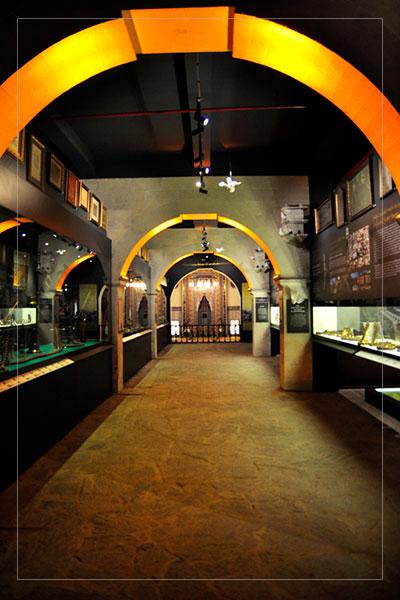
Museum Interior (Bursa Müze)
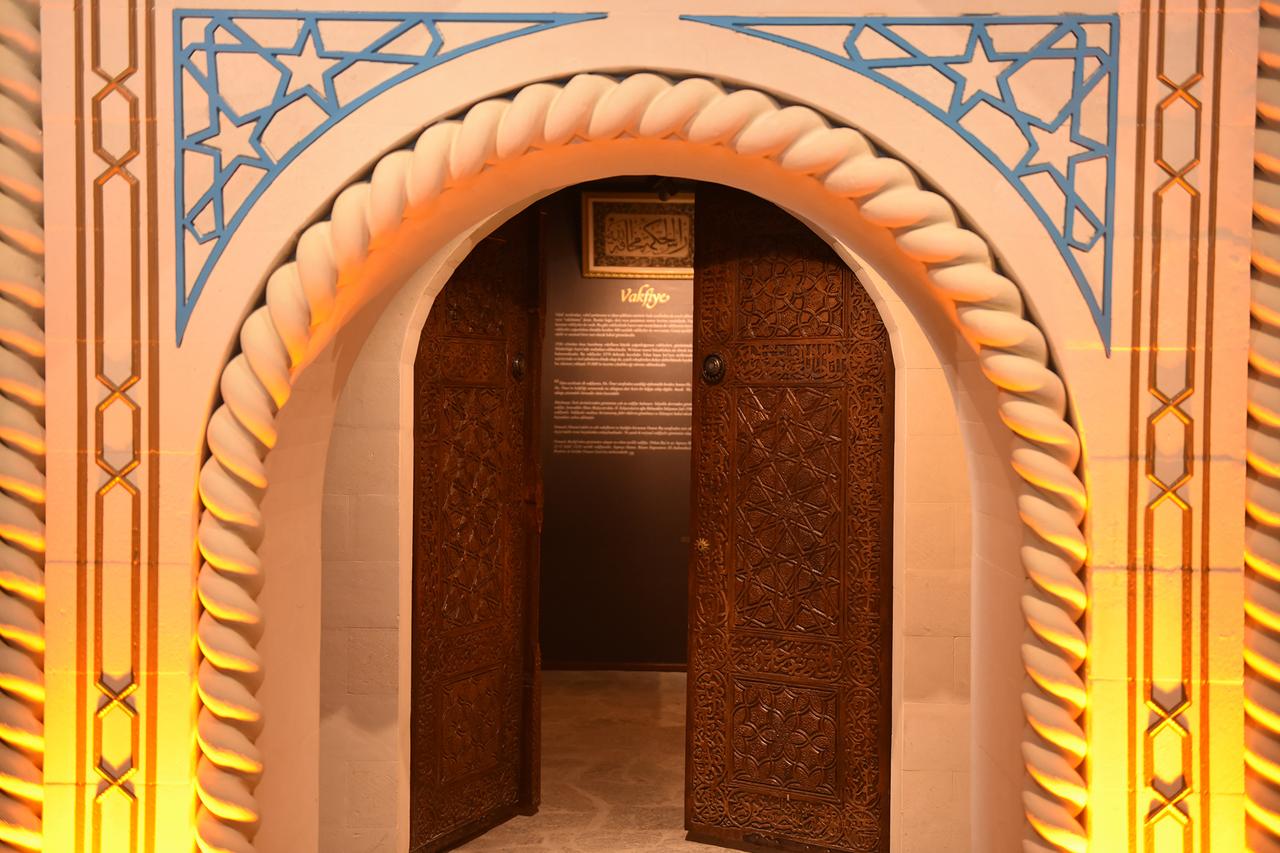
The museum’s entrance area was designed after the portal of Koza Han, one of the Ottoman waqf monuments, and a replica of the door of the Green Tomb, crafted using the kündekari technique, has been installed at the entrance. The museum comprises fifteen sections, with transitions between them facilitated by Bursa’s characteristic arched stone walls that reflect the architectural texture of the period.
Information panels in the museum present the concept of the waqf in Islamic history, the development of waqf culture in Muslim Turkish states, the Haremeyn Waqfs, Sultan waqfs, and the historical waqf monuments of Bursa, all organized in chronological and thematic contexts. The functions of caravanserais, bathhouses, soup kitchens (imarets), libraries, madrasas, tombs, hospitals (darüşşifas), roads and bridges, charity stones, and tekkes and zaviyes are explained in detail.
In addition, miniature models of the Green Mosque, Bursa Grand Mosque, Muradiye Madrasa, Koza Han, and Irgandı Bridge are exhibited, alongside scale models of birdhouses that illustrate the importance accorded to animals in Ottoman civil architecture.【2】 The museum also features sectional reconstructions of architectural elements such as fountains, bathhouses, and soup kitchens.
Approximately 500 distinct artifacts are displayed in the museum. A significant portion of these items was transferred to the museum from historical külliyes such as Muradiye Mosque and Emir Sultan Mosque, under protocols established with the Directorate General of Waqfs. The main artifact groups in the inventory are as follows:
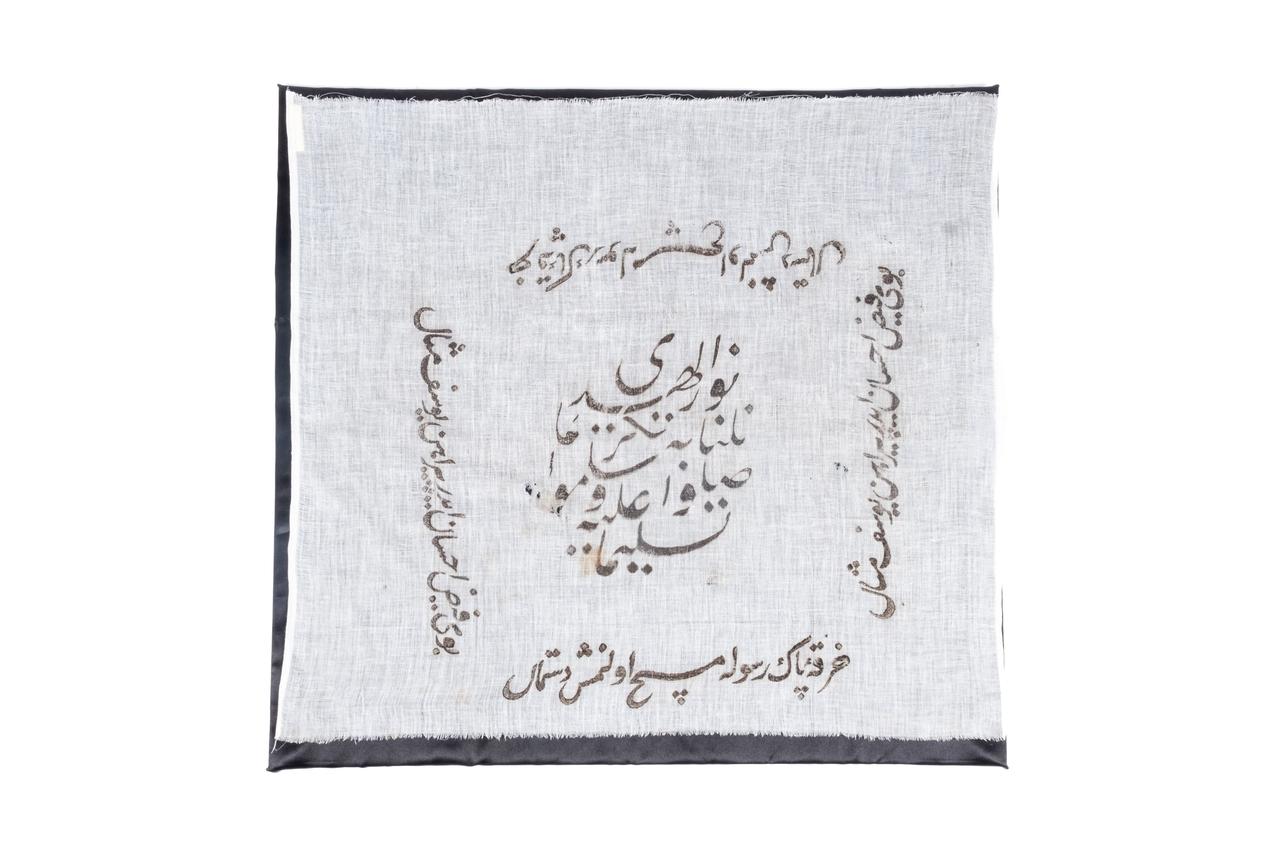
Destimal-i Şerif (Bursa Büyükşehir Belediyesi Kent Arşivi)
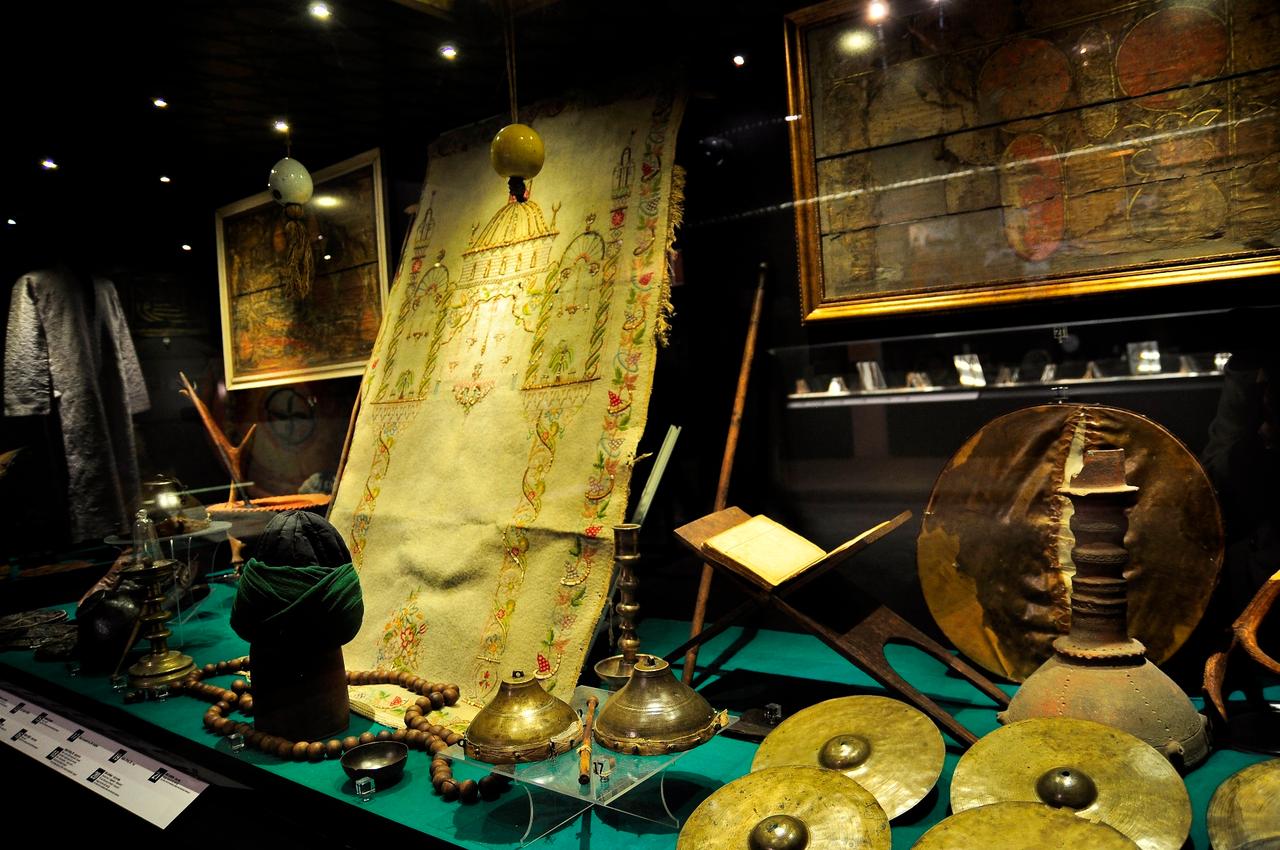
Museum Artifacts (Bursa Büyükşehir Belediyesi)
The Bursa Waqf Culture Museum serves as a comprehensive memory center that materializes Ottoman waqf culture through its extensive collection and architectural reconstructions, using historical and visual materials rooted in the Bursa context to preserve this heritage for future generations.
Altunışık, Büşra. "Bursa Müzelerinde Bulunan Ahşap Rahleler." Master's thesis, Dokuz Eylül Üniversitesi, 2024. YÖK Ulusal Tez Merkezi (852044). https://tez.yok.gov.tr/UlusalTezMerkezi/TezGoster?key=cr4SkWLaRMhkDRBjqthpsYfEr7Rwrr_ZmWZdXo7r_6tGwMUsqroFkjsQ4c6LVLgl
Bursa Büyükşehir Municipality City Archive. *Destimal-i Şerif*. Digital visual. Accessed March 5, 2026. https://bbbkentarsivi.bursa.bel.tr/DefaultContentViewer?relation_id=FTS_46939_408590_105_8&wsName=GAMOS&dfOpener=\Tab:DLV&v=-1243609257Default/
Bursa Büyükşehir Municipality. "Bu Müze Hep Açık." Accessed March 5, 2026. https://www.bursa.bel.tr/haber/bu-muze-hep-acik-28692.
Bursa Büyükşehir Municipality. [Museum Objects]. Digital image. Accessed March 5, 2026. https://www.bursa.bel.tr/dosyalar/resimler/haberler/28692_MTVlNGY4MD_6.jpg
Bursa Müze. "Bursa Vakıf Kültürü Müzesi." Accessed March 5, 2026. https://www.bursamuze.com/bursa-vakif-kulturu-muzesi.
Bursa Müze. [Museum Interior]. Digital image. Accessed March 5, 2026. https://bmuze.b-cdn.net/muze/ljezu-a621938918e4279a26032023025120000000.jpg?width=1000&height=1000.
Bursa Vakıf Municipality. [View from the Bursa Waqf Culture Museum]. Digital image. 2017. Accessed March 5, 2026. https://www.bursa.bel.tr/dosyalar/resimler/haberler/23337_MST_4707_201702171318.jpg
Dağdeler, Coşkun, and Doğan Yavaş. "Bursa Vakıf Kültürü Müzesi’nde Bulunan Kumaş Üzerine İşlemeli Hat Levhaları." *Uludağ Üniversitesi Fen-Edebiyat Fakültesi Sosyal Bilimler Dergisi* 21, no. 38 (2020): 109–143. https://doi.org/10.21550/sosbilder.557848
Dağdeler, Coşkun. "Bursa Vakıf Kültürü Müzesi Hat Levhaları." Master's thesis, Bursa Uludağ Üniversitesi, 2019. YÖK Ulusal Tez Merkezi (562149). https://tez.yok.gov.tr/UlusalTezMerkezi/TezGoster?key=FgmkGchPKo23qQqBeqzVZlf-DTr-GFdkpy-fC7n1cY0upYov45nGyyB44yo_1uaB
[1]
Bursa Müze, "Bursa Vakıf Kültürü Müzesi," Son erişim 5 Mart 2026,
[2]
Bursa Büyükşehir Belediyesi, "Bu Müze Hep Açık," Son erişim 5 Mart 2026, https://www.bursa.bel.tr/haber/bu-muze-hep-acik-28692.
[3]
Coşkun Dağdeler ve Doğan Yavaş, "Bursa Vakıf Kültürü Müzesi’nde Bulunan Kumaş Üzerine İşlemeli Hat Levhaları," Uludağ Üniversitesi Fen-Edebiyat Fakültesi Sosyal Bilimler Dergisi 21, sy. 38 (2020): 117,
[4]
Coşkun Dağdeler, "Bursa Vakıf Kültürü Müzesi Hat Levhaları" (Yüksek lisans tezi, Bursa Uludağ Üniversitesi, 2019), 39,
[5]
Büşra Altunışık, "Bursa Müzelerinde Bulunan Ahşap Rahleler" (Yüksek lisans tezi, Dokuz Eylül Üniversitesi, 2024), 76,

Henüz Tartışma Girilmemiştir
"Bursa Foundation Culture Museum" maddesi için tartışma başlatın
Foundation and Construction Process
Museum Design and Scope
Collection and Artifacts
Historical Significance