

This article was automatically translated from the original Turkish version.
Weekdays pass for me with a relentless pace, shuttling between my office and residence, as if they will never end. Both places have their own unique appeal; I enjoy being in different environments, but by Wednesday it feels as though the entire week’s intensity converges on that single day. For me, it is both exhausting and deeply satisfying.
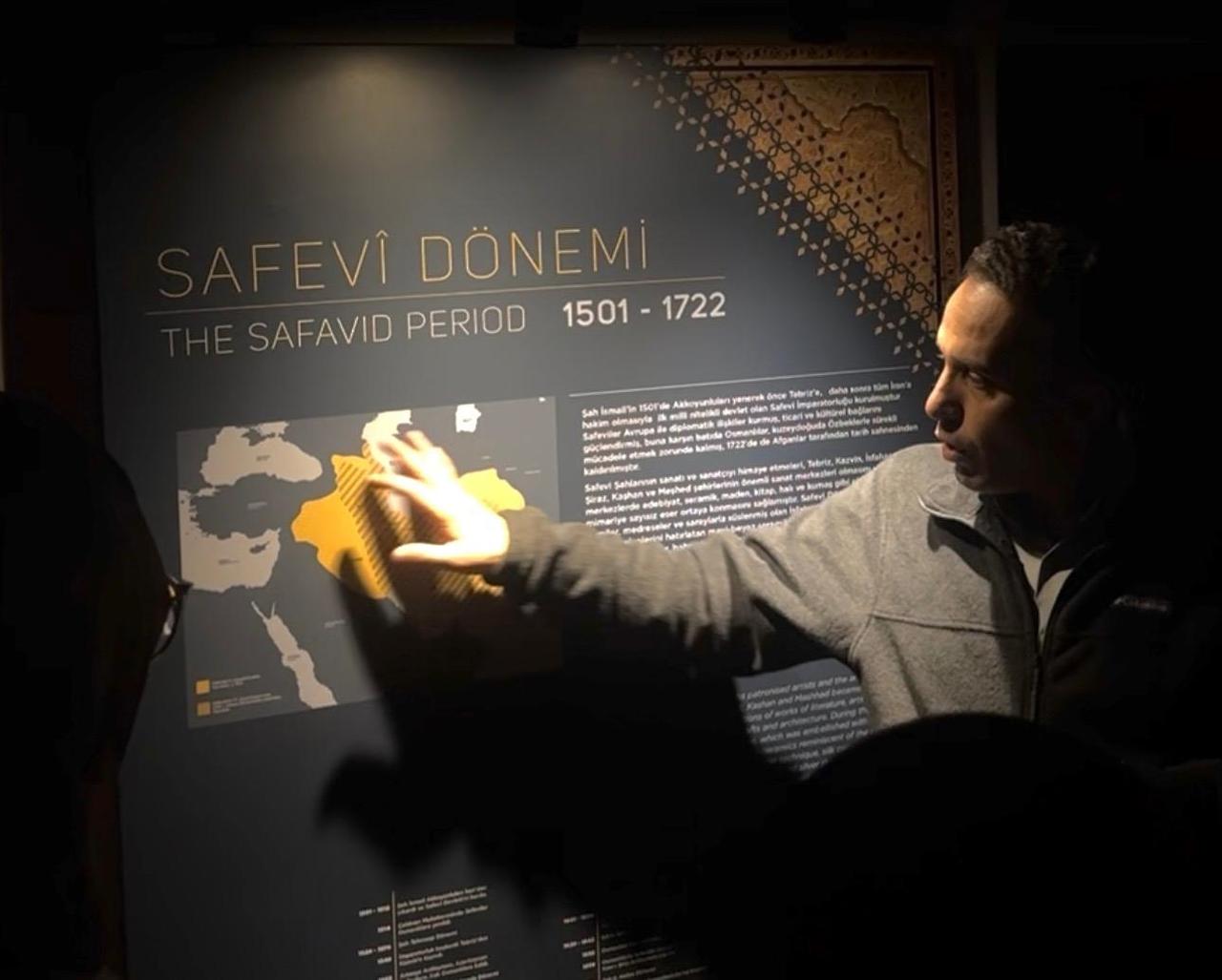
A Scene from Professor Fatih’s Lecture (Photo: Azra Karaca)
On yet another such Wednesday, I went to the residence for our course on Islamic Civilization. That day’s topic was Islamic history. Near the end of the lesson, our respected professor, Fatih Hoca, mentioned that he could take us on a visit to the Turk and Islamic Arts Museum, connecting it to the subjects we had been discussing. The idea of touring the museum under his guidance was so appealing to all of us that we accepted without hesitation.
In fact, this offer held special meaning for me. Recently, while passing in front of Ayasofya, I had thought to myself, “I’ve been in Fatih for so long—how I wish someone who knew these places well could show them to me.” But sometimes people cannot foresee how quickly their wishes might be fulfilled.
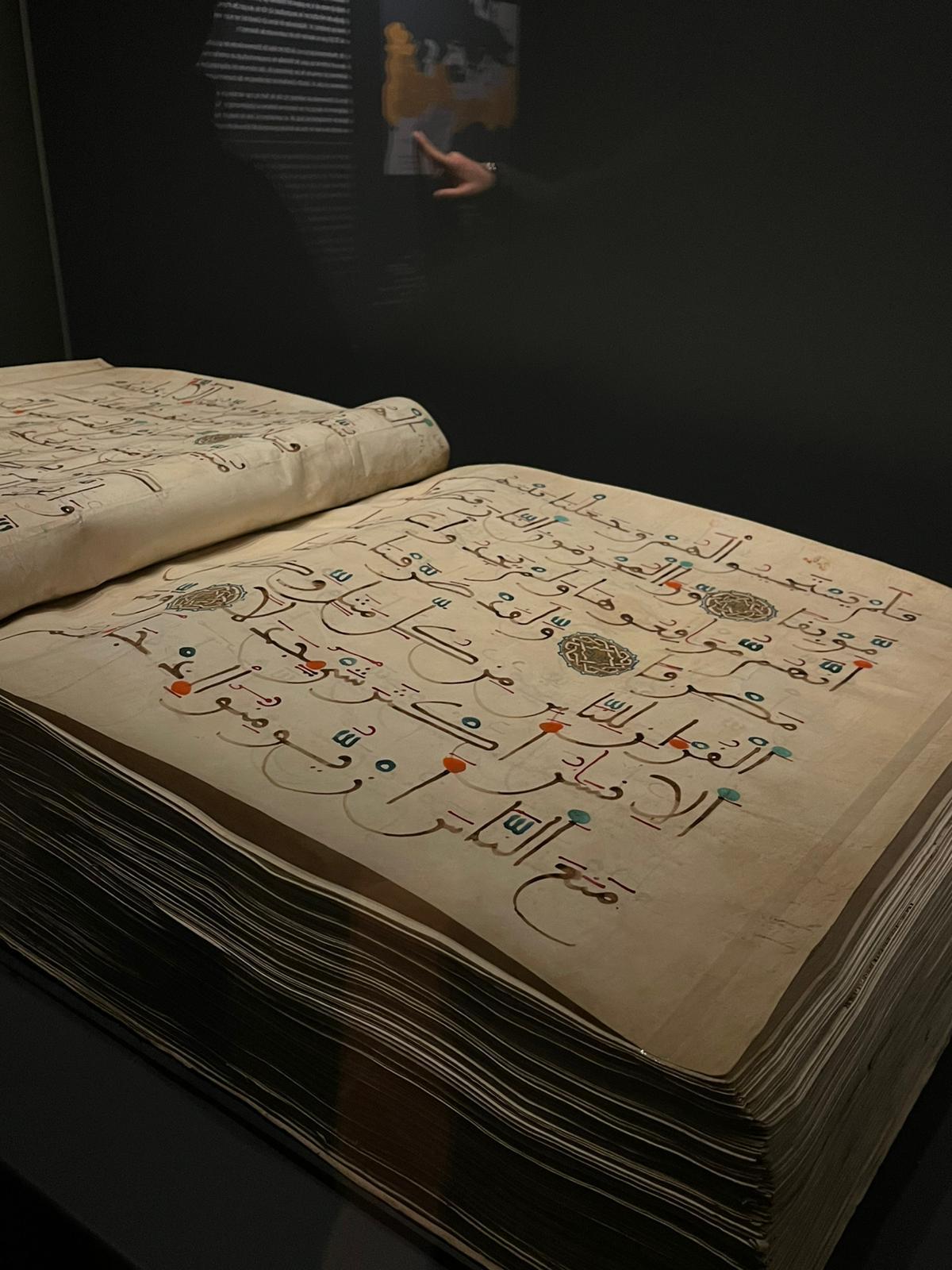
One of the Manuscript Works in the Museum (Photo: Dilay Yazıcı)
As a class, we made arrangements for April 23 and met at three o’clock on Thursday in front of Ayasofya. While touring the museum under our professor’s guidance, not only we but also the people around us were captivated by his explanations. Some even asked for permission to join our group, drawn in by his knowledgeable and fluent delivery.
The objects in the museum were arranged with great attention to chronological order, reflecting the succession of states and empires. Seeing artifacts from the era of the Rightly Guided Caliphs and the earliest copies of the Qur’an transported us directly into the time of the Companions. As we wandered among relics from that era, we had the rare opportunity to witness firsthand the service rendered to Islam. Some personal belongings of the Prophet also accompanied the other exhibits, deepening the atmosphere with profound meaning.
The museum did not merely display artifacts from the time of the Companions; it also revealed the Ottoman Empire’s profound reverence for that era. It was not only the objects themselves that drew attention, but also the meticulously crafted protective cases and delicate craftsmanship that surrounded them. These refined touches illustrated how Islamic civilization had sustained itself for centuries with both strength and aesthetic elegance.
As Islam spread toward Central Asia and encountered the Turks, we began to see traces of Turkish influence in cities like Samarra. At the same time, we witnessed how aesthetic sensibilities gradually evolved within Islamic civilization.
The rooms, arranged chronologically, transported visitors on a journey through centuries. The art of calligraphy in the Qur’ans was clearly visible, while the most enchanting examples of illumination dazzled the eye. In early periods, simple stones and materials were used out of necessity, but over time they gave way to ornate ceramic plates and artistic masterpieces. I could not help thinking, “People actually lived in those times.” The most ornate plates and the most elaborate candelabras seemed to compete for attention in their display cases.
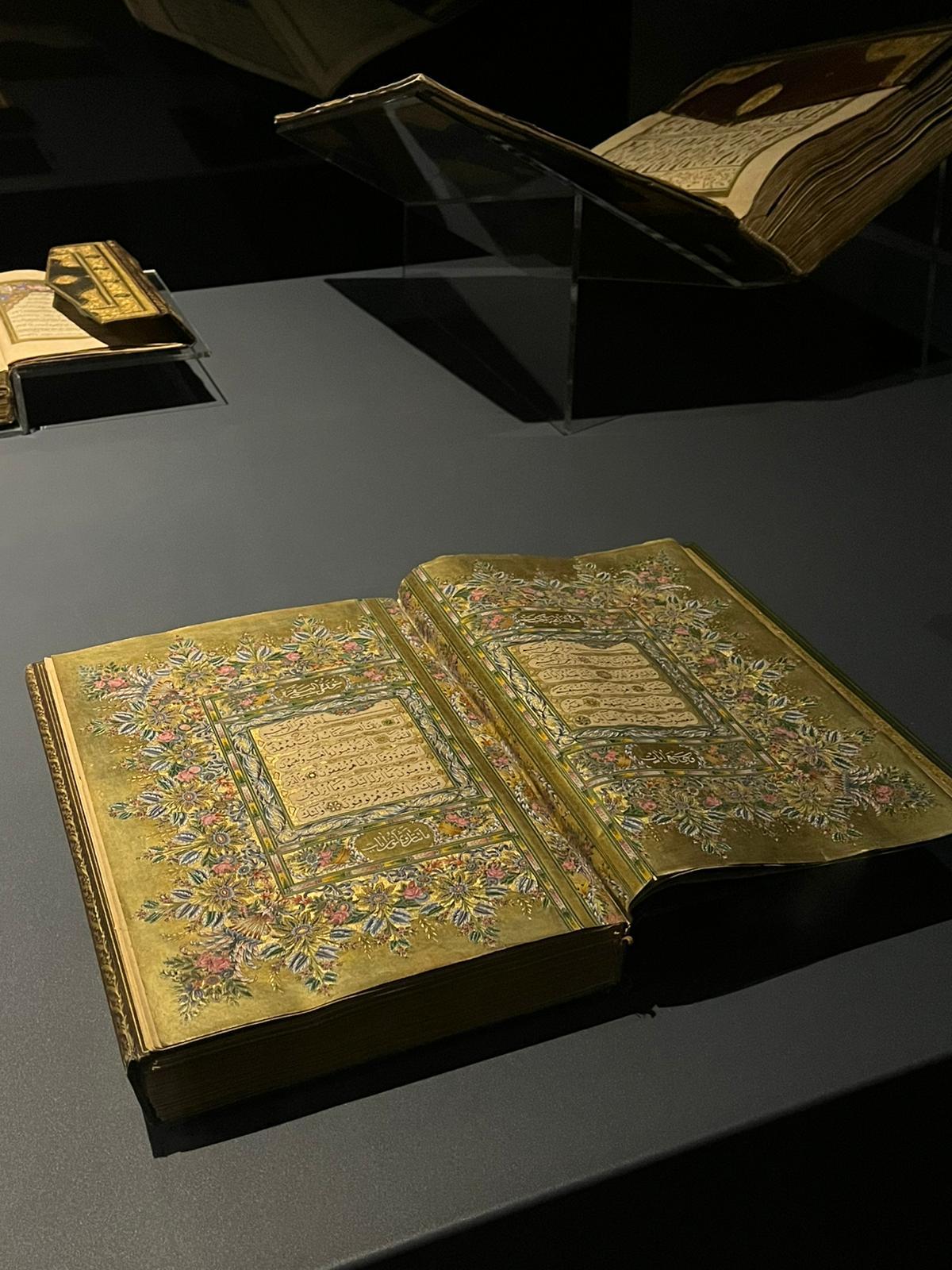
A Beautiful Example of a Qur’an Featuring Calligraphy and Illumination (Photo: Dilay Yazıcı)
As my admiration continued, we moved to the section displaying Ottoman carpets.
I am not sure whether a carpet can be considered a work of art—but what we saw certainly was. Their colors and textures were so exquisite that I believed even today’s finest carpet makers could learn much from them. The use of natural dyes, the plants from which they were derived, and the resulting hues were explained in detail to visitors. The carpets were old and had been used, yet their textures appeared as if they had never aged. Who knows how many hours or days of labor had gone into each loom…
Before we could fully emerge from the spell of the carpets, we were greeted by intricately carved wooden windows. I do not know if wood can be bent, but the artisans who created these pieces seemed to have mastered the art of shaping it. Floral patterns and figures were familiar, yet no less captivating.
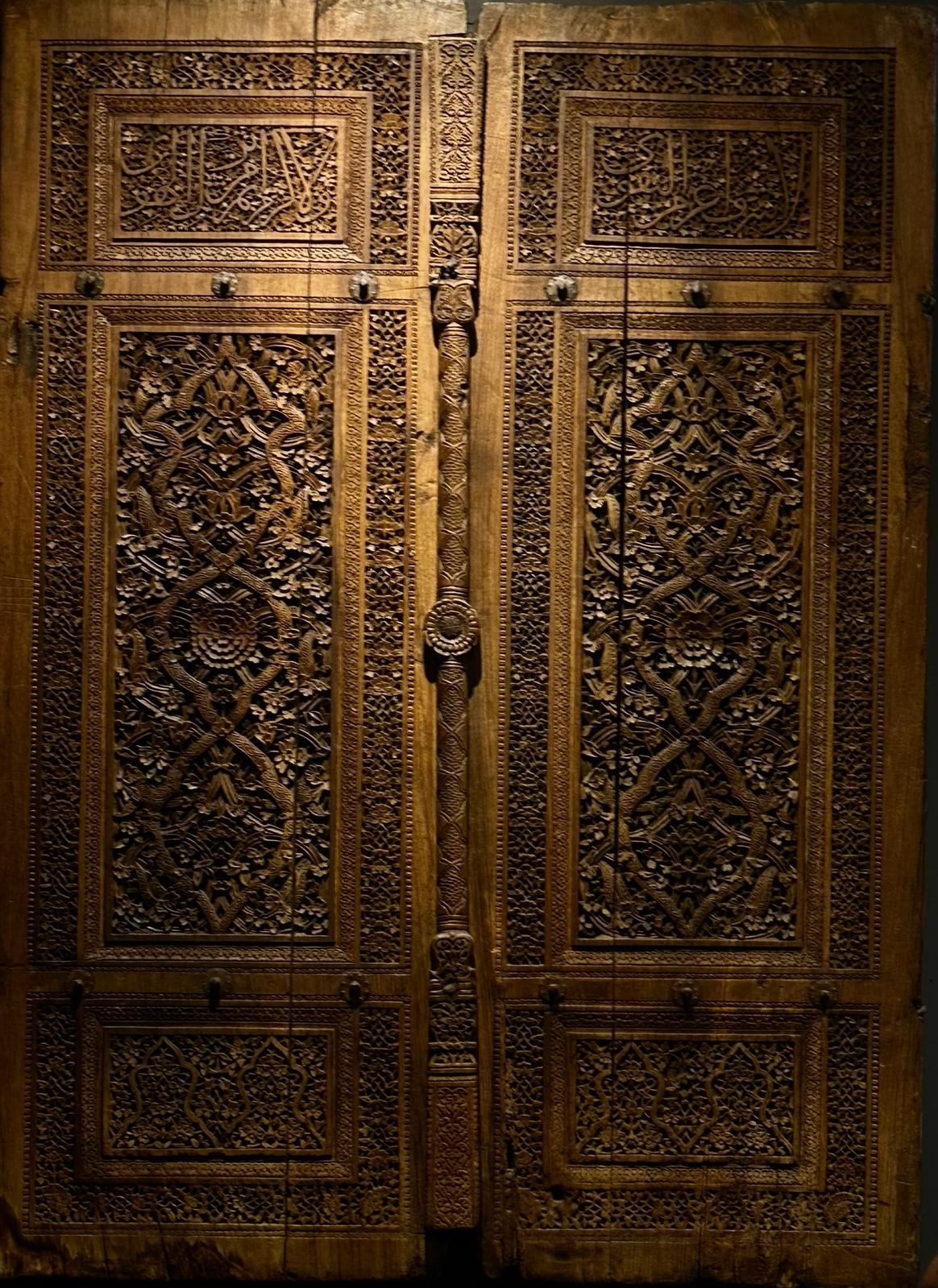
An Ornate Wooden Window Made of Wood (Photo: Azra Karaca)
Shortly before leaving the museum, we had the chance to see the famous Byzantine chain used during the Conquest of Istanbul. We then walked toward the section displaying the personal belongings of Ottoman palace women. The Ottoman taste, particularly in women’s adornments and kaftans, was once again laid bare before our eyes.
Near the end of our tour, we entered the section dedicated to gifts sent to Mecca. The coverings of the Kaaba were arranged side by side. At first glance, the threads appeared different. As I wondered, “There must be something special here,” Fatih Hoca’s words echoed in my ears:
“Friends, these threads were made from melted gold.”
In that moment, I felt anew a deep admiration for our ancestors.
We had toured the entire museum from beginning to end.
Following Fatih Hoca’s suggestion, we took a group photograph at the museum’s most scenic spot, bringing our visit to a beautiful close.
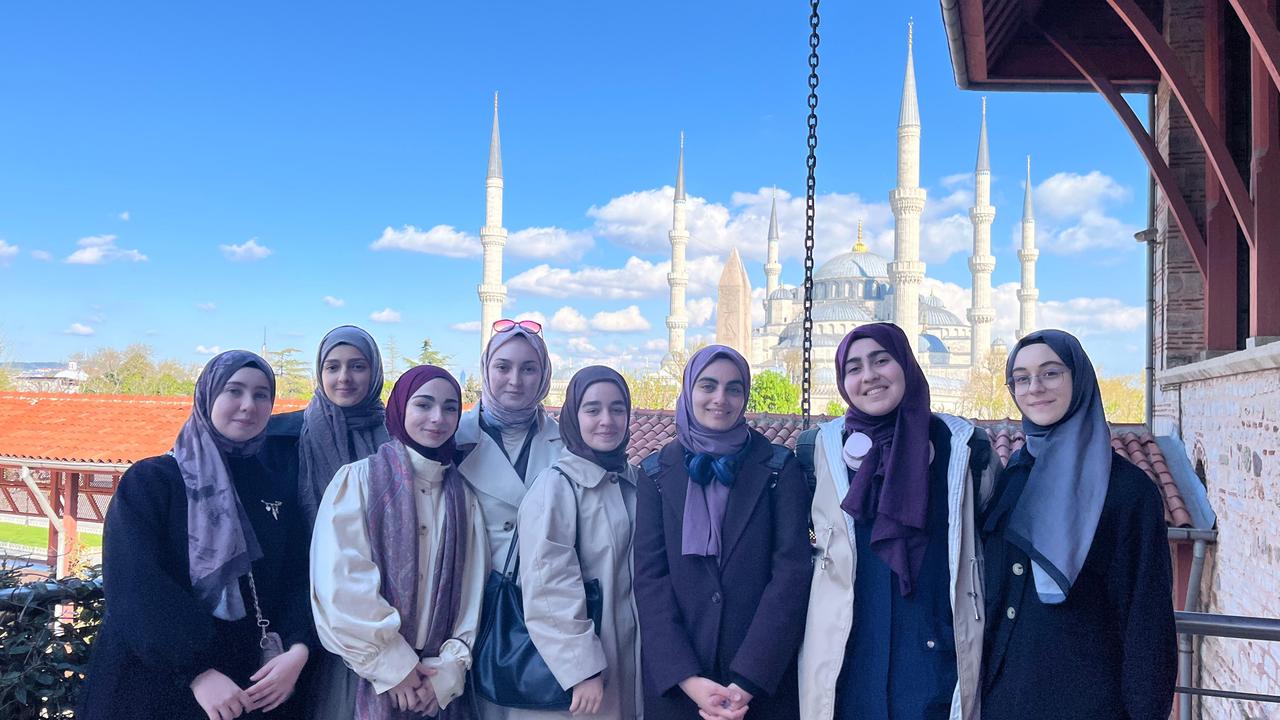
The View of the Day (Photo: Azra Karaca)
Then, in front of the tram stop, we shared a brief farewell with our professor and classmates. An hour later, we had a makeup class at the residence. We arrived at the residence and completed our lesson—but our professor did not know one thing: We had already begun planning our next excursion among ourselves 🙂