+2 Daha

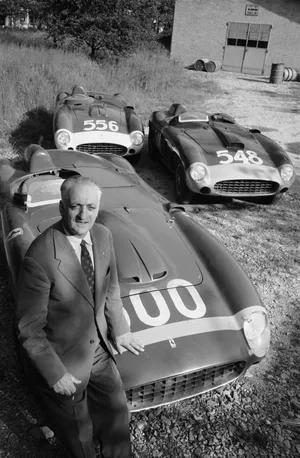
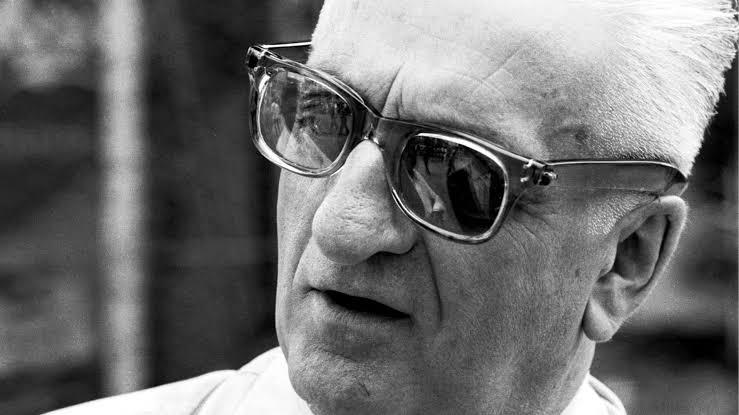
Enzo Anselmo Ferrari (20 February 1898 – 14 August 1988) was an Italian automobile manufacturer and racing team manager. Ferrari, the founder of Scuderia Ferrari and the Ferrari brand, left a lasting impact on the automotive industry through his passion for motorsport and innovative vision.
Enzo Ferrari was born on 20 February 1898 in the Italian city of Modena. His father was a business owner who worked in metalworking. In his youth, Ferrari had three different aspirations: to become an opera singer, a sports journalist, and a racing driver. Of these goals, only the pursuit of a racing career saw significant progress.
In 1916, during World War I, his father and older brother were conscripted into military service but both died that same year due to the Spanish flu pandemic. Initially exempted from military service due to health reasons, Ferrari was later accepted into the army. Near the end of the war, he served in a support role behind the front lines. In 1918, he contracted the resurgent flu pandemic but recovered and subsequently left the military.
After the war, Ferrari continued living with his mother and applied for a job at Fiat to enter the automotive sector. However, his application was rejected due to the economic downturn and rising unemployment following the war. In response, he began conducting test drives for Vespa and gained attention by participating in races during this period.
In 1920, Ferrari began working for Alfa Romeo, serving both as a test driver and a race driver. He took a break from his racing career in the mid-1920s but returned to the track in 1927. After the birth of his son Dino in 1932, he decided to retire from racing and shifted his focus to automobile manufacturing. Ferrari maintained his association with Alfa Romeo, holding a managerial position in the company’s motorsport division.
In 1929, Ferrari founded Scuderia Ferrari, which became the official racing team of Alfa Romeo. The team achieved considerable success competing with Alfa Romeo vehicles. In 1939, Ferrari left Alfa Romeo and established his own company, Auto Avio Costruzioni.
During World War II, the company’s operations were suspended and its factory was bombed. As a result, its headquarters were relocated to Maranello, which remains the center of the Ferrari brand today. After the war ended, Ferrari produced the first automobiles bearing his own name in 1946. The 1950s marked a period of growth for Ferrari, during which the company launched successful models such as the Ferrari 250 and Ferrari 250 GT. During the same period, Ferrari achieved major successes in motorsport competitions.
Ferrari’s son Dino died at a young age in 1956. This loss became a turning point for Ferrari. In the 1960s, like many industrialists in Italy, Ferrari faced financial difficulties due to the economic crisis. In 1965, he sold a portion of the company’s shares to Fiat. By 1969, he was compelled to transfer 90 percent of his shares to Fiat, yet he retained control over management and continued to direct the company’s operations.
In 1971, Ferrari stepped down as chairman of the company but remained actively involved in its management until 1988. The Ferrari F40 model was the last vehicle developed and approved under his supervision. Enzo Ferrari died in Modena on 14 August 1988.
Biography. "Enzo Ferrari." Biography Website. Accessed March 27, 2025. https://www.biography.com/athlete/enzo-ferrari
Ferrari. "Ferrary History." Ferrari Website. Accessed March 27, 2025. https://www.ferrari.com/en-EN/history/moments/1951/first-f1-win/more
Luebering, J. "Enzo Ferrari." Encyclopedia Britannica, February 27, 2025.

Henüz Tartışma Girilmemiştir
"Enzo Anselmo Ferrari" maddesi için tartışma başlatın
Early Life and Education
Beginnings of His Racing Career
Founding of Scuderia Ferrari and the Ferrari Brand
Personal Losses and Corporate Transformation
Final Years and Death