


Bu içerik Türkçe olarak yazılmış olup yapay zeka ile otomatik olarak İngilizceye çevrilmiştir.
+1 Daha
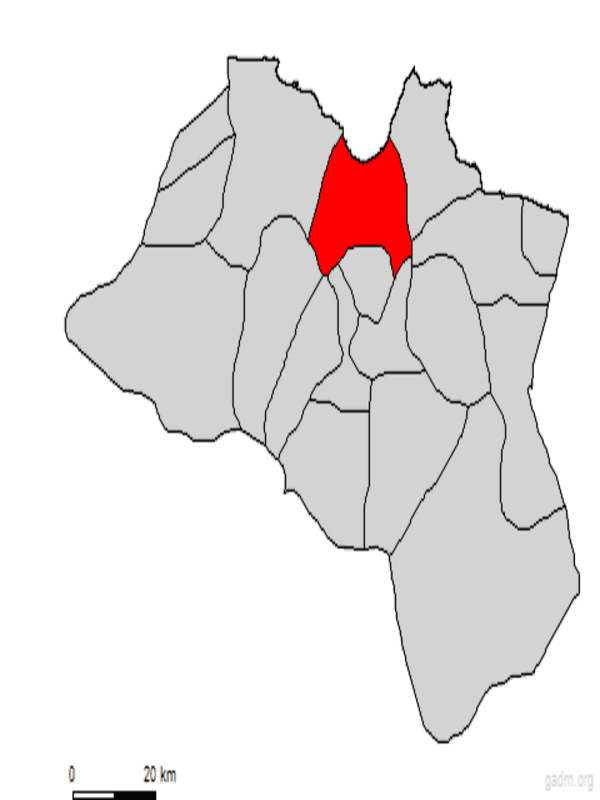
Located as a district affiliated with Army, Fatsa lies along the coast of place, to the east of Black Sea Region. It is one of the region’s most prominent settlement centers due to its natural beauty, historical heritage, advanced agriculture and trade. Fatsa attracts attention with its accessibility to both sea and black transport, and it is among the districts of Army distinguished by its cultural diversity, local economy and modern urban structure.

Fatsa (Fatsa Municipality)
Fatsa and its surroundings were inhabited in the 4th century BC by non-Greek communities including the Colchians, Drilae, Halizones, Mossynoecians and Tibareni. Although traces from this period are believed to be concentrated around Çıngırt Rock in the Yapraklı locality, these claims lack scientific foundation. Archaeological research in the region is expected to provide more definitive information.
From 675 BC onwards, the region came under the control of the Cimmerians, Persians, Alexander the Great and his commanders. However, Fatsa’s most significant historical period coincides with the Kingdom of Pontus. Between 280 BC and 263 AD, this era strengthened the region, and it is said that Pharnaces II built a palace in Fatsa in the name of his daughter Phanis. For this reason, the area was known for a time as “Phanis.” Over time, this name evolved into forms such as Fanise, Phadsane, Pytane and Faça, eventually becoming Fatsa. Claims that Fatsa was the capital of the Pontic state, however, lack any credible evidence.
After the Kingdom of Pontus was abolished by Rome in 63 AD, the region became part of the Byzantine territories in 395 AD. In the 11th century, invasions by the Pechenegs and Cumans affected the Fatsa area as well.
Permanent Turkish settlement in the region began after the Battle of Manzikert in 1071. Sevli, one of the Danişmentli beys, conquered the Black Sea coast including Fatsa. Among the Turkic tribes settling in the region, the Çepnis were the most prominent. In the 1380s, the Hacıemiroğulları Beylik gained control of Fatsa, and in 1427–1428, the region was incorporated into Ottoman territory through the Canik Campaign of Yorguç Paşa.
During the 13th and 14th centuries, Genoese commercial activities were evident along the coast, and Fatsa became one of the important trade centers of the Black Sea. The Genoese used the coastal fortress as a warehouse. Fatih Sultan Mehmet marked the end of Genoese dominance in the Black Sea.
During the Ottoman period, Fatsa was a settlement under the Canik Sanjak. Initially known as “Satılmış-ı Mezid Bey,” the region became a nahiye in the 15th century and attained kaza status from the 16th century onward. 17th-century records indicate six distinct kazas in the region. According to Secretary Çelebi, Fatsa and Vonayı were among them.
From the second half of the 16th century, the Fatsalı Caniklizade family became influential in the Canik region. In the 19th century, administrative changes occurred: between 1869 and 1872, Fatsa was subordinate to Ünye as a nahiye, and in 1878 it regained kaza status.
On 30 November 1920, the establishment of the Ordu and Giresun sanjaks was discussed in the Grand National Assembly of Türkiye, and on 4 December 1920, the Ordu Sanjak was created. The kazas of Fatsa and Ünye were attached to this new sanjak. Although the people of Ünye and Fatsa opposed this decision, their appeals were rejected, and Fatsa officially became a kaza under Ordu.
Fatsa, as a district of Ordu province in Türkiye’s Black Sea Region, lies between 41° North latitude and 37°–38° East longitude. To the east lies Perşembe, to the west Ünye, and to the south Korgan, Çamaş, Çatalpınar and Kumru districts. The northern boundary of Fatsa is formed by the Black Sea.
The district is generally mountainous and rugged in structure. Rakı rises from sea level to 550 meters. The Canik Mountains, running parallel to the Black Sea coast, gradually descend toward the shoreline. The Bolaman and Elekçi rivers, the district’s main waterways, form flat areas near the coast.
The main rivers flowing within Fatsa’s boundaries are the Bolaman River, Elekçi River, Şerefiye River and Kurtuluş Mahallesi Stream. The most important natural lake in the region is Beak Lake, located 10 kilometers southeast of the district, within the boundaries of Örencik Village.
Fatsa is situated both on alluvial soils along the coast and on slope terrains further inland. Based on excavation data from slope areas, no groundwater has been detected in these zones. Flat areas consist of fine sand and clayey soil structures that contain groundwater. The upper soil layer in slopes is 1.5–2 meters thick, composed of kil and plant cover, while the lower layer layer consists of fractured blue limestone.
Agricultural lands in the district consist of base terrains formed around stream deposits and slope terrains. Agricultural activities are carried out in areas with Class I and III soils. Approximately 80% of arable land is used for hazelnut cultivation. Higher elevation slopes are covered by forested areas, and due to the steep topography, conversion of these forests into agricultural land is rare.
Fatsa experiences a typical Black Sea climate. Winter months are mild, while write months are cool and humid. Annual temperature variations are low. Humidity remains high throughout the year, and precipitation patterns are regular.
As of 31 December 2024, Fatsa’s population is 128,359. Women constitute 51% of the population and men 49%. The population density across the district is calculated at 349.30 persons per square kilometer.
When examined by age groups, middle-aged individuals (48%) form the largest segment of Fatsa’s population, followed by the youth (34%) and elderly (18%). This distribution indicates a predominance of the working-age population and a high level of active labor force.
The majority of Fatsa’s population resides in the district center, but a significant population also lives in rural neighborhoods. Although age group distribution is relatively balanced, the dominance of the middle-aged group is decisive for medium- and long term planning in social services, health and education.
The district’s economy is based on agriculture and fishing. Major agricultural products include hazelnuts, tea and maize. Vegetable and fruit cultivation, along with greenhouse farming and culture mushroom farming, is increasingly common. Livestock farming includes both large and small ruminant breeding, poultry farming and beekeeping. Fishing is one of the primary livelihood sources in Fatsa. Traditional carpet weaving and hazelnut cracking workshops also contribute to the local economy. The district has an organized industry zone, and industrial investments are increasing.

Fatsa Organized Industrial Zone (Fatsa OSB)
In addition to primary and secondary educational institutions, Fatsa hosts higher education institutions affiliated with Ordu University, including the Fatsa Faculty of Marine Sciences and the Vocational School. Cultural activities in the district are conducted through municipality and local associations. Additionally, folk dances, traditional weddings and regional festivals reflect the cultural richness of the area.
Fatsa lies along the Black Sea Coast Highway. This road ensures strong road connections with major cities such as Ordu, Samsun and Trabzon. Although sea transport is not used within the district, it is approximately 60 kilometers from the Ordu-Giresun Airport. Bus services from the district’s terminal provide access to other provinces and districts.
Fatsa’s natural attractions include Gaga Lake, Çerkezler Hill, Bolaman Castle and Yalıköy Beach. Additionally, the town of Bolaman is a significant historical tourism center, featuring Ottoman-era civil architecture and the Bolaman Mansion. The area is suitable for nature hiking and highland tourism. The district is fortunate in having natural underground resources; in the town of Ilıca, there is a medicinal water. It is known that this water is beneficial for rheumatism, belt pain and kidney disorders. In Elmaköy, Acısu is known to cure various ailments.
Fatsa is one of the important port cities of the Black Sea that has hosted numerous civilizations throughout history. Archaeological excavations in the district and its surroundings have uncovered traces of ancient settlements. Particularly, the ancient ruins in Bolaman Mahallesi include significant findings from the Roman and Byzantine periods. Additionally, Hellenistic coins and ceramic fragments have been unearthed in the district. These historical layers ensure that Fatsa attracts attention not only through its natural beauty but also through its cultural heritage.
Located approximately 9 kilometers from Fatsa district, along the Ordu–Fatsa road, the Bolaman neighborhood stands out for its historical building. This structure has become a symbol of the region, notable not only for its architecture but also for its presence in cultural imagery. Every year, hundreds of visitors photograph this monument, which appears visually on numerous objects, from tourist souvenirs to matchboxes.
The historical structure incorporates elements from two distinct periods. The first construction phase consists of ramparts dating back to the early centuries AD. These stone walls were built defensively on a small surrounded by water on all sides. The structure, along with its ramparts, possesses a castle character and is believed to have housed a church structure within its walls. In this respect, the structure represents a typical example of early defensive and religious architecture.
The second construction phase is an Ottoman-period wood mansion. This mansion was constructed in the late 18th century on the existing stone ramparts. It is presumed to have been built by Mehmet Bey, son of Büyük Ali Bey of the Hazinedar family. The mansion, with a history of approximately two centuries, exhibits characteristic features of Ottoman civil architecture.
The Hazinedaroğlu Mansion has been officially registered as a historical monument by the General Directorate of Monuments and Museums of the Ministry of Culture and has been recorded as cultural heritage requiring protection. The mansion and its ruins, described by the same directorate as “a typical example of old Turkish architecture,” are among the rare structures in the Black Sea Region to have preserved their architectural integrity. Restoration efforts have been initiated by Karadeniz Technical University to preserve the building and transmit it to future generations.

Bolaman Castle and Hazinedaroğlu Mansion (Fatsa District Governorship)
In the area now occupied by a prison, known as Dumlupınar Neighborhood, ruins of a castle allegedly built by Count Polenon are found. The structure itself has not survived to the present day, but it remains in local memory as a “monastery.” Although there is no definitive information regarding the original function and architectural details of the structure, the historical nature of the site reflects the cultural diversity of the region.
In the western part of Fatsa district, within the boundaries of Evkaf Village and approximately five kilometers from the district center, remains of a fortress, palace, church and monastery from the Pond State period have been discovered. These ruins indicate that a large settlement once existed in the region. Surface surveys in the area have uncovered inscriptions on silver money, revealing that at one time, Derebeyi Hacı Şevda ruled the area and minted coins in his name. This information demonstrates the area’s historical significance both politically and economically.
Located west of the district center, in the area where Görevi Creek flows, the Cıngırt Rock Tombs are among structures believed to belong to an ancient fortress. The site is situated on a hill approximately five kilometers away and contains a rock tunnel with a 45-degree slope descending toward Elekçi Creek. Inside the tunnel is a staircase structure of 120 steps carved into a large rock. This hidden passage is thought to have been constructed to connect the fortress on the hill to Elekçi Creek. The site holds great archaeological importance.
Located approximately 10 kilometers from Fatsa district, the Sarmaşık Hot Springs are one of the region’s key health tourism centers due to their natural therapeutic properties and accessibility. Chemical analyses show that one liter of the 47°C spring water contains 0.731 grams of sulfur compounds (sulfurated matches), 0.1755 grams of sodium chloride, 0.253 grams of calcium salts, 0.005 grams of silica and 1.433 grams of gelatinous substance (yeluse essence). The water is colorless, odorless and has a mild mineral taste, with a flow rate of 200 liters per minute. It has long been used by the local population for treating various skin and rheumatic conditions.
One of Fatsa’s most vibrant tourism areas, Yalıköy attracts both domestic and foreign tourists during summer months with its long shoreline and natural coves. Its fine sandy beaches and clear sea make it one of the rare beach tourism potential areas of the Black Sea. Additionally, coastal excursions organized by small fishing boats are among the popular activities for visitors.

Yalıköy Shore (Fatsa Municipality)
Located 10 kilometers southeast of Fatsa district, within the boundaries of Örencik Village, Gaga Lake is a small freshwater lake covering approximately 15,000 square meters. Surrounded by dense forest vegetation and trees, the lake stands out for its natural landscape and tranquil atmosphere. In the center of the lake is a very small islet. Local folklore suggests that a church once stood on this islet, but these claims are not supported by any yet archaeological or historical evidence. Access to the lake shore is possible by motor vehicle, making Gaga Lake an attractive destination for nature walks and rural tourism.

Fatsa Gaga Lake (Fatsa Subdistrict Office)
Although Fatsa and its surroundings were not occupied during the War of Independence, the area served as one of the organizational centers for local resistance movements. Local monuments and commemorative events in this context help sustain awareness of the national and provide a valuable resource for educational and historical tourism.
Traditional Black Sea culture prevails in Fatsa. Family structure generally resembles the extended family model. Cultural diversity has increased due to migration from other regions. Social life in the district revolves around tea gardens, cafes, market places and coastal promenades.
Fatsa Belediyesi Official Website. Accessed April 14, 2025. https://www.fatsa.bel.tr
Fatsa Kaymakamlığı. "Bolaman Kalesi ve Hazinedaroğlu Konağı." Accessed April 14, 2025. http://www.fatsa.gov.tr/bolaman-kalesi-ve--hazinedaroglu-konagi
Fatsa Kaymakamlığı. "Gaga Gölü." Accessed April 14, 2025. http://www.fatsa.gov.tr/gaga-golu
Fatsa Organize Sanayi Bölgesi Resmî Web Sitesi. Accessed April 14, 2025. https://www.fatsaosb.org.tr/
Ordu İl Kültür ve Turizm Müdürlüğü. "Fatsa." Accessed April 14, 2025. https://ordu.ktb.gov.tr/TR-67377/fatsa.html
T.C.Fatsa Belediyesi. "Eski Fatsa Fotoğrafları." Accessed April 14, 2025. https://www.fatsa.bel.tr/fotograf/eski-fatsa-fotograflari
T.C.Fatsa Belediyesi. "Fatsa Fotoğrafları." Accessed April 14, 2025. https://www.fatsa.bel.tr/fotograf/fatsa-fotograflari
TÜİK, Adrese Dayalı Nüfus Kayıt Sistemi (ADNKS), 2024. Accessed April 14, 2025.

Henüz Tartışma Girilmemiştir
"Fatsa (District)" maddesi için tartışma başlatın
History
Ottoman Period (1427–1922)
Preliminary Republican Developments
Geography
Location
Topography
Hydrography
Geology
Soil and Land Use
Climate
Population and Demographic Structure
Economy
Education and Culture
Transportation
Tourism Potential
Bolaman Castle and Hazinedaroğlu Mansion
Monastery Ruins in Dumlupınar Neighborhood
Göreği Monastery and Ancient Settlement Ruins
Cıngırt Rock Tombs
Sarmaşık Hot Springs
Yalıköy and Its Beaches
Gaga Lake
Shahids’ Monument and National Struggle Traces
Social Structure