


Bu içerik Türkçe olarak yazılmış olup yapay zeka ile otomatik olarak İngilizceye çevrilmiştir.
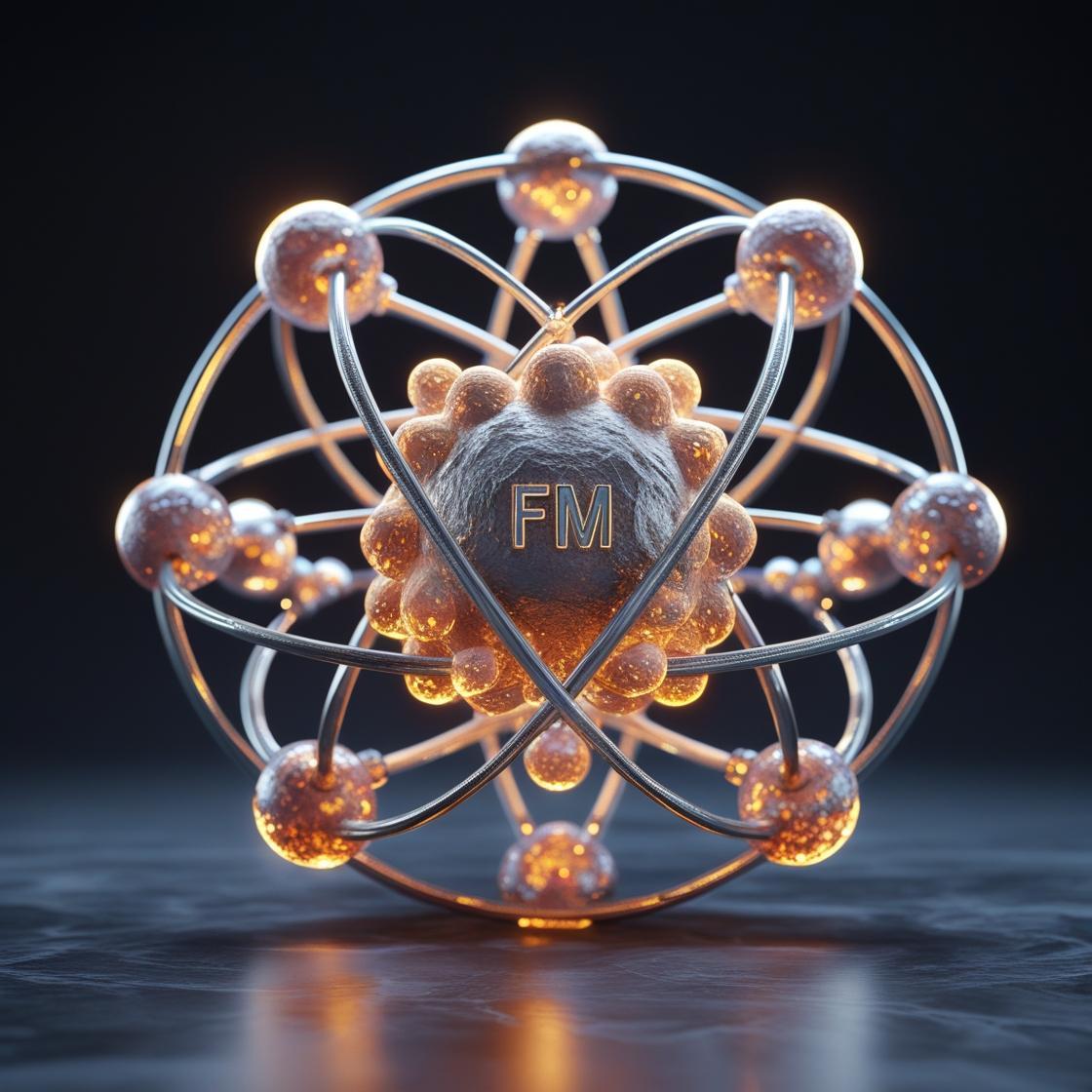
Fermium
Periodic Table Position | 7 | ||||||||
|---|---|---|---|---|---|---|---|---|---|
Chemical Symbol | Fm | ||||||||
Atomic Number | 100 | ||||||||
Group | Actinides | ||||||||
Electron Configuration | [Rn]5f¹²7s² | ||||||||
Melting Point (Estimated) | 1527 °C | ||||||||
Atomic Radius (Estimated) | 2.45 Å | ||||||||
Most Important Isotope | ²⁵⁷Fm (Half-life: ~100.5 days) | ||||||||
Year of Discovery | None | ||||||||
Discoverer(s) | Albert Ghiorso and team | ||||||||
Natural Occurrence | Artificial (not found in nature) | ||||||||
Fermium is a synthetic and radioactive metallic element with atomic number 100 and chemical symbol Fm, located in the actinide series of the periodic table. It is named after the Italian physicist Enrico Fermi, renowned for his pioneering work in nuclear physics.
Fermium is classified as the 12th element in the actinide group and the seventh period of the periodic table. Its electron configuration is [Rn]5f¹²7s². As a member of the actinide series, its chemical behavior is expected to involve the participation of f-electrons. It is one of the transuranium elements, and all known isotopes are radioactive. It is predicted to be solid at room temperature and exhibit metallic properties. Due to its high radioactivity and the fact that it can only be produced in trace amounts, experimental data on its physical and chemical properties are extremely limited.
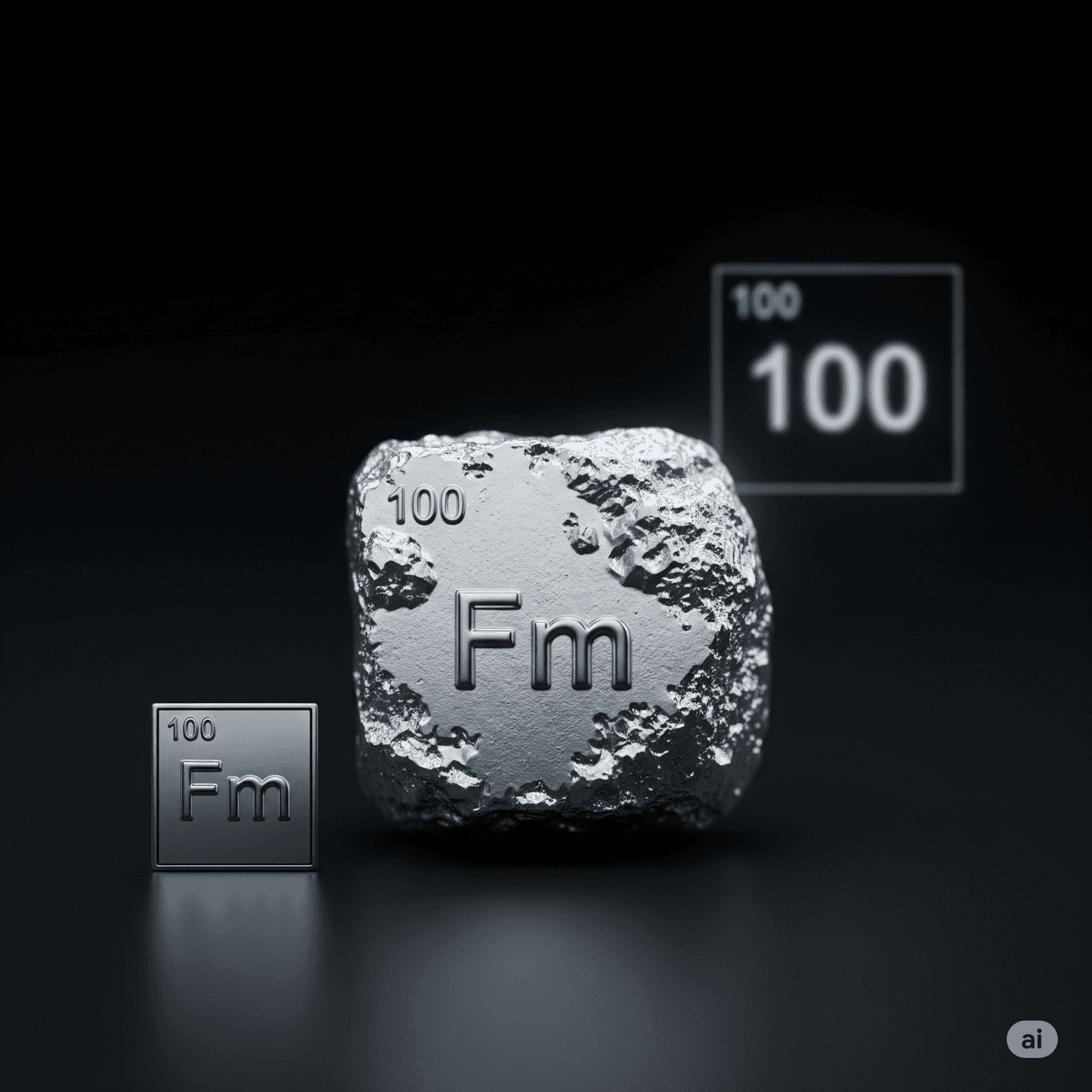
Fermium (Generated by Artificial Intelligence.)
The element fermium was first discovered in late 1952 by American scientist Albert Ghiorso and his colleagues during the analysis of debris from the "Ivy Mike" test, the first hydrogen bomb detonation, which took place at the Eniwetok Atoll in the Pacific Ocean.
Analysis of samples collected from the explosion debris revealed that uranium atoms had captured numerous neutrons under intense neutron bombardment, followed by successive beta decays, transforming into heavier elements. The isotope fermium-255 (²⁵⁵Fm) was identified in this manner. This discovery held scientific significance as it demonstrated that new elements could be formed as a result of nuclear explosions. The discovery was kept secret for a period due to security concerns and was published in the scientific literature in 1953.
The element fermium is named in honor of Enrico Fermi (1901–1954), the Italian-American physicist and 1938 Nobel Prize winner in Physics. Enrico Fermi is particularly known for his fundamental contributions to the development of nuclear reactors, neutron physics, and the theory of beta decay. The naming was proposed by the scientists who made the discovery and was officially accepted by the International Union of Pure and Applied Chemistry (IUPAC). The chemical symbol for the element was designated as "Fm".
Since all isotopes of fermium are radioactive and can only be produced in minute quantities, its macroscopic physical properties are largely unknown or based on theoretical predictions. It is expected to be solid at room temperature and exhibit metallic characteristics.
Its electron configuration [Rn]5f¹²7s² reflects the typical f-block properties of the actinide series. Its melting point is estimated at 1527 °C; however, other physical data such as boiling point and density remain unknown. The atomic radius is calculated to be approximately 2.45 Å. Electronegativity and electron affinity values are not known. Only the first ionization energy of fermium has been measured, at 627.2 kJ/mol. Despite these limited data, it is anticipated that fermium will exhibit physical behaviors similar to other actinide elements.
Fermium is a completely synthetic element and does not occur naturally. It can be produced in microgram quantities (one millionth of a gram) by subjecting lighter elements such as plutonium to intense neutron bombardment in nuclear reactors. Heavier isotopes are typically obtained by bombarding lighter elements with ions in particle accelerators.
Fermium has many known radioactive isotopes with mass numbers ranging from 241 to 260. According to the TÜBİTAK Bilim Genç source, ²⁵⁷Fm is an important isotope. Fermium-257 (²⁵⁷Fm), with a half-life of approximately 100.5 days, is the longest-lived fermium isotope. This isotope primarily decays via alpha decay and spontaneous fission.
Fermium has no known practical industrial or commercial applications. Due to the difficulty of production, high cost, extremely small quantities obtainable, and high radioactivity, it is produced and studied solely for fundamental scientific research purposes, such as synthesizing and examining heavier elements or understanding nuclear fission processes.
Fermium has no known biological role. Since all its isotopes are radioactive, they pose a potential radiation hazard to living organisms and are therefore classified as "toxic". However, because it is produced and studied only in extremely small quantities under strict safety and radiation protection measures in specially equipped nuclear research laboratories, it does not constitute a health risk to the general public. All work involving fermium is conducted in accordance with the specialized procedures and equipment required for handling ionizing radiation.
National Center for Biotechnology Information. "Fermiyum." PubChem Compound Database CID 23998. Accessed May 30, 2025. https://pubchem.ncbi.nlm.nih.gov/compound/23998
TÜBİTAK Bilim Genç. "Fermiyum." *Bilim Genç.* Accessed May 30, 2025. https://bilimgenc.tubitak.gov.tr/periyodik-tablo/fermiyum

Fermium
Periodic Table Position | 7 | ||||||||
|---|---|---|---|---|---|---|---|---|---|
Chemical Symbol | Fm | ||||||||
Atomic Number | 100 | ||||||||
Group | Actinides | ||||||||
Electron Configuration | [Rn]5f¹²7s² | ||||||||
Melting Point (Estimated) | 1527 °C | ||||||||
Atomic Radius (Estimated) | 2.45 Å | ||||||||
Most Important Isotope | ²⁵⁷Fm (Half-life: ~100.5 days) | ||||||||
Year of Discovery | None | ||||||||
Discoverer(s) | Albert Ghiorso and team | ||||||||
Natural Occurrence | Artificial (not found in nature) | ||||||||
Henüz Tartışma Girilmemiştir
"Fermium (Fm)" maddesi için tartışma başlatın
Classification and Fundamental Properties
Discovery
Etiology
Physical and Chemical Properties
Natural Occurrence and Production
Isotopes
Applications
Biological Role and Precautions