


Bu içerik Türkçe olarak yazılmış olup yapay zeka ile otomatik olarak İngilizceye çevrilmiştir.
+1 Daha
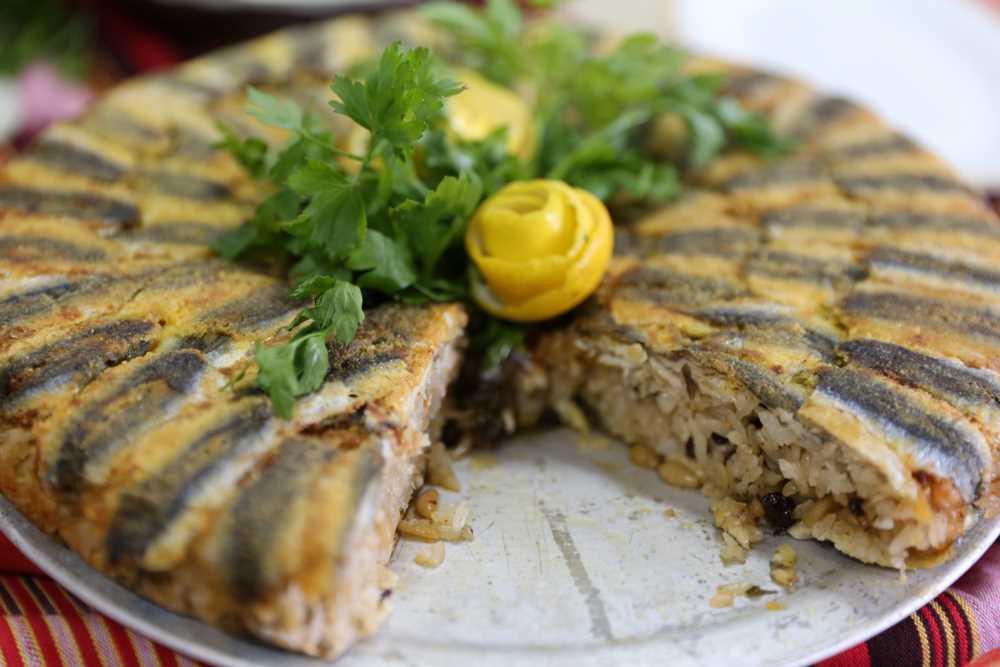
Hamsi böreği is a traditional dish from the Black Sea Region, particularly prepared in Giresun, Tirebolu, Trabzon, Rize and Sakarya, combining anchovies and rice. It is also known as hamsili pilav. Despite regional variations, it holds a traditional place in Black Sea cuisine due to its core ingredients and preparation method. This dish, consumed both on special occasions and daily meals, is one of the region’s distinctive flavors made from seafood and cereal products.

Hamsi Böreği (Trabzon Governorate)
Half of the olive oil is heated in a pot over medium heat. The onions are added and sautéed for 5 to 6 minutes until they turn pink. The drained rice and pine nuts are then added and stirred continuously for another 5 to 6 minutes. Salt, sultana raisins and butter (or Trabzon butter) are added, followed by water. The pot is covered and cooked first on high heat, then on medium heat for approximately 15 minutes. After cooking, the rice is left to steam. Parsley or dill may be added optionally.
The remaining half cup of olive oil is heated in a pan. The anchovies, previously salted and in some recipes coated with cornmeal, are fried for 3 to 4 minutes on each side until they turn a reddish color like pomegranate seeds. Excess oil is drained on paper towels.
Half of the fried anchovies are placed at the bottom of the pot with their backs facing down. The rice filling is spread evenly over them, and the remaining anchovies are arranged on top. The frying oil is poured over the layer. The pot is covered and gently steamed over low heat for 10 to 15 minutes.
Hamsili pilav or hamsi böreği can be prepared either in an oven or on the stovetop. If baked, the anchovies are arranged in a greased tray with their backs facing down, the rice is spread over them, the remaining anchovies are placed on top, and butter or liquid oil is drizzled over the surface. It is baked at 180°C for approximately 30 minutes. If cooked on the stovetop, the dish is steamed in the pot. After steaming, it is stirred a few times over medium heat to reheat before serving.
Hamsi böreği is a traditional dish of Black Sea cuisine that combines seafood and cereal products. Due to the abundance of anchovies and the region’s climatic conditions, it serves as one of the primary sources of protein. It is consumed both on special occasions and as part of everyday meals.
Culture Portal. "Hamsili Pilav - Trabzon." Culture Portal. Accessed May 26, 2025.
Giresun İl Kültür ve Turizm Müdürlüğü. "Hamsi Böreği - Giresun." *Kültür Portalı.* Accessed May 26, 2025.
T.C. Giresun Valiliği. "Yöresel Lezzetler." T.C. Giresun Valiliği Resmi Web Sitesi. Accessed May 26, 2025. http://www.giresun.gov.tr/yoresel-lezzetler
T.C. Ministry of Culture and Tourism. "Hamsili Pilav." *Rize İl Directorate of Culture and Tourism Official Website.* Accessed May 26, 2025.
T.C. Ministry of Culture and Tourism. "Hamsili Pilav." *Sakarya İl Directorate of Culture and Tourism Website.* Accessed May 26, 2025.
T.C. Trabzon Valiliği. "Yöresel Yemeklerimiz." T.C. Trabzon Valiliği Resmi Web Sitesi. Accessed May 26, 2025.
T.C.Tirebolu Kaymakamlığı Governorship. "Tirebolu Cuisine." *T.C. Tirebolu District Governorship Official Website.* http://tirebolu.gov.tr/tirebolu-mutfagi Accessed May 26, 2025.

Henüz Tartışma Girilmemiştir
"Hamsi Böreği (Hamsili Pilav)" maddesi için tartışma başlatın
Ingredients
Preparation
Preparing the Rice Filling
Preparing the Anchovies
Layering the Dish
Cooking and Serving
Regional Variations
Place in Culinary Culture