
+1 Daha

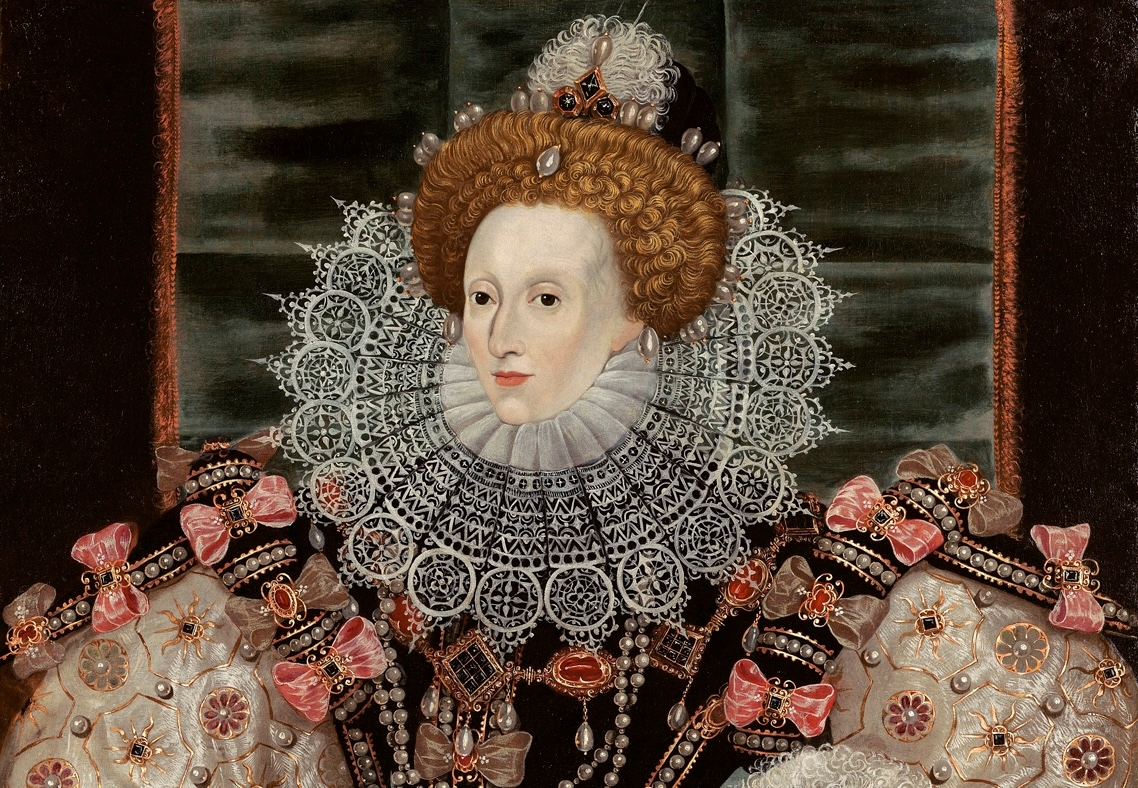
Elizabeth I was born on 7 September 1533 at Greenwich Palace to Henry VIII and Anne Boleyn. After her mother’s execution in 1536, her legitimacy became disputed and she spent her childhood in a setting removed from court. Nevertheless, she received a comprehensive education and learned multiple languages.
Following her father’s final marriage, she was readmitted to court and included in the line of succession. During the reigns of Edward VI and then Mary I, she faced political suspicion and pressure; in 1554 she was briefly imprisoned in the Tower of London. Upon Mary I’s death on 17 November 1558, she ascended the throne and was crowned at Westminster Abbey in 1559.【1】

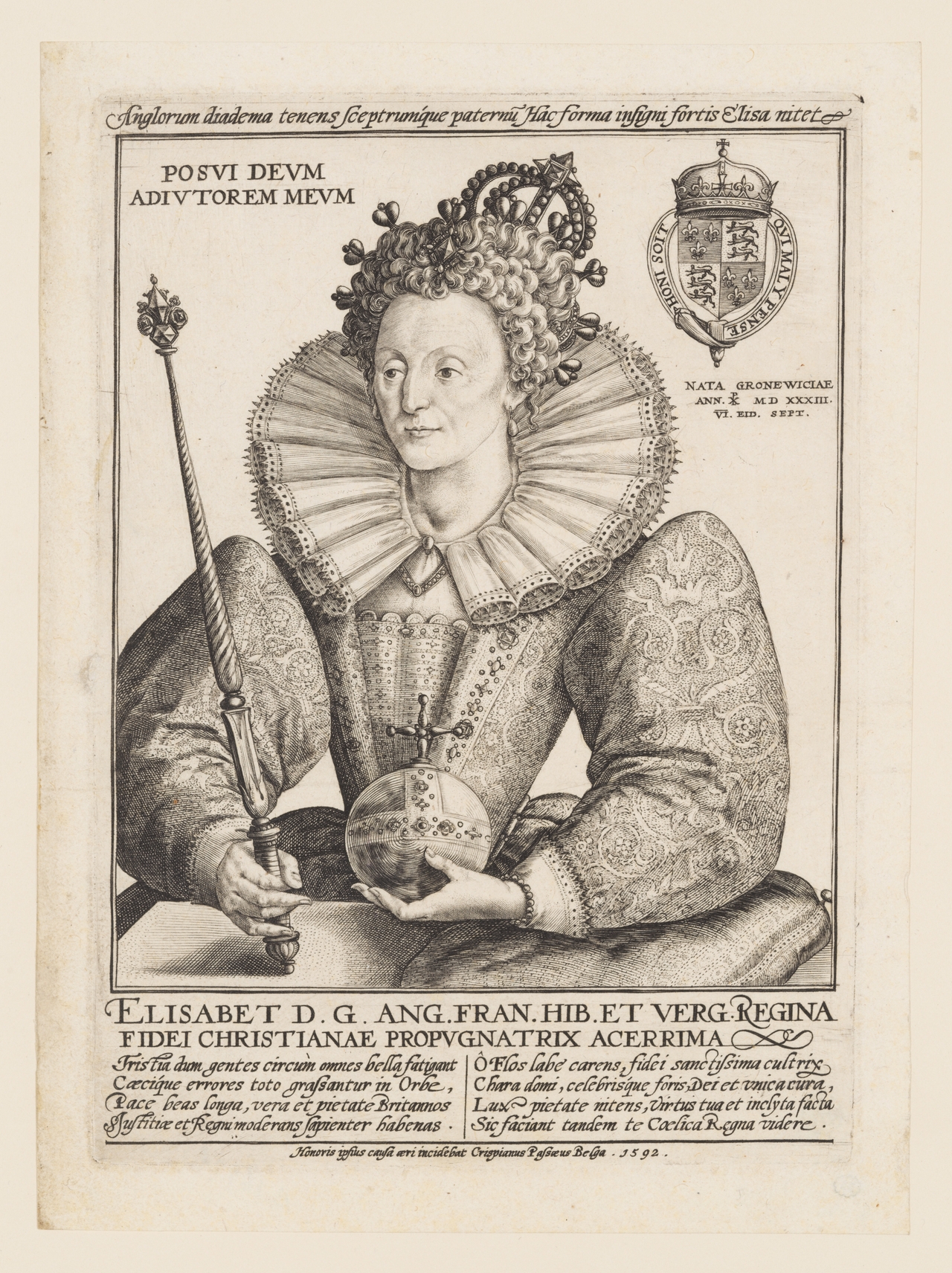
Elizabeth I (flickr)
Elizabeth I was born on 7 September 1533 at Greenwich Palace as the daughter of Henry VIII and Anne Boleyn. Her birth was not celebrated to the extent expected by her father and the court, who had hoped for a male heir; the announcement of her birth was last-minute altered from “prince” to “princess.”【2】In 1536, her mother’s execution on charges of treason directly affected Elizabeth’s status. She was declared illegitimate, lost the title of princess, and was removed from court to live in a more restricted environment at Hatfield House.
Following the birth of her half-brother Edward in 1537, she returned to court life and performed ceremonial duties at his baptism at Hampton Court Palace. After Henry VIII’s marriage to Katherine Parr in 1543, relations between the king and his daughters were restructured, and Elizabeth was restored to the line of succession.
During the 1540s, Katherine Parr’s influence was decisive in Elizabeth’s education. Under Parr’s guidance during her time at court, Elizabeth received a humanist education that included the study of classical texts. She learned French, Italian, Spanish, Latin, and Flemish. Despite her illegitimacy, Henry VIII ensured that her education continued.
Parr not only encouraged Elizabeth’s studies but also introduced her to religious reformist ideas. During this period, Elizabeth became more engaged with classical texts and developed her skills in rhetoric. She also translated Katherine Parr’s work Prayers and Meditations into Latin, Italian, and French and presented it to her father.【3】This education enabled Elizabeth to emerge as a prominent figure at court in later years and contributed significantly to her broad knowledge of language, religion, and thought.
While at Hampton Court, Katherine Parr’s role as regent during the king’s absences provided Elizabeth with an opportunity to observe court governance. After Henry VIII’s death in 1547, Elizabeth lived under Parr’s protection at Sudeley Castle. She became part of the new court circle after Parr married Thomas Seymour. However, Seymour’s conduct toward Elizabeth attracted attention, and she was removed from this environment in 1548. Later that year, following Parr’s death in childbirth, Seymour’s activities became a political issue; he was arrested in 1549 and executed. During this period, Elizabeth’s family relationships and court environment were shaped by both dynastic ties and political developments.
In 1553, following the death of Edward VI, Mary ascended the throne. Initially, the two sisters entered London together to celebrate Mary’s coronation; however, this unity quickly gave way to mistrust. Mary’s plan to marry Spain’s King Philip II and her efforts to restore Catholicism created unrest within the court and among the public. During this period, Elizabeth became one of the focal points of opposition, both religious and political.
Throughout Mary’s reign, Elizabeth was kept under surveillance in various palaces. In 1554, she was implicated in the Wyatt Rebellion led by Thomas Wyatt. As a result, Elizabeth was arrested on 17 March 1554 and imprisoned in the Tower of London. During her confinement, she wrote to her sister pleading that the accusations against her not be taken seriously. Although her conditions were relatively comfortable, her imprisonment carried special significance because her mother had also spent her final days in the same place.【4】
After Wyatt’s execution, investigations into the rebellion yielded no conclusive evidence linking Elizabeth directly to the plot. She was subsequently released, but remained under suspicion throughout Mary’s reign.
Elizabeth learned of Mary I’s death on 17 November 1558 while at Hatfield and became queen on the same day. At the time of her accession, the country was suffering from religious divisions, foreign policy challenges, military failures, economic hardship, and outbreaks of disease.
The ceremonies following her accession emphasized her legitimacy and position within the dynasty. On 14 January 1559, a coronation procession through London carried both ceremonial and public significance. Elizabeth rode on a throne carried by nobles and courtiers, her head covered by a canopy and dressed in ceremonial attire.
Along the procession route, Elizabeth was greeted by staged scenes and symbolic displays. These included representations of the Tudor lineage: Henry VII, Elizabeth of York, Henry VIII, and Anne Boleyn, alongside Elizabeth herself, arranged in a hierarchical order. Other scenes depicted the virtues expected of a monarch and their opposites, rendered symbolically.【5】
Other displays in the city included religious messages. In some scenes, Elizabeth was presented with sacred texts; others highlighted the relationship between the monarch and various segments of society. These arrangements conveyed both the public’s expectations of the new ruler and symbolic narratives about governance. The procession ended upon arrival at Westminster Hall, and on the following day, 15 January 1559, Elizabeth’s reign was formally confirmed by her coronation at Westminster Abbey.【6】
Throughout Elizabeth’s reign, governance operated through a structure that shared authority between central administration and local institutions. Approximately 600 officials managed central state affairs, while a similar number oversaw royal lands, forming the financial foundation of government. At the local level, order and administrative functions were maintained by sheriffs and unpaid justices of the peace.【7】

Half Pound, Elizabeth I (The Cleveland Museum of Art)
Elizabeth adopted a consultative approach to governance, appointing various officials to key state positions, including secretaries responsible for state affairs and officers managing intelligence operations. This administrative cadre played a decisive role in implementing central decisions and guiding the political process. Parliament relations were conducted through periodic sessions. Elizabeth reserved the right to veto legislation but generally avoided direct confrontation with Parliament. During her reign, the House of Commons convened only a limited number of times, with sessions after 1588 attracting particular attention.【8】
The governance model was also linked to religious policy. During this period, the structure of the Church of England was redefined, and religious practices were formalized through legislation adopted in 1563. These measures established a framework aiming to balance Catholicism and Protestantism. Elizabeth’s administration faced financial strain due to wars and other expenditures. Conflicts with Spain and other military campaigns incurred significant costs, while royal revenues proved insufficient to cover them. This imbalance led to increasingly visible financial difficulties in the later years of her reign.
Throughout Elizabeth’s reign, the question of marriage remained a subject of domestic and foreign political debate. In early 1559, Parliament addressed the issue, emphasizing the need for an heir to secure the dynasty’s continuity. Marriage was viewed not merely as a personal choice but as a political instrument. A union with a foreign monarch could shift England’s foreign policy orientation, while a marriage to a domestic candidate risked intensifying court rivalries. Consequently, Elizabeth continued to use the prospect of marriage as a diplomatic tool without committing to any definitive outcome.
In the 1560s, Parliament threatened to withhold financial support unless Elizabeth resolved the marriage issue. In response, Elizabeth objected to public discussion of her private life. In the 1570s, a potential marriage to a member of the French royal family was considered, but it failed to gain broad support. Over time, the consensus grew that Elizabeth would not marry, and she remained unmarried throughout her reign.
Robert Dudley was someone Elizabeth had known since childhood and was imprisoned with her in the Tower of London in 1554. After Elizabeth’s accession, Dudley rose to prominence at court, serving as Master of the Horse and becoming a close figure within the court circle.【9】
Dudley’s closeness to Elizabeth attracted attention at court. However, his marriage complicated the relationship. In 1560, his wife Amy Robsart died after falling down a staircase, sparking various allegations about the circumstances. This event led to differing interpretations of Dudley and Elizabeth’s relationship in public opinion.
Although Elizabeth’s marriage to Dudley was considered after this incident, the controversy weakened the possibility. Nevertheless, Dudley retained his position at court: he was appointed to the Privy Council in 1562 and granted the title of Earl of Leicester in 1564.【10】
Although the relationship with Dudley never resulted in marriage, it endured as a close bond within the court. His death in 1588 was recorded as the loss of one of Elizabeth’s most significant figures.
Elizabeth’s refusal to marry and lack of an heir brought alternative candidates into focus for the succession. In this context, Mary, Queen of Scots, emerged as a leading contender. Mary was related to the Tudor dynasty and was a Catholic monarch.
In 1568, following political turmoil in Scotland, Mary fled to England. Her involvement in the murder of her second husband and her subsequent marriage to his alleged accomplice had weakened her position in Scotland and led to her deposition. Upon arriving in England, Mary came under Elizabeth’s custody. Mary’s presence provided a Catholic alternative to Elizabeth, particularly among Catholic circles. Pro-Mary factions emerged in northern England, and in 1569 an uprising against Elizabeth was launched. Although suppressed, Mary remained linked to subsequent plots and schemes.【11】
The Babington Plot of 1586 directly affected Mary’s position in England. Evidence emerged that Mary had endorsed an assassination attempt against Elizabeth. Following these developments, Mary was tried, found guilty of treason, and executed in 1587. Her detention in England generated various political and diplomatic consequences; her execution was a significant event with repercussions both domestically and internationally.【12】
During Elizabeth’s reign, religious structure was treated as a key element of state governance. The Church of England was reorganized, and its doctrines were codified through legislation adopted in 1563. These measures established a framework designed to balance Catholicism and Protestantism. While Elizabeth emphasized that individuals’ inner beliefs should not be interfered with, she insisted on uniformity in public practice. This approach aimed to ensure religious observances followed a regulated order within society.【13】
Religious matters were also intertwined with political developments during her reign. A papal bull declaring Elizabeth’s illegitimacy and releasing her subjects from their allegiance heightened religious and political tensions. This led to the emergence of plots against Elizabeth and the imposition of stricter laws against Catholics. The religious policies of this period were shaped to maintain internal order and political stability.【14】
Throughout Elizabeth’s reign, the country faced both internal unrest and external threats. Religious and political divisions triggered rebellions in certain regions. The uprising in northern England between 1569 and 1570 represented a significant challenge to central authority.
At the same time, external threats persisted. European powers such as Spain and France emerged as potential influences on England. Spain, in particular, posed a major threat due to its naval strength and its aim to restore Catholicism.
In 1588, Spain launched its most significant attempt against England: a large fleet of approximately 130 ships intended to invade the country and reestablish Catholicism. However, this effort failed due to the intervention of the English navy and adverse weather conditions.【15】
Internal and external threats shaped political decision-making throughout Elizabeth’s reign, with national security being assessed in light of these developments.
During Elizabeth’s reign, cultural production and exploration activities increased significantly. Theater, literature, and music experienced notable developments. Theater became widespread, with the court actively participating in these activities. During this period, William Shakespeare and other writers produced major works. In music, composers were active around the court and Chapel Royal.【16】
Architectural developments also occurred, with the construction of numerous country houses and large residences. In painting, the miniature portrait tradition gained prominence. Geographic exploration and maritime activities accelerated during this period. Mariners such as Francis Drake, Walter Raleigh, and Humphrey Gilbert organized expeditions to the American continent, linked to expanding trade and overseas ventures.【17】
By the end of the reign, the founding of the East India Company in 1599 demonstrated that commercial activities had acquired institutional structure. These developments illustrate the breadth of cultural and economic activity during Elizabeth’s era.【18】
In the later years of Elizabeth’s reign, economic conditions presented various challenges. Particularly in the 1590s, high prices and economic stagnation in rural areas attracted attention. This created an economic environment affecting different segments of society.
The state’s financial structure came under pressure due to ongoing wars and military campaigns. Conflicts with Spain after 1588 and other expeditions incurred substantial expenditures. It has been estimated that the total cost of these wars exceeded five million pounds, while royal revenues failed to reach this level.【19】
Although Elizabeth attempted to control state expenditures, she left behind significant debt at the end of her reign. Despite economic difficulties, the frequency of parliamentary sessions did not increase markedly; only a limited number of sessions were held throughout her reign. The economic situation during this period was shaped by the imbalance between war expenditures and revenues, exerting a decisive influence on the financial structure.【20】
In the final years of Elizabeth’s reign, significant changes occurred within the court. The successive deaths of her long-serving close advisors affected the balance of power. The deaths of Robert Dudley in 1588, Francis Walsingham in 1590, and William Cecil in 1598 created vacancies in the administrative elite. In their wake, figures such as Cecil’s son Robert, Walter Raleigh, and Robert Devereux, Earl of Essex, became more prominent at court. During this period, struggles for influence and various accusations emerged.
Military campaigns during this time failed to achieve desired results. Expeditions to Spain, France, and Ireland ended in failure, increasing pressure on the government. Economic conditions also worsened: high taxes, poor harvests, unemployment, and rising prices contributed to growing social discontent.
Elizabeth’s relationship with Parliament continued into the final phase of her reign. In 1601, she delivered a speech known as the “Golden Speech,” in which she addressed her role as ruler and her relationship with her subjects.【21】Elizabeth died on 24 March 1603 at Richmond Palace from an illness associated with her throat, likely quinsy.【22】Her body was kept at court for a time before being moved to Whitehall and then transported to Westminster Abbey. The funeral was attended by a large gathering, and Elizabeth was initially buried in the area containing the tomb of her grandfather, Henry VII. Later, under the orders of her successor James I, she was reinterred beneath a monument erected in her honor, placed alongside her half-sister Mary.【23】
Elizabeth’s lifelong refusal to marry and her lack of an heir made the issue of dynastic continuity especially prominent in the final years of her reign. Although no formal arrangement had been made for the succession, among those with ties to the Tudor dynasty, James VI of Scotland emerged as the leading candidate.
Upon Elizabeth’s death on 24 March 1603, the throne passed without interruption to James VI, who became James I of England. This development united the two separate kingdoms under a single monarch.【24】
This peaceful transfer of the throne represented a crucial step in ensuring dynastic continuity. Simultaneously, it redefined the relationship between England and Scotland, as both kingdoms now came under the rule of a single monarch.
[1]
Westminster Abbey, ''Elizabeth I,'' westminster-abbey.org, Access date: 7 April 2026, https://www.westminster-abbey.org/abbey-commemorations/royals/elizabeth-i
[2]
Historic Royal Palaces, ''Elizabeth I, the last Tudor,'' hrp.org.uk, Access date: 7 April 2026, https://www.hrp.org.uk/hampton-court-palace/history-and-stories/elizabeth-i/
[3]
Historic Royal Palaces, ''Elizabeth I, the last Tudor,'' hrp.org.uk, Access date: 7 April 2026, https://www.hrp.org.uk/hampton-court-palace/history-and-stories/elizabeth-i/
[4]
Historic Royal Palaces, ''Elizabeth I, the last Tudor,'' hrp.org.uk, Access date: 7 April 2026, https://www.hrp.org.uk/hampton-court-palace/history-and-stories/elizabeth-i/
[5]
Charles Farris, ''Elizabeth I’s Coronation Procession From the Tower of London,'' Historic Royal Palaces, Access date: 7 April 2026, https://www.hrp.org.uk/blog/elizabeth-i-s-coronation-procession-from-the-tower-of-london/
[6]
Charles Farris, ''Elizabeth I’s Coronation Procession From the Tower of London,'' Historic Royal Palaces, Access date: 7 April 2026, https://www.hrp.org.uk/blog/elizabeth-i-s-coronation-procession-from-the-tower-of-london/
[7]
The Royal Family, ''Elizabeth I (r.1558-1603),'' royal.uk, Access date: 7 April 2026, https://www.royal.uk/elizabeth-i
[8]
The Royal Family, ''Elizabeth I (r.1558-1603),'' royal.uk, Access date: 7 April 2026, https://www.royal.uk/elizabeth-i
[9]
Historic Royal Palaces, ''Elizabeth I, the last Tudor,'' hrp.org.uk, Access date: 7 April 2026, https://www.hrp.org.uk/hampton-court-palace/history-and-stories/elizabeth-i/
[10]
Historic Royal Palaces, ''Elizabeth I, the last Tudor,'' hrp.org.uk, Access date: 7 April 2026, https://www.hrp.org.uk/hampton-court-palace/history-and-stories/elizabeth-i/
[11]
Historic Royal Palaces, ''Elizabeth I, the last Tudor,'' hrp.org.uk, Access date: 7 April 2026, https://www.hrp.org.uk/hampton-court-palace/history-and-stories/elizabeth-i/
[12]
Historic Royal Palaces, ''Elizabeth I, the last Tudor,'' hrp.org.uk, Access date: 7 April 2026, https://www.hrp.org.uk/hampton-court-palace/history-and-stories/elizabeth-i/
[13]
The Royal Family, ''Elizabeth I (r.1558-1603),'' royal.uk, Access date: 7 April 2026, https://www.royal.uk/elizabeth-i
[14]
The Royal Family, ''Elizabeth I (r.1558-1603),'' royal.uk, Access date: 7 April 2026, https://www.royal.uk/elizabeth-i
[15]
The Royal Family, ''Elizabeth I (r.1558-1603),'' royal.uk, Access date: 7 April 2026, https://www.royal.uk/elizabeth-i
[16]
Westminster Abbey, ''Elizabeth I,'' westminster-abbey.org, Access date: 7 April 2026, https://www.westminster-abbey.org/abbey-commemorations/royals/elizabeth-i
[17]
Westminster Abbey, ''Elizabeth I,'' westminster-abbey.org, Access date: 7 April 2026, https://www.westminster-abbey.org/abbey-commemorations/royals/elizabeth-i
[18]
Westminster Abbey, ''Elizabeth I,'' westminster-abbey.org, Access date: 7 April 2026, https://www.westminster-abbey.org/abbey-commemorations/royals/elizabeth-i
[19]
The Royal Family, ''Elizabeth I (r.1558-1603),'' royal.uk, Access date: 7 April 2026, https://www.royal.uk/elizabeth-i
[20]
The Royal Family, ''Elizabeth I (r.1558-1603),'' royal.uk, Access date: 7 April 2026, https://www.royal.uk/elizabeth-i
[21]
The Royal Family, ''Elizabeth I (r.1558-1603),'' royal.uk, Access date: 7 April 2026, https://www.royal.uk/elizabeth-i
[22]
Historic Royal Palaces, ''Elizabeth I, the last Tudor,'' hrp.org.uk, Access date: 7 April 2026, https://www.hrp.org.uk/hampton-court-palace/history-and-stories/elizabeth-i/
[23]
Westminster Abbey, ''Elizabeth I,'' westminster-abbey.org, Access date: 7 April 2026, https://www.westminster-abbey.org/abbey-commemorations/royals/elizabeth-i
[24]
Historic Royal Palaces, ''Elizabeth I, the last Tudor,'' hrp.org.uk, Access date: 7 April 2026, https://www.hrp.org.uk/hampton-court-palace/history-and-stories/elizabeth-i/

Henüz Tartışma Girilmemiştir
"I. Elizabeth" maddesi için tartışma başlatın
Early Years and the Court Environment
The Reign of Mary I and Political Developments
Accession and the Beginning of the Reign
Governance and Political Structure
Marriage Policy
Relationship with Robert Dudley
The Mary Stuart Affair
Religious Settlement and Church Policy
Internal Rebellions and External Threats
Cultural Activities and Geographic Exploration
Economic Condition and Financial Structure
Final Years and Death
Succession and Transfer of the Throne