
+1 Daha

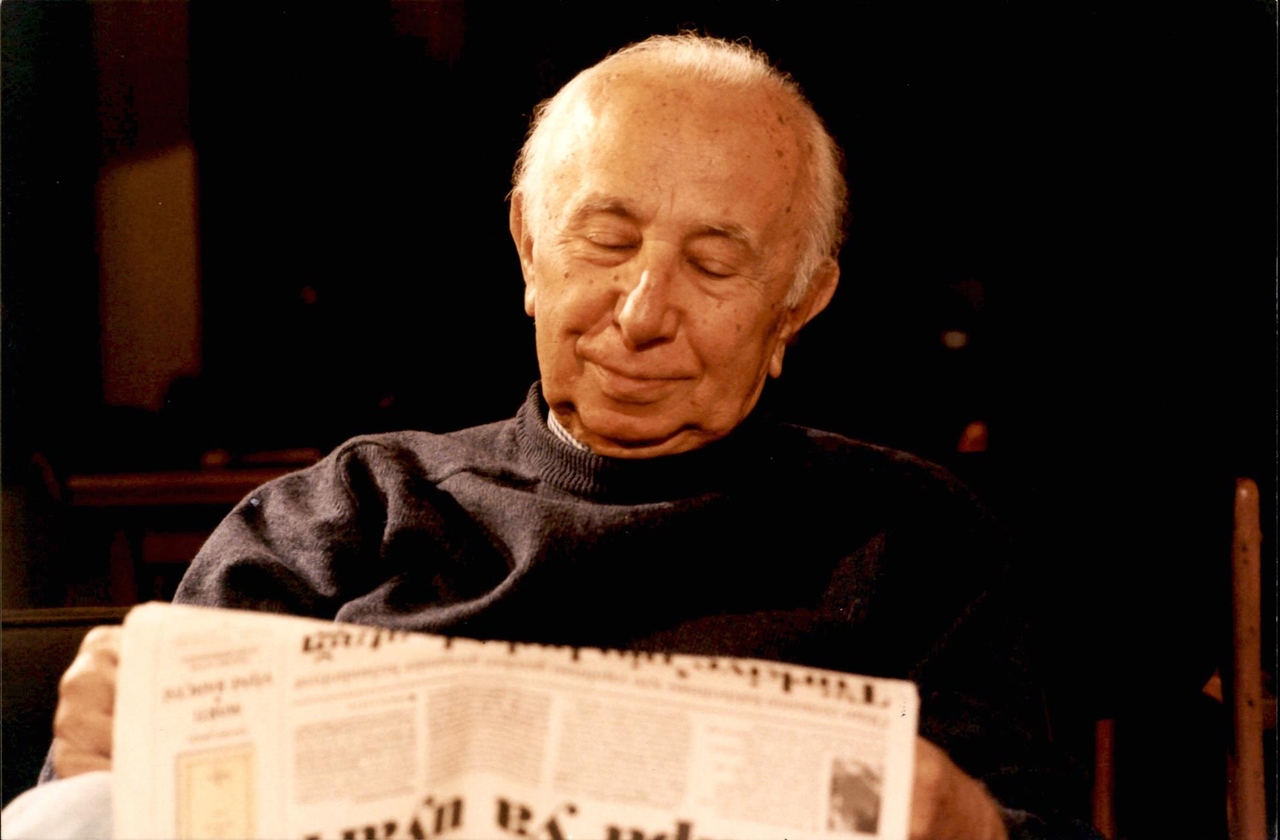
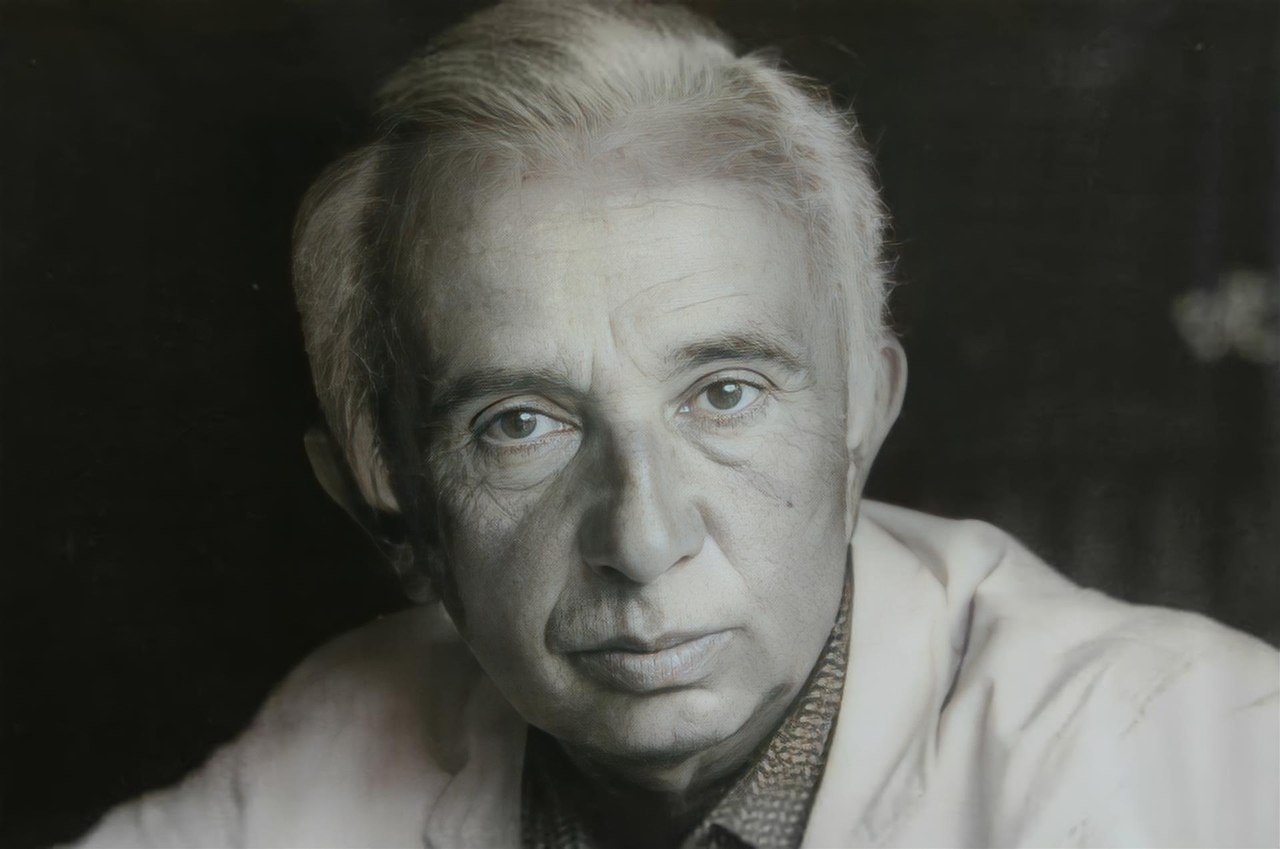
Necati Cumalı was born on 13 January 1921 in the town of Florina, located in the Western Macedonia region of present-day Greece. His real name was Ahmet Necati Acar. Cumalı’s family, originally Macedonian migrants from Florina, settled in the Urla district of İzmir in 1924 as part of the population exchange between Türkiye and Greece following the Treaty of Lausanne. This migration led Cumalı to spend his childhood and youth amid economic and social hardship. He learned Turkish for the first time with a Rumelian accent.
He completed his primary education at Urla Şehit Kemal Primary School, and his secondary education at İzmir Male Teachers’ School and İzmir Atatürk High School. He began his higher education at Istanbul University Faculty of Law but transferred his enrollment to Ankara Faculty of Law due to psychological distress, graduating in 1941. After graduation, he worked in various professions including civil service, reserve officer duties, and law. Between 1950 and 1957 he practiced law in Urla and İzmir; the human observations he made during this period later became the subject of his literary works.
Cumalı embraced writing as a way of life, stating that he could not live without writing. He lived for a time in different places such as Paris, Israel, and Istanbul, and from 1966 onward he earned his livelihood solely through literature. He died on 10 January 2001. The house where he spent his childhood is now open to the public as the “Necati Cumalı Memorial and Culture House” in Urla.
Necati Cumalı viewed writing as a path to salvation and happiness. For him, authorship was more than a profession—it was a way of life, and he declared that he could not live without writing plays, stories, and novels. This conviction led him to abandon regular professions such as law and devote himself entirely to literature.
At the core of his artistic vision was the effort to transcend the local and reach the universal. He drew the subjects of his works primarily from the lands where he lived, especially the areas around İzmir and Urla, as well as from the people around him and the events he witnessed. These local observations enabled his works to intertwine social issues with individual sensitivities. Cumalı produced works within a social realist tradition. While addressing social themes such as injustice, bureaucratic failures, traditional pressures, economic hardship, and sexual problems, he also explored individual emotions like love, loneliness, jealousy, and despair.
Female characters hold a special place in his works. He emphasized that women were individuals oppressed, exploited, and held under pressure by society. When addressing women’s issues, he reflected their emotional and social dilemmas. Cumalı adopted simplicity and clarity in language as a principle. He argued that “there is no depth in obscurity” and sought to establish a direct connection with the reader. This approach is evident throughout his poetry, stories, novels, and plays.
Cumalı regarded theatre as a “noble art” and believed that it made visible the emotions that elevate and dignify humanity. His interest in theatre began at a very young age; as a child, he converted the stable of his family home in Urla into a Karagöz stage and performed plays. During his secondary school years, he dreamed of becoming a playwright and wished to show his plays to Muhsin Ertuğrul. Cumalı’s literary production began with poetry and later expanded to include stories, novels, and theatre. For him, poetry was both a form of inner expression and a gateway to other genres. The sources of inspiration for his poetry were nature, humanity, and life. In his writing, he merged individual and social themes in a simple and heartfelt style.
Cumalı owed much of his interest in literature to the reading habits of his grandfather, İbrahim Efendi. He first encountered poetry at İzmir Male Teachers’ School. During his high school years, he was influenced by the poems of Necip Fazıl and wrote his first poems. In 1939, while a student at Ankara Faculty of Law, he began identifying himself as a “poet.” That same year, his first poem, “Ümitlerin Gemisi”, was published in the Urla Halkevi magazine. During this period, he published his writings under pseudonyms such as A. N. Acar, N. C. Acar, and Ahmet Necati.
He made his first significant literary appearance in 1940 with the poem “Netice”, published in the Varlık magazine. This poem attracted attention for its original poetic language and sensitivity. Cumalı drew inspiration from both Turkish and foreign literature: in Turkish literature, he maintained close ties with figures such as Sabahattin Kudret Aksal, Salah Birsel, Baki Süha Edipoğlu, and Şahap Sıtkı. He became acquainted with Orhan Veli but was not influenced by the poetry of Strange. In world literature, he read with interest authors such as Gorki, Stendhal, Balzac, and Dostoyevski. He regarded Sait Faik as an important model in the field of short stories.
Cumalı believed that art was a means of engaging with society. He frequently drew upon his own life experiences, transforming what he saw, heard, and witnessed into literary forms. He described himself as a provincial writer, not as a limitation but as a source of authenticity and depth of observation in his literary journey. He viewed theatre as an art that elevates and dignifies humanity. His passion for theatre, which began in childhood with Karagöz plays, evolved into professional playwriting. In his plays, humor, critique of tradition, women’s issues, and local dialect are prominent. For him, poetry remained a lifelong necessity. He saw poetry as the “first spark” that enabled him to write in other genres. Poetry was, for him, an inner voice and a space for self-expression.
Necati Cumalı produced works in many genres—including poetry, short stories, novels, plays, and essays—and became a versatile and prolific literary figure. In his works, he addressed both individual emotions and social realities in a simple and accessible language.
In Cumalı’s poetry, his inner world, nature, and humanity are central. Themes such as love, longing, loneliness, melancholy of the past, and hope emerge prominently. His poetry collections include:
Cumalı’s novels focus especially on the Aegean region, examining social problems and individual psychology.
His short stories mostly feature Urla and its surroundings. Themes include love, poverty, jealousy, unemployment, sexual oppression, and injustice.
Cumalı brought the problems of Anatolian people to the stage. He made theatre local by drawing inspiration from folk culture and his experiences as a lawyer.
Necati Cumalı’s literary works exhibit a unified structure directly connected to his life story and powers of observation. There is a clear harmony among the themes he explores, the characters he creates, and the settings he chooses.
Cumalı frequently selected İzmir and Urla as the settings for his works. These places served as the backdrop for both his childhood and youth and his professional life. Urla is generally portrayed in his works as a space of confinement, poverty, and social pressure. İzmir, by contrast, is associated with modernity, freedom, and love. These two opposing settings symbolize the protagonist’s inner conflict and the search for social transformation in his works.
Cumalı followed a social realist line, portraying the individual within the context of his or her social environment. Key themes include tradition, migration, water disputes, land issues, unemployment, poverty, sexual oppression, and bureaucratic decay. These themes are examined alongside the characters’ inner worlds, family relationships, and emotional breakdowns.
Tütün Üçlemesi portrays the pressures of rural economy through tobacco workers,
Susuz Yaz examines the nature of violence through water disputes,
and Mine depicts the loneliness of women facing tradition.
The characters in Cumalı’s works often feel lifelike. Rural characters are surrounded by poverty and tradition. Urban characters are more conscious but emotionally trapped. Female characters are mostly oppressed, burdened, and searching individuals. The characters’ decision-making processes are shaped by environmental pressures. This allows Cumalı to deeply explore the conflict between society and the individual.
There is an organic relationship among genres in Cumalı’s literary production. His poetic sensitivity is reflected in his prose and novels. His short stories gradually evolved into plays (Susuz Yaz, for example). The subjects of his plays were often directly inspired by folk songs or his own observations (Boş Beşik, Kaynana Ciğeri). This fluidity makes his literature holistic rather than one-dimensional.
The main themes that permeate Cumalı’s works are migration and homelessness, the position of women in society, love, jealousy and infidelity, social pressure and individual resistance, poverty and injustice, attachment to nature, and the relationship between place and person.
Necati Cumalı received numerous awards throughout his literary career, and his works attracted attention both nationally and internationally. He left behind a vast body of work spanning poetry, novels, short stories, and theatre. Through the bridge he built between art and society, he became a lasting figure in Turkish literature.
1957 Sait Faik Short Story Award – for the short story collection Değişik Gözle,
1969 Turkish Language Association Poetry Award – for the book Yağmurlu Deniz,
1977 Sait Faik Short Story Award – for the book Makedonya 1900,
1981 Ministry of Culture Theatre Award – for the play Dün Neredeydiniz?,
1984 Yeditepe Poetry Award – for the poetry collection Tufandan Önce,
1995 Orhan Kemal and Yunus Nadi Novel Awards – for the novel Viran Dağlar,
2000 Theatre Writers Association Honorary Award – for his contributions to Turkish theatre.
2001 Grand Poetry Award – an honorary award conferred posthumously.
Necati Cumalı died on 10 January 2001. He left behind not only his literary works but also the portrait of an artist devoted with passion to literature and theatre. Today, his childhood home in Urla is open to the public as the “Necati Cumalı Memorial and Culture House.” Various commemorative events are held annually on the anniversary of his death; his name continues to live on in the land where he lived and in the world of literature.
Necati Cumalı’s works form a multi-layered narrative woven between the pain of migration, the warmth of the Aegean, the rigidity of tradition, the delicacy of love, and the depth of the human soul. His literature is a struggle to become the voice of the Anatolian people.

Henüz Tartışma Girilmemiştir
"Necati Cumalı" maddesi için tartışma başlatın
Artistic Vision
Beginning of His Literary Career
Major Literary Works
Poetry
Novels
Short Stories
Plays
Themes, Characters, and Settings in His Works
Awards and Legacy
Major Awards and Books
Legacy and Memory