


+1 Daha

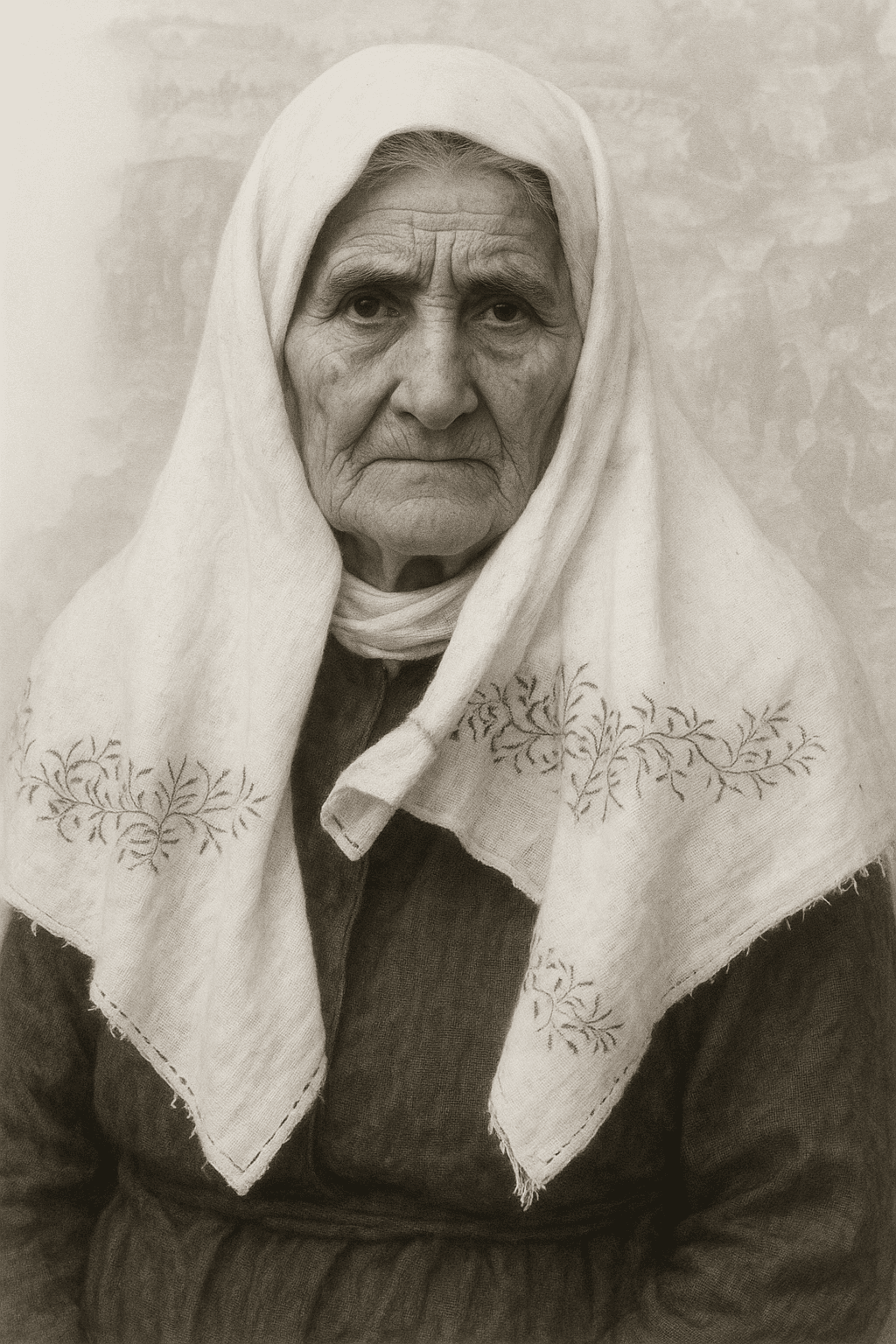
Nene Hatun
Birth | 1857 | ||||||||
|---|---|---|---|---|---|---|---|---|---|
Place of Birth | Ottoman Empire Pasinler (Erzurum) Çeperler Village | ||||||||
Death | 22 May 1955 | ||||||||
Place of Death | Republic of Türkiye Erzurum | ||||||||
Burial | Erzurum Aziziye Cemetery | ||||||||
Nationality | Republic of Türkiye (1923–1955) Ottoman (1857–1923) | ||||||||
Notable Event | Participation in the defense of Aziziye Tabyası during the 1877–1878 Russo-Turkish War | ||||||||
Title(s) | Mother of the Year (1955 – Turkish Women’s Union) Mother of the 3rd Army (1952) | ||||||||
Nene Hatun (1857–22 May 1955) was an Ottoman woman known for her resistance during the defense of the Aziziye Redoubt in Erzurum during the 1877–1878 Russo-Turkish War (93 War), and who gradually became one of the symbolic figures of popular opposition to occupation. Her life has been closely associated over time with the image of the “heroic Turkish woman” in social memory and the media.
Nene Hatun was born in 1857 in Çeperler village, within the Pasinler (Hasankale) district of the Erzurum Vilayet of the Ottoman Empire. Her father’s name was Hüseyin and her mother’s name was Zeliha. It is known that her only brother, Hasan, was killed in action during the defense of Aziziye. Although her real name is not definitively known, the title “Nene Hatun” has been used as an expression of the respect shown to her by the public. Having married at a young age, Nene Hatun lived a simple and traditional life in accordance with the social and economic conditions of the time. She moved to Erzurum with her husband Mehmet Efendi and resided in the Eminkurbu neighborhood. After the Surname Law of 1934, she adopted the surname “Kırkgöz.”
On the night of 7 November 1877, during the 93 War, the Aziziye Redoubt was captured by Russian forces. In response, the people of Erzurum were organized at dawn with the call to prayer and marched toward the redoubt. According to tradition, Nene Hatun left her three-month-old son at home and joined the resistance, taking up an axe and participating in the fighting.【1】 Despite being wounded in the chest, she continued to resist. After the event, especially with the advent of the Republic era, she became a historical figure.
After the war, Nene Hatun lived modestly and did not seek any official title for many years. She was reintroduced to public consciousness in 1937 through an interview conducted by İsmail Habib Sevük in the newspaper Cumhuriyet. In 1943, she appealed to the president of the Republic for economic assistance.
In 1952, she re-entered public discourse during the process of constructing the Aziziye Monument, prompted by the visit of NATO Commander General Ridgway and initiatives by Turkish officials. In the same year, the Turkish Armed Forces bestowed upon her the title “Mother of the Third Army.” In 1955, she was chosen as “Mother of the Year” by the Turkish Women’s Union.
Nene Hatun-1952 (TRT Archive).
Nene Hatun died of pneumonia on 22 May 1955 at the Erzurum Numune Hospital and was buried with an official ceremony at the Aziziye Martyrs’ Cemetery. Her grave is now located within the Nene Hatun Historical National Park and is regularly visited by the public.
Nene Hatun’s name has been preserved through its use for numerous schools, streets, parks, public institutions, and even Turkey’s first emergency response vessel, named “Nene Hatun.” Additionally, since the 1950s, numerous books, documentaries, and films have been produced about her life.
Nene Hatun’s historical identity was shaped for many years through popular narratives and public discourse. However, academic studies such as the 2019 master’s thesis titled “The Life of Nene Hatun and the Nene Hatun Bibliography” have re-evaluated her biography in light of documentary evidence.
According to these assessments, Nene Hatun’s role in the 93 War is significant not merely as an act of individual resistance but as a symbol of the woman’s place in the national defense within collective memory. She emerged as a prominent figure at various times depending on political developments; particularly during the early years of the Cold War, she was symbolically promoted within the framework of alliances with the West and granted a special status by the state.
Nene Hatun’s life and her role in the defense of Aziziye have been addressed in both contemporary testimonies and subsequent literary and visual cultural products. Since the early 20th century, she has appeared in various publications, literary works, and cinematic productions.
In 1911, Mehmet Emin Yurdakul, then governor of Erzurum, wrote articles in the local press about the defense of Aziziye and Nene Hatun. These writings played a significant role in shaping the local heroic narrative surrounding her.
In 1937, journalist İsmail Habib Sevük, then Istanbul correspondent for the newspaper Cumhuriyet, conducted interviews with Nene Hatun and other veterans of the 93 War during a visit to Erzurum. These interviews introduced her name to the national public.
In his 1956 work Moskova Hatıraları, General Ali Fuat Cebesoy mentioned the heroes of Aziziye and Nene Hatun’s struggle; this account was significant in establishing her place within the military memory of the era.
Nene Hatun’s life has also been portrayed in cinema. In the 1973 film Gazi Kadın, directed by Halit Refiğ and starring Türkan Şoray and Kadir İnanır, her life was dramatized. The film presented the defense of Aziziye through a fictionalized narrative.
Writer M. Talat Uzunyaylalı treated Nene Hatun’s life within a literary framework in his 2006 novel Efsane Kadın Nene Hatun. His work Nene Hatun (Biography), published by Atatürk University Press in Erzurum, provides a comprehensive biographical account of her life.
In 2010, another film titled Nene Hatun was released, portraying the heroine’s life and contributing to the cinematic representation of her story. The film was produced with historical consultation and helped reinforce her presence in the public memory of the Aziziye Defense.
Aktaş, Akın. "Sosyal Yardımlar Bağlamında 'Nene Hatun-Kara Fatma' Analizi." *Tarih ve Günce: Atatürk ve Türkiye Cumhuriyeti Tarihi Dergisi* 6, no. 1 (Winter 2020): 243–262. Accessed April 22, 2025. https://dergipark.org.tr/en/download/article-file/961993.
Aktaş, Akın. *Nene Hatun’un Hayatı ve Nene Hatun Bibliyografyası*. Master's thesis,Giresun Üniversitesi, Institute of Social Sciences, Department of History, 2019. Thesis Advisor: Dr. Öğr. Üyesi Oktay Karaman. Accessed April 22, 2025. https://tez.yok.gov.tr/UlusalTezMerkezi/tezDetay.jsp?id=WaNYuxSvOMrZddwpiSBqGA&no=RyZO7GVR9AVIhCWLZiy50g.
Alpgüvenç, Can. "Vefatının 54. Yıldönümünde Aziziye Kahramanı Nene Hatun." *Yüzakı Dergisi*, November 2015. Accessed April 22, 2025. https://web.archive.org/web/20151124145914/http://www.yuzaki.com/content/view/1531/10/.
Anadolu Ajansı (AA). "Türk Kadınının Kahramanlık Simgesi: Nene Hatun." *aa.com.tr*, June 4, 2019. Accessed April 22, 2025. https://www.aa.com.tr/tr/portre/turk-kadininin-kahramanlik-simgesi-nene-hatun/1484194.
Erzurum Valiliği. "22 Mayıs Nene Hatun’un Ölüm Yıl Dönümü Mesajı." *erzurum.gov.tr*. Accessed April 22, 2025. http://www.erzurum.gov.tr/22-mayis-nene-hatunun-olum-yil-donumu-mesaji.
T.C. Millî Eğitim Bakanlığı. "Nene Hatun Kimdir?" *bartinnenehatunkizihl.meb.k12.tr*. Accessed April 22, 2025. https://bartinnenehatunkizihl.meb.k12.tr/icerikler/nene-hatun-kimdir_11507508.html.
T.C. Ministry of National Education. "Nene Hatun Kimdir?" *korfeznenehatun.meb.k12.tr*. Accessed April 22, 2025. https://korfeznenehatun.meb.k12.tr/icerikler/nene-hatun-kimdir_15942249.html.
Uzuyaylalı, Talat. "Erzurum’un Yüzleri: Nene Hatun." katalog.tdk.gov.tr. Accessed April 22, 2025. http://katalog.tdk.gov.tr/details?id=85795&materialType=BK&query=Erzurum%27un+y%C3%BCzleri.
[1]
Nene Hatun'un çocuğunun o sırada 3 aylık olduğu genel bir halk anlatısı olsa da tarihi verilerle kesin olarak ispatlanmamıştır.

Nene Hatun
Birth | 1857 | ||||||||
|---|---|---|---|---|---|---|---|---|---|
Place of Birth | Ottoman Empire Pasinler (Erzurum) Çeperler Village | ||||||||
Death | 22 May 1955 | ||||||||
Place of Death | Republic of Türkiye Erzurum | ||||||||
Burial | Erzurum Aziziye Cemetery | ||||||||
Nationality | Republic of Türkiye (1923–1955) Ottoman (1857–1923) | ||||||||
Notable Event | Participation in the defense of Aziziye Tabyası during the 1877–1878 Russo-Turkish War | ||||||||
Title(s) | Mother of the Year (1955 – Turkish Women’s Union) Mother of the 3rd Army (1952) | ||||||||
Henüz Tartışma Girilmemiştir
"Nene Hatun" maddesi için tartışma başlatın
Life and Family
The 93 War and the Defense of Aziziye
Life After the War and Place in Social Memory
Death and Preservation of Her Memory
Historical Significance and Legacy
Works About Her