


This article was automatically translated from the original Turkish version.
+2 More
1927 Census
History | 28 October 1927 | ||||||||
|---|---|---|---|---|---|---|---|---|---|
Law No | 893 (2 June 1926) | ||||||||
Purpose(s) | To determine the quantity and quality of the population and to provide data for modernization and statist policies to support nation-state building | ||||||||
Background | Incomplete censuses in the Ottoman Empire, the demographic effects of wars, the Treaty of Lausanne and the population exchange, the Republic's modernization goals | ||||||||
Process | Establishment of the General Directorate of Statistics (1926), conducting trial censuses and building numbering, civil servant training, public awareness campaigns | ||||||||
Effects | Elevation of national morale, emphasis on ethnic homogeneity, foundation for a planned economy, international recognition | ||||||||
Population | A total of 13,648,270 people | ||||||||
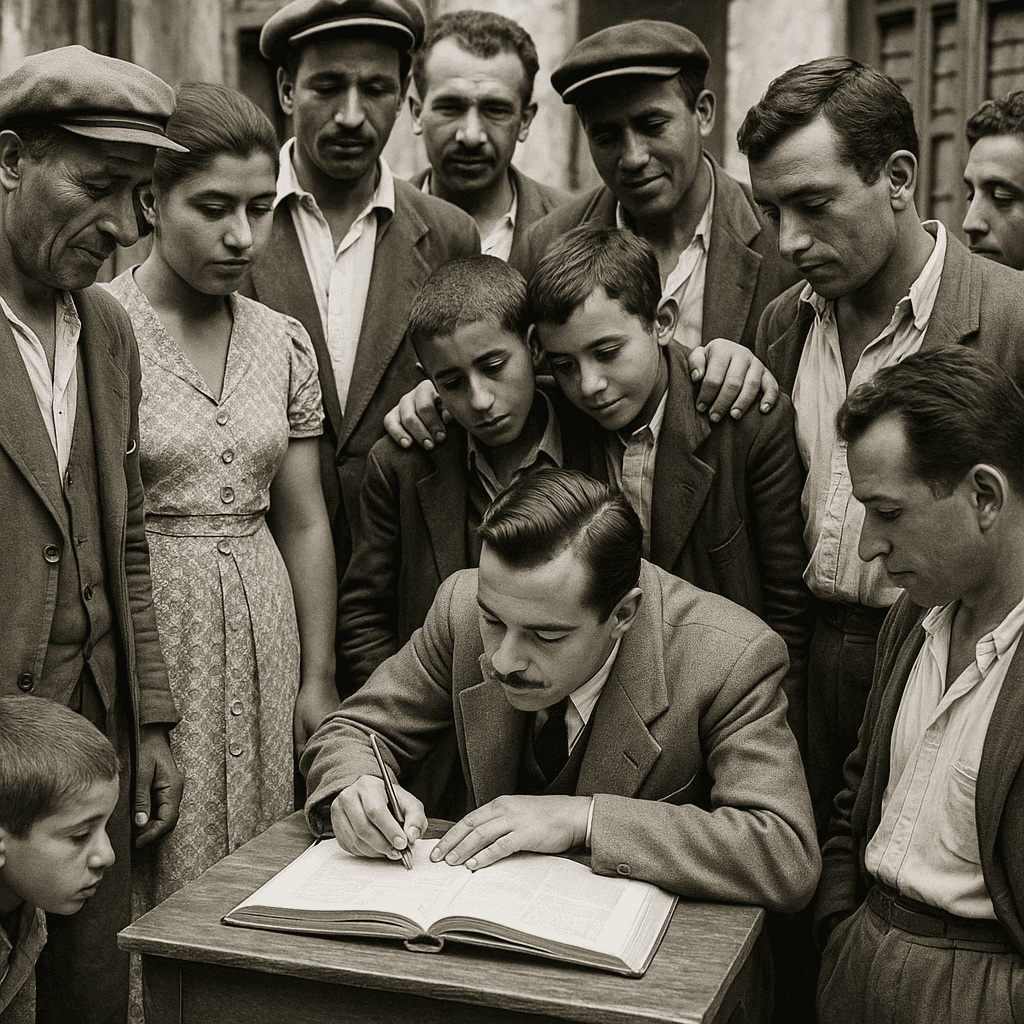
The 1927 Census is the first general population census conducted in the history of the Republic of Türkiye on 28 October 1927. During the Ottoman Empire period, no regular or comprehensive population census was carried out; existing counts were generally aimed at tax collection and military conscription and excluded women and certain segments of the population. With the establishment of the Republic, knowing the quantity and quality of the population became a critical need to assess human resources support modernization and strengthen the nation-state project. In this context the 1927 Census aimed both to fulfill the requirements of a modern state and to demonstrate national strength based on population size on the international stage.
The census was institutionalized through the establishment of the General Directorate of Statistics in 1926 and was conducted under the leadership of Belgian statistician Camille Jackquart in accordance with international standards. The total population identified as 13648270 exceeded expectations and boosted national morale and confidence. The homogeneity and size of the Turkish population were emphasized in alignment with the nation-state policies of the era.
Information on buildings and settlements was also recorded to reveal the effects of postwar population movements. The press played a significant role in informing the public about the preparation execution and results of the census presenting it as a “patriotic duty” and a sign of modernization. The census laid the groundwork for statist policies and planned economics as part of the Republic’s revolutionary transformations and established the foundation for policies aimed at population growth.
Population censuses in the Ottoman Empire were not conducted in a comprehensive and systematic manner as understood in modern terms. The first significant census was carried out during the reign of Sultan Abdülhamid II in 1831 for military recruitment and tax purposes but excluded women and certain groups. Similar censuses were conducted in 1844 1866 1885 and 1905 but lacked standards to cover the entire territory and population. The establishment of the Ministry of Interior Affairs in 1836 the Vilayet Nizamnamesi of 1870 and Article 8 of the 1876 Constitution provided a constitutional basis for population records and in 1884 the creation of the General Directorate of Population led to the first population cards being distributed. The 1905 general population register enabled the preparation of the first registers but did not meet modern standards. The 1914 Population Law and its regulations defined the duties of population administrations but these efforts were interrupted due to wars.
With the founding of the Republic of Türkiye in 1923 the uncertainty of population figures the demographic effects of wars and the Turkish-Greek population exchange under the Treaty of Lausanne in 1923 made an extensive census an urgent necessity. The exchange accelerated ethnic and religious homogenization and increased the need for the new regime to understand the population structure. The abolition of the Sultanate in 1922 the Caliphate in 1924 the Law on the Suppression of Dissent and the Independence Tribunals in 1925 silenced opposition and cleared the way for the revolutions. The year 1927 was one of consolidation marked by the delivery of the Nutuk and the Second Congress of the Republican People’s Party. In this context the 1927 population census was planned as part of modernization and nation-state building.
Preparations for the 1927 Census began with the establishment of the General Directorate of Statistics in 1926. The appointment of Belgian statistician Camille Jackquart a member of the International Statistical Institute as director strengthened the scientific and modern standards of the census. Law No. 893 dated 2 June 1926 ordered a general population census for 1927 and its second article granted the Ministry of Interior the authority to conduct trial censuses in 1926. The preparation process lasted one year during which officials from the General Directorate of Statistics undertook inspection trips to evaluate regional conditions including climate transportation and administrative infrastructure. These trips revealed the following problems:
To address these issues five trial censuses were conducted:
Trial censuses tested enumeration methods and required special arrangements particularly for nomadic populations. The enumeration of nomadic groups was entrusted to a commission headed by the governor and military commander in Diyarbakır which determined male and female counts based on representative declarations. During the preparation phase buildings were numbered census locations were designated staff were trained the public was informed and census forms were prepared. Census areas were divided into eight regions:
The 1927 population census began at 08:00 on Friday 28 October 1927 and ended with the evening cannon shot. A curfew was enforced during the census and the public was advised to meet their needs in advance. A total of 52276 officials participated in the census and were paid only travel expenses. Census enumerators were typically selected from the local population to minimize language and communication barriers. Census forms and questions were published in the press and the duties of enumerators were explained in detail. The public was encouraged to participate and it was stated that those excluded from the census would be penalized but it was emphasized that no penalties would be imposed on those previously unregistered.
The census attracted intense public interest especially in Ankara and Istanbul. Ankara’s growth as the capital and Istanbul’s transformation from a multicultural city were subjects of public curiosity. The newspaper Akşam organized a contest to estimate Istanbul’s population and Jackquart’s speeches in İzmir received wide coverage in the local press.
Writers such as Necmettin Sadak emphasized that the census would serve as an “examination” demonstrating the Turkish nation’s fitness for civil administration. The census day coincided with Republic Day creating a “double holiday” atmosphere. Newspapers reported the successful completion of the census and praised the dedication of the public and officials.
The census results were announced by Camille Jackquart to the Anatolia Agency on 4 November 1927 with the total population estimated at approximately 14 million. Final results were published in 1929 determining the total population at 13648270:
The fact that 51.91 percent of the population were women was attributed to male losses in the wars. This situation became the subject of jokes in some writings. The proportion of Turkish citizens was 96.77 percent while other nationalities accounted for 3.23 percent. Those whose mother tongue was Turkish numbered 11778810 persons (86.3 percent) while other languages totaled 1851678 persons (13.7 percent) (Kurdish: 1184446 persons). The census was evaluated under 14 headings:
The results exceeded expectations and strengthened national morale. Yunus Nadi described the population approaching 14 million as a “celebration and holiday” while Falih Rıfkı emphasized that the Turkish population had surpassed 12 million and equaled the combined population of the Balkan countries. The census demonstrated Türkiye’s ethnic homogeneity and strength on the international stage and laid the groundwork for policies aimed at population growth.
The press played a critical role in informing the public about the preparation execution and results of the 1927 Census. Despite low literacy rates in the early years of the Republic newspapers and magazines effectively served as tools for informing and guiding society. Publications such as Hayat Mecmuası Terbiye Mecmuası Şehir-emaneti Mecmuası Akşam Cumhuriyet Hakimiyet-i Milliye İkdam and Milliyet published articles on the census between 1923 and 1928. Ottoman Turkish texts were translated into Turkish and articles from 1927 were examined in detail.
The press presented the population census as a sign of modernization and nation-state building highlighting the shortcomings of Ottoman censuses to emphasize the scientific superiority of the 1927 Census. İsmet İnönü’s slogan “Neither less nor more” was widely disseminated by the press. Pre-census articles addressed public concerns such as fears of taxation or conscription and emphasized that the census was conducted for public service. Necmettin Sadak defined the census as a requirement of democracy while Ahmet Ağaoğlu described it as a symbol of the transition from a nomadic mindset to a state mindset. On census day the curfew and duties of enumerators were clearly announced and the results were met with enthusiasm after completion. The press reinforced national pride by comparing the homogeneity and size of the Turkish population with that of Balkan countries.
The 1927 Census served as a strategic instrument in Türkiye’s nation-state building process. The multiethnic structure inherited from the Ottoman Empire was transformed into a nation-state aligned with Western models. The census measured ethnic and religious homogenization strengthening Turkish identity and clarifying the population structure after the population exchange. Questions on religion mother tongue and nationality facilitated the distinction between the “us” (Muslim/Turk) and the “other” (non-Muslim/other) supporting the construction of national identity.
The census laid the foundation for statist economic policies and planning. It prepared the groundwork for the First Five-Year Industrial Plan of 1934. Data on dwellings and housing collected through building schedules documented the demographic changes following the wars. Educational institutions participated in the process through the involvement of teachers and students as census enumerators and lessons on the importance of the census were taught in schools. The census ensured Türkiye’s recognition internationally as a modern state demonstrating alignment with the West through positive science and statistics.
Tamer, Aytül, and Alanur Çavlıng Bozbeyoğlu. “1927 Nüfus Sayımının Türkiye’de Ulus Devlet İnşasındaki Yeri: Basında Yansımalar.” *Sayı*, no. 5, 2006. Accessed May 24, 2025. https://dergipark.org.tr/tr/download/article-file/213581.
Şimşek, Oktay. “1927 Nüfus Sayımı.” *Atatürk Ansiklopedisi.* Accessed May 24, 2025. https://ataturkansiklopedisi.gov.tr/detay/170/1927-N%C3%BCfus-Say%C4%B1m%C4%B1.

1927 Census
History | 28 October 1927 | ||||||||
|---|---|---|---|---|---|---|---|---|---|
Law No | 893 (2 June 1926) | ||||||||
Purpose(s) | To determine the quantity and quality of the population and to provide data for modernization and statist policies to support nation-state building | ||||||||
Background | Incomplete censuses in the Ottoman Empire, the demographic effects of wars, the Treaty of Lausanne and the population exchange, the Republic's modernization goals | ||||||||
Process | Establishment of the General Directorate of Statistics (1926), conducting trial censuses and building numbering, civil servant training, public awareness campaigns | ||||||||
Effects | Elevation of national morale, emphasis on ethnic homogeneity, foundation for a planned economy, international recognition | ||||||||
Population | A total of 13,648,270 people | ||||||||
Historical Background
Preparation of the Census
Conduct of the Census
Results and Evaluation
The Role of the Press
The Census in Nation-State Building