Recently Added:
This article was automatically translated from the original Turkish version.
2025 The Hague NATO Summit
History | 24–25 June 2025 | ||||||||
|---|---|---|---|---|---|---|---|---|---|
Place(s) | World Forum Congress Center - The Hague | ||||||||
Host Country | Netherlands | ||||||||
Number of Participants | 9,000 (Expected) | ||||||||
The 2025 NATO Summit in The Hague was a summit of NATO heads of state and government held on 24–25 June 2025 in The Hague, Netherlands. It was the first NATO leaders’ summit ever held in the Netherlands since the alliance’s founding in 1949. Discussions addressed defense spending, the war in Ukraine, developments in the Middle East, and the alliance’s deterrence policies.
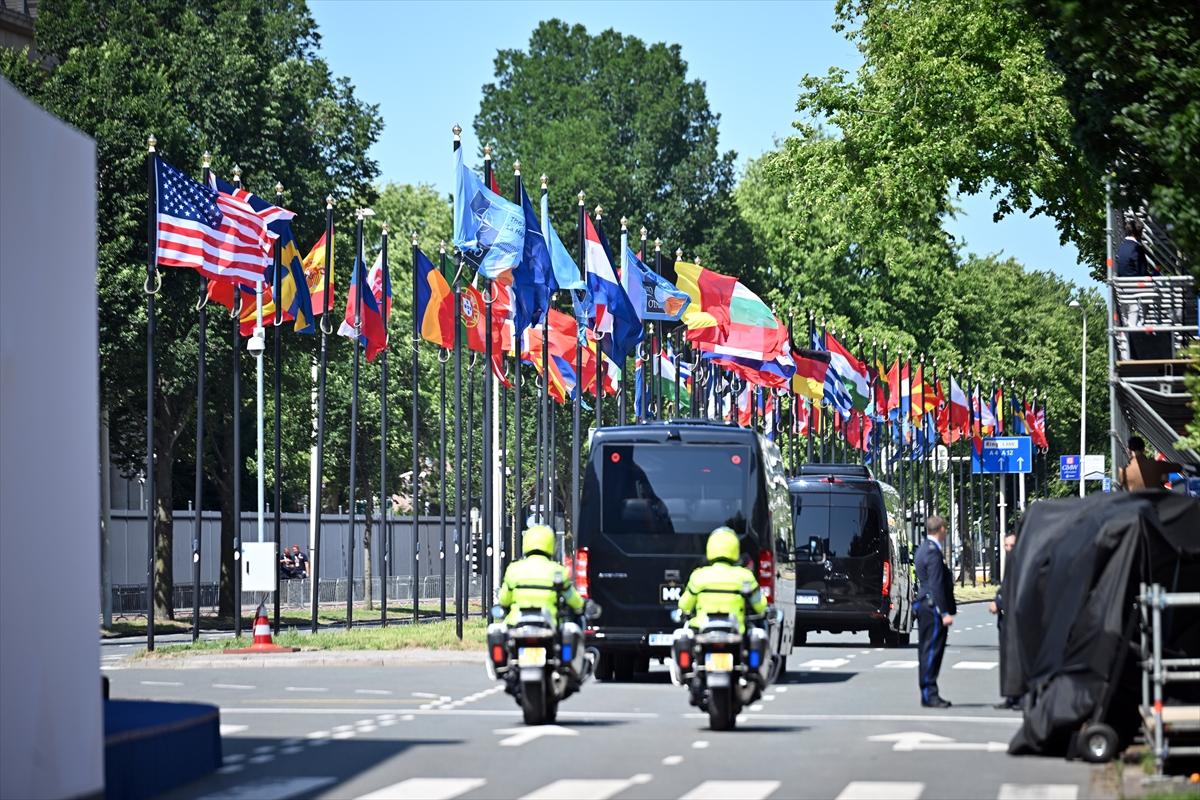
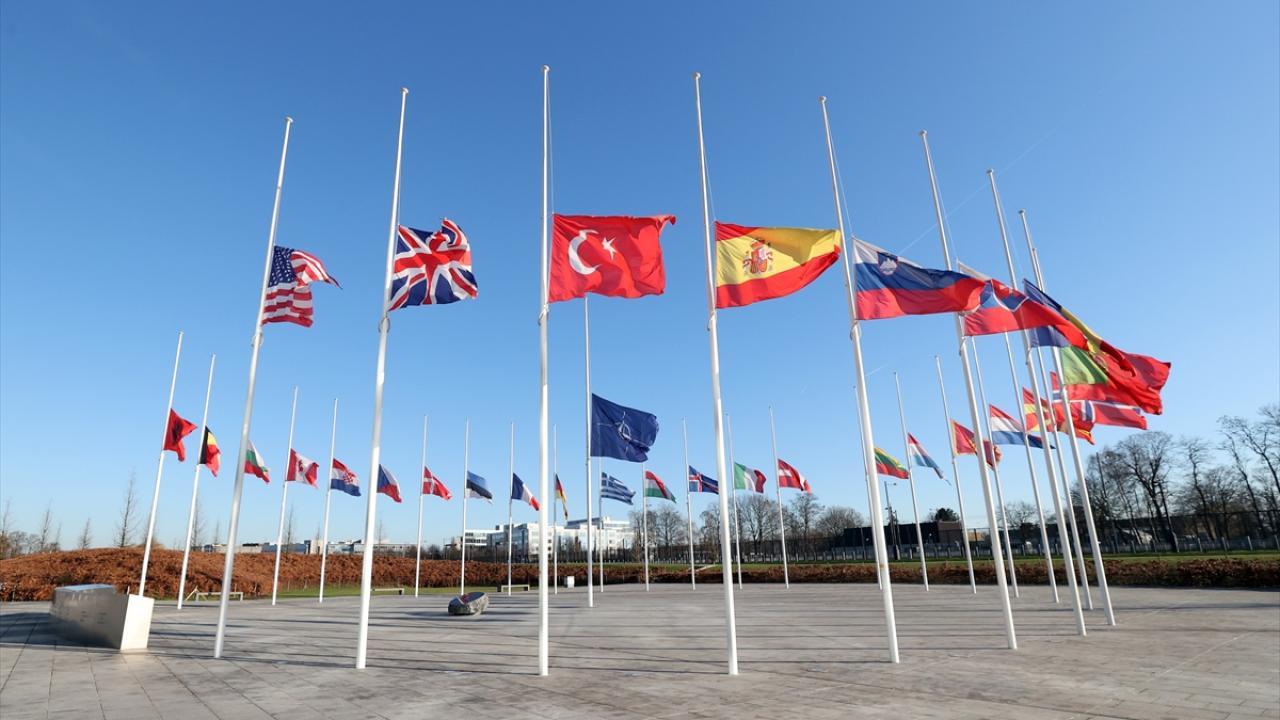
NATO member countries’ flags raised in the sky ahead of the NATO Leaders Summit in The Hague, 23 June 2025 – (Anadolu Agency)
The summit was attended by heads of state and government of all 32 NATO member countries, along with their foreign and defense ministers. Additionally, leaders of European Union institutions, as well as those of Asia-Pacific partner countries including Japan, South Korea, Australia, and New Zealand, and the President of Ukraine were among the invited participants. The total number of participants reached approximately 9,000, including around 2,000 national and international journalists.
The summit took place at the World Forum Congress Center in The Hague. The program included a welcoming ceremony, a group photo session, meetings of heads of state and government, separate sessions for foreign and defense ministers, bilateral and multilateral talks, press conferences, and official dinners.
The key topics discussed at the summit were:
Extensive security measures were implemented across the Netherlands during the summit. Under the “Orange Shield” security operation, a five-kilometer security cordon was established around the World Forum. Many roads in The Hague were closed to traffic, and military aircraft and helicopters conducted patrol flights over the airspace. Frigates were deployed in the North Sea, and diplomatic convoys were escorted by military police.
Approximately 27,000 police officers were deployed nationwide. Flight cancellations occurred at Schiphol Airport, slot capacity was reduced, and one runway was reserved exclusively for special aircraft. The Johan de Wittlaan route in The Hague was closed to traffic months in advance. Several schools in the region were temporarily closed.
Simultaneously with the summit, the NATO Public Forum was held on 24–25 June. Around 500 participants engaged in panels, sessions, and interactive discussions on topics related to NATO’s agenda. The event was broadcast live to the public via online platforms.
Additionally, on 24 June, the NATO Defense Industry Forum (NSDIF) was held. At this session, defense ministers of NATO member states, defense industry representatives, and experts assessed transatlantic defense production capacity, infrastructure investments, and cybersecurity.
The Netherlands coordinated the summit organization through collaboration between the Ministry of Foreign Affairs, the Ministry of Defense, the Ministry of Infrastructure and Water Management, the National Coordinator for Counterterrorism and Security, the Municipality of The Hague, Schiphol Airport management, and other public institutions. The hosting objectives included enhancing diplomatic visibility, contributing to the international security agenda, and strengthening the Netherlands’ position within the NATO alliance.
Al Jazeera. "Who Is Attending the NATO Summit – and What’s on the Agenda?" Al Jazeera. Accessed June 24, 2025. https://www.aljazeera.com/news/2025/6/24/who-is-attending-the-nato-summit-and-whats-on-the-agenda
Anadolu Ajansı. "Norway Backs NATO’s 5% Defense Spending Goal." Accessed June 20, 2025. https://www.aa.com.tr/en/europe/norway-backs-nato-s-5-defense-spending-goal/3605631#
Anadolu Ajansı. “White House Confirms Trump Will Attend NATO Summit at Hague.” Accessed June 20, 2025. https://www.aa.com.tr/en/americas/white-house-confirms-trump-will-attend-nato-summit-at-hague/3588202#
DutchNews.nl. “The Hague Goes into Lockdown Ahead of NATO Summit.” Accessed June 20, 2025. https://www.dutchnews.nl/2025/06/the-hague-goes-into-lockdown-ahead-of-nato-summit/
Government of the Netherlands. “NATO Summit 2025 in the Netherlands.” Government.nl. Accessed June 20, 2025. https://www.government.nl/topics/nato-summit-2025/nato-summit-2025-in-the-netherlands
NATO. "2025 NATO Summit." NATO. Accessed June 20, 2025. https://www.nato.int/cps/en/natohq/235800.htm#top
U.S. Embassy and Consulate in the Netherlands. “MESSAGE FOR U.S. CITIZENS: NATO SUMMIT IN THE HAGUE, JUNE 24-25, 2025.” U.S. Embassy in the Netherlands. Accessed June 20, 2025. https://nl.usembassy.gov/step-message-nato-2025/
On Sunday 22 June 2025, protests were held in The Hague ahead of the NATO Summit on 24–25 June. Hundreds of people participated in the demonstration expressing opposition to NATO’s rising military expenditures the Israeli attacks in Gaza and the Israel-Iran conflict.
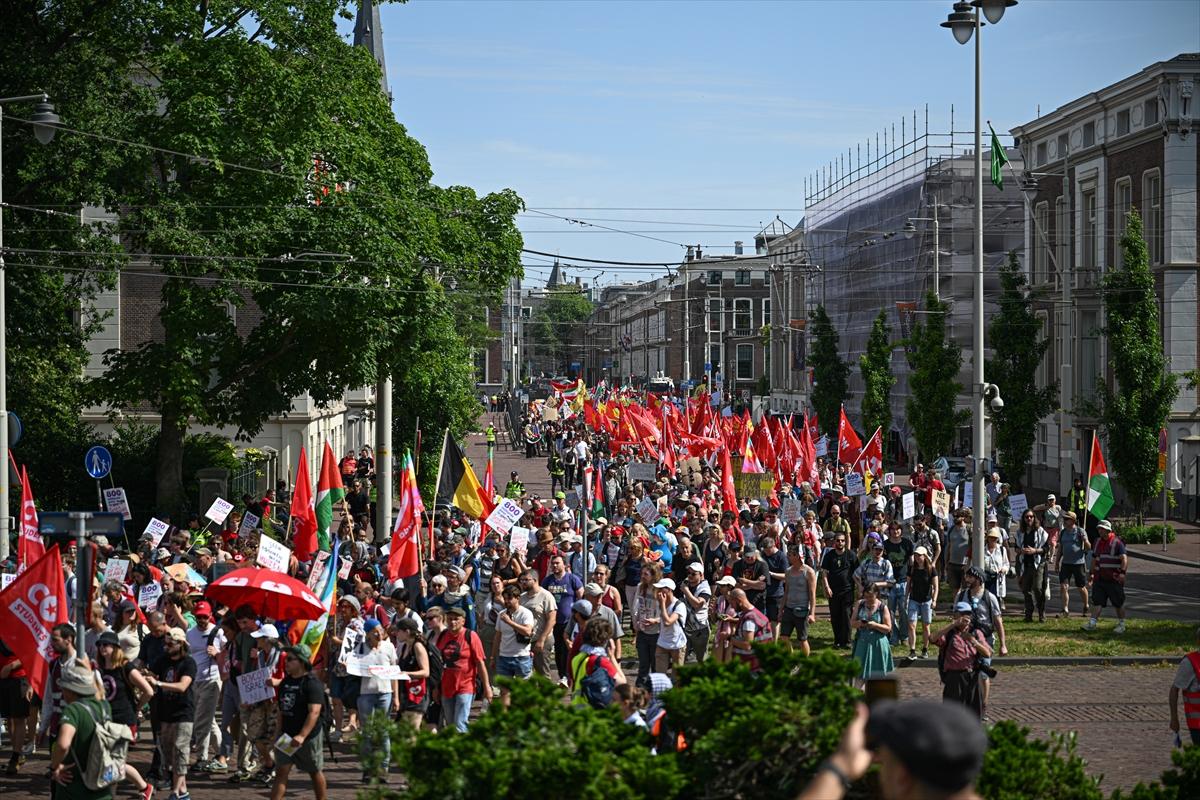
Protests against the NATO summit in The Hague 22 June 2025 – (Anadolu Ajansı)
The demonstration took place in the hours following the United States’ air strike targeting three nuclear facilities in Iran. Protesters expressed their opposition to defense budget policies and developments in the Middle East using various banners and signs. A NATO official stated that the alliance was closely monitoring the situation in the region following the U.S. attack.
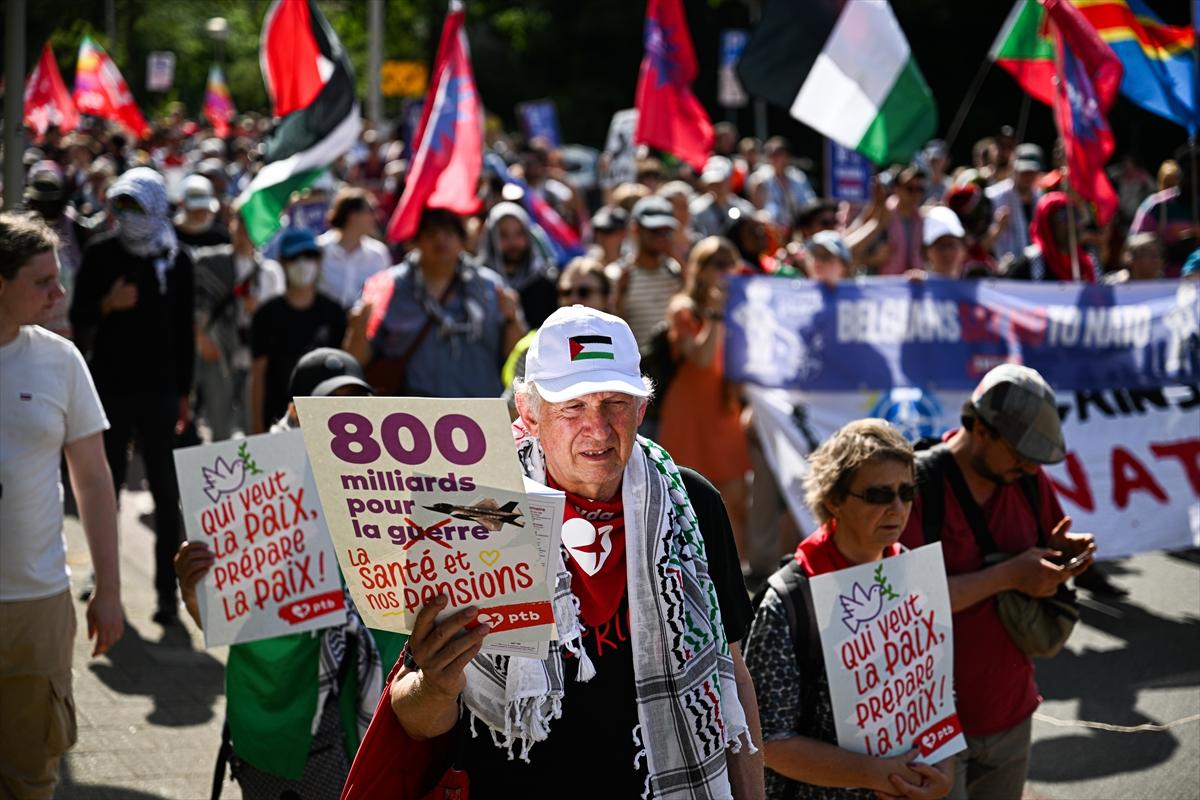
Protests against the NATO summit in The Hague 22 June 2025 – (Anadolu Ajansı)
Al Jazeera. “Hundreds Protest against NATO Summit, Israel-Iran Conflict in The Hague.” Al Jazeera. Accessed June 24, 2025. https://www.aljazeera.com/news/2025/6/22/hundreds-protest-against-nato-summit-israel-iran-conflict-in-the-hague
The first day of the 2025 The Hague NATO Summit began on 24 June 2025 at the World Forum Conference Centre in The Hague, Netherlands. The summit was attended by heads of state and government as well as foreign and defence ministers from all 32 NATO member countries. Additionally, leaders of partner nations including Japan, New Zealand and Ukraine also participated in the meetings.
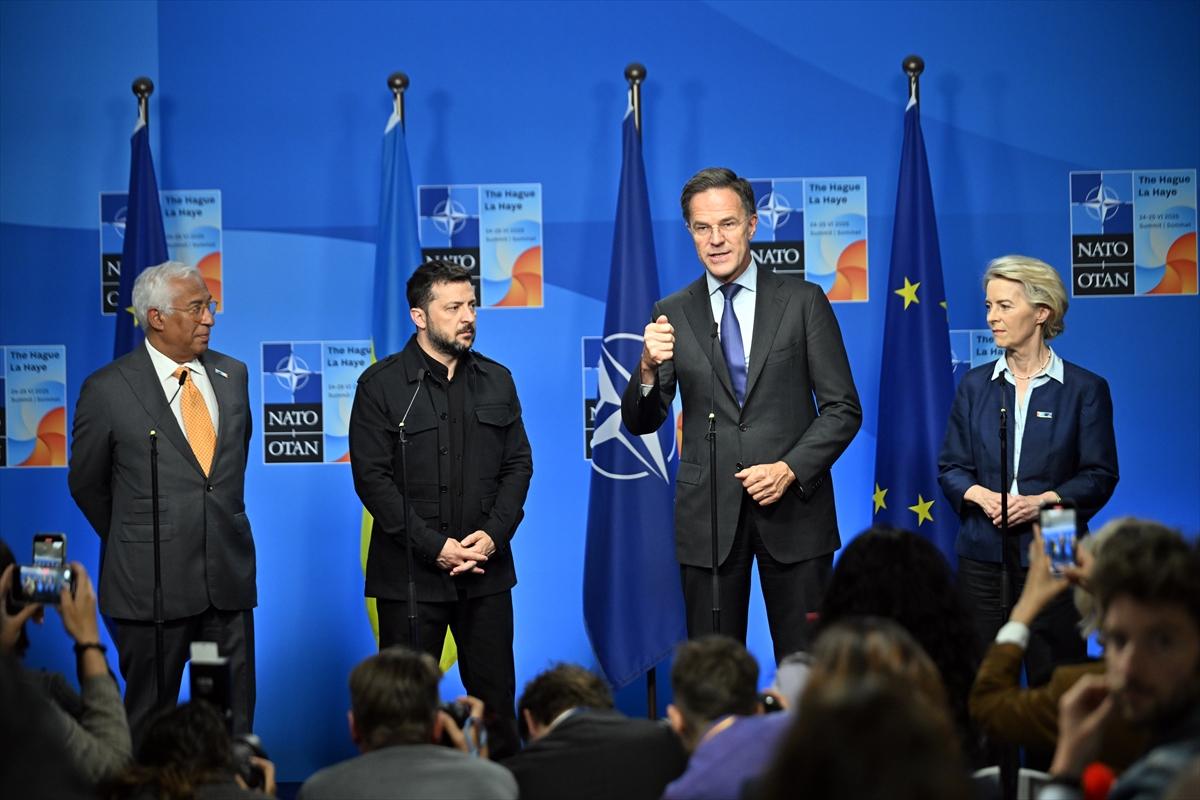
Ukrainian President Volodymyr Zelensky, NATO Secretary General Mark Rutte, European Commission President Ursula von der Leyen and European Council President Antonio Costa meet at the NATO Summit of Heads of State and Government held at the World Forum, 24 June 2025 – (Anadolu Agency)
On the opening day of the summit, allied nations conducted strategic threat assessments and reviewed NATO’s current deterrence policies. Key agenda items included increasing defence expenditures, enhancing transatlantic defence industrial cooperation and providing military support to Ukraine.
On the first day of the The Hague NATO Summit, defence spending targets became one of the central agenda items. U.S. President Donald Trump reiterated his call for NATO allies to increase their defence budgets in statements made both before and during the summit.
Trump urged NATO members to allocate 5 percent of their gross domestic product (GDP) to defence spending. This target exceeds twice the current NATO defence spending commitment of 2 percent. U.S. Defence Secretary Pete Hegseth called on allied nations during a meeting of defence ministers in Brussels prior to the summit to formally adopt the 5 percent defence spending target at The Hague Summit.
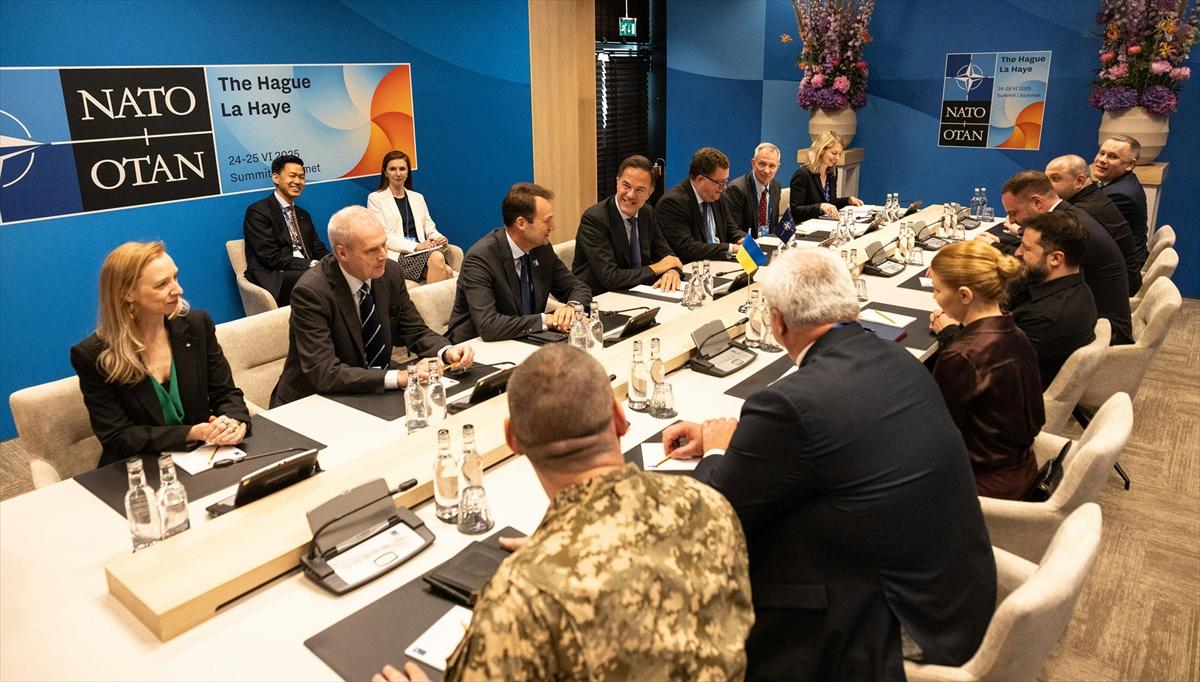
Ukrainian President Volodymyr Zelensky meets with NATO Secretary General Mark Rutte at the NATO Summit held in The Hague, Netherlands, 24 June 2025 – (Anadolu Agency)
NATO Secretary General Mark Rutte, in his address at the summit on 24 June, stated that the proposed new target is a fundamental requirement for the alliance’s future deterrence posture. Rutte described the new spending target as a “historic and structural change” and affirmed that NATO allies would sign up to this commitment.
European Commission President Ursula von der Leyen, in her remarks at the summit, emphasized that Europe is undergoing a profound transformation in defence, stating that “Europe’s security architecture is no longer what it used to be.” Von der Leyen announced that the European Union will allocate €80 billion to defence under its “Preparedness 2030” plan. She also stressed the need to strengthen transatlantic defence industrial cooperation among NATO members.
Some NATO members, including Spain, expressed concerns that the 5 percent target is unrealistic. Nevertheless, it was reported that by the end of the summit day, most NATO members intended to align with the new defence spending targets. According to the newly agreed NATO defence budget targets, member countries are expected to allocate 3.5 percent of their GDP to core defence expenditures and 1.5 percent to “soft spending” categories such as infrastructure, cybersecurity and logistics by 2032.
The NATO Defence Industry Forum, held at the World Forum in The Hague, was a key component of the summit’s first-day agenda. The forum was attended by NATO Secretary General Mark Rutte and European Commission President Ursula von der Leyen, alongside defence industry leaders, experts and defence ministers from NATO member states.
In his opening address at the forum, Secretary General Rutte called on NATO allies and defence industry representatives to “act together, innovate and accelerate delivery timelines.” Rutte noted that NATO has expanded hundreds of new and existing production lines to increase its defence manufacturing capacity. He emphasized that NATO must not fall short in production capacity in response to Russia’s rearmament efforts.
During the forum, the first publicly released version of NATO’s “Updated Defence Production Action Plan” was published. The plan aims to create collective demand, expand production capacity and foster stronger collaboration with the defence industry. In a declaration of commitment submitted by defence industry companies from NATO member states to the NATO Secretary General, support was expressed for NATO’s pledge to enhance industrial capacity to safeguard the security, prosperity and resilience of the transatlantic economy.
European Commission President Ursula von der Leyen, in her speech at the forum, referred to the European Union’s “Preparation 2030” plan and pledged to allocate 80 billion euros for defense investments. Von der Leyen emphasized the necessity of replenishing stockpiles and adapting to new technologies.
Ukrainian President Volodymyr Zelenskyy delivered a virtual address during the general session of the forum. Zelenskyy stated that Ukraine has an annual weapons production capacity of 35 billion dollars and the potential to produce approximately 8 million unmanned aerial vehicles per year. He also called on NATO countries to invest in Ukraine’s defense industry.
The forum also addressed Türkiye’s defense industry capacity. NATO Secretary General Rutte highlighted Türkiye’s substantial defense industry infrastructure and expressed that his visits to Turkish defense companies had been impressive. Rutte underlined the importance of Türkiye increasing defense industry cooperation with the United Kingdom, Norway and the European Union.
On the same day, NATO Defense Ministers approved the alliance’s first “Commercial Space Strategy.” This strategy aims to facilitate NATO’s relations with private space companies and reduce bureaucratic barriers. Agreement was also reached on the “Updated Defense Production Action Plan,” which targets increased production, and the “Rapid Adaptation Action Plan,” which seeks to accelerate the integration of new technologies into defense systems.
On 24 June 2025, as U.S. President Donald Trump traveled to The Hague for the NATO Summit, he made statements regarding the summit on the social media platform Truth Social. In a post en route to Europe, Trump described the NATO Summit as “a much calmer period” compared to the recent tensions between Israel and Iran.
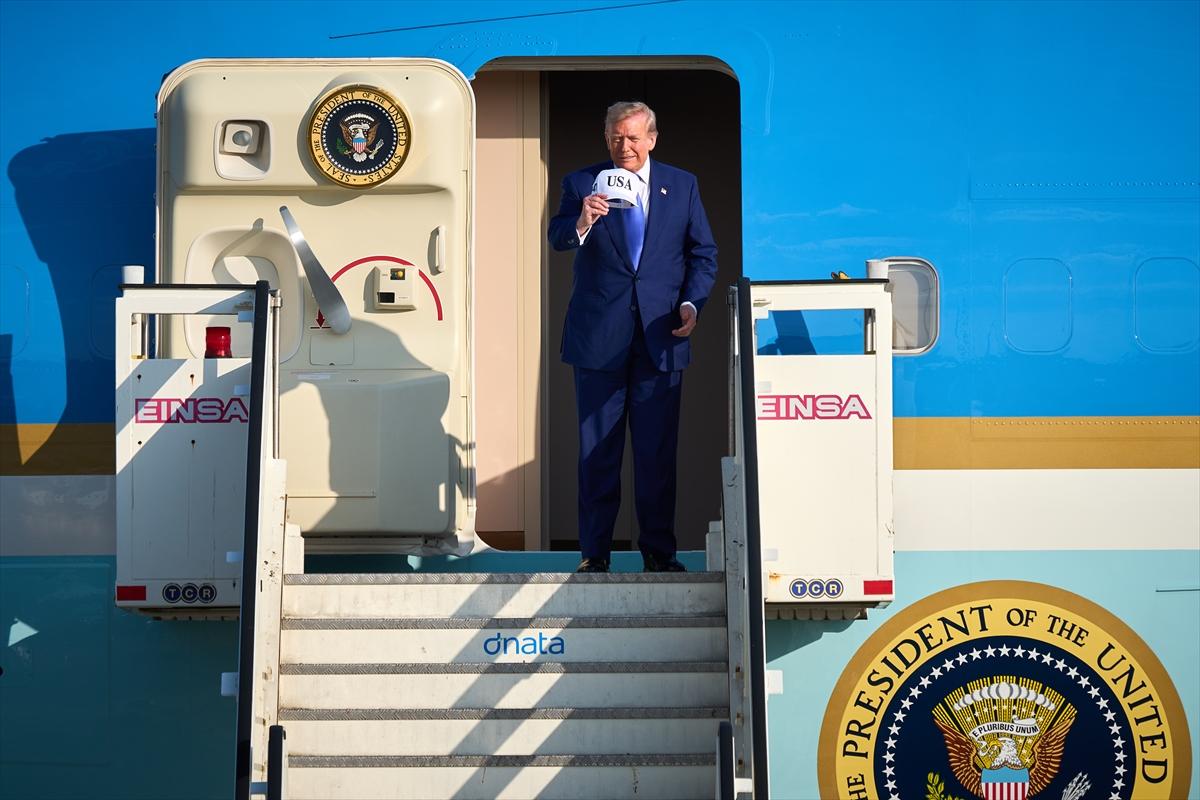
U.S. President Donald Trump, en route to the “NATO Summit of Heads of State and Government” in the Netherlands, 24 June 2025 – (Anadolu Agency)
Evaluating recent U.S. military operations against Iran, Trump characterized the complete destruction of Iran’s nuclear facilities and capacity as “a great source of pride for me.” He also expressed satisfaction that the war between Iran and Israel had been halted. Trump stated that China could now purchase oil from Iran and even expressed hope that China would buy large quantities of oil from the United States as well.
On the same day, Trump shared screenshots of private messages received from NATO Secretary General Mark Rutte on his Truth Social account. In his message to Trump, Rutte thanked him for his “decisive action” against Iran and noted that such a move would have been considered too bold by many. Rutte emphasized that Trump had reached a critical milestone for the United States, Europe and the world, accomplishing a task that no American president had achieved in many years. Rutte stated that Europe would make a substantial payment as it should and that this would be a triumph for Trump.
During remarks to journalists aboard his aircraft while traveling to The Hague for the NATO Summit, Trump also responded to questions regarding NATO’s Article 5 on collective defense. Trump said, “There are many definitions. You know that, don’t you?” and indicated he did not wish to elaborate further while on the plane. The U.S. President added, “I am committed to saving lives and ensuring security.”
On 24 June 2025, President Recep Tayyip Erdoğan arrived in the Netherlands to attend the NATO Summit of Heads of State and Government. At Amsterdam Schiphol Airport, he was welcomed by Dutch officials, Türkiye’s Permanent Representative to NATO Basat Öztürk, and Türkiye’s Ambassador to The Hague Selçuk Ünal.
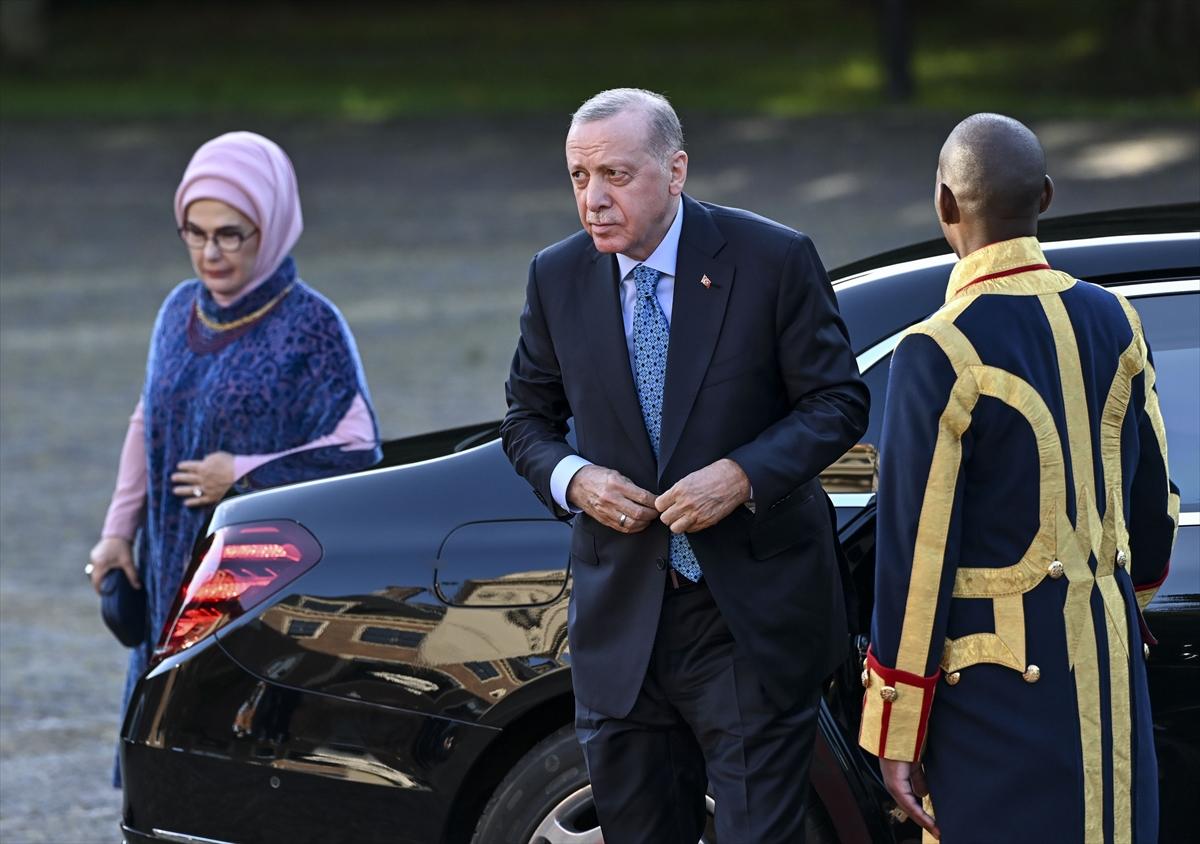
President Erdoğan in the Netherlands, 24 June 2025 – (Anadolu Agency)
Following the airport reception, President Erdoğan proceeded to The Hague, where the summit was held. His delegation included his wife Emine Erdoğan, Minister of Foreign Affairs Hakan Fidan, Minister of National Defense Yaşar Güler, Head of the National Intelligence Organization Ibrahim Kalın, President’s Communications Director Fahrettin Altun, and President’s Advisor on Foreign Policy and Security Akif Çağatay Kılıç.
President Erdoğan was greeted by some Turkish citizens living in the Netherlands upon arriving at the Hilton Hotel in The Hague, where he would be staying. On the evening of the first day of the summit, he attended a dinner hosted by King Willem-Alexander and Queen Maxima of the Netherlands in honor of the NATO heads of state and government and their spouses. President Erdoğan, accompanied by his wife Emine Erdoğan, also participated in the traditional “Family Photo” session held before the meal. During the photo session, Erdoğan was seen shaking hands with U.S. President Donald Trump to his left and sitting beside Slovak President Peter Pellegrini to his right.
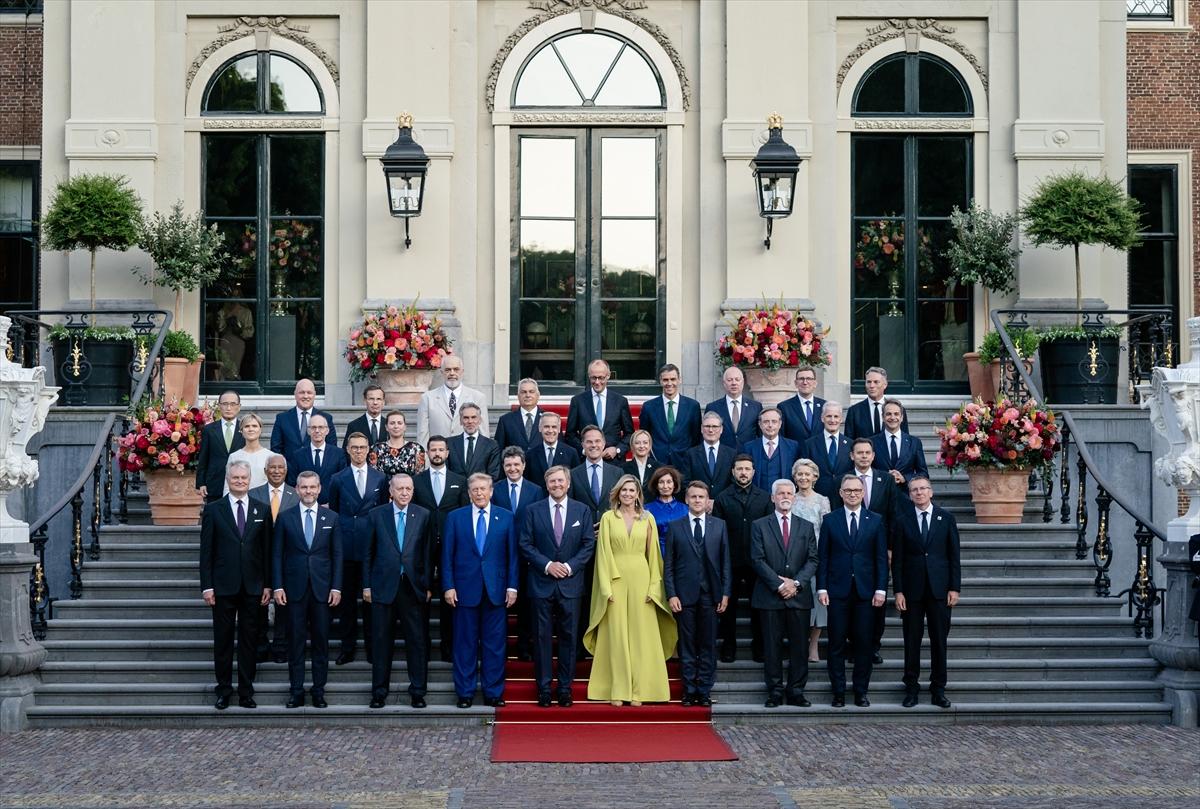
The family photo taken by King Willem-Alexander and Queen Maxima of the Netherlands with the heads of state and government and their spouses attending the summit, 24 June 2025 – (Anadolu Agency)
Following the dinner, a closed-door meeting took place between President Erdoğan and U.S. President Donald Trump at the Royal Palace. According to a statement issued by the Presidency of Communications, the meeting addressed bilateral relations between Türkiye and the United States as well as regional and global issues. President Erdoğan highlighted the significant potential for cooperation between the two countries in energy and investment and stated that enhancing defense industry collaboration would contribute to achieving the goal of a $100 billion trade volume.
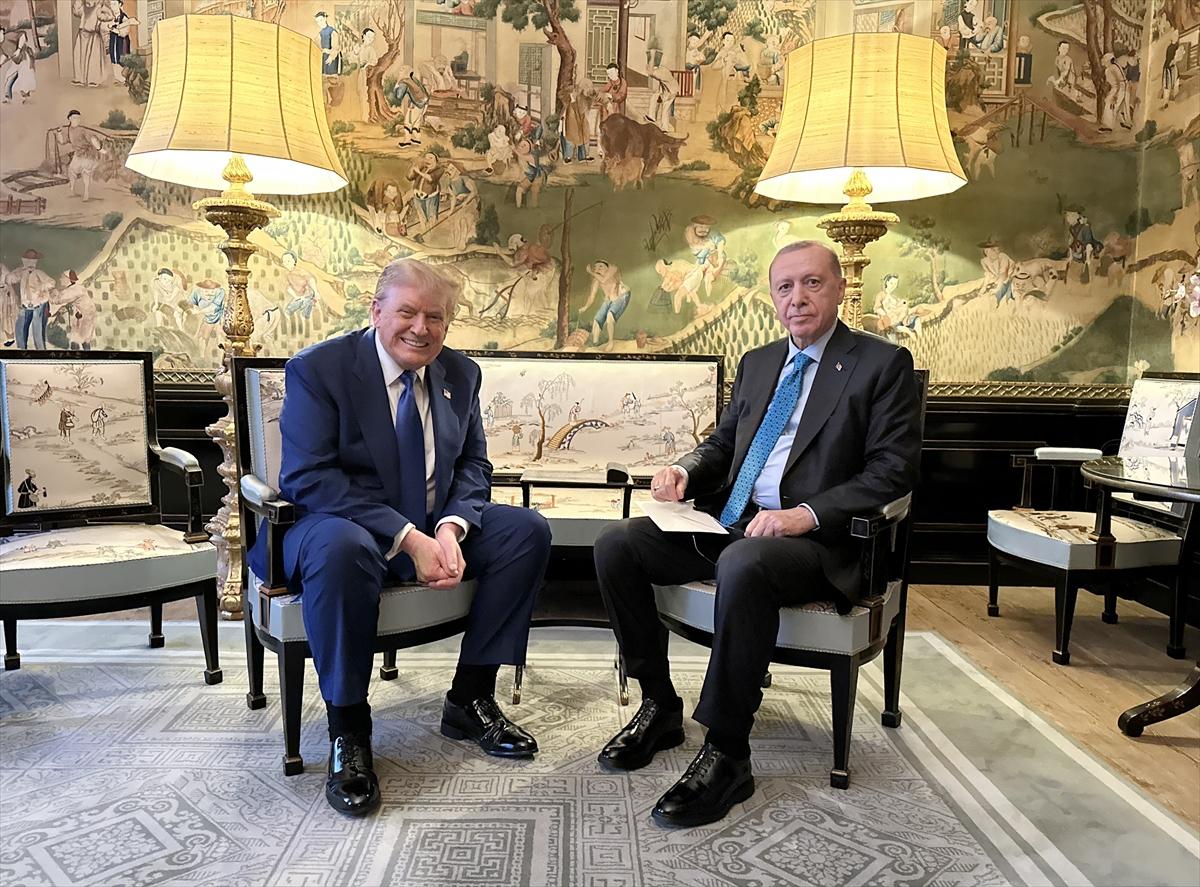
President Recep Tayyip Erdoğan and U.S. President Donald Trump meet in The Hague, Netherlands, during the “NATO Summit of Heads of State and Government,” 24 June 2025 – (Anadolu Agency)
Other topics discussed during the meeting included the Israel-Iran ceasefire, the humanitarian situation in Gaza, and the Russia-Ukraine war. President Erdoğan expressed his satisfaction with the ceasefire between Israel and Iran, achieved through President Trump’s efforts, and conveyed his hope that it would be lasting. Erdoğan emphasized the importance of close dialogue and cooperation to end the humanitarian tragedy in Gaza and achieve a peaceful resolution to the Russia-Ukraine war.
During the NATO Summit in The Hague, various international actors issued statements. On the summit day, Ukrainian President Volodymyr Zelensky made remarks. In a speech delivered at the NATO Defense Industry Forum, Zelensky stated that his government possessed intelligence indicating that Russia was planning new military operations against NATO territory. He shared this intelligence with summit participants, asserting that Russia was continuing its attacks on Ukraine with weapons sourced from Iran and North Korea and with support from certain Chinese companies.
Kremlin spokesperson Dmitry Peskov stated on the day of the summit that Russia had no plans to launch an attack against NATO. Peskov claimed that NATO was attempting to portray itself as a threat to Russia, describing this as an effort by Western countries to justify their military expenditures. He further argued that NATO was “an alliance created for conflict” and “not a tool for peace and stability.”
In parallel with the discussions at the NATO Summit, European Commission President Ursula von der Leyen noted that Europe’s defense architecture had entered a fundamental transformation process and reaffirmed the European Union’s determination to meet its new defense objectives.
Al Jazeera. “NATO Allies Set to Approve Major Defence Spending Hike at Hague Summit.” Accessed June 25, 2025. https://www.aljazeera.com/news/2025/6/24/nato-allies-set-to-approve-major-defence-spending-hike-at-hague-summit
Al Jazeera. “Trump’s Budget Demands, Iran to Split NATO Summit Focus.” Accessed June 25, 2025. https://www.aljazeera.com/news/2025/6/23/trumps-budget-demands-iran-to-split-nato-summit-focus
Anadolu Ajansı. "Cumhurbaşkanı Erdoğan ABD Başkanı Trump ile Bir Araya Geldi." Accessed June 25, 2025. https://www.aa.com.tr/tr/gundem/cumhurbaskani-erdogan-abd-baskani-trump-ile-bir-araya-geldi/3611968
Anadolu Ajansı. "NATO Genel Sekreteri Rutte: Savunma Üretimi Savaşını Kazanmalıyız." Accessed June 25, 2025. https://www.aa.com.tr/tr/dunya/nato-genel-sekreteri-rutte-savunma-uretimi-savasini-kazanmaliyiz/3611620
Anadolu Ajansı. "Trump: NATO Zirvesinin İsrail ve İran ile Yaşadığı Dönemden Daha Sakin Olacağını Belirtti." Accessed June 25, 2025. https://www.aa.com.tr/tr/dunya/trump-nato-zirvesinin-israil-ve-iran-ile-yasadigi-donemden-daha-sakin-olacagini-belirtti/3611638
Anadolu Ajansı. "Zelenskiy: Rusya NATO Topraklarında Yeni Askeri Operasyonlar Planlıyor." Accessed June 25, 2025. https://www.aa.com.tr/tr/dunya/zelenskiy-rusya-nato-topraklarinda-yeni-askeri-operasyonlar-planliyor/3611634
Anadolu Ajansı. “Cumhurbaşkanı Erdoğan NATO Zirvesi İçin Hollanda’da.” Accessed June 25, 2025. https://www.aa.com.tr/tr/gundem/cumhurbaskani-erdogan-nato-zirvesi-icin-hollandada/3611755
Anadolu Ajansı. “NATO Defense Ministers Approve the Alliance’s First Commercial Space Strategy.” Accessed June 25, 2025. https://www.aa.com.tr/tr/bilim-teknoloji/nato-savunma-bakanlari-ittifakin-ilk-ticari-uzay-stratejisini-onayladi/3611506
Anadolu Ajansı. “NATO Genel Sekreteri Rutte, Trump'ı İran Konusundaki Kararlı Eylemi İçin Tebrik Etti.” Accessed June 25, 2025. https://www.aa.com.tr/tr/dunya/nato-genel-sekreteri-rutte-trumpi-iran-konusundaki-kararli-eylemi-icin-tebrik-etti/3611656
Anadolu Ajansı. “NATO Genel Sekreteri Rutte: Türkiye'nin Çok Büyük Bir Savunma Sanayi Temeli Var.” Accessed June 25, 2025. https://www.aa.com.tr/tr/dunya/nato-genel-sekreteri-rutte-turkiyenin-cok-buyuk-bir-savunma-sanayi-temeli-var/3610928
NATO. "NATO Leaders Conclude Historic Summit in The Hague." NATO. Accessed June 25, 2025. https://www.nato.int/cps/en/natohq/news_236641.htm
The Heads of State and Government of NATO adopted the “The Hague Summit Declaration” during their sessions on the second day. The declaration reaffirmed NATO’s commitment to Article 5 of the Washington Treaty. Member states reiterated that an attack against one NATO member shall be considered an attack against all.
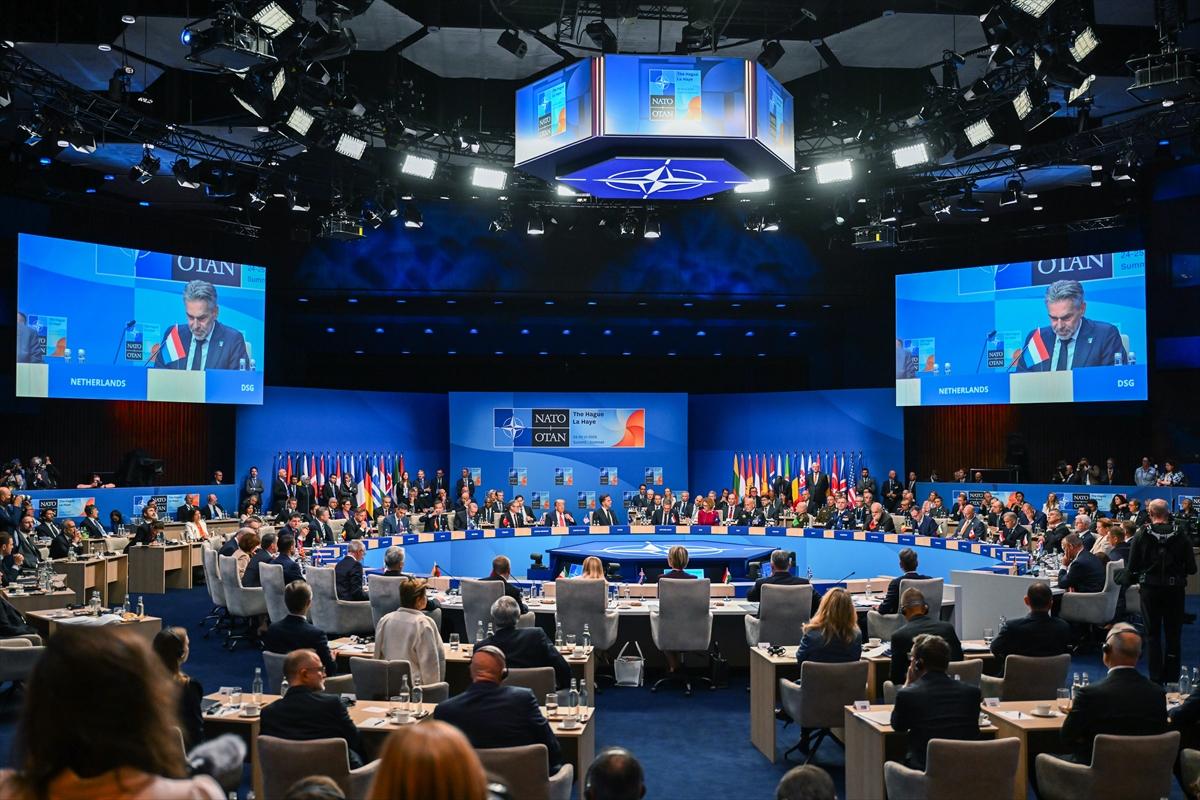
NATO Leaders Summit, 25 June 2025 – (Anadolu Ajansı)
As a result of the summit, NATO members pledged to allocate 5 percent of their gross domestic product (GDP) to defense spending by 2035. This new target is described as the largest increase in defense budgets since the end of the Cold War in the alliance’s history.
The targeted 5 percent ratio is divided into two main investment categories. It has been agreed that at least 3.5 percent of each country’s GDP must be allocated to core defense needs and NATO capability targets. The remaining 1.5 percent will be directed toward other defense-related areas such as protection of critical infrastructure, cybersecurity, civil preparedness and resilience. In line with this goal, allies are required to submit annual plans and review their progress in 2029.
The declaration also emphasized continued support for Ukraine. Member states stated that contributions to Ukraine’s defense capacity will be counted toward their NATO defense expenditure calculations, on the grounds that Ukraine’s security contributes to NATO’s overall security.
Furthermore, the declaration committed to rapidly expanding transatlantic defense industry cooperation. Member states declared their intention to remove barriers to defense trade within the alliance and strengthen defense industrial capacity. Finally, it was announced that the 2026 NATO Summit will be held in Türkiye, followed by the next summit in Albania.
On the second day of the The Hague Summit, statements from member states on the defense spending target stood out. Poland, Lithuania, Finland, Estonia and Croatia announced clear support for the 5 percent target. Polish President Andrzej Duda recalled that the issue was first brought to the agenda on his own proposal and argued that defense spending must return to Cold War levels due to Russia’s policies.
Lithuanian President Gitanas Nauseda stated that the 5 percent target must lie at the heart of the process to “make NATO great again.” Finnish President Alexander Stubb described the target as “the birth of a new NATO,” while Estonian Prime Minister Kristen Michal labeled the decision a “historic moment.” Croatian Foreign Minister Gordan Grlić Radman also emphasized Croatia’s determination to reach this target.
On the other hand, some countries adopted a more cautious stance. Spanish Prime Minister Pedro Sánchez stated that the current defense spending level of 2.1 percent was sufficient and aligned with Spain’s social model. During the summit, Sánchez told the press that the current level was “realistic.” Belgian Prime Minister Bart de Wever also described the 3.5 percent level as “realistic,” while Slovak President Peter Pellegrini stated that his government in Bratislava would not obstruct the target.
German Chancellor Friedrich Merz highlighted the growing threat and argued that the European flank of NATO must assume greater responsibility to effectively counter it.
On the second day of the NATO Summit in The Hague, U.S. President Donald Trump made several statements. Trump characterized the new 5 percent defense spending target as “a great victory for Europe and Western civilization.” He stated that this increase would add more than one trillion dollars annually to NATO countries’ defense budgets. Trump argued that the United States’ share of NATO defense spending was disproportionate and created an unfair burden.
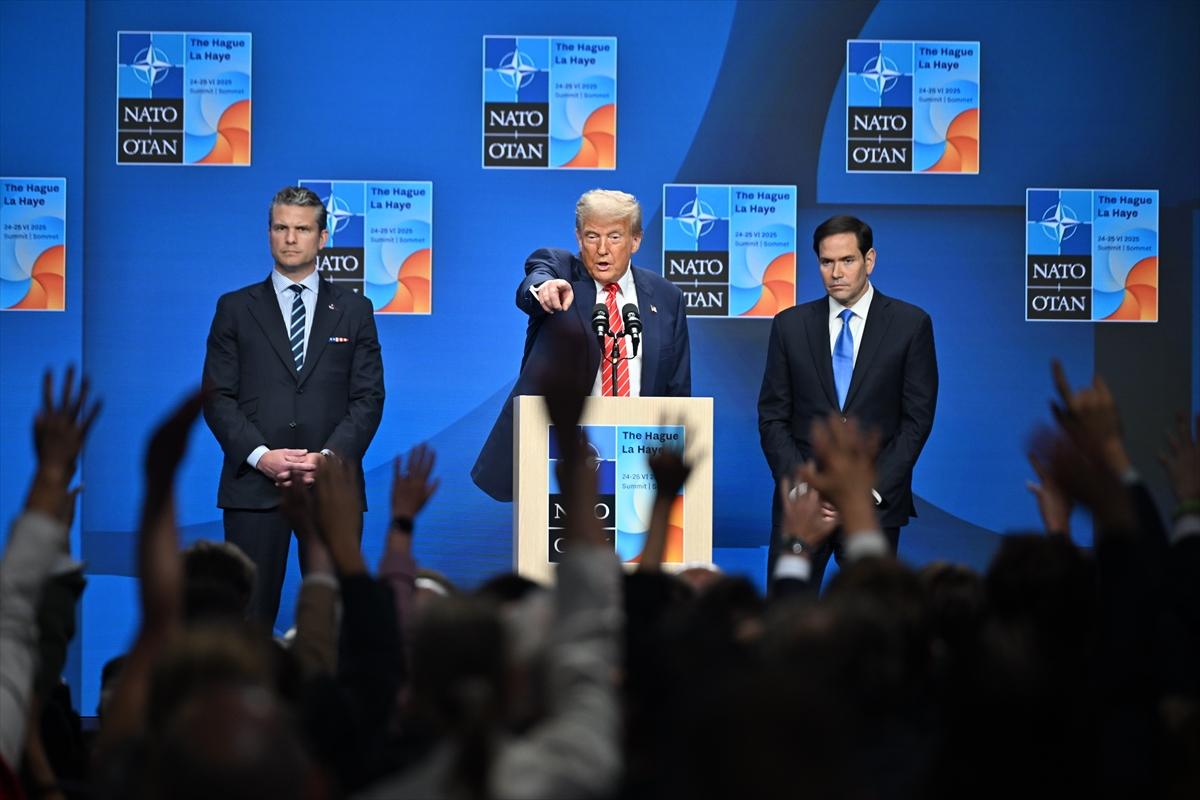
U.S. President Donald Trump at a press conference following the NATO Summit of Heads of State and Government at the World Forum in The Hague, Netherlands, 25 June 2025 – (Anadolu Ajansı)
Trump reiterated his criticism of Spain’s stance on defense spending. He labeled Spain a “free rider” and threatened to demand double payments from Madrid in trade agreements.
Trump also commented on the U.S. strike against nuclear facilities in Iran. He described the strike as a “perfect operation” and an “incredible success,” asserting that it set back Iran’s nuclear program by decades and rendered it incapable of rebuilding such a program. Trump claimed that Iran could no longer transport its nuclear materials abroad. He accused media outlets such as CNN and The New York Times of “spreading false news” for downplaying the strike’s impact.
Trump addressed the Israel-Iran conflict, describing the two sides as “two children fighting in a schoolyard.” He stated that he had ordered Israeli aircraft to return.
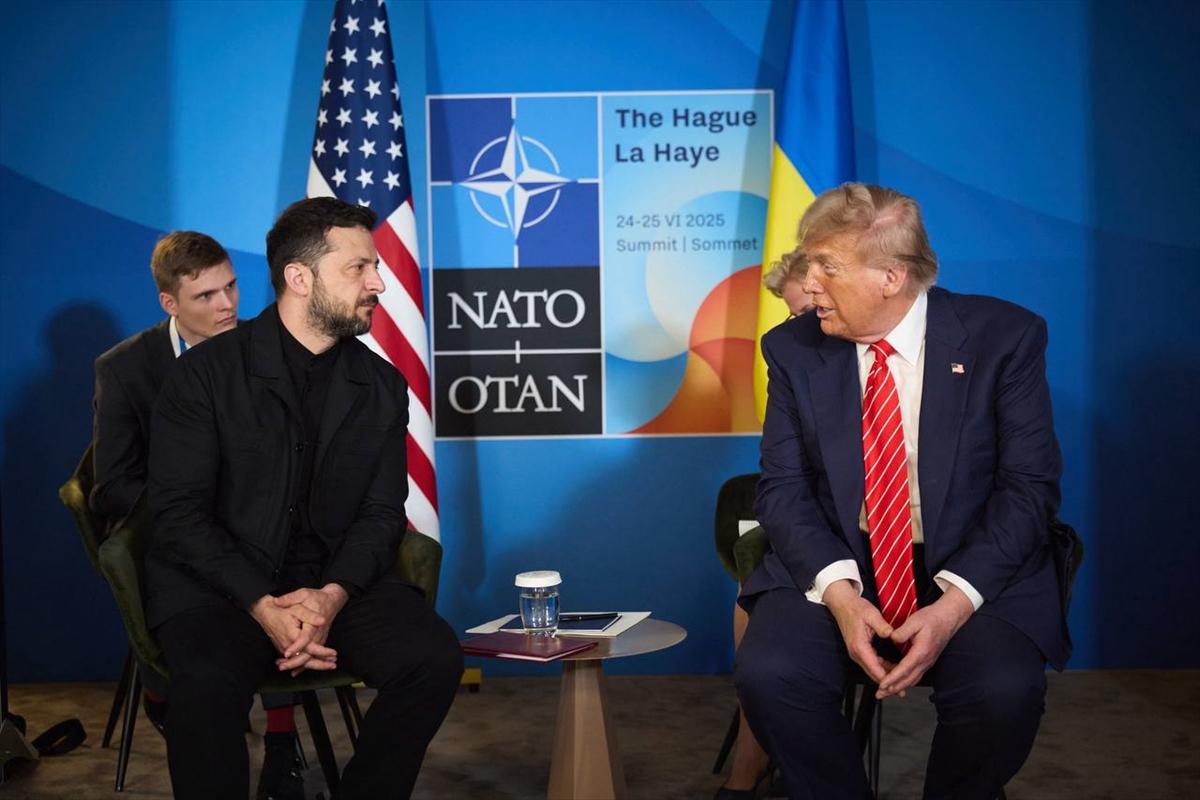
U.S. President Donald Trump and Ukrainian President Volodymyr Zelensky at the summit, 25 June 2025 – (Anadolu Ajansı)
Regarding the Russia-Ukraine war, Trump held a bilateral meeting with Ukrainian President Volodymyr Zelensky during the summit sessions. The discussion focused on providing additional air defense systems to Ukraine and imposing further sanctions on Russia. Trump stated that achieving a ceasefire in Ukraine was more difficult than expected.
In his press conference, while reaffirming NATO’s commitment to Article 5, Trump said, “That’s why I am here.” He also praised U.S. military strength, emphasizing that the United States possesses “the best military equipment in the world.”
Throughout the second day of the The Hague Summit, the repercussions of the U.S. strike against Iran continued to resonate within the NATO platform. NATO Secretary General Mark Rutte praised the U.S. strike on Iran’s nuclear facilities and commended Trump’s “resolute action.” Rutte described the operation as “truly extraordinary” and stated that it contributed to the security of NATO allies.
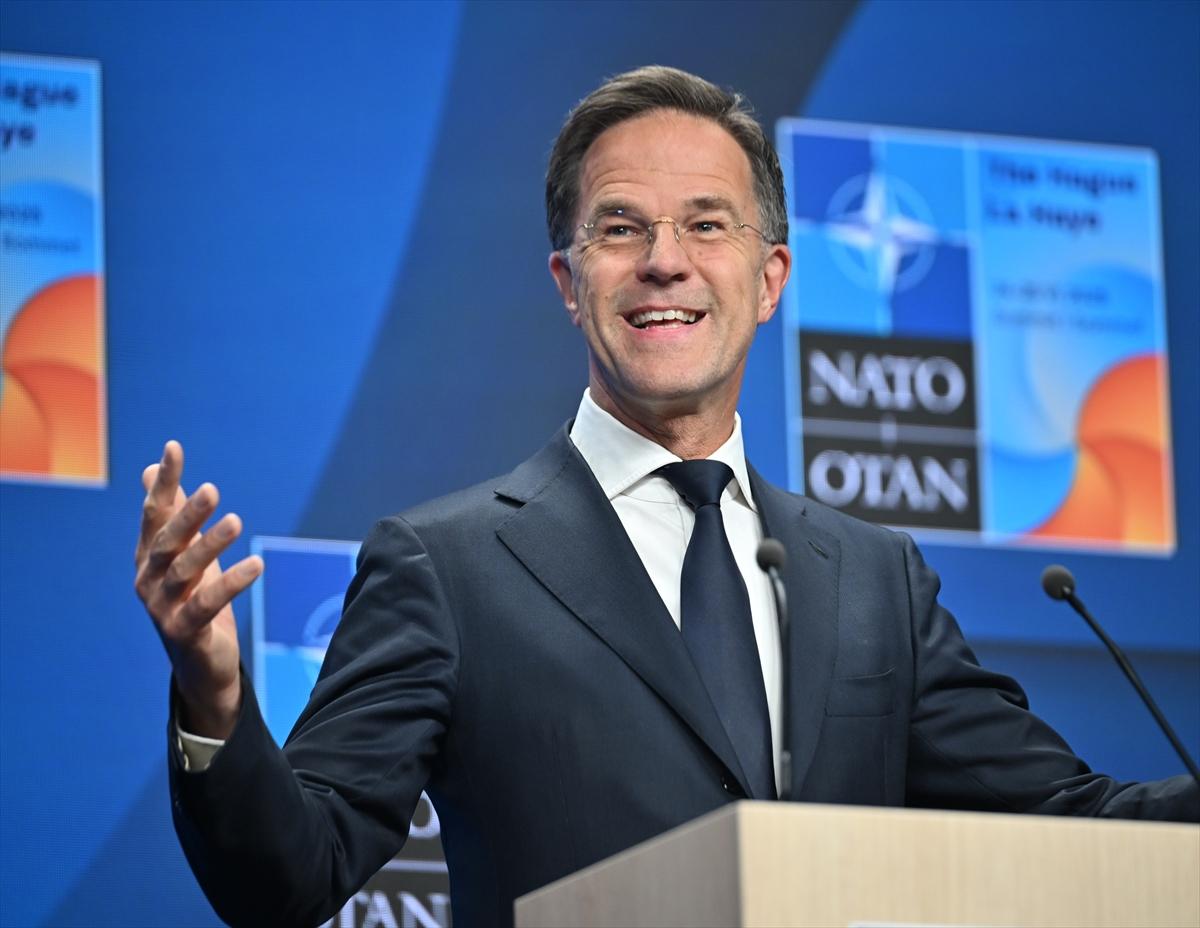
NATO Secretary General Mark Rutte at a press conference following the NATO Summit of Heads of State and Government at the World Forum, 25 June 2025 – (Anadolu Ajansı)
Iran responded with strong criticism. The Iranian Ministry of Foreign Affairs spokesperson labeled Rutte’s remarks as “shameful, degrading and irresponsible,” asserting that a NATO official praising such an attack amounted to “complicity in a crime.”
French President Emmanuel Macron adopted a more reserved stance regarding NATO Secretary General Rutte’s praise of the strike on Iran. France has initiated its own assessment to examine the legal dimensions of the attack.
On the second day of the summit, a significant defense supply agreement was signed between Germany and Norway. Under the agreement signed by German Defense Minister Boris Pistorius and Norwegian Defense Minister Tore Sandvik, Germany will procure approximately 677 million euros worth of Joint Strike Missiles (JSM) from Norway.
These missiles are being acquired for integration into Germany’s F-35 fighter jet fleet. Developed by Kongsberg Defence & Aerospace, the JSM is a precision-guided munition with a range of about 350 kilometers, capable of striking both land and sea targets, and featuring a low radar signature. Germany plans to receive its first deliveries by the end of 2027.
The German government stated that this agreement represents a significant reduction in bureaucracy, time and cost in line with NATO’s goals for joint defense procurement.
During the summit in The Hague, protests organized by climate activists and Palestine supporters drew attention. The demonstrations concentrated around the area where the NATO Summit was held, particularly along the A12 highway connecting the city center to major motorways.
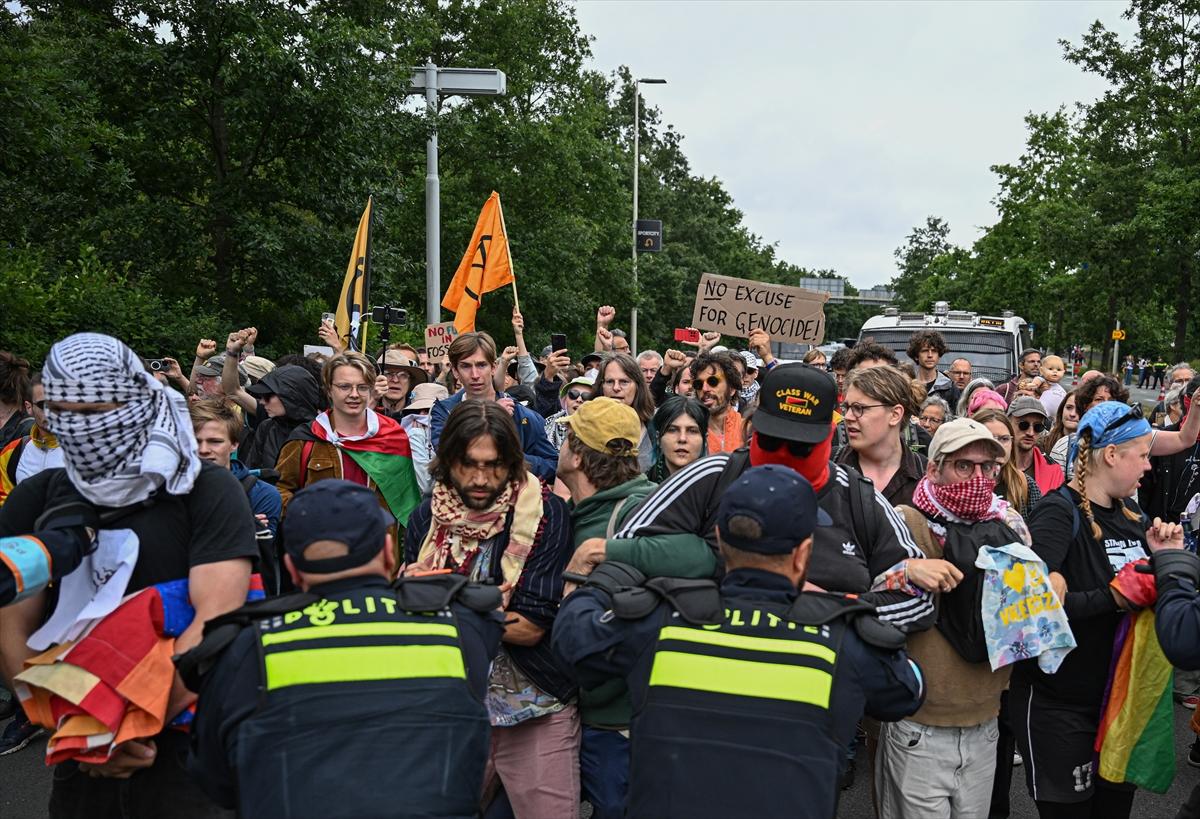
Police intervention against Palestine supporters and climate activists protesting the NATO summit in the Netherlands, 25 June 2025 – (Anadolu Ajansı)
Protesters chanted slogans such as “Stop genocide,” “Stop the war,” and “Free Palestine,” and carried banners with similar messages. Activists criticized NATO for its role in the events in Gaza and highlighted insufficient action on the climate crisis.
Dutch police intervened against groups attempting to block motorways, making arrests at five separate locations. Reports indicated that police used force at times to disperse demonstrators, including baton strikes. Those arrested were transported out of the city in municipal vehicles.
The group “Extinction Rebellion” stated on social media that the action was a peaceful protest and called for “Stop genocide,” “Stop fascism,” and “Stop fossil fuel destruction.”
Al Jazeera. “LIVE: NATO Leaders Expected to Agree on New Defence Spending Target.” Accessed June 26, 2025. https://www.aljazeera.com/news/liveblog/2025/6/25/live-nato-leaders-expected-to-agree-on-new-defence-spending-target.
Anadolu Ajansı. "Trump, ABD’nin İran’ın Nükleer Tesislerine Saldırısını ‘Mükemmel Bir Operasyon’ Olarak Değerlendirdi." Accessed June 26, 2025. https://www.aa.com.tr/tr/dunya/trump-abdnin-iranin-nukleer-tesislerine-saldirisini-mukemmel-bir-operasyon-olarak-degerlendirdi/3612394#.
Anadolu Ajansı. “2026 NATO Zirvesi Türkiye'de Yapılacak.” Accessed June 26, 2025. https://www.aa.com.tr/tr/dunya/2026-nato-zirvesi-turkiyede-yapilacak/3612631#.
Anadolu Ajansı. “ABD Başkanı Trump NATO Savunma Harcamaları Hedefiyle Yılda 1 Trilyon Dolardan Fazla Artış Olacak.” Accessed June 26, 2025. https://www.aa.com.tr/tr/dunya/abd-baskani-trump-nato-savunma-harcamalari-hedefiyle-yilda-1-trilyon-dolardan-fazla-artis-olacak/3612943#.
Anadolu Ajansı. “Almanya F-35 Filosu İçin Norveç'ten JSM Füzeleri Satın Alacak.” Accessed June 26, 2025. https://www.aa.com.tr/tr/dunya/almanya-f-35-filosu-icin-norvecten-jsm-fuzeleri-satin-alacak/3612587.
Anadolu Ajansı. “Hollanda'da NATO Zirvesini Protesto Eden Filistin Destekçileri ve İklim Aktivistlerine Polis Müdahalesi.” Accessed June 26, 2025. https://www.aa.com.tr/tr/dunya/hollandada-nato-zirvesini-protesto-eden-filistin-destekcileri-ve-iklim-aktivistlerine-polis-mudahalesi/3612799#.
Anadolu Ajansı. “Poland, Lithuania, Finland, Estonia, and Croatia Support NATO’s 5% New Target.” Accessed June 26, 2025. https://www.aa.com.tr/tr/dunya/polonya-litvanya-finlandiya-estonya-ve-hirvatistandan-natonun-yuzde-5lik-yeni-hedefine-destek-/3612488#.
BBC News. “G7 Summit: Leaders Agree to New NATO Defence Spending Target.” Accessed June 26, 2025. https://www.bbc.com/news/articles/cj4en8djwyko.
BBC News. “NATO Summit: Leaders Back New Defence Spending Goal Amid Global Tensions.” Accessed June 26, 2025. https://www.bbc.com/news/articles/cvg8pd2y80go.
NATO. “Brussels Summit Communiqué.” NATO. Accessed June 26, 2025. https://www.nato.int/cps/en/natohq/official_texts_236705.htm.

2025 The Hague NATO Summit
History | 24–25 June 2025 | ||||||||
|---|---|---|---|---|---|---|---|---|---|
Place(s) | World Forum Congress Center - The Hague | ||||||||
Host Country | Netherlands | ||||||||
Number of Participants | 9,000 (Expected) | ||||||||
The 2025 NATO Summit in The Hague was held on 24-25 June 2025 in The Hague, Netherlands. Leaders ministers and delegation representatives from all 32 NATO member countries attended the summit. Discussions focused on increasing defense expenditures the war in Ukraine Israel-Iran tensions and NATO’s deterrence policies. At the conclusion of the summit it was decided to raise defense budgets to 5 percent of GDP.
No Discussion Added Yet
Start discussion for "2025 The Hague NATO Summit" article
June 20, 2025
Summit Program and Participation Details
June 20, 2025
Main Agenda Items
June 20, 2025
Security and Logistics Arrangements
June 20, 2025
NATO Public Forum and Side Events
June 20, 2025
The Netherlands as Host
June 24, 2025
Protests in The Hague
June 25, 2025
First Day of the 2025 The Hague NATO Summit (24 June 2025)
June 26, 2025
Second Day of the 2025 The Hague NATO Summit (25 June 2025)