



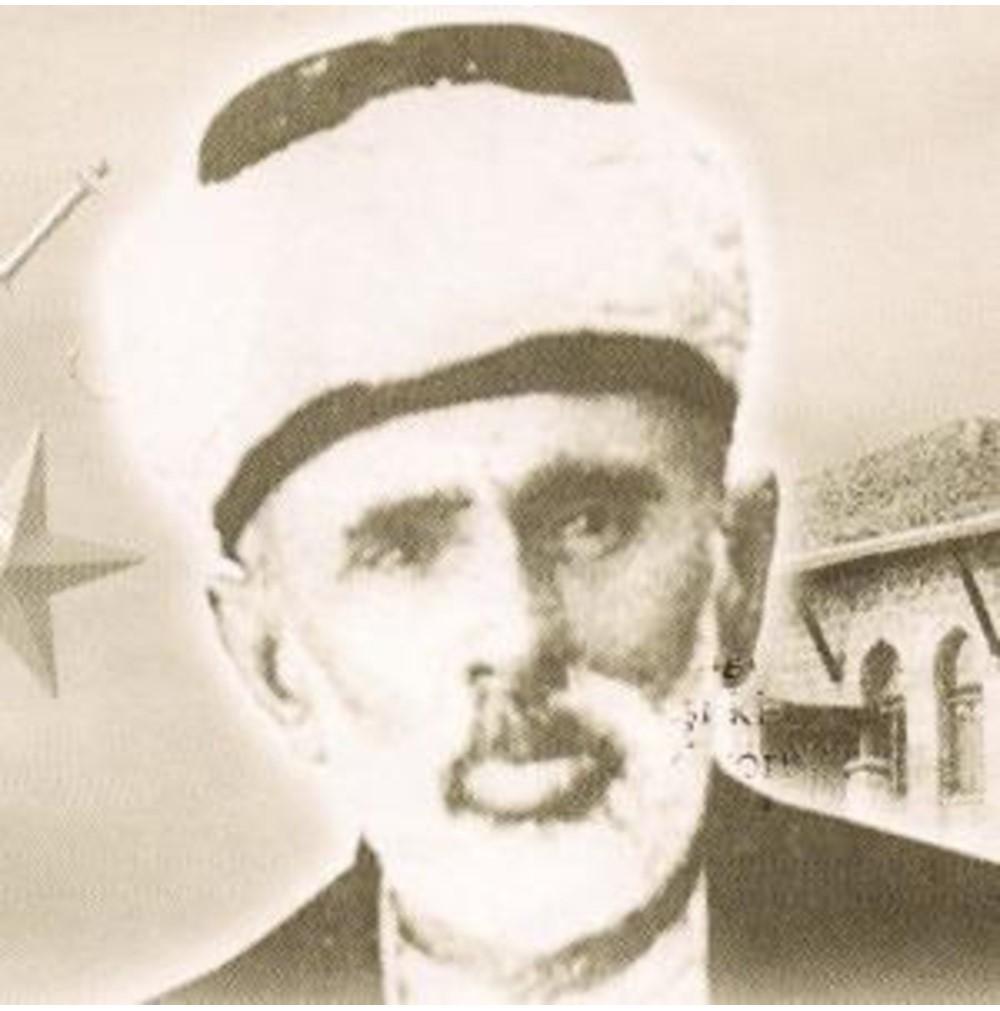
Abdullah Karabina, born in 1867 in the Boyabat district of Sinop, was a politician who engaged in trade, local governance, and parliamentary service from the late Ottoman Empire through the early years of the Turkish Republic. Engaged in the textile trade, Karabina served as president of the Boyabat Society for the Defense of Rights during the National Struggle and was elected as a deputy for Sinop to the Grand National Assembly of Türkiye in 1920. He was registered as a member of the First Group and served on various committees. Although his oral activities in the Assembly were limited, Karabina articulated his commitment to popular sovereignty and the supremacy of law through written statements. Karabina died in 1935; his family adopted the epithet “Karabina” as their surname after he passed away without having taken a legal surname under the Surname Law.
Abdullah Karabina was born in 1867 in the Boyabat district of Sinop Vilayet. His father was Zeytunzade Ömer Efendi and his mother was Arife Hanım. He completed his primary education at the iptidai and rüştiye schools in Boyabat and became involved in the family trade of textiles. He witnessed the politically and militarily turbulent periods of the Ottoman Empire, including major events such as the 1897 Ottoman-Greek War, the 31 March Incident, the Italo-Turkish War, the Balkan Wars, and the First World War.
Throughout his life, Karabina held various administrative positions in Boyabat and its surroundings, including membership in the Liva Permanent Council, membership in the Liva General Assembly, and service as Şehr-i Eminlik. During the National Struggle, he assumed the presidency of the Boyabat Society for the Defense of Rights. This role demonstrated his local popularity and his contribution to the resistance movement in Anatolia.
Elected as a deputy for Sinop in the elections held on 1 April 1920, Karabina attended the opening of the Grand National Assembly on 24 April 1920. He participated in the deliberations surrounding the Assembly’s establishment and was among the Sinop deputies who supported naming the institution the “Grand National Assembly.” Registered as a member of the First Group, Karabina served on the Drafting, Postal and Telegraph Committees of the Assembly.
No speeches or proposals by Karabina appear in the official records of the Grand National Assembly. However, following the liberation of İzmir, his signature appears on a congratulatory message issued jointly by the Sinop deputies. Additionally, his written response on 27 April 1922 to the question posed to Assembly members—“What is the success of the Independence Struggle dependent upon?”—stating “the sovereignty of the people and the law,” constitutes a key document reflecting his fundamental political outlook.
Although the legislative proposal dated 3 June 1922 concerning the punishment of those who openly broke their fast during Ramadan was attributed to Karabina, it was later determined that this was an error made during the transcription of the Assembly records into the new Latin script. In fact, the proposal originated from Abdullah Sabri Bey, the deputy for Bolu. Records show that the proposal was incorrectly registered under the name “Abdullah Efendi, Deputy of Sinop,” while other documents correctly identify him as the deputy from Bolu.
Not nominated for re-election in 1923, Karabina did not continue in political life and returned to his former trade in textiles. In 1927, he suffered significant economic loss due to a fire in his commercial building. A 1935 study conducted by the Republican People’s Party on the living conditions of first-term deputies found that Karabina had no fixed income and owned only a coffeehouse and a small plot of land.
Abdullah Karabina was married and had four children, though some sources list seven. He died on 22 April 1935. His daughter, Ziynet Kula, received a monthly pension under the “Monthly Allowance from National Service Order” between 1948 and 1951, continuing until 2012. Because Karabina died before the enactment of the Surname Law, his family adopted the epithet “Karabina” as their official surname.

Early Life and Education
Administrative and Local Roles
Membership in the Grand National Assembly
Activities and Assembly Records
The Misattributed Legislative Proposal
Life After Election and Economic Status
Family, Death, and Aftermath