


This article was automatically translated from the original Turkish version.
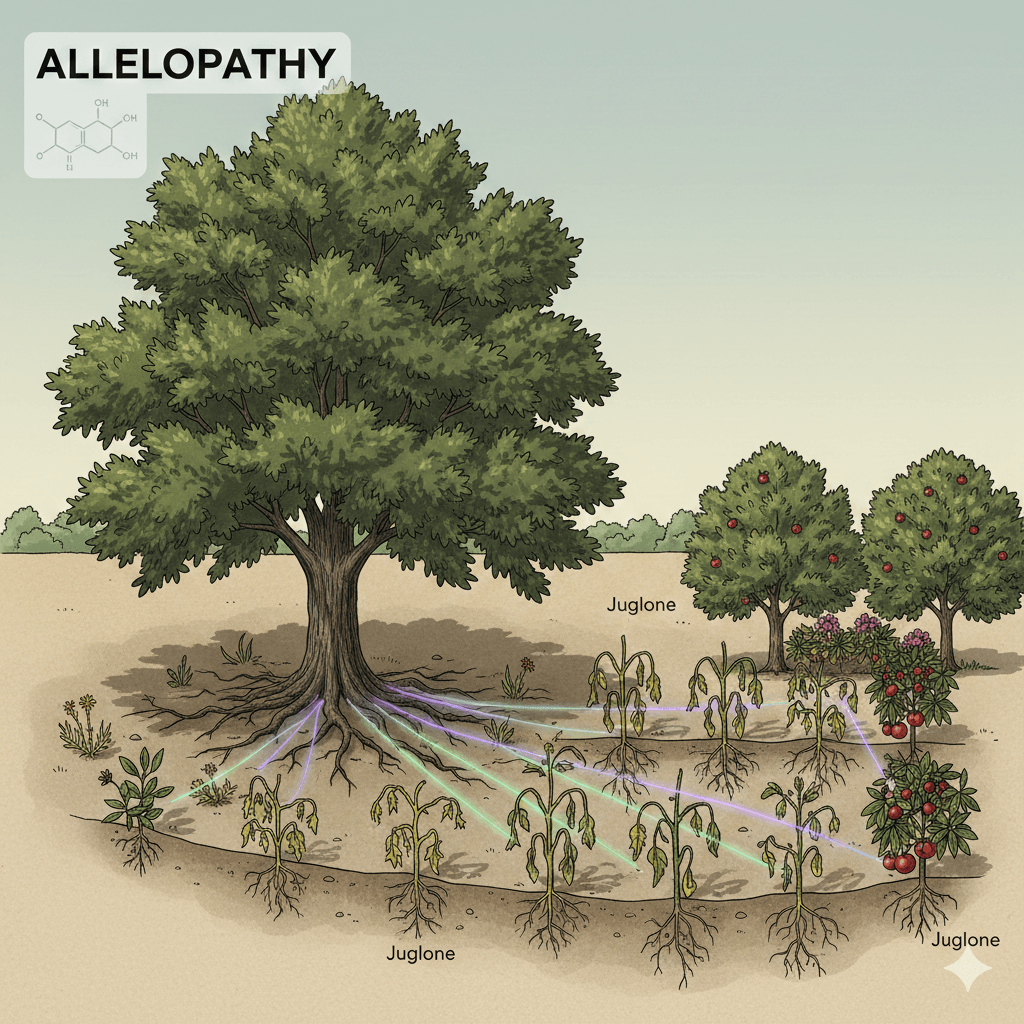
Allelopati (Yapay Zekâ ile Oluşturulmuştur)
Allelopathy is the collective set of positive or negative chemical interactions that one plant or microorganism exerts directly or indirectly on the growth and development of another plant through the production of secondary metabolites. The term, derived etymologically from the Greek words "allelon" (another) and "pathos" (to suffer or feel), was first used in 1937 by Austrian scientist Hans Molisch【1】. Today, allelopathy is recognized as a critical subdiscipline in the regulation of plant communities and in weed management strategies within agricultural ecosystems.
The existence of chemical interactions between plants has been known for thousands of years. In the 300s BCE, Theophrastus described the negative effects of chickpeas on other plants; in the 1st century CE, the Roman scholar Pliny noted the inhibitory effect of walnut trees on surrounding crops【2】. These historical observations laid the foundation for modern allelopathy research.

Visual Representing Allelopathy (Generated by Artificial Intelligence)
Chemical compounds mediating allelopathic interactions are termed "allelochemicals." All of these compounds are secondary metabolites produced by plants in processes unrelated to their primary life functions. These compounds are synthesized in plant tissues including leaves stems roots flowers fruits and seeds. Classified into 14 major categories based on chemical similarity allelochemicals encompass a broad molecular range such as water-soluble organic acids simple phenols coumarins flavonoids tannins terpenoids alkaloids and glucosinolates. Plant growth regulators such as salicylic acid and ethylene can also function as allelochemicals. These compounds serve as part of the plant's defense system against microbial attacks herbivory and competition from other plants.
The release of allelochemicals into the environment occurs through four primary mechanisms: volatilization root exudation leaching from aboveground plant parts and decomposition of plant residues. Plants in arid regions particularly can release toxic volatile gases through stomata or glandular trichomes to affect neighboring plants. Numerous compounds are secreted into the soil via roots while rainwater or fog droplets can wash protective chemicals from leaves into the soil. Additionally chemicals released upon plant death through tissue decomposition can reach target plants by altering the physical and microbial structure of the soil. These release processes vary according to the plant's age environmental temperature light availability soil structure and nutrient status.

Visual Representing Allelopathy (Generated by Artificial Intelligence)
The effects of allelochemicals on target plants are generally negative. These effects manifest as morphological expressions of cellular or molecular-level changes. Symptoms observed in recipient plants include inhibition of seed germination cessation of root and root hair development necrosis or swelling at root tips slowed seedling growth and loss of dry weight. At the physiological level allelochemicals disrupt cell division nutrient uptake photosynthesis enzyme activity protein synthesis and membrane permeability thereby interfering with the plant's life cycle. For example juglone in walnut trees reduces peroxidase activity associated with cell walls and nutrient uptake while the amino acid m-tyrosine found in basil inhibits cell division and early root development.
In sustainable agricultural practices allelopathy is used as an integrated weed management tool to reduce reliance on synthetic herbicides. In intercropping systems allelopathic plants grown alongside main crops reduce weed density through resource competition and chemical suppression. In crop rotation practices allelopathic residues left from previous crops accumulate in the soil and suppress weeds in subsequent planting seasons. Cover crops and mulching methods create both a physical barrier and prevent weed germination by releasing chemicals during decomposition. Additionally aqueous extracts derived from allelopathic plants can be applied directly to fields to reduce the dosage of synthetic herbicides.
Growing concerns over environmental and human health have spurred the development of plant-derived allelochemicals as "natural herbicides" or "bioherbicides." These compounds offer advantages over synthetic alternatives due to their novel modes of action and rapid degradation in nature. For instance leptospermone isolated from tea tree inspired the development of the commercial herbicide mesotrione while 1 8-cineole from eucalyptus formed the basis of cinmethylin. Currently various commercial natural herbicides containing substances such as d-limonene clove oil cinnamon oil and pelargonic acid are available. Products containing black walnut extract are also used for both pre- and post-emergence biological weed control.
The widespread adoption of allelopathy in agriculture faces key challenges including high costs of isolation and synthesis of allelochemicals environmental instability and low selectivity. Many natural compounds degrade too rapidly in nature to maintain desired persistence and when applied at high doses can cause unintended effects on soil microbial communities. Future research is expected to focus on elucidating the molecular and genetic mechanisms of allelochemical action enhancing selectivity and developing transgenic crops with enhanced allelopathic potential through genetic engineering. This process is regarded as a fundamental step toward transitioning to a sustainable agriculture system that reduces chemical dependency and preserves ecological balance.
[1]
Yuvraj Khamare, Jianjun Chen ve Stephen Christopher Marble, “Allelopati ve yabancı ot kontrolü aracı olarak uygulaması: Bir inceleme,” Frontiers in Plant Science 13 (Kasım 2022): 1034649, https://doi.org/10.3389/fpls.2022.1034649
[2]
Yuvraj Khamare, Jianjun Chen ve Stephen Christopher Marble, “Allelopati ve yabancı ot kontrolü aracı olarak uygulaması: Bir inceleme,” Frontiers in Plant Science 13 (Kasım 2022): 1034649, https://doi.org/10.3389/fpls.2022.1034649

Allelopati (Yapay Zekâ ile Oluşturulmuştur)
Historical Development
Nature and Classification of Allelochemicals
Mechanisms of Allelochemical Release and Environmental Interactions
Physiological and Morphological Effects of Allelopathy on Recipient Plants
Applications of Allelopathy in Agricultural Ecosystems
Natural Herbicides and Commercial Allelopathic Products
Limitations in Allelopathy Research and Future Projections