


This article was automatically translated from the original Turkish version.
+1 More
Amasya Beji Marble is a natural stone extracted in the Amasya province of Türkiye, possessing high physical, chemical, and aesthetic properties. It was officially registered as a “Geographical Indication” by the Turkish Patent and Trademark Office on 11 June 2018 and is protected under Law No. 6769 on Industrial Property.
Amasya Beji Marble is produced from limestone layers belonging to the Jurassic–Cretaceous-aged Dogdu Formation. Its fresh surface appears beige, white or light gray, while its fracture surface is gray or dark gray. The stone exhibits thin-to-thick layered, massive, fractured, and jointed structure. Calcite infillings are present at joint locations. It has a micritic texture and contains oolitic grains, chert bands, and reefal components.
Marble exhibits high block integrity, low water absorption capacity, stain resistance, and high abrasion resistance. Its color is beige, and its patterns are categorized into two types: “classic” and “light”.
Microscopic examinations have revealed primary and secondary calcite minerals along with oolitic grains. The structure is porous with a microcrystalline texture and contains no macrofossils.
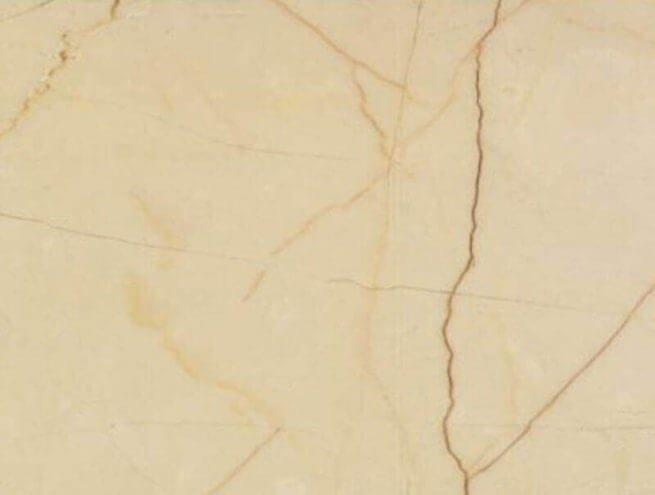
Amasya Beji Marble (Turkish Patent)
Amasya Beji Marble is extracted from quarries within its geographical boundary using open-pit mining methods. The production process consists of the following stages:
The geographical boundary encompasses the villages of Çivi, Akyazı, Musa, Eliktekke, Yağmur, Kervansaray, and Yördenik in the central district of Amasya province; Gaffarlı, Tencirli, and Başpınar in the Göynücek district; and Kervansaray, Karakaya, and Baculu in the Zile district of Tokat province.

Product Description and Distinctive Features
Physical and Chemical Properties:
Chemical Composition (%):
Production Method
Geographical Boundary and Control