


This article was automatically translated from the original Turkish version.
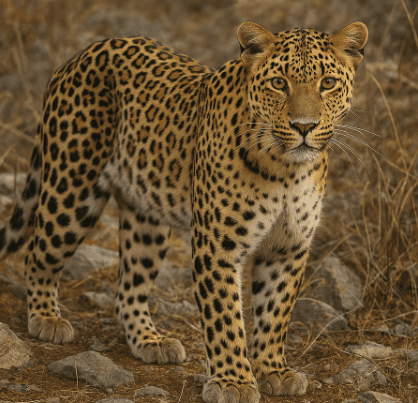
Anatolian Leopard
Scientific Name(s) | Panthera pardus tulliana | ||||||||
|---|---|---|---|---|---|---|---|---|---|
Specie(s) | Leopard (Panthera pardus) | ||||||||
Subspecies | Anatolian leopard (tulliana) | ||||||||
Geographic Distribution | The Anatolian Peninsula, especially the Taurus Mountains, Eastern and Southeastern Anatolia regions; also the forested areas of Eastern Black Sea, the inner parts of Central Black Sea, and Northwestern Anatolia | ||||||||
Habitat | Mountainous 500 meters above sea level and sparse forested terrain locations with vegetation cover for concealment at elevations up to 2 rocky and forested areas | ||||||||
Diet(s) | Carnivorous wild goat and wild boar feeds on large mammals such as deer | ||||||||
Conservation Status | Endangered according to the IUCN Red List its population in Türkiye is estimated to be fewer than 10 individuals | ||||||||
Last Confirmed Existence | Photographed with camera traps in 2019; new images were obtained in 2023 | ||||||||
Extinct? | No; it was long believed to be so, but its existence has been reconfirmed | ||||||||
Threats | Poaching, habitat loss, human activities | ||||||||
Conservation Efforts | Camera trap monitoring, awareness and conservation projects are being conducted in collaboration between DKMP, TÜBİTAK and ISUBÜ | ||||||||
Anatolian leopard (Panthera pardus tulliana) is recognized as a subspecies of the leopard (Panthera pardus) that historically inhabited and continues to exist in limited numbers in the Anatolian Peninsula. For many years, it was believed that the Anatolian leopard had become extinct, but in the 20th and 21st centuries, it was repeatedly documented through camera traps, providing concrete evidence of its continued existence. These discoveries have generated national and international interest in the species’ biogeography, ecology, and conservation.
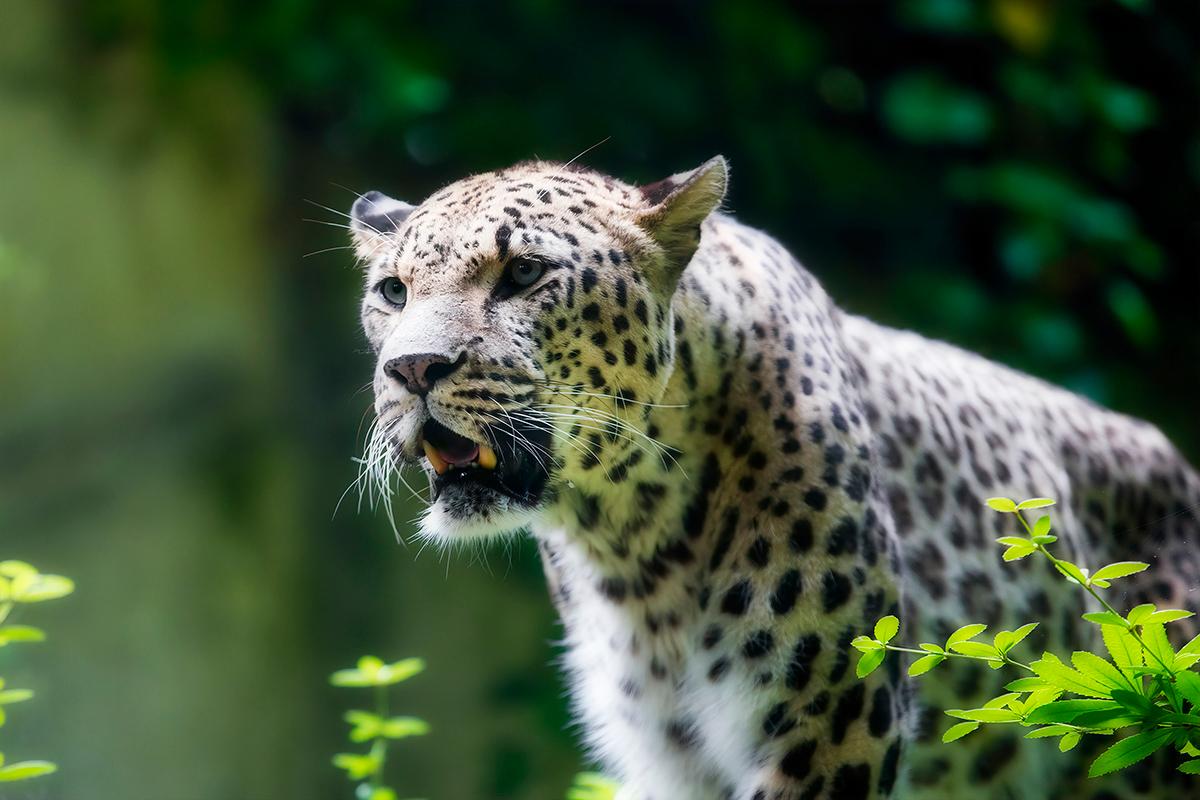
Anatolian Leopard (TÜBİTAK Science Young)
Due to its morphological and geographical characteristics, the Anatolian leopard has been classified as a distinct subspecies among Middle Eastern leopards. Although some scientific sources associate it with the Persian leopard (P. p. saxicolor), certain anatomical and genetic differences observed in individuals native to Turkey’s geography justify this distinction.
Historically, the Anatolian leopard ranged across Turkey’s Aegean, Mediterranean, Eastern Black Sea, Eastern, and Southeastern Anatolia regions. It was documented to inhabit mountainous, forested, and steep rocky areas during the 19th and 20th centuries. However, population numbers declined sharply due to human-induced pressures including expansion of agricultural land, settlement activities, hunting, and ecosystem degradation.
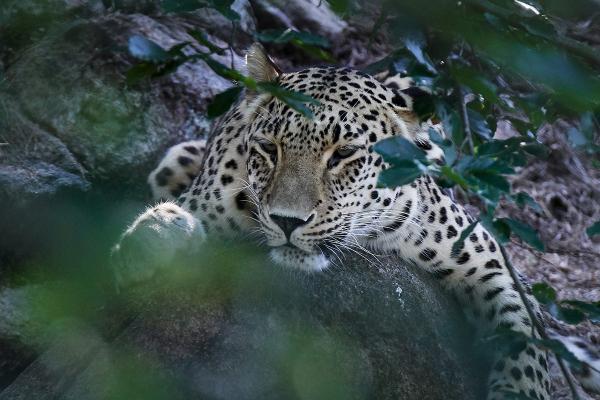
Anatolian Leopard (TÜBİTAK Science Young)
A sharp decline in sightings began in the 1950s, with the last confirmed observations reported in 1974 near Beypazarı, Ankara, and in the Siirt region during the 1970s. The most recent official record dates to 1974, when a leopard was killed. These events led to a widespread belief that the species had become extinct in Türkiye.
From the early 2000s onward, wildlife monitoring efforts coordinated by the General Directorate of Nature Conservation and National Parks (DKMP) began yielding new indications of the Anatolian leopard’s presence. Systematic monitoring using camera traps produced definitive photographic evidence in 2019, a finding officially shared with the public in 2024 by the Ministry of Agriculture and Forestry.
Anatolian Leopard – Footage Recorded by Camera Trap (TÜBİTAK Science Young)
The captured images demonstrate that the leopard continues to inhabit mountainous regions of Eastern and Southeastern Anatolia. These studies have also partially documented the leopard’s home range, behavioral patterns, and dietary habits. Visual data indicate that the individuals are physically healthy and show continued adaptation to their habitat.
The Anatolian leopard possesses a large, muscular body with a shoulder height of approximately 60–75 cm and a body length ranging from 110–150 cm. Its tail measures about 90 cm in length. The coat color varies from pale yellow to grayish-yellow and is covered with characteristic black rosettes. Among leopard subspecies, the Anatolian leopard is relatively lighter in color and larger in size.
It is a nocturnal and solitary animal. As a predator, it primarily feeds on mammals such as wild goat, ibex, wild boar, and hare. Its high physical agility enables effective movement across steep terrain. It is also an excellent climber and swimmer.
ANATOLIAN LEOPARD IS STILL LIVING IN ANATOLIA! (YouTube)
The Anatolian leopard is protected under the legislation of the Republic of Türkiye. It is listed among species under absolute protection by the Animal Protection Law No. 5199 and the Bern Convention. The International Union for Conservation of Nature (IUCN) currently classifies the species Panthera pardus as “Vulnerable,” while assessments at the subspecies level are still ongoing.
Under the framework of the “Anatolian Leopard Action Plan” implemented by the DKMP General Directorate, efforts are systematically carried out to protect the leopard’s habitat, monitor its population, and raise public awareness. National parks and nature parks designated as protected areas play a critical role in securing the leopard’s habitat.
Anadolu Ajansı. “Anadolu Parsı Fotokapanla Görüntülendi.” Accessed May 21, 2025. https://www.aa.com.tr/tr/yasam/anadolu-parsi-fotokapanla-goruntulendi/2986192.
Ministry of Agriculture and Forestry. "Anadolu Parsı Yüzünü Bu Kez Daha Net Gösterdi." Accessed May 21, 2025. https://www.tarimorman.gov.tr/DKMP/Haber/372/Anadolu-Parsi-Yuzunu-Bu-Kez-Daha-Net-Gosterdi.
TÜBİTAK Bilim Genç. “Anadolu Leoparının Soyu Nasıl Tükendi?” Bilim Genç. Accessed May 21, 2025. https://bilimgenc.tubitak.gov.tr/makale/anadolu-leoparinin-soyu-nasil-tukendi.
TÜBİTAK Bilim Genç. “Anadolu Parsının En Net Görüntüsü Kaydedildi.” *Bilim Genç.* Accessed May 21, 2025. https://bilimgenc.tubitak.gov.tr/makale/anadolu-parsinin-en-net-goruntusu-kaydedildi.
TÜBİTAK Bilim Genç. “Nesli Tükendiği Düşünülen Anadolu Parsı Fotokapana Yakalandı.” Bilim Genç. Accessed May 21, 2025. https://bilimgenc.tubitak.gov.tr/makale/nesli-tukendigi-dusunulen-anadolu-parsi-fotokapana-yakalandi.
Tübitak Bilim Genç. “Anadolu Parsı Fotokapana Yakalandı.” YouTube, November 15, 2024. Accessed May 21, 2025. https://www.youtube.com/watch?v=nrVS-MgmHnk.
YouTube. "Anadolu Parsı Aylar Sonra Yeniden Görüntülendi." YouTube, May 24, 2024. Accessed May 21, 2025. https://youtu.be/46ogmd8Eevo.YouTube

Anatolian Leopard
Scientific Name(s) | Panthera pardus tulliana | ||||||||
|---|---|---|---|---|---|---|---|---|---|
Specie(s) | Leopard (Panthera pardus) | ||||||||
Subspecies | Anatolian leopard (tulliana) | ||||||||
Geographic Distribution | The Anatolian Peninsula, especially the Taurus Mountains, Eastern and Southeastern Anatolia regions; also the forested areas of Eastern Black Sea, the inner parts of Central Black Sea, and Northwestern Anatolia | ||||||||
Habitat | Mountainous 500 meters above sea level and sparse forested terrain locations with vegetation cover for concealment at elevations up to 2 rocky and forested areas | ||||||||
Diet(s) | Carnivorous wild goat and wild boar feeds on large mammals such as deer | ||||||||
Conservation Status | Endangered according to the IUCN Red List its population in Türkiye is estimated to be fewer than 10 individuals | ||||||||
Last Confirmed Existence | Photographed with camera traps in 2019; new images were obtained in 2023 | ||||||||
Extinct? | No; it was long believed to be so, but its existence has been reconfirmed | ||||||||
Threats | Poaching, habitat loss, human activities | ||||||||
Conservation Efforts | Camera trap monitoring, awareness and conservation projects are being conducted in collaboration between DKMP, TÜBİTAK and ISUBÜ | ||||||||
Historical Distribution and Decline
Rediscovery and Camera Trap Evidence
Physical Characteristics and Behavior
Conservation Status and Legal Protection