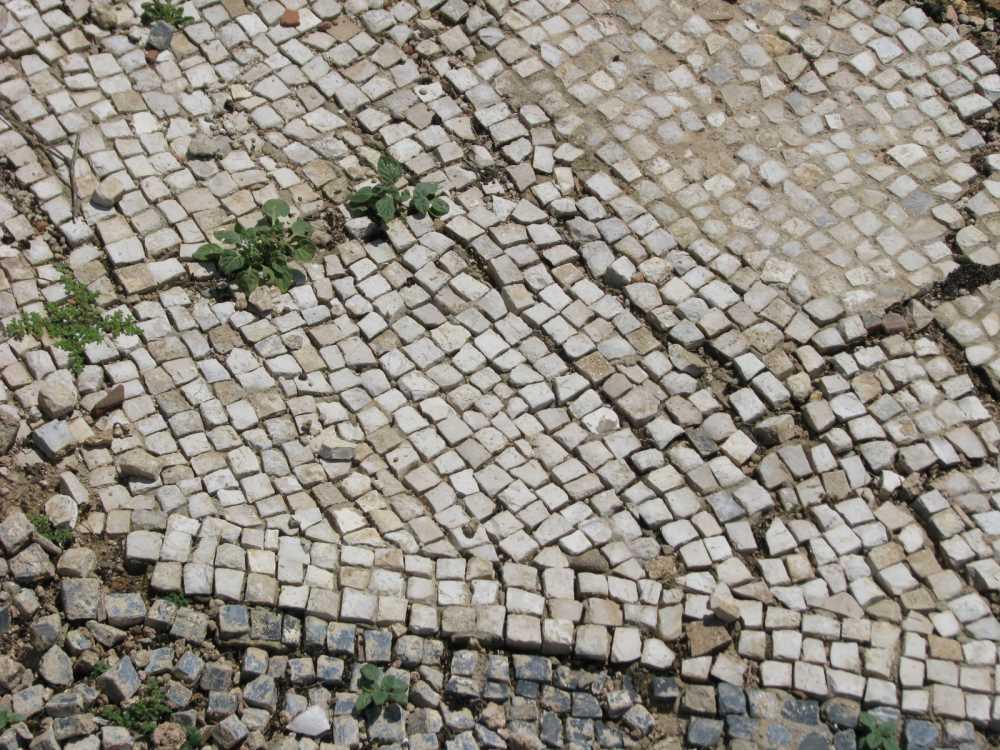


This article was automatically translated from the original Turkish version.
+1 More
Akmonia Ancient City is an ancient settlement located near Ahât Village in the Banaz district of Uşak Province, in Türkiye’s Aegean Region. The city lies within the western boundaries of ancient Phrygia and contains remains from the Hellenistic, Roman, and Byzantine periods. Akmonia is notable not only for its historical significance but also for its integration with the surrounding natural landscape, making it a significant archaeological site. Today, the city has been documented through surface surveys and officially registered by the Republic of Türkiye Ministry of Culture and Tourism as a protected immovable cultural heritage, granted first-degree archaeological site status.
Akmonia is situated in the southeast of the Banaz Plain, to the southwest of Ahât Village, within a region connected by ancient east-west roads. In ancient written sources, the city’s name appears in various forms such as Akmoneia and Akmonion. Located in the western part of Phrygia, Akmonia was established during the Hellenistic period and later flourished under the Roman Empire, becoming a regional center. Structures dedicated to the emperors of the time and public monuments attest to this elevated status.
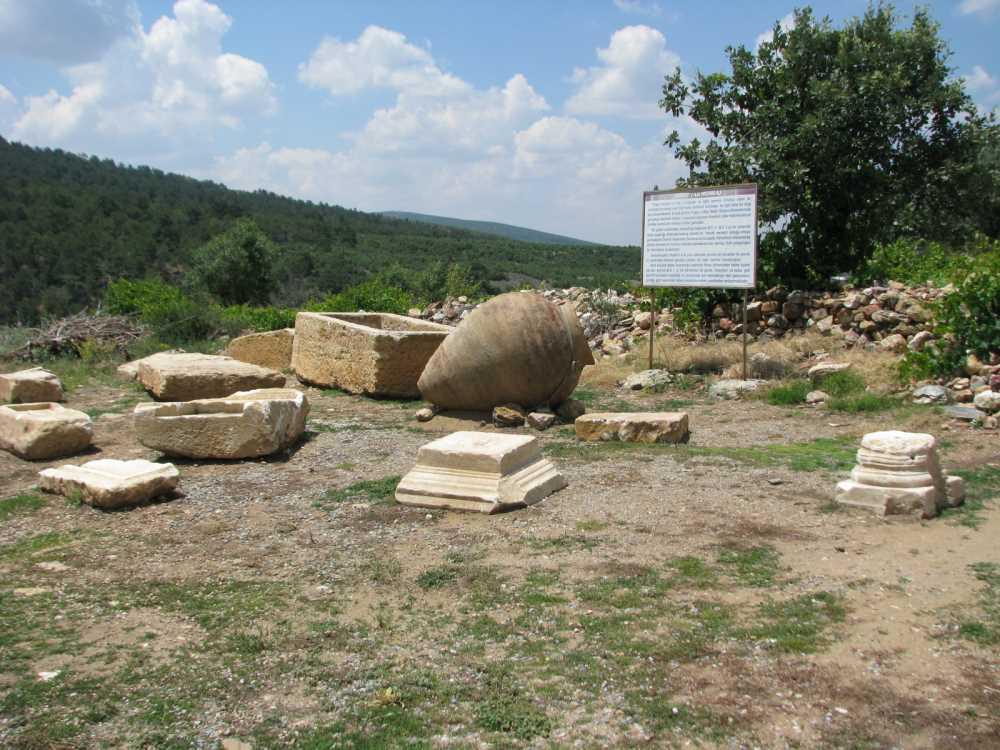
Akmonia Ancient City (Culture Portal)
Surface surveys conducted at Akmonia Ancient City indicate that the settlement followed a systematic urban plan. Various sectors of the city have revealed public buildings, sacred areas, residential terraces, defensive walls, and funerary structures. Particularly striking is the temple complex located in the area known as the “Upper City.” Architectural remnants associated with the temple include Corinthian columns, marble architectural blocks, and inscribed bases. These features show strong similarities to Roman-period temple architecture in Anatolia.
Among the inscriptions found in the city are examples written in Latin and Greek. These inscriptions provide information about public officials, priests, and local administrators who served in the city. Inscribed bases and monumental architectural remains are key elements documenting Akmonia’s social and administrative structure.
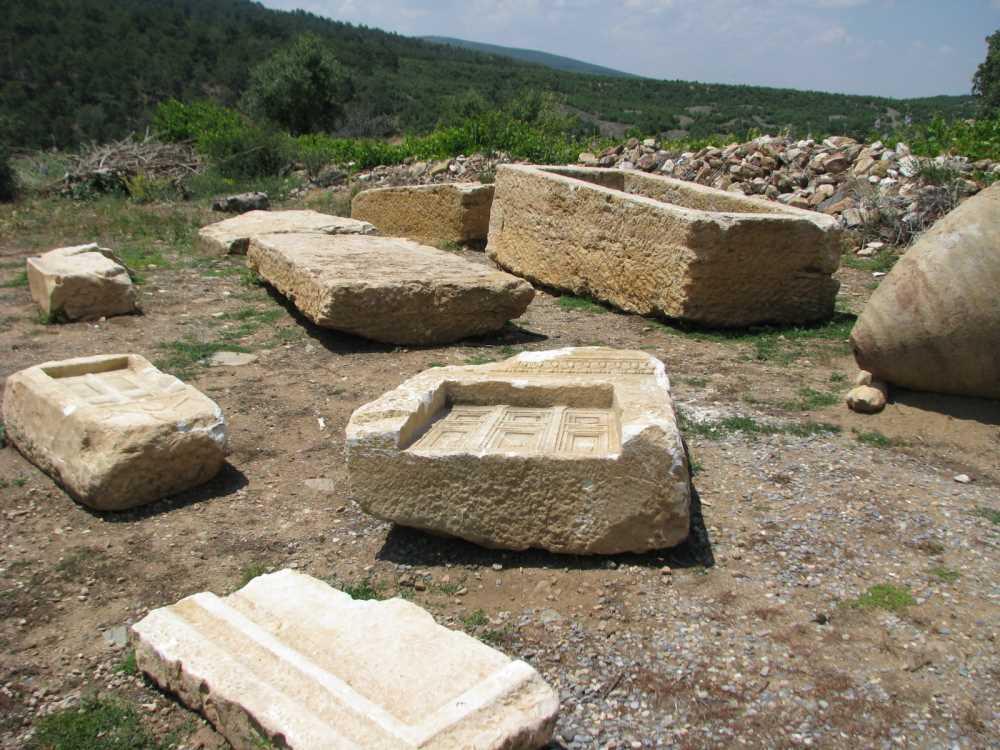
Akmonia Ancient City (Culture Portal)
In the northwestern sector of Akmonia, a large number of burial structures have been identified within the necropolis area. These include sarcophagi, stone coffins, rock-cut tombs, and inscribed funerary stelae. This diversity reflects the richness of burial traditions in the region. Some sarcophagi bear decorative elements and inscribed information. The burial grounds offer valuable insights into the city’s social structure and contemporary burial practices.
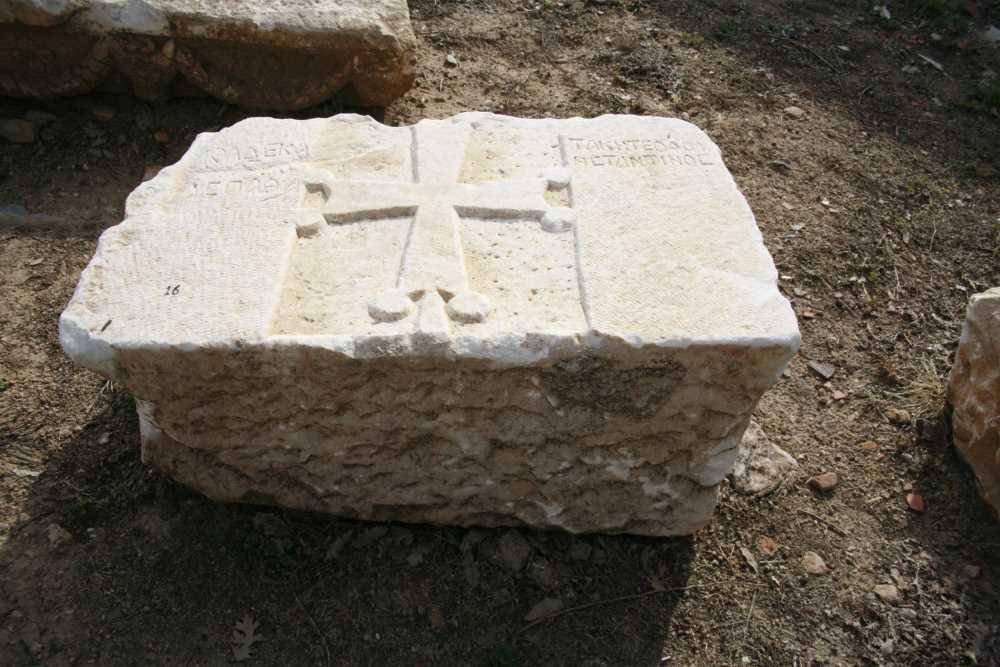
Akmonia Ancient City (Culture Portal)
At Akmonia Ancient City, temple structures associated with the Roman imperial cult have been identified. These include altars and monuments erected in honor of Emperor Augustus and subsequent emperors. Inscriptions dedicated to gods and goddesses demonstrate the widespread nature of religious practices in the city. Altars and inscriptional remains constitute important archaeological evidence of Akmonia’s religious life.
Akmonia Ancient City is a registered cultural heritage site under the Republic of Türkiye Ministry of Culture and Tourism and is protected as a first-degree archaeological site. The area has not yet undergone systematic excavations and has been documented solely through surface surveys. Works for the promotion and preservation of the site are coordinated by the Uşak Provincial Governorate, Banaz District Governorate, and Uşak Provincial Directorate of Culture and Tourism. According to official information on the Banaz District Governorate’s website, the city is being promoted as part of efforts to develop cultural tourism.
Access to Akmonia Ancient City is possible by road. The settlement lies within the boundaries of Ahât Village, which is administratively attached to Banaz district, and is situated in a location with favorable road access. Known to the local population and embedded in the region’s cultural memory, Akmonia holds an important place within Banaz’s historical and cultural heritage.

No Discussion Added Yet
Start discussion for "Ancient City of Akmonia" article
Geographical Location and Historical Context
Urban Structure and Archaeological Remains
Necropolis and Funerary Architecture
Religious Structures and Imperial Cult
Protection Status and Institutional Efforts
Access and Current Status