This article was automatically translated from the original Turkish version.
+1 More
Location | Gazipaşa - Antalya / Türkiye | ||||||||
|---|---|---|---|---|---|---|---|---|---|
Ancient Area | Mountainous Cilicia | ||||||||
Foundation | 1st century AD | ||||||||
Excavation Start | 2005 | ||||||||
Archaeological Findings | mosaics stamped with "ANT" and pottery Roman period coins | ||||||||
Antiocheia ad Cragum is a coastal city located within the boundaries of Güneyköy Village, Gazipaşa District of modern-day Antalya, in the region known in antiquity as Mountainous Cilicia. Although situated along the Mediterranean coast, the city’s center was built on a sheltered area approximately 300–350 meters above sea level, surrounded by rocky and steep slopes. This strategic location made it a refuge for Cilician pirates who raided neighboring cities and merchant ships during the Hellenistic period.
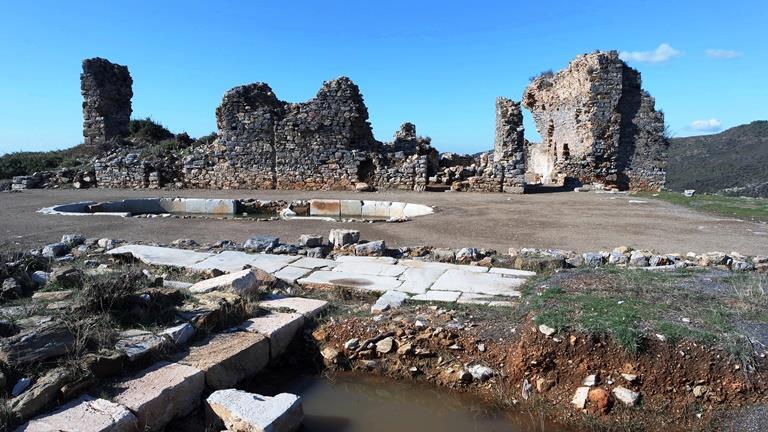
Antiocheia ad Cragum Ancient City (Antalya Provincial Directorate of Culture and Tourism)
The city’s name derives from King Antiochus IV of Commagene, to whom Emperor Claudius granted authority over the region in 41 CE. Antiochus IV initiated construction activities in this rugged, rocky area, establishing two settlements: Antiocheia ad Cragum, named after himself, and Iotape, named after his wife. The term “Cragum” in the city’s name, according to the account of Claudius Ptolemaeus, was adopted to distinguish it from other cities named Antiocheia, and originates from the nearby Mount Kragos.
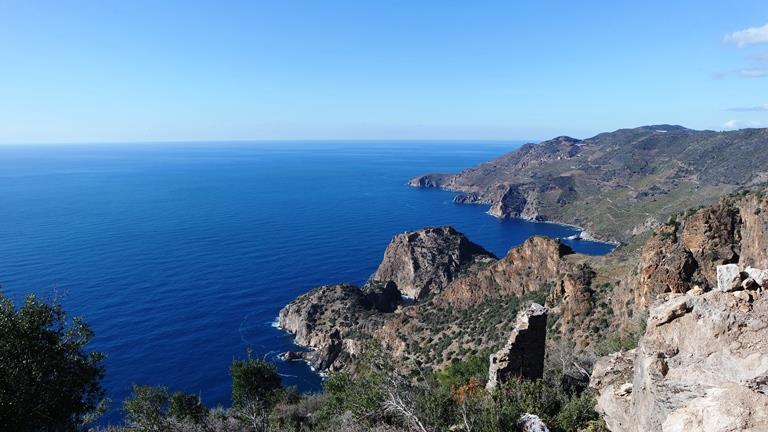
Antiocheia ad Cragum Ancient City (Antalya Provincial Directorate of Culture and Tourism)
Throughout the Roman Imperial period (30 BCE – 303 CE), Antiocheia ad Cragum was inhabited as part of the province of Cilicia. However, it reached its peak prosperity during the Eastern Roman Empire period (303–1453 CE). From the 4th century CE until the 12th century, it was recognized as a significant center of Christianity.
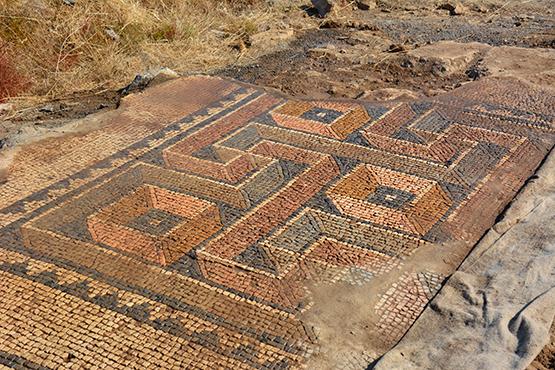
Excavations have revealed a council building, temples, and mosaic-decorated structures that highlight the city’s rich religious and public life. The excavation of the temple structure has been largely completed, and restoration projects are planned.
Although no definitive information exists regarding coins minted in Antiocheia ad Cragum, it is known that imperial coins from Antoninus Pius to Valerian were produced during the Roman Imperial era.
The discovery of mosaics and pottery bearing the stamp “ANT” indicates that Antiocheia ad Cragum was among the few ancient cities to achieve commercial branding. These stamps confirm that ceramic production occurred in local kilns within the city.
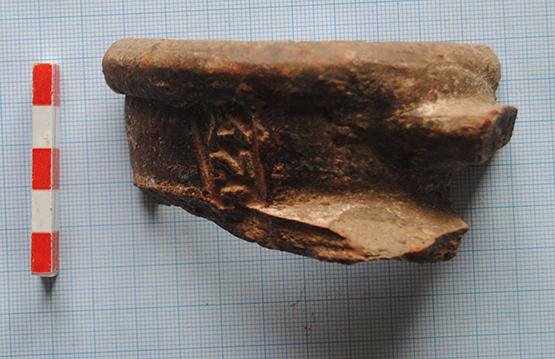
Pottery with “ANT” Stamp (Anadolu Agency)
The city’s remains are grouped into three main terraces, reflecting distinct functional zones of the ancient settlement.
Located on a terrace at the eastern edge of the site, the Temple Tomb, though entirely ruined, preserves significant architectural elements. Fragments of pediments, columns, and Corinthian capitals survive on its eastern and western facades. The structure, oriented east-west and built on a high podium, has a podium measuring 7.25 × 7.5 meters, with a marble-clad base.
On the western pediment, a medallion carried symmetrically by two flying genii contains a nude female bust. The bust, holding a bow on its left shoulder and a quiver on its right, evokes the goddess Artemis. The overall architectural features and the facial characteristics of the genii date the structure to the mid-2nd century CE. Construction materials include finely cut limestone blocks, black-mica granite columns, and marble architectural elements.
Located on a terrace south of the Temple Tomb, the church is single-nave with a narthex. The nave is 24.42 meters long and narrows toward the apse from the narthex. The apse is semicircular and plastered. The northern wall was constructed using spolia, particularly vertical granite columns. The southern wall is part of an earlier Roman structure and includes an inscribed column bearing the name M. Aurelius. The narthex extends beyond the nave walls on both sides and measures 20 meters in length. The structure was built using small rubble stones and mortar.
The Tower Tomb, situated southeast of the church, has the appearance of a rectangular tower. It measures 3.65 × 5 meters and consists of two stories. The entrance faces west, and the first floor is vaulted in an east-west direction. There is no internal connection between the floors. The structure was built using local small stones bound with mortar.
The bathhouse, located between the church and the colonnaded street, was constructed to conform to the sloping terrain. The building has an irregular rectangular plan, measuring 22.50 meters in length and 15.5 meters in width. Although its entrance is on the north side, the steepness of the terrain causes the main facade to face south. The bathhouse contains three cisterns, the largest of which (F) runs along the eastern wall. The bathhouse shares similarities with those of Syedra and Anamurium.
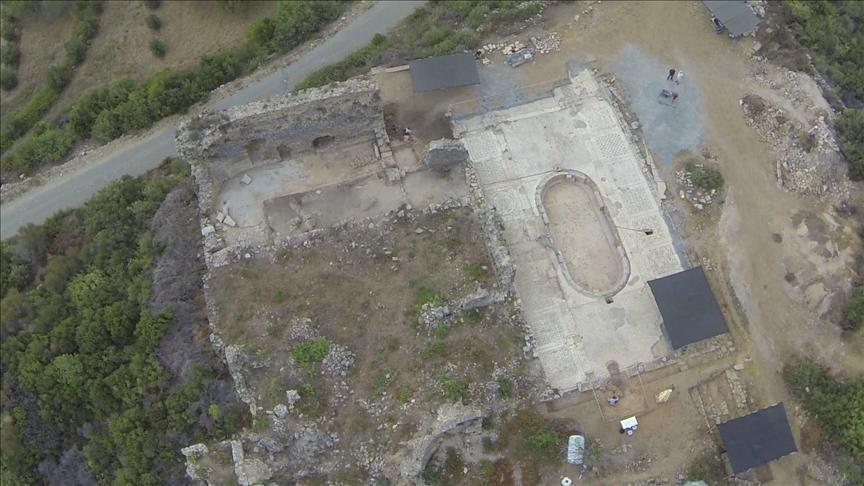
Antiocheia ad Cragum Ancient City
The colonnaded street, beginning at the triumphal arch and ending at the agora, is built on a terrace. It measures 166 meters in length and 12.10 meters in width. Rows of columns line both sides of the street. The columns are made of granite and feature Corinthian-style marble capitals. Small shops are located on both sides of the street. The presence of statue bases along the street suggests that it was adorned with statues in antiquity. At the eastern end of the street stands a single-arched triumphal arch.
The trikonkhos, located north of the corner where the colonnaded street meets the agora, measures 8 × 6.50 meters and has an entrance from the west. Each of the eastern, northern, and southern walls features an apse. The walls were constructed using local small stones bound with mortar.
The agora, situated south of the western end of the colonnaded street, has a nearly square plan with colonnaded galleries only along the eastern and western sides. The columns are made of granite and feature high-quality white marble Corinthian capitals. At the center of the agora stands a temple oriented north-south. The temple, built on a high podium, measures approximately 14.50 × 8.50 meters.
The palace, located on a hill behind the agora, is the most prominent site in the city due to its geographical position. The palace entrance faces the agora. The surviving walls are 1–2 meters high and constructed of regular small stones and mortar.
The fortress, situated on a hill at the westernmost point of the city, stands approximately 150 meters above sea level. Access from the three sides surrounded by the sea is impossible. The eastern walls are double-fortified and reinforced with towers. The entrance to the fortress is from the north. Inside the inner fortress, vaulted cisterns are found in various locations.
The city has two major necropolises. One is located on a plain north of the colonnaded street, east of the Nohutyeri neighborhood; the other is on a small hill between the palace and the fortress to the west of the city. The hill containing the western necropolis is surrounded by the sea on three sides and is rocky and steep. The majority of the tombs here are well-preserved. Two-story tombs are arranged along the southern edge of the hill. In addition to rectangular tombs, there is also a circular, domed tomb. The interiors of the tombs were carved directly into the rock.
At the center of the hill stands a single-nave chapel. Fresco fragments depicting saints have survived on the chapel’s interior walls. The other necropolis, the oldest in the city, was damaged during the construction of the Nohutyeri neighborhood.
Systematic scientific excavations at Antiocheia ad Cragum began in 2005 with the participation of scholars from various countries and disciplines. Under the leadership of Professor Michael C. Hoff, joint excavations conducted by the University of Nebraska and Atatürk University include not only archaeological investigations but also interdisciplinary research such as paleopathological studies.
Under the “Heritage for the Future” project, currently managed by the Ministry of Culture and Tourism, land acquisition efforts have been initiated around the ancient city. This project aims to enhance the site’s protection and promote its development for tourism.
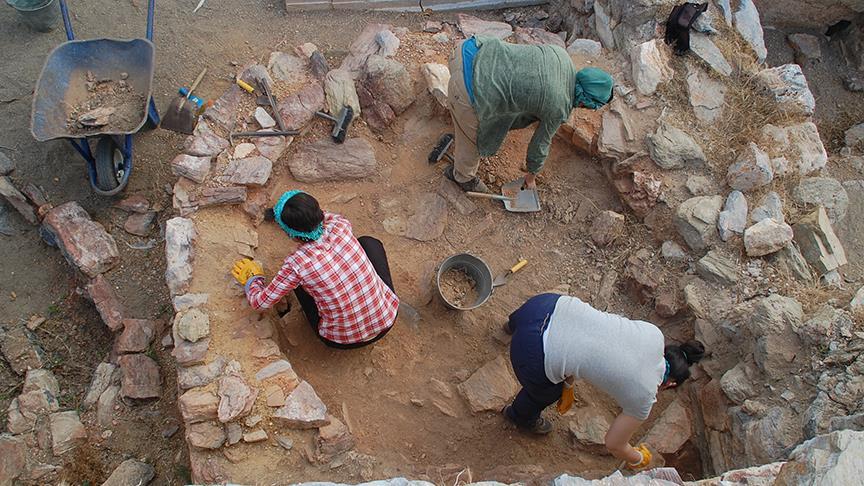
Excavation Work at the Ancient City (Anadolu Agency)
Anadolu Ajansı. "2 bin yıllık çömlek ve mozaiklerde 'ANT' damgası." Accessed June 18, 2025. https://www.aa.com.tr/tr/kultur-sanat/2-bin-yillik-comlek-ve-mozaiklerde-ant-damgasi-/868852
Anadolu Ajansı. "Antiocheia Ad Cragum Antik Kenti'nde yapılacak çalışmalar için acele kamulaştırma kararı." Accessed June 18, 2025. https://www.aa.com.tr/tr/kultur/antiocheia-ad-cragum-antik-kentinde-yapilacak-calismalar-icin-acele-kamulastirma-karari/3382076
Erdemgil, Selâhattîn, and Fatma Özoral. "ANTIOCHIA AD CRAGUM." *Anadolu Araştırmaları (Jahrbuch für Kleinasiatische Forschung)* 19, no. 1 (2013): 211–236. Accessed June 18, 2025. https://dergipark.org.tr/tr/download/article-file/2158716
Erdoğan, Halil Mert. "Antiocheia ad Cragum." Türkiye Turizm Ansiklopedisi. Accessed June 18, 2025. https://turkiyeturizmansiklopedisi.com/antiocheia-ad-cragum
Ministry of Culture and Tourism. "Antiochia ad Cragum." *Republic of Turkey,Antalya İl Directorate of Culture and Tourism.* Accessed June 18, 2025. https://antalya.ktb.gov.tr/TR-312260/antiochia-ad-cragum.html

Location | Gazipaşa - Antalya / Türkiye | ||||||||
|---|---|---|---|---|---|---|---|---|---|
Ancient Area | Mountainous Cilicia | ||||||||
Foundation | 1st century AD | ||||||||
Excavation Start | 2005 | ||||||||
Archaeological Findings | mosaics stamped with "ANT" and pottery Roman period coins | ||||||||
No Discussion Added Yet
Start discussion for "Ancient City of Antiocheia ad Cragum" article
Foundation and Development
Architectural Structures and Remains
Temple Tomb
Single-Nave Church
Tower Tomb
Bathhouse
Colonnaded Street
Trikonkhos
Agora
Palace
Fortress
Necropolis
Excavation Projects