

This article was automatically translated from the original Turkish version.
+1 More
Antimony (Sb)
Periodic Table | 5 | ||||||||
|---|---|---|---|---|---|---|---|---|---|
Chemical Symbol | Sb | ||||||||
Atomic Number | 51 | ||||||||
Group | 15 (Pnictogens) | ||||||||
Atomic Weight | (121.760) g/mol | ||||||||
Electron Configuration | [Kr] 4d¹⁰5s²5p³ | ||||||||
Density | 6.68 g/cm³ | ||||||||
Melting Point | 630.628 °C | ||||||||
Boiling Point | 1587 °C | ||||||||
Atomic Radius | ~206 pm | ||||||||
Electronegativity | 2.05 | ||||||||
Electron Affinity | 100924 kj/mol | ||||||||
Important Isotopes | ¹²³Sb (%42.64) (natural stable) ¹²¹Sb (%57.36) | ||||||||
Discoverer(s) | Ancient civilizations | ||||||||
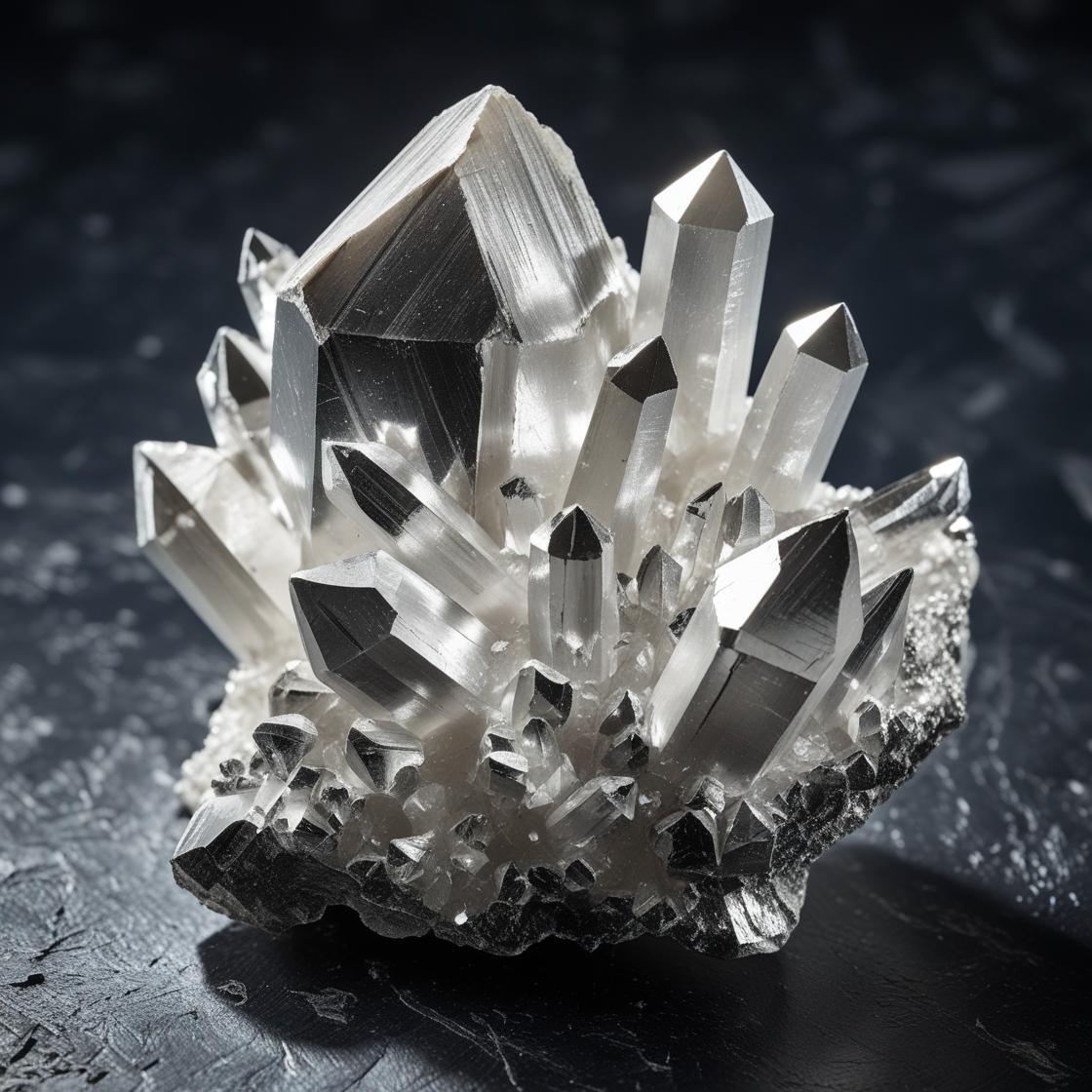
Antimony is a metalloid element with atomic number 51 located in group 15 of the periodic table. It has a silvery-white color and a hard, brittle structure and has been known since ancient times. It is used in various industrial applications, primarily in alloys and the electronics industry.
Antimony (Sb) is situated in the fifth period and group 15 (pnictogen group) of the periodic table, between arsenic and bismuth. Due to its chemical properties resembling both metals and nonmetals, it is classified as a metalloid. Its electron configuration is [Kr] 4d¹⁰5s²5p³. The most common allotrope is metallic gray antimony; it also exists in amorphous forms such as yellow and black. At room temperature, it is a solid. The density of metallic antimony is approximately 6.68 g/cm³. It is a poor conductor of heat and electricity.
Antimony and its most common mineral, stibnite (antimony sulfide, Sb₂S₃), have been known since antiquity. Ancient Egyptians used stibnite as eye makeup (kohl). Metallic antimony was also known in ancient times but was often confused with lead or bismuth. Recognizing antimony as a distinct substance and studying its properties took centuries. Figures such as Vannoccio Biringuccio and Georgius Agricola, known for their work in metallurgy and chemistry in the 16th century, described the isolation and properties of antimony.
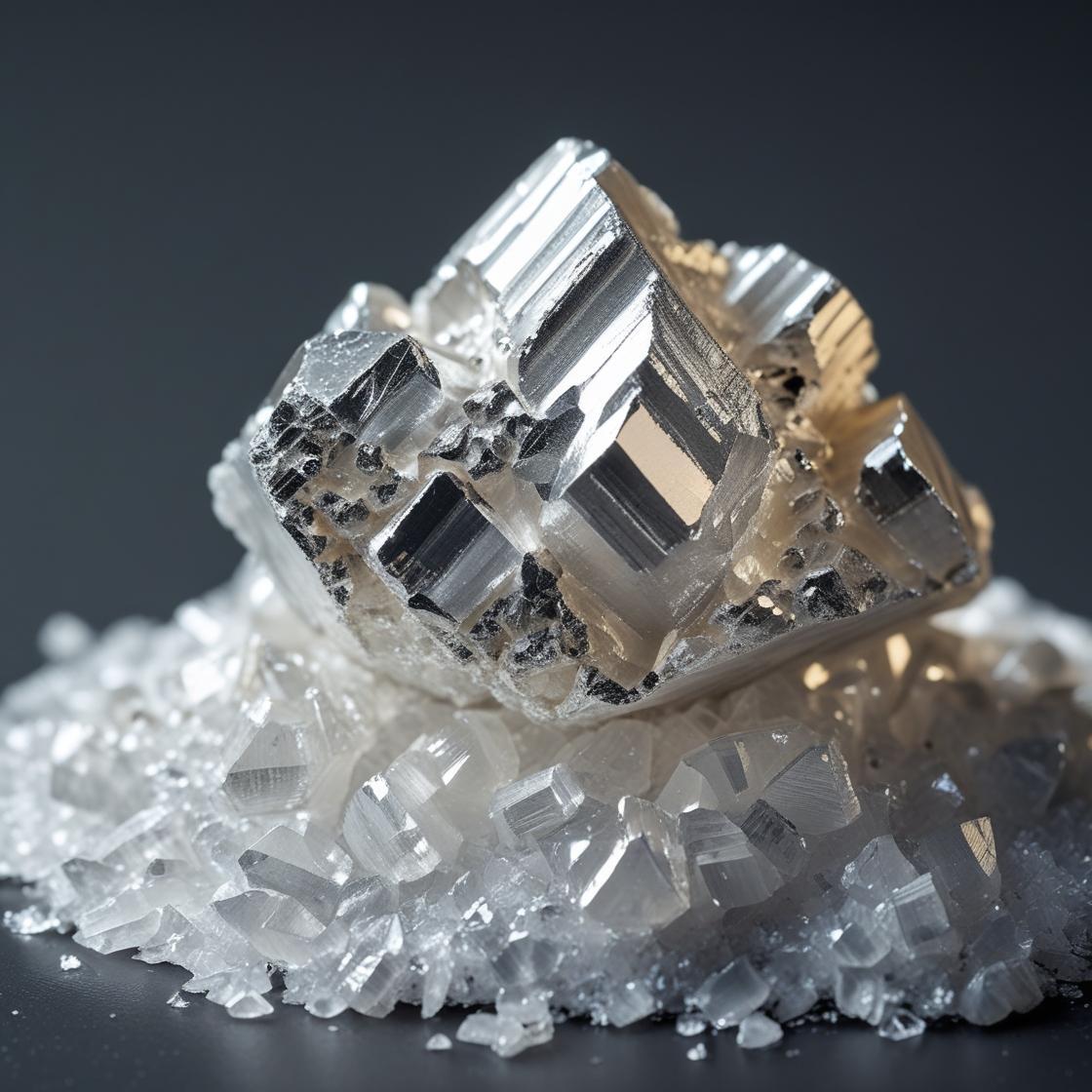
Antimony (Generated by Artificial Intelligence.)
The word antimony likely derives from the Medieval Latin term antimonium, whose origin traces back to the Arabic word al-ithmid (referring to stibnite). Its chemical symbol Sb is based on the Latin word stibium.
Metallic antimony is a hard, brittle solid with a silvery-white luster and a bluish tint. It tends to flake easily. Its melting point is 630.628 °C and its boiling point is 1587 °C. The atomic radius is approximately 206 pm and its electronegativity is 2.05. Its electron affinity is reported as 100.924 kJ/mol. It is stable in dry air but reacts with oxygen when heated to form antimony trioxide (Sb₂O₃) and other oxides. It reacts readily with halogens. It dissolves in oxidizing acids but dissolves slowly in reducing acids such as hydrochloric acid. In its compounds, it commonly exhibits oxidation states of +3 and +5.
Antimony is a relatively rare element in the Earth’s crust, with an abundance comparable to that of arsenic. It is rarely found in nature as free metallic antimony. It is mostly found in over 100 different minerals, primarily as sulfide compounds. The most important antimony mineral is stibnite (antimony(III) sulfide, Sb₂S₃). It is also found in complex sulfide minerals such as ullmannite (NiSbS), jamesonite (Pb₄FeSb₆S₁₄), and boulangerite (Pb₅Sb₄S₁₁). Occasionally, it occurs naturally as metallic antimony or in alloys. Major producing countries include China, Russia, Bolivia, and Tajikistan.
Antimony has two stable isotopes in nature: antimony-121 (¹²¹Sb) and antimony-123 (¹²³Sb). Natural antimony consists of approximately 57.36% ¹²¹Sb and 42.64% ¹²³Sb. The isotope ¹²¹Sb is noted as the significant isotope in the source. Many radioactive isotopes have also been synthesized artificially.
Antimony and its compounds have various industrial applications:
Antimony has no known biological role. Antimony and many of its compounds are considered toxic. The severity of toxic effects depends on the route of exposure (inhalation, ingestion, skin contact), dose, and duration. Antimony poisoning can produce symptoms similar to arsenic poisoning, including headache, dizziness, nausea, and vomiting. Chronic exposure may lead to heart, liver, and lung disorders.
Antimony trioxide has been classified as a potential carcinogen. Strict safety measures, including adequate ventilation, use of personal protective equipment (gloves, goggles, respiratory masks), and adherence to hygiene protocols, must be observed when working with antimony and its compounds.
National Center for Biotechnology Information. "Antimony." *PubChem Compound Database CID 5354495.* Accessed May 31, 2025. https://pubchem.ncbi.nlm.nih.gov/compound/5354495.
TÜBİTAK Bilim Genç. "Antimon." *Bilim Genç*. Accessed May 31, 2025. https://bilimgenc.tubitak.gov.tr/periyodik-tablo/antimon.

Antimony (Sb)
Periodic Table | 5 | ||||||||
|---|---|---|---|---|---|---|---|---|---|
Chemical Symbol | Sb | ||||||||
Atomic Number | 51 | ||||||||
Group | 15 (Pnictogens) | ||||||||
Atomic Weight | (121.760) g/mol | ||||||||
Electron Configuration | [Kr] 4d¹⁰5s²5p³ | ||||||||
Density | 6.68 g/cm³ | ||||||||
Melting Point | 630.628 °C | ||||||||
Boiling Point | 1587 °C | ||||||||
Atomic Radius | ~206 pm | ||||||||
Electronegativity | 2.05 | ||||||||
Electron Affinity | 100924 kj/mol | ||||||||
Important Isotopes | ¹²³Sb (%42.64) (natural stable) ¹²¹Sb (%57.36) | ||||||||
Discoverer(s) | Ancient civilizations | ||||||||
Classification and Basic Properties
Discovery
Etimology
Physical and Chemical Properties
Natural Occurrence
Isotopes
Applications
Biological Role and Effects