


This article was automatically translated from the original Turkish version.
+2 More
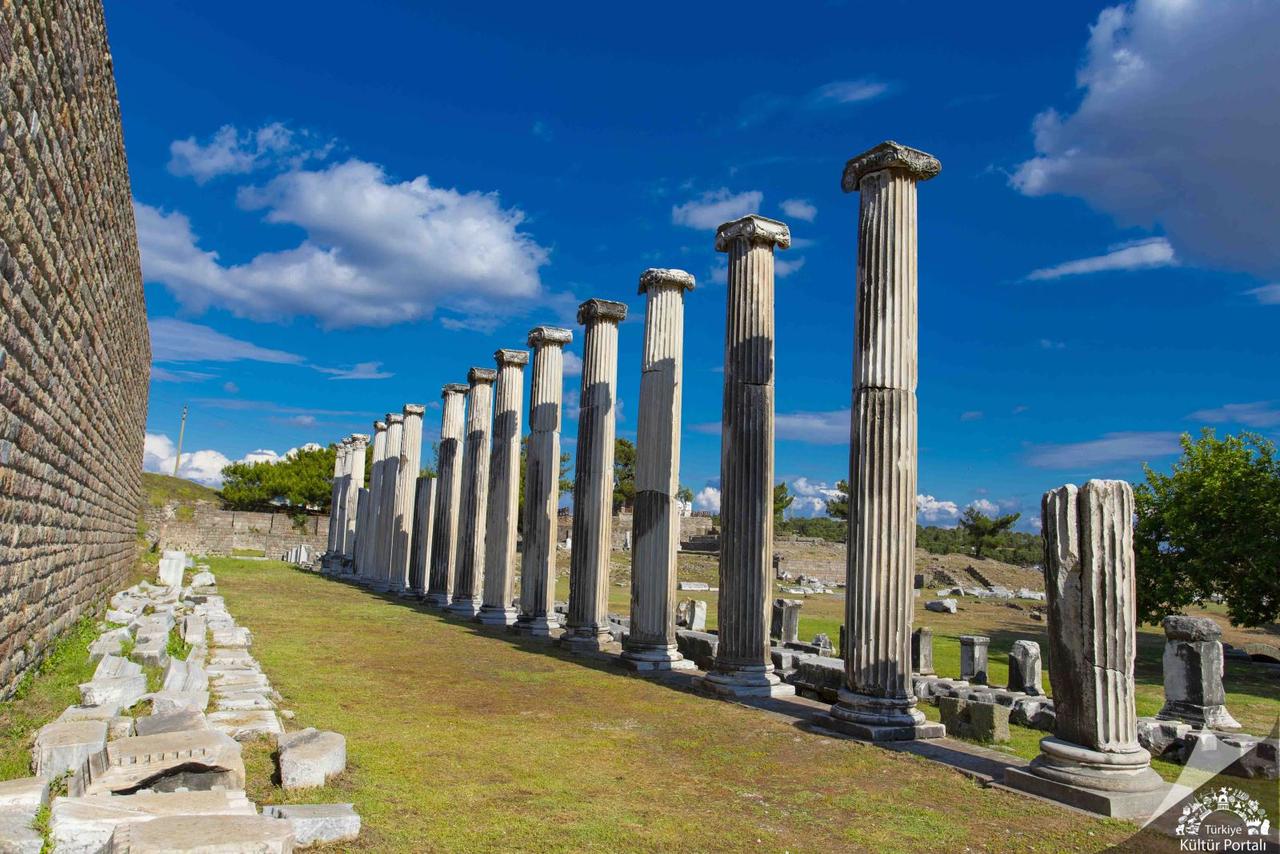
Location | Bergama İzmir (Ancient Pergamon) | ||||||||
|---|---|---|---|---|---|---|---|---|---|
Founding Date | 4th century BCE | ||||||||
Architectural Elements | Propylon, Colonnaded Galleries, Theatre, Temple, Sleeping Chambers, Latrines | ||||||||
Archaeological Features | Theatre (3,500 seats), Healing Water Springs, Marble Structures | ||||||||
Primary Function | Medical and Religious Healing Center | ||||||||
Pergamon The Asklepion is a healing center established in the 4th century BCE outside the acropolis of the ancient city of Pergamon (modern-day Bergama, İzmir) in western Anatolia, in honor of the god of medicine, Asklepios. It is situated in a secluded valley on the slopes of Geyikli Dağı, where springs believed to possess curative properties were located. According to founding legend, Archias, the first high official of Pergamon, established a similar sacred site in Pergamon as an act of gratitude after receiving treatment at the Asklepion of Epidaurus. Archaeological excavations at the site have revealed that the area was used as a sacred precinct even earlier than the 4th century BCE.
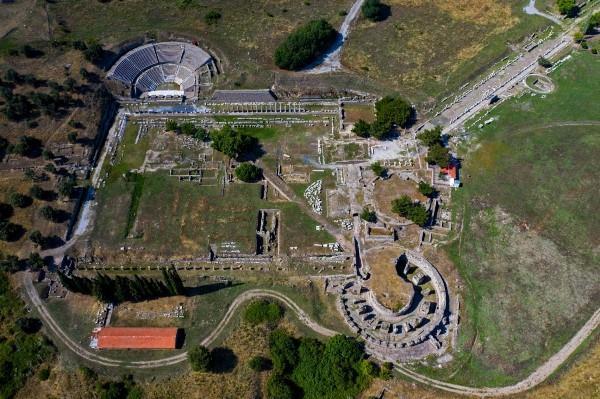
Asklepion Archaeological Site (Ministry of Culture and Tourism of the Republic of Türkiye)
The Asklepion attained its final form during the reign of the Roman Emperor Hadrian (117–138 CE) through extensive renovations. Access to the sacred precinct was provided by a approximately 1 km long covered pathway known as the Via Tecta (Sacred Way), which featured a vaulted ceiling and ended in a colonnaded section. The pathway began at a large arched gate located beside the Roman theater in the southern part of the city, commonly known among the populace as the “Viran Kapı” (Ruined Gate). It is said that an inscription above this entrance read: “No death may enter the Asklepion in honor of all the gods.”
The Sacred Way culminated in a propylon (monumental gateway) supported by four Corinthian columns. To the right of the entrance stood a library hall, and to the left, a temple dedicated to Zeus Asklepios. Beyond the propylon lay a large courtyard measuring 110 by 130 meters, surrounded on the north, south, and west sides by colonnaded galleries. The floor was covered with earth, a feature thought to have been part of a therapeutic practice encouraging patients to walk barefoot. The best-preserved of these galleries, the northern one, has been reconstructed through restoration efforts.
In the northwestern corner of the courtyard, a theater carved directly into the bedrock could accommodate 3,500 spectators. To the east of the theater stood a square building that served both as an imperial reception hall and a library. In the central niche of the building’s eastern wall stood a statue of Emperor Hadrian. The western gallery was constructed during the expansion works carried out in the reign of Eumenes II (2nd century BCE). The large hall adjacent to this gallery is believed to have functioned as a banquet hall. In the southern corner, Roman-era toilet facilities (latrines) are located. In the southeastern corner of the courtyard is the “lower circular structure,” a building designated for treatment. On the western side of the courtyard are the sacred water sources, early-period temple remains, and sleeping chambers.

Asklepion Archaeological Site (Anadolu Agency)
The most important information regarding the treatment methods practiced at the Asklepion comes from the writings of the renowned ancient orator Aelius Aristides, in his work titled “Hieroi Logoi.” According to this text, both physical and psychological treatments were employed at the Asklepion. Major practices included incubation sleep (incubation), suggestion therapy, hot and cold baths, mud treatments, herbal remedies, dietary regimens, massage with medicinal oils, bloodletting (hijama), intestinal cleansing, sunlight therapy, and music therapy. Surgical interventions were also performed when deemed necessary.
Patients arriving at the Asklepion were first examined by priest-physicians known as Asklepiades. Fatal cases and pregnant women were not admitted. In the sleeping chambers, patients were expected to receive divine healing through dreams. Environmental factors such as the sound of water, bird songs, music, massage, and the use of healing waters were integral components of the therapeutic process.
The Asklepion gained significant importance in the history of medicine during the Roman period, particularly due to the physician Galen. Living in the 2nd century CE, Galen was trained here and made major contributions to pharmacology. He provided medical care to gladiators and prominent Roman figures and laid the foundations of pharmacy through his studies on medicinal plants. In this regard, the Pergamon Asklepion is regarded as equivalent in importance to other major medical centers of the era, such as Epidaurus and Kos.
Anadolu Ajansı. “Antik Dönemin Tıp Okulu Asklepion, Sağlık Misyonunu Koruyor.” Accessed June 17, 2025. https://www.aa.com.tr/tr/kultur/antik-donemin-tip-okulu-asklepion-saglik-misyonunu-koruyor/3409218.
T.C. Ministry of Culture and Tourism İzmir Bergama Museum Directorate. "İzmir Bergama Museum Directorate." *General Directorate of Cultural Assets and Museums*. Accessed June 17, 2025. https://kvmgm.ktb.gov.tr/TR-44101/izmir-bergama-muze-mudurlugu.html.
Turkish Museums. “İzmir Bergama Asklepion Örenyeri.” Turkish Museums. Accessed June 17, 2025. https://www.turkishmuseums.com/museum/detail/2091-izmir-bergama-asklepion-orenyeri/2091/1.
Türkiye Kültür Portalı. "Bergama Asklepion Örenyeri - İzmir." Türkiye Kültür Portalı. Accessed June 17, 2025. https://www.kulturportali.gov.tr/turkiye/izmir/gezilecekyer/bergama-asklepion-orenyeri.

Location | Bergama İzmir (Ancient Pergamon) | ||||||||
|---|---|---|---|---|---|---|---|---|---|
Founding Date | 4th century BCE | ||||||||
Architectural Elements | Propylon, Colonnaded Galleries, Theatre, Temple, Sleeping Chambers, Latrines | ||||||||
Archaeological Features | Theatre (3,500 seats), Healing Water Springs, Marble Structures | ||||||||
Primary Function | Medical and Religious Healing Center | ||||||||
No Discussion Added Yet
Start discussion for "Asklepion Archaeological Site" article
Architectural Layout
Treatment Methods
Galen and the Medical School