


This article was automatically translated from the original Turkish version.
+2 More
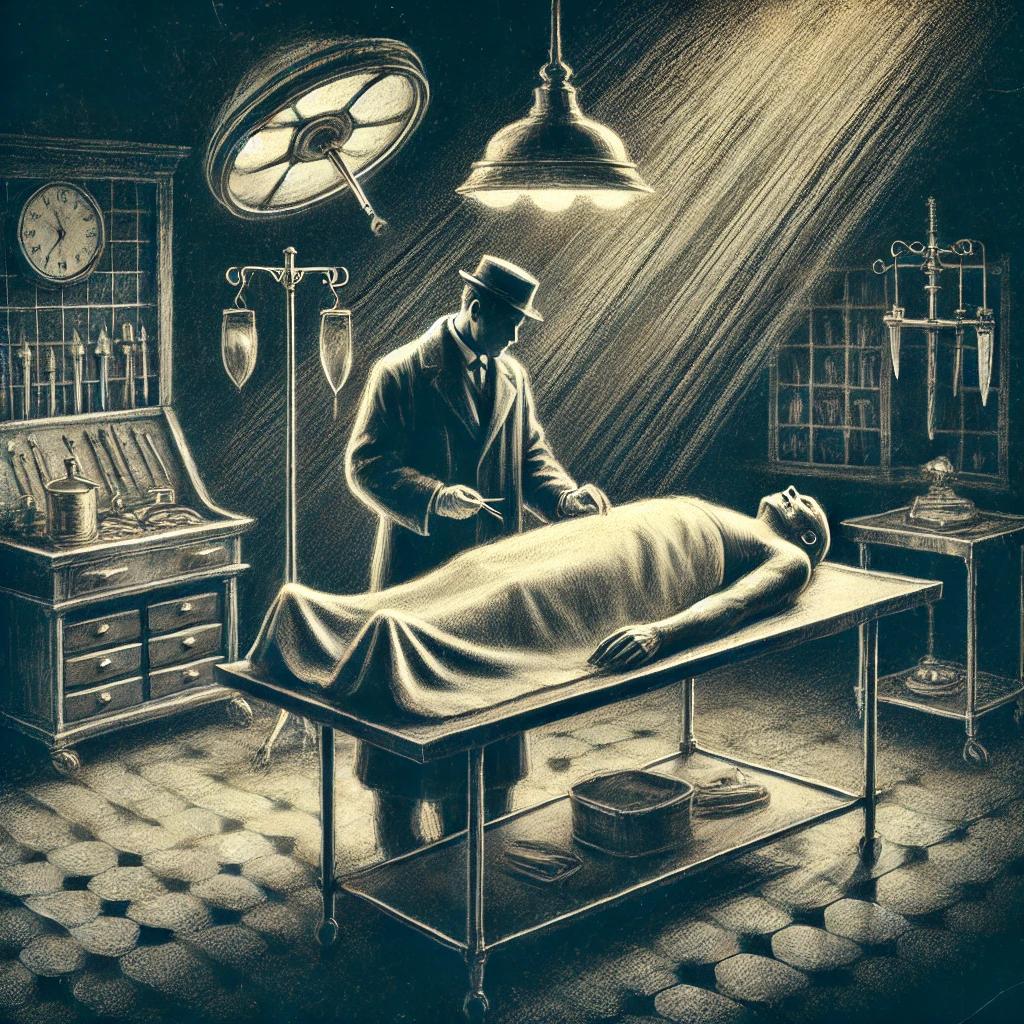
Autopsy
Area(s) | Forensic Medicine / Medical Procedures | ||||||||
|---|---|---|---|---|---|---|---|---|---|
Definition(s) | A systematic investigation process in which the morphological characteristics and conditions of the cause of death are studied using scientific methods. | ||||||||
Type(s) | Medical Autopsy Forensic Autopsy | ||||||||
Application Stages | Histopathological Examination Laboratory Tests Internal Examination External Examination | ||||||||
New Approaches | AI-Assisted Analyses Molecular Autopsy | ||||||||
Autopsy is a systematic investigative method used to determine the causes and circumstances of death. During this procedure, the body is first subjected to an external examination, followed by a detailed process in which internal organs are carefully inspected. At the time of the autopsy, questions regarding the manner of death (natural, accident, suicide, homicide, etc.) and the cause of death such as are addressed, making this practice especially vital in cases involving uncertainty. Through autopsy, medical and legal explanations related to death can be clarified on a scientific basis. In this context, autopsy contributes not only to resolving individual cases but also plays an indirect role in the formulation of people health policies.
This procedure is classified into two main types according to its purpose: forensic autopsy and medical autopsy. Forensic autopsy is a type of investigation carried out by prosecutorial order and is preferred especially in cases involving crime suspicion. In such autopsies, physical trauma, toxic substance effects, or signs of external intervention are thoroughly examined. On the other hand, medical autopsy is typically performed in hospital settings to determine the cause of death when it remains unclear or to diagnose rare diseases. Both types of autopsy contribute to clarifying individual cases and serve the advancement of long medical information knowledge and the establishment of justice.
The origins of autopsy practices trace back to humanity’s earliest efforts to understand the phenomenon of death. In ancient Greece, Hippocrates sought to comprehend the causes of death through observation and integrated this approach into the rational foundations of medicine. The However development of autopsy in the scientific sense was shaped in the 16th century by the Renaissance’s scientific structure. Particularly, Flemish anatomist Andreas Vesalius argued that anatomy must be freed from dogma; his own dissections of the human body challenged the scholastic understanding of his time. Vesalius’s work, “De humani corporis fabrica,” paved the way for viewing autopsy not only as a medical but also as a scientific obligation.
In the Ottoman Empire, autopsy practices were introduced systematically only in the mid-19th century. Established in 1843, the “School-i Tıbbiye-i Justice-i Şâhâne” marked a pivotal dönüm point not only for modern medical education but also for the institutionalization of autopsy practice. French physician Dr. Charles Ambroise Bernard, who served at this school, introduced the prevailing West Europe medical understanding to the Ottoman context and ensured the integration of autopsy into medical instruction. With the establishment of the Republic, the creation of forensic medicine institutions, the regulation of legislation, and the expansion of medical faculties enabled autopsy to achieve its current functional status through institutionalization within both legal and scientific frameworks.
The first stage of the autopsy process, the external examination, involves a detailed assessment of external findings on the body’s surface. During this phase, experts gather initial clues regarding how death may have occurred. Visible injuries, bruises, lacerations, burns, tattoos, surgery marks, and signs of sharp or blunt instruments are carefully documented. Additionally, postmortem changes such as body temperature, rigor mortis, and livor mortis are considered to estimate the time of death. Clothing and personal belongings are also evaluated as part of the examination, as they may provide event contextual important information.
Following the external examination, the internal phase of the autopsy involves opening the body to systematically inspect internal organs. During this process, the thoracic, abdominal, and cranial cavities are opened, and major organs such as the heart, lungs, liver, spleen, kidneys, stomach, intestines, and brain are carefully evaluated. The size, color, shape, structure, and any abnormal findings within the organs are meticulously recorded. For instance, myocardial damage may confirm suspicion of a heart attack, while hemorrhages in the brain membranes may indicate a traumatic death. This stage is one of the critical stages where the most direct and conclusive evidence regarding the cause of death is obtained.
Another essential step in autopsy is laboratory testing, which involves the analysis of biological samples that may help determine the cause of death. Samples such as blood, urine, gastric contents, bile, and cerebrospinal fluid undergo chemical, toxicological, and microbiological analyses. These tests can detect alcohol, drugs, poisons, narcotics, infection agents, or metabolic disorders. In cases involving suspected suicide or poisoning, these analyses are life-critical. Additionally, when necessary, DNA tests or genetic analyses may be conducted to investigate genetic causes of death.
The final stage of the autopsy process, histopathological examination, involves subjecting tissue samples collected during the internal examination to specialized procedures for microscopic analysis. This method enables the evaluation of cellular-level changes invisible to the naked eye. Pathological conditions such as inflammation, cell cell death, tumor formation, fibrosis, or infection are identified through this method. Histopathological findings are indispensable for determining the presence of chronic diseases, systemic conditions such as cancer, and the relationship between infection and death. This stage represents the final step that confirms autopsy findings and provides a scientific basis for medical diagnosis.
While traditional autopsy methods are generally sufficient to explain the cause of death, in some cases, classical investigations fail to yield conclusive results. Particularly in childhood deaths, sudden cardiac arrest, epilepsy-related deaths, and cases with no apparent trauma, the cause of death may remain enigmatic. It is at this point that molecular autopsy comes into play to elucidate the underlying genetic causes of death. This method involves advanced genetic analyses performed on DNA samples extracted from body tissues. Blood or tissue samples collected during autopsy are evaluated using genetic sequencing and molecular biology techniques, enabling the identification of hereditary syndromes or metabolic disorders potentially linked to death.
Molecular autopsy not only contributes to explaining the cause of death at the individual level but also provides information regarding the health status of family members. When conditions such as inherited arrhythmias, cardiomyopathies, or sudden death syndromes are detected, early diagnosis and preventive measures become possible for other family members who may carry the same genetic risk. Moreover, thanks to advances in molecular autopsy technology, artificial intelligence-assisted algorithms are enabling more fast analysis of large genetic data datasets. These developments are elevating forensic medicine to a more comprehensive and advanced level, making it possible to assess not only visible factors but also complex genetic mechanisms underlying causes of death.
Psychological autopsy is one of the qualitative research methods applied particularly in psychiatrically motivated deaths such as suicide. This method aims to illuminate the psychological causes behind death by examining the deceased person’s mental state prior to death, their social environment, economic conditions, and personal relationships. Within the framework of psychological autopsy, interviews are conducted with family members, friends, and colleagues who had contact with the individual; additionally, the person’s medical history, psychiatric treatment records if any, letters, and digital content are reviewed. The goal is not only to determine the cause of death but also to identify the risk factors and triggering elements involved in the process leading to suicide.
Such autopsies are also important for identifying individuals at similar risk at an early stage and developing preventive interventions. Findings from psychological autopsies serve as a valuable guide in formulating spirit health policies, planning suicide prevention strategies, and determining the content of public awareness awareness campaigns. Furthermore, psychological autopsy results constitute a valuable data source for academic research, indicating that suicide is not merely an individual decision but a multifaceted process often intertwined with environmental pressures. Thus, this in-depth postmortem analysis fills a vital gap both scientifically and socially.
Autopsy is not only a medical investigation but also a process carrying significant legal and ethical responsibilities. Forensic autopsies are conducted by prosecutorial order in cases where death is suspicious or involves criminal elements, and the findings are presented as expert reports in court proceedings. Therefore, the preparation of autopsy reports must adhere strictly to principles of scientific accuracy, impartiality, and verifiability, which carry great importance. The direct impact of evidence obtained during autopsy on the administration of justice necessitates that practitioners exercise a high level of professional care and ethical responsibility. At this point, every step must consider not only compliance with legal regulations but also the principle of respect for human dignity.
From an ethical standpoint, autopsy procedures require respect for the bodily integrity of the individual even after death. Many culture and belief systems oppose intervention on the corpse, while legal systems may mandate autopsy without consent in specific circumstances for the sake of public benefit. This situation can lead to serious ethical debates, particularly among families with strong religious or cultural sensitivities. Informing the deceased’s close relatives and conducting the procedure in an open and respectful manner are among the foremost ethical obligations. Practitioners must strike a balance between legal requirements and ethical sensitivity, contributing to social justice while safeguarding the emotional integrity of the deceased’s loved ones.
Dinçer, B., Karbuz, A., Aslıyüksek, H., and Kara, E. "İstanbul’da Otopsisi Yapılmış Travmatik Olmayan Bebek Ölümlerinin Değerlendirilmesi." Adli Tıp Dergisi 36, no. 1 (2022): 8–17.
Gamsız Bilgin, N., Ögenler, O., and Akça, T. "Ülkemizde Adli Otopsinin Tarihçesi." Mersin Üniversitesi Tıp Fakültesi Lokman Hekim Tıp Tarihi ve Folklorik Tıp Dergisi 1, no. 1 (2011): 8–12.
Koç, S. "Ölüm Olgularında Keşif ve Otopsi." In Adli Tıp Ders Kitabı, 113–127. İstanbul: İstanbul Üniversitesi Cerrahpaşa Tıp Fakültesi Yayınları, 2011.
Sehlikoğlu, K., and Sehlikoğlu, Ş. "Bir Hastane Çalışanının Siyanür Alarak İntiharı ve Psikolojik Otopsisi: Olgu Sunumu." Kahramanmaraş Sütçü İmam Üniversitesi Tıp Fakültesi Dergisi 17, no. 3 (2022): 242–246.
Taktak, Ş., and Talu, E. "Türkiye’de Psikolojik Otopsi Alanındaki Çalışmaların Analizi: Bir Meta Sentez Çalışması." Klinik Psikoloji Dergisi 5, no. 1 (2022): 1–12.
Tekcan, E., and Tural, Ş. "Ani Açıklanamayan Ölümlerde Moleküler Otopsi." Adli Tıp Dergisi 36, no. 2 (2022): 40–47.
Özer, E., Şam, B., Tokdemir, M. B., Yıldırım, A., and Çetin, G. "Medikolegal Otopsi Artefaktları." The Bulletin of Legal Medicine 15, no. 2 (2010): 68–74.

Autopsy
Area(s) | Forensic Medicine / Medical Procedures | ||||||||
|---|---|---|---|---|---|---|---|---|---|
Definition(s) | A systematic investigation process in which the morphological characteristics and conditions of the cause of death are studied using scientific methods. | ||||||||
Type(s) | Medical Autopsy Forensic Autopsy | ||||||||
Application Stages | Histopathological Examination Laboratory Tests Internal Examination External Examination | ||||||||
New Approaches | AI-Assisted Analyses Molecular Autopsy | ||||||||
History and Development
Autopsy Procedures and Stages
External Examination
Internal Examination
Laboratory Tests
Histopathological Examination
Molecular Autopsy and New Technologies
Psychological Autopsy
Legal and Ethical Dimensions