This article was automatically translated from the original Turkish version.
+1 More
Type of Geographical İndication | Mahreç Sign | ||||||||
|---|---|---|---|---|---|---|---|---|---|
Application Date | 26.11.2012 | ||||||||
Registration Number | 263 | ||||||||
Registration Date | 07.12.2017 | ||||||||
Product / Product Group(s) | Textiles | ||||||||
Province(s) | Sinop | ||||||||
Applicant/Registrant(s) | Ayancık Adult Education Center Evening Art School Directorate | ||||||||
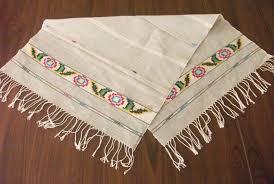
Ayancık linen fabric is a textile product manufactured in the Ayancık district of Sinop Province, Türkiye, using yarn spun from flax plants on traditional handloom weaving frames. This linen fabric has been officially registered with a geographical indication mark and is known for its cooling properties, moisture absorption, and durability. Registered by the Ayancık People’s Education Center and Evening Art School Directorate, the product represents the region’s traditional weaving heritage and is widely used in both undergarments and household textiles.
Ayancık linen has a long history rooted in the cultivation of flax, which thrives in the region’s cool and humid climate. The local population has used linen fabric in traditional clothing and folk costumes throughout history.
Ayancık linen was officially registered as a geographical indication on 26 November 2012 through an application submitted to the Turkish Patent and Trademark Office by the Ayancık People’s Education Center and Evening Art School Directorate, and it came under legal protection on 7 December 2017. This registration aims to preserve the unique characteristics of the product tied to Ayancık and ensure the continuity of the local weaving tradition.
Ayancık linen is produced by processing flax yarn on wooden handloom frames. The natural color of flax yarn is a matte, dark brownish hue; however, when boiled with wood ash, it turns cream-colored. The yarn is typically single-ply and twisted.
Weavings are made using three different yarn combinations:
The most distinctive feature of Ayancık linen is its ability to remain cool during summer months, prevent sweating, and absorb high levels of moisture. These properties make it especially preferred for undergarments (such as göynek, işli don, and nezgep), household textiles (such as sheets, towels, and curtains), and pursel (used for drying tarhana and pasta). The fabric width ranges between 47 and 52 cm and is woven using the bezayağı technique. Warp yarns are treated with a sizing mixture of flour, starch, oil, and soap to enhance durability and smoothness. Depending on the density of the combs used in weaving, there are 12 to 20 warp threads and 12 to 16 weft threads per square centimeter.
The production of Ayancık linen follows a traditional process extending from cultivation to weaving.
Ayancık’s cool and humid climate is ideal for flax cultivation. Flax requires significant water, particularly during May and June, when seasonal rainfall in the region enhances yield. Flax grows well in permeable, sandy-loamy, medium-weight soils. Seeds are typically sown by broadcasting in September and October during soil preparation. Flax plants are carefully protected against pests such as kuskut otu.
Harvested flax plants are dried in bundles, and fibers are separated through a retting process. Retting is carried out in two ways:
After retting, flax bundles are drained and dried in the sun for 8 to 10 days, then baked to make them brittle. The woody parts are removed using a tool called mengenez, followed by combing to clean the fibers. Combing yields three grades of yarn:
Combed fibers are spun into yarn on spinning wheels and bleached by boiling in wood ash. The yarn is wound onto a wooden device called elepçek and then transferred to bobbins. Warp yarns are sized before being prepared on the loom. Weaving is performed on wooden looms constructed without nails, locally known as “düzen.” These looms feature four harnesses and two foot pedals; the combs are made of reed teeth and wooden frames. Sparse combs are used for towels, while dense combs are used for garments. Weaves are produced using flax-flax, flax-cotton, or cotton-flax combinations. Towels measure 50x100 cm and are decorated with geometric patterns using colored yarns (e.g., Şeftali yarımı, Çerkez kızı, Kandil). Sheets are woven with yarn dyed using root dyes and joined using the çırpma stitch technique.
The geographical indication standards for Ayancık linen are safeguarded by a monitoring commission composed of the following members:
The commission inspects the weaving workshop of the Ayancık People’s Education Center once a month and other producers once a year. Additional inspections are conducted in cases of complaints. During inspections, the commission evaluates whether the flax yarn is locally produced, whether the handlooms meet required standards, and whether the products conform to local characteristics. The commission may seek support from public or private institutions when necessary.
Ayancık linen makes a significant contribution to the cultural and economic fabric of the region. By preserving traditional weaving techniques, it provides a livelihood for local artisans. The natural, cooling, and environmentally friendly properties of linen fabric have increased interest in sustainable textile production. The geographical indication registration enhances the national and international recognition of Ayancık linen, contributing to the preservation of the region’s cultural heritage. Its use in traditional garments and folkloric patterns reflects Ayancık’s cultural identity and enhances its tourism value.
Turk Patent and Trademark Office. "Ayancık Keten Bezi." Turk Patent and Trademark Office. Accessed July 13, 2025. https://ci.turkpatent.gov.tr/Files/GeographicalSigns/8d89b568-83c3-4502-9840-8d8defcf9c4d.pdf
Turk Patent and Trademark Office. "Ayancık Keten Bezi." Turk Patent and Trademark Office. Accessed July 13, 2025. https://ci.turkpatent.gov.tr/cografi-isaretler/detay/38081.

Type of Geographical İndication | Mahreç Sign | ||||||||
|---|---|---|---|---|---|---|---|---|---|
Application Date | 26.11.2012 | ||||||||
Registration Number | 263 | ||||||||
Registration Date | 07.12.2017 | ||||||||
Product / Product Group(s) | Textiles | ||||||||
Province(s) | Sinop | ||||||||
Applicant/Registrant(s) | Ayancık Adult Education Center Evening Art School Directorate | ||||||||
No Discussion Added Yet
Start discussion for "Ayancık Linen Cloth" article
History
Characteristics
Production Method
Cultivation
Fiber Extraction
Weaving Process
Monitoring and Quality Control
Impact and Significance