


This article was automatically translated from the original Turkish version.
+2 More
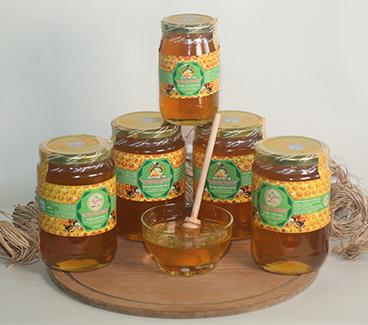
Ayder Honey
Registration Number | 1081 | ||||||||
|---|---|---|---|---|---|---|---|---|---|
Registration Date | 15.04.2022 | ||||||||
Application Number | C2019/116 | ||||||||
Application Date | 02.09.2019 | ||||||||
Name of the Geographical Indication | Ayder Honey | ||||||||
Product / Product Group(s) | Honey / Honey | ||||||||
Type of Geographical Indication | Place of Origin | ||||||||
Applicant/Registrant(s) | Limited Liability Ayder Spa and Aşağı Şimşirli Agricultural Development Cooperative | ||||||||
Address of the Registrant | Kaplıca Mah. Ayder A.Ambarlık No:126/A Çamlıhemşin RIZE | ||||||||
Geographical Boundary | Ayder Plateau Durak and Çayırdüzü basins Tunca Çat Hala encompassing the Fırtına Valley and the Kavron which begins on the northern slopes of the Kaçkar Mountains in the Çamlıhemşin District of Rize Province and ends in the Ardeşen District | ||||||||
Ayder Honey is a type of honey produced within the geographical boundaries of Ayder Plateau, which lies within the boundaries of Çamlıhemşin district of Rize province, Türkiye. This area extends from the northern slopes of the Kaçkar Mountains to the Ardeşen district and encompasses the basins of Kavron, Hala, Çat, Tunca, Durak, and Çayırdüzü. This product was officially registered on 15 April 2022 under the designation of “geographical indication”. The product, registered under number 1081, was entered into the registration process with application number C2019/116 dated 2 September 2019. The holder of the geographical indication is the Limited Liability Ayder Spa and Aşağı Şimşirli Agricultural Development Cooperative. The cooperative’s headquarters is located in the Kaplıca neighborhood of Çamlıhemşin district, Rize province.

Ayder Honey (generated by artificial intelligence.)
Ayder Honey is produced in two main types, depending on the flowering season specific to its geographical area: chestnut honey and multifloral floral honey:
Both types are produced using Caucasian hybrid bee strains. The long tongue of this bee strain enables efficient nectar collection from deep-flowered plants. Melissopalynological analyses have also detected pollen from the secondary taxa Trifolium repens, Lotus corniculatus, and Coronilla orientalis.
Characteristics of Ayder Honey:
Honey production in the designated geographical area has a long history and remains one of the primary sources of livelihood for the local population. The abundance of water sources, diversity of flowering plants, and density of forested areas in the region contribute to a relatively extended flowering period. These environmental conditions provide an ideal foundation for satisfying the nectar and pollen requirements of bee colonies.
The region where Ayder Honey is produced is characterized by a rich floral vegetation, dense forest cover, and abundant water resources. This natural structure is vital for the sustainability of beekeeping activities. The prolonged flowering season supports the natural feeding cycle of bees. Beekeeping is an economic activity for settlements within the geographical boundaries.

Ayder Honey (generated by artificial intelligence.)
The production of Ayder Honey is carried out within the defined geographical boundaries using registered hives. Approximately 800 bee hives are placed in the production area. All hives are registered in a monitoring system established for tracking beekeeping activities. Products obtained from hives not included in this system may not be sold.
The bees used in production belong to the Caucasian hybrid strain. The wintering process takes place within and around the geographical boundaries. Preparatory activities before honey production are also conducted in the same region. Only physical methods are applied during hive cleaning and maintenance; chemical interventions are avoided.
During spring, typically in April and May, bee hives are transported to higher altitudes and placed on pre-prepared platforms. At this stage, honeycombs are added to the hives. From this point onward, only maintenance and necessary treatments are performed; no further interventions are carried out.
Hives are placed in areas allocated to each producer within a radius of approximately 10 km, the natural flight range of bees. The distance between hives varies between 200 and 500 meters, depending on the density of the floral cover and the number of hives in the region.
Only pesticides approved by the Ministry of Agriculture and Forestry may be used for pest control.
Honey harvesting is carried out in July using traditional methods. Bees are calmed using mild smoke generated by a smoker. Frames are stripped of wax caps using a capping knife or capping fork, then placed in honey extractors. The extracted honey is allowed to rest for one to two days, then filtered again to remove residual beeswax and bee particles.
Cleaned honey is filled into glass jars of 0.5 kg, 1 kg, and 2 kg capacities at the cooperative’s filling facility and labeled accordingly. Packaging in other weights is available upon request. Packaged products are stored at temperatures above 15 °C. Labels indicate the honey type as either “floral honey” or “chestnut honey” based on analysis results.
The production process is monitored through inspections coordinated by the Limited Liability Ayder Spa and Aşağı Şimşirli Agricultural Development Cooperative. The inspection body consists of representatives from the cooperative, the Department of Molecular Biology at Recep Tayyip Erdoğan University, and experts from the Rize Provincial Directorate of Agriculture and Forestry. This committee, which must include at least three members, conducts routine inspections three times per year. Additional inspections may be carried out as needed or in response to complaints.
Inspections cover the following aspects:
Samples collected after harvesting or in response to complaints are subjected to the following analyses:
The cost of these analyses is borne by the respective producer.
During inspection activities, support or services may be obtained from public institutions, private organizations, or qualified individuals and entities affiliated with them. Legal procedures to protect the geographical indication are carried out by the registering cooperative.
Turk Patent and Trademark Office. "Ayder Balı." Geographical Indications Information System. Accessed May 20, 2025. https://ci.turkpatent.gov.tr/cografi-isaretler/detay/830.
Turk Patent and Trademark Office. *Ayder Balı Coğrafi İşaret Tescil Belgesi*. Ankara: Turk Patent and Trademark Office, 2022. Accessed May 20, 2025. https://ci.turkpatent.gov.tr/Files/GeographicalSigns/4ac2b783-3c5d-4782-a154-68063ae4fd51.pdf.

Ayder Honey
Registration Number | 1081 | ||||||||
|---|---|---|---|---|---|---|---|---|---|
Registration Date | 15.04.2022 | ||||||||
Application Number | C2019/116 | ||||||||
Application Date | 02.09.2019 | ||||||||
Name of the Geographical Indication | Ayder Honey | ||||||||
Product / Product Group(s) | Honey / Honey | ||||||||
Type of Geographical Indication | Place of Origin | ||||||||
Applicant/Registrant(s) | Limited Liability Ayder Spa and Aşağı Şimşirli Agricultural Development Cooperative | ||||||||
Address of the Registrant | Kaplıca Mah. Ayder A.Ambarlık No:126/A Çamlıhemşin RIZE | ||||||||
Geographical Boundary | Ayder Plateau Durak and Çayırdüzü basins Tunca Çat Hala encompassing the Fırtına Valley and the Kavron which begins on the northern slopes of the Kaçkar Mountains in the Çamlıhemşin District of Rize Province and ends in the Ardeşen District | ||||||||
Product Characteristics
Geographical and Ecological Characteristics
Production Process and Control Mechanism
Wintering and Pre-Season Preparation
Relocation and Placement
Agricultural Practices
Honey Harvesting and Processing
Packaging and Storage
Inspection Practices
Analysis and Testing