

This article was automatically translated from the original Turkish version.
+1 More
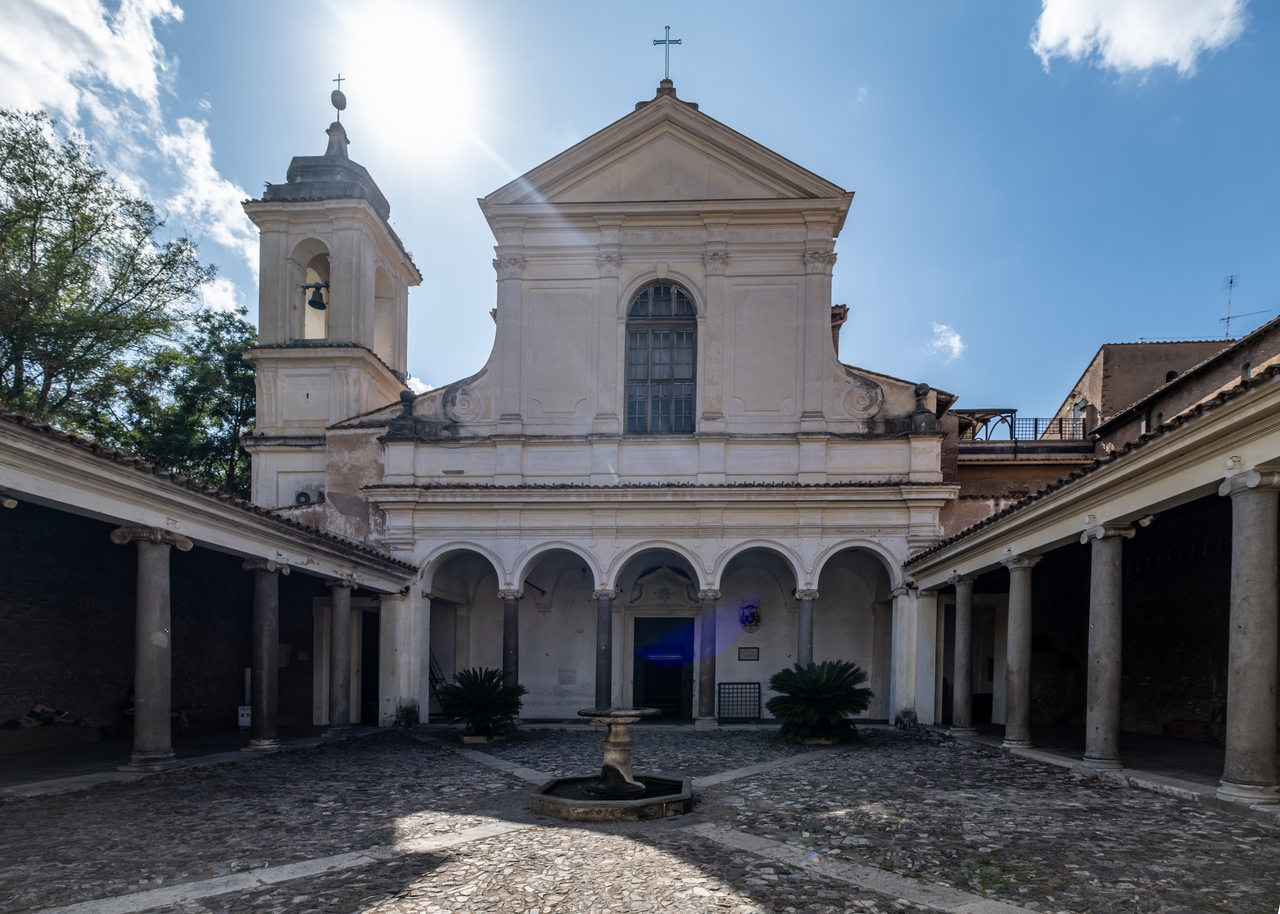
Basilica of San Clemente is a historic Christian place of worship located in the city of Rome, Italy. The basilica derives its name from Saint Clement, who is believed to have died around AD 100. The structure is characterized by overlapping architectural and archaeological layers from different historical periods, encompassing multiple phases of use from antiquity to the Middle Ages.
The Basilica of San Clemente has been used as a place of worship throughout history. Excavations conducted in the 19th century revealed the lower basilica and earlier structures beneath. Today, the building continues to serve its religious function while also being accessible to visitors as an archaeological site.
The history of the area where the Basilica of San Clemente stands extends back to the Roman Imperial period. In the 1st century, the street level in this area was approximately twenty meters below today’s ground level, and various structures with different functions stood there. After the great fire of AD 64, known as the Fire of Nero, the damaged buildings were abandoned and filled with earth to serve as foundations for new constructions. This filling process led to a gradual rise in the ground level over subsequent centuries.【1】
Following the fire, two separate structures were built at the same level. One was a multi-story Roman house (domus) arranged around a courtyard, with semi-subterranean galleries and vaulted spaces in its lower levels. The other structure, separated by a narrow passage, was a large rectangular public building composed of cell-like rooms. This structure was filled in and abandoned in the 3rd century, upon which a new complex was constructed.【2】
Wall paintings and architectural remains dating to the 3rd century suggest that this structure may have originally served as a residence. It is likely that part of the building was converted into a place of worship by a Christian community. Around AD 400, the area was transformed into a basilica with a central nave and side aisles, with the apse constructed directly over the nearby Mithraic complex. Thus, an early Christian basilica emerged on the site.【3】
The lower basilica underwent various modifications in subsequent centuries. In the 6th century, during the tenure of the titular priest Mercurius—who later became Pope John II—a choir passage (solea) was constructed extending from the central nave toward the entrance, and marble panels produced in Constantinople were added to the structure. The mosaic flooring, sacristy (secretarium), and monumental baptistery also date from this period. The walls of the building were decorated with frescoes in different eras; the earliest surviving examples date to the 8th century, while other significant pictorial programs are dated to the 9th and 11th centuries.
By the late 11th century, rising ground levels and structural conditions led to the abandonment of the lower basilica. Around the year 1100, the interior of the old structure was filled with rubble, and marble elements and relics were transferred to the new church being constructed above. The old walls were reused as foundations, and between 1099 and 1119, a new basilica was built under the patronage of Cardinal Anastasius.【4】The upper basilica visible today is the result of this construction activity. The new building largely followed the plan of its predecessor, preserving the nave, side aisles, and apse arrangement.【5】
The apse mosaic of the basilica completed in the 11th century is thought to have been created either during the same period or in the 1130s. This mosaic program combines motifs inherited from early Christian tradition with medieval artistic sensibilities. Subsequent centuries saw various additions to the building: a tabernacle was added in the 14th century, and in the 15th century, frescoes by Masolino da Panicale adorned the Chapel of Saint Catherine. In 1715, during the papacy of Pope Clement XI, a comprehensive renovation was carried out, including ceiling arrangements, frescoes, and stucco decorations. In 1880, a chapel dedicated to Saint Cyril was added, with arrangements made to house his relics.
From the Middle Ages onward, the management of the basilica was entrusted to various religious communities. In 1403, Pope Boniface IX placed the Milanese Ambrosian community in charge of the site, and they maintained the building until 1643. In 1645, the basilica was transferred to the Dominicans, and in 1667, the property was permanently assigned to the Dominican Order. Due to religious persecution in Ireland, in 1677 the monasteries of San Clemente and San Sisto Vecchio were assigned to Irish Dominicans, who have managed the basilica to the present day.【6】
The early layers of the basilica remained largely unknown for centuries. Excavations initiated in 1857 by the Dominican friar Joseph Mullooly uncovered the 4th-century basilica and the earlier Roman structures beneath. Subsequent excavations, particularly drainage works carried out between 1912 and 1914, revealed remains from the Fire of Nero and substructures, as well as the baptistery and sacristy areas. These investigations enabled a clearer understanding of San Clemente’s successive architectural phases.【7】
The Basilica of San Clemente derives its name from Saint Clement, one of the bishops of Rome who is believed to have died around AD 100.【8】 In early Christian literary tradition, his name is associated with a letter sent on behalf of the Christian community in Rome to the congregation in Corinth. This text is among the documents reflecting early church relations and was read alongside sacred scriptures in Corinth in subsequent centuries.【9】
In late antiquity, it is recorded that Clement was exiled to the Crimea during the reign of Emperor Trajan and was subsequently executed by being tied to an anchor and thrown into the sea. Later accounts describe how his body was recovered from a tomb revealed when the sea receded. It is believed that relics attributed to Saint Clement were discovered in the Crimea in the 9th century by the brothers Cyril and Methodius, brought to Rome, and buried at San Clemente.【10】
The association of the basilica with Saint Clement is linked to the preservation of his relics there and the building’s naming after him since early Christian times. It is known that the relics were kept beneath the high altar and that the basilica was opened for worship each year on the feast day of November 23.【11】
The earliest architectural layer beneath the Basilica of San Clemente consists of structures dating to the Roman Imperial period. At this level, two distinct complexes have been identified, separated by a narrow passage.
The first is a multi-story Roman house (domus) built of brick. The structure is organized around a central courtyard and contains semi-subterranean galleries (cryptoporticus) and vaulted spaces in its lower levels. These grotto-like areas are understood to have served as dining spaces during the summer months. The lower portion of the building was converted into a place of worship for a community devoted to the Mithraic faith toward the end of the 2nd century. During this transformation, the existing architectural layout was preserved and adapted to suit Mithraic rituals.

Mithras Altar (Flickr)
On the opposite side of the narrow passage lies a second structure that is distinctly different in scale and construction technique. Its outer walls, built of tuff blocks, are reinforced with travertine blocks. This rectangular complex consists of cell-like rooms arranged around a central courtyard, with vaulted ceilings and fishbone-patterned floors. The absence of plaster or wall painting traces suggests that the building was intended for public rather than domestic use. It is thought that this complex may have been associated with the imperial mint known to have been established in the area during the 1st century.【12】
Both structures were later filled in and preserved as foundations for subsequent constructions, thus forming the base for later architectural layers. Today, these remains visible in the lower levels of the basilica illustrate the settlement and usage phases of the site prior to the Christian era.
Above the Roman-era structures at San Clemente lies the early Christian basilica, a place of worship following the classical basilican plan. The structure consists of a central nave flanked by two side aisles and exhibits a linear arrangement extending from the entrance toward the apse. Access to the basilica was provided through a courtyard, and the apse was positioned directly over the adjacent complex.
The interior space was arranged according to liturgical requirements. A choir passage (solea or chancel) extends from the central nave toward the high altar, and the marble panels associated with this arrangement were produced in Constantinople. Today, these panels are preserved in the choir area of the upper basilica. To the north of the building are the sacristy (secretarium) and a large baptistery, with mosaic flooring preserving traces of the early layout.
The walls of the lower basilica are extensively covered with frescoes. The depiction of the Virgin and Child in the north aisle is among the earliest examples influenced by Byzantine style. Around the central nave are paintings depicting scenes from the Bible, including the Ascension of Christ and the Crucifixion. The fresco series near the entrance includes narratives related to Saint Clement and scenes from the life of Saint Alexius.【13】
Today, the lower basilica survives as a preserved architectural layer beneath the upper structure, housing pictorial programs from multiple historical periods.
The Basilica of San Clemente as seen today is a three-nave church that maintains the basilican plan. Access to the building is through a colonnaded courtyard (atrium). Inside, the central nave is separated from the side aisles by rows of columns and arches; the apse contains the bishop’s throne (cathedra) and the altar area.
The central choir area (schola cantorum), reading ambo, and spiral columns used for the Paschal candle are preserved elements of medieval church design. The marble panels surrounding the choir area were reused from the earlier structure.【14】

Schola Cantorum (Choir Area) (Flickr)
The floor is paved with Cosmatesque mosaic, composed of geometric arrangements of antique marble fragments in various colors. The semi-dome of the apse features a mosaic program that forms part of the building’s decorative elements, combining vegetal ornamentation, animal figures, and Christian symbols.

Floor Mosaic (Flickr)
Chapels added in different periods occupy the side areas. The Chapel of Saint Catherine contains 15th-century frescoes, with ceiling decorations and interior embellishments added during later renovations. The structure today forms the main worship space of the church.
The mosaic decoration in the apse of the Basilica of San Clemente constitutes the central element of the upper basilica’s decorative program. Although traditionally dated to the period of the basilica’s construction, recent research indicates that the composition was likely completed in the first half of the 12th century, probably during the 1130s. As one of the first major apse mosaics in Rome after a gap of approximately two centuries, this program exemplifies the synthesis of early Christian tradition with medieval artistic sensibilities.【15】
The composition is organized around an elaborate vegetal motif on a gold background. Twining tendrils of acanthus leaves spread across the entire surface; between the vines are birds, animal figures, shepherd scenes, and depictions of daily life. These pastoral images are combined with symbols known from early Christian iconography.【16】
At the center of the mosaic is a depiction of Christ crucified. The doves on the cross symbolize the apostles, while in the lower section, sheep emerging from representations of Jerusalem and Bethlehem move toward the sacred lamb. Surrounding the scene are animals associated with visions of paradise and depictions alluding to the four rivers of paradise.【17】

Apse Mosaic with Crucified Christ (Flickr)
On the side panels of the apse arch are figures of the apostles Peter and Paul, associated with Rome, alongside Saint Clement and Saint Lawrence. These figures are depicted in traditional tunics and himations. The mosaic program integrates iconographic elements inherited from the early Christian period with a compositional style characteristic of the Middle Ages, completing the basilica’s decorative unity.
Today, the Basilica of San Clemente functions both as an active place of worship and as an archaeological site open to visitors. The Roman-era remains and the early Christian basilica beneath it have been preserved and made accessible thanks to excavation efforts. Thus, the basilica continues to exist as a complex where architectural layers from multiple historical periods are visible in the same location. Management of the basilica has been entrusted to communities affiliated with the Dominican Order since the 17th century and is currently administered by Irish Dominicans.
[1]
Basilica of San Clemente, ''History,'' basilicasanclemente.com, Erişim tarihi: 13 Mart 2026, https://www.basilicasanclemente.com/eng/history/
[2]
Basilica of San Clemente, ''History,'' basilicasanclemente.com, Erişim tarihi: 13 Mart 2026, https://www.basilicasanclemente.com/eng/history/
[3]
Basilica of San Clemente, ''History,'' basilicasanclemente.com, Erişim tarihi: 13 Mart 2026, https://www.basilicasanclemente.com/eng/history/
[4]
Basilica of San Clemente, ''History,'' basilicasanclemente.com, Erişim tarihi: 13 Mart 2026, https://www.basilicasanclemente.com/eng/history/
[5]
Dr. Diane Reilly, ''The Basilica of San Clemente, Rome,'' Smarthistory, Erişim tarihi: 13 Mart 2026, https://smarthistory.org/san-clemente/
[6]
Basilica of San Clemente, ''Key Figures,'' basilicasanclemente.com, Erişim tarihi: 13 Mart 2026,
[7]
Basilica of San Clemente, ''History,'' basilicasanclemente.com, Erişim tarihi: 13 Mart 2026, https://www.basilicasanclemente.com/eng/history/
[8]
Basilica of San Clemente, ''History,'' basilicasanclemente.com, Erişim tarihi: 13 Mart 2026, https://www.basilicasanclemente.com/eng/history/
[9]
Basilica of San Clemente, ''Key Figures,'' basilicasanclemente.com, Erişim tarihi: 13 Mart 2026,
[10]
Basilica of San Clemente, ''Key Figures,'' basilicasanclemente.com, Erişim tarihi: 13 Mart 2026,
[11]
Basilica of San Clemente, ''Key Figures,'' basilicasanclemente.com, Erişim tarihi: 13 Mart 2026,
[12]
Basilica of San Clemente, ''History,'' basilicasanclemente.com, Erişim tarihi: 13 Mart 2026, https://www.basilicasanclemente.com/eng/history/
[13]
Basilica Of San Clemente, ''The Frescos of the Lower Basilica,'' basilicasancelemente.com, Erişim tarihi: 13 Mart 2026, https://www.basilicasanclemente.com/eng/the-frescos-of-the-lower-basilica/
[14]
Dr. Diane Reilly, ''The Basilica of San Clemente, Rome,'' Smarthistory, Erişim tarihi: 13 Mart 2026, https://smarthistory.org/san-clemente/
[15]
Dr. Diane Reilly, ''The Basilica of San Clemente, Rome,'' Smarthistory, Erişim tarihi: 13 Mart 2026, https://smarthistory.org/san-clemente/
[16]
Dr. Diane Reilly, ''The Basilica of San Clemente, Rome,'' Smarthistory, Erişim tarihi: 13 Mart 2026, https://smarthistory.org/san-clemente/
[17]
Dr. Diane Reilly, ''The Basilica of San Clemente, Rome,'' Smarthistory, Erişim tarihi: 13 Mart 2026, https://smarthistory.org/san-clemente/

No Discussion Added Yet
Start discussion for "Basilica of San Clemente" article
History
Naming
Roman Period Structures
Lower Basilica
Upper Basilica
Apse Mosaic
The Basilica Today