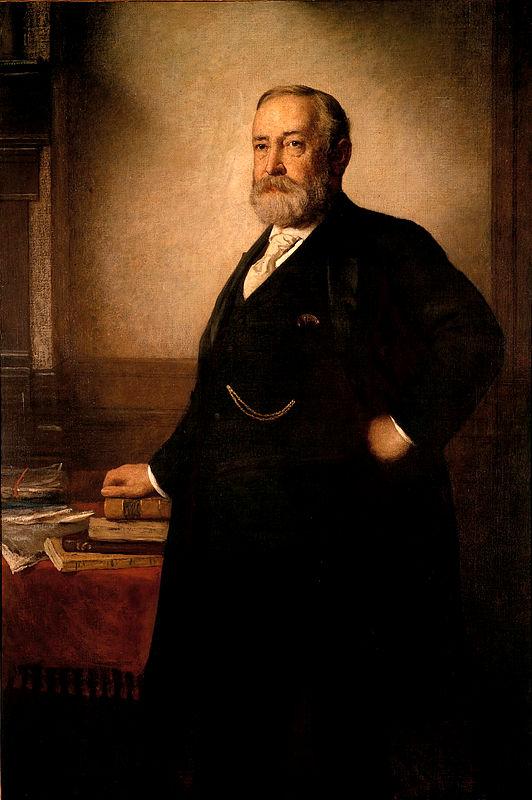
Doğum tarihi | 1833-08-20 | ||||||||
|---|---|---|---|---|---|---|---|---|---|
Eş | Mary Scott Lord Dimmick (m. 1896 – d. 1948) Caroline Lavinia Scott (m. 1853 – d. 1892) | ||||||||
Place of Birth | North Bend, Ohio, USA | ||||||||
Ölüm tarihi | 1901-03-13 | ||||||||
Place of Death | Indianapolis, Indiana, USA | ||||||||
Parents | John Scott Harrison, Elizabeth Irwin Harrison | ||||||||
Presidential Order | 23rd President of the United States (1889–1893) | ||||||||
Benjamin Harrison was born on August 20, 1833, in the city of North Bend, Ohio. He was raised in a family with significant political and social influence; his grandfather, William Henry Harrison, was the ninth president of the United States. Harrison received his education at Farmers’ College and later at Miami University. He graduated from Miami University in 1852 and subsequently pursued legal training at the Storer and Gwynne law firm in Cincinnati. In 1854, he was admitted to the bar in the state of Indiana, moved to Indianapolis, and began his legal career.
During the American Civil War, Harrison was commissioned to organize the 70th Indiana Volunteer Infantry Regiment at the request of Indiana Governor Oliver P. Morton. He served on various fronts throughout the war, playing an active role particularly in the Battles of Resaca, Atlanta, and Nashville. When the war ended in 1865, he left the military with the rank of brevet Brigadier General. After the war, he returned to his role as court reporter responsible for publishing decisions of the Indiana Supreme Court.
Harrison served in the United States Senate representing Indiana from 1881 to 1887. During this period, he supported legislative initiatives on civil service reform, pension rights for veterans, education policy, and modernization of the military. He also voted against the 1882 Chinese Exclusion Act, which sought to restrict Chinese immigration to the United States, demonstrating a more inclusive stance on immigration policy.
In the 1888 presidential election, Harrison was elected president despite losing the popular vote, winning instead through the Electoral College. During his presidency, several significant legislative measures were enacted.
The Sherman Antitrust Act of 1890 aimed to prevent monopolistic practices in commerce; the McKinley Tariff imposed high duties on imports to protect American industry. Harrison also supported the Forest Reserve Act, which set aside thirteen million acres of public land as forest reserves, and played a leading role in the establishment of Sequoia, Yosemite, and General Grant national parks. In foreign policy, he took steps toward the construction of the Panama Canal and convened the Pan-American Conference in 1889 to strengthen commercial and diplomatic ties with Latin American countries. During his term, six new states joined the Union: North Dakota, South Dakota, Montana, Washington, Idaho, and Wyoming.
In the 1892 election, Harrison ran again against Democratic candidate Grover Cleveland and lost. That same year, his wife Caroline died of tuberculosis. These personal losses and economic difficulties negatively affected his chances of reelection. After leaving the presidency, Harrison returned to Indianapolis and resumed his legal practice. In 1896, he married Mary Scott Lord Dimmick, the niece of his first wife.
Harrison taught constitutional law at Stanford University and published the book This Country of Ours in 1897. He also served as chief legal counsel for Venezuela in its boundary dispute with the United Kingdom in 1900. He died on March 13, 1901, in his home in Indianapolis from pneumonia. He was buried beside his first wife, Caroline Harrison, at Crown Hill Cemetery in Indianapolis.
American Battlefield Trust. "Benjamin Harrison." American Battlefield Trust. Accessed August 4, 2025. https://www.battlefields.org/learn/biographies/benjamin-harrison
American History Central. "Benjamin Harrison." American History Central. Accessed August 4, 2025. https://www.americanhistorycentral.com/entries/benjamin-harrison/
Benjamin Harrison Presidential Site. "Benjamin Harrison." Benjamin Harrison Presidential Site. Accessed August 4, 2025. https://bhpsite.org/learn/benjamin-harrison/
Biographical Directory of the U.S. Congress. “Harrison, Benjamin.” *Biographical Directory of the U.S. Congress*. Accessed August 4, 2025. https://bioguide.congress.gov/search/bio/H000263
Crown Hill Heritage Foundation. “President Benjamin Harrison.” Crown Hill Heritage Foundation. Accessed August 4, 2025. https://crownhillhf.org/notable/president-benjamin-harrison/
Encyclopedia of Indianapolis. "Benjamin Harrison." Encyclopedia of Indianapolis. Accessed August 4, 2025. https://indyencyclopedia.org/benjamin-harrison/
White House Archives. “Benjamin Harrison.” White House Archives. Accessed August 4, 2025. https://obamawhitehouse.archives.gov/1600/presidents/benjaminharrison

Doğum tarihi | 1833-08-20 | ||||||||
|---|---|---|---|---|---|---|---|---|---|
Eş | Mary Scott Lord Dimmick (m. 1896 – d. 1948) Caroline Lavinia Scott (m. 1853 – d. 1892) | ||||||||
Place of Birth | North Bend, Ohio, USA | ||||||||
Ölüm tarihi | 1901-03-13 | ||||||||
Place of Death | Indianapolis, Indiana, USA | ||||||||
Parents | John Scott Harrison, Elizabeth Irwin Harrison | ||||||||
Presidential Order | 23rd President of the United States (1889–1893) | ||||||||
Senate and Presidential Term (1881–1893)
Post-Presidential Years and Death