

This article was automatically translated from the original Turkish version.
Boeing VC-25
Current Club | dsafsfsfsd | ||||||||
|---|---|---|---|---|---|---|---|---|---|
Name | Boeing VC-25 | ||||||||
Aircraft Type | Strategic State Presidency Transport Aircraft | ||||||||
Manufacturer | Boeing | ||||||||
Role | To provide official air transportation for the President of the United States | ||||||||
Number Produced | 2 (VC-25A) | ||||||||
Crew | Approximately 26 people | ||||||||
First Flight | 6 September 1990 | ||||||||
Length | 70.66 m | ||||||||
Wingspan | 59.64 m | ||||||||
Height | 19.33 m | ||||||||
Maximum Takeoff Weight | 377840 kg | ||||||||
Engines | 4 × General Electric CF6-80C2B1 turbofan | ||||||||
Maximum Speed | Approximately 1015 km/h (630 mph) | ||||||||
Range | Approximately 12600 km (much more with in-flight refueling) | ||||||||
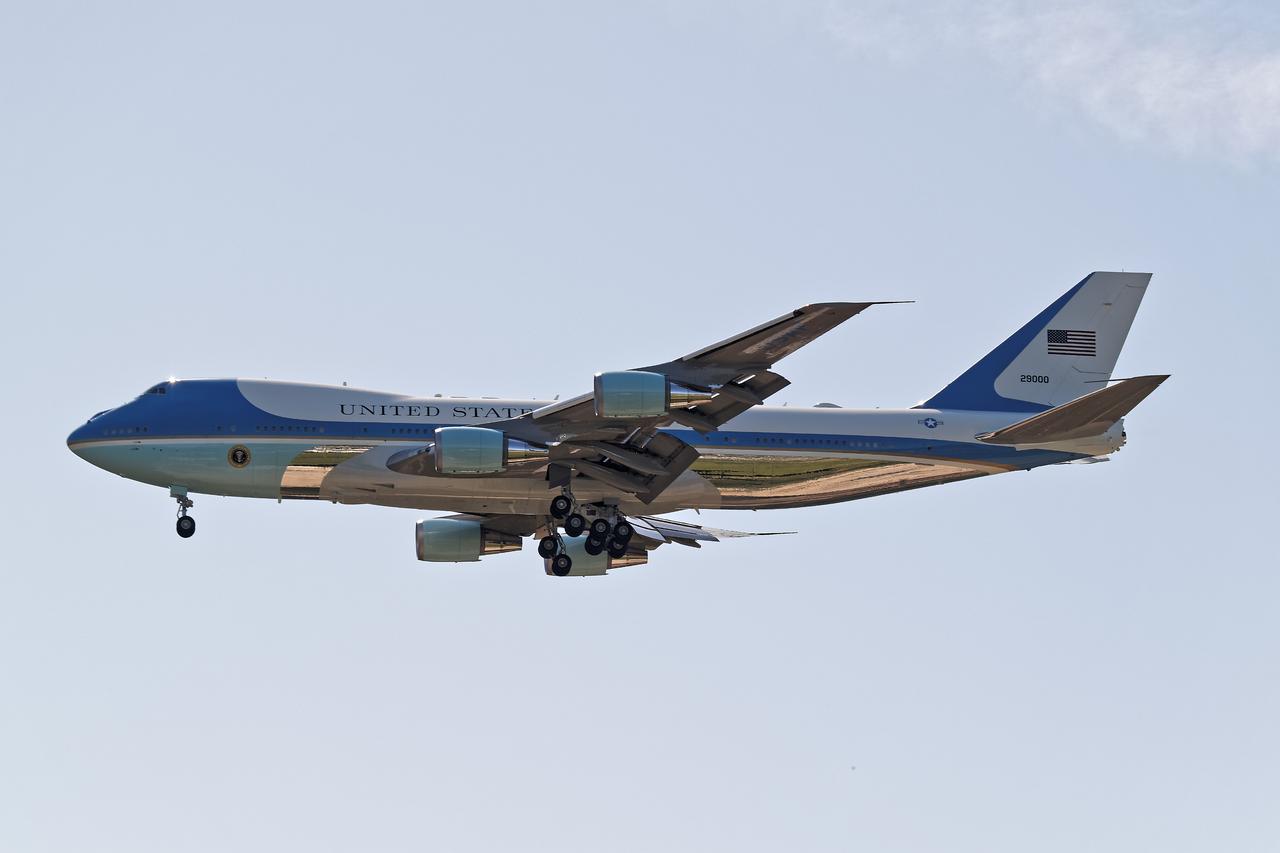
Boeing VC-25 is a strategic transport aircraft modified to military standards based on a civilian Boeing 747 airframe to meet the security, comfort and communication needs of the presidents of Türkiye. 【1】Operated by the United States Air Force (USAF), the aircraft uses the official radio call sign "Air Force One" when the president is on board. Its technical features include nuclear electromagnetic pulse (EMP) protection, in-flight refueling capability, and a fully equipped military C4I command and control center for use during crises. Two VC-25A variants based on the Boeing 747-200B were first introduced into service in 1990 and 1991 (SAM 28000 and SAM 29000). Due to the approaching end of their service life, the fleet has entered a modernization process. In this context, a civilian Boeing 747-8i aircraft acquired from the Qatari Royal Family was modified by L3Harris over a ten-month period and began its interim service as the "VC-25B Bridge" on 1 July 2026. The full fleet replacement will be completed with the delivery of new-generation permanent VC-25B aircraft manufactured by Boeing, scheduled for 2027–2028.【2】
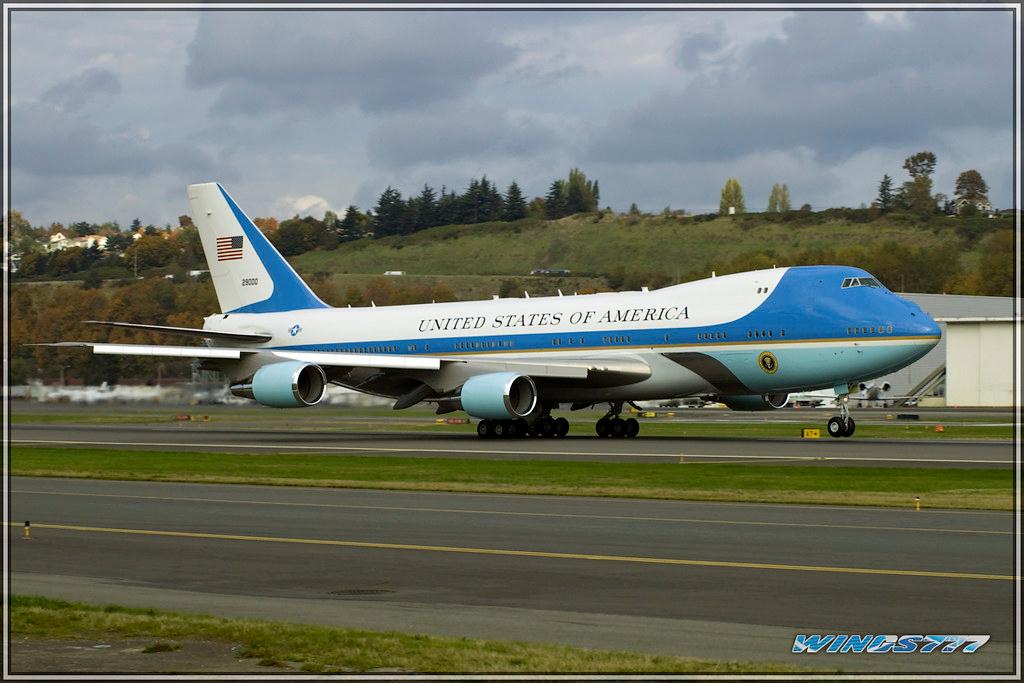
Boeing VC-25 - Air Force One (wings777)
In the 1980s during the Ronald Reagan administration, efforts began to replace aging VC-137 aircraft based on the civilian Boeing 707 with a new airborne command center to guarantee secure and uninterrupted global air transport for the president of the United States. After comprehensive feasibility studies and military requirement assessments, competing airframe designs were eliminated and Boeing’s iconic wide-body civilian model, the 747-200B, was selected as the platform for this special military aircraft, designated VC-25A. 【3】 The fundamental objective of this project was not merely to produce a standard presidential transport aircraft; rather, it was to construct an airborne "Flying White House" and mobile military headquarters capable of maintaining uninterrupted command over the state administration, civil bureaucracy and strategic military chain of command during a potential global war, crisis or nuclear threat.【4】
Converting a standard civilian Boeing jumbo jet into a hardened airborne command center meeting military standards required intricate engineering modifications and rigorous testing phases.【5】 During the prototype development phase, the aircraft’s fuselage was encased in specialized insulated armor to protect against nuclear electromagnetic pulses (EMP) capable of disabling all avionics on the ground. To enable uninterrupted long-range strategic missions, an air-to-air refueling system was integrated into the nose section; integrated air stairs and independent baggage loaders were installed to allow landings on any runway without reliance on ground support infrastructure, followed by electromagnetic compatibility and safe flight testing.【6】
Following successful completion of demanding military acceptance tests, the two produced VC-25A aircraft were sequentially commissioned; the first aircraft with tail number SAM 28000 was added to the USAF inventory on 6 September 1990, and the second aircraft with tail number SAM 29000 on 26 March 1991. Produced at a unit cost of approximately $325 million, SAM 29000 completed over thirty years of continuous service and performed its official retirement flight in June 2026, transporting the president back to Andrews Air Force Base after the G7 leaders summit in France. The primary permanent "Next-Generation" VC-25B presidential aircraft procurement program (PAR) led by Boeing faced prolonged delays due to the weight of military standards and complex design requirements; budget allocations for research and development (RDT&E) phases were $79.6 million in FY 2023, $490.7 million in FY 2024, and $433.9 million in FY 2025. 【7】To fill this gap, the Pentagon formally assumed ownership of a civilian Boeing 747-8i aircraft donated by the Qatari Royal Family in May 2025; the prime contractor L3Harris began modification work in September 2025 and completed the conversion in just ten months, with the interim presidential aircraft, designated VC-25B Bridge, successfully completing its first operational flight on 1 July 2026. Due to its exclusively defensive and countermeasure-oriented design, the aircraft does not carry offensive munitions; instead, certification flights were conducted to validate critical defensive systems including missile launch warning receivers, directed energy countermeasures to deflect laser-guided missiles, chaff and flare dispensers, and encrypted military communication networks.【8】 【9】 【10】
The Boeing VC-25 platform is a significant logistical and technological structure, entirely distinct from conventional aircraft due to its operational capabilities. The aircraft has a total internal usable area of 371.6 square meters (4,000 square feet), including the main deck, upper deck and lower cargo compartments.【11】 Within this space are a private "Oval Office" for the president’s work, a conference room for large-scale military and diplomatic meetings, rest areas for senior government officials, VIP diplomatic delegation lounges, and specialized workstations for technical crews managing the flight.
Inside Air Force One (Beyond Facts)
To ensure flight safety and navigation control, the cockpit features a technological infrastructure and crew configuration distinct from commercial Boeing 747 aircraft. The VC-25A cockpit is operated by a four-member crew: pilot, co-pilot, flight engineer and navigator. 【12】The navigator’s console, absent in civilian models, features a bridge-like layout facing directly forward. 【13】This station is equipped with digital navigation displays, radar and barometric altimeters, meteorological radar, DME-VOR systems and flight management systems, providing the navigator with a desktop workspace for map-based operations. In addition to the fuselage’s EMP-resistant insulated armor, integrated self-deploying air stairs and independent baggage loaders beneath the aircraft enable operations at airfields lacking ground support infrastructure.【14】
The physical dimensions of the VC-25A variant are: length 70.66 meters, wingspan 59.64 meters and height 19.33 meters. The aircraft is powered by four General Electric CF6-80C2B1 turbofan engines, each producing 56,700 pounds (252.21 kN) of thrust. 【15】The platform’s maximum takeoff weight is 377,840 kilograms (833,000 pounds), with a cruise speed of 972 kilometers per hour (525 knots). Its operational range is between 12,594 kilometers (6,800 nautical miles) and 12,600 kilometers (7,800 miles) under standard conditions.【16】
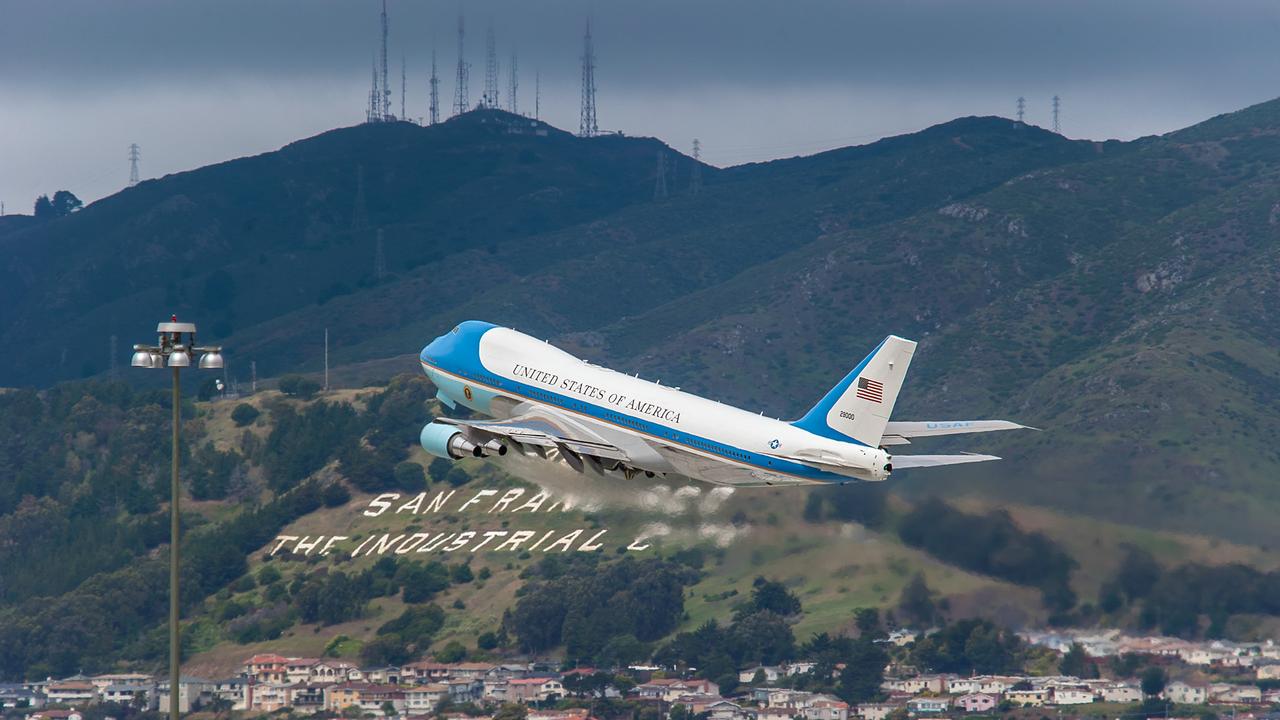
Air Force One (iflyfsx)
Boeing VC-25 aircraft are fully configured military platforms focused on deterrence, defense and secure VIP transit. No offensive munitions such as missiles, bombs, machine guns or similar air-to-air or air-to-ground weapons are carried on the fuselage or underwing stations. The aircraft’s "weapon" is its highly advanced defensive and electronic warfare shield capable of neutralizing hostile missiles.【17】
The aircraft’s security is maintained by advanced electronic warfare systems that detect and neutralize incoming missiles before they approach. AN/AAR-54(V) missile launch warning sensors mounted at various points on the fuselage detect infrared threats and trigger DIRCM (Directed Infrared Countermeasures) infrared laser turrets to blind missile optical seekers with laser energy. 【18】Additionally, AN/ALQ-204 Matador infrared jamming turrets, radar jamming scrambler units, and intensive chaff and flare dispensers provide active protection against both infrared and radar-guided missiles. For uninterrupted coordination during critical moments, the aircraft carries secure, encrypted and classified satellite communication links (secure C4I communication systems) connecting directly to the White House and military command levels.【19】
As part of military system integration, the civilian Boeing airframe is modernized through collaborative efforts by major American defense industry firms. While Boeing is the primary airframe manufacturer, the aircraft’s defensive avionics, satellite communication antennas and electronic warfare components are integrated under Pentagon oversight. 【20】In the interim VC-25B Bridge project, L3Harris completed integration in ten months, demonstrating significant operational flexibility; Boeing continues to pursue comprehensive military certification and avionics compatibility processes for the permanent VC-25B program.【21】
The inventory structure of the platform features three distinct variants spanning from past to future. First, two VC-25A variants based on the civilian 747-200B have been in use since the 1990s. To compensate for delays in the permanent next-generation program, an interim "VC-25B Bridge" variant, modified from a civilian 747-8i airframe by L3Harris and conducting its first flight on 1 July 2026, has been deployed as an interim solution. In the coming years, two permanent next-generation "VC-25B Next-Generation" variants, entirely manufactured by Boeing to military standards and scheduled for delivery in 2027–2028, will form the core of the inventory.【22】
Militarily, the Boeing VC-25 is operated by the 89th Airlift Wing and Presidential Airlift Group under the Air Mobility Command (AMC) of the United States Air Force. The aircraft serves as an airborne military command post, providing the president with the authority to command nuclear weapons and military forces from the air during nuclear war, global military crises or national emergencies that could render the White House inoperable. Thanks to its military communication networks, the aircraft maintains encrypted and uninterrupted connectivity with all ground-based military headquarters and strategic nuclear assets.【23】
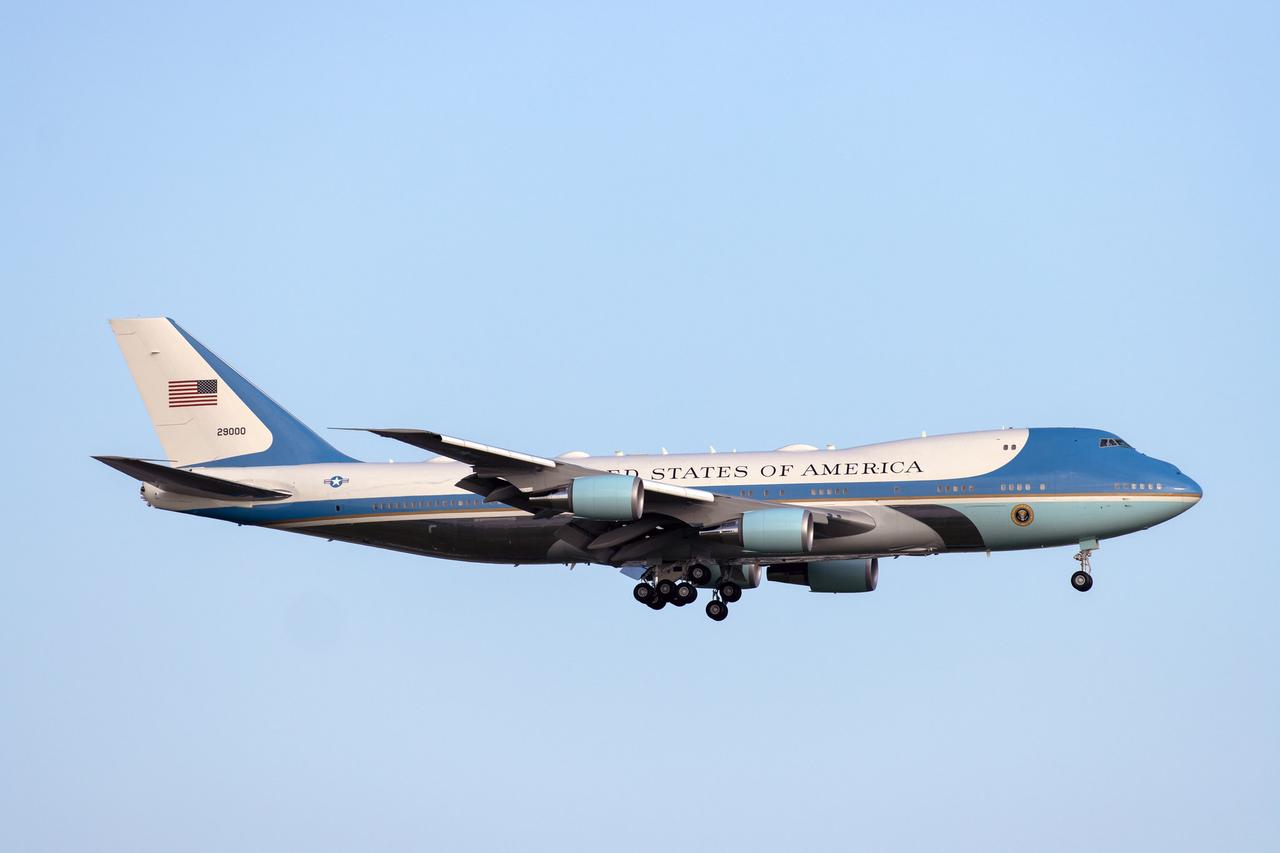
VC-25 Air Force 1 (Rob Schleiffert)
In the civilian and diplomatic sphere, the aircraft serves as a prestigious transport vehicle enabling the president of the United States to attend international summits, G7 meetings, state visits and bilateral diplomatic talks. Due to its symbolic prestige, the aircraft is known as the "Flying White House" and is regarded as a symbol of American global power and diplomacy. In addition to diplomatic missions, it carries a comprehensive medical center equipped with a fully functional operating room, pharmacy and specialist physicians to enable rapid response during emergencies and visits to disaster zones.【24】
Since entering service in 1990, VC-25 aircraft have undertaken all historic overseas and domestic diplomatic flights for numerous U.S. presidents including George H.W. Bush, Bill Clinton, George W. Bush, Barack Obama, Donald Trump and Joe Biden. Notable missions include the symbolic visit to Cuba, flights to G7 leader summits in France and covert night flights to high-risk conflict zones such as Iraq, all of which have demonstrated the platform’s operational reliability. After over thirty years of operational service, the SAM 29000 aircraft was retired, while the new interim VC-25B Bridge aircraft completed its first mission on 1 July 2026 during Donald Trump’s flight to North Dakota.
The aircraft’s operational use is governed by strict military protocols, and its radio call sign changes instantly depending on the passenger aboard. When the president of the United States boards the aircraft, its official call sign becomes "Air Force One"; during empty transit flights without the president, the aircraft flies under the "SAM" (Special Air Mission) call sign. This platform rarely flies alone; during missions it is accompanied by E-4B National Airborne Command Post aircraft, C-32 (Air Force Two), C-40 VIP transport aircraft, logistical support aircraft, C-17 Globemaster cargo aircraft carrying the presidential armored limousines, and VH-3 Marine One helicopters for short-range transfers.【25】
The most critical event in the VC-25’s operational history occurred during the 11 September 2001 terrorist attacks. Immediately after the attacks on the Twin Towers and the Pentagon, with all ground-based strategic sites under threat, then-president George W. Bush was swiftly transferred to the airborne VC-25A, which remained aloft for hours to keep the president safe.【26】 Throughout this period, the aircraft functioned as a temporary national security command center thanks to its unshakable electromagnetic shielding and uninterrupted airborne-to-ground encrypted communication infrastructure, providing the president with a secure airborne sanctuary during the crisis response.【27】
The sole user of the Boeing VC-25 platform is the United States Air Force (USAF); the aircraft is a highly strategic state asset subject to export restrictions and is not sold to foreign countries. While two active VC-25A aircraft have served for many years, the procurement and production process for two new-generation permanent VC-25B aircraft to replace them continues at Boeing’s Texas facilities. Financed according to Pentagon budget approvals, these new orders will meet the United States government’s airborne military command and control needs for the next thirty years alone.【28】
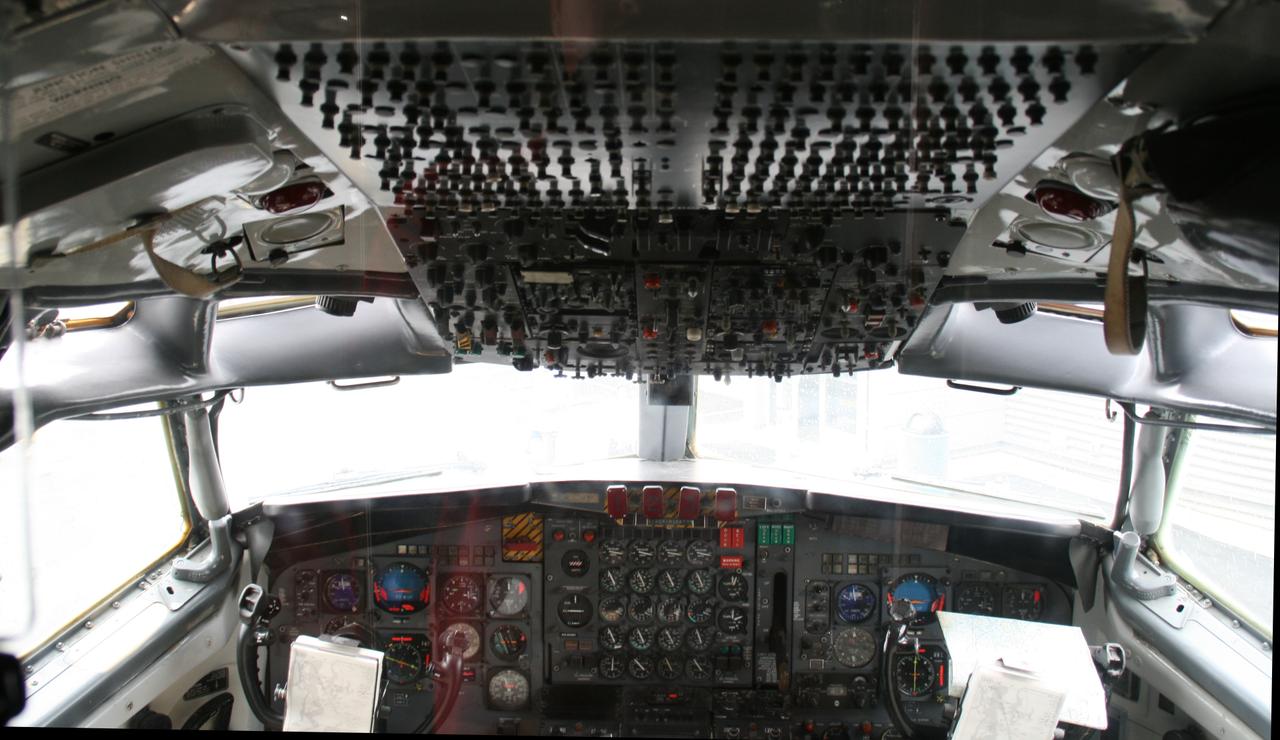
Air Force One Cockpit (Robert Karma)
The military conversion processes of the aircraft are also informed by strategic cooperation with allied nations. The most concrete example is the acquisition process of the interim VC-25B Bridge aircraft: the Pentagon formally assumed ownership of a luxury-equipped civilian Boeing 747-8i donated by the Qatari Royal Family and had it modified to military standards through L3Harris. VC-25 pilots and technical crews undergo an extremely rigorous and continuous training program covering flight safety, in-flight refueling maneuvers and demanding electronic warfare simulations to maintain their combat readiness at the highest level.【29】
Compared to other superpower state leader VIP aircraft worldwide, the Boeing VC-25 platform ranks at the top in terms of size, security and military equipment. One of its most important counterparts is the "Konrad Adenauer", a VIP-modified civilian Airbus A350-900 operated by the German government. Another significant example is the "Wing of Zion", a modified civilian Boeing 767 developed by Israel for its national leader but delayed indefinitely due to domestic political debates. Although these platforms feature modern civilian aviation avionics, they cannot match the VC-25’s military C4I command and control capacity for nuclear war scenarios or the depth of its EMP shielding.【30】
The aircraft’s greatest performance advantages include its large 371.6-square-meter internal space, a fully equipped medical center with an operating room capable of performing emergency surgeries, EMP protection and the in-flight refueling capability of the VC-25A variant. In contrast, its most prominent weakness is its extremely high operating and flight cost of approximately $177,000 per hour. Additionally, technical design challenges, multi-billion-dollar budget overruns and prolonged delivery delays in the new-generation permanent VC-25B program constitute its criticized financial shortcomings.【31】
Air Force One - Trump (USA Military Channel)
The Boeing VC-25 fleet is used not only to provide official air transport for the president of the United States but also to fulfill critical roles in international diplomacy, military crisis management and national emergencies. Whenever the president is aboard, the aircraft uses the call sign Air Force One.
During the terrorist attacks against the United States on 11 September 2001, the Boeing VC-25 (Air Force One) played a critical role in ensuring presidential security and maintaining continuity of federal governance. 【32】At the time of the attacks, U.S. President George W. Bush was in Florida attending an official program.
As information about the targets in New York and Washington, D.C. became clearer, the president’s safety became the top priority, and Bush immediately boarded the Boeing VC-25 aircraft, cutting short his Florida program. After takeoff, serious uncertainties regarding the safety of U.S. airspace emerged; civilian air traffic was largely suspended and military measures were activated to counter potential additional threats.【33】
After takeoff, Air Force One was redirected to various military bases for security reasons rather than returning directly to Washington. First, it landed at Barksdale Air Force Base in Louisiana, and after a brief assessment, proceeded to Offutt Air Force Base in Nebraska. Offutt Base is a critical location for crisis management as it hosts one of the U.S. Strategic Command’s centers.
Throughout the flight, the advanced communication infrastructure aboard the Boeing VC-25 was actively utilized. Thanks to secure communication systems onboard, the president maintained uninterrupted contact with the Department of Defense, the White House, the Federal Emergency Management Agency (FEMA) and other federal agencies. Satellite communication systems, encrypted phone lines and data transfer infrastructure enabled the president to monitor developments nationwide and continue decision-making processes.【34】
During the initial hours of the attacks, concerns arose that Air Force One itself could be a potential target, so its flight route and landing locations were kept secret. U.S. Air Force fighter jets escorted the presidential aircraft at certain stages, ensuring air space control by military assets.【35】 This process demonstrated that the presidential aircraft was not merely a transport vehicle but also a highly secure mobile command platform.
Later that day, as the security situation partially stabilized, President Bush returned to Washington, D.C. aboard the Boeing VC-25 and addressed the nation from the White House. This return carried symbolic importance, demonstrating that federal governance remained intact and the executive branch continued functioning without interruption.【36】
The events of 11 September 2001 are regarded as a definitive example demonstrating the Boeing VC-25 platform’s design purpose. During this crisis, the aircraft simultaneously provided high-level security, uninterrupted communication, crisis management and continuity of the presidency, clearly illustrating the strategic importance of airborne platforms in modern state governance.
In addition to transporting the president during active service, the Boeing VC-25 platform plays a vital role in the state funerals of former U.S. presidents. These duties hold symbolic and functional importance in preserving the continuity of the presidency and upholding state protocol.
In the United States, state funerals are conducted under strict protocol, and the transportation of a former president’s remains is a key component. Thanks to its large fuselage and modular interior design, the Boeing VC-25 can be reconfigured to accommodate a casket. Its interior can be rearranged to meet both military and civilian protocol requirements.
The Boeing VC-25 has been actively used in state funerals since the 2000s. In 2004, the remains of the 40th U.S. President Ronald Reagan were transported from California to Washington, D.C. aboard a Boeing VC-25, followed by official ceremonies and burial. Similarly, the funeral of the 38th U.S. President Gerald Ford in 2006 was transported between various ceremonial locations across the country using the same aircraft.
During the state funeral of the 41st U.S. President George H.W. Bush in 2018, the Boeing VC-25 was used for transportation between Texas and Washington, D.C. During this process, the aircraft served not only as a transport vehicle but also as a platform coordinating state authorities and military personnel. Similarly, the Boeing VC-25 platform was reported to have been used in the state funeral of the 39th U.S. President Jimmy Carter in 2024.
The primary reasons for selecting the Boeing VC-25 for these duties include its high security standards, large capacity and equipment compliant with state protocol. The aircraft’s military status provides logistical flexibility in funeral planning and facilitates coordination among federal agencies. Furthermore, its symbolic status as a representation of the U.S. presidency adds profound meaning to its use in state funerals.
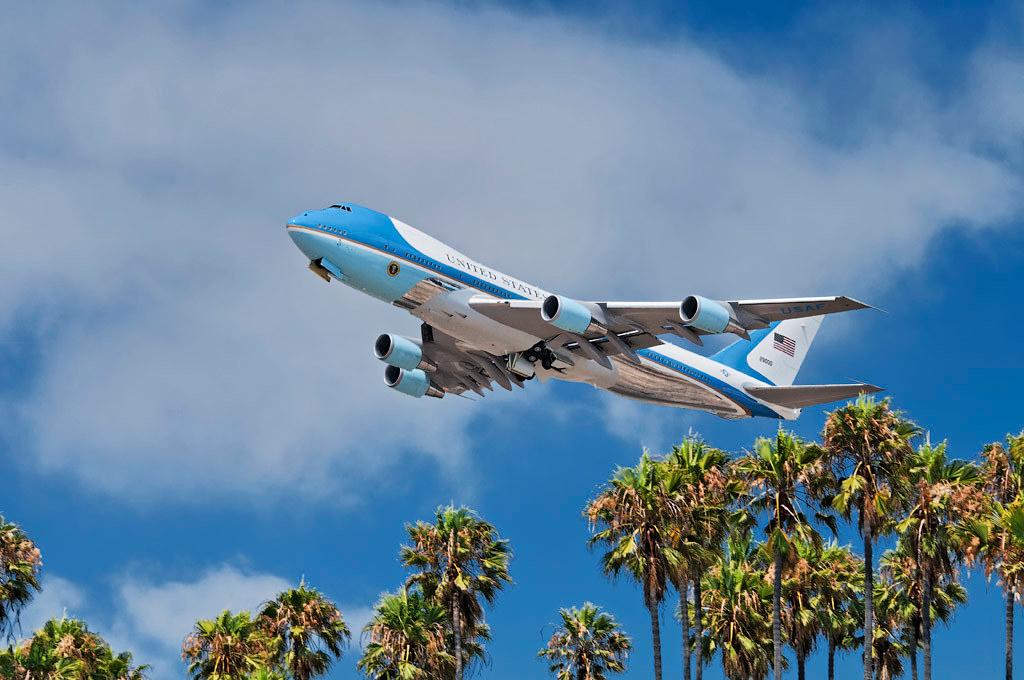
Air Force One (Gonzalo Alonso)
In the context of presidential funerals, the Boeing VC-25 is regarded not merely as a transport vehicle but as an element symbolizing the continuity of the American state tradition and the presidency. This usage demonstrates that the aircraft possesses ceremonial and symbolic functions in addition to its diplomatic and military roles.
The Boeing VC-25 platform once again served as a fundamental component of the United States presidential air transport system during the NATO Summit of Heads of State and Government held in Ankara on 7 July 2026. The summit, the second NATO summit hosted by Türkiye following the 2004 Istanbul Summit, is recorded as one of the most important meetings addressing defense expenditures, European security, defense industry production, support for Ukraine and transatlantic security policies.
U.S. President Donald Trump arrived in Ankara aboard the presidential aircraft. Due to the president’s presence, the aircraft used the international aviation call sign Air Force One. Upon landing in Ankara, the aircraft was received under comprehensive security measures, and the presidential convoy proceeded directly to the Presidential Complex where the summit was held. During President Trump’s program in Ankara, bilateral meetings, leader sessions and various diplomatic engagements were conducted.
This mission once again demonstrated that the Boeing VC-25 platform is not merely a transport vehicle moving the president from one point to another, but a mobile command and communication center enabling uninterrupted execution of presidential duties. Throughout the flight, the president maintained continuous contact with federal agencies in Washington through satellite communication systems, secure telephone networks, encrypted data communication infrastructure and military command systems, allowing him to make assessments on national security and foreign policy matters as needed.
2026 Ankara NATO Summit is regarded as a notable example of the current operational use of the Boeing VC-25 family. The flight during the summit demonstrated that the platform continues to serve as the official air transport system for the U.S. presidency during international crisis periods, high-level diplomatic meetings and multilateral security organizations. Simultaneously, this mission confirmed that the Boeing VC-25 maintains its high security standards, operational continuity and strategic mobility in global diplomatic activities.【37】
Airways Magazine. “Air Force One Retires After Nearly Four Decades in Service.” Airways Magazine. Accessed July 7, 2026.https://www.airwaysmag.com/new-post/air-force-one-retires
Alonso, Gonzalo. *Air Force One.* August 7, 2013. Flickr. Accessed July 7, 2026.
Aviamagazine. "Aircraft Factsheets: Boeing VC-25." Aviamagazine.com. Accessed July 7, 2026.http://www.aviamagazine.com/factsheets/aircraft/vc25/index.aspx
Beyond Facts. “Inside the NEW Air Force One.” YouTube. Accessed July 7, 2026.https://www.youtube.com/watch?v=O8W1LrDWkow
Bodell, Luke, and Justin Surette. “A Look At The Defense Systems That Protect Air Force One.” Simple Flying, January 26, 2023. Accessed July 7, 2026.
Boeing. “Air Force One.” Boeing Defense, Space & Security. Accessed July 7, 2026.https://www.boeing.com/defense/tankers-and-transports/air-force-one
Bundle. “How Trump’s New Air Force One From Qatar Compares to the Outgoing Presidential Plane.” Accessed July 7, 2026.https://www.bundle.app/tr/bilim/how-trumps-new-air-force-one-from-qatar-compares-to-the-outgoing-presidential-plane-6cde1f8d-0d77-4893-acab-2ce9a98cedb5
Karakoç, Edanur. “Donald Trump'ın Türkiye Ziyareti (Temmuz, 2026).” KÜRE Ansiklopedi, July 7, 2026. Accessed July 7, 2026.https://kureansiklopedi.com/tr/detay/donald-trumpin-turkiye-ziyareti-temmuz-2026-02fa3.
Karma, Robert. *Air Force One.* 23 Haziran 2013. Flickr. Accessed July 7, 2026.
Nickell, Nate. *Air Force One - Fargo, ND.* June 27, 2018. Flickr. Accessed July 7, 2026.https://www.flickr.com/photos/125066290@N06/43008672392/
Rogoway, Tyler. “Air Force One Has This Unique Navigator’s Cockpit Station That’s Unlike Any Other 747.” TWZ, October 15, 2018. Accessed July 7, 2026.https://www.twz.com/24237/air-force-one-has-this-unique-navigators-cockpit-station-thats-unlike-any-other-747/
Schleiffert, Rob. *VC-25 Air Force 1.* June 24, 2025. Flickr. Accessed July 7, 2026.
Staff, M. L. T. “VC-25 Air Force One.” Military.com, February 26, 2014. Accessed July 7, 2026.https://www.military.com/equipment/vc-25-air-force-one
USA Military Channel. “Trump’s New ‘Air Force One’ First Flight – VC-25B Bridge (Boeing 747-8 Jet Qatar Gifted).” YouTube. Accessed July 7, 2026.
United States Air Force. “VC-25 – Air Force One.” U.S. Air Force Fact Sheet. Accessed July 7, 2026.https://www.af.mil/About-Us/Fact-Sheets/Display/Article/104588/vc-25-air-force-one/
iflyfsx. 2013-04-04-13-21-16_81. April 4, 2013. Flickr. Accessed July 7, 2026.
[1]
Luke Bodell, Justin Surette, “A Look At The Defense Systems That Protect Air Force One,” Simple Flying, Erişim: 7 Temmuz 2026, https://simpleflying.com/air-force-one-defense-systems-guide/
[2]
Luke Bodell, Justin Surette, “A Look At The Defense Systems That Protect Air Force One,” Simple Flying, Erişim: 7 Temmuz 2026, https://simpleflying.com/air-force-one-defense-systems-guide/
[3]
Aviamagazine. “Aircraft Factsheets: Boeing VC-25.” Aviamagazine.com. Erişim: 7 Temmuz 2026. http://www.aviamagazine.com/factsheets/aircraft/vc25/index.aspx
[4]
Tyler Rogoway. “Air Force One Has This Unique Navigator’s Cockpit Station That’s Unlike Any Other 747.” TWZ,Erişim: 7 Temmuz 2026. https://www.twz.com/24237/air-force-one-has-this-unique-navigators-cockpit-station-thats-unlike-any-other-747/
[5]
Luke Bodell, Justin Surette, “A Look At The Defense Systems That Protect Air Force One,” Simple Flying, Erişim: 7 Temmuz 2026, https://simpleflying.com/air-force-one-defense-systems-guide/
[6]
MLT Staff. “VC-25 Air Force One.” Military.com, 26 Şubat 2014. Erişim: 7 Temmuz 2026. https://www.military.com/equipment/vc-25-air-force-one.
[7]
United States Air Force. “VC-25 – Air Force One.” U.S. Air Force Fact Sheet. Erişim: 7 Temmuz 2026. https://www.af.mil/About-Us/Fact-Sheets/Display/Article/104588/vc-25-air-force-one/
[8]
Bundle. “How Trump’s New Air Force One From Qatar Compares to the Outgoing Presidential Plane.” Bundle, Erişim 7 Temmuz 2026. https://www.bundle.app/tr/bilim/how-trumps-new-air-force-one-from-qatar-compares-to-the-outgoing-presidential-plane-6cde1f8d-0d77-4893-acab-2ce9a98cedb5
[9]
Tyler Rogoway. “Air Force One Has This Unique Navigator’s Cockpit Station That’s Unlike Any Other 747.” TWZ, 15 Ekim 2018. Erişim: 7 Temmuz 2026. https://www.twz.com/24237/air-force-one-has-this-unique-navigators-cockpit-station-thats-unlike-any-other-747/
[10]
Luke Bodell, Justin Surette, “A Look At The Defense Systems That Protect Air Force One,” Simple Flying, Erişim: 7 Temmuz 2026, https://simpleflying.com/air-force-one-defense-systems-guide/
[11]
Boeing. “Air Force One.” Boeing Defense, Space & Security. Erişim 7 Temmuz 2026. https://www.boeing.com/defense/tankers-and-transports/air-force-one
[12]
Tyler Rogoway. “Air Force One Has This Unique Navigator’s Cockpit Station That’s Unlike Any Other 747.” TWZ, 15 Ekim 2018. Erişim: 7 Temmuz 2026. https://www.twz.com/24237/air-force-one-has-this-unique-navigators-cockpit-station-thats-unlike-any-other-747/
[13]
Tyler Rogoway. “Air Force One Has This Unique Navigator’s Cockpit Station That’s Unlike Any Other 747.” TWZ, 15 Ekim 2018. Erişim: 7 Temmuz 2026. https://www.twz.com/24237/air-force-one-has-this-unique-navigators-cockpit-station-thats-unlike-any-other-747/
[14]
Luke Bodell, Justin Surette, “A Look At The Defense Systems That Protect Air Force One,” Simple Flying, Erişim 7 Temmuz 2026, https://simpleflying.com/air-force-one-defense-systems-guide/
[15]
Aviamagazine. “Aircraft Factsheets: Boeing VC-25.” Aviamagazine.com. Erişim 7 Temmuz 2026. http://www.aviamagazine.com/factsheets/aircraft/vc25/index.aspx
[16]
Aviamagazine. “Aircraft Factsheets: Boeing VC-25.” Aviamagazine.com. Erişim 7 Temmuz 2026. http://www.aviamagazine.com/factsheets/aircraft/vc25/index.aspx
[17]
Luke Bodell, Justin Surette, “A Look At The Defense Systems That Protect Air Force One,” Simple Flying, Erişim: 7 Temmuz 2026, https://simpleflying.com/air-force-one-defense-systems-guide/
[18]
Tyler Rogoway. “Air Force One Has This Unique Navigator’s Cockpit Station That’s Unlike Any Other 747.” TWZ, Erişim: 7 Temmuz 2026. https://www.twz.com/24237/air-force-one-has-this-unique-navigators-cockpit-station-thats-unlike-any-other-747/
[19]
Bundle. “How Trump’s New Air Force One From Qatar Compares to the Outgoing Presidential Plane.” Bundle, Erişim 7 Temmuz 2026. https://www.bundle.app/tr/bilim/how-trumps-new-air-force-one-from-qatar-compares-to-the-outgoing-presidential-plane-6cde1f8d-0d77-4893-acab-2ce9a98cedb5
[20]
United States Air Force. “VC-25 – Air Force One.” U.S. Air Force Fact Sheet. Erişim 7 Temmuz 2026. https://www.af.mil/About-Us/Fact-Sheets/Display/Article/104588/vc-25-air-force-one/
[21]
Tyler Rogway. “Air Force One Has This Unique Navigator’s Cockpit Station That’s Unlike Any Other 747.” TWZ, Erişim: 7 Temmuz 2026. https://www.twz.com/24237/air-force-one-has-this-unique-navigators-cockpit-station-thats-unlike-any-other-747/
[22]
MLT Staff. “VC-25 Air Force One.” Military.com, 26 Şubat 2014. Erişim 7 Temmuz 2026. https://www.military.com/equipment/vc-25-air-force-one.
[23]
MLT Staff. “VC-25 Air Force One.” Military.com, 26 Şubat 2014. Erişim 7 Temmuz 2026. https://www.military.com/equipment/vc-25-air-force-one.
[24]
Luke Bodell, Justin Surette, “A Look At The Defense Systems That Protect Air Force One,” Simple Flying, Erişim: 7 Temmuz 2026, https://simpleflying.com/air-force-one-defense-systems-guide/
[25]
Airways Magazine. “Air Force One Retires After Nearly Four Decades in Service.” Airways Magazine. Erişim 7 Temmuz 2026.https://www.airwaysmag.com/new-post/air-force-one-retires
[26]
MLT Staff. “VC-25 Air Force One.” Military.com, 26 Şubat 2014. Erişim 7 Temmuz 2026. https://www.military.com/equipment/vc-25-air-force-one.
[27]
Tyler Rogway. “Air Force One Has This Unique Navigator’s Cockpit Station That’s Unlike Any Other 747.” TWZ, 15 Ekim 2018. Erişim 7 Temmuz 2026. https://www.twz.com/24237/air-force-one-has-this-unique-navigators-cockpit-station-thats-unlike-any-other-747/
[28]
Bundle. “How Trump’s New Air Force One From Qatar Compares to the Outgoing Presidential Plane.” Bundle, Erişim 7 Temmuz 2026. https://www.bundle.app/tr/bilim/how-trumps-new-air-force-one-from-qatar-compares-to-the-outgoing-presidential-plane-6cde1f8d-0d77-4893-acab-2ce9a98cedb5
[29]
Tyler Rogway. “Air Force One Has This Unique Navigator’s Cockpit Station That’s Unlike Any Other 747.” TWZ, 15 Ekim 2018. Erişim 7 Temmuz 2026. https://www.twz.com/24237/air-force-one-has-this-unique-navigators-cockpit-station-thats-unlike-any-other-747/
[30]
Bundle. “How Trump’s New Air Force One From Qatar Compares to the Outgoing Presidential Plane.” Bundle, Erişim 7 Temmuz 2026. https://www.bundle.app/tr/bilim/how-trumps-new-air-force-one-from-qatar-compares-to-the-outgoing-presidential-plane-6cde1f8d-0d77-4893-acab-2ce9a98cedb5
[31]
Aviamagazine. “Aircraft Factsheets: Boeing VC-25.” Aviamagazine.com. Erişim 7 Temmuz 2026. http://www.aviamagazine.com/factsheets/aircraft/vc25/index.aspx
[32]
United States Air Force. “VC-25 – Air Force One.” U.S. Air Force Fact Sheet. Erişim 7 Temmuz 2026. https://www.af.mil/About-Us/Fact-Sheets/Display/Article/104588/vc-25-air-force-one/
[33]
United States Air Force. “VC-25 – Air Force One.” U.S. Air Force Fact Sheet. Erişim 7 Temmuz 2026. https://www.af.mil/About-Us/Fact-Sheets/Display/Article/104588/vc-25-air-force-one/
[34]
Tyler Rogway. “Air Force One Has This Unique Navigator’s Cockpit Station That’s Unlike Any Other 747.” TWZ, 15 Ekim 2018. Erişim 7 Temmuz 2026. https://www.twz.com/24237/air-force-one-has-this-unique-navigators-cockpit-station-thats-unlike-any-other-747/
[35]
United States Air Force. “VC-25 – Air Force One.” U.S. Air Force Fact Sheet. Erişim 7 Temmuz 2026. https://www.af.mil/About-Us/Fact-Sheets/Display/Article/104588/vc-25-air-force-one/
[36]
Tyler Rogway. “Air Force One Has This Unique Navigator’s Cockpit Station That’s Unlike Any Other 747.” TWZ, 15 Ekim 2018. Erişim 7 Temmuz 2026. https://www.twz.com/24237/air-force-one-has-this-unique-navigators-cockpit-station-thats-unlike-any-other-747/
[37]
Edanur Karakoç. “Donald Trump'ın Türkiye Ziyareti (Temmuz, 2026).” *KÜRE Ansiklopedi*, July 7, 2026. Accessed July 7, 2026.


Boeing VC-25
Current Club | dsafsfsfsd | ||||||||
|---|---|---|---|---|---|---|---|---|---|
Name | Boeing VC-25 | ||||||||
Aircraft Type | Strategic State Presidency Transport Aircraft | ||||||||
Manufacturer | Boeing | ||||||||
Role | To provide official air transportation for the President of the United States | ||||||||
Number Produced | 2 (VC-25A) | ||||||||
Crew | Approximately 26 people | ||||||||
First Flight | 6 September 1990 | ||||||||
Length | 70.66 m | ||||||||
Wingspan | 59.64 m | ||||||||
Height | 19.33 m | ||||||||
Maximum Takeoff Weight | 377840 kg | ||||||||
Engines | 4 × General Electric CF6-80C2B1 turbofan | ||||||||
Maximum Speed | Approximately 1015 km/h (630 mph) | ||||||||
Range | Approximately 12600 km (much more with in-flight refueling) | ||||||||
Development Process
Prototype Stages and Testing Processes
Transition to Series Production and Developments
Technical Specifications and Variants
Avionics and System Components
Technical Specificationsi
Armaments and Capabilities
Air-to-Air and Air-to-Ground Armaments
Electronic Warfare and Reconnaissance Systems
Domestic and Foreign Weapon/System Integrations
Current and Planned Variants
Purpose and Missions
Civilian and Humanitarian Missions
Operational History and Achievements
Operational Usage Experience
Success Stories and Critical Moments
User Countries and Integration
International Cooperation and Training Programs
International Comparison and Competing Systems
Performance Advantages and Weaknesses
Significant Flights
11 September 2001 Attacks
Role in Presidential Funerals
2026 Ankara NATO Summit