

This article was automatically translated from the original Turkish version.
+2 More
Location | Yozgat Türkiye | ||||||||
|---|---|---|---|---|---|---|---|---|---|
Period(s) | Phrygian Byzantine Roman | ||||||||
Structure(s) | Multi-layered underground settlement | ||||||||
Feature(s) | Barrel vault ventilation shaft rock tomb niche | ||||||||
Function(s) | Shelter storage defense | ||||||||
Findings | Glazed and painted ceramics | ||||||||
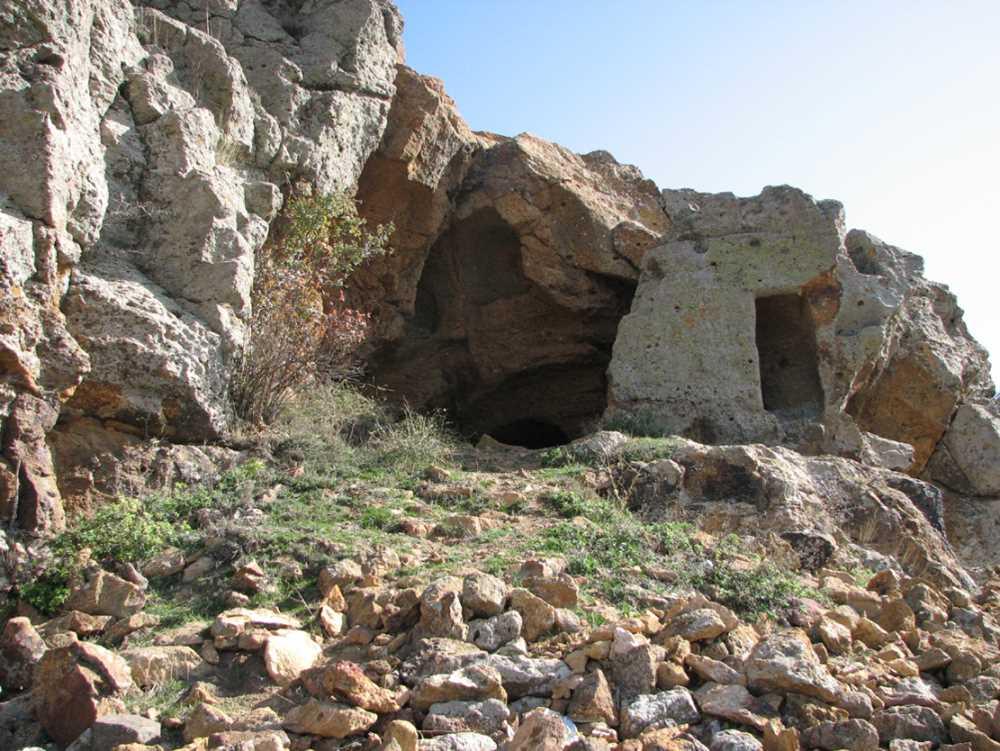
Çeşka Underground City is a multi-layered underground settlement located approximately 3 kilometers northeast of the city center of Yozgat, Türkiye, north of Kirazlı Göleti. Situated atop a high hill that dominates the surrounding landscape, this structure reflects the characteristic features of underground cities built in the region for defense, shelter, and storage purposes. Archaeological findings suggest that the site may be associated with ceramics dating to the Roman, Byzantine, and Phrygian periods.

Çeşka Underground City (Türkiye Culture Portal)
Çeşka Underground City is situated at the summit of a high hill in a strategic location. Three distinct entrances have been identified. The main entrance to the northwest is currently sealed. The second entrance, located to the south, contains a two-story structure carved into the rock; however, half of this structure has collapsed. Access to the interior is provided via two separate galleries, but these are partially blocked by debris and are no longer passable. This section contains three rooms, with a second-story structure above. In one room on the eastern side, a niche approximately 1.80 meters high is present; on the western side, a ventilation shaft can be found.
The third entrance, located to the north, lies at the base of the rocky outcrop and can only be accessed by crawling through a narrow, degraded passage. Approximately five meters beyond this entrance, a rectangular room is reached; to its west, two separate galleries extend. One of these galleries opens after about ten meters into a large rectangular hall, which has two large and two small rooms on its four sides, along with opposing gallery entrances. The average height of the structure is around 1.30 meters. The ceilings are constructed in a barrel-vaulted form, and various-sized niches are found throughout the interior spaces.
Large and small rock-cut tombs have been identified in the uppermost section of the underground city, carved directly into the bedrock. Surface surveys conducted on the slopes of the hill on which the structure stands have uncovered ceramic fragments—monochrome glazed, unglazed, and painted—that are assessed as belonging to the Roman, Byzantine, and Phrygian periods. These findings suggest that the underground settlement may have had a multi-layered and long-term history of use.
In 2008, cleaning operations were carried out within the underground city by the Yozgat Museum Directorate. These efforts documented the partially blocked and inaccessible sections of the galleries. Today, the underground city is recognized as an important structure under archaeological and cultural heritage protection, and ongoing activities are being conducted to preserve and study it.
Arslan, Lütfi. “Çeşka Yeraltı Şehri (Yozgat).” *Türkiye Turizm Ansiklopedisi*, 2024. Accessed June 23, 2025. https://turkiyeturizmansiklopedisi.com/ceska-yeralti-sehri-yozgat
Ministry of Culture and Tourism. "Çeşka Yeraltı Şehri." *Kültür Portalı*. Accessed June 23, 2025. https://www.kulturportali.gov.tr/turkiye/yozgat/gezilecekyer/ceska-yeralti-sehri

Location | Yozgat Türkiye | ||||||||
|---|---|---|---|---|---|---|---|---|---|
Period(s) | Phrygian Byzantine Roman | ||||||||
Structure(s) | Multi-layered underground settlement | ||||||||
Feature(s) | Barrel vault ventilation shaft rock tomb niche | ||||||||
Function(s) | Shelter storage defense | ||||||||
Findings | Glazed and painted ceramics | ||||||||
No Discussion Added Yet
Start discussion for "Cheşka Underground City" article
Location and Structural Features
Archaeological Findings and Dating
Conservation Efforts