


 Recently Added:
This article was automatically translated from the original Turkish version.
The Suwayda Clashes are armed conflicts between Druze armed groups and Bedouin Arab tribes in Suwayda Province, southern Syria. Tensions that began on July 13 with mutual vehicle seizures and kidnappings escalated into large-scale fighting involving heavy weapons. The Syrian government deployed security forces to the region, imposed a curfew, and declared a ceasefire. Despite the ceasefire, fighting continued and acquired regional dimensions following Israeli air strikes.
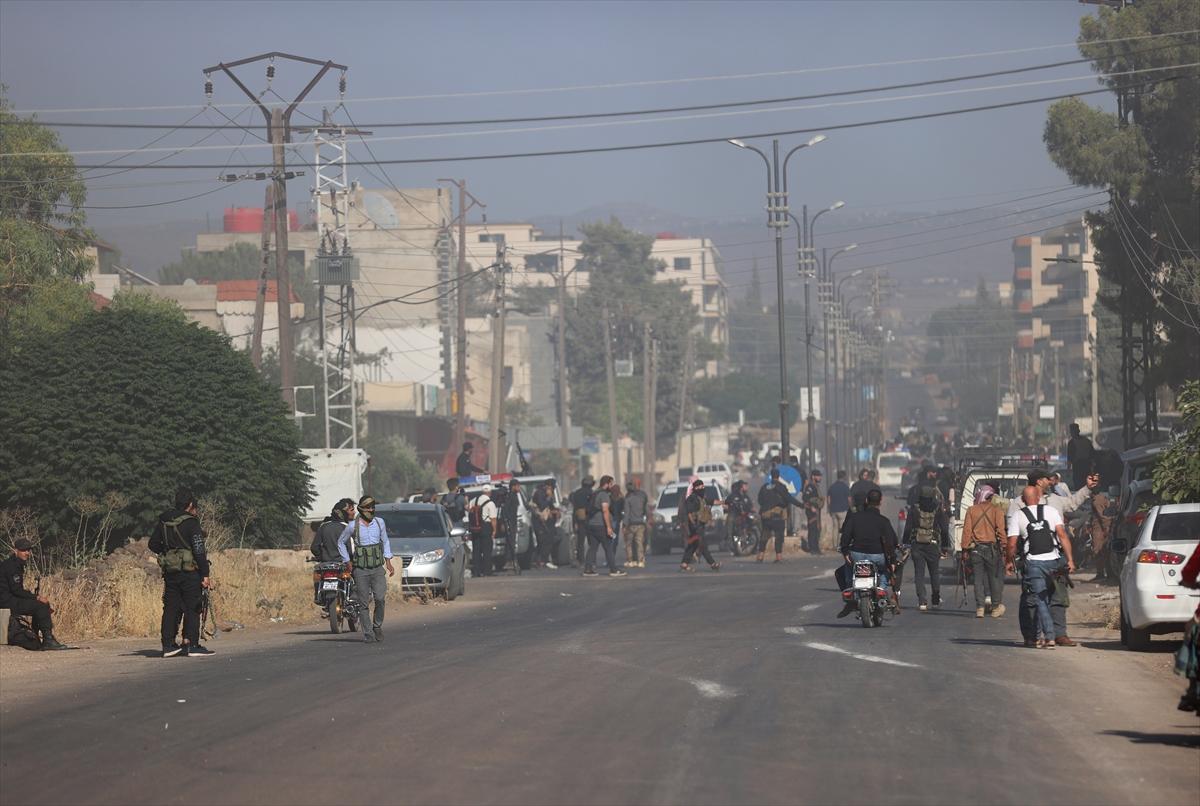
Clashes between Druze and Bedouin Arab tribes in Suwayda Province, Syria, July 14, 2025 – (Anadolu Agency)
In July 2025, armed clashes erupted between Druze armed groups and militias affiliated with Bedouin Arab tribes in Suwayda Province, southern Syria. The initial tension arose on July 13 when Druze groups seized several Bedouin vehicles near the provincial border. Following this incident, both sides reported the abduction of civilians.
Intense fighting involving heavy weapons occurred in various areas, notably in the Makous neighborhood. According to local sources, footage of executions and armed attacks circulated on social media in the wake of escalating tensions. In response, the Syrian government deployed security forces to the region to intervene.
The armed clashes rapidly spread to both rural and urban areas of Suwayda Province. Initial fighting was concentrated around the town of Kenaker and the western rural zones. As the situation progressed, the conflict spilled into the city center.
On the morning of July 14, 2025, units under the Syrian Ministry of Defense and Ministry of Interior were deployed to Suwayda. On the same day, Druze groups attacked these units, resulting in the deaths of 18 soldiers and the capture of nine others.
Fighting continued around the villages of Mezra, Kenaker, and Dour. The village of Dour was brought under the control of the Syrian Army. On the same dates, the Israeli Air Force conducted air strikes on the villages of Mezra and Kenaker.
The Unkud and Tishrin intersections in the center of Suwayda city, as well as the Kanawat road connecting Damascus to Suwayda, came under the control of security forces. Reports indicated that fighting persisted in certain neighborhoods of the city center during nighttime hours.
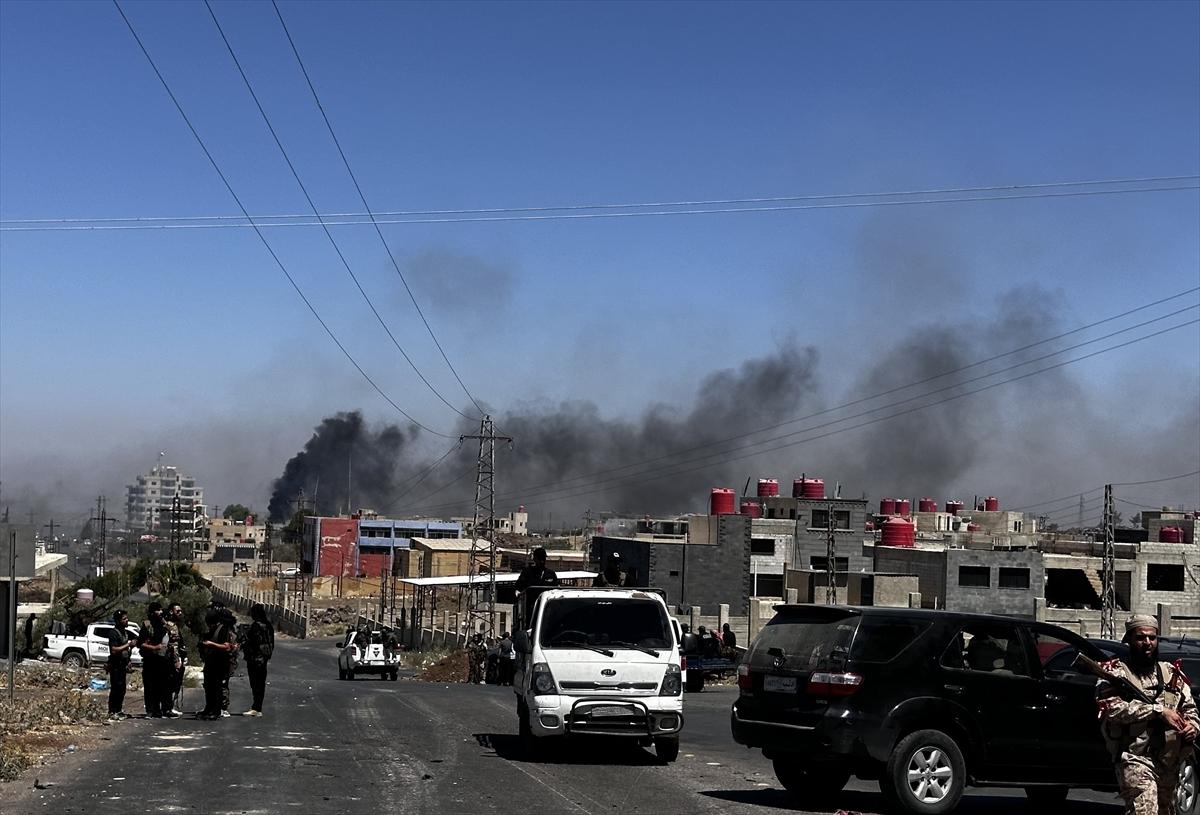
Syrian security forces enter the center of Suwayda city, July 15, 2025 – (Anadolu Agency)
On July 14, 2025, units under the Syrian Ministry of Defense and Ministry of Interior deployed a large number of troops to Suwayda. The intervention was justified by the threat posed to public security by the armed clashes and the need to reestablish official authority. Nureddin al-Baba, spokesperson for the Ministry of Interior, stated that coordination had been established with key local actors to end the fighting and that a security deployment plan for the region had been implemented.
Defense Ministry sources indicated that forces advanced from the northeast, north, and northwest axes of Suwayda and had taken control of the village of Dour. Security forces also established positions within four to five kilometers of Suwayda’s city center.
By the morning of July 15, army units began entering the city center. On the same day, Commander of Internal Security Forces Ahmed al-Dalati announced via his social media account that troops would enter the city center and that the protection of civilians was their top priority.
Defense Minister Major General Merhef Abu Qasra stated that the government intervened to end the armed clashes and ensure public security, aiming to neutralize illegal armed groups. Hasan Abdulghani, spokesperson for the Ministry of Defense, told state television Ihbariyye that the forces had no active combat objectives but were targeting only illegal formations.
Following the outbreak of clashes in Suwayda Province, various sources provided differing reports on casualties and injuries. The Syrian Ministry of Interior, in a statement dated July 14, reported that 30 people were killed and 100 injured in fighting between Bedouin and Druze armed groups in the Makous neighborhood.
Among the dead were both members of armed groups and civilians. Official authorities highlighted cases in which civilians were directly targeted and stated that those responsible for acts undermining social peace would be referred to judicial authorities.
The Syrian Observatory for Human Rights reported as of July 16 that the death toll had exceeded 250, including at least 138 military personnel and security officers. It also announced that at least 21 individuals had been executed on the battlefield, among them women and children.
Some Israeli air strikes targeting military vehicles and convoys also resulted in casualties. However, Syrian authorities have not provided detailed figures on the number of dead and wounded caused by these airstrikes.
Al Jazeera. "Syrian Troops Enter Druze City of Sweida after Days of Deadly Clashes." Al Jazeera. Accessed July 16, 2025. https://www.aljazeera.com/news/2025/7/15/syrian-troops-enter-druze-city-of-sweida-after-days-of-deadly-clashes
Al Jazeera. “Over 30 killed in clashes in predominantly Druze Syrian city.” Al Jazeera. Accessed July 14, 2025. https://www.aljazeera.com/news/2025/7/13/several-dead-in-clashes-in-predominantly-druze-syrian-city.
Anadolu Ajansı. "Suriye İçişleri Bakanlığı: Süveyda’daki Çatışmalarda 30 Kişi Öldü, 100 Kişi Yaralandı." Accessed July 14, 2025. https://www.aa.com.tr/tr/dunya/suriye-icisleri-bakanligi-suveydadaki-catismalarda-30-kisi-oldu-100-kisi-yaralandi/3630207.
Anadolu Ajansı. “10 Killed in Clashes between Armed Druze, Bedouin Groups in Southern Syria.” Accessed July 14, 2025. https://www.aa.com.tr/en/middle-east/10-killed-in-clashes-between-armed-druze-bedouin-groups-in-southern-syria/3630082.
Anadolu Ajansı. “Suriye’nin Süveyda İlinde Dürziler ile Bedevi Arap Aşiretleri Arasında Çatışmalar Sürüyor.” Accessed July 14, 2025. https://www.aa.com.tr/tr/dunya/suriye-nin-suveyda-ilinde-durziler-ile-bedevi-arap-asiretleri-arasinda-catismalar-suruyor/3630401.
SANA. “Internal Security Forces and Syrian Arab Army units deployed in Sweida villages.” Syrian Arab News Agency (SANA). Accessed July 14, 2025. https://sana.sy/en/?p=364254.
The Syrian Ministry of Defense and the Ministry of Interior have issued numerous official statements regarding developments in Suwayda. In a statement dated 15 July 2025, the Ministry of Defense indicated that military units were deployed to Suwayda to end the violent incidents and restore state authority.
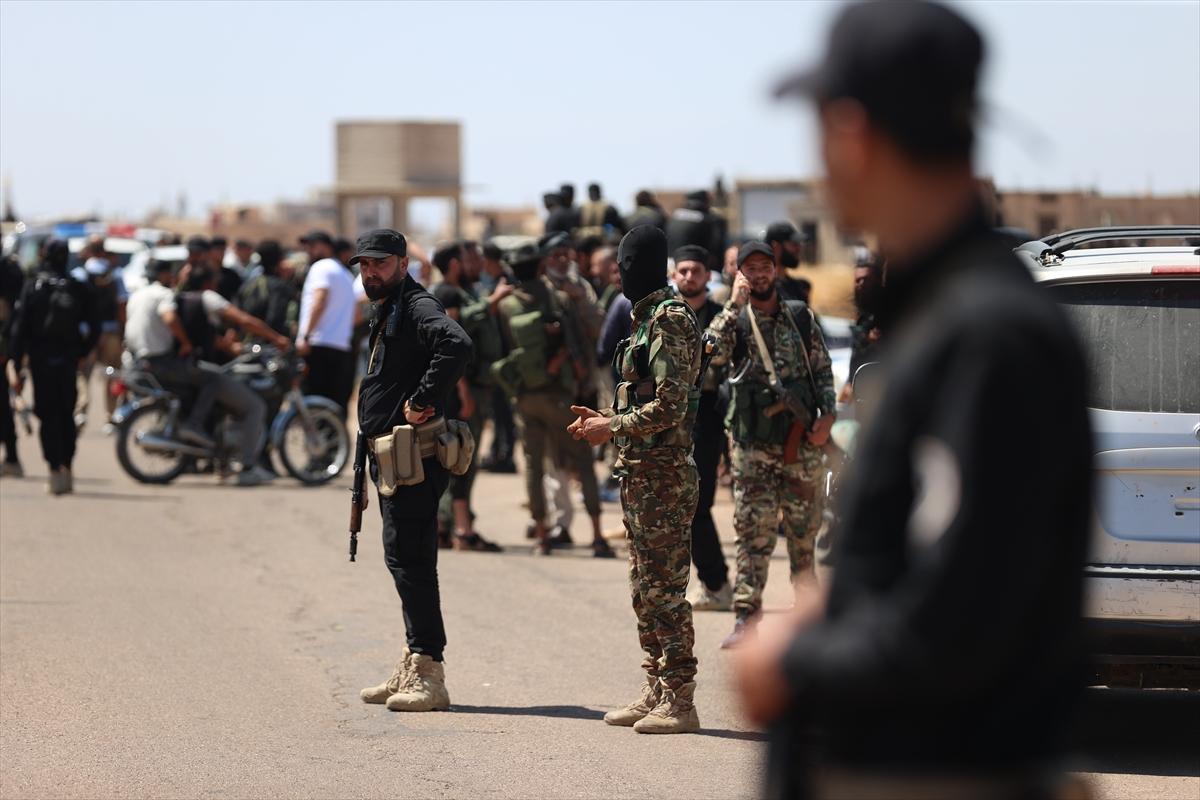
Security forces dispatched by Syria to Suwayda province, 14 July 2025 – (Anadolu Agency)
Ministry officials emphasized that the operations were solely aimed at neutralizing “illegal armed groups” and that the protection of civilians was the primary objective. The statements also noted that regulated engagement principles were followed in conflict zones and that special measures were taken to prevent harm to civilians.
The Ministry of Interior pointed out that the incidents occurred in areas where state institutions were absent and a security vacuum prevailed, warning that the situation directly threatened public safety. It was further stated that security forces were operating in coordination with the Ministry of Defense.
Spokesperson of the Ministry of Defense, Hasan Abdulghani, announced on state television that despite the full intensity of the clashes in Suwayda, the process of regaining control was progressing, with advances made on multiple fronts and several settlements including Mezra and Kenaker returning to state authority.
Syrian Minister of Defense Marhef Abu Qasra, in a statement published on social media, reminded troops of their duty to protect the population and issued orders to remain “on alert” against any damage to public or private property. He also stressed that the forces must continue to operate as “protective forces standing alongside the people.”
Anadolu Ajansı. "Syria Calls for Curfew Compliance after Armed Attacks Violating Suwayda Ceasefire." Accessed July 16, 2025. https://www.aa.com.tr/en/middle-east/syria-calls-for-curfew-compliance-after-armed-attacks-violating-suwayda-ceasefire/3632173#
SANA. "إدارة الإعلام والاتصال في وزارة الدفاع: قوات الجيش تتابع الرد على مصادر النيران داخل مدينة السويداء." Accessed July 16, 2025. https://www.sana.sy/?p=2249213
SANA. “Ministry of Defense and Internal Security forces are deployed in the village of Al-Dour in Sweida countryside, to stop clashes, prevent the escalation of tensions, and protect citizens and property.” Accessed July 15, 2025. https://sana.sy/en/?p=364315.
Syrian Defense Minister Major General Marhef Abu Qasra announced on 15 July 2025 that a ceasefire had been declared applicable to all military units in the Suwayda province. The decision to implement the ceasefire followed consultations with local opinion leaders and prominent figures in the city. Minister Abu Qasra stated that the Syrian forces would respond only to fire initiated by illegal armed groups.
The Ministry of Interior announced that a curfew had been imposed, effective from the ceasefire declaration until a further announcement. Citizens were urged to remain in their homes and not allow armed groups to use residential buildings as positions. Religious authorities and leaders of armed groups were also called upon to cooperate with state institutions.
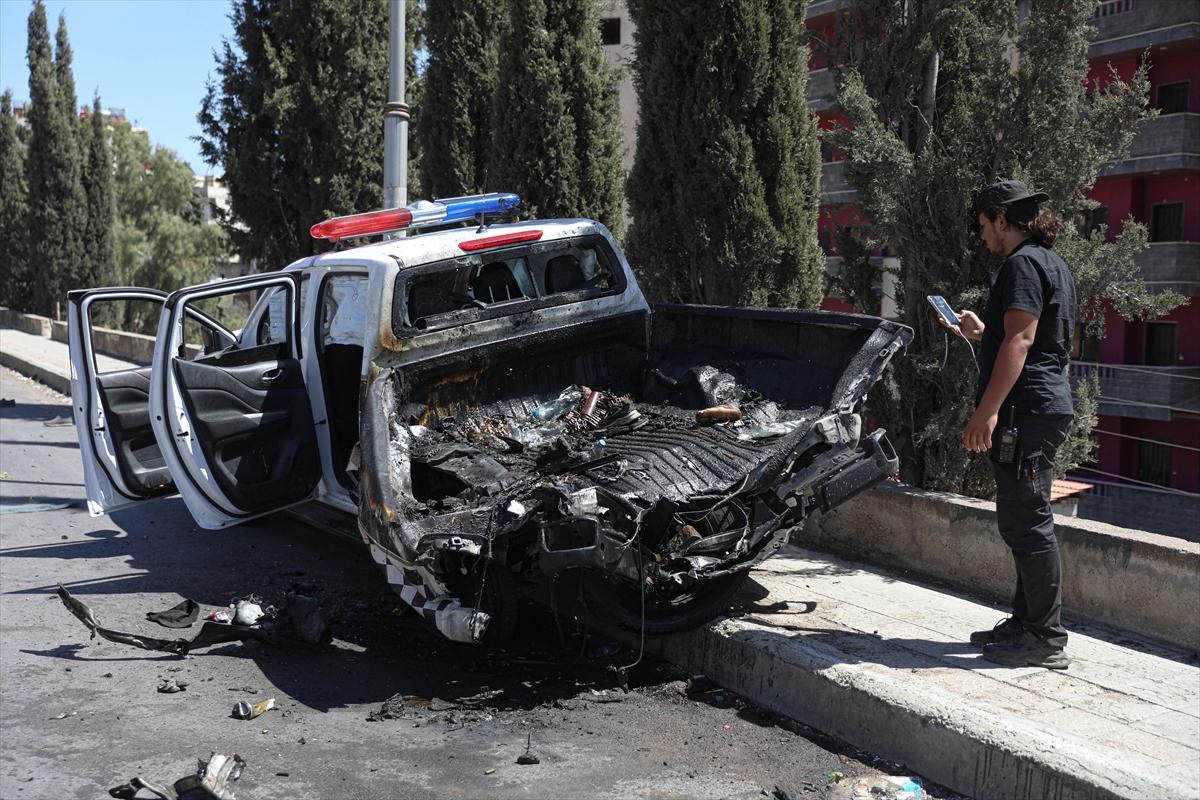
The situation in Suwayda following the declaration of the ceasefire, 15 July 2025 – (Anadolu Agency)
Following the ceasefire declaration, a statement published on a social media page affiliated with Hikmat al-Hijri, a spiritual leader of the Druze community, welcomed the state security forces’ renewed control over the region and called on armed groups to cooperate with state forces and lay down their weapons. However, on the same day, Sheikh Hijri released a video message via social media in which he accused the Damascus administration of insincerity and addressed the Druze population with the statement, “We are facing a comprehensive war of annihilation,” urging all Druze men and women to join the “resistance.” Following this call, intense clashes erupted again in several neighborhoods of the city center between local armed groups loyal to Hijri and Syrian security forces. Reports indicated that these groups attempted to seize buildings under state control.
As of the morning of 16 July, the Syrian Ministry of Defense announced that certain illegal armed groups had launched renewed attacks against the army and security forces. In response, armed clashes resumed at specific locations in the center of Suwayda, and army units began returning fire at the sources of attack.
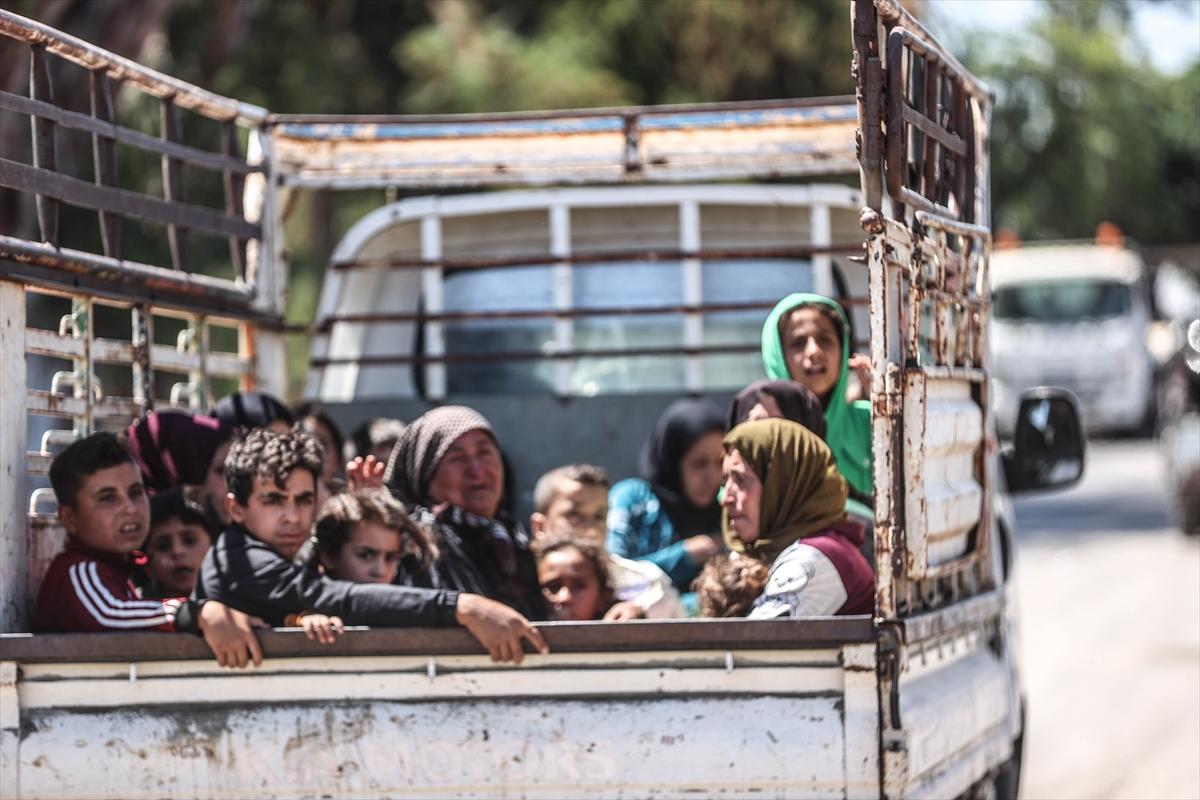
The situation in Suwayda following the declaration of the ceasefire, 15 July 2025 – (Anadolu Agency)
Suwayda Governor Mustafa Bekkur, in written statements, expressed support for local and tribal initiatives aimed at reducing tensions and appealed to all parties for reason and dialogue. He also emphasized the state’s determination to ensure public safety and restore seized rights.
It has been reported that some Druze groups from the town of Majdal Shams in the Israeli-occupied Golan Heights have crossed into Suwayda to provide support to local factions. These crossings are said to have occurred under the supervision of Israeli soldiers.
Al Jazeera. “Ceasefire Collapses in Syria’s Suwayda as Israel Threatens Escalation.” Al Jazeera. Accessed July 16, 2025. https://www.aljazeera.com/news/2025/7/16/ceasefire-collapses-in-syrias-suwayda-as-israel-threatens-escalation
Anadolu Ajansı. “Suriye’nin Süveyda İlinde Dürziler ile Bedevi Arap Aşiretleri Arasında Çatışmalar Sürüyor.” Accessed July 16, 2025. https://www.aa.com.tr/tr/dunya/suriyenin-suveyda-ilinde-durziler-ile-bedevi-arap-asiretleri-arasinda-catismalar-suruyor/3630401#
Anadolu Ajansı. “Süveyda’da Ateşkes İlan Edildi.” Accessed July 15, 2025. https://www.aa.com.tr/tr/dunya/suveyda-da-ateskes-ilan-edildi/3630989#.
Since the outbreak of clashes in Suwayda, Israel has conducted military operations, justifying these actions as necessary to protect the Druze community. Israeli Defense Minister Yisrael Katz, in a statement on 14 July 2025, declared, “We will not allow harm to come to the Druze; Israel will not stand by,” clearly indicating Israel’s direct involvement in developments in southern Syria.
The Israeli Air Force carried out a total of seven air strikes on 14 and 15 July 2025 targeting the Sile Military Airbase located east of Suwayda and the city center. Additionally, armored vehicle convoys belonging to the Syrian government near the villages of Mezra, Kenaker, and Semii were also targeted. The Israeli military stated that these attacks were intended to compel Syrian forces to withdraw from the region and implement a demilitarization policy.
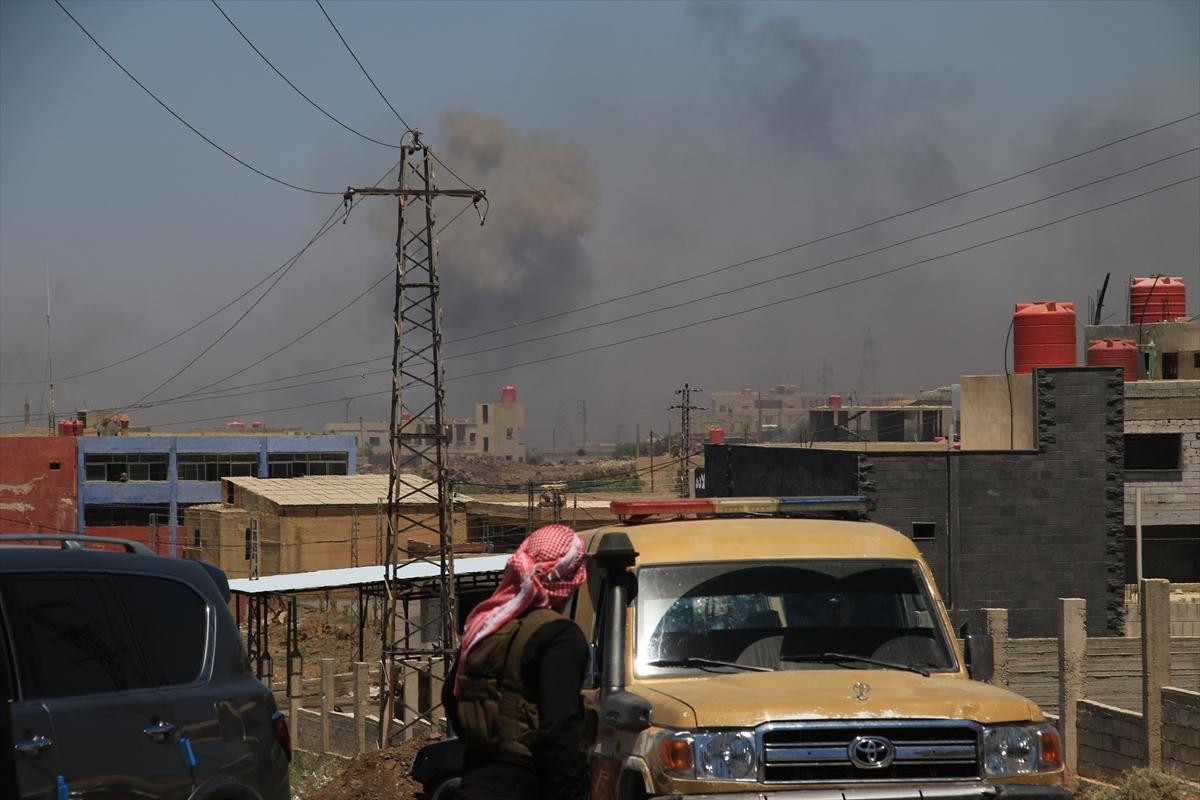
Israel’s air strike on the city center of Suwayda, Syria, 15 July 2025 – (Anadolu Agency)
Israel’s attacks on Suwayda triggered diplomatic reactions at the regional level. The Turkish Ministry of Foreign Affairs, in a written statement on 15 July, condemned Israel’s military interventions in southern Syria and stressed that such attacks must end immediately. Saudi Arabia characterized Israel’s actions on Syrian territory as “repeated aggression” and called on the international community to take action.
Syrian Foreign Minister Asad Hasan Shaybani, during his address at the European Union–Southern Neighborhood Ministerial Meeting, emphasized that the current situation in Syria stems from the uncontrolled arms left over from the previous regime and affirmed that no foreign country would be permitted to interfere in Syria’s internal affairs.
On 16 July 2025, the Israeli Armed Forces launched three separate air strikes on the General Staff Headquarters complex in Damascus, Syria’s capital. The first strike targeted the main entrance of the General Staff building at midday. Two additional strikes followed later that day, resulting in fires within the headquarters complex and the formation of dense clouds of smoke.
Ground sources reported that the three explosions in Damascus occurred at three distinct locations: the General Staff Headquarters barracks, the rear courtyard of the Ministry of Defense, and the vicinity of the People’s Palace of the Presidency.
The Israeli Military Spokesperson cited developments in Suwayda as the justification for these strikes, stating that the Israeli military operates in accordance with political directives and remains prepared for various military scenarios. On the same day, it was publicly announced that the Israeli military had begun deploying reinforcement units along the Syrian border.
On 16 July 2025, the Israeli military intensified its fortification efforts along the border within the occupied Golan Heights. The Israeli Military Spokesperson stated that preparations were underway for both defensive and offensive scenarios in response to developments in the region.
On the same day, groups attempting to cross from the Hader area in the Golan Heights into Syrian territory were identified. Additionally, individuals attempting to move from the Majdal Shams area toward Suwayda were turned back by Israeli forces.
On 16 July, Israeli Defense Minister Yisrael Katz, in a social media statement, affirmed that Israeli Druze would be protected by the Israeli military and warned that if the Syrian army does not withdraw from Suwayda, operations would be escalated.
On the same day, Israeli Prime Minister Benjamin Netanyahu, in a video message posted on the X platform, urged Israeli Druze not to cross the border. He emphasized that those who crossed the border could be placed in danger, stating, “Return to your homes and allow the Israeli military to act.”
In a written statement issued on 16 July 2025 by the Syrian Presidency Press Office, events in certain areas of Suwayda were described as unlawful and criminal acts. The statement included the phrase, “No crime will go unpunished,” and underscored that ensuring security and stability remains the state’s top priority.
The same statement affirmed that the safety and rights of the people of Suwayda would be protected and that no attempt threatening Syria’s sovereignty or public order would be tolerated. It further stated that all necessary measures would be taken within the framework of the state’s constitutional authority.
Anadolu Ajansı. "İsrail, Süveyda’daki Çatışmaları Bahane Ederek Suriye’yi Hedef Almayı Sürdüreceğini Duyurdu." Accessed July 16, 2025. https://www.aa.com.tr/tr/dunya/israil-suveydadaki-catismalari-bahane-ederek-suriyeyi-hedef-almayi-surdurecegini-duyurdu/3630727#
Anadolu Ajansı. “Türkiye, İsrail’in Suriye’nin Güneyine Yönelik Müdahalelerini Kınadı.” Accessed July 16, 2025. https://www.aa.com.tr/tr/gundem/turkiye-israilin-suriyenin-guneyine-yonelik-mudahalelerini-kinadi/3631566#
Anadolu Ajansı. “İsrail, Suriye Genelkurmay Başkanlığına Hava Saldırısı Düzenledi.” Accessed July 16, 2025. https://www.aa.com.tr/tr/dunya/israil-suriye-genelkurmay-baskanligina-hava-saldirisi-duzenledi/3632260#
On 17 July 2025, the Syrian Ministry of Defense announced that military units in Suwayda Governorate had begun a phased withdrawal from the region. The ministry stated that the withdrawal was initiated to strengthen the feasibility of the ceasefire and to ensure civilian safety. In the first phase, some units stationed in the city center were withdrawn, while security checkpoints in certain rural areas were maintained.
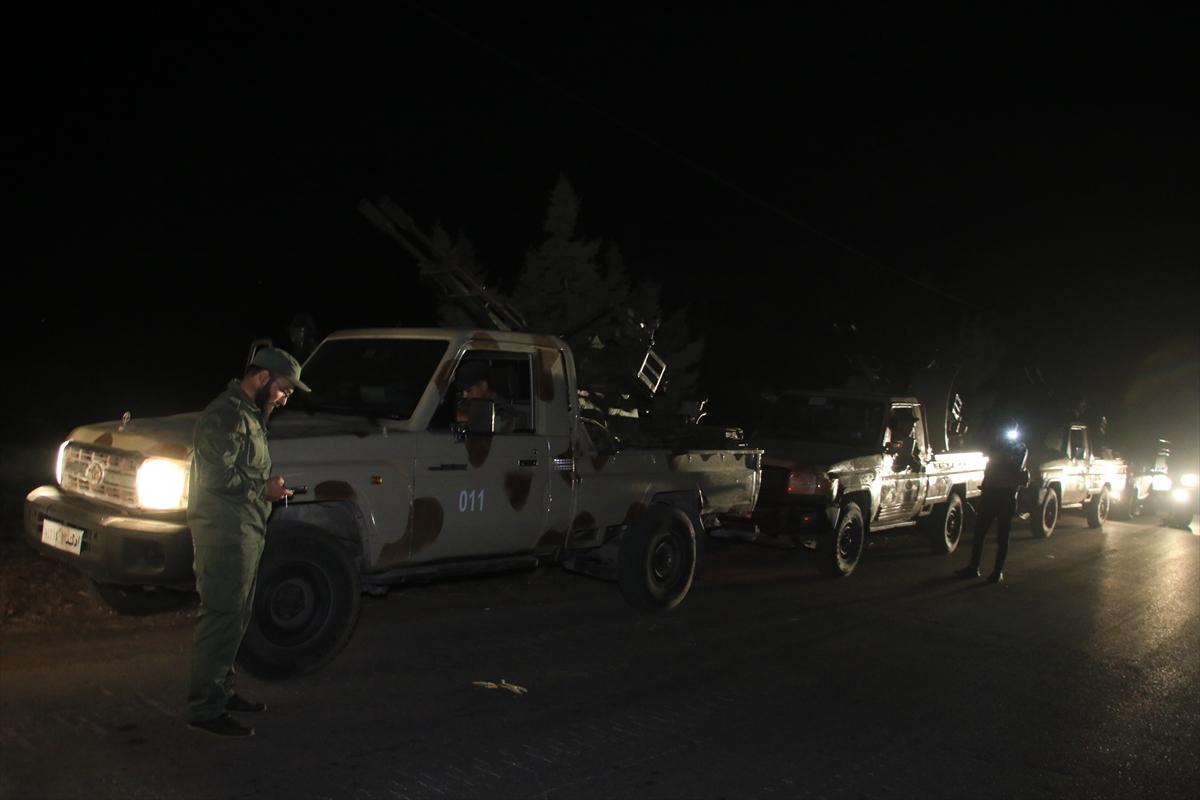
As part of the ceasefire agreement in Syria’s Suwayda region, security forces are partially withdrawing from the city, 16 July 2025 – (Anadolu Agency)
According to field sources, control points at the Unkud and Tishrin intersections were vacated, and parts of armored units loyal to the Syrian Army relocated toward Damascus. A reduction in military presence was observed on several streets in the city center, while limited numbers of internal security personnel remained on duty around public buildings.
The Syrian government emphasized that the withdrawal should not be interpreted as a “step backward” and affirmed that coordination with local authorities would continue to preserve the stability of the region. The statement also noted that legal proceedings against illegal armed groups would continue.
U.S. Secretary of State Marco Rubio issued a written statement regarding Israel’s ongoing aerial strikes against Syria. Rubio noted that reports of civilian harm due to developments in Suwayda and Damascus were being closely monitored. The statement emphasized that “all actors, including Israel, must act responsibly to prevent escalation and protect civilians.”
On the same day, U.S. State Department spokesperson Tammy Bruce held a press briefing, confirming that the Washington administration was maintaining contact regarding the situation in Suwayda and had engaged in direct talks with Israel. Bruce stated that the United States had specifically called for the protection of civilians following Israeli strikes on rural settlements in Suwayda. The spokesperson also confirmed that diplomatic efforts were underway to reduce tensions and keep dialogue channels open.
The statements indicated that the United States had intensified its diplomatic engagement to prevent the conflict in Suwayda from escalating into a regional crisis and was conducting indirect mediation efforts through certain third countries, although no official confirmation of these mediation claims was provided.
In a statement from the office of U.S. President Donald Trump, it was asserted that “the current administration’s silence is unacceptable” and that “the United States must deploy its diplomatic weight in support of peace.” The statement also noted that Trump was personally monitoring the situation through special envoys.
The European Union External Action Service (EEAS), in a written statement, expressed concern over the rising incidents of violence in southern Syria’s Suwayda Governorate and Israel’s aerial strikes. The statement underscored the need to protect civilians and called on all parties in the region to exercise restraint. The European Union also urged all external actors to fully respect Syria’s sovereignty and territorial integrity.
Italian Foreign Minister Antonio Tajani, in a social media post, stated that the civilian casualties and ongoing violence in Suwayda posed a “serious risk of a major humanitarian tragedy.” Tajani affirmed that Italy was urging all parties in Syria to take steps toward dialogue and ceasefire. Italy also pledged its support for all humanitarian efforts in the region.
United Nations Secretary-General Antonio Guterres expressed “deep concern” over the ongoing armed clashes in southern Syria, particularly in Suwayda Governorate, and the resulting harm to the civilian population. Guterres called on all parties in the region to comply with international humanitarian law and prioritize the protection of civilians.
On the same day, UN Secretary-General’s spokesperson Stephane Dujarric, during his daily press briefing, confirmed that the situation in Suwayda was being closely monitored and that preventing the spread of violence was essential. Dujarric emphasized that the UN was in contact with all relevant parties and that ensuring humanitarian access remained a top priority.
On 16 July, the Presidency of the Grand National Assembly of Türkiye issued a resolution condemning Israel’s aerial strikes against southern Syria. The resolution stated that targeting civilian settlements in Suwayda violated international law and stressed that Israel’s military operations in the region must end immediately.
The resolution further noted that Israel’s actions undermining Syria’s sovereignty posed a threat to regional peace and called on the international community to assume responsibility in this matter. Türkiye affirmed its continued support for the security and territorial integrity of the Syrian people.
Several political parties represented in the Turkish Parliament also issued separate statements, emphasizing that the protection of civilians in Suwayda was paramount and that Israel’s military interventions must be monitored by international institutions.
On 16 July 2025, numerous Arab countries issued condemnations of developments in Suwayda. The foreign ministries of Saudi Arabia, Kuwait, Egypt, Algeria, and Iraq each released separate statements, characterizing Israel’s aerial strikes against Syria as “an open attack on sovereignty” and asserting that these actions, which caused civilian harm, violated international law.
The Gulf Cooperation Council (GCC), the Arab League, and the World Union of Muslim Scholars issued joint declarations stating that interventions on Syrian territory threatened regional security. These organizations called on all parties to act with restraint and halt hostilities.
Lebanese President Sleiman Frangieh and Prime Minister Najib Mikati assessed Israel’s attacks as developments that could also jeopardize Lebanon’s border security and called for a diplomatic solution in the region. The Qatari Ministry of Foreign Affairs, in its statement, emphasized that violence against civilians in Suwayda was unacceptable and demanded that Israel immediately cease its military operations.
Lebanese Hezbollah described Israel’s aerial strikes on Suwayda as an “attempt to destabilize Syria” and asserted that “all resistance axes must be prepared” to respond to these attacks. The Palestine-based Hamas organization also condemned Israel’s posture for deepening regional conflicts and expressed solidarity with the Syrian people.
On 17 July 2025, the Russian Ministry of Foreign Affairs issued a written statement regarding Israel’s aerial strikes against Syria. The statement declared that Israel’s operations targeting locations in Suwayda and Damascus violated international law and the United Nations Charter.
Russia emphasized that Israel’s attacks breached Syria’s sovereignty and threatened regional stability. The statement called for respect for Syria’s territorial integrity and demanded the immediate cessation of all military operations. Russia also affirmed its support for the Syrian people and stated that the crises in the region must be resolved through peaceful means.
Iranian Foreign Minister Abbas Araghchi, in a social media post, condemned Israel’s aerial strikes on Suwayda and Damascus. Araghchi stated that these attacks not only violated Syria’s sovereignty but also endangered the security of all civilians in the region.
In his statement, Araghchi reaffirmed Iran’s solidarity with the Syrian people and called on the international community to adopt a clearer and more resolute stance against Israel’s military interventions. The Iranian Ministry of Foreign Affairs also indicated its support for all parties in Suwayda to exercise restraint and pursue diplomatic solutions.
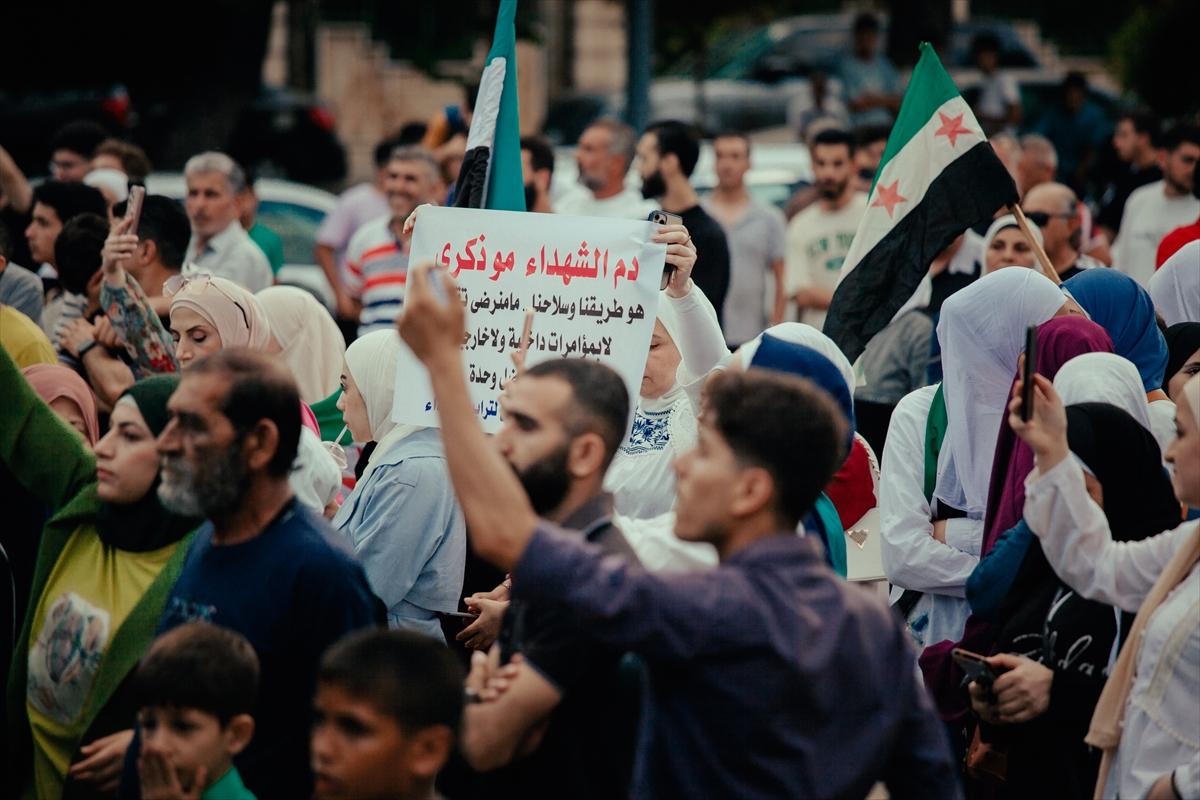
Protests against Israel’s aerial strikes in Syria, 16 July 2025 – (Anadolu Agency)
On 16 July, thousands of people participated in a demonstration in the capital Damascus to protest Israel’s aerial strikes on strategic centers including the Presidential Complex and the General Staff Headquarters. Demonstrators gathered at Khalid ibn al-Walid intersection condemned Israel’s aerial attacks and military interventions on Syrian territory.
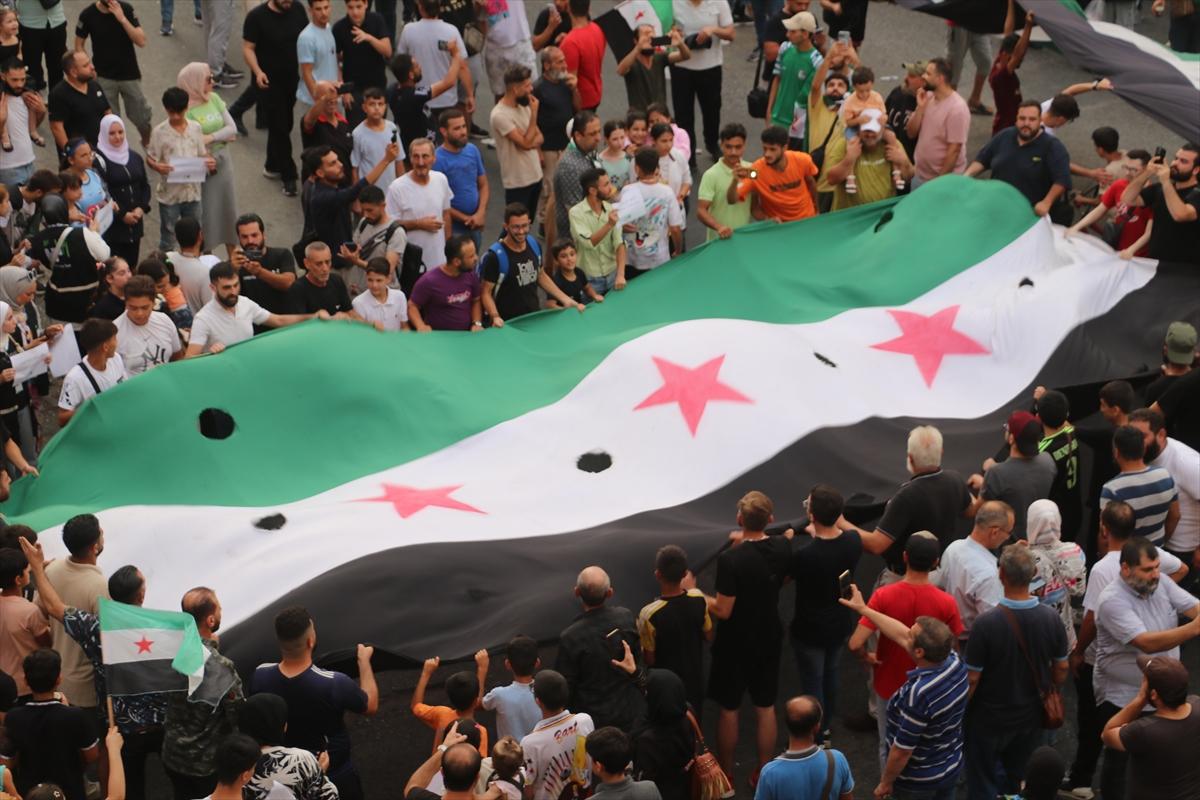
Protests against Israel’s aerial strikes in Syria, 16 July 2025 – (Anadolu Agency)
Some participants in the demonstration stated that Syria must not suffer further destruction and voiced opposition to Israel’s interventions. Others declared their rejection of foreign interference in Syria’s internal affairs. The protests were not confined to Damascus; similar demonstrations took place in cities such as Hama, Aleppo, and Homs. Security forces were reported to have maintained control over the events, which were conducted in an organized manner.
On 17 July, Syrian President Ahmed al-Shara, in a televised address, commented on Israel’s aerial strikes coinciding with the clashes in Suwayda. Al-Shara stated that Syria was aware of Israel’s attempts to divide the country and affirmed the people’s unity and the state’s determination to uphold its sovereignty. He emphasized that the Druze community remained under the protection of the Syrian state and rejected any efforts by external powers to draw them into their spheres of influence.
Al-Shara asserted that Israel was using developments in Suwayda as a pretext to launch attacks on central state institutions such as the Presidential Complex, the General Staff Headquarters, and the Ministry of Defense, with the aim of destabilizing the country. He noted that a large-scale escalation had been prevented thanks to the intervention of U.S., Arab, and Turkish mediators. Al-Shara also stated that leaders of certain illegal armed groups had committed crimes against civilians and reaffirmed the state’s determination to restore stability in Suwayda.
Al-Shara declared the state’s firm commitment to safeguarding the security and rights of its Druze citizens, stating that “anyone who harms our Druze brothers will be held accountable before the law.” He declared that no element threatening Syria’s unity or public order would be tolerated and that the country would not be allowed to become a battlefield.
Anadolu Ajansı. "Arap Ülkeleri, İsrail’in Suriye’ye Yönelik Düzenlediği Saldırıları Kınadı." Accessed July 17, 2025. https://www.aa.com.tr/tr/dunya/arap-ulkeleri-israilin-suriye-ye-yonelik-duzenledigi-saldirilari-kinadi/3633260
Anadolu Ajansı. "Rusya: İsrail’in Saldırıları, Suriye’nin Egemenliğini ve Uluslararası Hukuku İhlal Ediyor." Accessed July 17, 2025. https://www.aa.com.tr/tr/dunya/rusya-israilin-saldirilari-suriyenin-egemenligini-ve-uluslararasi-hukuku-ihlal-ediyor/3633605
Anadolu Ajansı. “ABD Dışişleri Bakanlığı, Suriye ve İsrail’e Çatışmalı Bölgeden Çekilmeleri Çağrısı Yaptı.” Accessed July 17, 2025. https://www.aa.com.tr/tr/dunya/abd-disisleri-bakanligi-suriye-ve-israile-catismali-bolgeden-cekilmeleri-cagrisi-yapti/3633175
Anadolu Ajansı. “ABD Dışişleri Bakanı Rubio, İsrail’in Suriye’ye Saldırılarından Derin Endişe Duyduklarını Belirtti.” Accessed July 17, 2025. https://www.aa.com.tr/tr/dunya/abd-disisleri-bakani-rubio-israilin-suriyeye-saldirilarindan-derin-endise-duyduklarini-belirtti/3632780
Anadolu Ajansı. “Lübnanlı Dürzi Lider Canbolat: İsrail, Suriye’de Karışıklık Çıkarmak İçin Bazı Dürzileri Kullanıyor.” Accessed July 17, 2025. https://www.aa.com.tr/tr/dunya/lubnanli-durzi-lider-canbolat-israil-suriyede-karisiklik-cikarmak-icin-bazi-durzileri-kullaniyor/3632916
Anadolu Ajansı. “Suriye Cumhurbaşkanı Esad’dan İsrail’in Bölme Girişimine Karşı Birlik Çağrısı.” Accessed July 17, 2025. https://www.aa.com.tr/tr/dunya/suriye-cumhurbaskani-saradan-israilin-bolme-girisimine-karsi-birlik-cagrisi/3633387
Anadolu Ajansı. “Suriye Ordusu Süveyda Kentindeki Güçlerini Çekiyor.” Accessed July 17, 2025. https://www.aa.com.tr/tr/dunya/suriye-ordusu-suveyda-kentindeki-guclerini-cekiyor/3632260
Anadolu Ajansı. “Suriye’de İsrail’in Hava Saldırıları Protesto Edildi.” Accessed July 17, 2025. https://www.aa.com.tr/tr/dunya/suriyede-israilin-hava-saldirilari-protesto-edildi/3633026
Anadolu Ajansı. “TBMM Genel Kurulu’nda İsrail’in Suriye’deki Saldırılarına Karşı Meclis Başkanlığı Tezkeresi Kabul Edildi.” Accessed July 17, 2025. https://www.aa.com.tr/tr/gundem/tbmm-genel-kurulunda-israilin-suriyedeki-saldirilarina-karsi-meclis-baskanligi-tezkeresi-kabul-edildi/3633134
On 17 July 2025, armed clashes resumed between Bedouin Arab tribes and Druze armed groups in the Suwayda province of southern Syria. Despite a ceasefire agreed the previous day between the Syrian government and local Druze groups, it was reported that factions loyal to Hikmat al-Hijri forcibly displaced several Bedouin Arab families, killed some, and injured others. The incidents, which began in the early morning, led to escalating tensions throughout the day and eventually erupted into armed combat by evening.
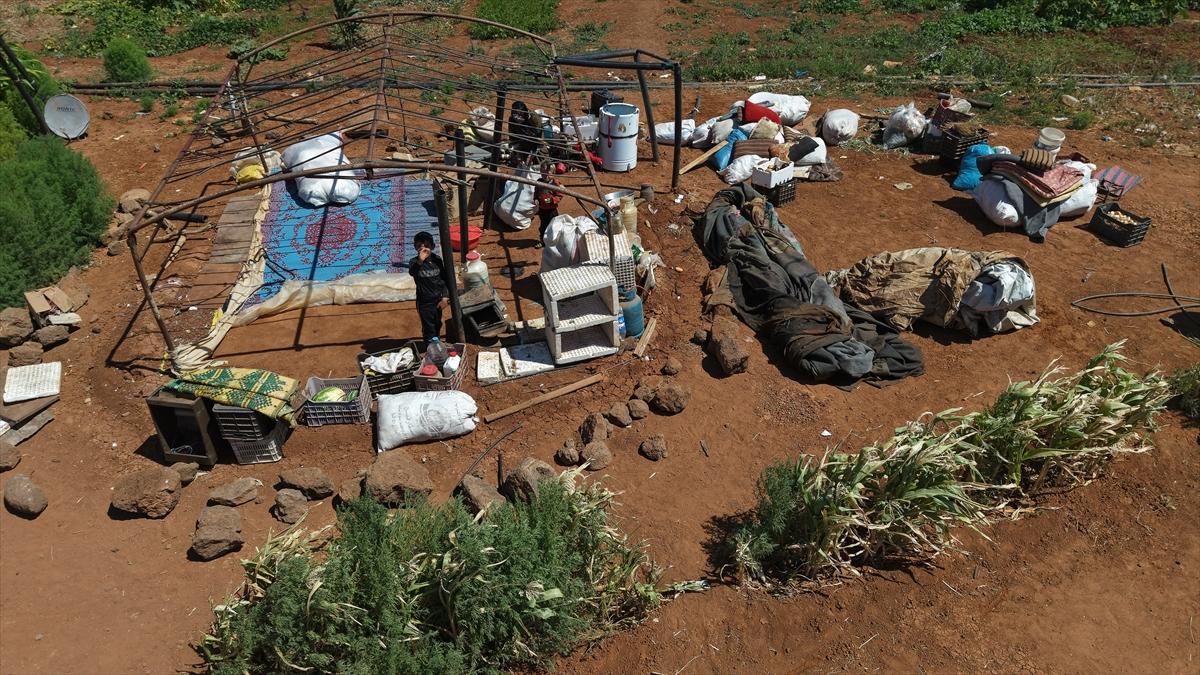
Bedouin Arabs being forcibly displaced in Suwayda, 17 July 2025 – (Anadolu Agency)
Syrian security forces, who did not intervene in the clashes, were reported to have redeployed outside Suwayda and established new checkpoints along the Daraa–Suwayda highway in an effort to prevent the spread of violence. Meanwhile, it was reported that numerous Bedouin families fled toward the Daraa and Quneitra provinces following the Druze groups’ forced displacement campaigns.
On 17 July 2025, the Israeli Air Force conducted an airstrike on the village of Muzayra in Suwayda province, Syria. According to local sources, the attack occurred around 20:40 Turkey time and targeted a village previously under the control of Bedouin Arab groups. It was reported that numerous Israeli unmanned aerial vehicles conducted reconnaissance and surveillance flights in the area during the incident.
Syria’s official news agency SANA announced in the evening that Israeli warplanes had carried out attacks on the rural areas of Suwayda. In contrast, Israeli media, citing military sources, denied any strike had taken place against Muzayra and dismissed reports to that effect.
On 17 July, Bedouin Arab groups launched a new military offensive against Druze groups in the western sectors of Suwayda province. According to local security sources, clashes that erupted after Druze forces loyal to Hikmat al-Hijri forcibly displaced several Bedouin families culminated in a coordinated counterattack by Bedouin Arabs in the evening.
With hundreds of fighters arriving from Arab tribes across different regions of Syria, control was regained by Bedouin groups over the villages of Muzayra, Tayra, Sama Hanidat, Sama, Eldor, Taara, Devriyye, and Karasa.
As of 18 July 2025, ongoing clashes in Suwayda province had reached the western entrance of the city center. Following armed movements that began the previous evening, Bedouin Arab groups, reinforced by fighters from other Arab tribes, reportedly recaptured several settlements held by the al-Hijri faction. Following this advance, the clashes intensified around the western entrance to Suwayda city.
The clashes sharply escalated near the city center, particularly as Bedouin groups from the direction of Muzayra pressed their offensive. Druze groups continued their defense through central neighborhoods. During the prolonged mutual entrenchment and heavy fire exchanges, increased aerial activity was reported around the city, with several unmanned aerial vehicles observed conducting surveillance.
In response to the advancing clashes, armed Druze groups withdrew from the city outskirts and shifted their defensive lines into the urban center. Syrian security forces did not directly intervene in the fighting but maintained control operations along the roads leading into Suwayda.
On the same day, a statement issued by the Syrian Presidency reiterated that Syrian military units had withdrawn from the region in response to initiatives by mediator countries. The statement accused the armed groups fighting in Suwayda of violating prior agreements and threatening internal peace. The Presidency further affirmed the state’s determination to “protect all Syrians regardless of their sect or background.”
The Syrian government also appealed to the international community for support in ensuring stability, bringing uncontrolled weapons under regulation, and enforcing the rule of law nationwide. It emphasized that Israeli interventions constituted direct interference in Syria’s internal affairs and had further complicated the regional situation.
In a statement released on 18 July 2025 by the Syrian Presidency Press Office, it was confirmed that the decision to withdraw military units from Suwayda remained in effect and was taken as a response to diplomatic initiatives by mediator countries. The statement affirmed that Syrian security forces continued to maintain a posture aimed at preserving general stability in the region without engaging in direct combat with armed groups stationed there.
On the same day, the U.S. Department of State issued a social media statement reiterating a Level 4 travel advisory for Syria and urging U.S. citizens to leave the region. Those unable to depart were advised to locate a secure shelter.
Anadolu Ajansı. "Bedevi Araplar ile Dürziler Arasında Yeniden Başlayan Çatışmalara İsrail Müdahil Oldu." Accessed July 18, 2025. https://www.aa.com.tr/tr/dunya/bedevi-araplar-ile-durziler-arasinda-yeniden-baslayan-catismalara-israil-mudahil-oldu/3634412
Anadolu Ajansı. “Süveyda’da Çatışmalar Kent Merkezinin Batı Girişinde Yoğunlaştı.” Accessed July 18, 2025. https://www.aa.com.tr/tr/dunya/suveydada-catismalar-kent-merkezinin-bati-girisinde-yogunlasti/3634534
Between 18 and 19 July 2025, armed clashes intensified in the city center of Suwayda between Bedouin Arab tribes and Druze armed groups. The fighting concentrated in the western and northwestern areas of the city, including Ankud Junction, Municipal Park, Umran Tishrin Junction, the industrial zone, and Muhallak al-Gharbi. Both heavy and light weapons were reported to have been used in the clashes.
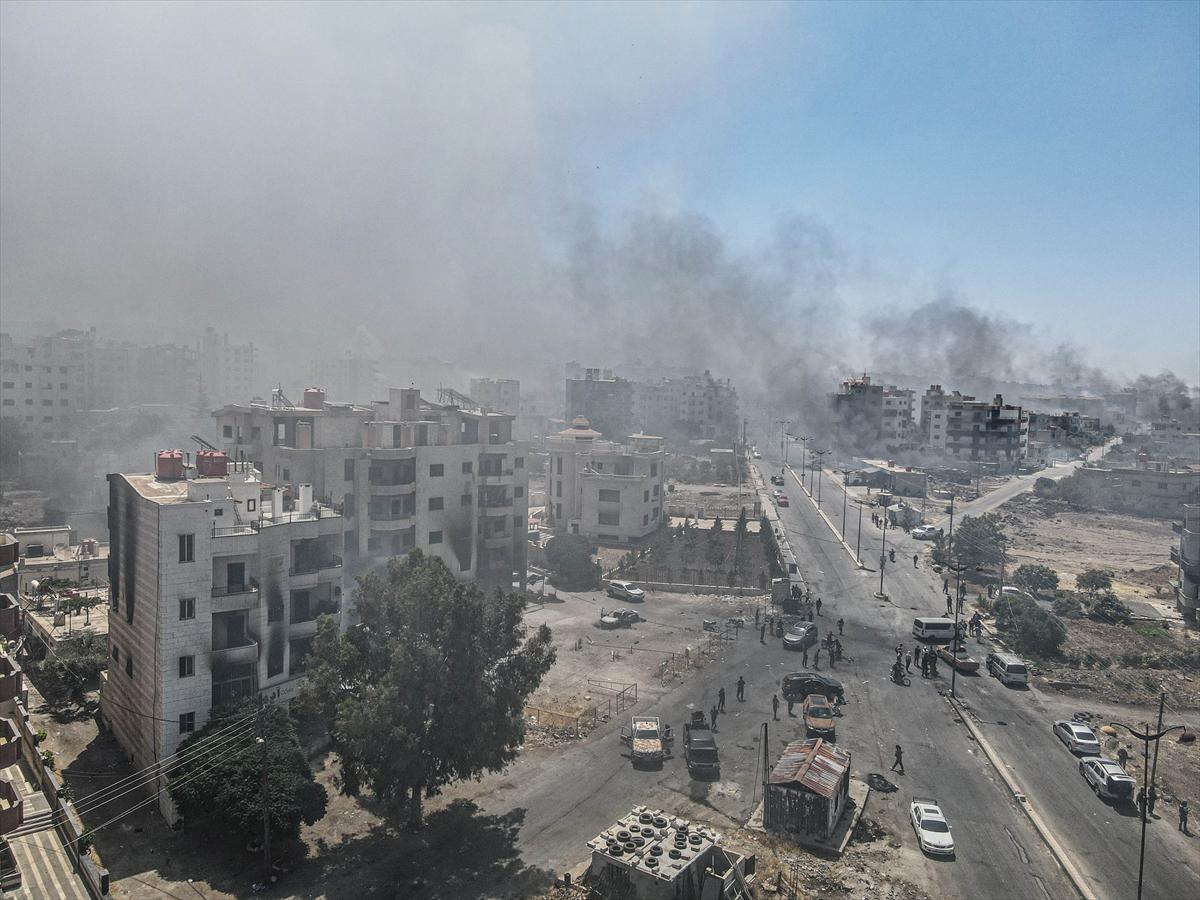
Intense fighting continues in the city center and rural areas of Suwayda despite calls for a ceasefire, 19 July 2025 – (Anadolu Ajansı)
It was reported that groups loyal to Druze leader Hikmat al-Hajri operated with sniper support. Armed clashes between the parties involved the use of sniper fire as well as heavy machine guns and automatic weapons.
Clashes were also reported to have continued in the rural areas outside Suwayda city. Intense fighting occurred particularly in the villages of Majdal and Um Zaytun. Evacuations were carried out from some settlements during the rural clashes. Security sources indicated that the fighting showed a tendency to spread to other regions.
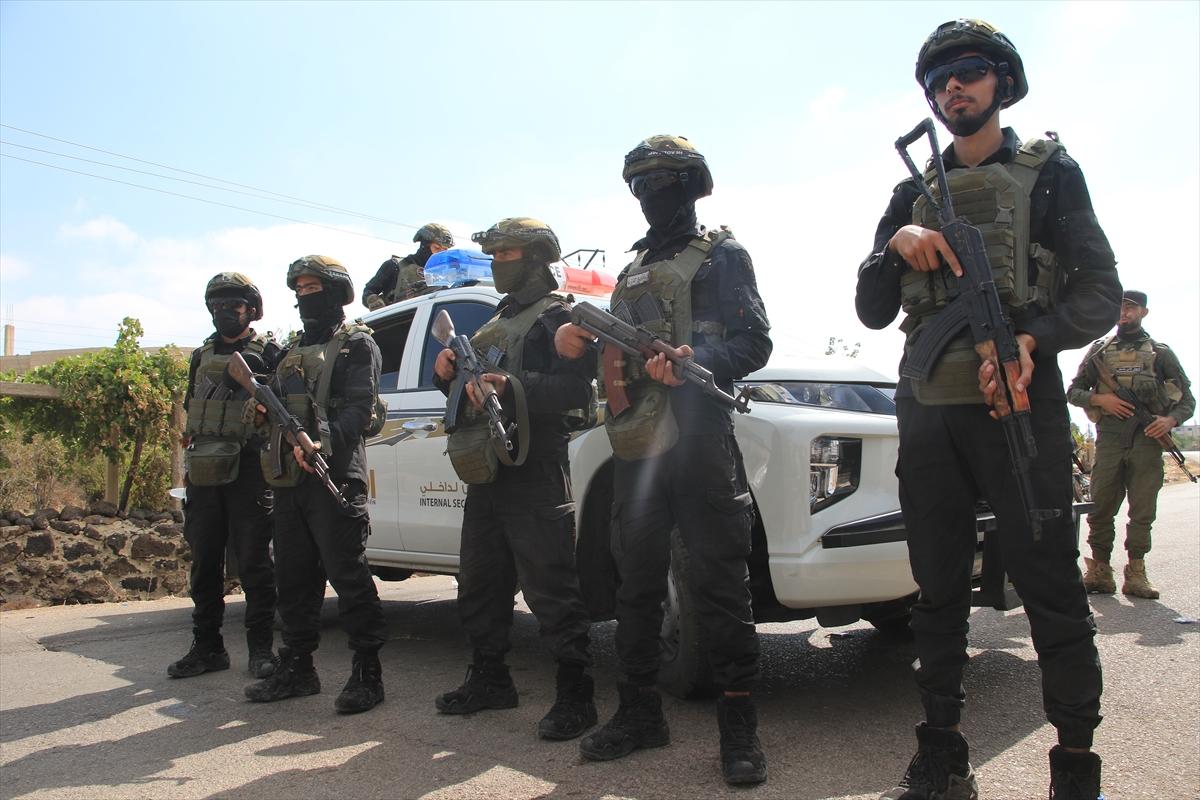
Police forces are deployed around the city center as calm is restored in Suwayda, 20 July 2025 – (Anadolu Ajansı)
On the morning of 19 July 2025, the Syrian Presidency issued a written statement announcing a comprehensive ceasefire aimed at ending all armed actions nationwide. The statement called on state institutions and security forces to be granted access to necessary areas to implement the ceasefire. All parties were urged to assume responsibility for ensuring stability and protecting civilians. The uninterrupted delivery of humanitarian aid was also emphasized.
In a national address on 19 July, President Ahmed al-Shara stated that the clashes in Suwayda had been brought under control through state intervention and warned that without such action, the situation could have spiraled out of control. Shara identified Israel’s attacks on Damascus and other state institutions as factors deepening the crisis. Information Minister Hamza al-Mustafa, in a press conference held the same day, stated that the state had been pursuing a political solution from the outset and had sought to end the clashes without resorting to military intervention. Mustafa also informed the public that certain armed groups had engaged in acts of revenge and systematic displacement. The ceasefire was to be implemented in three phases: in the first phase, security forces would deploy in the western and northern areas; in the second phase, humanitarian transit corridors would be opened; and in the third phase, state institutions would resume operations across the entire governorate.
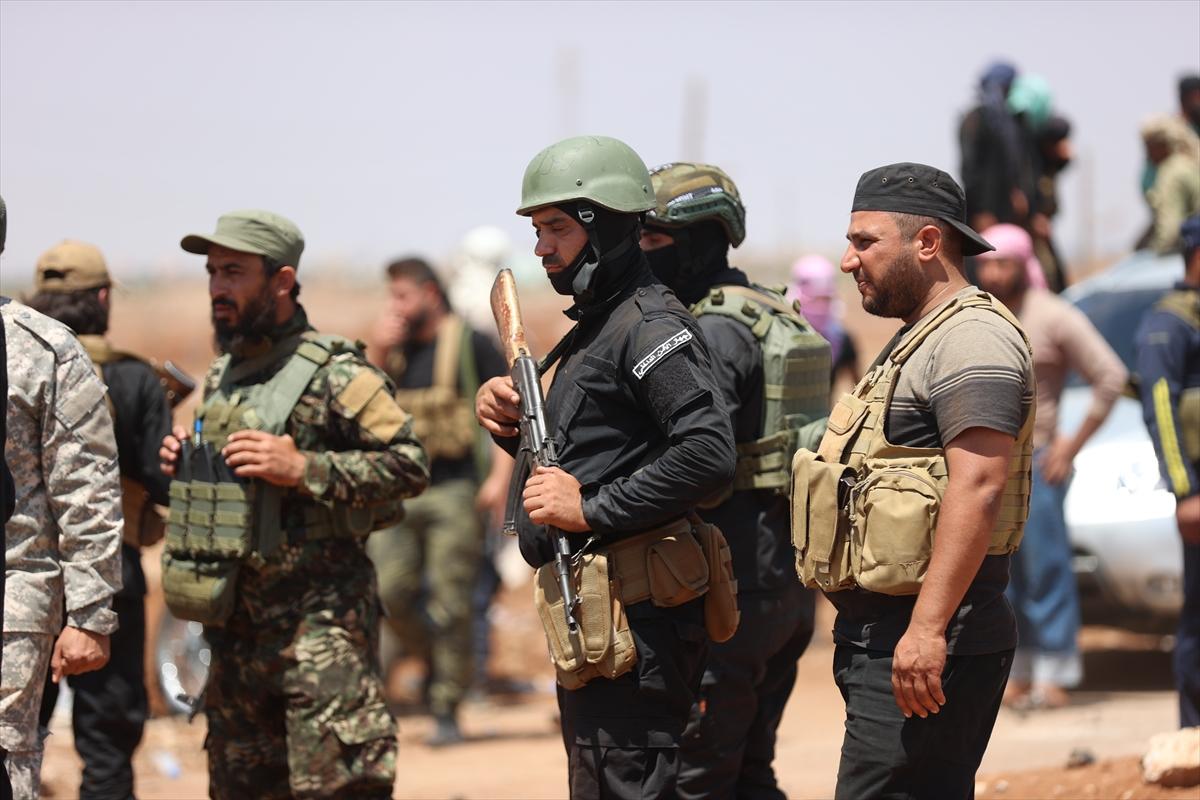
Police forces are deployed around the city center as calm is restored in Suwayda, 20 July 2025 – (Anadolu Ajansı)
On 19 July 2025, a security force convoy of approximately 100 vehicles departed from the capital Damascus toward Suwayda. The Syrian Presidency announced that the convoy had been dispatched to enforce the ceasefire, restore public order, and safeguard the lives and property of civilians. The movement of the convoy was recorded as the first step in the state’s initiative to halt the violence in Suwayda.
Under the first phase of the ceasefire plan, it was announced that Syrian security forces had begun deploying in the western and northern rural areas of Suwayda governorate as well as along major roads outside the city. Information Minister Hamza al-Mustafa stated that this deployment would gradually advance toward the city center over the next 48 hours.
The Syrian Ministry of Interior announced that armed clashes within Suwayda city center had been halted. The ministry confirmed that internal security units had been positioned around the city, thereby restoring public order within the urban area. It was also stated that security forces were tasked not only with suppressing the fighting but also with coordinating the evacuation of civilians and humanitarian aid operations.
As of 19 July, following the re-deployment of security forces in Suwayda, the state reported the gradual removal of Bedouin Arab fighters who had entered the region to support Bedouin tribes. During this process, local tribal representatives held meetings with government officials in Deraa and pledged their support for the state’s ceasefire plan on the condition of honor and security guarantees.
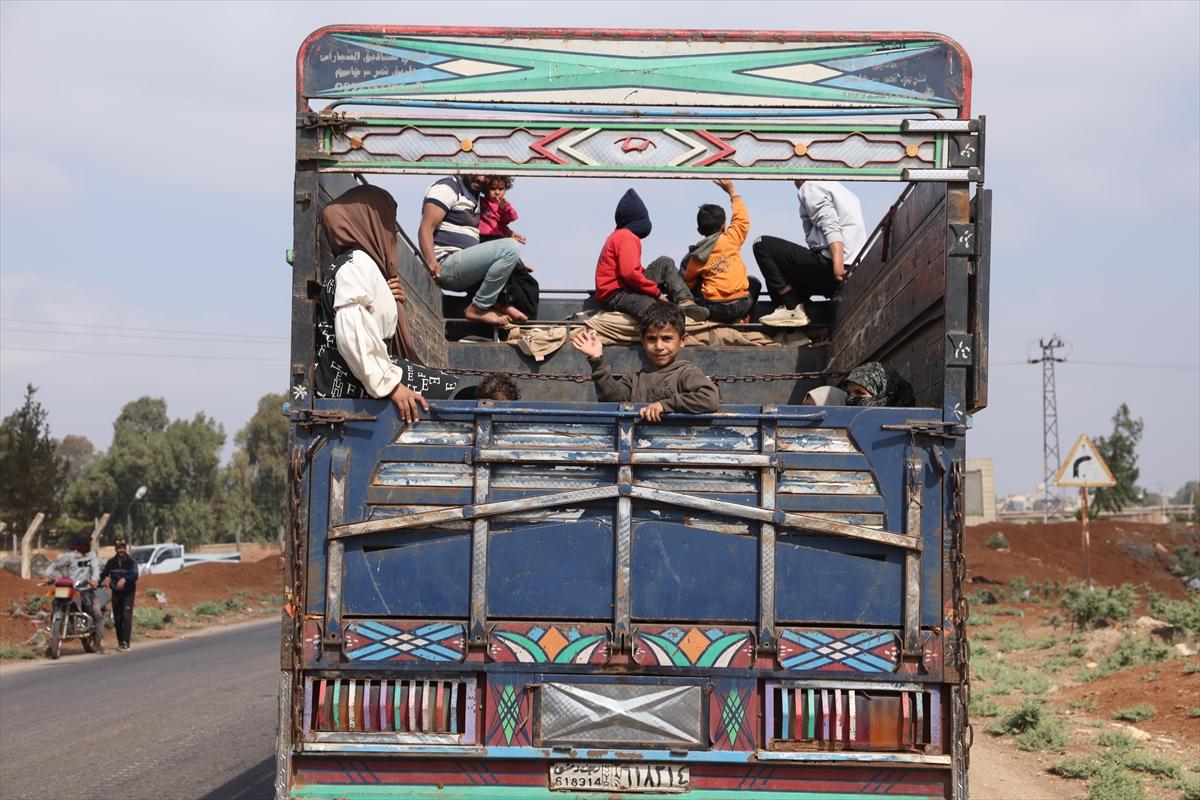
Bedouin Arab families forcibly displaced from Suwayda are being evacuated, 21 July 2025 – (Anadolu Ajansı)
Following the outbreak of clashes on 13 July 2025, armed groups loyal to Druze leader Hikmat al-Hajri were reported to have forcibly displaced Bedouin Arab families living in certain neighborhoods of Suwayda. Civilians in various areas, particularly in al-Mekus neighborhood, were driven from their homes and compelled to flee the region under armed pressure. The majority of those displaced were women and children.
On the morning of 21 July 2025, a convoy of displaced Bedouin Arab families departed from the Suwayda city center. The evacuation convoy consisted of four buses and approximately 20 private transport vehicles, accompanied by Syrian Arab Red Crescent personnel. No state institution directly accompanied the operation, but it was conducted under the control of Syrian security forces. The majority of those evacuated were residents of al-Mekus neighborhood.
The evacuation convoy first reached the village of Walga, then proceeded to the Izra district of Deraa governorate. It was subsequently directed to temporary settlement areas in the rural outskirts of Damascus. Families placed in shelters organized by the Syrian Arab Red Crescent began receiving basic necessities. Humanitarian organizations were mobilized to provide food, healthcare, and shelter to the displaced.
Syrian authorities stated that the state had provided guarantees for the return of Bedouin families to their ancestral lands. In this context, the Damascus administration announced that it had secured assurances from Hikmat al-Hajri, one of the conflict parties, that these families would be permitted to return.
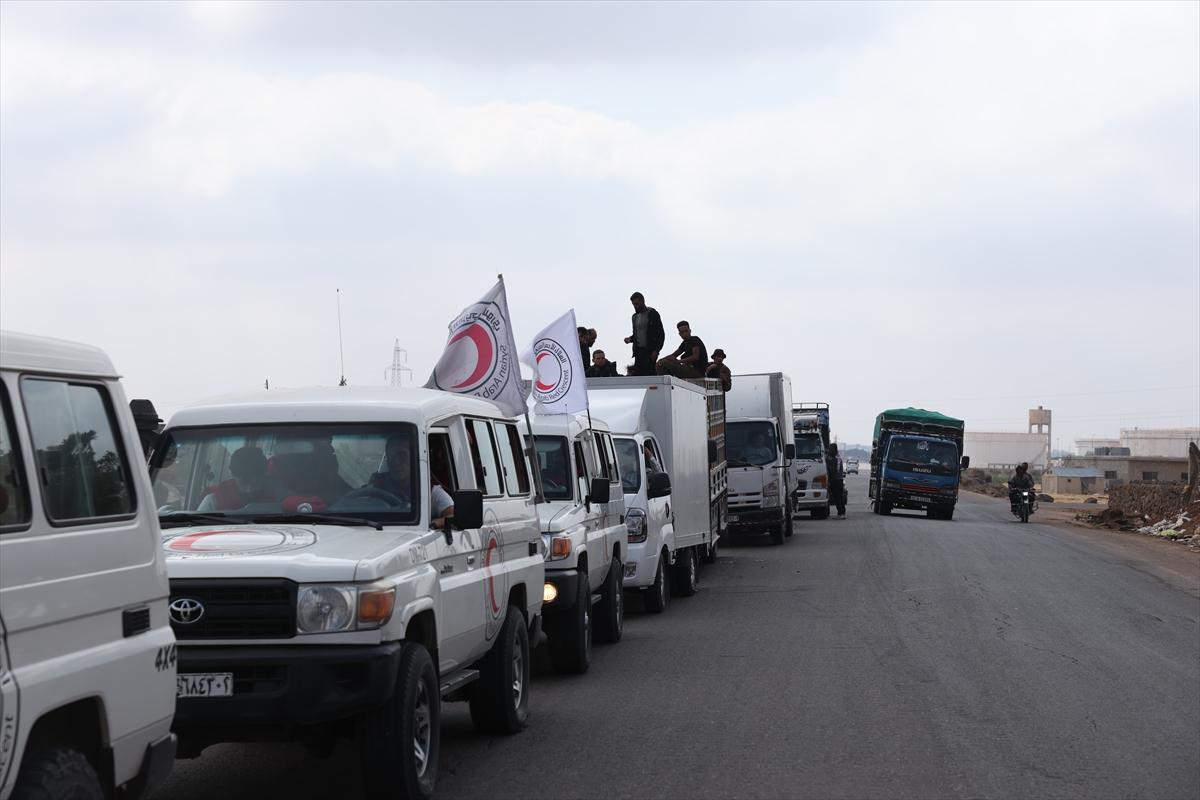
Bedouin Arab families forcibly displaced from Suwayda are being evacuated, 21 July 2025 – (Anadolu Ajansı)
According to a report issued by the Syrian Network for Human Rights (SNHR) on 21 July 2025, the number of documented fatalities in Suwayda between 13 and 20 July 2025 reached 558. Among the deceased were 11 children, 17 women, six healthcare workers, and two media personnel. More than 783 individuals were reported injured during the same period with varying degrees of severity. In previous reports, SNHR had stated that at least 321 people had been killed and over 436 injured between 13 and 18 July.
In statements by Information Minister Hamza al-Mustafa, it was asserted that certain armed groups in Suwayda had engaged in systematic displacement and forced expulsion. Mustafa emphasized that these actions targeted not only the Bedouin Arab population but also threatened the deliberate alteration of the region’s demographic composition. The state’s responsibility to protect all its citizens against such practices was underscored.
In response to the worsening humanitarian situation in Suwayda, the Syrian government established an emergency task force. According to Minister Mustafa, the task force comprised representatives from the Ministry of Health, the Ministry of Family and Social Affairs, the Disaster Management Authority, and other relevant state institutions. Its mandate was to coordinate humanitarian assistance for civilians affected by the clashes and to meet the needs of those displaced.
In his address on 19 July 2025, President Ahmed al-Shara affirmed that Suwayda governorate remained an inseparable part of the Syrian state and emphasized that the Druze community was one of the fundamental pillars of the national fabric. Shara stated that the actions of a small group that did not represent the Druze community could not serve as justification to condemn the entire population. Information Minister Hamza al-Mustafa echoed this position, noting that the Druze community had historically cooperated with the state, but that certain groups had established contact with external powers and pursued agendas threatening national unity.
Information Minister Hamza al-Mustafa stated that the state was working to unify all factions under a single umbrella and to establish a single national army. Mustafa asserted that only the Syrian Army should represent the country’s armed power and warned against attempts by PKK/YPG elements to gain legitimacy under the name “Syrian Democratic Forces (SDF).” He alleged that Hikmat al-Hajri had sought cooperation with PKK/YPG and was attempting to establish a corridor. It was also reported that past agreements between the state and al-Hajri had been violated by him and that he had adopted rhetoric encouraging foreign intervention.
Anadolu Ajansı. "Suriye İçişleri Bakanlığı: Süveyda İçindeki Çatışmalar Durduruldu." July 20, 2025. Accessed July 21, 2025. https://www.aa.com.tr/tr/dunya/suriye-icisleri-bakanligi-suveyda-icindeki-catismalar-durduruldu/3636119.
Anadolu Ajansı. "Süveyda'da Ateşkes Çağrılarına Rağmen Kent Merkezinde ve Kırsalında Şiddetli Çatışmalar Yaşanıyor." July 20, 2025. Accessed July 21, 2025. https://www.aa.com.tr/tr/dunya/suveydada-ateskes-cagrilarina-ragmen-kent-merkezinde-ve-kirsalinda-siddetli-catismalar-yasaniyor-/3635514.
Anadolu Ajansı. "Süveyda'da Sükunet Sağlanırken Polis Gücü Kent Merkezi Çevresinde Konuşlanıyor." July 20, 2025. Accessed July 21, 2025. https://www.aa.com.tr/tr/dunya/suveydada-sukunet-saglanirken-polis-gucu-kent-merkezi-cevresinde-konuslaniyor/3636297.
Anadolu Ajansı. "Süveyda'da Zorla Yerinden Edilen Bedevi Arap Aileler Tahliye Edildi." July 21, 2025. Accessed July 21, 2025. https://www.aa.com.tr/tr/dunya/suveydada-zorla-yerinden-edilen-bedevi-arap-aileler-tahliye-edildi/3637036.

No Discussion Added Yet
Start discussion for "Suez Canal Conflicts (July 2025)" article
July 15, 2025
Statements by the Syrian Government
July 15, 2025
Declaration of Ceasefire and Violations
July 16, 2025
Israeli Intervention and International Reactions
July 17, 2025
Syrian Army’s Withdrawal from Suwayda
July 17, 2025
International Reactions
July 17, 2025
Anti-Israel Protests in Syria
July 17, 2025
Statements by Syrian President Ahmed al-Shara
July 18, 2025
Resumption of Clashes Between Bedouin Arabs and Druze Groups
July 18, 2025
Israeli Air Force Strike on the Village of Muzayra
July 18, 2025
Bedouin Groups’ Advance in Western Suwayda
July 18, 2025
Clashes Spread to the Urban Center and Syria’s New Statements
July 18, 2025
Syrian Presidency’s New Statement of 18 July 2025
July 21, 2025
Events in Suwayda Between 18 and 21 July 2025
July 21, 2025
Escalation of Conflict
July 21, 2025
Declaration of Ceasefire by the Syrian Presidency
July 21, 2025
Security Forces Intervention and Deployment
July 21, 2025
Condition of Bedouin Arab Families and Evacuation Operation
July 21, 2025
Civilian Casualties, Humanitarian Situation and Human Rights Violations
July 21, 2025
National and International Political Reactions