


This article was automatically translated from the original Turkish version.
+2 More
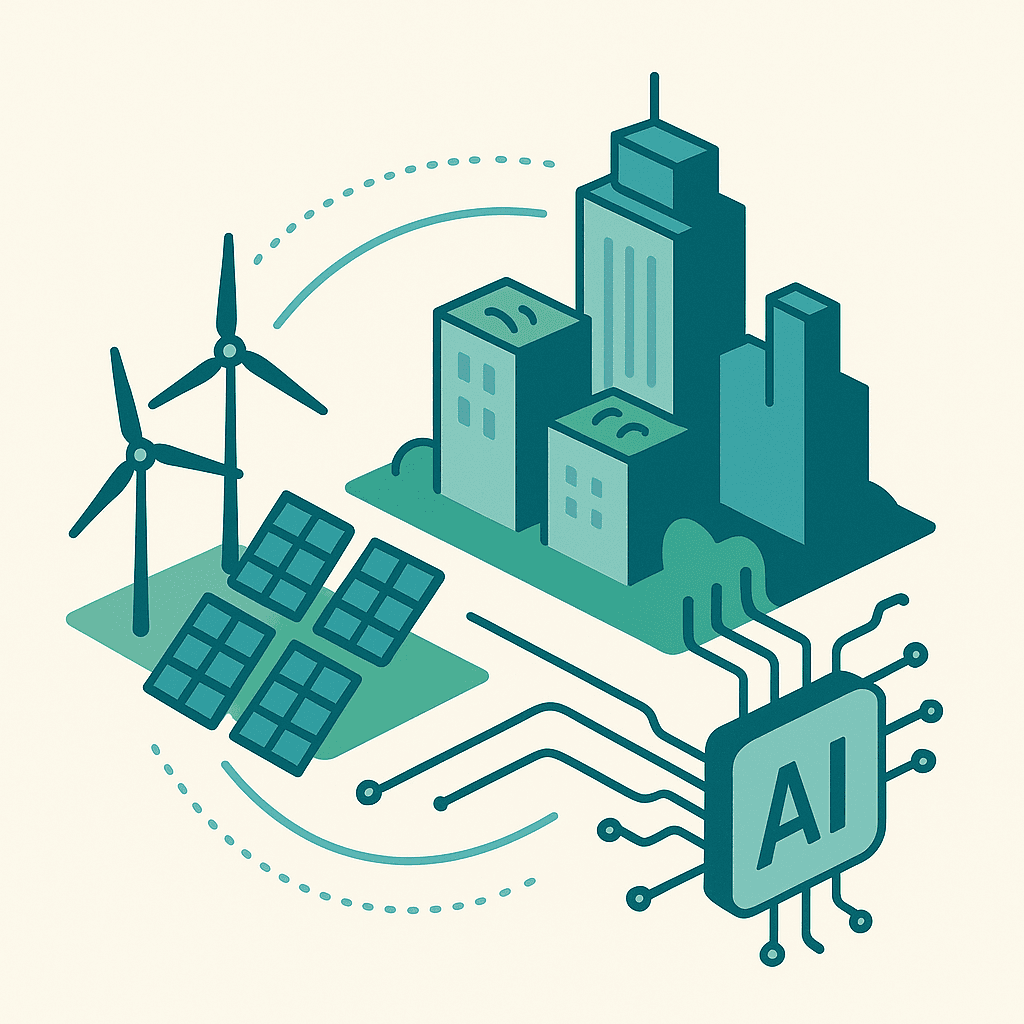
Generated with artificial intelligence.
Climate Change and Artificial Intelligence
Application Area(s) | smart city applications energy efficiency optimization Climate data modeling | ||||||||
|---|---|---|---|---|---|---|---|---|---|
Purpose(s) | Ensure sustainability and develop scientific-technological solutions to the climate crisis reduce environmental impacts | ||||||||
Climate change is a global crisis accelerating due to direct and indirect human activities. Multidimensional impacts such as increasing greenhouse gas emissions rising atmospheric temperatures sea level rise and the growing frequency of extreme weather events reveal the scope of this crisis. Addressing these complex challenges requires moving beyond traditional methods and integrating advanced technologies. In this context artificial intelligence technologies have emerged as a prominent tool in managing environmental crises thanks to capabilities such as big data analysis and predictive system design. This section examines the role of artificial intelligence in combating climate change from multiple perspectives and clearly outlines the contributions of these technologies to sustainability.

Image of Drought and Climate Change. (Anadolu Agency)
Massive volumes of data are processed in the monitoring and modeling of climate change. Temperature measurements sea level data glacier melt rates atmospheric compositions and other environmental indicators are analyzed using AI-supported systems to generate meaningful insights. Machine learning algorithms process such data through classification pattern recognition and prediction to produce more accurate climate forecasts.
Reducing carbon emissions is one of the primary goals in combating climate change. Artificial intelligence is used to enhance energy efficiency in high-consumption sectors such as industry transportation and buildings. Smart energy management systems monitor electricity consumption patterns optimize the integration of renewable energy sources into the grid and generate emission reduction scenarios. These systems have the capacity to analyze energy production and consumption data in real time minimizing losses and improving efficiency.
Climate change has direct impacts on agricultural production. Drought excessive rainfall and seasonal shifts threaten food production. Artificial intelligence enables precision agriculture by analyzing factors such as soil moisture weather conditions plant growth and pest monitoring. These systems contribute to preventing crop losses and making production processes more resilient to climate change.
Cities generate a large share of emissions driving climate change. Smart cities equipped with advanced technologies continuously monitor energy consumption transportation density and air quality through AI-based surveillance systems. These systems enhance sustainability by enabling more efficient management of urban activities ranging from transportation to waste management. Additionally climate risk maps of urban areas can be created to identify vulnerable zones and develop targeted intervention strategies.

Image of Artificial Intelligence and Climate Change. (Anadolu Agency)
Climate change is a crisis that demands not only scientific understanding but also technological intervention due to its multidimensional impacts. In this context artificial intelligence occupies a strategic position in the fight against climate change through its computational power data processing capabilities and decision support mechanisms. Through applications in climate data analysis urban planning energy management and agricultural production artificial intelligence makes significant contributions to achieving environmental sustainability. It does not merely mitigate the effects of climate problems but also enables their early detection and management. Therefore AI-based solutions are regarded as leading technologies for the future in combating climate change.
Anadolu Ajansı. "Yapay zeka çevre sorunlarının çözümüne katkı sağlayabilir." Yeşilhat. Accessed July 2, 2025.
Anadolu Ajansı. "İklim değişikliğinin getireceği sorunlara bugünden önlem alınmaya çalışılacak". Accessed July 2, 2025.
Partigöç, Nur Sinem. "Afet risk yönetiminde yapay zekâ kullanımının rolü." Bilişim Teknolojileri Dergisi 15, no. 4 (2022): 401-411. Accessed Adresi.
Partigöç, Nur Sinem. "Sürdürülebilir Kentsel Planlama Süreçlerinde Akilli Şehir Yaklaşiminin Rolü." Çevre Şehir ve İklim Dergisi 2, no. 3 (2023): 174-189. Accessed Adresi.
Tuğaç, Çiğdem. "İklim değişikliği ve yapay zekâ: fırsatlar ve sorunlar." Hitit Sosyal Bilimler Dergisi 16, no. 1 (2023): 74-94. Accessed Adresi.

Generated with artificial intelligence.
Climate Change and Artificial Intelligence
Application Area(s) | smart city applications energy efficiency optimization Climate data modeling | ||||||||
|---|---|---|---|---|---|---|---|---|---|
Purpose(s) | Ensure sustainability and develop scientific-technological solutions to the climate crisis reduce environmental impacts | ||||||||
No Discussion Added Yet
Start discussion for "Climate Change and Artificial Intelligence" article
Artificial Intelligence in Processing Climate Data
Carbon Emissions and Energy System Management
Agricultural Applications and Food Security
Sustainable Urban Planning and Smart City Applications