

This article was automatically translated from the original Turkish version.
+2 More
Location | Milas Türkiye Muğla | ||||||||
|---|---|---|---|---|---|---|---|---|---|
Region(s) | Aegean Region | ||||||||
Population | 227 (2022) | ||||||||
Notable People | Halil Efe (Legendary Folk Hero) | ||||||||
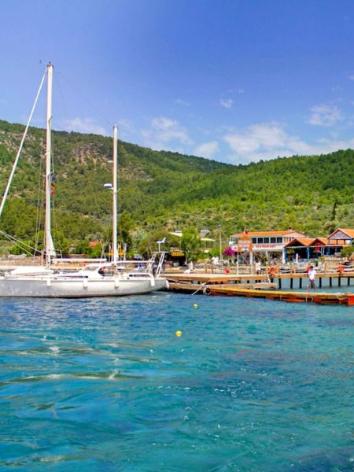
Çökertme is a coastal settlement in the Aegean Region of Türkiye,隶属于 Muğla Province’s Milas district. This small bay, located on the southern coast of Gökova Bay, attracts attention for both its natural features and its place in local culture. The area is an important stop on the “Blue Voyage” tourism route.
Çökertme lies approximately 50 kilometers from the Milas district center, between Bodrum and Ören. Its coastline, surrounded by olive groves and integrated with forested areas and the sea, is favorable for nature tourism. Due to its bay structure, it is sheltered from the wind and functions as a natural harbor, making it a popular destination for yachtsmen and campers.

Çökertme (Milas)
Today, Çökertme Bay is a holiday destination known for its natural beauty and tranquility. There are restaurants along the shore, accommodation facilities, and camping areas. Road access is possible from Milas and Bodrum, while sea access is very common within the context of yacht tourism.
Çökertme is also known through local oral narratives dating to the late Ottoman period. In the early 20th century, the regional economy was largely based on olive and tobacco production. Various taxes and trade restrictions of the time led to an increase in smuggling activities. Local resistance stories arising from this context became subjects of folk tales and songs.
The Çökertme Folk Song is an anonymous folk song passed down orally, especially in Bodrum, Milas, and surrounding areas of the Aegean Region. The events described in the song are based on a narrative preserved in the collective memory of the local people. According to this narrative, a local figure named Halil Efe is arrested and killed on charges of smuggling. The bay of Çökertme and its surroundings are frequently cited as the location of the event.
The central basis of the events in the song lies in the taxes and prohibitions imposed during the late Ottoman period on tobacco production and distribution in the region. At that time, trade in tobacco with the British was banned, but some local producers attempted to smuggle their goods by sea. Halil Efe is portrayed as one of these producers or as a local leader protecting them. In various versions, a woman named “Yâreni” or “Zeynep” appears alongside Halil Efe. It is recounted that Halil Efe was captured and killed by zaptiyes (law enforcement officers) during a smuggling operation.
There are several oral variants of the Çökertme Folk Song. These variations differ in delivery style and lyrical content. For example:
These variations demonstrate that the song is an anonymous and living cultural heritage.
The collector or definitive author of the Çökertme Folk Song is unknown. The song has been embraced by both the Bodrum and Milas communities and has become part of their regional identity. This has led to the song being adopted in different settlements and sung with varying lyrics.
Although the historical accuracy of the events described in the song has not been fully documented, the figure of Halil Efe is perceived as a symbol of resistance, defiance against injustice, and local heroism. In this sense, the song holds significant value not only as a musical expression but also as an important element of local history and social memory.
Çökertme kebab is a dish unique to Muğla Province and embodies characteristic elements of Aegean cuisine. The main components are thinly sliced and fried potatoes, grilled or sautéed beef or lamb, and a sauce made from yogurt and tomato paste. The crisp texture of the potatoes combined with the tenderness of the meat, balanced by the yogurt, creates a harmonious flavor. Typically, the potatoes are arranged at the bottom of the plate, followed by the meat and sauce, with yogurt served alongside or on top.

Çökertme Kebab (Morning)
There are various accounts regarding the origin of the name Çökertme kebab. One view holds that it is named after the settlement of Çökertme near Bodrum district. Another interpretation suggests the name derives from the layered preparation method, in which ingredients are “layered down” onto the base of the dish.
The dish also carries a cultural connection to the local Çökertme Folk Song. In this context, it is regarded not merely as a food but as an expression of regional identity and oral culture. It is commonly prepared in local restaurants and home kitchens, and today has become a well-known and widely featured dish on menus across different regions of Türkiye.
Bodrumlu Hayat. "Çökertme Türküsünün Hikayesi ve Heykeli." Bodrumluhayat.blogspot.com. Accessed July 2025. https://bodrumluhayat.blogspot.com/2011/02/cokertme-turkusunun-hikayesi-ve-heykeli.html
Bujuyollarda. "Çökertme Koyu." Bujuyollarda.com. Accessed July 2025. https://bujuyollarda.com/cokertme-koyu/
Culture Portal. 2020. “Çökertme Kebabı.” Kulturportali.gov.tr. Ministry of Culture and Tourism of the Republic of Türkiye. Accessed July 2025. https://www.kulturportali.gov.tr/turkiye/mugla/neyenir/cokertme-kebabi-1
Hayal Meyal. “Çökertme Türküsünün Hikayesi.” HayalMeyal.org. Accessed July 2025. https://www.hayalmeyal.org/2019/11/cokertme-turkusunun-hikayesi.html
Muhtar Çökertme. “Çökertme Köyü Nerededir ve Nasıl Gidilir?” muhtarcokertme.com. Accessed July 2025. https://muhtarcokertme.com/2022/04/11/cokertme-koyu-nerededir-ve-nasil-gidilir/
Neredekal.com. 2024. “Çökertme Köyü Gezilecek Yer Detay.” Neredekal.com. Accessed July 2025. https://www.neredekal.com/cokertme-koyu-gezilecek-yer-detay/
Sabah. "Çökertme Kebabı Nasıl Yapılır?" Sabah.com.tr. Accessed July 2025.
Tarihte.net. "Çökertme Türküsü Hikayesi." Accessed July 2025. https://www.tarihte.net/cokertme-turkusu-hikayesi/

Location | Milas Türkiye Muğla | ||||||||
|---|---|---|---|---|---|---|---|---|---|
Region(s) | Aegean Region | ||||||||
Population | 227 (2022) | ||||||||
Notable People | Halil Efe (Legendary Folk Hero) | ||||||||
No Discussion Added Yet
Start discussion for "Çökertme Neighborhood" article
Location and Geographic Features
Tourism and Transportation
History
Çökertme Folk Song
Events According to Folk Narrative
Variations in Oral Tradition
Anonymous Nature and Regional Identity
Çökertme Kebab