 Recently Added:
This article was automatically translated from the original Turkish version.
United States and Iran reached an agreement on 14 June 2026, which was signed on 17 June 2026 under the mediation of Pakistan, known as the Islamabad Accord. By 7 July 2026, the agreement had effectively collapsed. Immediately after the end of the one-week ceasefire stipulated in the accord, U.S. officials reported that the Iranian Revolutionary Guard Corps had struck two commercial vessels passing through the Strait of Hormuz with missiles. On the same day, the Qatari oil tanker Al-Rekayyat was also targeted near the Strait of Hormuz. In response, the U.S. administration revoked the general license issued on 21 June, which had temporarily permitted the sale of Iranian oil, effective 7 July. On the morning of 8 July, the U.S. Central Command (CENTCOM) announced it had launched a series of strong attacks against Iran.
Between 7 and 17 July 2026, successive waves of attacks occurred between the parties. The U.S. military conducted seven consecutive nights of air strikes against Iran. In response, the Iranian Revolutionary Guard Corps and the Iranian military carried out numerous missile and unmanned aerial vehicle (UAV) attacks targeting U.S. bases in the region, countries around the Persian Gulf, and Jordan under the operations named Operation Thunder and Operation Nasr 2. During this period, the Strait of Hormuz was repeatedly closed, numerous commercial vessels and oil tankers were targeted, and Iran’s southern coastal cities — Bandar Abbas, Sirik, Bushehr, Chabahar, Kunarik, Iranshahr, Ahvaz, Mahshahr, and Abadan — were heavily bombed. On 13 July, U.S. President Donald Trump announced the re-imposition of a naval blockade on the Strait of Hormuz and declared that a 20 percent transit fee would be levied on all cargo passing through the strait. The blockade took effect on 14 July at 16:00 Eastern Daylight Time (23:00 Turkey Standard Time).
The conflict spilled over into third countries in the region; Kuwait, Bahrain, Qatar, Jordan, Oman, and United Arab Emirates (UAE) were hit by missile and UAV attacks originating from Iran. On 14 July, the UAE-owned tankers Mombasa and Al-Bahiyah were struck by Iranian cruise missiles, resulting in the death of one crew member. According to data from Iran’s Ministry of Health, casualties increased progressively during this period; by 17 July, the number of fatalities from July attacks had reached 38, with over 400 injured. Global oil prices also fluctuated during this time, with Brent crude oil prices rising from $70 to over $87 per barrel.
As of the end of 17 July 2026, the United States continued its attacks against Iran, while Iran maintained the closure of the Strait of Hormuz and continued retaliatory operations — designated as the 14th, 15th, and 16th waves — against U.S. targets in the region.
On the morning of 7 July 2026, U.S. officials speaking to the American press reported that shortly after the end of the one-week ceasefire with Iran, the Iranian Revolutionary Guard Corps had fired at least two missiles at two commercial vessels passing through the Strait of Hormuz, causing severe damage to both ships. Officials speaking to the U.S.-based news site Axios stated that the attacks occurred during nighttime hours, that both vessels sustained serious damage, but that there were no casualties. The United Kingdom Maritime Trade Organisation (UKMTO) reported receiving an alert from a tanker heading south near the Omani coast in the Strait of Hormuz, indicating the vessel had been struck by unidentified munitions and was on fire. On the same day, Iranian state television announced that the Iranian navy had targeted a petroleum tanker that had ignored warnings near the Strait of Hormuz; the report claimed that the Qatari vessel Al-Rekayyat had planned to transit via an Omani route with U.S. Navy support but had disregarded repeated warnings, prompting the strike.
On the same day, Qatar’s Ministry of Foreign Affairs confirmed that the oil tanker Al-Rekayyat had been struck while navigating near the Strait of Hormuz. Ministry Spokesperson Majid al-Ensaari described the attack as an unacceptable violation of international navigation and global energy supply security, and a grave and clear breach of international law. He held Iran fully responsible under international law for the attack and its consequences. Ibrahim bin Yusuf Fahru, Director of the Protocol Department at Qatar’s Ministry of Foreign Affairs, summoned Iran’s Charge d’Affaires in Doha, Muhsin Muhammad Kanaani, to deliver a formal protest note and demanded that Iran immediately cease practices endangering maritime navigation security. In its response on the same day, Iran’s Ministry of Foreign Affairs condemned Qatar’s move as unacceptable and incompatible with the principle of neighborly relations. Ministry Spokesperson Ismail Bekayi stated that Iran had committed under Article 5 of the Islamabad Accord to take necessary measures for the management and facilitation of navigation through the Strait of Hormuz, and expected Qatari shipping companies to avoid actions contrary to the accord.
That evening, the U.S. administration revoked the general license issued on 21 June, which had permitted the production, delivery, and sale of Iranian oil for a 60-day period. The U.S. Treasury Department’s Office of Foreign Assets Control (OFAC) issued a new general license replacing the temporary authorization for Iranian-origin crude oil, petrochemicals, and petroleum products. As of 7 July, no transactions involving the purchase or loading of these Iranian-origin products were permitted, with a grace period until 17 July for the settlement of transactions initiated under the previous license.
Former Commander of the Iranian Revolutionary Guard Corps, Mohsen Rezaei, stated on Iranian state television that same evening that the United States was pursuing the passage of its warships through the Strait of Hormuz, had undermined the signed accord, and would fail in negotiations. Rezaei said, “Friends opposed to negotiations should wait. The United States itself is eliminating these negotiations. ‘Death to America,’ ‘Death to Israel’ slogans confirm the necessity of the United States’ military withdrawal from the region.” By midnight, Iranian state television reported hearing explosion sounds in the city of Sirik in southern Iran near the Strait of Hormuz and on Kish Island.
In the early hours of 8 July 2026, the U.S. Central Command (CENTCOM) announced it had launched “a series of strong attacks” against Iran on the grounds that it had targeted commercial vessels. CENTCOM’s statement read: “U.S. Central Command forces launched a series of powerful air strikes against Iran to impose heavy costs for targeting and attacking commercial vessels carrying innocent civilian crews on international sea lanes.” It stated that the strikes were in response to Iranian attacks on three commercial vessels passing through the Strait of Hormuz and described Iran’s aggression as “unwarranted, dangerous, and a clear violation of the ceasefire.” With these developments, the Islamabad Accord’s stipulated ceasefire effectively ended, and a period of intense reciprocal military attacks began between the parties from the night of 7–8 July.
On the morning of 8 July, Iran’s Ministry of Foreign Affairs stated that U.S. strikes against certain monitoring points along Iran’s southern coast constituted a violation of the first article of the accord, which aimed to end the war, and invalidated the accord’s fundamental provisions. The Speaker of Iran’s Parliament, Mohammad Bagher Kalibaf, asserted that U.S. attacks violated the Islamabad Accord, specifically citing breaches of several of its 14 articles and claiming Iran’s regulations concerning the Strait of Hormuz had been violated. On 15 July, Deputy Foreign Minister Kazem Garibabadi stated that the Islamabad Accord had been completely “eliminated” due to U.S. attacks and the re-imposition of the naval blockade. On 16 July, Iran’s Ministry of Foreign Affairs accused the United States of “betraying diplomacy once again” by violating the accord, asserting that Washington had rendered the agreement entirely invalid by breaching several of its provisions just 20 days after its signing on 18 June and held Washington fully responsible for all consequences. On 13 July, Ministry and Negotiation Team Spokesperson Ismail Bekayi declared, “As long as the other side violates its obligations, we will not implement the accord.”
On 10 July 2026, U.S. President Donald Trump stated that Iran had requested the continuation of talks and said, “We accepted, but the United States clearly announced the end of the ceasefire.” On 11 July, the U.S. administration demanded that Iran publicly declare it had ceased attacks on vessels in the Strait of Hormuz and that all maritime transit routes in the strait be open to commercial vessels without fees. On the same day, the Iranian Revolutionary Guard Corps Navy announced that the Strait of Hormuz would remain closed until a further notice due to “an unstable security situation caused by foreign intervention.”
On 12 July, CENTCOM announced that approximately 140 military targets had been struck in its latest operation and that the week’s third wave of attacks had been completed. On the same day, Mohammad Bagher Kalibaf, Chairman of Iran’s Parliament and Negotiation Team, shared the visual text of Article 5 of the Iran-U.S. accord and declared, “The era of unilateral agreements has ended.” He delivered a message to the United States: “Either honor your word or pay the price.” Iran’s newly established Persian Gulf Waterway Administration, created to regulate transit through the Strait of Hormuz, announced that transit applications would be reviewed in order once peace and stability were restored and necessary permits issued.
On 13 July 2026, in an interview with Fox News, U.S. President Trump responded to a question about Iran’s stance on the Strait of Hormuz by saying, “We are taking over the Strait. They (Iran) have nothing.” He added, “We will hold onto the Strait. Probably we will manage it.” That evening, Trump announced via social media that the U.S. naval blockade against Iran in the Strait of Hormuz had been re-imposed and that a 20 percent transit fee would be charged on all cargo passing through the strait “to cover all necessary costs for ensuring security and safety in this highly unstable region of the world.”
Iran’s Foreign Minister Abbas Araghchi responded sarcastically, saying, “Twenty percent is too much. We will be fair.” He added, “The U.S. President is absolutely right. Whoever ensures safe and secure transit of commercial vessels through the Strait of Hormuz should be compensated for this service.” That same night, according to CENTCOM’s announcement, dozens of Iranian targets were struck with precision munitions “to minimize threats to maritime traffic in the Strait of Hormuz.”
On 14 July 2026, according to Iran’s official news agency IRNA, hundreds of foreign vessels had applied for transit permits through the Strait of Hormuz to Iran’s new regulatory authority established in recent weeks. On the same day, U.S. President Trump announced he would pursue trade and investment agreements with various Gulf countries instead of collecting the 20 percent transit fee from vessels passing through the Strait of Hormuz. In a social media post, Trump stated, “At this moment, the Strait of Hormuz is open to all vessels except Iran’s, due to the lying, violent, and malicious regime (Iran).” According to CENTCOM’s statement, the U.S. naval blockade targeting vessels heading to and from Iranian ports was re-imposed at 16:00 Eastern Daylight Time (23:00 Turkey Standard Time) on 14 July.
On 16 July, CENTCOM announced that it had targeted an empty (ballast) oil tanker heading toward an Iranian port. The statement read: “U.S. forces neutralized an empty oil tanker attempting to proceed toward an Iranian port in the Arabian Gulf on 15 July to enforce the naval blockade against Iran.” On 17 July, CENTCOM reported that it had taken various actions against five commercial vessels allegedly attempting to circumvent the re-imposed naval blockade in the Oman Gulf. Until that date, Iran maintained that control and management of the Strait of Hormuz remained with the Iranian Revolutionary Guard Corps Navy, asserting that the strait would never be opened by U.S. attacks and that the only path forward was “respect for the rights of the Iranian people.”
On the morning of 7 July, U.S. officials speaking to the American press reported that the Iranian Revolutionary Guard Corps had fired at least two missiles at two commercial vessels that had passed through the Strait of Hormuz the previous night, causing serious damage to both ships but no casualties, according to Axios. UKMTO reported receiving an alert from a tanker heading south near the Omani coast in the Strait of Hormuz, indicating the vessel had been struck by unidentified munitions and was on fire. The Saudi National Maritime Transport Company later confirmed that the targeted tanker was the crude oil tanker Vedyan.
That same morning, Iranian state television announced that the Iranian navy had targeted a petroleum tanker that had ignored warnings near the Strait of Hormuz, claiming that the Qatari vessel Al-Rekayyat had planned to transit via an Omani route with U.S. Navy support but had disregarded repeated warnings, prompting the strike. In the afternoon, Qatar’s Ministry of Foreign Affairs confirmed that the oil tanker Al-Rekayyat had been struck while navigating near the Strait of Hormuz.
Qatar’s Ministry of Foreign Affairs Spokesperson Majid al-Ensaari stated that the attack was an “unacceptable assault on international navigation and global energy supply security, and a grave and clear violation of international law.” That evening, Qatar summoned Iran’s Charge d’Affaires in Doha, Muhsin Muhammad Kanaani, to the Ministry of Foreign Affairs to deliver a formal protest note. Director of the Protocol Department Ibrahim bin Yusuf Fahru stated they firmly rejected the attack and demanded Iran immediately cease practices endangering maritime navigation security. Iran’s Ministry of Foreign Affairs, in its nighttime response, condemned Qatar’s move as “unacceptable” and incompatible with the principle of neighborly relations. Ministry Spokesperson Ismail Bekayi argued that attempts by certain vessels to bypass Iran’s designated routes by disabling their GPS tracking devices could lead to maritime accidents.
That same evening, the U.S. Treasury Department’s Office of Foreign Assets Control (OFAC) revoked the temporary general license issued on 21 June, which had permitted the production, delivery, and sale of Iranian-origin crude oil, petrochemicals, and petroleum products for 60 days, replacing it with a new general license. As of 7 July, no transactions involving the purchase or loading of these Iranian-origin products were permitted, with a grace period until 17 July for the settlement of transactions initiated under the previous license.
Former Commander of the Iranian Revolutionary Guard Corps, Mohsen Rezaei, stated on Iranian state television that the United States was pursuing the passage of its warships through the Strait of Hormuz and had undermined the accord, saying, “Friends opposed to negotiations should wait. The United States itself is eliminating these negotiations.” By midnight, Iranian state television reported hearing explosion sounds in the city of Sirik in Hormozgan Province and on Kish Island.
In the early hours of 8 July, CENTCOM announced it had launched “a series of strong attacks” against Iran on the grounds that it had targeted commercial vessels. The statement read: “U.S. Central Command forces launched a series of powerful air strikes against Iran to impose heavy costs for targeting and attacking commercial vessels carrying innocent civilian crews on international sea lanes.” It stated that the strikes were in response to Iranian attacks on three commercial vessels passing through the Strait of Hormuz and described Iran’s aggression as “unwarranted, dangerous, and a clear violation of the ceasefire.” In the morning, CENTCOM reported that more than 80 Iranian military targets had been struck in retaliation for attacks on commercial vessels. Throughout the night, Iranian state television reported explosions in the city of Sirik in Hormozgan Province, followed by six in Bandar Abbas, and additional explosions in the village of Tahiruyi, totaling seven explosion sounds.
The Iranian Revolutionary Guard Corps announced that in response to U.S. nighttime attacks on southern Iran, it had targeted 85 military facilities in Bahrain and Kuwait with missiles and UAVs. A statement published by Fars News Agency indicated that some coastal bases along the Hormozgan and Mahshahr coasts had been targeted. The Hatem al-Anbiya Central Command, Iran’s armed forces unit responsible for the war, declared that the only safe route for commercial vessels and oil tankers through the Strait of Hormuz was the one designated by Iran and warned that any source supporting U.S. aggression would be targeted.
Kuwait and Bahrain called on their populations and residents to follow official instructions in response to missile and UAV attacks from Iran. Kuwait’s Ministry of Foreign Affairs condemned Iran’s repeated attacks on its territory in the strongest terms, describing them as a clear violation of Kuwait’s sovereignty and a direct threat to its security. In the afternoon, Kuwait’s military announced it had intercepted two ballistic missiles and 13 UAVs launched from Iran, with no material damage or injuries reported. Qatar, Oman, Egypt, Jordan, UAE, Saudi Arabia, Lebanon, Palestine, and the Arab League strongly condemned Iran’s repeated attacks on Bahrain and Kuwait, classifying these actions as open violations of Gulf countries’ sovereignty. Iranian state television Press TV, citing an Iranian security source, reported that Iran would re-close the Strait of Hormuz and respond forcefully to any potential U.S. attack.
The 3rd Regional Command of the Revolutionary Guard Corps Navy reported that one soldier, Mohammad Reza Hazini, was killed during combat against enemy UAVs at the Mahshahr Third Naval Region. Deputy Governor of Bushehr Province, Ihsan Jihaniyan, stated that U.S. strikes had targeted two military headquarters in the cities of Deshti and Chogadek in Bushehr Province. Deputy Governor for Security and Public Order in Khuzestan Province, Veliyullah Hayati, reported that U.S. strikes had targeted three locations in the cities of Mahshahr, Bandar Imam, and Hamidiye in Hormozgan Province, resulting in one death and two injuries. According to IRNA, eight Iranian military personnel from the Air and Naval Forces of the Iranian Army were killed in U.S. strikes on southern Iran.
Before the NATO Ankara Summit, U.S. President Trump addressed the press at the Presidential Complex in Ankara with NATO Secretary General Mark Rutte. Speaking about the accord with Iran, he said, “(The accord with Iran) is over for me. I no longer want to reach an agreement with them.” U.S. Vice President JD Vance, in a speech in Milwaukee, Wisconsin, stated that if Iran fired on commercial vessels passing through the Strait of Hormuz, the United States would respond “much more harshly.” Iranian Deputy Foreign Minister Kazem Garibabadi responded to Trump’s remarks with, “We must speak the language of the killer Trump.”
During the night, Iranian media reported explosion sounds in Bandar Abbas, Sirik, Chabahar, and Kunarek. CENTCOM announced it had launched additional strikes “to reduce Iran’s ability to threaten freedom of navigation in the Strait of Hormuz” under Trump’s orders. At least 10 explosion sounds were heard in Bandar Abbas, Kunarek, and Chabahar. Additionally, on 8 July, a funeral ceremony was held in Kerbela, Iraq, for Iran’s former leader Ayatollah Ali Khamenei, who died in the U.S.-Israel attack; thousands attended the ceremony, during which his body was transported from Najaf to Kerbela.
Beginning at midnight on 9 July, following President Trump’s threat of attacks against Iran, the U.S. military targeted areas near the Strait of Hormuz: the cities of Sirik and Bandar Abbas in Hormozgan Province, Abu Musa Island, the city of Chabahar and Kunarek in Sistan-Baluchestan Province, and the city of Bushehr in Bushehr Province. A military base south of Bushehr was struck by two missiles; Deputy Governor of Bushehr Province, Ihsan Jihaniyan, stated no casualties had been reported so far. Iranian state television reported that during a strike on Chabahar Port, shrapnel from the “guilty American regime’s” attack hit the Imam Ali Hospital in the city. During the night, the United States also targeted the Akteke Han Bridge on the railway line on the western border of Akkale city in Golestan Province in northern Iran. The bridge, used in Iran’s trade with China and Russia, was struck by seven munitions at 01:30 local time, two of which hit the railway tracks.
CENTCOM released details regarding the air strikes against Iran on 7 and 8 July, stating that approximately 90 Iranian military targets were struck on 8 July and approximately 80 on 7 July, including more than 60 speedboats belonging to the Revolutionary Guard Corps.
The Iranian Revolutionary Guard Corps announced that in response to U.S. attacks, it targeted infrastructure and facilities at U.S. military bases in Kuwait and Bahrain. The Revolutionary Guard Corps stated that the U.S. command and control center in Western Asia and the Azraq Air Base in Jordan had been targeted with 10 ballistic missiles. The Chairman of Iran’s Parliament’s National Security and Foreign Policy Committee, Ibrahim Azizi, said, “The Americans must know we will deliver a crushing response and take away their security wherever they are.” Mohsen Rezaei, advisor to Iran’s leader Ayatollah Mousavi Khamenei, stated, “The aggressive enemy and its collaborators will be severely punished.”
The Bahraini military reported that Iran had targeted “civilian sites” with missiles and UAVs in the morning and that its air defense systems had intercepted numerous attacks. Sirens sounded twice throughout the night, and the public was urged to seek the nearest safe locations. The Kuwaiti military stated that its air defense systems had attempted to intercept missile and UAV attacks, detecting and neutralizing three ballistic missiles, one cruise missile, and 10 UAVs entering its airspace, with one person injured. Qatar’s Ministry of Interior announced that the security threat had been eliminated and that the situation had returned to normal. In Jordan, warning sirens sounded; the Jordanian military reported intercepting eight missiles fired from Iran toward Jordanian territory, and the U.S. Embassy in Amman issued an urgent security alert urging all citizens to seek shelter immediately.
Hussein Kermanpur, Director of the Public Relations and Information Center at Iran’s Ministry of Health, reported that in U.S. strikes targeting five Iranian provinces on 8 and 9 July, 14 people had been killed and 78 injured in the past two days. In U.S. air strikes on Khuzestan Province, Revolutionary Guard Corps members Hussein Amuri and Saeed Tavakkolizadeh and Basij militia member Mohsen Necati were killed. U.S. strikes on a point along the Tehran-Mashhad railway line temporarily halted passenger train services on that route. Explosion sounds were heard in Bushehr Province; Deputy Governor Ihsan Jihaniyan reported that U.S. strikes during the afternoon targeted the area around the Bushehr Nuclear Power Plant, the military base in Chogadek, and a fishing pier in southern Bushehr.
U.S. President Trump, stating that Iran “very much wanted” to reach an agreement with the United States, said, “They called just a short while ago. They want the agreement so badly. I don’t know if they are worth it. I am not sure they will remain faithful to any agreement made.” In a social media post, he warned, “This is retaliation for Iran’s bombing of ships yesterday. If it happens again, it will be much heavier.” Iran’s Ministry of Foreign Affairs classified U.S. strikes on coastal provinces and two bridges on the Mashhad railway line as “clear acts of war.”
The Gulf Cooperation Council (GCC) condemned Iran’s attacks on the Strait of Hormuz and the territories of Gulf countries and called on the United Nations Security Council (UNSC) to take a firm stance to ensure safe passage through the Strait of Hormuz. During the night, explosion sounds were heard in Sistan-Baluchestan, Bushehr, and Hormozgan provinces; Kunarek Deputy Governor Muhammad Yunus Hakkani reported two explosions at a Revolutionary Guard Corps naval facility in the city and that warplanes had conducted attacks on the area.
On 10 July, the Bandar Abbas Fishermen’s Cooperative reported that at least 30 fishing boats connected to the Pench Pille Pier had been damaged in U.S. strikes on Bandar Abbas, with some rendered completely unusable.
A delegation of Qatari mediators was reported to have traveled to Tehran to reduce tensions between the United States and Iran and to facilitate the resumption of technical negotiations.
On the evening of 10 July, U.S. President Trump stated on social media, “Iran asked us to continue ‘talks.’ We accepted, but the United States clearly announced the end of the ceasefire.” Iranian Parliament Speaker Kalibaf, during a meeting with Indonesian People’s Consultative Assembly Chairman Ahmed Muzani, warned that Iran would respond if Washington violated the agreement reached with Tehran. Late at night, Iranian Ministry of Foreign Affairs Spokesperson Ismail Bekayi denied claims that Iran had sought negotiations with the United States.
The U.S. administration demanded that Iran publicly declare it had ceased attacks on vessels in the Strait of Hormuz and that all maritime transit routes in the strait be open to commercial vessels without fees. Senior U.S. officials stated that recent talks between Washington and Tehran had been “productive,” but Iran needed to make a clear commitment regarding maritime traffic in the Strait of Hormuz. U.S. President Trump, in an interview with the New York Post, stated that if an assassination attempt against him succeeded, Iran would be bombed “at an unprecedented level,” and that the price for Tehran would be “extremely heavy.”
On 11 July, the Iranian Revolutionary Guard Corps Navy announced that the Strait of Hormuz would remain closed until a further notice due to “an unstable security situation caused by foreign intervention.”
Iran’s Foreign Minister Abbas Araghchi, stating that the United States had violated its obligations under the accord, called for “mutual compliance,” saying, “Iran has kept its word, unlike the so-called U.S. Treasury Secretary who violated Article 9 of the accord.”
Iran’s Ministry of Health reported that in U.S. strikes on 8–9 July, 17 people had been killed and 115 injured.
Explosion sounds were heard in the cities of Bushehr and Asaluyeh along the Persian Gulf coast in southern Iran, followed by three explosions in Bandar Abbas and two in Sirik, and five new explosions in Chabahar and Bushehr.
CENTCOM announced that in its latest operation, approximately 140 military targets had been struck and that the week’s third wave of attacks, carried out by ground- and sea-based fighter jets, UAVs, and warships, had been completed.
The Iranian Revolutionary Guard Corps announced that it had targeted a second vessel that had violated Iran’s transit rules in the Strait of Hormuz and that the U.S. military’s aircraft maintenance and repair center and command and control center at the Al Udeid Air Base in Qatar had been targeted. According to IRNA, the Iranian cities of Mahshahr, Hindican, and Abadan in Khuzestan Province were struck by multiple missiles from the United States; Deputy Governor of Khuzestan Province, Veliyullah Heyat, stated that investigations were ongoing.
On 12 July, the Kuwaiti military reported that its air defense systems had intervened against “hostile targets” in its airspace; sirens sounded again in Bahrain, and the public was urged to move to safe areas. Qatar’s Ministry of Defense stated that its air defense systems had been activated due to ongoing missile attacks and that the Ministry of Interior had sent a “national emergency” alert to residents’ phones; Qatar’s Armed Forces successfully neutralized a missile targeting the country.
Oman’s news agency ONA reported that several locations in Oman’s Musandam province had been targeted by kamikaze UAVs and that Oman had condemned the attack. Jordan’s Armed Forces reported that three missiles fired from Iranian territory had landed in different regions of the country, with no casualties or injuries and only limited material damage. In the evening, explosion sounds were heard near Bandar Abbas and Kish Island; Kish Deputy Governor Hussein Emrayi reported that 10 to 11 missiles had struck the island. Kuwait’s military reported that three border points in northern Kuwait had been attacked and that an oil drilling platform in its territorial waters had been targeted by a UAV. Qatar suspended all maritime traffic, including recreational boats, until further notice for public safety reasons.
Iran’s Parliament and Negotiation Team Chairman Kalibaf, following U.S. attacks, declared, “The era of unilateral agreements has ended.” He delivered a message to the United States: “Either honor your word or pay the price.” Iranian Parliament’s National Security Committee Spokesperson Ibrahim Rezaei stated, “We took control of the Strait of Hormuz by force and will defend it by force.” The Bahraini military reported that Iran’s missile and UAV attacks targeting civilians in Bahrain demonstrated a “systematic aggressive posture.”
Qatar, UAE, Egypt, and Jordan condemned Iran’s attacks on Qatar, Jordan, UAE, Bahrain, Oman, and Kuwait as “clear violations of the sovereignty and territorial integrity of the targeted countries.” The foreign ministers of Saudi Arabia, Qatar, Bahrain, Oman, and Jordan condemned Iran’s repeated attacks on regional countries and called for de-escalation and the guarantee of freedom of navigation in the Strait of Hormuz. In the evening, U.S. President Trump, in a statement to CNN regarding the death of Republican Senator Lindsey Graham, indicated that progress toward an agreement with Tehran had been made prior to the nighttime strikes against Iran.
Shortly after midnight on 13 July, following the U.S. announcement of new attacks, new explosion sounds were heard in Bandar Abbas, Sirik, and Cask cities and on Kish Island; 10 explosions occurred in Sirik and Bandar Abbas. CENTCOM announced it had launched new strikes “to weaken Iran’s capacity to attack commercial vessels in the Strait of Hormuz,” stating the attacks began at 17:00 Eastern Daylight Time. In the morning, CENTCOM announced that “dozens of targets” in Iran had been struck with precision munitions and that the strike wave had been completed. In the afternoon, explosion sounds were heard again near Bandar Abbas and Kish Island, with local residents reporting the sounds originated from the sea.
The Iranian military launched large-scale missile and UAV attacks against “enemy bases” in response to ongoing U.S. strikes; the Iranian Revolutionary Guard Corps announced that the U.S. military’s helicopter maintenance and repair facility at the Sheikh Isa Air Base in Bahrain had been targeted. The Revolutionary Guard Corps stated it had intervened against two vessels attempting to transit the Strait of Hormuz without authorization. The Iranian Revolutionary Guard Corps declared that the only condition for reopening the Strait of Hormuz to maritime traffic was the cessation of U.S. interference and respect for the sovereignty of coastal states. In the afternoon, the Iranian military announced that an U.S.-owned UAV had been detected and destroyed by a ground-to-air missile system based in Bandar Abbas. During the night, the Iranian Revolutionary Guard Corps announced it had shot down an U.S.-owned MQ-1 UAV over the Strait of Hormuz.
Flight operations in Jordan’s capital Amman were temporarily suspended due to Iranian missile attacks, and sirens sounded in Bahrain. The Jordanian military reported intercepting four missiles fired from Iran, while Kuwait’s General Staff reported its forces had countered “hostile” aerial targets in Kuwaiti airspace. Satellite imagery revealed that after being targeted by Iran, a hangar at the Prince Hasan Air Base — also used by the U.S. military — had collapsed and direct hits had occurred on the runway; according to satellite analysis company Soar Atlas, the base is located in the Mefrat region, approximately 100 kilometers north-east of Amman near the Safavi village. During the night, four explosion sounds were heard east of Bandar Abbas and several in Chabahar and Kunarek; Tesnim News Agency reported that several vessels had been targeted in the Strait of Hormuz; Iranian state television clarified that these explosions were caused by air defense system activity.
Deputy Governor of Khuzestan Province, Veliyullah Hayati, reported that one of the munitions used in U.S. strikes early in the morning struck an agricultural water pump station in Mahshahr, killing one security officer and injuring four. According to ISNA, Deputy Governor of Isfahan Province, Akbar Salih, reported that one person had been killed and seven injured in the Nain district of Isfahan Province during U.S. strikes early in the morning. In the afternoon, according to Fars News Agency, and according to Deputy Governor Veliyullah Hayati, two people were killed and three injured in Abadan after a munition struck the city at 13:45 local time during U.S. strikes on Khuzestan Province in the Persian Gulf.
Iran’s Ministry of Foreign Affairs and Negotiation Team Spokesperson Ismail Bekayi, at a weekly press conference in Tehran, said, “Undoubtedly, the accord has entered a crisis phase.” He then stated, “As long as the other side violates its obligations, we will not implement the accord.” Iran’s Ministry of Foreign Affairs accused the United States of using bases in some Gulf countries in its attacks on Iran and warned those countries against allowing their territories to be used for attacks on Iran. Spokesperson Colonel Ibrahim Zulfikari of the Hatem al-Anbiya Central Command, Iran’s armed forces unit responsible for the war, responded to U.S. President Trump’s statement, “We will hold onto the Strait. Probably we will manage it,” by saying, “We have not allowed and will not allow the United States to interfere in the Strait of Hormuz.”
Iranian Revolutionary Guard Corps Spokesperson Hussein Mohibbi stated they would continue to maintain control and management of the strait through strength and determination. The UAE and Qatar strongly condemned Iran’s missile and UAV attacks on Jordan, Bahrain, and Kuwait. In the evening, U.S. President Trump announced that the U.S. naval blockade against Iran in the Strait of Hormuz had been re-imposed and that a 20 percent transit fee would be charged on all cargo passing through the strait. Iran’s Foreign Minister Abbas Araghchi responded with, “Twenty percent is too much. We will be fair.”
Starting at midnight on 14 July, the U.S. military announced it had launched a third consecutive night of air strikes against Iran; CENTCOM stated, “CENTCOM, under President Donald Trump’s orders, launched a third consecutive night of air strikes against Iran.” Trump, appearing on Hugh Hewitt’s podcast, said, “Tonight we will strike them very hard, and tomorrow we will strike them very hard.” Explosion sounds were heard in Bandar Abbas and Kish, Kish, and Abu Musa islands in the Strait of Hormuz region, and explosions also occurred in Bushehr Province. The U.S. military announced it had completed its latest wave of strikes against Iranian military targets; CENTCOM reported that U.S. forces had struck military targets across Iran, including Bushehr, Chabahar, Cask, Konarak, Abu Musa Island, and Bandar Abbas, during a five-hour operation. In the afternoon, new explosion sounds were heard in Bandar Abbas, followed by explosions in Bushehr and Chogadek; Bushehr Province reported that four locations in the city had been struck by U.S. missiles. The United States also attacked Abadan and Mahshahr after targeting Bandar Abbas and Bushehr; according to Khuzestan Province, one location in Abadan was struck at 13:25 and one in Mahshahr at 13:30.
In the morning, the UAE Ministry of Defense reported that the UAE-owned tankers Mombasa and Al-Bahia had been targeted by Iranian cruise missiles in the southern corridor of the Strait of Hormuz in Omani territorial waters, resulting in the death of one crew member and injuries to eight personnel. The UAE Ministry of Defense also reported that two missiles fired from Iran struck a fuel tanker, killing one person and injuring eight, four of them seriously. The UAE Ministry of Foreign Affairs strongly condemned the attack, stating that “the UAE’s security of navigation in the southern corridor of the Strait of Hormuz had been violated.”
The Iranian Revolutionary Guard Corps, in retaliation for U.S. strikes on Iran’s coasts, targeted storage facilities containing aircraft parts and weapons at the Sheikh Isa Air Base in Bahrain and MQ-9 UAV launch pads at the Ali Al-Salem Air Base in Kuwait. According to IRNA, Deputy Governor of Khuzestan Province, Veliyullah Hayati, reported that the United States had launched attacks on several locations in Ahvaz in the Persian Gulf and three explosions occurred east of Bandar Abbas. Late at night, explosion sounds were heard in southern Iran, particularly in Sirik and Behbehan cities in Khuzestan and Hormozgan provinces, with continued attacks on Bandar Abbas. Iranian Deputy Foreign Minister Kazem Garibabadi, during technical talks in Oman, proposed a new transit route for vessels through the Strait of Hormuz and stated that attacks on vessels in Omani territorial waters were necessitated by “war conditions.”
Sirens sounded multiple times in Bahrain. Jordan’s military reported that four missiles fired from Iran had been neutralized, with no casualties, injuries, or material damage. Bahrain’s military reported that its air defense systems had intercepted numerous attacks launched by Iran in the morning. Kuwait’s military reported that four soldiers were injured after a naval asset was targeted in Iran’s attacks and that from evening onward, one ballistic missile, five cruise missiles, and 33 UAVs in Kuwaiti airspace had been intercepted.
According to Fars News Agency, during a nighttime U.S. strike on Hormozgan Province, a fire storage facility and an environmental protection point were targeted, resulting in the death of a guard’s daughter-in-law and two of his sons who lived near the environmental protection point. U.S. strikes caused damage to the water and electricity generation facility on Kish Island; according to Tesnim News Agency, Kish Water and Electricity Company stated that experts were assessing the extent of the damage. The Hormozgan Province Governor’s Office reported that Kish Island had been struck by U.S. forces at 19:00 local time. In an attack by the Israeli military on the village of Upper Nabatieh in southern Lebanon, despite the framework agreement, ceasefire, and U.S.-Iran accord, two people were injured.
Iranian Armed Forces Spokesperson Major General Mohammad Ekrminiya said, “The Strait of Hormuz will never be opened by U.S. attacks, war, or malice. The only way to open the Strait of Hormuz is to respect the rights of the Iranian people.” In the evening, Trump announced that instead of collecting a 20 percent transit fee from vessels passing through the Strait of Hormuz, he would pursue trade and investment agreements with various Gulf countries. During the night, the U.S. military announced it had launched additional air strikes and that the naval blockade against Iran would take effect at 23:00 Turkey Standard Time (16:00 Eastern Daylight Time).
On 15 July, it was reported that the United States had launched attacks on Kish and Hengam islands near the Strait of Hormuz and on the city of Bandar Abbas; according to Tesnim News Agency, the first attack occurred at 00:00 on Hengam Island and at 00:05 on Bandar Abbas. Iranian Deputy Foreign Minister Kazem Garibabadi explicitly stated that due to U.S. attacks and the re-imposition of the naval blockade, the Islamabad Accord had been “eliminated.” The Hormozgan Province Governor’s Office reported, “The sounds occasionally heard in Bandar Abbas and coastal cities and islands of the Persian (Arabian) Gulf are related to the conflict in the Strait of Hormuz; currently, combat is taking place at sea.”
The Iranian military announced it had launched kamikaze UAV attacks on the Azraq (Muvaffak Salti) Air Base in Jordan, which hosts U.S. troops and aircraft; the statement indicated that F-18 fighter jets, a barracks building, and a large equipment depot at the base had been targeted. Iranian state television reported that a drinking water production facility near a village in the Musian district of Ilam Province in western Iran had been struck by three missiles.
U.S. President Trump, in an interview with Fox News, stated that if Iran refused to return to the negotiating table, he would “destroy all power plants and all bridges.” He added, “We are striking everything they have along the coast, along the shoreline. Tonight we will strike them very hard. Tomorrow night too.” CENTCOM announced that a seven-hour attack wave had ended at 05:00 Turkey Standard Time (22:00 Eastern Daylight Time), with dozens of military targets near the Strait of Hormuz and Iran’s coastal regions struck. At 13:00 Turkey Standard Time (06:00 Eastern Daylight Time), CENTCOM launched a second attack wave, aiming to further weaken Iran’s military capabilities used to attack commercial vessels in the Strait of Hormuz. According to Fars News Agency, the Hormozgan Province Governor’s Office confirmed that the United States had attacked Hengam Island in the Strait of Hormuz. According to Axios, citing three sources, Trump held a meeting in the Situation Room to discuss a larger-scale attack against Iran around the Strait of Hormuz than the current operations.
Sirens sounded again in Bahrain, and Kuwait’s air defense systems activated against Iranian UAV attacks. Jordan’s military reported that three ballistic missiles fired from Iran had been destroyed by air defense systems. Bahrain’s military reported that its air defense systems had intercepted numerous aerial attacks launched by Iran. In the evening, after the United States announced new attacks, explosion sounds were heard in Ahvaz and Chabahar. Kuwaiti Ministry of Defense Spokesperson Colonel Saud al-Atwan reported that since morning, Kuwait had been targeted by 21 UAVs and four ballistic missiles from Iran, all of which had been intercepted by air defense systems. During the night, sirens sounded again in Bahrain; explosion sounds were heard in Ahvaz in Khuzestan Province, Chabahar and Rask in Sistan-Baluchestan Province, and Bandar Abbas in Hormozgan Province, with at least four explosion sounds recorded in Ahvaz.
Iran’s Ministry of Health Spokesperson Hussein Kermanpur reported that in the latest U.S. strikes, 260 people, including women and children, had been injured and two killed, with 222 injured receiving medical treatment. Iranian Government Spokesperson Fatma Muhacerani stated, “In recent days, more than 30 civilians have been killed in U.S. strikes on southern Iran.” The Iranian military reported that seven people were killed in a U.S. strike on a military facility in the city of Iranshahr in Sistan-Baluchestan Province early in the morning; according to the statement, the United States fired 13 missiles at a military facility belonging to ground forces in the Bempur region of Iranshahr, targeting a control point, barracks, and guard areas. In the evening, Iran’s Ministry of Health Spokesperson Kermanpur reported that the death toll had reached 35 and the number of injured had exceeded 300. According to Iranian state television, U.S. strikes on Ahvaz targeted the area around the Shahid Bekayi Hospital, where children with cancer received treatment; the hospital was temporarily evacuated after the attacks.
U.S. Secretary of State Marco Rubio met with Jordan’s Foreign Minister Ayman Safadi in Washington to discuss Iran’s ongoing attacks on shipping and regional countries and condemned Iran’s attacks on Jordanian territory. Iran’s Ministry of Foreign Affairs and Negotiation Team Spokesperson Ismail Bekayi stated regarding possible negotiations with the United States, “We currently have no negotiation plan; we are focused on defense. The accord is a whole composed of mutual obligations. If the other side violates the accord, we will suspend our obligations.” Iranian Deputy Foreign Minister Kazem Garibabadi, at a commemoration program for former leader Ali Khamenei at Imam Sadiq University, stated that no attack against the country would go unanswered and that the armed forces would respond “decisively” to U.S. attacks. Iran’s Ministry of Foreign Affairs condemned Israel’s attacks on Palestine and restrictions on humanitarian aid to Gaza, asserting that Israel had violated the ceasefire in Gaza 3,600 times. Iranian Parliament Speaker Kalibaf, in a social media post addressing the public, emphasized the need to be prepared for war but also to utilize diplomacy and negotiation tools for the country’s interests, stating that Iran was in a “existential struggle” with the United States.
Shortly before midnight, CENTCOM announced that it had neutralized an empty oil tanker attempting to proceed
Al Jazeera. “Iran War Update: US Launches Sixth Consecutive Day of Strikes Against Iran.” Al Jazeera. Accessed July 18, 2026.https://www.aljazeera.com/news/liveblog/2026/7/16/iran-war-live-sirens-in-bahrain-kuwait-us-disables-iranian-oil-tanker
Al Jazeera. “Iran War Updates: US Launches 7th Consecutive Night of Strikes on Iran.” Al Jazeera. Accessed July 18, 2026.https://www.aljazeera.com/news/liveblog/2026/7/16/iran-war-live-us-carries-out-strikes-on-civilian-infrastructure-in-south?update=4778572
Al Jazeera. “Iran War Updates: US Launches ‘Additional Round of Strikes’.” Al Jazeera. Accessed July 18, 2026.https://www.aljazeera.com/news/liveblog/2026/7/14/iran-war-live-us-launches-more-attacks-trump-orders-blockade-in-hormuz
Al Jazeera. “Iran War Updates: US Military Carries Out Another Wave of Strikes.” Al Jazeera. Accessed July 18, 2026.https://www.aljazeera.com/news/liveblog/2026/7/15/live-trump-says-strikes-on-iran-will-continue-until-i-say
Anadolu Ajansı. "ABD Başkanı Trump, ABD-İran Ateşkesinin Sona Erdiğini Açık Bir Dille Bildirdi." Accessed July 18, 2026.https://www.aa.com.tr/tr/dunya/abd-baskani-trump-abd-irana-ateskesin-sona-erdigini-acik-bir-dille-bildirdi/3994446
Anadolu Ajansı. "ABD Başkanı Trump: Büyük İhtimalle Bu Akşam İran'ı Çok Sert Şekilde Vuracağız." Accessed July 18, 2026.https://www.aa.com.tr/tr/dunya/abd-baskani-trump-buyuk-ihtimalle-bu-aksam-irani-cok-sert-sekilde-vuracagiz/3991102
Anadolu Ajansı. "ABD Başkanı Trump: Hürmüz Boğazı'nı Muhtemelen Biz Yöneteceğiz." Accessed July 18, 2026.https://www.aa.com.tr/tr/dunya/abd-baskani-trump-hurmuz-bogazini-muhtemelen-biz-yonetecegiz/3996582
Anadolu Ajansı. "ABD Başkanı Trump: İran Bir Anlaşma Yapmayı Çok İstiyor." Accessed July 18, 2026.https://www.aa.com.tr/tr/dunya/abd-baskani-trump-iran-bir-anlasma-yapmayi-cok-istiyor/3992637
Anadolu Ajansı. "ABD, Son Saldırılarda İran'ın Hürmüz Boğazı Yakınındaki Bölgelerini Hedef Aldı." Anadolu Ajansı Canlı Blog. Accessed July 18, 2026.https://www.aa.com.tr/tr/live-blog/abd-son-saldirilarda-iran-in-hurmuz-bogazi-yakinindaki-bolgelerini-hedef-aldi/4672
Anadolu Ajansı. "ABD, İran'dan Hürmüz Boğazı'nda Gemilere Saldırmama ve Tüm Geçişlere Açık Tutma Taahhüdü İstiyor." Accessed July 18, 2026.https://www.aa.com.tr/tr/dunya/abd-irandan-hurmuz-bogazi-nda-gemilere-saldirmama-ve-tum-gecislere-acik-tutma-taahhudu-istiyor/3994741
Anadolu Ajansı. "ABD-İran Gerilimi Hürmüz Boğazı'nda Normalleşmeyi Tersine Çevirdi." Accessed July 18, 2026.https://www.aa.com.tr/tr/ekonomi/abd-iran-gerilimi-hurmuz-bogazinda-normallesmeyi-tersine-cevirdi/4001115
Anadolu Ajansı. "Axios: Trump, Durum Odasında İran'a Karşı Geniş Çaplı Saldırılara İlişkin Toplantı Yaptı." Accessed July 18, 2026.https://www.aa.com.tr/tr/dunya/axios-trump-durum-odasinda-irana-karsi-genis-capli-saldirilara-iliskin-toplanti-yapti/3998749
Anadolu Ajansı. "Brent Petrolün Fiyatı, ABD-İran Geriliminin Etkisiyle 80 Doları Aştı." Accessed July 18, 2026.https://www.aa.com.tr/tr/ekonomi/brent-petrolun-fiyati-abd-iran-geriliminin-etkisiyle-80-dolari-asti/3996896
Anadolu Ajansı. "Katar, BAE, Mısır ve Ürdün'den İran'ın Bölge Ülkelerine Yönelik Saldırılarına Kınama." Accessed July 18, 2026.https://www.aa.com.tr/tr/dunya/katar-bae-misir-ve-urdunden-iranin-bolge-ulkelerine-yonelik-saldirilarina-kinama/3995761
Anadolu Ajansı. "Katar, İran'ın Doha Maslahatgüzarını Dışişleri Bakanlığına Çağırarak Protesto Notası Verdi." Accessed July 18, 2026.https://www.aa.com.tr/tr/dunya/katar-iran-in-doha-maslahatguzarini-disisleri-bakanligina-cagirarak-protesto-notasi-verdi/3989611
Anadolu Ajansı. "Son Gelişmeler ➜ ABD'nin İran'a Yönelik Saldırıları ve İran’ın Misillemeleri." *Anadolu Ajansı Canlı Blog*. Accessed July 18, 2026.https://www.aa.com.tr/tr/live-blog/son-gelismeler-abdnin-irana-yonelik-saldirilari-ve-iran-in-misillemeleri/5333
Anadolu Ajansı. "Son Gelişmeler ➜ ABD'nin İran'a Yönelik Saldırıları ve İran’ın Misillemeleri." *Anadolu Ajansı Canlı Blog*. Accessed July 18, 2026.https://www.aa.com.tr/tr/live-blog/son-gelismeler-abdnin-irana-yonelik-saldirilari-ve-iran-in-misillemeleri/5480
Anadolu Ajansı. "Son Gelişmeler ➜ ABD'nin İran'a Yönelik Saldırıları ve İran’ın Misillemeleri." Anadolu Ajansı Canlı Blog. Accessed July 18, 2026.https://www.aa.com.tr/tr/live-blog/son-gelismeler-abdnin-irana-yonelik-saldirilari-ve-iran-in-misillemeleri/5413
Anadolu Ajansı. "Trump, ABD'deki Seçim Sisteminin Yabancı Müdahalelere Karşı Savunmasız Olduğunu Belirtti." Accessed July 18, 2026.https://www.aa.com.tr/tr/dunya/trump-abddeki-secim-sisteminin-yabanci-mudahalelere-karsi-savunmasiz-oldugunu-belirtti/4000893
Anadolu Ajansı. "Trump, Hürmüz'den Geçiş Ücreti Almak Yerine Körfez ile Ticari Anlaşmalar Yapılacağını Duyurdu." Accessed July 18, 2026.https://www.aa.com.tr/tr/dunya/trump-hurmuzden-gecis-ucreti-almak-yerine-korfez-ile-ticari-anlasmalar-yapilacagini-duyurdu/3997972
Anadolu Ajansı. "Trump, İran'a Yönelik ABD Deniz Ablukasının Yeniden Başladığını Duyurdu." Accessed July 18, 2026.https://www.aa.com.tr/tr/dunya/trump-irana-yonelik-abd-deniz-ablukasinin-yeniden-basladigini-duyurdu/3996726
Anadolu Ajansı. "Trump, İran'a Yönelik Saldırıların Süreceğini ve Anlaşmanın Mümkün Olduğunu Belirtti." Accessed July 18, 2026.https://www.aa.com.tr/tr/dunya/trump-irana-yonelik-saldirilarin-surecegini-ve-anlasmanin-mumkun-oldugunu-belirtti/3997071
Anadolu Ajansı. "Trump, İran'ın Müzakere Etmemesi Halinde Tüm Enerji Santrallerini ve Köprülerini Yıkacaklarını Söyledi." Accessed July 18, 2026.https://www.aa.com.tr/tr/dunya/trump-iranin-muzakere-etmemesi-halinde-tum-enerji-santrallerini-ve-koprulerini-yikacaklarini-soyledi/3998389
Anadolu Ajansı. "İran, İngiltere Büyükelçisini Dışişleri Bakanlığına Çağırdı." Accessed July 18, 2026.https://www.aa.com.tr/tr/dunya/iran-ingiltere-buyukelcisini-disisleri-bakanligina-cagirdi/3992801
Anadolu Ajansı. “AB ve KİK'ten Hürmüz Boğazı'nı Açık Tutması İçin İran'a Ortak Çağrı.” Accessed July 18, 2026.https://www.aa.com.tr/tr/dunya/ab-ve-kikten-hurmuz-bogazini-acik-tutmasi-icin-irana-ortak-cagri/3997054
Anadolu Ajansı. “ABD Basını: İran, Hürmüz Boğazı'nda 2 Ticari Gemiyi Füzelerle Vurdu.” Accessed July 18, 2026.https://www.aa.com.tr/tr/dunya/abd-basini-iran-hurmuz-bogazinda-2-ticari-gemiyi-fuzelerle-vurdu/3988063
Anadolu Ajansı. “ABD Başkan Yardımcısı Vance, Hürmüz'den Geçişleri Engelleyen İran'ı Daha Sert Vuracaklarını Bildirdi.” Accessed July 18, 2026.https://www.aa.com.tr/tr/dunya/abd-baskan-yardimcisi-vance-hurmuzden-gecisleri-engelleyen-irani-daha-sert-vuracaklarini-bildirdi/3992306
Anadolu Ajansı. “ABD Başkanı Trump, İran'a Yönelik ABD Saldırılarının Devam Edeceğini Duyurdu.” Accessed July 18, 2026.https://www.aa.com.tr/tr/dunya/abd-baskani-trump-irana-yonelik-abd-saldirilarinin-devam-edecegini-duyurdu/3997049
Anadolu Ajansı. “ABD Başkanı Trump: İran'la Mutabakat Benim İçin Bitti.” Accessed July 18, 2026.https://www.aa.com.tr/tr/gundem/abd-baskani-trump-iranla-mutabakat-benim-icin-bitti/3990379
Anadolu Ajansı. “ABD'nin Bender Abbas'a Saldırılarında 30 Balıkçı Teknesi Zarar Gördü.” Accessed July 18, 2026.https://www.aa.com.tr/tr/dunya/abdnin-bender-abbasa-saldirilarinda-30-balikci-teknesi-zarar-gordu/3993908
Anadolu Ajansı. “ABD'nin, İran'dan Hürmüz'ün Açık Olduğunu Kabul Ettiğine İlişkin Açıklama Yapmasını İstediği Öne Sürüldü.” Accessed July 18, 2026.https://www.aa.com.tr/tr/dunya/abdnin-irandan-hurmuzun-acik-oldugunu-kabul-ettigine-iliskin-aciklama-yapmasini-istedigi-one-suruldu/3995169
Anadolu Ajansı. “ABD, İran Petrolünün Satışına Geçici Olarak İzin Veren Lisansı İptal Etti.” Accessed July 18, 2026.https://www.aa.com.tr/tr/dunya/abd-iran-petrolunun-satisina-gecici-olarak-izin-veren-lisansi-iptal-etti/3989669
Anadolu Ajansı. “BAE, Hürmüz Boğazı'nda İki Petrol Tankerini Hedef Alan İran Saldırısını Kınadı.” Accessed July 18, 2026.https://www.aa.com.tr/tr/dunya/bae-hurmuz-bogazinda-iki-petrol-tankerini-hedef-alan-iran-saldirisini-kinadi/3997085
Anadolu Ajansı. “BAE: İran, Hürmüz Boğazı'nda 2 Tankerimize Füze Saldırısı Düzenledi; 1 Ölü, 8 Yaralı.” Accessed July 18, 2026.https://www.aa.com.tr/tr/dunya/bae-iran-hurmuz-bogazinda-2-tankerimize-fuze-saldirisi-duzenledi-1-olu-8-yarali/3997074
Anadolu Ajansı. “Beyaz Saray: Trump, ABD'yi Diğer Ülkelerin Etkilemek İstediği Konusunda Vance ile Hemfikir.” Accessed July 18, 2026.https://www.aa.com.tr/tr/dunya/beyaz-saray-trump-abd-yi-diger-ulkelerin-etkilemek-istedigi-konusunda-vance-ile-hem-fikir/4000684
Anadolu Ajansı. “CNN: ABD, Diplomasiye Zaman Tanımak İçin Arada İran'a Saldırıları Durduruyor.” Accessed July 18, 2026.https://www.aa.com.tr/tr/dunya/cnn-abd-diplomasiye-zaman-tanimak-icin-arada-irana-saldirilari-durduruyor/3993862
Anadolu Ajansı. “IKBY: Erbil Semalarında 8 Kamikaze İHA Etkisiz Hale Getirildi.” Accessed July 18, 2026.https://www.aa.com.tr/tr/dunya/ikby-erbil-semalarinda-8-kamikaze-iha-etkisiz-hale-getirildi/4001042
Anadolu Ajansı. “Kuveyt ve Bahreyn, İran'ın Füze ve İHA Saldırılarına Karşı Uyarıda Bulundu.” Accessed July 18, 2026.https://www.aa.com.tr/tr/dunya/kuveyt-ve-bahreyn-iranin-fuze-ve-iha-saldirilarina-karsi-uyarida-bulundu/3990064
Anadolu Ajansı. “Son Gelişmeler ➜ ABD'nin İran'a Yönelik Saldırıları ve İran’ın Misillemeleri.” *Anadolu Ajansı Canlı Blog*. Accessed July 18, 2026.https://www.aa.com.tr/tr/live-blog/son-gelismeler-abdnin-irana-yonelik-saldirilari-ve-iran-in-misillemeleri/5093
Anadolu Ajansı. “Son Gelişmeler ➜ ABD'nin İran'a Yönelik Saldırıları ve İran’ın Misillemeleri.” *Anadolu Ajansı Canlı Blog*. Accessed July 18, 2026.https://www.aa.com.tr/tr/live-blog/son-gelismeler-abdnin-irana-yonelik-saldirilari-ve-iran-in-misillemeleri/5148
Anadolu Ajansı. “Son Gelişmeler ➜ ABD'nin İran'a Yönelik Saldırıları ve İran’ın Misillemeleri.” *Anadolu Ajansı Canlı Blog*. Accessed July 18, 2026.https://www.aa.com.tr/tr/live-blog/son-gelismeler-abdnin-irana-yonelik-saldirilari-ve-iran-in-misillemeleri/5196
Anadolu Ajansı. “Son Gelişmeler ➜ ABD'nin İran'a Yönelik Saldırıları ve İran’ın Misillemeleri.” *Anadolu Ajansı Canlı Blog*. Accessed July 18, 2026.https://www.aa.com.tr/tr/live-blog/son-gelismeler-abdnin-irana-yonelik-saldirilari-ve-iran-in-misillemeleri/5275
Anadolu Ajansı. “İran Devrim Muhafızları: Hürmüz Boğazı'nın Açılmasının Tek Şartı ABD Müdahalesinin Sona Ermesi.” Accessed July 18, 2026.https://www.aa.com.tr/tr/dunya/iran-devrim-muhafizlari-hurmuz-bogazinin-acilmasinin-tek-sarti-abd-mudahalesinin-sona-ermesi/3996120
Anadolu Ajansı. “İran Dışişleri Bakanı Erakçi, ABD'nin Mutabakatı İhlal Ettiğini Belirtti.” Accessed July 18, 2026.https://www.aa.com.tr/tr/dunya/iran-disisleri-bakani-erakci-abdnin-mutabakati-ihlal-ettigini-belirtti/3994769
Anadolu Ajansı. “İran Meclis Başkanı Kalibaf'tan ABD'nin Anlaşmayı İhlal Etmesi Durumunda Karşılık Verecekleri Uyarısı.” Accessed July 18, 2026.https://www.aa.com.tr/tr/dunya/iran-meclis-baskani-kalibaftan-abdnin-anlasmayi-ihlal-etmesi-durumunda-karsilik-verecekleri-uyarisi/3994627
Anadolu Ajansı. “İran Sağlık Bakanlığı: ABD'nin Son 2 Günde Düzenlediği Saldırılarda 14 Kişi Hayatını Kaybetti.” Anadolu Ajansı Canlı Blog. Accessed July 18, 2026.https://www.aa.com.tr/tr/live-blog/iran-saglik-bakanligi-abdnin-son-2-gunde-duzenledigi-saldirilarda-14-kisi-hayatini-kaybetti/5047
Anadolu Ajansı. “İran Silahlı Kuvvetleri: ABD'nin Hürmüz Boğazı'na Müdahale Etmesine İzin Vermeyeceğiz.” Accessed July 18, 2026.https://www.aa.com.tr/tr/dunya/iran-silahli-kuvvetleri-abdnin-hurmuz-bogazina-mudahale-etmesine-izin-vermeyecegiz/3996640
Anadolu Ajansı. “İran, Hürmüz Boğazı'nı İkinci Bir Duyuruya Kadar Kapattığını Duyurdu.” Accessed July 18, 2026.https://www.aa.com.tr/tr/dunya/iran-hurmuz-bogazini-ikinci-bir-duyuruya-kadar-kapattigini-duyurdu/3995302
Anadolu Ajansı. “İran: ABD Yükümlülüklerini İhlal Ettiği Sürece Biz de Mutabakatı Uygulamayacağız.” Accessed July 18, 2026.https://www.aa.com.tr/tr/dunya/iran-abd-yukumluluklerini-ihlal-ettigi-surece-biz-de-mutabakati-uygulamayacagiz/3996254
Anadolu Ajansı. “İran: ABD'liler, Onlara Ezici Bir Karşılık Vereceğimizi Bilmeli.” Accessed July 18, 2026.https://www.aa.com.tr/tr/dunya/iran-abdliler-onlara-ezici-bir-karsilik-verecegimizi-bilmeli/3992466
Anadolu Ajansı. “İran: ABD'nin 8-9 Temmuzdaki Saldırılarında 17 Kişi Hayatını Kaybetti, 115 Kişi Yaralandı.” Accessed July 18, 2026.https://www.aa.com.tr/tr/dunya/iran-abdnin-8-9-temmuzdaki-saldirilarinda-17-kisi-hayatini-kaybetti-115-kisi-yaralandi-/3994951
Anadolu Ajansı. “İranlı Kaynağa Göre ABD Mevcut Tutumundan Geri Adım Atmadıkça Müzakereler Söz Konusu Değil.” Accessed July 18, 2026.https://www.aa.com.tr/tr/dunya/iranli-kaynaga-gore-abd-mevcut-tutumundan-geri-adim-atmadikca-muzakereler-soz-konusu-degil/3994986
Anadolu Ajansı. “İsrail, ABD'nin Saldırılarının Ardından Olası İran ve Lübnan Misillemelerine Karşı Alarmda.” Accessed July 18, 2026.https://www.aa.com.tr/tr/dunya/israil-abdnin-saldirilarinin-ardindan-olasi-iran-ve-lubnan-misillemelerine-karsi-alarmda/3992529
CNN. “July 10, 2026 — Mediators Work to De-escalate US-Iran Tensions and Revive Talks.” CNN. Accessed July 18, 2026.https://edition.cnn.com/2026/07/10/world/live-news/iran-war-trump
CNN. “July 12, 2026 — US Launches Strikes on Iran for a Second Night.” Accessed July 18, 2026.https://edition.cnn.com/2026/07/12/world/live-news/iran-war-trump
CNN. “July 13, 2026 — US Resumes Strikes While Iran Says It Struck Two Tankers in Strait of Hormuz.” CNN. Accessed July 18, 2026.https://edition.cnn.com/2026/07/13/world/live-news/iran-war-trump
CNN. “July 14, 2026 — US Naval Blockade of Iranian Ports Goes into Effect.” Accessed July 18, 2026.https://edition.cnn.com/2026/07/14/world/live-news/iran-war-trump
CNN. “July 15, 2026 — US Says New Strikes on Iran Aimed at Protecting Vessels in Strait of Hormuz.” Accessed July 18, 2026.https://edition.cnn.com/2026/07/15/world/live-news/iran-war-trump
CNN. “July 16, 2026 — Qatar, Kuwait Fend Off Fresh Attacks, US Continues Iran Strikes.” Accessed July 18, 2026.https://edition.cnn.com/2026/07/16/world/live-news/iran-war-trump
CNN. “July 17, 2026 — Iran and US Widen Attacks as Renewed Conflict Shows No Sign of De-escalating.” CNN. Accessed July 18, 2026.https://edition.cnn.com/2026/07/17/world/live-news/iran-war-trump
CNN. “July 8, 2026 — US, Iran Threaten More Attacks as Strikes Continue, Trump Attends NATO Summit.” CNN. Accessed July 18, 2026.https://edition.cnn.com/2026/07/08/world/live-news/iran-war-nato-summit-ukraine-trump
CNN. “July 9, 2026 — US-Iran Ceasefire Crumbles as Fresh Strikes Rock Middle East.” CNN. Accessed July 18, 2026.https://edition.cnn.com/2026/07/09/world/live-news/iran-war-trump
Beginning at midnight on 18 July, the Islamic Revolutionary Guard Corps announced that it had struck the U.S. military’s maritime drone storage facility and its artificial intelligence-assisted targeting center in Bahrain, which it accused the United States of using to identify attack targets in the region. The statement declared that the U.S. facility in Bahrain was destroyed in retaliation for American strikes on Iranian civilian infrastructure including bridges, and warned that if the United States continued its attacks on Iran’s civilian infrastructure, companies with American stakeholders in the region would also be targeted.
The Khuzestan Governorate announced that U.S. forces had targeted several locations in the city of Ahvaz with missiles. Iran’s Tasnim News Agency reported that U.S. warplanes conducted strikes on multiple sites in Yazd Province and that five explosions were heard in the surrounding area. During the same period, Iran announced that it had shot down a U.S.-owned MQ-9 Reaper armed unmanned aerial vehicle over the skies of Bushehr in the northern Persian Gulf.
On 18 July, the Islamic Revolutionary Guard Corps announced that two oil tankers attempting to pass through mined waters south of the Strait of Hormuz had exploded and caught fire. The statement declared that the Strait of Hormuz was now “unsafe and completely closed” due to U.S. actions, and that no chemical fertilizer or even a single drop of oil or natural gas would be exported through the strait until U.S. attacks ceased. In the early morning hours, the Islamic Revolutionary Guard Corps Navy announced that four vessels attempting to transit the Strait of Hormuz with U.S. support had been halted by missile and UAV attacks, urging all ships in the strait to heed Iranian naval warnings. The Hormozgan Governorate reported that the United States had attacked two bridges and one tunnel in the region: the Rudhaneh Shur Bridge on the Bandar Abbas-Sirik route was closed, while the Minab three-way bridge leading to Rodan and the Shahid Mirzai Tunnel from Bandar Abbas to Hajjabad were also struck.
The Islamic Revolutionary Guard Corps claimed that as part of its “18th wave” of attacks against U.S. bases hosting American troops and aircraft in Kuwait, it had targeted the gathering area of U.S. ground forces at the Arifjan Base using UAVs, asserting that many American soldiers were killed in the strikes. Kuwait’s Ali Salem Air Base was also listed among the targets.
In a separate statement, Iran’s military announced that under the “15th wave” of operations, it had targeted the Sheikh Isa Air Base used by the U.S. military in Bahrain and various connecting bridges in the country with kamikaze UAVs, reporting damage to aircraft shelters, parking areas, and fuel storage facilities. At midday on 18 July, the Islamic Revolutionary Guard Corps announced that Jordan’s Muvaffak Salti military base, where U.S. forces are stationed, had been struck by missiles and UAVs, with several aircraft including two fighter jets parked at the base targeted.
CENTCOM announced the conclusion of its seventh consecutive night of attacks against Iran, stating that surveillance posts, military logistics infrastructure, and maritime capabilities had been targeted. The statement added that “CENTCOM continues to hold Iran accountable and enforce the maritime blockade.” Unnamed U.S. officials speaking to CBS News claimed that many U.S. soldiers were wounded in Iran’s attacks on military bases in Jordan this week.
On 18 July, sirens sounded multiple times throughout the night in Bahrain, prompting the Ministry of Interior to urge the public to move to safe zones. The Kuwaiti military reported that its air defense systems had been activated in response to Iranian ballistic missile and UAV attacks, and that some soldiers were wounded. Kuwaiti Defense Ministry spokesperson Colonel Saud al-Atwan stated that missile and UAV threats detected in Kuwaiti airspace since early morning had been intercepted. The Jordanian military announced that ten ballistic missiles fired from Iran had been neutralized by air defense systems with no casualties or material damage; in a separate statement, it confirmed that four UAVs entering Jordanian airspace had also been shot down.
Kuwait’s Ministry of Electricity, Water and Renewable Energy announced that one of its electricity generation and water purification facilities had been targeted in the Iranian attack, resulting in a fire. Kuwait Petroleum Corporation (KPC) confirmed that a facility critical to the oil sector had been struck in a series of Iranian attacks, causing injuries and severe damage. Kuwaiti fire services reported that several firefighters and one facility worker were injured while responding to fires at two separate locations targeted by Iran.
Kuwait’s Ministry of Foreign Affairs condemned the attack on the electricity and water facility in the strongest terms, noting that it was the second such attack within two days and that the repeated targeting of vital civilian infrastructure demonstrated Iran’s “systematic aggressive approach.” The Bahraini military reported that its air defense systems had intercepted part of the aerial attacks launched by Iran. The Israeli military announced that additional U.S. aerial refueling aircraft would be deployed to military air bases rather than Ben-Gurion Airport in Tel Aviv to avoid disrupting civilian air traffic.
Hormozgan Water Authority reported that due to U.S. strikes on a water distribution pump and electrical grid west of the city of Cask on 18 July, water supplies to two villages were cut off, leaving approximately 10,000 residents without access to water. The Hormozgan Governorate stated that over the past 10 days, the United States had conducted 95 strikes on locations within 12 cities in the province, resulting in eight civilian deaths. Iranian Health Ministry spokesperson Hossein Kirmanpur announced that since 27 June, Iran had suffered more than 50 civilian deaths and over 517 injuries from U.S. attacks, including women and children among the wounded.
Iran’s Deputy Foreign Minister Kazem Garibabadi stated that his country had suspended its obligations under the Joint Comprehensive Plan of Action, asserting that the United States had violated all its commitments under the agreement and that Iran was now focused solely on defense. Iranian Foreign Ministry and Negotiation Team spokesperson Ismail Bekayi said, “Certain factions within the U.S. administration are preventing their government from fulfilling its commitments. But what ultimately matters is adherence to U.S. commitments.” Iranian leader Mujtaba Khamenei, in a post on his official social media accounts, stated, “The Great Satan’s (the U.S.) renewed violation of the agreement once again proves to everyone how worthless and invalid the U.S. President’s signature is.” The UAE Ministry of Foreign Affairs expressed “deep concern” over recent developments in the region and called for an immediate de-escalation of tensions in the Middle East.
On the evening of 18 July, CENTCOM announced that two U.S. soldiers had been killed in the Iranian attack targeting the military base in Jordan: “Two U.S. soldiers lost their lives on 17 July while U.S. and allied forces in Jordan resisted Iranian ballistic missile and unmanned aerial vehicle attacks.” The statement also noted that one U.S. soldier was missing and that four soldiers wounded and evacuated to Jordanian hospitals had since been discharged.
Beginning at midnight on 19 July, Iranian media reported that the United States had launched attacks on the city of Sirik near the Strait of Hormuz and on the city of Hajjabad in Hormozgan Province. According to Fars News Agency, “At approximately 01:30, the enemy United States conducted a strike on a location near Sirik,” followed by another strike near Hajjabad at 02:10, with no reports of civilian casualties or damage from either attack.
CENTCOM announced that it had launched new air strikes against Iran “in response to the attacks that killed two U.S. soldiers in Jordan.” The statement read, “Today, at the direction of the Commander-in-Chief of U.S. Forces (Donald Trump), new air strikes were initiated against Iran.” It was also stated that the strikes aimed to further degrade Iran’s ability to threaten commercial shipping in the Strait of Hormuz. In the early morning hours of the same day, CENTCOM confirmed that during the eighth night of attacks, Iran’s military coastal surveillance and air defense facilities, naval forces, and missile and UAV storage sites had been struck, and that the attack wave had been completed.
On the afternoon of 19 July, the Atomic Energy Organization of Iran announced that the United States had conducted a strike on the construction site of a nuclear power plant in Darhovin, located in the southwestern province of Khuzestan. The organization asserted that the attack on a nuclear facility under the supervision of the International Atomic Energy Agency (IAEA) constituted a clear violation of international law. That night, Deputy Foreign Minister Kazem Garibabadi stated, “The U.S. targeting of the Darhovin nuclear power plant under construction is a dangerous attack on Iran’s peaceful infrastructure,” and warned that an “appropriate response” would be delivered.
The Iranian military announced that under the “16th wave” of operations, it had targeted U.S. equipment at Kuwait’s Al-Adiri Camp and Ali Salem Air Base using kamikaze UAVs. The Islamic Revolutionary Guard Corps reported that it had shot down an MQ-9 type UAV over the skies of Ahvaz in Khuzestan Province. During the night, the Iranian military announced that an MQ-9 type UAV and a U.S.-owned cruise missile had been intercepted by air defense systems in western Iran, and that the Iranian Armed Forces had shot down a surveillance UAV over the skies of Kohgiluyeh and Boyer-Ahmad Province. The Islamic Revolutionary Guard Corps Navy announced that two of four vessels violating the “safe navigation route” it had designated in the Strait of Hormuz had suffered accidents, while the other two had altered course. It alleged that these vessels, allegedly supported by the United States, had disabled their navigation systems and ignored warnings from the Iranian Revolutionary Guard Corps Strait of Hormuz Control Center.
On 19 July, the Kuwaiti military reported that its air defense systems had been activated in response to missiles and kamikaze UAVs fired from Iran. In Bahrain, sirens sounded again due to aerial attacks, and the public was again urged to move to safe zones. In the afternoon, sirens sounded across a wide area of Jordan, beginning with the capital Amman, following a missile attack launched from Iran. The Israeli military reported that a ballistic missile had been launched from Iran toward the Jordanian city of Aqaba, with some debris potentially heading toward Israel.
The Jordanian military announced that three of four missiles fired from Iran and entering its airspace had been intercepted, while the fourth had landed in a sparsely populated area in southern Jordan with no casualties or damage reported. Kuwait’s Ministry of Electricity, Water and Renewable Energy confirmed that Iran had for the second time in two days targeted its electricity and water purification facility, damaging power generation plants and causing fires in parts of the facility. Kuwait’s Ministry of Defense reported that missile and UAV attacks launched by Iran since dawn had caused extensive damage to civilian infrastructure in the country. In the evening, a technical malfunction at a main electrical transformer station in the Hittin district of Kuwait caused power outages in several areas.
On 19 July, Israeli media claimed that the United States was preparing to expand the scope of its upcoming air strikes against Iran and had begun deploying approximately 100 aerial refueling aircraft to Israel. It was reported that 14 additional refueling aircraft had arrived in Israel within the past 24 hours and were being directed to Israeli military air bases and facilities in Eilat.
Israeli Defense Minister Yisrael Katz threatened to respond with full force if Iran targeted Israel in retaliation for U.S. strikes, stating that Iran’s ballistic missile launch systems would be the primary targets in any potential conflict.
During the night of 19 July, the United States announced that additional remains had been recovered from the attack in Jordan that killed two soldiers, and that another U.S. soldier had been killed during the controlled detonation of an unexploded Iranian UAV munition in Iraq.
U.S. President Donald Trump, in an interview with NewsNation following the attacks that killed two U.S. soldiers in Jordan, said he “did not care” that Iran claimed it was no longer bound by the Joint Comprehensive Plan of Action, arguing that the deaths of soldiers were “a very sad situation” but that the war’s primary goal was “to prevent Iran from acquiring nuclear weapons.”
Trump also used his social media account to call for Iran to be added to a Republican Party bill imposing sanctions on Russia, asserting that the late Republican Senator Lindsey Graham, who had led the bill’s drafting before his recent death, would have supported the move. Jordan’s Deputy Prime Minister and Minister of Foreign Affairs Eyman al-Safadi held phone calls with the foreign ministers of Kuwait, Bahrain, Saudi Arabia, Qatar, and Oman to discuss recent developments in the region. Jordan’s Ministry of Foreign Affairs also summoned Iran’s Ambassador to Amman and delivered a formal protest note to the Tehran government.
Israeli television channel 13 claimed that Trump had sent a message to mediator countries warning that if a ceasefire with Iran could not be achieved within the same week, tensions would escalate further. The same report alleged that Qatar had proposed to the parties that the Strait of Hormuz be opened for maritime traffic under Iranian control for a period of 10 days in exchange for a ceasefire. Iranian Member of Parliament Mohammad Bakri Benab argued that criticisms directed at Mohammad Bagher Kalibaf, who also heads the parliamentary negotiation team with the United States, were intended to “eliminate Kalibaf from the political scene.”
On the night of 20 July, the U.S. military launched attacks on the Iranian cities of Tabriz, Urmia, and Bushehr. The East Azerbaijan Province Governorate reported that at 02:35 local time, U.S. forces targeted the eastern part of Tabriz, resulting in one death.
The West Azerbaijan Province Crisis Management Center reported that U.S. forces had launched a missile strike on Urmia during the night of 20 July, causing injuries. Bushehr Province Governorate announced that U.S. forces had conducted a missile strike on Bushehr city during the night, and that Bushehr District Administration confirmed additional strikes on multiple locations in the city the following morning, stating that the city had been bombed twice. Later, CENTCOM announced that the ninth wave of air strikes aimed at degrading Iran’s capacity to threaten commercial shipping and civilian maritime traffic in the Strait of Hormuz had been completed, and that efforts to weaken Iran’s military capabilities would continue.
On 20 July, the U.S. military announced that under the maritime blockade imposed on Iran, six commercial vessels had been rerouted and one vessel had been “taken out of service.” CENTCOM’s statement noted that the guided-missile destroyer “USS John Finn (DDG 113)” continued its mission enforcing the blockade against Iran. The Islamic Revolutionary Guard Corps announced that two oil tankers attempting to transit the Strait of Hormuz along an unsafe route had “exploded,” adding that the tankers had detonated while attempting to follow the unsafe route under U.S. pressure, without specifying the cause of the explosions. The statement reiterated that all routes outside those designated by Iran were unsafe for vessel transit.
On the same day, the Islamic Revolutionary Guard Corps announced that under the “21st and 22nd waves” of Operation Nasr, it had launched missile and UAV strikes against U.S. military targets in Jordan and Kuwait. According to the statement, 20 hangars housing U.S. troops in Jordan’s Al-Ezraq region had been targeted by missiles, with numerous U.S. soldiers reportedly killed. The Aqaba Airport in Jordan was also struck by missiles, with allegations that U.S. military C-17 heavy transport aircraft and P-8 command and control aircraft had sustained heavy damage.
In Bahrain, sirens sounded three times throughout the night, with the Ministry of Interior urging the public to move to the nearest safe zone each time. The U.S. Embassy in Manama warned that Iran might attempt to target specific locations in the center of Bahrain’s capital and urged U.S. citizens to remain vigilant and follow local authorities’ instructions. The Kuwaiti military reported that its air defense systems had responded to UAV attacks from Iran and that any explosion sounds heard in the country were the result of these interception efforts.
U.S. Secretary of State Marco Rubio, in a statement to journalists on 20 July, accused Iran of seeking to control the Strait of Hormuz and use it as a “bargaining chip” against the world, warning that if Tehran continued its attacks on international commercial vessels, military operations would continue. U.S. President Trump, upon returning to Joint Base Andrews in Maryland, told reporters he felt great sorrow over the recent deaths of U.S. soldiers in the Middle East, adding, “This night we hit them very hard again,” and asserting that control of the Strait of Hormuz remained in U.S. hands.
Global oil prices continued to rise during the period of 18–20 July. Energy analysts estimated that the U.S. re-imposed maritime blockade had removed at least 1.5 million barrels per day of Iranian oil exports from the market, pushing Brent crude prices close to $90 per barrel. According to Iranian Health Ministry data, since 27 June, the number of civilian deaths from attacks had exceeded 50 and the number of injured had surpassed 517 as of 20 July.
In Hormozgan Province, 95 locations across 12 cities were struck over 10 days, resulting in eight deaths. In Kuwait, electricity generation and water purification facilities were targeted for two consecutive days, with a critical facility owned by Kuwait Petroleum Corporation sustaining severe damage. Approximately 10,000 people were left without water after a U.S. strike on a water distribution pump in the city of Cask in Hormozgan.
Al Jazeera. “Iran War Live: Ship Ablaze in Hormuz Strait After Attack; Crew Rescued.” Al Jazeera. Accessed July 20, 2026.https://www.aljazeera.com/news/liveblog/2026/7/20/iran-war-live-us-military-carries-out-another-wave-of-strikes-on-iran
Al Jazeera. “Iran War Updates: US Attacks Nuclear Site; Kuwait Desalination Plant Hit.” Al Jazeera. Accessed July 20, 2026.https://www.aljazeera.com/news/liveblog/2026/7/19/iran-war-live-us-launches-new-strikes-trump-mourns-killed-soldiers?update=4788504
Al Jazeera. “Iran War Updates: US Launches Strikes After Killing of Soldiers in Jordan.” Al Jazeera. Accessed July 20, 2026.https://www.aljazeera.com/news/liveblog/2026/7/18/iran-war-live-us-and-iran-exchange-attacks-for-7th-consecutive-night
Anadolu Ajansı. "Trump'tan Arabulucu Ülkelere, İran ile Bu Hafta Ateşkes Sağlanmazsa Tırmanışa Hazırlanma Mesajı İddiası." Accessed July 20, 2026.https://www.aa.com.tr/tr/dunya/trumptan-arabulucu-ulkelere-iran-ile-bu-hafta-ateskes-saglanmazsa-tirmanisa-hazirlanma-mesaji-iddiasi/4003096
Anadolu Ajansı. "Trump, Hürmüz Boğazı'nı ABD'nin Kontrol Ettiğini Savundu." Accessed July 20, 2026.https://www.aa.com.tr/tr/dunya/trump-hurmuz-bogazini-abdnin-kontrol-ettigini-savundu/4003303
Anadolu Ajansı. "Trump, İran'ın İslamabad Mutabakatı'na Uymayacağını Belirtmesinin Umurunda Olmadığını Söyledi." Accessed July 20, 2026.https://www.aa.com.tr/tr/dunya/trump-iranin-islamabad-mutabakatina-uymayacagini-belirtmesinin-umurunda-olmadigini-soyledi/4002659
Anadolu Ajansı. “ABD Dışişleri Bakanı Rubio, İran'ın Hürmüz'ü Koz Aracı Olarak Kullanmak İstediğini Savundu.” Accessed July 20, 2026.https://www.aa.com.tr/tr/dunya/abd-disisleri-bakani-rubio-iranin-hurmuzu-koz-araci-olarak-kullanmak-istedigini-savundu/4003263
Anadolu Ajansı. “Dakika Dakika Gelişmeler ➜ ABD'nin İran'a Yönelik Saldırıları ve İran'ın Misillemeleri.” *Anadolu Ajansı Canlı Blog*. Accessed July 20, 2026.https://www.aa.com.tr/tr/live-blog/dakika-dakika-gelismeler-abdnin-irana-yonelik-saldirilari-ve-iran-in-misillemeleri/5613
Anadolu Ajansı. “Son Gelişmeler ➜ ABD'nin İran'a Yönelik Saldırıları ve İran'ın Misillemeleri.” *Anadolu Ajansı Canlı Blog*. Accessed July 20, 2026.https://www.aa.com.tr/tr/live-blog/son-gelismeler-abdnin-irana-yonelik-saldirilari-ve-iran-in-misillemeleri/5480
Anadolu Ajansı. “Son Gelişmeler ➜ ABD'nin İran'a Yönelik Saldırıları ve İran'ın Misillemeleri.” *Anadolu Ajansı Canlı Blog*. Accessed July 20, 2026.https://www.aa.com.tr/tr/live-blog/son-gelismeler-abdnin-irana-yonelik-saldirilari-ve-iran-in-misillemeleri/5564
Anadolu Ajansı. “İran Devrim Muhafızları: Hürmüz Boğazı'nda Güvenli Rotayı İhlal Eden 2 Gemi Kaza Yaptı.” Accessed July 20, 2026.https://www.aa.com.tr/tr/dunya/iran-devrim-muhafizlari-hurmuz-bogazinda-guvenli-rotayi-ihlal-eden-2-gemi-kaza-yapti/4002789
Anadolu Ajansı. “İran Dışişleri Bakanından, Hamaney'in Ofisine Saldırıya Yol Açan Güvenlik Açığı Sürüyor Olabilir Açıklaması.” Anadolu Ajansı. Accessed July 20, 2026.https://www.aa.com.tr/tr/dunya/iran-disisleri-bakanindan-hamaneyin-ofisine-saldiriya-yol-acan-guvenlik-acigi-suruyor-olabilir-aciklamasi/4002934
Anadolu Ajansı. “İsrail Basını: ABD, İran'a Yönelik Hava Saldırılarının Kapsamını Genişletmeye Hazırlanıyor.” Accessed July 20, 2026.https://www.aa.com.tr/tr/dunya/israil-basini-abd-irana-yonelik-hava-saldirilarinin-kapsamini-genisletmeye-hazirlaniyor/4002534
Anadolu Ajansı. “İsrail Savunma Bakanından, İran'ın İsrail'i Hedef Alması Halinde Tüm Güçleriyle Saldırı Düzenleyecekleri Tehdidi.” Anadolu Ajansı. Accessed July 20, 2026.https://www.aa.com.tr/tr/dunya/israil-savunma-bakanindan-iranin-israili-hedef-almasi-halinde-tum-gucleriyle-saldiri-duzenleyecekleri-tehdidi/4003059
CNN. "Trump Says Iran Hit 'Very Hard,' as Third US Service Member Killed." CNN. Accessed July 20, 2026.https://edition.cnn.com/2026/07/20/world/live-news/iran-war-trump
CNN. “July 18, 2026 – Explosions Reported in Iran After Two US Troops Killed.” Accessed July 20, 2026.https://edition.cnn.com/2026/07/18/world/live-news/iran-war-trump
CNN. “July 19, 2026 – US Begins Ninth Night of Strikes, Iran Claims New Wave of Missiles Launched.” Accessed July 20, 2026.https://edition.cnn.com/2026/07/19/world/live-news/iran-war-trump
21 July, just after midnight, it was claimed that approximately 100 American servicemen were injured during Iran’s series of attacks on U.S. bases in the Middle East throughout July. U.S. officials speaking to CBS News on condition of anonymity stated that the majority of the injured had returned to duty. Pentagon spokesperson Sean Parnell confirmed on a television channel that approximately 100 servicemen had been “somewhat injured” since 7 July.
In the evening of 21 July, after the U.S. announced its strikes, explosion sounds were heard in central Iranian cities of Isfahan, Shiraz, and near the Strait of Hormuz in the town of Bender Lenge. No official statement has been issued regarding the source of the explosions, but Iranian media reported that these strikes were Iran’s retaliatory response to U.S. attacks on its bases in regional countries. In the morning, Iranian officials reported that the U.S. had launched a missile strike on the town of Abdanan, located in Iran’s western Ilam Province. Abdanan Deputy Governor Behzad Nur Muhammad stated that U.S. forces had targeted a civilian area near the Abdanan mountains with missiles, that search and rescue teams had been dispatched to the site, and that initial assessments indicated no loss of life.
Iranian media reported that two oil tankers attempting to pass through the unsafe zone of the Strait of Hormuz had experienced explosions. According to a statement by the Islamic Revolutionary Guard Corps’ Tasnim News Agency, fires broke out on the two tankers after they were targeted while navigating the dangerous and insecure route south of the Strait under “U.S. pressure.” The statement reiterated that the Strait of Hormuz would remain closed as long as U.S. attacks in the region continued and not a single drop of oil or gas would be able to pass through safely.
In the early morning of 21 July, the Islamic Revolutionary Guard Corps announced that as part of the 24th wave of “Nasr 2” operations, it had launched missile and drone strikes against U.S. military targets in Bahrain and Kuwait. According to the statement, a U.S. radar and air defense system in the Al-Muharraq region of Bahrain and a Patriot air defense system in the Al-Rifa region were destroyed by missile and drone attacks. In subsequent operations, a long-range U.S. radar facility, a communications center, satellite communication systems, and a hangar housing MQ-9 drones at the Ali Al-Salem Base in Kuwait were targeted, with numerous drones reportedly destroyed.
Shortly after midnight on the same day, following the U.S. announcement of a “new wave of attacks,” air defense systems in Kuwait and Bahrain were reactivated. The Kuwaiti military reported that Iran had targeted the country with missiles and drones, and that its air defense systems had been activated to counter the threat.
Qatar sent letters to the United Nations Secretary-General and the President of the UN Security Council regarding Iran’s attacks on its territory and recent developments. According to a statement from Qatar’s Ministry of Foreign Affairs, Qatar’s Permanent Representative to the UN, Sheikha Alya Ahmed bin Saif Al Thani, delivered two letters addressed to UN Secretary-General Antonio Guterres and to the President of the July UN Security Council and Permanent Representative of the Democratic Republic of the Congo to the UN, Zenon Mukongo Ngay. The letters emphasized that the Tehran government was responsible for compensating all damages and that Qatar’s right to legitimate defense remained intact.
In the U.S. domestic political arena, Senate Minority Leader Chuck Schumer called for an end to the war against Iran and announced that Democrats would force Republicans to vote again on halting military operations. Schumer wrote on social media: “Every second Trump extends this war, our servicemembers remain in danger.” He stated that Senate Democrats would “force Senate Republicans to vote again to end this war and bring our troops home,” adding: “Enough is enough. End this war.”
Al Jazeera. “Iran War Live: US Launches 10th Night of Strikes, Tehran Attacks Kuwait.” Al Jazeera. Accessed July 20, 2026.https://www.aljazeera.com/news/liveblog/2026/7/21/iran-war-live-us-launches-10th-night-of-strikes-tehran-attacks-kuwait
CNN. “Nearly 100 US Troops Injured in Last Two Weeks, Pentagon Says, as Strikes Continue.” Accessed July 20, 2026.https://edition.cnn.com/2026/07/21/world/live-news/iran-war-trump
Near midnight on 22 July, the Iranian Armed Forces’ operational unit, Hatem al-Anbiya Central Headquarters, declared that any U.S. attack on Iran’s nuclear power plants would be regarded as an escalation of the regional conflict, and that all U.S. interests and its allies in the region would become targets. The statement referenced remarks made by U.S. President Trump regarding the vicinity of Iran’s Natanz Nuclear Power Plant.
At the same time, U.S. Secretary of Defense Pete Hegseth stated that they live in a dangerous world requiring additional resources for the U.S. military, and announced that the cost of the war with Iran had reached $37.5 billion. Hegseth, alongside Chief of the Joint Chiefs of Staff Dan Caine and Secretary of Agriculture Brooke Rollins, responded to questions from members of the U.S. Senate Appropriations Committee regarding the additional budget request for the Pentagon: “As you know, we live in a dangerous world requiring bold and swift action. This supplemental budget request for fiscal year 2026 is precisely for that reason.”
On 22 July, CENTCOM announced that U.S. forces had begun strikes against “military targets” in Iran at 19:00 Eastern Time, marking the eleventh consecutive night of U.S. attacks on Iran, with the objective of degrading Iran’s capability to threaten commercial vessels in the Hormuz Strait. Following the attack announcement, numerous explosions were heard in various provinces of Iran; explosions occurred near a military zone south of the city of Tabriz, and in the cities of Mahshahr and Behbahan in Khuzestan Province.
Iran State Television reported four explosions in the city of Chabahar in Sistan-Baluchestan Province, and stated that U.S. warplanes had been flying in the area. Air defense systems were also activated in the capital, Tehran. In the early morning hours of 22 July, it was reported that U.S. forces conducted air strikes on the districts of Bane in the Kurdistan Province and Kebuder Aheng in Hamadan Province; the mayor of Bane, Mohammad Rezaei, and the Hamadan Provincial Government confirmed the attacks, but made no statement regarding casualties or material damage. Explosions were also reported from various areas of Khuzestan, Sistan-Baluchestan, Hormozgan, Bushehr, and Kermanshah provinces.
CENTCOM announced that the eleventh wave of attacks, aimed at degrading Iran’s capability to threaten commercial vessels in the Hormuz Strait, had been “successfully completed” at 03:15 Iran Standard Time; Iranian military command centers, maritime capabilities, aircraft hangars, drone storage facilities, and military logistics infrastructure were targeted. Later reports indicated that U.S. missiles struck an electrical substation near Iran’s Bushehr Nuclear Power Plant; according to the Bushehr Provincial Government, the attack caused a power outage in the village of Bendergah, with energy restored approximately two hours after repair teams began work.
The Kuwaiti military reported that its air defense systems had been activated in response to Iran’s drone attacks, stating “Kuwait’s air defense systems are currently countering Iran’s hostile drone attacks,” and attributing possible explosion sounds to defensive operations against enemy strikes. During the night, the UAE strongly condemned Houthi (Ansarullah Movement) statements threatening Saudi Arabia and their threats to disrupt maritime navigation, calling on the international community to ensure implementation of UN Security Council Resolution 2722 regarding freedom of navigation in the Red Sea, in accordance with Resolution 2216 on Yemen.
On the morning of 22 July, the Iranian Armed Forces announced that they had launched drone attacks on U.S. Army Command ammunition depots and logistics facilities at the Ed-Doha Military Base in western Kuwait; according to the statement, the attack was carried out as part of the 21st wave of “Thunder Operation.” Subsequently, the military announced that several buildings and ammunition depots at the U.S.-controlled Muvaffak Salti Air Base in Jordan had been targeted by drones, and that this attack was conducted as part of the 22nd wave of “Thunder Operation.”
Al Jazeera. “Iran War Live: Tehran Attacks Bahrain, Kuwait, Jordan After US Bombings.” Al Jazeera. Accessed July 22, 2026.https://www.aljazeera.com/news/liveblog/2026/7/22/iran-war-live-us-launches-new-attacks-hegseth-says-war-has-cost-37-5bn
CNN. "Rubio Accuses Tehran of Not Being ‘Serious’ About Talks as US Strikes Hit West and South of Iran." Accessed July 22, 2026.https://edition.cnn.com/2026/07/22/world/live-news/the-war-with-iran
Shortly after midnight on 23 July, Iranian media reported hearing loud explosion sounds near the Strait of Hormuz in Sirik and near the Iraqi border in Ahvaz. Shortly thereafter, the United States announced that attacks had been carried out against the Iranian city of Sirik in Hormozgan Province and the city of Ahvaz in Khuzestan Province, as well as against the city of Ramshir. The Khuzestan Provincial Government confirmed that missiles had struck several locations in Ahvaz.
SCENTCOM announced that US forces, acting under the orders of the Commander in Chief Trump at 17:30 Eastern Time (00:30 Türkiye Standard Time), had launched new strikes against Iranian military targets, aiming to further degrade Iran’s capacity to threaten civilian mariners and commercial vessels in regional waters. By dawn, initial assessments indicated that two people had been killed in the US missile strikes on Khuzestan Province; according to the Khuzestan Provincial Government, the passenger terminal at the Shalamcheh Border Crossing between Iran and Iraq had been targeted by US missiles. Search and rescue operations were ongoing, but the border crossing remained open to traffic. A location near the city of Endimesh in the province was also struck.
US President Trump, during a meeting with Republican voters in Georgia, stated, “Today we received the remains of our four brave servicemembers who lost their lives in the conflict with Iran.” He added, “The Iranians want to reach an agreement but are not yet ready. They will be soon.”
In the early morning hours of 23 July, Axios claimed that the US military had resumed using B-1 bombers to strike targets belonging to Iran’s Islamic Revolutionary Guard Corps. According to reports citing US officials, these aircraft, which had taken off from a base in the United Kingdom, were tracked over Iranian airspace.
CENTCOM announced that it had completed its 12th consecutive wave of attacks against Iran on 23 July at 05:30 Türkiye Standard Time. The strikes targeted Iran’s maritime capabilities, missile and UAV storage facilities, coastal surveillance installations, and air defense assets. CENTCOM also stated that the US had imposed a blockade on the Strait of Hormuz.
On 23 July, the Islamic Revolutionary Guard Corps announced it had launched drone attacks against US military elements in Kuwait and struck various military targets. According to the statement, a military equipment depot, a Patriot air defense system, and a hangar housing MQ-9 drones at the Ali Al Salem Air Base in Kuwait were targeted. Areas where US troops were stationed at the Al-Udeid Camp and two helicopter hangars were also hit. It was claimed that some US personnel were killed or wounded and that numerous helicopters and drones sustained damage.
The Islamic Revolutionary Guard Corps also announced attacks on US military bases in Jordan, stating that a radar system belonging to the US THAAD missile defense system, a Patriot air defense system, and a C-RAM radar had been destroyed. Fuel depots and a storage facility housing helicopter equipment, as well as a helicopter maintenance hangar at the base, were set on fire.
On the same morning, in the Jekigur Border Post area of Sistan and Baluchistan Province along Iran’s border with Pakistan, a clash between border guards and an armed group resulted in two deaths. Commander of the Iranian Border Guard Forces, Brigadier General Ali Akbar Javidan, stated that the clash occurred between border guards and members of a terrorist organization, and that numerous weapons and munitions were recovered at the scene.
On 23 July, Jordan’s Minister of Foreign Affairs Ayman Safadi and Saudi Arabia’s Minister of Foreign Affairs Faisal bin Farhan held a telephone conversation in which they discussed regional developments, the need to reduce tensions, and the importance of ensuring freedom of navigation in the Persian Gulf and the Red Sea.
Pakistan’s Prime Minister Shehbaz Sharif held a telephone conversation with Saudi Arabia’s Crown Prince Mohammed bin Salman, addressing the regional situation and strongly condemning the Houthi attacks on Saudi oil tankers in the Red Sea. France’s Minister of Foreign Affairs Jean-Noël Barrot announced that two French diplomatic personnel, who had been detained for hours by Iranian authorities on 19 July and subsequently released, had returned to Paris. He stated that France was “shocked” by the violation of their diplomatic immunity.
Al Jazeera. “Iran War Live: Rubio Says Tehran ‘Clearly Not Serious About Making a Deal’.” Al Jazeera. Accessed July 23, 2026.https://www.aljazeera.com/news/liveblog/2026/7/23/iran-war-live-us-launches-new-attacks-houthis-attack-2-saudi-oil-tankers
Anadolu Ajansı. "Son Gelişmeler: ABD'nin İran'a Yönelik Saldırıları ve İran'ın Misillemeleri." *Anadolu Ajansı Canlı Blog*. Accessed July 23, 2026.https://www.aa.com.tr/tr/live-blog/son-gelismeler-abdnin-irana-yonelik-saldirilari-ve-iran-in-misillemeleri/5817
Throughout the night of 24 July, Iranian media reported that the United States had targeted the city of Ahvaz near the Iraqi border with missiles, with explosion sounds heard in seven separate districts of the city. Explosion reports also emerged near the city of Andimeshk in Khuzestan Province. The Strait of Hormuz's southern coast nearKish Island was also reported to have experienced explosions. In the early morning, CENTCOM announced that the 13th wave of attacks was "successfully" completed at 04:00 Tehran Standard Time, targeting Iran’s command centers, UAV storage facilities, communication networks, coastal surveillance centers, and maritime capabilities. The objective of the strikes, it stated, was to reduce the threat to commercial vessels and civilian shipping in the Strait of Hormuz.
In the early morning, the Khuzestan Provincial Government reported that four people were killed and five injured in the missile strike on Ahvaz by the United States. Iranian media reported that during the night, the U.S. military targeted various locations in the provinces of Isfahan, Yazd, Lorestan, Sistan-Baluchistan, Hormozgan, Fars, and Khuzestan. The cities and sites targeted included Isfahan city, Hurremabad and Burujerd in Lorestan Province, Kunarek in Sistan-Baluchistan Province, Kish Island, Khas and Bandar Abbas in Hormozgan Province, Andimeshk, Umidiye and Ahvaz in Khuzestan Province, Yazd city, and Firuzabad in Fars Province.
In the early morning, the Iranian Armed Forces announced that it had launched drone attacks against U.S. military assets in Bahrain and Jordan. According to the statement, fuel and weapons depots, aircraft hangars, and personnel accommodation areas at the Sheikh Isa Base in Bahrain and the Muvaffak Salti Military Base in Jordan were targeted by drones. Iran affirmed that it would continue responding to attacks against it and warned that the economic interests of countries in the region could also suffer during this period.
In the early morning, the New York Times reported that the number of military personnel killed in the war initiated by U.S. and Israeli strikes against Iran had been reduced on the U.S. Department of Defense’s (Pentagon) website from 18 to 14. Three unnamed military officials and a Pentagon spokesperson offered conflicting explanations for the change. One official suggested one possible reason was that four service members who died over the previous weekend were no longer counted because they were killed "after Trump declared a ceasefire."
In the early morning, sirens sounded in Bahrain and the public was urged to move to the nearest safe area. Some Arab countries in the Gulf, including Kuwait and Bahrain, continued to issue statements that their air defense systems had successfully intercepted Iranian-origin aerial attacks over recent days.
In the early morning, the foreign ministers of China and ASEAN issued a joint statement following the ASEAN Foreign Ministers Meeting in Manila, calling for an immediate cessation of all hostilities across all fronts in the Middle East. They urged the United States and Iran to strictly comply with ceasefire conditions, adding: "We once again emphasize the importance of peaceful resolution, dialogue, and diplomacy in resolving conflicts under international law." Iranian Foreign Minister Abbas Araghchi warned that using Iran’s frozen assets to cover future claims would set a "dangerous precedent," reacting to Trump’s statement that damages in the Strait of Hormuz would be compensated using Iran’s frozen assets. "Seizing the assets of another country to satisfy unrelated future claims constitutes a dangerous precedent," he said. Before nightfall, Iraqi Prime Minister Ali al-Zeidi returned to Baghdad after a visit to Tehran, announcing that an agreement on "international road transport" had been signed with Iran. It was also reported that Zeidi met with Muhammad Baqir Qalibaf, Chairman of Iran’s Parliament and Negotiating Delegation, and the Head of Iran’s Judiciary during his Tehran talks.
Following Houthi attacks on two Saudi oil tankers in the Red Sea on 23 July, Brent crude oil prices temporarily rose above $100 per barrel, interpreted as a reflection of the global energy crisis triggered by the U.S.-Israel campaign against Iran. Brent crude had closed at $94.07 per barrel in the previous session. After the United States launched new strikes against Iran and the Houthi tanker attacks, prices rose 2 percent to $96 per barrel, reaching the highest level since 8 June. U.S. crude oil (WTI) rose to $88.27 per barrel. It was reported that Iraq produced approximately four million barrels of oil per day before the war, with about 3.5 million barrels exported largely via the Strait of Hormuz. Due to Iran’s blockade of the strait, Iraq has been forced to reduce its oil production.
Al Jazeera. “Iran War Live: US Completes 13th Night of Strikes on Iran.” Al Jazeera. Accessed July 24, 2026.https://www.aljazeera.com/news/liveblog/2026/7/24/iran-war-live-trump-weighs-massive-attack-on-iran
Anadolu Ajansı. “Dakika Dakika Gelişmeler: ABD'nin İran'a Yönelik Saldırıları ve İran'ın Misillemeleri.” *Anadolu Ajansı Canlı Blog*. Accessed July 24, 2026.https://www.aa.com.tr/tr/live-blog/dakika-dakika-gelismeler-abdnin-irana-yonelik-saldirilari-ve-iran-in-misillemeleri/5899
On the night of 25 July, the U.S. military did not announce a new attack following 13 consecutive nights of strikes; unlike previous nights, no new attack statement was posted on CENTCOM’s social media accounts. It has become evident that the conflict between the United States and Iran has paused after nearly two weeks of nightly U.S. bombardment and Iran’s attacks against U.S. allies. Countries hosting U.S. military bases in the region have not reported any new Iranian attacks since the pause in hostilities.
On Friday 25 July, U.S. President Trump signaled that “talks with Iran have become more serious,” stating that the war “went extremely well” and that the United States “struck Iran very hard,” adding that Iran “wants very much to reach an agreement” but that he “does not believe they are ready for it yet.” An Iranian official rejected Trump’s assessment, asserting that the conflict is “a war that will not end.”
The U.S. Department of Defense confirmed that Sergeant Angel S. Rampersad, previously reported missing among the soldiers killed in Iranian attacks in Jordan, was among the deceased.
On 25 July, a delegation from Oman visited Tehran to discuss shipping traffic through the Strait of Hormuz; Iran’s official news agency IRNA announced this visit on Saturday. During the night, Iran’s Foreign Minister Alireza Araghchi and the European Union’s High Representative for Foreign Affairs and Security Policy Kaja Kallas held talks on regional and international issues.
During the night, Iran’s Ministry of Foreign Affairs condemned Ukraine’s attack on an Iranian commercial vessel in the Caspian Sea, which resulted in the death of one sailor, stating that this constituted a violation of the UN Charter and a sign of Ukraine’s hostility toward Iran. During their talks, Araghchi and Kallas addressed this attack, emphasizing that the UN, the EU and the international community must take a firm stance against it.
In the early hours of 26 July, CENTCOM reported that under the naval blockade imposed on Iran, as of 25 July, 12 commercial vessels attempting to breach the blockade were redirected, two vessels that refused to comply were rendered “out of service,” and two others were boarded to ensure full compliance.
Iran’s Presidential Advisor for Strategic Affairs was summoned by the Ministry of Foreign Affairs following the attack on the Iranian commercial vessel in the Caspian Sea, and Iran declared that it would not leave attacks on the lives and property of its citizens unanswered. Ukrainian President Volodymyr Zelenskyy confirmed that a long-range strike targeted a vessel transporting military cargo linked to Iran in the Caspian Sea. In the morning, the Ukrainian Security Service (SBU) reported that drones had attacked the Russian-owned “Filanovski” oil platform and vessels used for military cargo transport between Iran and Russia, noting that the targets were under international sanctions.
On the afternoon of 26 July, Iranian state television reported that a vessel attempting to exit the Strait of Hormuz and deviating from Iran’s designated route struck a mine and exploded, with no reports of casualties or injuries. Earlier in the morning, Iranian state television stated that the Islamic Revolutionary Guard Corps Navy had stopped six vessels that attempted unauthorized transit outside the designated route in the Strait of Hormuz over the past 24 hours by firing warning shots, compelling them to change course.
The Abdali Border Crossing between Iraq and Kuwait, closed for three days following an attack on 23 July, has resumed operations for passenger and commercial traffic.
On 26 July, it was announced that the Israeli government and Security Cabinet would hold their weekly meetings in an underground secure facility due to tensions with Iran. In the afternoon, Israeli Prime Minister Benjamin Netanyahu announced at the cabinet meeting that he would address all agenda items, including Iran, during his upcoming talks with U.S. President Trump, attend the funeral of U.S. Senator Lindsey Graham who died in the United States, and declare that Israeli military raids and attacks against Palestinians in the occupied West Bank would “expand.”
On the same day, Pakistani government sources reported that following claims that Trump had ordered the military “not to launch new attacks against Iran,” diplomatic contacts between Washington and Tehran had intensified through the mediation of Pakistan and Qatar.
Iran’s leader Mujtaba Khamenei’s father-in-law, Gholamali Haddad-Adel, told the Iranian Students News Agency that Khamenei had “not communicated with anyone or any place for certain reasons,” and in response to questions about the leader’s health, he said, “God willing, his health is fine.”
In the evening of 26 July, Iranian Armed Forces Spokesperson Mohammad Ekrimiya stated that U.S. attacks had ceased for the past two nights and that Iran’s strategy of retaliation meant its own counteroperations had also paused; when asked whether this constituted a unilateral ceasefire, Ekrimiya said it was not yet possible to claim the U.S. had adopted a clear strategy, but that the current situation could be a signal within Washington’s strategic decision-making process.
Later that evening, Israel’s Channel 12, citing an unnamed former commander, claimed that Tel Aviv and Washington had misjudged Iran’s capabilities and recovery capacity; despite Trump’s assertion that “92 percent of Iran’s missile system had been destroyed,” Tehran had in the past two weeks struck nine U.S. military bases in the Middle East, bypassing U.S. defense systems, killing four U.S. soldiers and wounding approximately 100 others.
Iranian President Masoud Pezeshkian met with officials from the Ministry of Transportation in Tehran and ordered the rapid reconstruction of sea, air and land transport infrastructure, border crossings and customs facilities damaged by U.S. attacks, instructing that the best available technology be used during this process.
U.S. Permanent Representative to the UN Mike Waltz told NBC News that after two days of pause in attacks on Iran, Trump had “opened the door to diplomatic talks,” adding that “the President is keeping all options on the table,” and emphasizing that negotiations between the two countries were taking place “at every level.”
On the evening of 26 July, Iranian Deputy Foreign Minister Saeed Hatibzadeh stated at the ASEAN Foreign Ministers’ Meeting that Iran remained committed to diplomacy and the principle of peaceful transit of vessels through the Strait of Hormuz to prevent escalation. Iranian Parliament Deputy Speaker Ali Nikzad declared regarding Ukraine’s Caspian Sea attack, “Ukraine’s reckless action will not go unanswered.” Later that night, Araghchi reiterated that the Ukrainian attack “will not go unanswered” and discussed the matter with Russian Foreign Minister Lavrov.
Late at night, Iranian Ministry of Foreign Affairs and Negotiation Team Spokesperson Ismail Bekayi stated, “The Americans are continuing communication, but for us, the priority is defending our people against violations of our sovereignty, territorial integrity and U.S. war crimes.”
Late at night, Iran’s Ministry of Petroleum announced that the country’s oil sales during the period 21 March to 22 July exceeded $11 billion, compared to approximately $8 billion in the previous period (22 December 2025 to 20 March 2026); the statement was issued in response to claims that the country’s economy was on the brink of collapse.
Near midnight on 27 July, Axios, citing two sources, claimed that CENTCOM Commander Admiral Brad Cooper advised Trump that the bombing campaign around the Strait of Hormuz had reached its operational limits, as most targets had been depleted, and recommended halting further strikes; it was suggested that this advice influenced Trump’s decision on Friday to halt attacks on Iran. According to the sources, Cooper assessed that the strikes had “significantly weakened” Iran’s ability to target commercial vessels.
Chairman of Iran’s Parliament Commission on National Security and Foreign Policy Ibrahim Azizi warned regarding Ukraine’s Caspian Sea attack, “Ukraine will soon realize that Iran leaves no action unanswered.” He added, “The list of those who have miscalculated is growing.”
In the early hours of 27 July, Iran announced that it had stopped six vessels that attempted to transit through the southern Strait of Hormuz via alternative routes instead of Tehran’s designated path; one of these vessels suffered an accident during its transit attempt, while the other five were forced to return to the Persian Gulf.
Al Jazeera. “Iran War Updates: Saudi Arabia, Houthis Trade Attacks as Conflict Spreads.” Al Jazeera. Accessed July 27, 2026.https://www.aljazeera.com/news/liveblog/2026/7/25/iran-war-live-trump-says-us-locked-and-loaded-as-it-seeks-iran-talks
Al Jazeera. “Iran War Updates: Trump Denies US Munitions Low, Posts AI-Images of Attacks.” Al Jazeera. Accessed July 27, 2026.https://www.aljazeera.com/news/liveblog/2026/7/26/iran-war-live-tehran-summons-ukraine-diplomats-over-caspian-sea-attack?update=4806902
Al Jazeera. “Iran War Updates: Trump Says Tehran Wants Deal; Violence Rages in West Bank.” Al Jazeera. Accessed July 27, 2026.https://www.aljazeera.com/news/liveblog/2026/7/24/iran-war-live-trump-weighs-massive-attack-on-iran?update=4802631
CNN. “July 25, 2026 — US Military Does Not Announce New Iran Strikes for First Time in 2 Weeks.” Accessed July 27, 2026.https://edition.cnn.com/2026/07/24/world/live-news/iran-war-trump
CNN. “July 26, 2026 — UN Envoy Waltz Says Trump Giving Talks ‘Some Space;’ Iran Condemns Ukrainian Attacks.” CNN. Accessed July 27, 2026.https://edition.cnn.com/2026/07/26/world/live-news/iran-war-trump
CNN. “Trump Administration Signals That Pause in Iran Strikes Will Allow Talks to Progress.” Accessed July 27, 2026.https://edition.cnn.com/2026/07/27/world/live-news/iran-war-trump
On 28 July, conflicting statements emerged from the parties regarding whether negotiations between the United States and Iran were continuing. US President Donald Trump stated that talks were ongoing, while Iranian Ministry of Foreign Affairs Spokesperson Ismail Bekayi, during a press conference broadcast on television, clarified that "no negotiations are currently being conducted with the United States." Bekayi also stated that Tehran would not allow the United States to determine the timing of war or peace.
On the same day, Iranian Foreign Minister Abbas Araghchi held separate telephone conversations with Omani Foreign Minister Badr bin Hamad al-Busaidi and Saudi Foreign Minister Faisal bin Farhan. The discussions addressed bilateral relations and regional developments; the importance of diplomacy and regional cooperation in improving the security environment in the Hürmüz Strait was emphasized.
Oman has launched a regional diplomatic initiative aimed at finding a political solution to the military confrontation between the United States and Iran. Omani Foreign Minister Badr bin Hamad al-Busaidi conducted telephone conversations with his counterparts in Iran, Saudi Arabia, Qatar, Kuwait and Egypt to discuss efforts to reduce tensions. Oman proposed a plan offering Iran joint management of the Hürmüz Strait through "voluntary fees" and aiming to prevent Tehran from asserting sole control over the strait.
Israeli Defense Minister Yisrael Katz confirmed on 28 July during an interview with Channel 14 television that US warplanes had launched airstrikes against Iran in recent weeks from Israeli bases. Katz stated, "The Iranians know that American aircraft are taking off from here and that refueling aircraft are also launching attacks from here." He added, "The Iranians have fired at everything except the State of Israel." Katz further explained that Iran's neighbors were planning new strikes against Iran's energy infrastructure, but the United States had so far withheld approval due to concerns that such actions could provoke Iran to attack neighboring countries and trigger a global oil crisis. He argued, however, that Israel had been deterred from launching attacks against Iran despite Iran's retaliatory strikes against Israeli targets.
Israeli Prime Minister Netanyahu traveled to Washington ahead of his scheduled meeting with US President Trump on Tuesday, 28 July, stating that Iran would be "at the top of the agenda." In a separate statement, Trump said the United States had conducted "good negotiations" with Iran but warned that if talks failed, a "strong military operation" would follow; he left unanswered questions regarding his stance on Israel's objection to the sale of F-35 fighter jets to Türkiye, stating only that "no one other than me decides on sales."
Iran Government Spokesperson Fatma Muhacerani announced that during the war initiated by US and Israeli strikes, the country had lost 230 million cubic meters of its daily natural gas production capacity. Muhacerani stated, "During the third imposed war, part of the country's gas production capacity has been damaged, and approximately 230 million cubic meters of this capacity has been lost as a result of the attacks." She noted that the decline in gas production has also affected the volume of raw material sent to refineries and fuel supplied to power plants.
On Monday, 27 July, Brent crude oil prices recorded their largest single-day drop in nearly four months, falling by 11.3 percent; this decline was interpreted by markets as reflecting a reduced risk premium following the apparent pause in hostilities in the US-Iran conflict as it approached its third day. On the morning of 28 July, Brent crude prices continued to decline, falling another 2.9 percent.
Al Jazeera. “Iran War Live: Oman Sends Hormuz Plan with Gulf Nations Reportedly Onboard.” Al Jazeera. Accessed July 28, 2026.https://www.aljazeera.com/news/liveblog/2026/7/28/iran-war-live-trump-touts-friendly-talks-netanyahu-arrives-in-us
Anadolu Ajansı. “İsrail Savunma Bakanı, İran'ın Enerji Tesislerine Saldırı Düzenlemelerine ABD'nin Onay Vermediğini Açıkladı.” Accessed July 28, 2026.https://www.aa.com.tr/tr/dunya/israil-savunma-bakani-iranin-enerji-tesislerine-saldiri-duzenlemelerine-abdnin-onay-vermedigini-acikladi/4011372
CNN. "Trump and Iran Send Conflicting Messages on Talks." Accessed July 28, 2026.https://edition.cnn.com/2026/07/28/world/live-news/iran-trump-news
According to reports in the Israeli press around midnight on 29 July, a U.S. official stated that Iran launched ballistic missiles targeting a U.S. base in Jordan, all of which were intercepted, and described the attack as “major.” CENTCOM announced that the Islamic Revolutionary Guard Corps forces launched a “surprise attack attempt” against U.S. forces in the Middle East at 17:45 Eastern Daylight Time, firing numerous ballistic missiles, all of which were intercepted, and confirmed that “U.S. forces remain on high alert and at maximum readiness.”
In the early morning hours, CENTCOM announced that U.S. and Saudi Arabian armed forces conducted air strikes against targets belonging to Iran-backed groups in eastern Iraq; the statement specified that the targets were Iran-aligned groups previously identified as having been directed by the Islamic Revolutionary Guard Corps to attack U.S. forces and Saudi energy infrastructure the previous day. U.S. and Saudi warplanes struck logistical centers and weapons depots belonging to these groups in various regions of eastern Iraq. The strikes were described as a response to more than 30 drone attacks carried out by the Islamic Revolutionary Guard Corps in the preceding 72 hours.
According to Iraqi media, an explosion occurred at a Hashd al-Shaabi operational center in the ed-Deyr area of Basra Governorate, where ammunition storage facilities were located. In the Suwayra district of Wasit Governorate, south of Baghdad, the El-Feth al-Mubin Camp belonging to the Iran-aligned Nujaba Movement was targeted.
The Saudi Ministry of Foreign Affairs stated that during a period in which it is striving to preserve security and stability and end regional tensions, it had become the target of attacks by Iran-aligned militias in Iraq, describing these attacks as a “irresponsible escalation policy” and a violation of international law. The Hashd al-Shaabi Ninova Operations Command initially reported that eight people were killed and four wounded in the attacks by U.S. and Saudi forces on centers across the country. As the day progressed, this figure was updated; according to Hashd al-Shaabi, official group centers in Baghdad, Wasit, Ninawa, Basra, Kirkuk, Karbala and Diyala governorates were targeted, resulting in at least 20 members killed and 30 wounded. Some of the wounded were reportedly transferred to Iran for medical treatment.
On the evening of 29 July, Iran’s semi-official Mehr News Agency reported that four Islamic Revolutionary Guard Corps soldiers were killed in a nighttime attack by the U.S. and Saudi Arabia on the Iraqi city of Karbala. The names of the deceased were identified as Ali Asgar Astane, Abu al-Fazl Muttaqi, Morteza Ekbali and Amir Abbas Derhamfurus. U.S. President Trump announced in the afternoon that the attacks in Iraq had been conducted in coordination with the Iraqi government.
On the same day, the Islamic Revolutionary Guard Corps Navy announced that it had targeted three oil tankers attempting to pass through the Strait of Hormuz, which were deemed to be proceeding on a “dangerous and unlawful” route despite warnings, and forced them to stop. The statement warned that U.S. interventions in the region and unlawful directives to vessels would not go unanswered. The same statement also confirmed that the U.S. base in Jordan had been targeted.
On 29 July, Iran reported that a “hostile” missile struck an empty area in West Azerbaijan Province, causing no casualties or damage. Later that day, U.S. President Trump, in a phone conversation with Fox News correspondent Trey Yingst, stated that in response to the attacks on U.S. forces in Jordan, Iran would be hit “very hard.” The Coordinator of the Iranian Armed Forces, Habibullah Seyyari, stated that no movement would be permitted in the Strait of Hormuz without Iran’s approval, and that the Iranian Navy maintains “full control” over the eastern section of the Strait, the northern Indian Ocean and the Sea of Oman.
The U.S. Department of the Treasury announced that it had imposed sanctions on two companies — Persian Gulf Marine Insurance Company and HormuzSafe Marine Services Authority — which are said to facilitate Iran’s revenue from the Strait of Hormuz, as well as eight vessels and eight associated companies involved in transporting Iranian crude oil and petrochemical products. The mechanism is described as forcing commercial vessels to pay fees for passage through the Strait of Hormuz.
In an interview with Fox News, Netanyahu stated that he was in “complete agreement” with the U.S. administration on Iran, describing his meeting with Trump as “one of the best he has ever had,” and asserting that they shared full consensus on “preventing Iran from acquiring nuclear weapons,” and that if diplomacy fails, they would pursue their goals “by other means.” An anonymous senior Israeli official speaking to the Israeli press said that Netanyahu and Trump had engaged in “genuine strategic dialogue” regarding Iran, with three options before Trump: reach an agreement, not reach an agreement, or escalate attacks, but that the final decision rested with Trump.
The Iranian military confirmed that the pilot of an Iranian Air Force Su-24 fighter jet, Majid Kazemi, who participated in the 2 March attack on the U.S. Al Udeid Air Base near Doha, Qatar, following the U.S. and Israeli strikes on Iran on 28 February, was killed in the operation. The Iranian military stated that his body would be repatriated to Iran.
U.S. President Trump, during a press briefing in the Oval Office, stated that the U.S. would respond “very harshly” to a drone attack on a U.S.-owned LNG tanker in Egypt. When asked whether the attack was linked to Iran, Trump replied, “I have been briefed on the matter. The situation appears nearly identical, but it will become clear.” He added, “We will deliver a very hard blow to them because it is our turn. They know this will happen, but they can do nothing about it.”
Beginning at midnight on 30 July, following CENTCOM’s announcement of a new wave of strikes against military targets in Iran, explosion sounds were heard in various regions of southern Iran. According to Iranian state television, two separate explosions were heard in the city of Bander Abbas, located in Hormozgan Province, and explosions occurred on the strategically located islands of Abu Musa and Kish within the province. Explosion sounds were also reported on Kishm Island, facing the Strait of Hormuz, and in the city of Abadan, located in Khuzestan Province in southwestern Iran.
In the morning hours, CENTCOM announced that it had completed a new wave of strikes targeting Islamic Revolutionary Guard Corps facilities at 22:00 Eastern Daylight Time (05:00 TİS) as retaliation for Iran’s attacks on U.S. bases in Jordan. The statement specified that military command centers, missile and drone facilities, coastal surveillance and defense posts, and maritime capabilities of the Islamic Revolutionary Guard Corps had been struck, and that the strikes targeted “the threats posed by Iran and its proxy forces against American forces, commercial vessels, and regional allies.”
The Bushehr Governorate confirmed that the city of Bushehr, along with the districts of Jam and Dasht, which host Iran’s nuclear power plant, were targeted in the U.S. strikes. Investigations into casualties and damage are ongoing.
On the same morning, Hormozgan University of Medical Sciences announced that a missile strike by the U.S. on Kishm Island hit a residential home, killing a mother, father and their two-year-old child, and injuring two children under the age of ten. No further details about the strike were released.
The Kuwaiti military reported that a building belonging to a Chinese company in northern Kuwait was targeted in an attack originating from Iran, resulting in the death of one worker and significant damage to the building. Authorities responded to the incident.
The Jordanian military reported that its air defense systems detected and intercepted five missiles originating from Iran that were aimed at its territory, with no casualties or damage reported. The Armed Forces remain in a state of high readiness.
On 30 July, Iranian media reported that a fire broke out on one of two vessels attempting to transit the Strait of Hormuz via an alternative route, having deviated from Iran’s designated shipping lane without its permission. After the fire, both vessels changed course and were forced to return.
The Islamic Revolutionary Guard Corps stated that the Strait of Hormuz would not reopen as long as U.S. threats and interference in regional maritime traffic continue, asserting that the Strait remains under Iranian control and that the current situation may further deteriorate. It warned that countries supporting the U.S. would face a “strong response” if they did not change their stance.
Iranian media reported that during the U.S. nighttime strikes on 30 July, areas adjacent to the Strait of Hormuz and various other locations in Iran were targeted, resulting in the deaths of at least three people.
Al Jazeera. “Iran War Live: Worker in Kuwait Dies in Iran Strike; Family Killed in Qeshm.” Al Jazeera. Accessed July 30, 2026.https://www.aljazeera.com/news/liveblog/2026/7/30/iran-war-live-trump-threatens-to-hit-back-hard-over-strikes-on-jordan
Al Jazeera. “Iran War Updates: Pezeshkian Urges Iranians to ‘Stand Firm’ Against ‘Enemy’.” Al Jazeera. Accessed July 30, 2026.https://www.aljazeera.com/news/liveblog/2026/7/29/iran-war-live-us-accuses-irgc-of-surprise-ballistic-missile-attacks
Anadolu Ajansı. "Son Gelişmeler ➜ ABD'nin İran'a Yönelik Saldırıları ve İran’ın Misillemeleri." *Anadolu Ajansı Live Blog*. Accessed July 30, 2026.https://www.aa.com.tr/tr/live-blog/son-gelismeler-abdnin-irana-yonelik-saldirilari-ve-iran-in-misillemeleri/6067
Anadolu Ajansı. "Son Gelişmeler ➜ ABD'nin İran'a Yönelik Saldırıları ve İran’ın Misillemeleri." *Anadolu Ajansı Live Blog*. Accessed July 30, 2026.https://www.aa.com.tr/tr/live-blog/son-gelismeler-abdnin-irana-yonelik-saldirilari-ve-iran-in-misillemeleri/6111
Anadolu Ajansı. “ABD, İran'a Yönelik Yeni Yaptırımlar Açıkladı.” Accessed July 30, 2026.https://www.aa.com.tr/tr/dunya/abd-irana-yonelik-yeni-yaptirimlar-acikladi/4012851
Anadolu Ajansı. “Netanyahu ile Trump'ın İran'a Karşı Nasıl Hareket Edeceklerini Ele Aldığı Bildirildi.” Accessed July 30, 2026.https://www.aa.com.tr/tr/dunya/netanyahu-ile-trumpin-irana-karsi-nasil-hareket-edeceklerini-ele-aldigi-bildirildi/4013088
Anadolu Ajansı. “Netanyahu, Trump'la İran Konusunda Tam Mutabakat İçinde Olduklarını İleri Sürdü.” Accessed July 30, 2026.https://www.aa.com.tr/tr/dunya/netanyahu-trumpla-iran-konusunda-tam-mutabakat-icinde-olduklarini-ileri-surdu/4012236
Iranian Ministry of Foreign Affairs Spokesperson Ismail Bekayi stated regarding the drone attack on Egypt: "Iran's policy of respect for Egypt's sovereignty and territorial integrity is well known to all. We categorically deny any involvement in the attacks on Damietta." Bekayi added that they approached the incident with suspicion.
Former Egyptian Deputy Minister of Foreign Affairs Salah Halime told Al Jazeera television that the attack on Damietta Port could have been carried out by Israel, noting that the Cairo government had adopted a cautious approach from the outset and had not accused any country or organization. He pointed out indications that the drones used in the attack may have been Iranian-made and could have originated from Iranian-linked groups in Iraq or Yemen. The Egyptian Minister of Information, however, denied a Wall Street Journal report claiming that the Egyptian government believed Iran was behind the attack.
On the morning of July 31, the Iranian military announced that its kamikaze drones targeted a U.S. military aircraft hangar, satellite communication systems, and ammunition depots at the Ahmed al-Jaber Air Base in Kuwait, stating that the attack was a reprisal for a civilian home strike on Kish Island the previous day.
On the same day, Iran's official news agency IRNA reported that the bodies of five soldiers from the Islamic Revolutionary Guard Corps killed in the U.S. and Saudi Arabia's attack on the Hashd al-Shaabi headquarters in Diyala, Iraq, were transported into Iran through the Mehran Border Crossing between Iran and Iraq.
The Islamic Revolutionary Guard Corps announced that two ships attempting to transit the Strait of Hormuz via an "illegal and unsafe" route were hit and stopped, prompting four oil tankers to quickly change course and turn back. It stated that the ships were attempting to transit under the "deception" of the United States and with the "air cover" of the U.S. military, and that the vessels were struck because they ignored warnings.
On July 31, U.S. President Trump, during a cabinet meeting at Camp David, claimed he did not believe the cyberattack on certain water facilities in Minnesota was Iranian in origin, asserting that the culprits were the state's "incompetent" Democratic officials. Trump said, "We heard about a cyberattack in Minnesota and they pointed to Iran. I don't think so. I believe the responsibility lies with Minnesota's administration because they are extremely incompetent."
During his first public cabinet meeting at Camp David, Trump stated his intention to "win" the war against Iran, saying, "We will hit Iran very hard, and at some point they will say 'we can no longer endure.'" Trump, who argued that the war was going "very well" from his perspective, added, "We only want to win. So far, things are going very well... Our goal is very simple: Iran will not have nuclear weapons."
On the same day, CENTCOM stated that Iran's claim that it had "closed the Strait of Hormuz to commercial shipping" was false, affirming that the strait remained open to commercial vessels, that Iran does not control the strait, and that thousands of ships had transited this international waterway in the past four months.
The Bulgarian Ministry of Defense announced that the first two U.S. aerial refueling aircraft had landed at the Bezmer Air Base in Bulgaria, confirming that the first two of up to eight planned refueling aircraft had arrived. On July 22, the Bulgarian National Assembly approved a decision allowing the United States to station up to eight KC-135 refueling aircraft, their crews, and up to 250 military personnel at Bezmer Base between July 24 and October 1, 2026, to support U.S. operations in the Middle East.
On August 1, CBS News, citing unnamed U.S. and Israeli sources, claimed that the United States and Israel planned one of the "harshest bombing campaigns to date" against Iranian energy infrastructure over the weekend. The sources indicated that Israeli authorities had been informed and were coordinating with the United States, but that President Trump had not yet issued a final order on the matter.
On the same morning, the Kuwaiti military announced that its air defense systems had activated in response to Iranian drone attacks, stating: "Kuwait's air defense systems are countering hostile drone attacks following the Iranian assault." It explained that audible explosions heard by the public were caused by air defense systems intercepting targets, and urged citizens to follow safety instructions.
Kuwaiti Defense Ministry Spokesperson Brigadier General Saud Abdulaziz al-Atwan stated that armed forces had neutralized hostile drones detected in Kuwaiti airspace since dawn. He confirmed that one state facility in northern Kuwait was targeted in the Iranian attack, and that civilian vehicles on Bubiyan Island were also affected, resulting in material damage due to shrapnel, but no casualties or injuries were reported.
On the same day, it was reported that a tanker located 11 nautical miles northeast of the Omani city of Limah was struck by munitions of unknown origin. The Houthi movement in Yemen claimed to have forced eight Saudi vessels to alter their routes, but did not specify the date of this claim.
An Iranian official stated that Iran possesses a "comprehensive response plan" targeting U.S. and Israeli infrastructure in response to potential new U.S. attacks. Despite U.S. President Trump's statement the previous day (Friday) to journalists that he would "hit Iran hard," the Pentagon spokesperson declined to comment on whether new attacks would occur.
On July 31, Brent crude oil prices rose by $1.14 (1.3 percent) to $90.17 per barrel; on the same day, it was reported that the Islamic Revolutionary Guard Corps had stopped two tankers attempting to transit the Strait of Hormuz, while four others changed course. Late that night, Brent prices fell by $1.03 (1.2 percent) to $88, and U.S. crude oil (WTI) dropped by $1.50 (1.8 percent) to $82.09; however, both benchmarks showed a monthly increase of approximately 20 percent for July.
Al Jazeera. “Iran War Live: Trump Threatens Strikes, Iran Says It Has a Plan to Respond.” Al Jazeera Live Blog. Accessed August 1, 2026.https://www.aljazeera.com/news/liveblog/2026/7/31/iran-war-live-iran-says-it-has-a-plan-to-respond-to-any-us-attacks
Al Jazeera. “Iran War Update: Trump Says US to Hit Iran ‘Hard’, Gaza Plan Welcomed.” Al Jazeera Live Blog. Accessed August 1, 2026.https://www.aljazeera.com/news/liveblog/2026/7/31/iran-war-live-irgc-claims-retaliatory-attack-on-kuwait
Anadolu Ajansı. "ABD, Hürmüz Boğazı'nın İran Tarafından Kapatıldığı İddiasını Yalanladı." Accessed August 1, 2026.https://www.aa.com.tr/tr/dunya/abd-hurmuz-bogazinin-iran-tarafindan-kapatildigi-iddiasini-yalanladi/4015277
Anadolu Ajansı. "WP: ABD, Minnesota'da Su Tesislerine Düzenlenen Siber Saldırı Konusunda İran'dan Şüpheleniyor." Accessed August 1, 2026.https://www.aa.com.tr/tr/dunya/wp-abd-minnesotada-su-tesislerine-duzenlenen-siber-saldiri-konusunda-irandan-supheleniyor/4014600
Anadolu Ajansı. “CBS: ABD ve İsrail, Bu Hafta Sonu İran'daki Enerji Altyapısını Bombalamayı Planlıyor.” Accessed August 1, 2026.https://www.aa.com.tr/tr/dunya/cbs-abd-ve-israil-bu-hafta-sonu-irandaki-enerji-altyapisini-bombalamayi-planliyor/4015439
Anadolu Ajansı. “Kuveyt Ordusu, Hava Savunma Sistemlerinin İran'ın İHA Saldırılarına Karşı Devreye Girdiğini Duyurdu.” Accessed August 1, 2026.https://www.aa.com.tr/tr/dunya/kuveyt-ordusu-hava-savunma-sistemlerinin-iranin-iha-saldirilarina-karsi-devreye-girdigini-duyurdu/4015498
Anadolu Ajansı. “Kuveyt, İran'dan Gönderilen İHA'ların Hava Sahasında İmha Edildiğini Açıkladı.” Accessed August 1, 2026.https://www.aa.com.tr/tr/dunya/kuveyt-irandan-gonderilen-ihalarin-hava-sahasinda-imha-edildigini-acikladi/4014869
Anadolu Ajansı. “İran Dışişleri Bakanlığı: İran'ın Mısır'a Yönelik İHA Saldırısıyla Bir İlgisi Bulunmuyor.” Accessed August 1, 2026.https://www.aa.com.tr/tr/dunya/iran-disisleri-bakanligi-iranin-misira-yonelik-iha-saldirisiyla-bir-ilgisi-bulunmuyor/4014426
Anadolu Ajansı. “İran Ordusu: Kuveyt'teki Ahmed el-Cabir Hava Üssünü Hedef Aldık.” Accessed August 1, 2026.https://www.aa.com.tr/tr/dunya/iran-ordusu-kuveytteki-ahmed-el-cabir-hava-ussunu-hedef-aldik/4014523
CNN. “July 31, 2026 — Trump Touts Progress on Gaza Peace Effort as War with Iran Drags On.” CNN Live News. Accessed August 1, 2026.https://edition.cnn.com/2026/07/31/world/live-news/iran-war-trump
CNN. “Trump Warns Fresh Strikes on Iran Are Coming, as Kuwait Reports Drone Attacks.” CNN Live News. Accessed August 1, 2026.https://edition.cnn.com/2026/08/01/world/live-news/iran-war-trump
During the night of 2 August, U.S. President Trump announced via his social media account that the United States was "ready and prepared" to act against Iran with "military terror, power, and might unseen since World War II." Shortly thereafter, Trump stated that Iran and other Middle Eastern countries he had consulted had agreed on the "general framework of an agreement" and requested that no new attack be launched. Based on this request, he announced the cancellation of the attack, contingent upon a swift agreement, for the sake of global interests and "the survival of a successful and prosperous Iran," adding that "the State of Israel also joins this commitment."
The proposed agreement was said to include the "immediate, complete, and full opening" of the Strait of Hormuz and the "end of Iran's nuclear threat." According to Reuters and AP, the Israeli government learned of Trump's decision only through his social media post, without prior notification. Channel 12, an Israeli broadcaster, reported that Prime Minister Benjamin Netanyahu and Defense Minister Yisrael Katz were not informed in advance, and that Israel's initial impression was that this move might have been intended to create a "false sense of security" toward the Tehran regime.
According to Al Jazeera's Washington correspondent, the escalation of threats over the past 24 hours may have been a form of "brinkmanship" tactic, aiming to convince Iran that an attack was inevitable in order to force concessions. However, this tactic was deemed a failure, and Trump's retreat was interpreted as granting diplomacy one more chance. U.S. academics and analysts noted that Trump has followed a recurring pattern in his Iran policy: first issuing severe threats of attack, then receiving calls from Gulf leaders expressing concern over the potential consequences of Iranian retaliation, after which Trump withdraws and declares he is giving diplomacy "another chance." Yet Iran continues to maintain control over the Strait of Hormuz, leading to this cycle repeating itself. Some observers have labeled this pattern "TACO" (Trump Always Chickens Out).
On the same day, Iranian media reported that claims of an agreement to open the Strait of Hormuz to shipping were not reflective of reality. An anonymous source close to Iran's negotiating team stated that no such agreement had been reached. An anonymous military source added that the Strait of Hormuz would remain closed as long as the United States continued its "hostile actions," and that vessels could pass only along designated routes and with the explicit permission of the Islamic Revolutionary Guard Corps Navy.
Iranian Foreign Ministry Spokesperson Ismail Bekayi stated that the status of the Strait of Hormuz "will not return to what it was before the war," emphasized that negotiations with Oman were in the final stages, clarified that these talks were strictly bilateral and did not involve third parties, and reaffirmed that Iran would not alter its position under U.S. threats. In the evening, Iranian Foreign Minister Araghchi confirmed that negotiations with Oman on the Strait of Hormuz were "in the final phase."
U.S. Secretary of State Marco Rubio, in an interview with Fox News, argued that U.S. military strikes had made Iran "more willing" to negotiate on its nuclear program and the Strait of Hormuz. He claimed the strikes had destroyed Iran's navy, air force, missile defense systems, launch sites, and weapons production facilities, severely weakening its defensive capabilities. "They still have missiles and drones and can still cause damage," he said. "But this has changed the entire balance. The only reason they are now willing, even eager, to agree on nuclear disarmament and the strait is because we are approaching them from a position of strength, not weakness."
King Abdullah II of Jordan and King Hamad bin Isa Al Khalifa of Bahrain, in a telephone conversation on 2 August, discussed efforts to reduce regional tensions and the necessity of achieving a comprehensive de-escalation to restore security and stability to the region.
Qatar's Prime Minister and Minister of Foreign Affairs Sheikh Mohammed bin Abdulrahman Al Thani, held separate talks with counterparts in Saudi Arabia, Jordan, and Kuwait, reiterating his support for de-escalation efforts and emphasizing that all parties must adhere to the agreement signed on 20 June, which includes freedom of navigation in the Strait of Hormuz.
The Qatari Ministry of Foreign Affairs also discussed de-escalation efforts with Egyptian Foreign Minister Badr Abdelatty. In the evening, Saudi Foreign Minister Faisal bin Farhan and Iranian Foreign Minister Araghchi held a telephone conversation to assess recent developments in the region and diplomatic efforts to reduce tensions. Bin Farhan stated that Saudi Arabia believes in establishing security and stability that serve the common interests of all countries and peoples in the region.
The semi-official Iranian Students News Agency (ISNA) reported that the body of a sailor killed in a Ukrainian attack on an Iranian commercial vessel during the last week of July had been returned to Iran. Iranian President Masoud Pezeshkian reiterated his belief that the agreement signed with the United States in June — which has encountered various implementation challenges — would become "the centerpiece of Iran's future foreign relations," stressed the need to ensure the adversary fulfills its obligations, and asserted that the agreement would further strengthen the security of Iran and the region.
While returning from New Jersey to Washington, U.S. President Trump told reporters aboard his plane that negotiations with Iran would resume on Monday, 3 August, in the afternoon, likely through intermediaries. Trump said, "We are engaging with them (the Iranians) in a negotiation format; it starts tomorrow afternoon and we will see how it goes. I really want to do this. It will save many lives and, frankly, prevent unnecessary use of force. We are ready to act whenever we choose. Do I prefer an agreement? I do not want to kill people because too many lives are lost; we do not want this. That is why we, especially Iran, but also the other three countries, wanted this."
Trump stated that talks with Saudi Arabia, the UAE, Qatar, and Iran had led him to cancel the large-scale attack planned for the weekend. He expressed optimism that an agreement could be reached on the management of the Strait of Hormuz and on Iran's nuclear disarmament.
Hasan Kashkavi, spokesperson for the Iranian Parliament's National Security Commission, confirmed that Tehran was close to an agreement with Oman on the Strait of Hormuz and noted that intermediaries were attempting to revive the agreement signed in Washington. Iranian Foreign Minister Araghchi, in a report to the cabinet, stated that the Tehran-Muscat negotiations were "on the path to conclusion."
In its latest statement, CENTCOM reported that under the renewed naval blockade against Iran, 35 commercial vessels have been redirected, two have been taken out of service, and two have been boarded since the operation was reinstated last month.
Iranian President Pezeshkian reiterated his belief that the June agreement would be "the centerpiece of Iran's future foreign relations." Iranian Foreign Ministry Spokesperson Bekayi stated that the Strait of Hormuz "will never return to its pre-war status." The Iraqi government announced it was prepared to prevent its armed forces from targeting neighboring countries.
An attempted drone attack on the 70th Peshmerga Brigade headquarters in Sulaymaniyah, northern Iraq, was thwarted, and a fire broke out near the wreckage of the downed target. No group claimed responsibility. Lebanon-based Al-Mayadin TV alleged the attack was carried out by Iran-aligned groups in Iraq, while Iran's semi-official Fars News Agency described the target as "the headquarters of anti-Iran terrorist groups."
Following Trump's announcement of the cancellation of the planned attack, oil prices declined. According to Reuters, Brent crude futures fell $4.08 (4.64 percent) to $83.85 per barrel at 23:52 GMT, while U.S. crude (WTI) dropped $4.01 (4.74 percent) to $80.66 per barrel. Seven OPEC+ members — Saudi Arabia, Russia, Iraq, Kuwait, Kazakhstan, Algeria, and Oman — announced they would increase daily production by approximately 188,000 barrels in September to support stability in the global oil market.
According to Reuters, citing vessel tracking data from Kpler, the Maltese-flagged tanker "Lesvos" transported approximately one million barrels of Saudi crude oil to an undisclosed destination, while the tanker "Desh Vaibhav" carried two million barrels to the Sikka Port in India, owned by Reliance Industries. Both tankers turned off their automatic identification systems upon exiting the Red Sea.
Al Jazeera. “Iran War Live: Iranian Foreign Ministry Says No Current Talks with US.” Al Jazeera Live Blog. Accessed August 3, 2026.https://www.aljazeera.com/news/liveblog/2026/8/3/iran-war-live-trump-says-talks-set-to-begin-tehran-urges-us-to-honour-mou
Al Jazeera. “Iran War Updates: Trump Says Negotiations with Tehran to Begin Monday.” Al Jazeera Live Blog. Accessed August 3, 2026.https://www.aljazeera.com/news/liveblog/2026/8/2/iran-war-live-tehran-warns-of-decisive-response-to-any-us-aggression
Anadolu Ajansı. "Erakçi, Umman ile Hürmüz Boğazı'na İlişkin Müzakerelerde Son Aşamada Olduklarını Açıkladı." Accessed August 3, 2026.https://www.aa.com.tr/tr/dunya/erakci-umman-ile-hurmuz-bogazina-iliskin-muzakerelerde-son-asamada-olduklarini-acikladi/4016482
Anadolu Ajansı. "Trump, Bir Anlaşmanın Ana Hatları Üzerinde Uzlaştıkları İçin İran'a Saldırıları Durdurduğunu Açıkladı." Accessed August 3, 2026.https://www.aa.com.tr/tr/dunya/trump-bir-anlasmanin-ana-hatlari-uzerinde-uzlastiklari-icin-irana-saldirilari-durdurdugunu-acikladi/4016067
Anadolu Ajansı. “ABD Başkanı Trump, İran'la Müzakerelerin Yeniden Başlayacağını Açıkladı.” Accessed August 3, 2026.https://www.aa.com.tr/tr/dunya/abd-baskani-trump-iranla-muzakerelerin-yeniden-baslayacagini-acikladi/4016573
Anadolu Ajansı. “İran Basını: Hürmüz Boğazı'nın Açılmasına Yönelik Anlaşma Yapıldığı İddiaları Gerçeği Yansıtmıyor.” Accessed August 3, 2026.https://www.aa.com.tr/tr/dunya/iran-basini-hurmuz-bogazi-nin-acilmasina-yonelik-anlasma-yapildigi-iddialari-gercegi-yansitmiyor/4016223
CNN. “Trump Says Iran War Talks to Resume Monday After He Called Off Strikes.” CNN Live News. Accessed August 3, 2026.https://edition.cnn.com/2026/08/02/world/live-news/iran-war-trump?t=1785667579722
In the early morning hours of 4 August the United Kingdom Maritime Trade Organisation (UKMTO), according to a report by the maritime risk management group Marisks, reported that a cargo vessel was struck by an unidentified munition approximately 37 kilometres northeast of the Omani town of Hasab in the Strait of Hormuz, causing a complete power outage on board. According to the British maritime security firm Vanguard one crew member is missing. A member of Iran’s negotiation delegation stated that their objective in ongoing talks with Oman is to establish temporary arrangements lasting no more than three months under which Iran would exercise control over a designated route through the Strait of Hormuz.
On the same day Iranian President Pezeşkiyan denied claims that he had resigned, affirming that he would continue in office. “If I were to resign I would announce it publicly. I will not resign I will fight,” said Pezeşkiyan, also refuting reports of a disagreement with Iran’s Supreme Leader Mücteba Hamaney and the Armed Forces, asserting that he works in full harmony with them. Regarding ongoing hostilities with the United States he stated “We will defend our territorial integrity with all our strength but we have no desire to expand or prolong the war.”
Hüseyin Ali Hacıdeligani, Deputy Chair of Iran’s Parliament’s 90th Article Commission responsible for overseeing public institutions, said that the government’s stance regarding potential talks with the United States is being closely monitored and that if necessary, authorities including President Pezeşkiyan and Foreign Minister Erakçi will be removed from office.
On 4 August Pakistani Foreign Minister Muhammed İshak Dar held a telephone conversation with Iranian Foreign Minister Erakçi discussing regional and international issues including the situation in occupied East Jerusalem and invited Erakçi to visit Pakistan “as soon as possible.” Pakistani sources also indicated that Speaker of the Pakistani National Assembly Serdar Ayaz Sadık has been in contact with Mohammad Bagher Kalibaf, Speaker of Iran’s Parliament who leads the Iranian delegation in negotiations with the United States. By midday Muhsin Rızai, advisor to Iran’s Supreme Leader Mücteba Hamaney, warned that the United States would not tolerate the maritime blockade and that if it continues, U.S. forces would face “serious risks and losses.”
According to statements attributed to the CEO of Saudi Aramco the world’s largest oil exporter, a total loss of 2.6 billion barrels of global oil supply has occurred during the U.S.-Iran conflict. Iranian Minister of Economy and Finance Seyyid Ali Medenizade stated that his country is facing not only military and cyber attacks but also an “economic war,” asserting that hostile nations are targeting not only Iran’s military and infrastructure but also the living conditions of its people and its economy. Nevertheless he maintained that efforts to collapse the Iranian economy would fail.
Al Jazeera. “Iran War Live: Tehran Slams US Blockade as Trump Warns of ‘Last Chance’.” Al Jazeera Live Blog. Accessed August 4, 2026.https://www.aljazeera.com/news/liveblog/2026/8/4/iran-war-live-tehran-denies-us-talks-as-trump-warns-of-last-chance
CNN. “Iran Seeks Control of New Strait of Hormuz Route Amid US Talks Uncertainty.” CNN Live News. Accessed August 4, 2026.https://edition.cnn.com/2026/08/04/world/live-news/iran-war-trump
On 5 August CNN reported, citing multiple sources familiar with the matter, that the U.S. military has consumed a large portion of its ammunition reserves for a critical missile defense system used in its ongoing conflict with Türkiye. According to the report, since the start of the conflict the U.S. military has used nearly one quarter of its Terminal High Altitude Area Defense THAAD missile inventory approximately 80 percent and about half of its Patriot interception missiles. A separate report by Reuters and CBS indicated that the United States has used almost its entire global stock of long-range precision-guided missiles.
CNN's report stated that declining ammunition reserves, alongside concerns among Middle Eastern allies about a potential Iranian missile strike, were among the factors that persuaded Trump to cancel planned large-scale attacks on Iranian infrastructure. Officials from the Pentagon and the White House have disputed concerns about insufficient stockpiles.
In a morning interview with Fox News on 5 August Trump said negotiations with Türkiye were progressing "very well" and that the situation would "clear up within 48 hours" and that the Strait of Hormuz would also "open very soon." Trump explained that the United States had planned a major attack against Türkiye but resumed negotiations after Iranian officials contacted him, saying: "We were going to carry out the largest attack since World War II but they called us and very politely said Please can we talk." He reiterated his warning that if Türkiye were to step back from negotiations it would suffer a "very heavy blow."
On the same day Sepahnews the official media outlet of the Islamic Revolutionary Guard Corps cited an unnamed official familiar with the talks stating that the primary reason for the delay in reaching an agreement with Oman regarding the Strait of Hormuz was U.S. threats and that no agreement could be reached as long as the threat of military action against Türkiye persisted. Iran would not reach any agreement "under the shadow of threats." By midday the Islamic Republic of Iran Broadcasting IRIB citing an unnamed source stated that any potential agreement with Oman would not mean the immediate reopening of the Strait of Hormuz negotiations on vessel transit arrangements were being conducted solely between Iran and Oman with no connection to the United States and that the reopening of the strait depended on a change in U.S. posture and the correction of its "violations."
In anticipation of a possible agreement regarding the Strait of Hormuz the Brent crude oil price fell below 80 dollars per barrel. On the same day U.S. stock markets saw the Dow Jones and S&P 500 indices reach record levels while the Nasdaq index rose by 2.6 percent. According to maritime risk analysis firm Windward two tankers flying the flag of Pakistan carrying Saudi crude oil successfully passed through the Bab el-Mandeb Strait despite the Houthi blockade.
Al Jazeera. “Iran War Live: Tehran Says US Not Part of Talks with Oman to Reopen Hormuz.” Al Jazeera Live Blog. Accessed August 5, 2026.https://www.aljazeera.com/news/liveblog/2026/8/5/iran-war-live-tehran-oman-talks-on-hormuz-positive-ship-hit-in-red-sea
Anadolu Ajansı. “ABD Başkanı Trump: Hürmüz Çok Yakında Açılacak ya da (İran) Çok Sert Vurulacaklar.” Accessed August 5, 2026.https://www.aa.com.tr/tr/dunya/abd-baskani-trump-hurmuz-cok-yakinda-acilacak-ya-da-iran-cok-sert-vurulacaklar/4018616
CNN. “Nearly 80% of Interceptors for a Key Missile Defense System Depleted, Sources Say.” Accessed August 5, 2026.https://edition.cnn.com/2026/08/04/politics/us-iran-key-missile-interceptors-low
CNN. “Trump Says Hormuz Deal Could Be Imminent but Iranian Media Dampen Hopes of Breakthrough.” CNN Live News. Accessed August 5, 2026.https://edition.cnn.com/2026/08/05/world/live-news/iran-war-trump
On 6 August, U.S. President Trump, at an economics-themed event held in Las Vegas, Nevada, stated that he preferred reaching an agreement with Iran but emphasized that the use of force remains an option if diplomacy fails. Trump reiterated that the United States would not allow Iran to acquire nuclear weapons, saying, “I prefer to reach an agreement with them because I do not want to kill people.” He reaffirmed that the United States was prepared to launch “the largest attack since World War II” but had suspended its planned strike in response to positive signals from Gulf leaders and Iranian officials calling for de-escalation and dialogue.
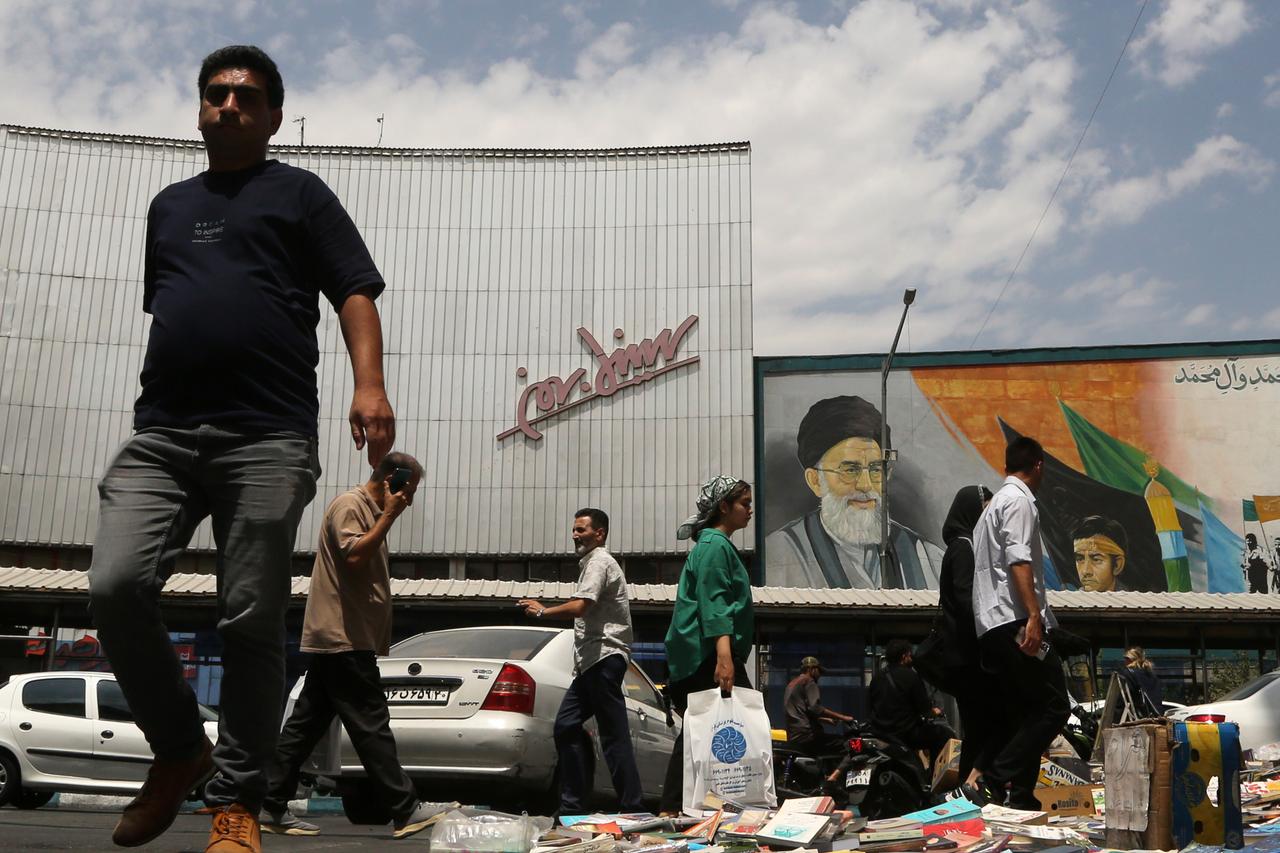
Daily life in Tehran under the shadow of US-Iran tensions, 6 August 2026 – (Anadolu Agency)
On the same day, the Washington Post, citing unnamed sources, claimed that during a cabinet meeting at Camp David the previous week, Trump had sharply rebuked Defense Secretary Pete Hegseth for allegedly misleading him about the “severely depleted” state of ammunition supplies intended for use against Iran; White House Press Secretary Karoline Leavitt and Pentagon Press Secretary Sean Parnell both denied these allegations. In a post on his Truth Social account, following media reports from CNN and other outlets about declining Pentagon ammunition stocks, Trump stated that the United States possesses “massive amounts of ammunition,” particularly in certain types, and that large quantities are being produced and delivered to the United States as needed, without specifying which types of ammunition he was referring to.
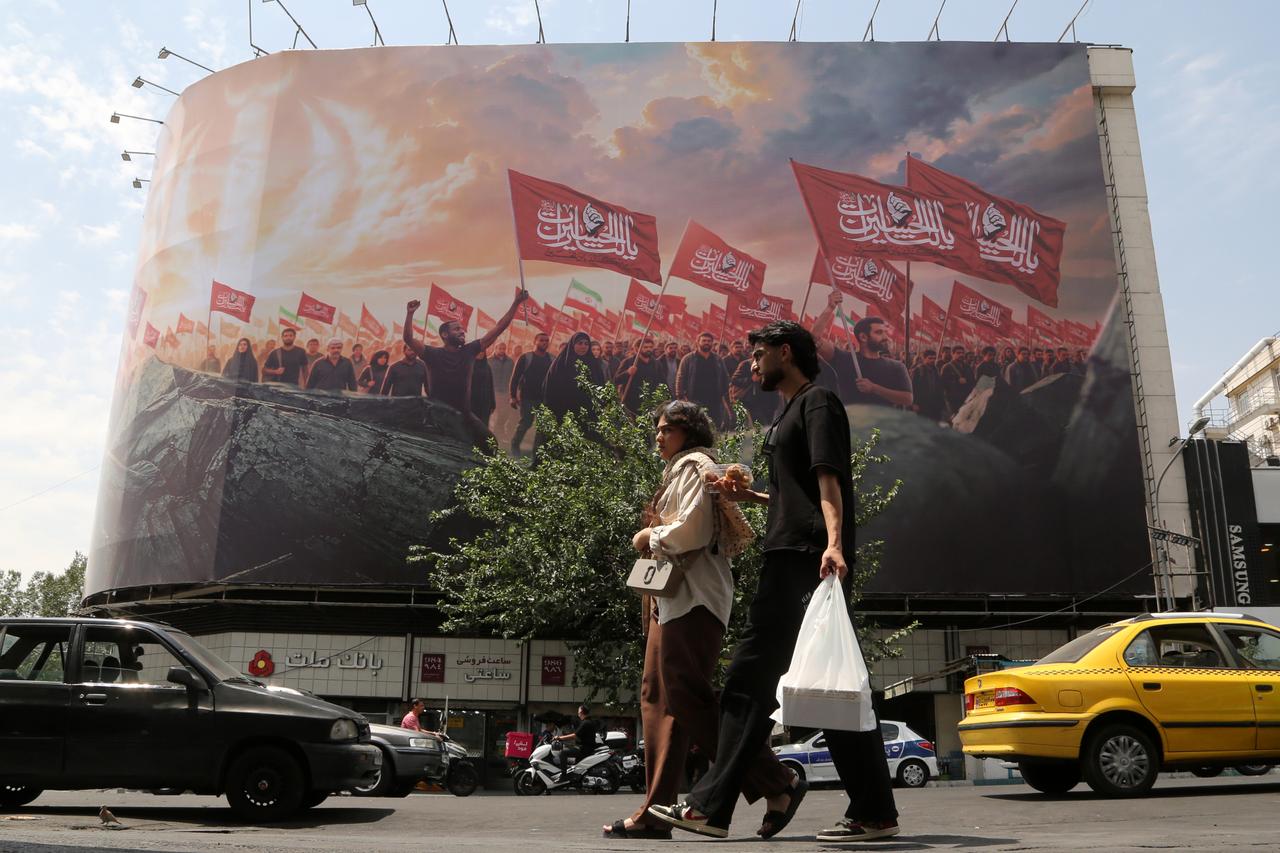
Daily life in Tehran under the shadow of U.S.-Iran tensions, 6 August 2026 - (Anadolu Agency)
Behnam Saidi, First Secretary of the National Security and Foreign Policy Commission of the Iranian Parliament, stated that the agreement reached with Oman does not mean the opening of the Strait of Hormuz and that the strait will remain closed until threats against Iran cease. Saidi clarified that negotiations with Oman concern only the manner and routes of ship transit, adding, “The Strait of Hormuz will be discussed and negotiated only when the Americans stop threatening the sea and blockading the region and withdraw from it, and when the war is officially declared over.”
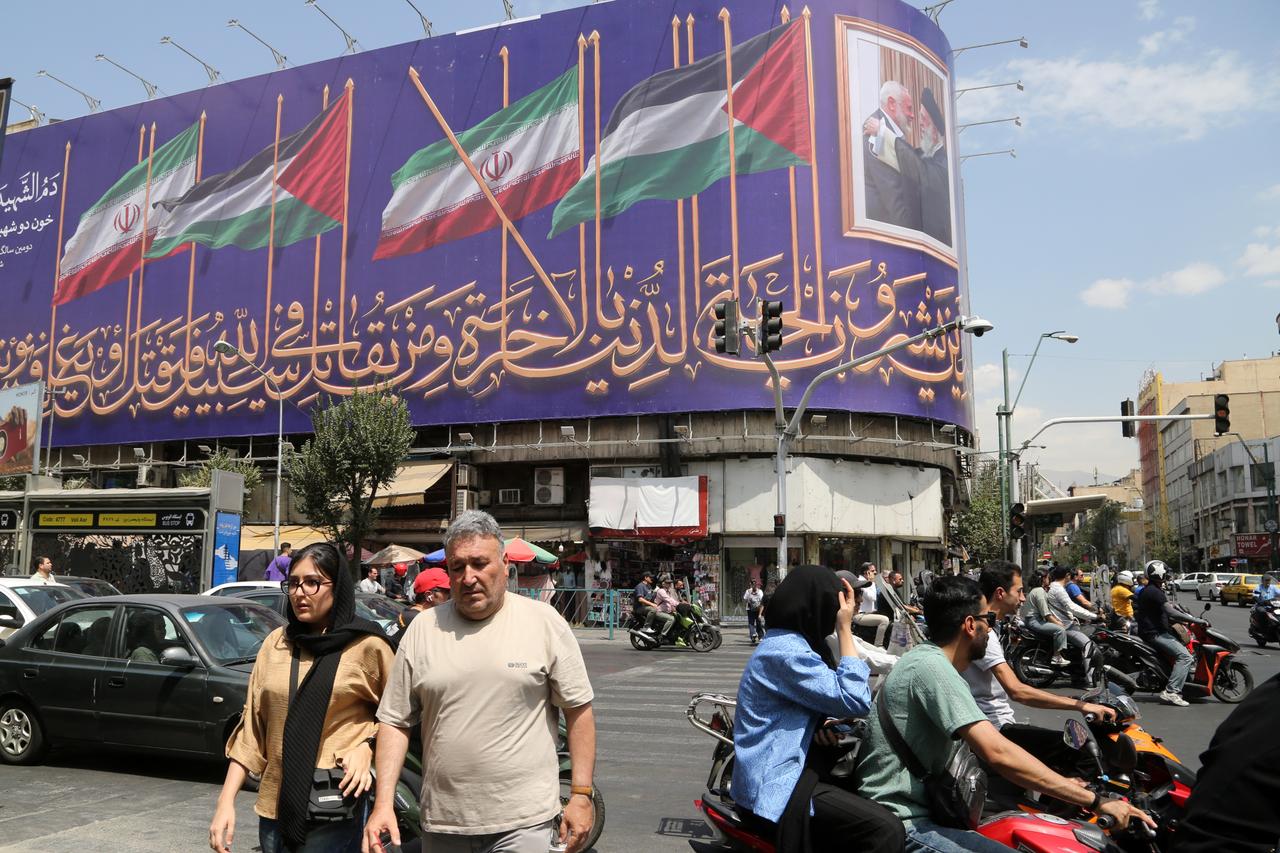
Daily life in Tehran under the shadow of U.S.-Iran tensions, 6 August 2026 - (Anadolu Agency)
On 6 August, U.S. Vice President JD Vance, in an interview with Fox News, said all military, economic, and diplomatic tools would be used to resolve tensions with Iran. He described Iranians as “hard people” and characterized the Tehran government as having a “complex structure,” noting that within Iran there are factions that both desire an end to the conflict and those who argue for its continuation. Vance emphasized that the process would take time.
On the same day, Israel’s Channel 12 television reported that the U.S. Air Force had begun withdrawing some of its aerial refueling aircraft stationed at Ben-Gurion Airport in Tel Aviv. According to the report, Israeli Transport Minister Miri Regev had pressured security officials to remove the refueling aircraft to ensure the uninterrupted operation of civilian flights due to heavy passenger traffic. It was noted that over 2.6 million passengers are expected to use the airport in August, the highest number since 7 October 2023.
Al Jazeera. “Iran War Live: Houthis Announce Wide Military Operation; Hormuz Deal Close.” Al Jazeera Live Blog. Accessed August 6, 2026.https://www.aljazeera.com/news/liveblog/2026/8/6/iran-war-live-tehran-oman-close-in-on-hormuz-deal-houthis-attack-tankers
Anadolu Ajansı. "Trump, ABD'nin Mühimmat Sıkıntısı Çektiği Yönündeki Haberleri Yalanladı." Accessed August 6, 2026.https://www.aa.com.tr/tr/dunya/trump-abdnin-muhimmat-sikintisi-cektigi-yonundeki-haberleri-yalanladi/4019663
Anadolu Ajansı. "Trump, İran'la Anlaşmayı Tercih Ettiğini Ancak Askeri Saldırının Hâlâ Bir Seçenek Olduğunu Belirtti." Accessed August 6, 2026.https://www.aa.com.tr/tr/dunya/trump-iranla-anlasmayi-tercih-ettigini-ancak-askeri-saldirinin-hala-bir-secenek-oldugunu-belirtti/4019611
Anadolu Ajansı. "Vance, İran Konusunda Askeri, Ekonomik ve Diplomatik Tüm Araçların Kullanılacağını Belirtti." Accessed August 6, 2026.https://www.aa.com.tr/tr/dunya/vance-iran-konusunda-askeri-ekonomik-ve-diplomatik-tum-araclarin-kullanilacagini-belirtti/4019813
Anadolu Ajansı. "İran: Umman ile Hürmüz Boğazı Konusundaki Müzakereler Son Aşamada, Boğaz'ın Açılması ABD'nin Tutumuna Bağlı." Accessed August 6, 2026.https://www.aa.com.tr/tr/dunya/iran-umman-ile-hurmuz-bogazi-konusundaki-muzakereler-son-asamada-bogazin-acilmasi-abdnin-tutumuna-bagli/4019510
Anadolu Ajansı. “İsrail Basını: ABD, Ben Gurion Havalimanı’ndaki Bazı Yakıt İkmal Uçaklarını Geri Çekmeye Başladı.” Accessed August 6, 2026.https://www.aa.com.tr/tr/dunya/israil-basini-abd-ben-gurion-havalimani-ndaki-bazi-yakit-ikmal-ucaklarini-geri-cekmeye-basladi/4020289
CBS News. “Live Updates: Iran, Oman Deal on Strait of Hormuz Getting Close, Tehran Says.” CBS News. Accessed August 6, 2026.https://www.cbsnews.com/live-updates/iran-war-us-trump-strait-of-hormuz-deal/
CNN. “Trump Dismisses Low Munitions Reports, Says US ‘Has Massive Amounts’.” CNN Live News. Accessed August 6, 2026.https://edition.cnn.com/2026/08/06/world/live-news/iran-war-trump
On 7 August, Saudi Arabia, Türkiye and Pakistan met in Mecca and signed a collective defense pact similar to Article 5 of NATO, stipulating that an armed attack against any one of the three countries shall be considered an attack against all three. The agreement was announced following talks between Pakistan Prime Minister Shehbaz Sharif, Türkiye President Recep Tayyip Erdoğan and Saudi Crown Prince Mohammed bin Salman. Iranian parliamentarian Ibrahim Rezaei argued that the pact would not guarantee Saudi security, stating, "The Saudis must understand that a paper agreement with Türkiye and Pakistan will not bring them security, just as their decades-long unilateral dependence on the United States has not."
On Friday 7 August, Iraqi Prime Minister Ali Faleh al-Zeydi met with Khalid bin Ali al-Humaydan, Director of Saudi Intelligence, to discuss security coordination and intelligence sharing. The Iraqi Islamic Resistance, a coalition of Iran-aligned militias, announced it had postponed retaliatory attacks against the United States and Saudi Arabia for deadly strikes on Iraq, citing "honorable stances taken by certain honorable political leaders."
According to a CNN report citing U.S. sources, U.S. Chairman of the Joint Chiefs of Staff General Dan Caine explicitly stated in private discussions that the United States must find an "exit strategy" from a potential war with Iran, warning that military options on the table could escalate the conflict beyond control.
On the afternoon of 7 August, Hasan Kashkavi, spokesperson for the Iranian Parliament's National Security Commission, told Iranian state television that the general framework of an agreement with Oman on the Strait of Hormuz had nearly been finalized and would soon be submitted to higher authorities for approval. He added that the final agreement text and a joint statement would be published shortly.
According to a separate draft law under consideration in the Iranian Parliament, vessels owned by Israel or other entities deemed responsible for harming Iran will be denied passage through the Strait of Hormuz unless they pay compensation. According to Fars News Agency, Iran-Oman shipping routes will remain temporarily in use until replaced by a centralized route.
In the evening of 7 August, the United Arab Emirates' Abu Dhabi National Oil Company (ADNOC) reported that three of its vessels had been targeted in attacks in the Strait of Hormuz over the past week, with personnel and assets continuing to suffer significant damage from unprovoked attacks. The company stated that since the outbreak of the war between the United States and Israel and Iran, 15 of its vessels, three of which were attacked this week, had been hit by missiles and drones, resulting in one fatality and 20 injuries. ADNOC emphasized its commitment to meeting customer needs despite the challenging conditions.
On the same day, the third and final part of a special interview with President Masoud Pezeshkian, the first part of which was published on 4 August, was released by Iranian media. Pezeshkian affirmed Iran's support for implementing the agreement reached with the United States on 14 June, stating, "If they are trying to force us to surrender, we will fight, we will not retreat, and we will not bow — but why should we continue along the path demanded by Israel while we are still able to secure our rights?" He added, "We have no intention of attacking other countries. We are not pursuing a 'Greater Iran' in opposition to the Zionist regime's 'Greater Israel' goal. We regard all our neighboring countries as our brothers."
According to the UAE's official news agency WAM, on 8 August, a vessel belonging to Abu Dhabi National Oil Company (ADNOC) was targeted by a missile while passing through the Strait of Hormuz; the statement confirmed no injuries occurred and the situation was brought under control.
The spokesperson for the Iranian Parliament's National Security and Foreign Policy Commission stated that a general framework of agreement with Oman had been reached, but that it still awaits final approval from higher authorities.
On 7 August, oil prices recovered during the day; according to Reuters, Brent crude opened at approximately $79.08 per barrel and closed at $83.55, indicating an increase of $4.47 (about 5.7%). U.S. West Texas Intermediate (WTI) crude rose from approximately $74.69 to $78.18, gaining $3.49 (about 4.7%). This recovery occurred amid ongoing uncertainty over whether shipping through the Strait of Hormuz could be restored and as Iran considered a draft law that could restrict passage to vessels linked to the United States and Israel.
Al Jazeera. “Iran War Live: ‘High-Level’ Approval Still Pending from Tehran on Oman Deal.” Al Jazeera Live Blog. Accessed August 8, 2026.https://www.aljazeera.com/news/liveblog/2026/8/8/iran-war-live-trilateral-mecca-defence-pact-signed-as-hormuz-deal-looms
Al Jazeera. “Iran War Updates: ‘Mecca Joint Defence Pact’ Signed, as Hormuz Deal ‘Nears’.” Al Jazeera Live Blog. Accessed August 8, 2026.https://www.aljazeera.com/news/liveblog/2026/8/7/trump-says-war-cant-go-much-longer-hormuz-deal-close?update=4837108
Anadolu Ajansı. "Abu Dabi Ulusal Petrol Şirketi: Bu Hafta Hürmüz Boğazı'nda 3 Gemimiz Saldırıya Uğradı." Accessed August 8, 2026.https://www.aa.com.tr/tr/dunya/abu-dabi-ulusal-petrol-sirketi-bu-hafta-hurmuz-bogazinda-3-gemimiz-saldiriya-ugradi/4021381
Anadolu Ajansı. “ABD Başkanı Trump, İran'ın Anlaşma Yapmak İstediğini Savundu.” Accessed August 8, 2026.https://www.aa.com.tr/tr/dunya/abd-baskani-trump-iranin-anlasma-yapmak-istedigini-savundu/4021197
Anadolu Ajansı. “İran Cumhurbaşkanı Pezeşkiyan, ABD ile Mutabakatın Uygulanmasını Desteklediklerini Söyledi.” Accessed August 8, 2026.https://www.aa.com.tr/tr/dunya/iran-cumhurbaskani-pezeskiyan-abd-ile-mutabakat%C4%B1n-uygulanmasini-desteklediklerini-soyledi/4021533
Anadolu Ajansı. “İran Meclisi Ulusal Güvenlik Komisyonu Sözcüsü: Umman ile Mutabakatın Genel Çerçevesi Neredeyse Şekillendi.” Accessed August 8, 2026.https://www.aa.com.tr/tr/dunya/iran-meclisi-ulusal-guvenlik-komisyonu-sozcusu-umman-ile-mutabakatin-genel-cercevesi-neredeyse-sekillendi/4021100
Anadolu Ajansı. “İran, Savaş Sırasında Düşürdüğü ABD-İsrail'e Ait Uçak ve İHA'ların Kalıntılarını Sergiledi.” Accessed August 8, 2026.https://www.aa.com.tr/tr/dunya/-iran-savas-sirasinda-dusurdugu-abd-israile-ait-ucak-ve-ihalarin-kalintilarini-sergiledi/4021232
CNN. “August 7, 2026 — Iranian-Backed Proxies Targeted Saudi Arabia, Widening Conflict in Middle East.” Accessed August 8, 2026.https://edition.cnn.com/2026/08/07/world/live-news/iran-war-trump
On the night of August 9, close to midnight, Israeli television channel 13 reported that Israel was preparing for the possibility of launching unilateral strikes against Iran should the war between the United States and Iran come to an end; the report stated that the Tel Aviv administration had kept the option of conducting attacks without U.S. involvement on the table. The report also referenced a CNN article indicating that U.S. Chairman of the Joint Chiefs of Staff Dan Caine had recently shared his concerns with senior officials in Washington regarding the current state of the conflict with Iran.
Iran’s state television, KAN, reported that CENTCOM Commander Admiral Brad Cooper had arrived in Israel following consultations in Bahrain and the UAE, where he held discussions with Israel’s Chief of General Staff Eyal Zamir and other senior Israeli military officials regarding Gaza and Iran. After the talks, Cooper departed for the United States.
Earlier that same day, Fedahüseyin Maliki, a member of Iran’s Parliament’s National Security and Foreign Policy Committee, announced significant progress in negotiations between Iran and Oman regarding the use, management, and control of the Hormuz Strait, stating that the talks had reached the final stage and that an agreement could be signed at any moment. Maliki asserted that the issue was being addressed solely between Iran and Oman, and that the United States had attempted to join the negotiations as a third party. He argued that Washington sought to assume a role in the southern waterway and southern corridor within Omani territorial waters, but that Tehran had refused to permit this.
By midday, Brigadier General Hussein Mohibi, spokesperson for the Islamic Revolutionary Guard Corps, stated that Iran’s strategy was to maintain control over the Hormuz Strait until the United States accepted all of Iran’s conditions. He emphasized that the strait was not merely a maritime route for Iran but also a theater of conflict. Iran’s Foreign Minister Abbas Araghchi stated that Iran was currently not engaged in any negotiations with the United States and that talks would not resume until Washington rectified its violations of prior agreements. He confirmed that messages were being exchanged through intermediary countries but insisted that “this is not called negotiation.”
Sadegh Amoli Laricani, Chairman of Iran’s Expediency Discernment Council, declared that Iran would not retreat on the issue of the Hormuz Strait regardless of the cost, stating, “The Hormuz Strait will not return to its previous conditions. If they want free passage, they must comply with the terms of the agreement memorandum.”
On August 9, Iranian President Masoud Pezeshkian met with Supreme Leader Ayatollah Ebrahim Raisi to discuss the country’s economic and military matters; according to a statement from the Iranian presidency, the meeting, held as Pezeshkian entered his third year in office, addressed solutions for meeting the population’s basic needs, wartime conditions, military developments, securing financial resources, foreign exchange, energy supplies, and managing expenditures.
On the same day, U.S. President Trump, in a phone interview with Axios, stated that the ongoing negotiations with Iran were being conducted “silently,” contrary to his previous stance, saying, “We are doing this quietly.” Trump indicated that the U.S. was only in a “partial negotiation” phase with Iran, adding, “We are merely observing Iran’s high inflation and financial collapse.” He claimed that Iran’s economy was in “very bad shape,” that its soldiers could not be paid, and that the U.S. naval blockade had worsened the Iranian regime’s economic crisis.
On August 10, Iranian Foreign Ministry Spokesperson Ismail Bekayi, during his weekly press briefing in Tehran, stated that there was no cause for concern in Tehran regarding the Mecca Collective Defense Agreement signed between Turkey, Saudi Arabia, and Pakistan, saying, “Given that these three countries share deep religious, historical, and civilizational ties with us, there is no reason for us to fear that this agreement is directed against Iran.” Later in the afternoon, Bekayi added in a separate statement that if the United States continued its current policy and naval blockade, the Hormuz Strait would not remain a safe passage route. He confirmed that Iran was currently not engaged in any negotiations with Washington but was exchanging messages through intermediary countries. He noted that negotiations with the U.S. depended on the progress of talks with Oman and that at this stage, the issue of charging fees for vessels passing through the Hormuz Strait had not been considered.
U.S. President Trump, on his Truth Social account, declared that in response to Iran’s demand for military reparations, the United States would demand reparations for the lives lost in Iran over the past 50 years. Trump stated, “Iran is demanding reparations for damages inflicted during a five-month military conflict (which began because they did not possess nuclear weapons), yet this issue has never been raised in any of our negotiations.” Later that night, after a press conference in the Oval Office, Trump revisited the issue, asserting that Iran was responsible for the deaths of hundreds of thousands of people in the Middle East over the last 50 years. He said, “They demanded war reparations — I think that’s a good idea; we will demand reparations for the damage they have caused over 50 years.” He also left open the possibility of a major attack against Iran.
On August 11, Iranian Foreign Minister Abbas Araghchi, at a ceremony in the Ministry of Health signing an agreement for diplomatic and health cooperation to rebuild infrastructure damaged in the war, stated that Iran and Israel had won the war that began with their February 28 attacks. He said that officials from various countries had told him the same. Araghchi argued that Iran had proven itself and demonstrated it was an “invincible power,” adding, “I have repeatedly heard from officials of other countries, ‘The Iranians have created a miracle and surprised the entire world.’”
In an interview with Real America’s Voice, Trump stated that the United States had three options regarding Iran: continue negotiations, significantly escalate attacks, or intensify economic pressure. He described Iranians as “hardline negotiators,” claiming that some agreements reached with Iranian officials had later been publicly rejected by them. He emphasized that Iran’s economy was in “difficult circumstances.”
Pakistan’s Interior Minister Muhsin Raza Nakvi arrived in Tehran to meet with senior Iranian officials; details of the visit were not disclosed. At the same time, Qatari Foreign Ministry Spokesperson Majid al-Ansari, during a press briefing in Doha, stated that the negotiations between Oman and Iran on the Hormuz Strait had reached an advanced stage. He said Qatar’s priority as a mediator was to ensure the strait reopened as soon as possible and confirmed receiving positive feedback from both Oman and Iran regarding the talks.
On August 11, the Wall Street Journal, citing an unnamed U.S. official, reported that U.S. forces had attacked a Panama-flagged vessel attempting to breach the blockade on Iranian ports earlier that day. It stated that a U.S. military helicopter fired at the vessel’s steering system after the crew ignored U.S. warnings, interpreting the incident as part of the Trump administration’s efforts to tighten security measures in its campaign to economically pressure the Iranian regime. Later that night, CENTCOM confirmed in an official statement that the Panama-flagged cargo ship “M/V Vela Nova” had attempted to transit the Gulf of Oman and breach the U.S. blockade by heading toward an Iranian port. As a result, the ship’s steering system was disabled. CENTCOM stated that the civilian crew had ignored warnings and that a U.S. Navy MH-60 helicopter had fired two Hellfire missiles at the vessel’s engine room.
Mohsen Rezaei, Secretary General of Iran’s Supreme National Security Council, told Chinese Ambassador to Tehran Zong Peiwu during their meeting that the United States must end its war against Iran and release Iran’s frozen assets. He stated that the Hormuz Strait would remain closed unless Washington accepted Iran’s conditions, saying, “The Hormuz Strait will not open unless the U.S. changes its stance and accepts Iran’s conditions.” Rezaei also noted that Iran’s other conditions included ending the wars in Lebanon and Gaza.
In the early hours of August 12, U.S. President Trump, while answering reporters’ questions during his flight from Ohio to Washington, stated he did not trust Iran in negotiations, saying, “The last person I would trust on Iran is me. They have constantly lied to me.” Trump asserted that the Hormuz Strait was under complete control of the U.S. Navy, adding, “We currently have full control over the Hormuz Strait. The control is not with them — it is entirely with us.”
Later that day, Iranian President Masoud Pezeshkian received Pakistan’s Interior Minister Muhsin Raza Nakvi in Tehran. According to the Iranian presidency, Pezeshkian emphasized the “privileged relations and deep ties” between Iran and Pakistan and expressed readiness to deepen bilateral cooperation in political, economic, commercial, cultural, and security fields.
Anadolu Ajansı. "ABD Başkanı Trump, Müzakereler Konusunda İran'a Güvenmediğini Söyledi." Accessed August 12, 2026.https://www.aa.com.tr/tr/dunya/abd-baskani-trump-muzakereler-konusunda-irana-guvenmedigini-soyledi/4024709
Anadolu Ajansı. "ABD, Hürmüz Boğazı'nda Bir Gemiye Daha Müdahale Ettiğini Duyurdu." Accessed August 12, 2026.https://www.aa.com.tr/tr/dunya/abd-hurmuz-bogazinda-bir-gemiye-daha-mudahale-ettigini-duyurdu/4024391
Anadolu Ajansı. "Trump, İran Konusunda Müzakere, Askeri ve Ekonomik Baskı Seçenekleri Olduğunu Belirtti." Accessed August 12, 2026.https://www.aa.com.tr/tr/dunya/trump-iran-konusunda-muzakere-askeri-ve-ekonomik-baski-secenekleri-oldugunu-belirtti/4024017
Anadolu Ajansı. "Trump, İran'la Müzakereleri Sessizce Yürüttüklerini Belirtti." Accessed August 12, 2026.https://www.aa.com.tr/tr/dunya/trump-iranla-muzakereleri-sessizce-yuruttuklerini-belirtti/4022324
Anadolu Ajansı. "Trump, İran'ın Savaş Tazminatı Talebine Karşılık Tahran'dan Tazminat Talep Edeceğini Açıkladı." Accessed August 12, 2026.https://www.aa.com.tr/tr/dunya/trump-iranin-savas-tazminati-talebine-karsilik-tahrandan-tazminat-talep-edecegini-acikladi/4023495
Anadolu Ajansı. "İran Meclisi Üyesi Maliki: Hürmüz Boğazı Konusunda Umman'la Müzakereler Sonuçlanma Aşamasında." Accessed August 12, 2026.https://www.aa.com.tr/tr/dunya/iran-meclisi-uyesi-maliki-hurmuz-bogazi-konusunda-ummanla-muzakereler-sonuclanma-asamasinda/4022245
Anadolu Ajansı. "İran: ABD Ablukayı Devam Ettirirse Hürmüz Boğazı Güvenli Bir Güzergah Olmayacaktır." Accessed August 12, 2026.https://www.aa.com.tr/tr/dunya/iran-abd-ablukayi-devam-ettirirse-hurmuz-bogazi-guvenli-bir-guzergah-olmayacaktir/4022984
Anadolu Ajansı. "İran: Hürmüz Boğazı'nın Açılması ABD'nin Tutumunu Değiştirmesine ve Şartlarımızı Kabul Etmesine Bağlı." Accessed August 12, 2026.https://www.aa.com.tr/tr/dunya/iran-hurmuz-bogazinin-acilmasi-abdnin-tutumunu-degistirmesine-ve-sartlarimizi-kabul-etmesine-bagli/4024508
Anadolu Ajansı. “Katar: Umman ile İran Arasındaki Hürmüz Boğazı Görüşmelerinde İlerleme Kaydedildi.” Accessed August 12, 2026.https://www.aa.com.tr/tr/dunya/katar-umman-ile-iran-arasindaki-hurmuz-bogazi-gorusmelerinde-ilerleme-kaydedildi/4024176
Anadolu Ajansı. “İran Cumhurbaşkanı Pezeşkiyan, Ülke Lideri Hamaney ile Ekonomik ve Askeri Konuları Görüştü.” Accessed August 12, 2026.https://www.aa.com.tr/tr/dunya/iran-cumhurbaskani-pezeskiyan-ulke-lideri-hamaney-ile-ekonomik-ve-askeri-konulari-gorustu/4022432
Anadolu Ajansı. “İran Cumhurbaşkanı Pezeşkiyan: Mücteba Hamaney'in Sağlık Durumu İyi.” Anadolu Ajansı. Accessed August 12, 2026.https://www.aa.com.tr/tr/dunya/iran-cumhurbaskani-pezeskiyan-mucteba-hamaneyin-saglik-durumu-iyi/4023425
Anadolu Ajansı. “İran Dışişleri Bakanı Erakçi'den ‘Hem Savaşı Hem Diplomasiyi Kazandık’ Açıklaması.” Anadolu Ajansı. Accessed August 12, 2026.https://www.aa.com.tr/tr/dunya/iran-disisleri-bakani-erakciden-hem-savasi-hem-diplomasiyi-kazandik-aciklamasi/4023941
Anadolu Ajansı. “İran Dışişleri Bakanı Erakçi: Şu Anda ABD ile Herhangi Bir Müzakere Yürütmüyoruz.” Accessed August 12, 2026.https://www.aa.com.tr/tr/dunya/iran-disisleri-bakani-erakci-su-anda-abd-ile-herhangi-bir-muzakere-yurutmuyoruz/4022338
In the early morning of 12 August, U.S. President Trump, while responding to questions from journalists during his return flight from Ohio to Washington, stated that he did not trust Iran regarding negotiations, saying, “I am the last person who would trust Iran. They have constantly lied to me.” Trump asserted that the Strait of Hormuz was under complete control of the U.S. Navy, stating, “We currently have full control over the Strait of Hormuz. The control is not with them—it is entirely with us.”
In the afternoon, in a separate post on his social media account, Trump repeated, “The U.S. has full control over the Strait of Hormuz. I believe we will maintain it.” Trump described the U.S. blockade of the Strait of Hormuz as a “steel wall,” arguing that Iran had no means to respond, adding, “They have no navy, no air force, their remaining soldiers cannot even pay their salaries. The Islamic Revolutionary Guard Corps has been shattered and is fleeing. Their leadership is uncertain. They have no money. Their countries are being struck.” Trump also claimed that the only things Iran possesses are “a lying press and 300 percent inflation.”
In another post on Truth Social, Trump stated, “Iran is only talk, no action—it is no longer the bully of the Middle East.” Later that night, Iran’s newly established Basra Gulf Waterway Management Authority, created to manage the Strait of Hormuz, responded to Trump’s statements, declaring, “The Strait will not be reopened until our conditions are accepted.”
The authority further stated, “The repeated claims and social media posts by U.S. officials that the Iranian blockade of the Strait of Hormuz has been lifted do not change the reality. The Strait of Hormuz remains closed and will not be reopened until Iran’s conditions are accepted.”
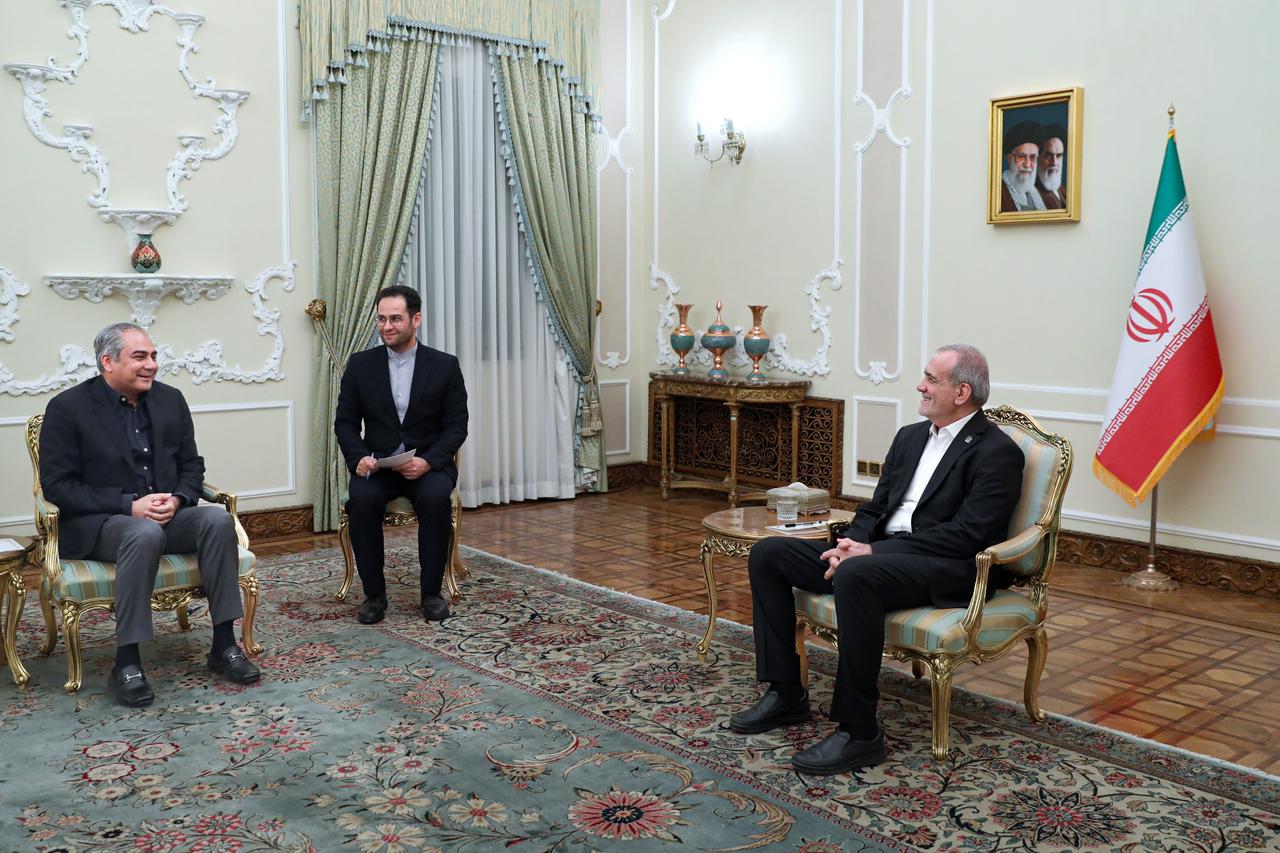
Pakistan's Interior Minister Muhsin Riza Nakvi, mediator in negotiations between Iran and the United States, is meeting with President Masoud Pezeshkian in Tehran, 12 August 2026 – (Anadolu Agency)
On the same day, Pakistan’s Interior Minister Muhsin Raza Nakvi, who is mediating negotiations between Iran and the United States, met with Iranian President Masoud Pezeshkian in Tehran. Pezeshkian emphasized the “privileged relations and deep ties” between Iran and Pakistan, stating that both countries were ready to deepen their relationship and expand cooperation in political, economic, commercial, cultural and security fields.
On the afternoon of 12 August, Pakistani Foreign Ministry spokesperson Tahir Hussain Andrabi, during a weekly press briefing, announced that Pakistan was making “every possible effort” to bring Iran and the United States back to the negotiating table. Andrabi stated that they would continue to ensure the continuation of constructive dialogue through both direct and indirect channels.
Iran’s Secretary of the Supreme National Security Council, Muhsin Rezaei, also met with Nakvi in Tehran. Rezaei stated that Iran viewed the Pakistani government, military and people as “great assets” of the Islamic world, and expressed satisfaction with the participation of Pakistani Prime Minister Shehbaz Sharif and Pakistan Army Chief General Asim Munir in regional developments.
Commander of Iran’s Border Guards, Brigadier General Ali Akbar Javidan, dismissed claims that the United States planned a land invasion of Iran as “a figment of imagination.” Javidan said, “Such statements are mostly figments of imagination; enemies have repeatedly made such claims throughout history. The actions of enemies can never shake the authority or security of our country.”
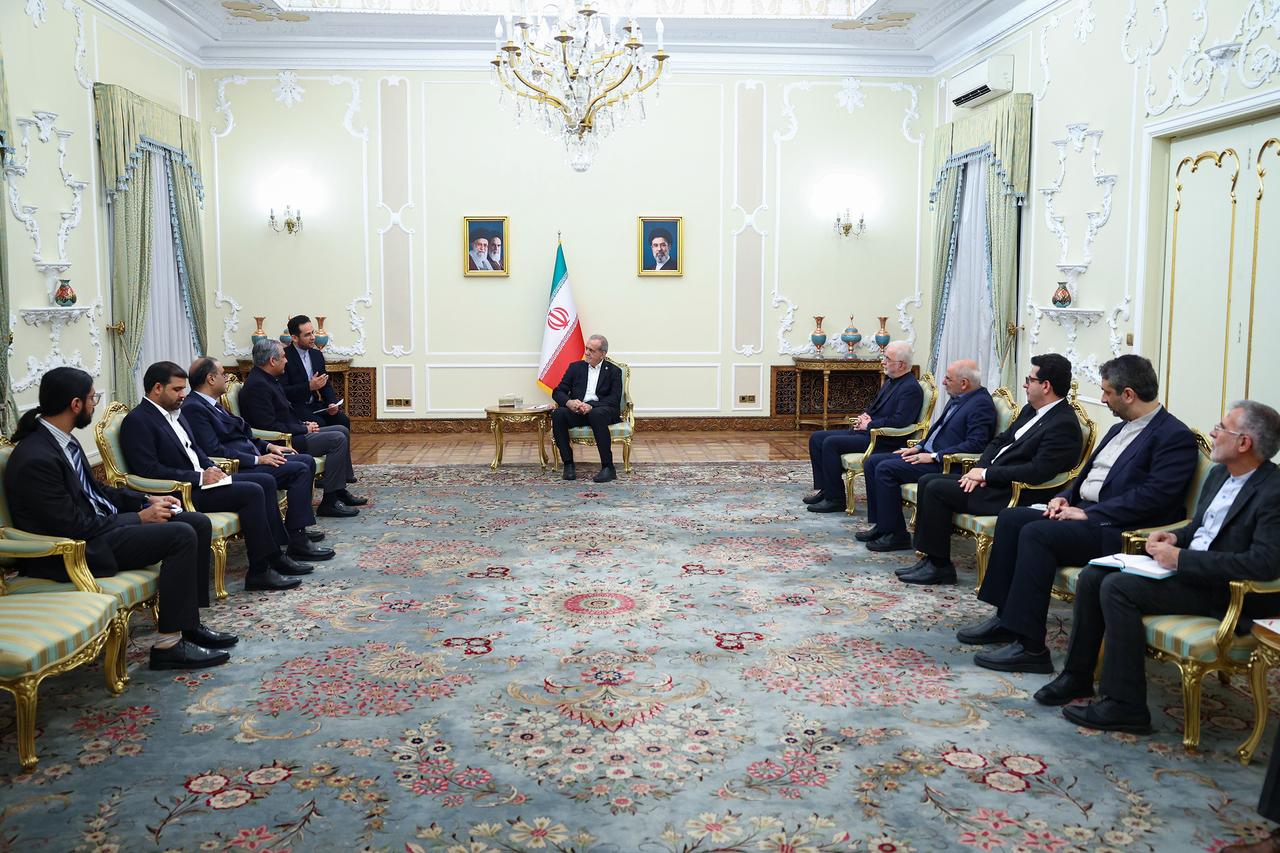
Pakistan's Interior Minister Mohsin Raza Nakvi, mediator in negotiations between Iran and the United States, is meeting with President Masoud Pezeshkian in Tehran, 12 August 2026 – (Anadolu Agency)
Javidan noted that in the war initiated by the United States and Israel, many commanders and generals had been killed, yet insisted that the authority, structure, and operational capacity of Iran’s armed forces had suffered no damage whatsoever.
On 12 August, Iranian President Masoud Pezeshkian met with members of the Besic Health Community Thought Council. Pezeshkian stated that the current war was more complex than previous conflicts and argued that the enemy aimed to undermine the country from within.
Pezeshkian emphasized the need to implement a community- and mosque-based governance model, saying, “We must not distance ourselves from the people, otherwise we will suffer harm.” He also stressed the need to prioritize disadvantaged groups, including those combating poverty and unemployment, households where women are the sole breadwinners, and residents of remote areas.
In the afternoon, Pakistani government sources told the AA correspondent that the United States and Iran had “agreed” to extend the 60-day ceasefire under the Islamabad Agreement, which was due to expire on 17 August. A source close to the mediation process said that both parties had conveyed their approval to mediators regarding the extension of the ceasefire, but that discussions were ongoing regarding the duration of the extension.
Later that day, according to Reuters, an unnamed senior Iranian source directly refuted the claim. The source stated, “There is no talk of extension because from Iran’s perspective, no period has begun, so there is nothing to extend.”
The Iranian source asserted that the United States violated the agreement 48 hours after it was reached and withdrew from it a few days later. The same source indicated that one of the issues discussed between Washington and Tehran through mediators was the U.S. returning to the interim agreement and establishing a timeline for implementing obligations. The source further stated that “absolutely no progress has been made” on this matter.
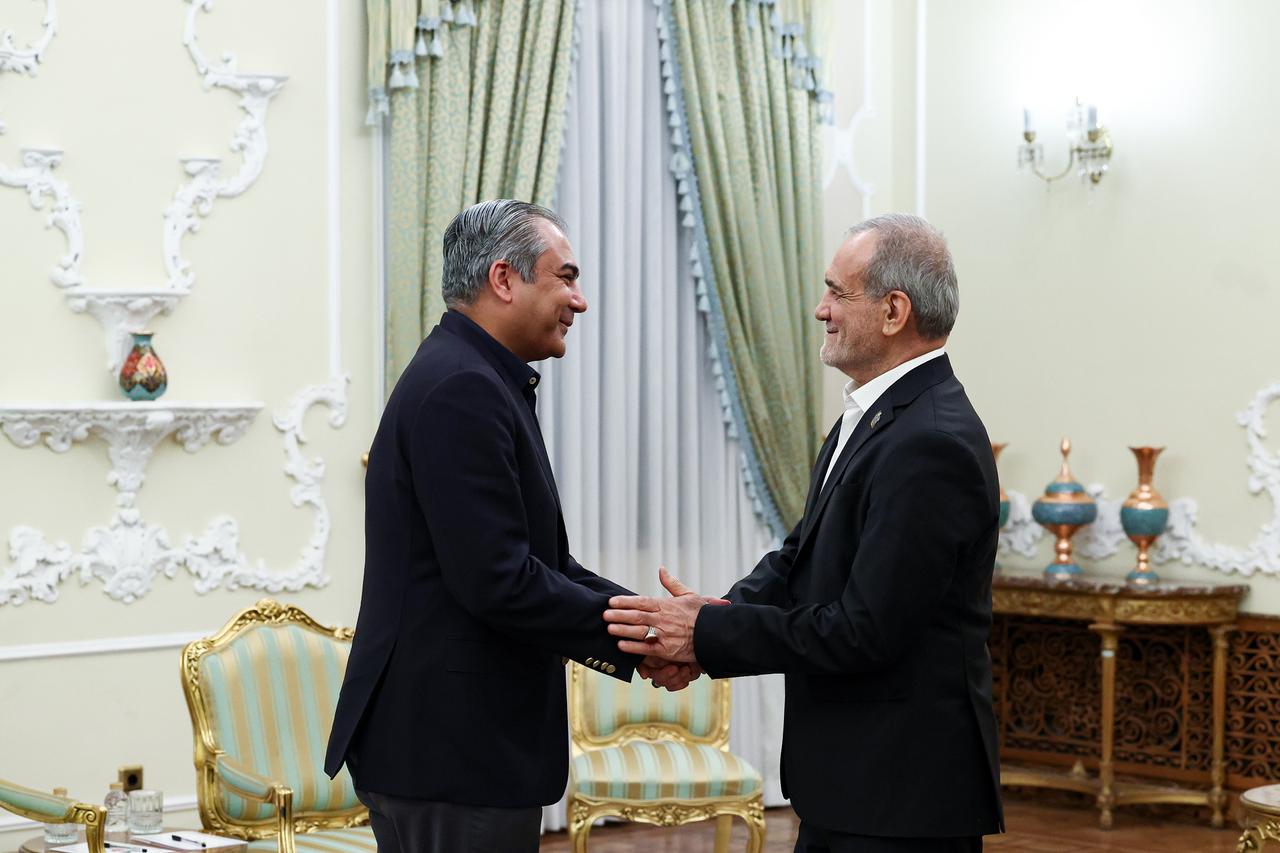
Pakistan's Interior Minister Mohsin Raza Naqvi, mediator in negotiations between Iran and the United States, is meeting with President Masoud Pezeshkian in Tehran, 12 August 2026 – (Anadolu Agency)
In the early morning of 13 August, the head of Iran’s Besic paramilitary force, Hossein Taib, asserted that the Strait of Hormuz was “under Iranian control and administration.” Taib’s statement followed U.S. President Trump’s claim the previous day that the United States had “full control” over the Strait of Hormuz.
Late at night, more than 30 countries, including France, the United Kingdom, Canada, and the European Union’s top diplomat, jointly condemned Iran’s use of the death penalty to “silence protesters.”
The statement declared, “The execution of protesters and the continued use of the death penalty to suppress communities and punish individuals exercising human rights can never be justified.”
Iran’s Foreign Minister, Abbas Araghchi, responded sharply to these criticisms via a social media post. Araghchi said, “Countries like France should stop lecturing the world on human rights and international law. Their hypocrisy is dazzling and shameful.” In another morning post, Araghchi added, “Your support for Israel’s genocide in Gaza and its aggression against Iran has destroyed every moral superiority you claim for yourselves.”
Spokesperson for Iran’s Ministry of Foreign Affairs, Ismail Bekayi, stated that damage caused by pollution during and in the years preceding the war with the United States and Israel in the Persian Gulf and the Sea of Oman must be compensated.
Bekayi noted that in recent days, images showing oil pollution along the coast of Kish Island near the Strait of Hormuz had spread on social media. He indicated that the pollution had been carried from the Persian Gulf toward the coastline and stated that, according to initial assessments, the source of the pollution was assessed to be a foreign oil tanker.
Bekayi confirmed that the pollution had been detected at three coastal points on Kish Island and in certain areas of the sea surface.
In a social media post, Iran’s Foreign Minister Abbas Araghchi argued that the United States has long made erroneous assessments due to intelligence failures, stating, “The United States has long made miscalculations due to intelligence failures. One example: the war against Iran. Now it is making an even greater miscalculation regarding the Strait of Hormuz.” He added, “Worse than fake news is fake intelligence. Be careful.” Araghchi also referenced Trump’s use of the phrase “Thank God” at the end of his previous day’s threatening message regarding Iran and its maritime blockade, responding with, “God is greater than any power on Earth. We rely on God.”
Al Jazeera. “Iran War Live: US, Tehran Exchange Opposing Claims Over Hormuz Control.” Al Jazeera. Accessed August 13, 2026.https://www.aljazeera.com/news/liveblog/2026/8/13/iran-war-live-us-and-iran-exchange-opposing-claims-over-hormuz-control
Al Jazeera. “Iran War Updates: Mediators Push US-Iran Talks as Israel Hits Lebanon, Gaza.” Al Jazeera. Accessed August 13, 2026.https://www.aljazeera.com/news/liveblog/2026/8/12/iran-war-live-us-fires-missiles-at-cargo-ship-violating-iran-blockade
Anadolu Ajansı. "ABD Başkanı Trump, Müzakereler Konusunda İran'a Güvenmediğini Söyledi." Accessed August 13, 2026.https://www.aa.com.tr/tr/dunya/abd-baskani-trump-muzakereler-konusunda-irana-guvenmedigini-soyledi/4024709
Anadolu Ajansı. "Pakistanlı Kaynaklar: ABD ve İran'ın Ateşkesi Uzatmayı Kabul Ettiğini Söyledi." Accessed August 13, 2026.https://www.aa.com.tr/tr/dunya/pakistanli-kaynaklar-abd-ve-iranin-ateskesi-uzatmayi-kabul-ettigini-soyledi/4025090
Anadolu Ajansı. "Trump: ABD, Hürmüz Boğazı Üzerinde Tam Kontrole Sahip." Accessed August 13, 2026.https://www.aa.com.tr/tr/dunya/trump-abd-hurmuz-bogazi-uzerinde-tam-kontrole-sahip/4025441
Anadolu Ajansı. “İran Dışişleri Bakanından Trump'a Hürmüz Boğazı'nda ‘Daha Büyük Bir Yanlış Hesaplama Yapmayın’ Uyarısı.” Accessed August 13, 2026.https://www.aa.com.tr/tr/dunya/iran-disisleri-bakanindan-trumpa-hurmuz-bogazinda-daha-buyuk-bir-yanlis-hesaplama-yapmayin-uyarisi/4026066
Anadolu Ajansı. “İran Dışişleri Bakanından, Ülkesi Aleyhinde Açıklama Yayımlayan Fransa'ya Tepki.” Accessed August 13, 2026.https://www.aa.com.tr/tr/dunya/iran-disisleri-bakanindan-ulkesi-aleyhinde-aciklama-yayimlayan-fransaya-tepki/4025884
CBS News. “Live Updates: Trump Says U.S. Has ‘Total Control’ Over Strait of Hormuz and Might ‘Keep It’.” Accessed August 13, 2026.https://www.cbsnews.com/live-updates/iran-war-us-donald-trump-strait-hormuz-traffic-falls-houthis-kill-red-sea/
CNN. “August 12, 2026 — Trump Insists US Controls Hormuz, Iran Says It Could ‘Prolong’ War with US.” CNN. Accessed August 13, 2026.https://edition.cnn.com/2026/08/12/world/live-news/iran-war-trump
Reuters. “Iran Says No Progress on Reviving Interim Peace Deal with US.” Reuters. Accessed August 13, 2026.https://www.reuters.com/world/asia-pacific/iran-says-no-progress-reviving-interim-peace-deal-with-us-2026-08-12/
On 14 August near midnight, the United Arab Emirates (UAE) reported that two tankers owned by its national oil company ADNOC were targeted while passing through the Strait of Hormuz. According to the UAE’s official news agency WAM, there were no casualties or injuries in the incident. The UAE Ministry of Foreign Affairs condemned the attack, stating it was a clear violation of UN Security Council Resolution 2817, which affirms the freedom of maritime navigation.
Earlier that morning, the United Kingdom Maritime Trade Operations (UKMTO) announced that a petroleum tanker had been struck by a drone while exiting the Strait of Hormuz, resulting in minor damage to the vessel and no harm to the crew. At the same time, a drone attack was launched against Erbil, Iraq; Iraqi security sources reported that the drone was intercepted over Erbil, its debris fell near a residential complex close to the airport, and the attack was assessed to have targeted a nearby U.S. military base. No casualties or injuries were reported.
U.S. Secretary of Defense Pete Hegseth, during a closing ceremony for a drill in Panama, told journalists that the U.S. Navy could sustain its maritime blockade against Iran indefinitely, with ships being rotated in and out of service.
On 14 August, the Islamic Revolutionary Guard Corps (IRGC) announced that it had shot down a U.S.-owned MQ-9 Reaper drone that had violated Iranian airspace near the Strait of Hormuz using air defense systems.
On the same day, Iran’s Environmental Protection Organization announced that oil pollution had been detected over an area of 3.2 hectares on Kish Island due to conflict-related activities along the Strait of Hormuz coastline. Deputy Director of the Environmental Protection Agency, Mohammad Reza Lahicanzadeh, stated that the shores of Suza, Shibderaz, and Nakkaše, along with mangrove forests and part of Hengam Island, had also been contaminated, and that the pollution was assessed to be maritime in origin.
U.S. President Trump, during an event at a police academy in New York, declared, "After completely defeating Iran, I will very soon declare the Strait of Hormuz U.S. territory." He added that the U.S. Navy was enforcing a complete blockade on the strait, preventing any vessel from passing through that the United States did not approve of, and that Iran would not be permitted to acquire nuclear weapons.
Shortly after midnight on 15 August, Iranian Deputy Foreign Minister Kazem Garibabadi responded to Trump’s claim that he would declare the Strait of Hormuz American territory with the statement, "The Strait of Hormuz cannot be seized by tweet, by aircraft carrier, by decree, or by campaign speech... Iran fears no threats and cannot be intimidated by displays of force."
The UAE reported that another ADNOC tanker was targeted while passing through the Strait of Hormuz on the evening of 14 August Friday; the company confirmed no injuries occurred and that the situation was under control.
On 15 August around noon, UKMTO announced that a bulk carrier in the Strait of Hormuz had been struck by an unknown object, with the crew reported safe. In the afternoon, the UAE Ministry of Foreign Affairs condemned the attack on the ADNOC vessel in the "strongest terms," reiterating that it was a clear violation of UN Security Council Resolution 2817.
On the morning of 15 August, Iranian Foreign Minister Abbas Araghchi, in an interview with Tasnim News Agency, stated that Iran had not yet decided whether to resume negotiations with the United States. In response to a question about whether the "ceasefire" period would be extended, Araghchi emphasized that what was agreed upon in the accord signed on 17 June was not a "ceasefire" but "the end of war," adding, "The United States violated the agreement and we witnessed the resumption of hostilities, but now there is no ceasefire to extend. On the contrary, the war had ended."
On the same day, Iranian Foreign Ministry Spokesperson Ismail Bekayi reported progress in the Strait of Hormuz talks between Tehran and Muscat, which had been ongoing for approximately three weeks. He described the negotiations as proceeding in a "positive and constructive" atmosphere, noting particular agreement between Iran and Oman on defining maritime routes. He accused Washington of attempting to obstruct the talks.
Commander of the Iranian Armed Forces General Staff’s Missing Persons Search Committee, Brigadier General Mohammad Bakrizadeh, claimed that three of the four Iranian pilots from two fighter jets shot down during the war with the United States and Israel — Cevad Salhi, Abdulmecid Deshtian, and Imran Behrouzian — had been held captive by Qatar for six months. He announced that he had sent a letter to the President of the International Committee of the Red Cross, Mirjana Spoljaric Egger, on this matter.
Qatar rejected the claim. Spokesperson for the Qatari Ministry of Foreign Affairs, Majid al-Ansari, stated, "We categorically deny all allegations that Iranian pilots are being held." He described the timing of this announcement — amid ongoing diplomatic efforts to reduce regional tensions — as "surprising and misleading."
Iranian President Masoud Pezeshkian noted that economic problems in the country had worsened since the war with the United States and Israel, citing rising costs and declining state revenues due to reduced oil sales, and stated, "Our revenues have also decreased." Iranian Foreign Ministry Spokesperson Bekayi condemned Israeli airstrikes on southern Lebanese towns including Deyr al-Zaharani, Ansar, and Nabatieh, which killed at least eleven people, and criticized the UN Security Council’s "silence and inaction" in the face of these serious violations.
On 16 August, Ibrahim Azizi, Chairman of the Iranian Parliament’s National Security and Foreign Policy Committee, stated that instead of Trump’s "endless bluffs," he should be concerned about his own security. In his message, Azizi also referenced the claim that Trump had changed aircraft inside a food truck during his departure from the NATO Summit in Ankara amid an alleged Iranian assassination threat.
Early on 16 August, in Iran, Shahram Sadiki was executed by the Kermanshah Revolutionary Court on charges of acting in favor of the United States and Israel and engaging in activities against national interests, following street protests that began over economic grievances and turned anti-regime. According to the Iranian Judiciary, Sadiki had injured seven police officers during the protests by driving his vehicle into them. Commander-in-Chief of the Iranian Armed Forces, Major General Habibullah Hatemi, announced that any Iranian citizen who captures or kills a U.S. soldier who has attacked Iranian territory will receive a reward of $30,000, and that the reward for women will be double that amount.
On 17 August, Iranian Foreign Ministry Spokesperson Ismail Bekayi, during a weekly press briefing, stated that the agreement text signed with the United States contained no "60-day period" or ultimatum directed at Iran, and that negotiations had never begun due to the United States’ violation of the agreement. He emphasized that Iran does not define its policies under pressure, ultimatums, or time limits.
Deputy Commander of the Islamic Revolutionary Guard Corps, Yedullah Javani, stated that the war must end based on the agreement reached with the United States, and that the Strait of Hormuz would only open after the United States fulfills its commitments under the accord. He declared, "The Strait of Hormuz and the order prevailing there will never return to its pre-war state."
On the same day, U.S. President Trump, following a press conference in the Oval Office, clearly answered " No " when asked whether he intended to extend the 60-day framework agreement with Iran that expired that day. In response to whether a final agreement with Iran was possible, Trump said, "They want an agreement, but they will not make one of the kind I deem necessary." He stressed that Iran must accept the conditions the United States considers essential regarding its nuclear program.
In a social media post, Trump stated that preventing Iran from acquiring nuclear weapons is "the number one objective and will always remain so." During an afternoon interview with Fox News, when asked what he would do if Oman interfered with U.S. operations in the Strait of Hormuz, Trump replied, "If Oman stands in our way, we will bomb them badly." Trump also claimed to have "secret communication channels" with IRGC officials.
IRGC Spokesperson Brigadier General Hossein Mohibbi denied the claim, stating, "There has been no communication whatsoever between IRGC officials and Americans." He dismissed the allegation as "illusions born of defeat and desperation in war."
Around noon on the same day, the Kurdistan Regional Government (KRG) Anti-Terrorism Unit announced that at 00:28, two Hadid-110 kamikaze drones loaded with explosives, allegedly launched by Iran, targeted the private office of KRG Prime Minister Masrour Barzani and the residence of the intelligence chief. No casualties were reported. Later that night, Iranian Foreign Ministry Spokesperson Bekayi condemned the attack as a "highly suspicious development," stressed that the incident must be handled with care and sensitivity, and reaffirmed Iran’s determination to maintain friendly relations with Iraq and the KRG.
Deputy Commander of the Islamic Revolutionary Guard Corps, Major General Mustafa Izadi, claimed that over 200 enemy aircraft had been shot down during the war with the United States, asserting that Iran had managed the conflict using resources amounting to only one percent of the enemy’s expenditure. In the evening, the IRGC announced on behalf of Iran’s Supreme Leader Ayatollah Khamenei that any threat or attack against Iran would be met with "full resolve" and "maximum deterrence through powerful offensive operations."
Iranian Vice President Mohammad Reza Arif stated that "the enemy aims to overthrow the Islamic Republic of Iran" and has planned a "socio-cultural coup" within the country, and that the Pezeshkian administration has been a "war government" since its first day in office.
Iranian media reported that a UAE-owned oil tanker had been detained near Kish Island by Iran while transiting the Strait of Hormuz. According to Fars News Agency, the tanker was stopped because it did not use the route designated by Iran, failed to pay service fees, and did not obtain permission from Iranian authorities.
Al Jazeera. “Iran War Updates: Iran Says Hormuz Under Its Control, Israel Bombs Lebanon.” Accessed August 18, 2026.https://www.aljazeera.com/news/liveblog/2026/8/15/iran-war-live-trump-vows-to-make-hormuz-us-territory-pretty-soon
Al Jazeera. “Iran War Updates: Tehran, Oman Discuss Hormuz; UN Delivers West Bank Aid.” Accessed August 18, 2026.https://www.aljazeera.com/news/liveblog/2026/8/16/iran-war-live-talks-on-hormuz-strait-continue-israel-kills-11-in-lebanon
Al Jazeera. “Iran War Updates: Trump Says Tehran Should Wave the ‘White Flag’.” Accessed August 18, 2026.https://www.aljazeera.com/news/liveblog/2026/8/17/iran-war-live-tehran-us-mou-set-to-expire-hamass-al-khayya-meets-kushner
Al Jazeera. “Iran War Updates: Trump Says Will Declare Hormuz US Territory ‘Pretty Soon’.” Accessed August 18, 2026.https://www.aljazeera.com/news/liveblog/2026/8/14/iran-war-live-us-eyes-indefinite-iran-naval-blockade?update=4854851
Anadolu Ajansı. "ABD Başkanı Trump, İran’la Sona Eren Mutabakatı Uzatmak İstemediklerini Açıkladı." Accessed August 18, 2026.https://www.aa.com.tr/tr/dunya/abd-baskani-trump-iranla-sona-eren-mutabakati-uzatmak-istemediklerini-acikladi/4029880
Anadolu Ajansı. "BAE’nin ADNOC Şirketine Ait Bir Tanker Hürmüz Boğazı’nda Hedef Alındı." Accessed August 18, 2026.https://www.aa.com.tr/tr/dunya/baenin-adnoc-sirketine-ait-bir-tanker-hurmuz-bogazinda-hedef-alindi/4027882
Anadolu Ajansı. "Fox News: Trump, Hürmüz’de ABD’nin Faaliyetlerini Engellemesi Halinde Umman’ı Bombalayacaklarını Söyledi." Accessed August 18, 2026.https://www.aa.com.tr/tr/dunya/fox-news-trump-hurmuzde-abdnin-faaliyetlerini-engellemesi-halinde-ummani-bombalayacaklarini-soyledi/4029462
Anadolu Ajansı. "IKBY Anti Terör Birimi: İran’dan IKBY Başbakanı’nın Özel Ofisine İHA Saldırısı Düzenlendi." Accessed August 18, 2026.https://www.aa.com.tr/tr/dunya/ikby-anti-teror-birimi-irandan-ikby-basbakaninin-ozel-ofisine-iha-saldirisi-duzenlendi/4029211
Anadolu Ajansı. "Trump: Yakında Hürmüz Boğazı’nı ABD Toprağı İlan Edeceğini Açıkladı." Accessed August 18, 2026.https://www.aa.com.tr/tr/dunya/trump-yakinda-hurmuz-bogazini-abd-topragi-ilan-edecegini-acikladi/4027854
Anadolu Ajansı. "İran Dışişleri Bakanlığı: Umman ile Hürmüz Boğazı Görüşmelerinin Olumlu Devam Ettiğini Bildirdi." Accessed August 18, 2026.https://www.aa.com.tr/tr/dunya/iran-disisleri-bakanligi-umman-ile-hurmuz-bogazi-gorusmelerinin-olumlu-devam-ettigini-bildirdi-/4028171
Anadolu Ajansı. "İran, Hürmüz Boğazı Yakınlarında ABD’ye Ait MQ-9 Tipi İHA’yı Düşürdüğünü Duyurdu." Accessed August 18, 2026.https://www.aa.com.tr/tr/dunya/iran-hurmuz-bogazi-yakinlarinda-abdye-ait-mq-9-tipi-ihayi-dusurdugunu-duyurdu/4027425
Anadolu Ajansı. "İran: ABD ile Varılan Mutabakat Metninde 60 Günlük Süre Bulunmuyor." Accessed August 18, 2026.https://www.aa.com.tr/tr/dunya/iran-abd-ile-varilan-mutabakat-metninde-60-gunluk-sure-bulunmuyor/4029235
Anadolu Ajansı. “UKMTO: Hürmüz Boğazı’nda Bir Dökme Yük Gemisi Vuruldu.” Accessed August 18, 2026.https://www.aa.com.tr/tr/dunya/ukmto-hurmuz-bogazinda-bir-dokme-yuk-gemisi-vuruldu-/4027945
Anadolu Ajansı. “UKMTO: Hürmüz Boğazı’nda Bir Petrol Tankeri İHA ile Vuruldu.” Accessed August 18, 2026.https://www.aa.com.tr/tr/dunya/ukmto-hurmuz-bogazinda-bir-petrol-tankeri-iha-ile-vuruldu-/4026986
Anadolu Ajansı. “İran Cumhurbaşkanı Yardımcısı Arif: Düşman Toplumsal-Kültürel Darbe Planlıyor.” Accessed August 18, 2026.https://www.aa.com.tr/tr/dunya/iran-cumhurbaskani-yardimcisi-arif-dusman-toplumsal-kulturel-darbe-planliyor/4029670
Anadolu Ajansı. “İran Dışişleri Bakanı Erakçi: ABD ile Müzakere Konusunda Henüz Bir Karar Almadık.” Accessed August 18, 2026.https://www.aa.com.tr/tr/dunya/iran-disisleri-bakani-erakci-abd-ile-muzakere-konusunda-henuz-bir-karar-almadik/4027883
Anadolu Ajansı. “İran: Savaş Sırasında Düşen 2 Savaş Uçağındaki İranlı 4 Pilottan 3’ü Katar Tarafından Esir Alındı.” Accessed August 18, 2026.https://www.aa.com.tr/tr/dunya/iran-savas-sirasinda-dusen-2-savas-ucagindaki-iranli-4-pilottan-3u-katar-tarafindan-esir-alindi/4028176
Anadolu Ajansı. “İsrail, Suriye’nin İdlib İlindeki Ebu Zuhur Askeri Havaalanını Vurdu.” Accessed August 18, 2026.https://www.aa.com.tr/tr/dunya/israil-suriyenin-idlib-ilindeki-ebu-zuhur-askeri-havaalanini-vurdu/4030074
CNN. "Trump Threatens to Bomb US Ally Oman as Iran Agreement Expires." Accessed August 18, 2026.https://edition.cnn.com/2026/08/17/world/live-news/iran-war-trump
CNN. “August 15, 2026 — Shipping Faces More Disruptions in the Middle East.” Accessed August 18, 2026.https://edition.cnn.com/2026/08/15/world/live-news/iran-war-trump
CNN. “August 16, 2026 — Kushner Meets Regional Leaders as Multiple Conflicts Roil Middle East.” Accessed August 18, 2026.https://edition.cnn.com/2026/08/16/world/live-news/iran-war-trump
In the afternoon of August 18, Islamic Republic of Iran Parliament Speaker Mohammad Bagher Kalibaf stated in a parliamentary address that the United States must fulfill the conditions agreed upon for the opening of the Hormuz Strait — including the lifting of sanctions, release of frozen assets, removal of oil sanctions, and cessation of all threats and military operations across all fronts — and that the strait would not be opened until these conditions were met. In the afternoon of August 18, 2026, following U.S. President Trump’s sharing of a map depicting the Hormuz Strait along with parts of Iran, the Persian Gulf, and the Sea of Oman as “new U.S. territory,” Iranian Deputy Foreign Minister Kazem Garibabadi responded: “Trump’s misconception regarding the Hormuz Strait will soon be corrected, or we will correct the delusions of this fantasist.”
On the same day, Trump claimed on his social media account that there were no ongoing or planned talks or negotiations with Iran, that the maritime blockade against Iran was fully in effect, that the Hormuz Strait was open and operational, and that “all sea mines had been removed or destroyed.” During the night hours of August 18, 2026, Kalibaf asserted that the assumption that the United States could use increased economic and military pressure to extract new concessions from Iran beyond those agreed upon would “lead to nothing.”
In the evening of August 18, the UAE Ministry of Defense announced that its air defense systems had detected two ballistic missiles launched from Iran toward the country, with one falling outside territorial waters and the other inside, and confirmed that the ministry remained in a state of “full alert and preparedness.” During the night hours of August 18, 2026, the UAE Ministry of Defense declared that assessments concluded the two ballistic missiles were targeted at maritime traffic. Immediately thereafter, the UAE Ministry of Foreign Affairs announced the suspension of all commercial, financial and economic transactions with Iran until a further announcement.
On the same day, Iranian Ministry of Foreign Affairs Spokesperson Ismail Bekayi rejected the UAE’s claim that a missile had been fired from Iran, stating that due to the actions of the United States and Israel against regional peace and security — particularly their history of numerous “false flag” operations — regional actors should avoid making baseless accusations against Iran.
During the night hours of the same day, Iranian Foreign Minister Abbas Araghchi, in an interview, clarified that Iran was not seeking a temporary “ceasefire” during the war but rather the “complete end of the war,” stating: “In the last war we did not seek a ceasefire; instead we sought a definitive end to the war. Temporary ceasefires only lead to its repetition.”
In the afternoon of August 19, Iraqi Parliament Speaker Hayba al-Halbusi, during a visit by Iranian Parliament Speaker Kalibaf, requested that Iraq be granted a “special status” for the export of its oil through the Hormuz Strait, emphasizing that Iraq was “one of the countries most affected by the conditions in the region.”
In the evening of the same day, after showing reporters a helicopter pad under construction at the White House, Trump responded to questions about when negotiations with Iran would resume by saying: “Perhaps at some point. But right now I think we are in a good position.” He maintained that the Hormuz Strait was under “full control” and that a certain number of tankers continued to pass through.
Before a meeting with cryptocurrency company executives at the White House, Trump stated that due to alternative routes and newly laid pipelines, the Hormuz Strait would no longer be “as important as it once was,” reiterated that the United States was preparing “strong” new sanctions against Iran, affirmed that the strait was under complete control of the U.S. Navy, and insisted that only ships approved by the United States would be permitted to pass.
Near midnight on August 20, U.S. President Trump announced on his social media account an “unprecedented” economic operation against Iran, warning that any country providing Iran with any form of “lifeline” through financial institutions, companies, airports, or state entities would face “massive economic consequences,” asserting that no one but himself had offered Tehran a chance to reach an agreement, and that Iran had failed to seize this opportunity. Global crude oil prices rose following this announcement to nearly $94, the highest level since the end of July.
In the early morning hours of August 20, Iranian Foreign Minister Araghchi labeled Trump’s announcement as an “economic D-Day operation,” arguing that it was an attempt by the United States to mask its own economic crisis caused by rising debt and interest costs, and contended that Washington’s continuation of its failed policies would bring it “further defeat.” Later that day, in the afternoon, Iranian Deputy Foreign Minister Garibabadi claimed that having failed to achieve results in military conflict, the United States was now calling its actions an “economic war.” He noted that despite Washington’s assertion that Iran was “on the brink of defeat and hanging by a thread,” it was begging for assistance from all its allies, which he described as an attempt by the United States to conceal its own miscalculations.
The Iranian Ministry of Foreign Affairs characterized the United States’ new sanctions as “economic terrorism and a crime against humanity,” emphasizing that their timing coincided with the anniversary of the 1953 coup in Iran orchestrated by the United States and Britain, underscoring that this represented the continuation of Washington’s “73-year hostility” toward the Iranian people.
Late on the night of August 20, U.S. Vice President JD Vance, during a podcast appearance, stated that the war with Iran had entered a “new phase,” asserting that the “most effective tool” currently available was economic pressure. He argued that while the Hormuz Strait was Iran’s “bargaining chip,” high volumes of oil continued to transit through it despite attacks on commercial vessels, and that this had significantly lowered fuel prices in the United States.
On August 21, Iran’s Chief of the General Staff, Lieutenant General Ali Abdullahi, in a message issued on Defense Industry Day, stated that Iran would respond with “devastating force” to the enemy’s “miscalculations and new threats,” and affirmed that the defense industry was “an irreplaceable pillar of national power.”
In response to Trump’s characterization of the new sanctions as “the most crushing economic operation in history,” Iranian Foreign Minister Araghchi recalled that in 2012, then U.S. President Barack Obama had similarly claimed to impose “the most crippling sanctions in history” on Iran, adding: “Fourteen years ago, the heaviest sanctions in history. They failed.” Iranian Foreign Minister Araghchi spoke by phone with Omani Foreign Minister Badr al-Busaidi regarding the resumption of navigation through the Hormuz Strait, and both sides assessed the conditions necessary to restart dialogue and negotiations to find peaceful solutions to outstanding issues while respecting mutual interests.
On August 22, while answering reporters’ questions at Joint Base Andrews, Trump stated that military options against Iran remained on the table, declaring: “The Iranians want to reach an agreement, but they are not ready to reach the right agreement.” He emphasized that economic sanctions did not constrain military options.
In the early morning hours of the same day, it was reported that Iran had approved special permission for certain Iraqi oil tankers to transit the Hormuz Strait, following requests from Iraqi officials during and prior to Kalibaf’s recent visit to Iraq. The report noted that Iran granted this permission “despite the intense military activity and security concerns in the Hormuz Strait caused by U.S. hostile actions.”
Commander of the Iranian Armed Forces General Staff’s Missing Persons Search Committee, Brigadier General Mohammad Bakrizadeh, announced that Qatar had permitted Iranian diplomats in Doha to meet with three pilots allegedly held captive in Qatar, and requested that the International Red Cross send an air ambulance from Qatar to bring the pilots back to Iran.
Iranian President Masoud Pezeshkian, in a speech at the tomb of Ayatollah Khomeini, referencing Trump’s claim that the United States would impose “the most terrifying sanctions” on Iran, stated that his country faced a “total war” across economic, military, and security domains, adding: “We stand firm and will resist in this unequal struggle.”
In the evening of August 23, Hashd al-Shaabi Chairman Falih al-Fayyad in Iraq received a delegation sent by Iranian leader Mousavi Hamey, who conveyed thanks to the Iraqi government and people for participating in the funeral ceremonies of the late Iranian leader Ali Hamey, who died in a U.S. attack.
The Iranian Parliament’s National Security and Foreign Policy Committee approved Article 3 of the draft titled “Strategic Action Plan for Ensuring the Security and Development of the Hormuz Strait”, which provides for the collection of fees from vessels transiting the strait in exchange for services rendered. Committee spokesperson Hasan Kashkavi stated that the article covered maritime, environmental, and other services.
The Persian Gulf Sea Lane Management Authority (PGSA) announced that vessels failing to comply with Iran’s established transit regulations could face penalties, detention, or confiscation on subsequent passages, and urged companies transporting cargo to the Persian Gulf to verify the compliance history of vessels before chartering them.
On August 24, U.S. Treasury Secretary Scott Bessent declared that the United States and Israel had entered the “final move” in the war initiated by their attacks on Iran, stating that their objective was to “cut off every economic lifeline until Tehran is left alone.” He claimed that Trump had “destroyed” Iran’s military capacity, nearly all its military factories, and its nuclear program, adding: “Now we enter the final move. At dawn, the day of the largest financial attack ever launched against an adversary — the economy.”
Bessent announced the launch of an “economic exclusion” operation against Iran, stating: “Every country has been given a deadline to cease activities we have identified. Any entity facilitating money laundering for Iran will be removed from the U.S. dollar system.” He added that the new sectoral sanctions issued that day targeted Iran’s five most vital economic lifelines — digital assets, technology, gold, aviation, and transportation — and that these measures expanded secondary sanction risks for those continuing to do business with the regime.
On the evening of August 24, Iranian President Pezeshkian received Pakistani Chief of Army Staff General Asim Munir, urging the United States to change its approach toward Iran and adhere to its legal obligations under the Islamabad Agreement, and expressing appreciation for Pakistan’s mediation efforts for regional peace and security.
On the same day, Iranian Minister of Economy and Finance Ali Madanizadeh responded to Bessent’s statements by asserting that the government was “fully prepared” to counter the new U.S. sanctions, acknowledged that the Iranian people were suffering serious harm, noted that “a series of initiatives launched by the enemy since last year have imposed high inflation on the country,” and stated that the government had prepared a two-year economic plan encompassing all scenarios, including the current developments.
In the afternoon of August 25, Iranian Parliament Deputy Speaker Ali Nikzad, during an open parliamentary session, warned that if U.S. economic pressure further jeopardized the livelihood of the Iranian people, “the economic interests of the United States and its cooperating countries would be put at risk,” adding: “Our fantasist enemies speak of a complete economic blockade, but guilty America must know that the Iranian nation will not surrender to this absurdity.”
On the same day, Iranian Foreign Minister Araghchi met with Omani Foreign Minister Badr al-Busaidi in Tehran. The Iranian Ministry of Foreign Affairs Spokesperson Bekayi had previously announced that the two ministers would discuss bilateral relations and regional developments, beginning with the Hormuz Strait.
Iranian media reported that an anonymous source close to Iran’s negotiation team stated that Tehran had conveyed its conditions regarding the Hormuz Strait to the United States through Pakistani Army Chief General Asim Munir, and that Munir’s visit was not intended as a threat but aimed at paving the way for negotiations and communicating Iran’s position to the U.S. side.
Iran and Oman announced they had discussed a phased framework proposal for establishing a joint temporary corridor through the Hormuz Strait. In a joint statement issued after consultations between Busaidi and Araghchi, both countries emphasized their commitment to restoring safe navigation in the strait while preserving their sovereign rights.
Iranian Deputy Foreign Minister Garibabadi disclosed that the agreed transit corridor through the strait would be seven nautical miles wide and that the southern corridor had been closed, warning: “If U.S. mine-clearance vessels enter the area, they will become targets for us.”
On August 25, Iranian state television announced that a $10 million reward had been placed on the head of U.S. President Trump’s son, Barron Trump; a video aired on a channel affiliated with the Islamic Republic of Iran Broadcasting (IRIB) included claims about Barron’s life, education, security arrangements, and daily routine, stating that anyone who could reach and “carry out an assassination” against him would receive the reward.
Trump, on his social media account, declared that all mines in international waters of the Hormuz Strait had been removed or destroyed by the U.S. Navy, and that the United States would show “zero tolerance” toward any new mine-laying by Iran.
On August 26, Iranian Islamic Revolutionary Guard Corps Spokesperson Brigadier General Hossein Mohibbi, during a press conference, stated that during talks with Oman, the two countries had reached agreement on certain issues including the division of revenues from the Hormuz Strait, but emphasized that the full opening of the strait remained contingent upon the United States accepting Iran’s conditions. Mohibbi asserted that Iran maintained control over the Hormuz Strait and denied any U.S. dominance in the Persian Gulf or the strait, despite contrary statements by the U.S. administration.
Following Trump’s “economic operation” announcement on August 20, 2026, global crude oil prices rose to nearly $94, the highest level since the end of July. On the morning of August 25, as more concrete details regarding U.S. sanctions against Iran and its trading partners were anticipated, oil prices declined; Brent crude futures fell 2 percent to $90 per barrel, while U.S. crude (WTI) dropped 2.4 percent to $83 per barrel.
Al Jazeera. “Iran Updates: Iranian Parliament Advances Plans for Hormuz Service Fees.” Accessed August 26, 2026.https://www.aljazeera.com/news/liveblog/2026/8/23/iran-war-live-tehran-warns-neighbours-against-joining-us-economic-war
Al Jazeera. “Iran War Live: Iran Says Hormuz Remains Closed Despite Oman Route Deal.” Accessed August 26, 2026.https://www.aljazeera.com/news/liveblog/2026/8/26/iran-war-live-iran-says-hormuz-remains-closed-despite-oman-rout-deal
Al Jazeera. “Iran War Updates: Tehran Says Oman Deal on Hormuz Does Not Mean Strait Open.” Accessed August 26, 2026.https://www.aljazeera.com/news/liveblog/2026/8/25/iran-war-live-drat?update=4884268
Al Jazeera. “Iran War Updates: US Announces New Sanctions Against Iran.” Accessed August 26, 2026.https://www.aljazeera.com/news/liveblog/2026/8/24/iran-war-live-iranian-assembly-advances-plans-for-hormuz-service-fees
Anadolu Ajansı. "ABD Başkanı Trump, İran'a Yönelik Eşi Benzeri Görülmemiş Ekonomik Operasyon İlan Etti." Accessed August 26, 2026.https://www.aa.com.tr/tr/dunya/abd-baskani-trump-irana-yonelik-esi-benzeri-gorulmemis-ekonomik-operasyon-ilan-etti/4032267Anadolu Ajansı.
Anadolu Ajansı. "Trump'a Göre İran, ABD ile Doğru Anlaşmayı Yapmaya Hazır Değil." Accessed August 26, 2026.https://www.aa.com.tr/tr/dunya/trumpa-gore-iran-abd-ile-dogru-anlasmayi-yapmaya-hazir-degil/4034330
Anadolu Ajansı. "Trump, İran'la Şu Anda Devam Eden ya da Planlanan Bir Müzakere Olmadığını Belirtti." Accessed August 26, 2026.https://www.aa.com.tr/tr/dunya/trump-iranla-su-anda-devam-eden-ya-da-planlanan-bir-muzakere-olmadigini-belirtti/4030685
Anadolu Ajansı. "İran, Katar'ın İran Büyükelçisinin Bu Ülkede Esir Alınan Pilotlarımızla Görüşmesine Onay Verdi." Accessed August 26, 2026.https://www.aa.com.tr/tr/dunya/iran-katar-iran-buyukelcisinin-bu-ulkede-esir-alinan-pilotlarimizla-gorusmesine-onay-verdi/4034482
Anadolu Ajansı. “ABD Hazine Bakanı Bessent, İran'a Karşı ‘Ekonomik Dışlama’ Operasyonu Başlatıldığını Bildirdi.” Accessed August 26, 2026.https://www.aa.com.tr/tr/ekonomi/abd-hazine-bakani-bessent-irana-karsi-ekonomik-dislama-operasyonu-baslatildigini-bildirdi/4036252
Anadolu Ajansı. “BAE: İran'dan Ülkeye Yönelen 2 Balistik Füze Tespit Edildi.” Accessed August 26, 2026.https://www.aa.com.tr/tr/dunya/bae-irandan-ulkeye-yonelen-2-balistik-fuze-tespit-edildi/4030806
Anadolu Ajansı. “Umman ile İran, Hürmüz Boğazı'nda Geçici Koridoru Oluşturmaya Yönelik Aşamalı Çerçeve Önerisini Görüşüyor.” Accessed August 26, 2026.https://www.aa.com.tr/tr/dunya/umman-ile-iran-hurmuz-bogazinda-gecici-koridoru-olusturmaya-yonelik-asamali-cerceve-onerisini-gorusuyor/4037240
Anadolu Ajansı. “İran Basını: Tahran, Hürmüz Boğazı'na İlişkin Şartlarını Pakistan Aracılığıyla ABD'ye İletti.” Accessed August 26, 2026.https://www.aa.com.tr/tr/dunya/iran-basini-tahran-hurmuz-bogazina-iliskin-sartlarini-pakistan-araciligiyla-abdye-iletti/4037081
Anadolu Ajansı. “İran Cumhurbaşkanı Pezeşkiyan, ABD'nin Zorba ve Dayatmacı Tutumunun Çözüm Getirmeyeceğini Söyledi.” Accessed August 26, 2026.https://www.aa.com.tr/tr/dunya/iran-cumhurbaskani-pezeskiyan-abdnin-zorba-ve-dayatmaci-tutumunun-cozum-getirmeyecegini-soyledi/4036014
Anadolu Ajansı. “İran Devlet Televizyonu: Trump'ın Oğlunun Başına 10 Milyon Dolarlık Ödül Konulduğunu Duyurdu.” Accessed August 26, 2026.https://www.aa.com.tr/tr/dunya/iran-devlet-televizyonu-trumpin-oglunun-basina-10-milyon-dolarlik-odul-konuldugunu-duyurdu/4037103
Anadolu Ajansı. “İran Devrim Muhafızları Ordusu: İran ve Umman, Hürmüz Boğazı Sularındaki Paylarına İlişkin Anlaşma Sağladı.” Accessed August 26, 2026.https://www.aa.com.tr/tr/dunya/iran-devrim-muhafizlari-ordusu-iran-ve-umman-hurmuz-bogazi-sularindaki-paylarina-iliskin-anlasma-sagladi-/4038114
Anadolu Ajansı. “İran, ABD'nin Ekonomik Baskısına Karşılık Vereceğini Açıkladı.” Accessed August 26, 2026.https://www.aa.com.tr/tr/dunya/iran-abd-nin-ekonomik-baskisina-karsilik-verecegini-acikladi/4036664
Anadolu Ajansı. “İran: ABD'nin Ekonomik ‘D-Day’ Operasyonu Kendi Krizini Örtme Çabası.” Accessed August 26, 2026.https://www.aa.com.tr/tr/dunya/iran-abdnin-ekonomik-d-day-operasyonu-kendi-krizini-ortme-cabasi/4032358
Anadolu Ajansı. “İran: Hürmüz Boğazı'ndaki Geçiş Koridoru 7 Mil Genişliğinde ve Güney Koridoru Kapatıldı.” Accessed August 26, 2026.https://www.aa.com.tr/tr/dunya/iran-hurmuz-bogazindaki-gecis-koridoru-7-mil-genisliginde-ve-guney-koridoru-kapatildi/4037489
CNN. “August 20, 2026 — US Imposes New Sanctions on Hezbollah, Threatens Economic Pressure on Iran.” Accessed August 26, 2026.https://edition.cnn.com/2026/08/20/world/live-news/iran-war-trump
CNN. “August 21, 2026 — US Gas Prices Up Nearly a Dollar from a Year Ago as Hormuz Traffic Remains Low.” Accessed August 26, 2026.https://edition.cnn.com/2026/08/21/world/live-news/iran-war-trump
CNN. “August 22, 2026 — Iran Military Leader Vows Tehran ‘Will Not Submit’ as US Plans Economic Squeeze.” Accessed August 26, 2026.https://edition.cnn.com/2026/08/22/world/live-news/iran-war-trump
CNN. “August 23, 2026 — Bessent Promises ‘Economic D-Day’ Ahead of Expected Iran Sanctions.” Accessed August 26, 2026.https://edition.cnn.com/2026/08/23/world/live-news/iran-war-trump
CNN. “August 24, 2026 — US Threatens Sanctions on Countries That Don’t Cut Economic Ties to Tehran.” Accessed August 26, 2026.https://edition.cnn.com/2026/08/24/world/live-news/iran-war-trump
CNN. “August 25, 2026 – Iran War Latest.” Accessed August 26, 2026.https://edition.cnn.com/2026/08/25/world/live-news/iran-war-trump-sanctions
“Trump, İran'la Müzakerelerin Bir Noktada Devam Edebileceğini Söyledi.” Anadolu Ajansı. Accessed August 26, 2026.
On the evening of 27 August, Qatar's Prime Minister and Minister of Foreign Affairs Mohammed bin Abdulrahman Al Thani met with Mohammad Bagher Ghalibaf, Speaker of the Iranian Parliament, as part of his talks in Tehran to discuss creating the conditions necessary for de-escalating regional tensions and restarting dialogue.
Later that night, Mohsen Rezaei, Secretary General of Iran's Supreme National Security Council, stated in an interview with Hezbollah's Al-Manar television that if the United States continues its naval blockade, it will target U.S. economic interests "at 100 percent intensity with great force" and linked the full reopening of the Strait of Hormuz to the United States fulfilling Iran's conditions, including ending the wars in Western Asia, especially in Lebanon and Gaza.
On 28 August, U.S. President Trump, defending himself against Fox News correspondent Jonathan Hunt's claim that he had reported inaccurately on Iran, asserted that he did not wish to meet with Iran and instead claimed that Iran was "begging" to reach an agreement. In a separate post, he declared, "Iran is a failing country." Earlier that morning, CENTCOM Commander Admiral Brad Cooper announced that international shipping lanes in the Strait of Hormuz had been reopened following the removal of U.S. naval mines, with Navy divers, Marine Corps units, and land, sea, and air assets participating in the clearance operation.
In the afternoon, Iranian Deputy Foreign Minister Kazem Garibabadi responded to Trump's post depicting the Strait of Hormuz as "U.S. territory" by labeling it "schizophrenia," reminding the public that schizophrenia is a complex psychotic disorder characterized by thought disturbance and distorted perception of reality.
Late that night, Iranian President Masoud Pezeshkian, speaking on state television, stated that Iran had reached an agreement with Oman regarding transit routes through the Strait of Hormuz and affirmed that the strait could be reopened based on the agreed-upon map, provided the United States fulfills its commitments under the agreement signed on 17 June, including ending the wars in Western Asia.
On 28 August, the U.S. Department of the Treasury announced that its Financial Crimes Enforcement Network (FinCEN) had proposed a rule to revoke Banque Misr's U.S. correspondent banking access, as part of an "economic exclusion operation" targeting Iran. It was estimated that Banque Misr's branch in the UAE had conducted approximately $1.8 billion in transactions on behalf of 103 companies suspected of being part of Iran's shadow banking networks between January 2024 and June 2026.
On 29 August, the International Maritime Organization (IMO) reported that nearly 400 vessels carrying approximately 6,000 seafarers remained unable to safely exit the Persian Gulf nearly six months after the start of the U.S./Israel-Iran conflict. IMO Secretary-General Arsenio Dominguez warned that the crisis would have severe short-term and long-term impacts on the global economy.
On 30 August, following the U.S. Department of the Treasury's decision to impose sanctions on Banque Misr's UAE branches, the central banks of the UAE and Egypt issued a joint statement announcing their commitment to continue coordinating and cooperating to ensure that Banque Misr's UAE branches could continue all operations normally.
On the same day, U.S. Treasury Secretary Scott Bessent told Reuters ahead of the G20 finance leaders meeting that the Treasury planned to announce new secondary economic sanctions against Iran on a weekly basis, initially targeting banks.
Bessent stated, "You will see far more than this every week. We are starting with banks and telling them it is unacceptable to hold Iranian money or assist the regime."
On the night of 30 August, following reports that the U.S. military had launched an attack on Lark (Larak) Island, near the Strait of Hormuz in Iran, Iranian media reported hearing explosions from the island.
Lark Island, a small landmass off the coast of Bandar Abbas, was reported by Iranian state media to have suffered casualties among both military personnel and civilians. Iran's semi-official Tasnim News Agency stated that a drone strike had hit a point on the island and, citing unofficial sources, reported that two people were killed and two others injured. Some media outlets close to the Islamic Revolutionary Guard Corps (IRGC) reported two dead and three injured, but the IRGC did not issue an official casualty report following the attack.
CENTCOM Spokesperson Lieutenant Tim Hawkins stated that the U.S. strike targeted two rocket launchers observed to be preparing to deploy naval mines in the Strait of Hormuz. Hawkins described the operation as a "limited, precise action" against Iran's "urgent threat of mine-laying capabilities."
CENTCOM stated, "Iran created this threat and the U.S. military eliminated it to protect civilian mariners, commercial shipping, and the free flow of global trade."
Shortly afterward, the Islamic Revolutionary Guard Corps confirmed the U.S. attack and acknowledged casualties among civilians and military personnel. The IRGC identified the attack as carried out by the "American-Zionist enemy" and vowed retaliation. IRGC Spokesperson Brigadier General Hossein Mohibbi labeled the strike a "strategic and lethal mistake" by the Trump administration and pledged a response.
This attack marked the first U.S. strike against Iran since completing its "heavy strike wave" on 29 July.
On the night of 30 August, the Washington Post, citing military officials, reported that U.S. Defense Secretary Pete Hegseth had been warned that large-scale attacks against Iran were "unsustainable" and could weaken the U.S. capacity to respond to threats emerging from other regions.
According to the report, some U.S. units stationed in the Middle East have been ordered to remain in the region until September, while others have been instructed to stay until 2027. Leaders of other U.S. commands, including U.S. European Command (EUCOM), U.S. Pacific Command (PACOM), and U.S. Southern Command (SOUTHCOM), expressed concern over this development.
Shortly after midnight on 31 August, Iran's Supreme Leader Ayatollah Khamenei issued a written message calling on Muslim heads of state to "recognize their true enemies, understand their plans, and resist them."
On the same day, Ibrahim Azizi, Chairman of the Iranian Parliament's National Security and Foreign Policy Committee, issued a retaliation threat on social media following the U.S. attack on Lark Island, stating, "No crime, at any level, will go unanswered. Your chain of failures will be completed with a destructive, more painful, and instructive response. Prepare for fear and terror."
On the night of 31 August, Iranian state television reported that the United States had launched two attacks on Lark Island and that explosions were heard near the town of Sirik close to the Strait of Hormuz, attributing the sounds to Iranian missile launches directed toward the strait.
English-language outlet Press TV reported that Iran had fired missiles at U.S. vessels in the Strait of Hormuz. Shortly afterward, Iranian state television stated, "Missiles launched from various regions of the country are seen heading toward targets in the region."
At 02:17, the Islamic Revolutionary Guard Corps issued an official statement announcing the commencement of a joint missile and drone operation named "Punishing the Occupier" in response to the U.S. attack on Lark Island.
The statement claimed that ballistic missiles struck the King Hussein and Muvaffak Salti (Azraq) air bases in Jordan, targeting their technical and maintenance infrastructure and aircraft parking areas, causing "severe damage."
The Jordanian military, however, announced at dawn on 31 August that its air defense systems had intercepted eight missiles that had violated its airspace. Jordan stated that the missiles were destroyed without posing a threat to civilians or property and that the interception was conducted "in accordance with rules of engagement."
The Jordanian military emphasized that no injuries were reported at either base and provided no official information on the origin of the missiles.
On the morning of 31 August, the Iranian military claimed that in retaliation for the U.S. attack on Lark Island, it had targeted U.S. troops and helicopters stationed at the Al Minhad Air Base in the UAE with dozens of drones.
Iran stated the attack was carried out "in revenge for the civilians and soldiers killed in the Lark Island attack." However, the UAE Ministry of Defense categorically denied the claim, stating that media reports suggesting Al Minhad Air Base had been targeted were "baseless."
Prior to this, the UAE Ministry of Defense had reported that it had responded to a drone approaching its territorial waters from Iran. The ministry stated that its armed forces remain "at a high state of readiness against all potential threats" and that its air defense systems maintain 24-hour surveillance over the country's airspace.
On the morning of 31 August, Iran announced that the Islamic Revolutionary Guard Corps had used modern air defense systems to shoot down a U.S.-owned MQ-9 Reaper drone over the Strait of Hormuz, causing it to crash into the Persian Gulf.
On the same day, the IRGC Navy reported that a super tanker attempting to transit the Strait of Hormuz via an "illicit route" had struck two naval mines, caught fire, and come to a complete stop. The IRGC warned that vessels violating its security regulations would suffer a similar fate, urging shipping companies not to be deceived by the "provocations of the child-killing U.S. military."
On 31 August, U.S. President Donald Trump shared on Truth Social an AI-generated video purporting to show the bombing of Iran's main oil export hub, Kharg Island.
The video showed a storage tank and an oil tanker exploding in aerial footage, with Trump adding the caption, "Kharg Island is being shredded!!! President DJT."
The CEO of Iran's National Oil Company responded to Trump's post with mockery, telling Fars News Agency that his "tweets are ridiculous" and that oil operations on the island had "not been halted."
On the morning of 31 August, Iran's Ministry of Foreign Affairs stated it would continue responding to any military aggression against the country. The ministry held both the United States and any other parties involved in planning or executing attacks against Iran responsible, confirming that both civilians and military personnel had been killed in the strikes.
The ministry also stated that the operation targeting U.S. bases in Jordan was conducted "within the framework of legitimate defense."
On the same day, Iranian President Masoud Pezeshkian, before departing for Bishkek to attend the Shanghai Cooperation Organization summit, stated at Tehran's airport, "We are not seeking war — this is a clear message we have conveyed to the world. In response to any aggression, we will not remain silent and will respond decisively to aggressors."
On the same day, U.S. President Trump, in an interview with Fox News, said Iran's retaliatory strikes against countries in the Gulf region in response to U.S. and Israeli attacks had "surprised everyone, including himself." Trump reiterated, "Iran will not have nuclear weapons." He argued that if Tehran acquired nuclear weapons, it would use them to destroy the Middle East and Israel, followed by Europe and the United States. On the morning of 31 August, CENTCOM reiterated on social media that a "limited strike" had been conducted against Iran's mine-laying capabilities in the Strait of Hormuz.
The statement emphasized that the operation's purpose was to "protect civilian mariners, commercial vessels, and the free flow of global trade," and rejected assessments labeling the U.S. action as an "act of aggression."
Al Jazeera. “İran Güncellemeleri: ABD'nin Larak Adası'nı Bombalamasının Ardından Devrim Muhafızları Ürdün'deki ABD Üslerine Saldırdı.” Accessed August 31, 2026.https://www.aljazeera.com/news/liveblog/2026/8/30/iran-war-live-iran-pledges-to-stand-firm-against-unjust-us-sanctions
Al Jazeera. “İran Savaşı Canlı: Tahran, ABD'nin Saldırısının Ardından Ürdün'deki Üslere Saldırdığını Açıkladı.” Accessed August 31, 2026.https://www.aljazeera.com/news/liveblog/2026/8/31/iran-war-live-irgc-attacks-us-bases-in-jordan-after-us-bombs-larak-island
Al Jazeera. “İran, ABD'nin Larak Adası'na Düzenlediği Saldırının Ardından Ürdün'deki ABD Üslerini Hedef Aldı.” Accessed August 31, 2026.https://www.aljazeera.com/news/2026/8/30/us-strikes-irans-lark-island-in-first-attack-in-weeks
Anadolu Ajansı. "ABD Başkanı Trump, İran'ın Nükleer Silaha Sahip Olmayacağı Sözünü Yineledi." Accessed August 31, 2026.https://www.aa.com.tr/tr/dunya/abd-baskani-trump-iranin-nukleer-silaha-sahip-olmayacagi-sozunu-yineledi/4042143
Anadolu Ajansı. “ABD Başkanı Trump: İran Çökmekte Olan Bir Ülkedir.” Accessed August 31, 2026.https://www.aa.com.tr/tr/dunya/abd-baskani-trump-iran-cokmekte-olan-bir-ulkedir/4039699
Anadolu Ajansı. “CENTCOM, Mayınların Temizlenmesiyle Hürmüz Boğazı'nın Ulaşıma Açıldığını Savundu.” Accessed August 31, 2026.https://www.aa.com.tr/tr/dunya/centcom-mayinlarin-temizlenmesiyle-hurmuz-bogazinin-ulasima-acildigini-savundu/4039831
Anadolu Ajansı. “Son Gelişmeler: ABD'nin İran'a Yönelik Saldırıları ve İran'ın Misillemeleri.” Accessed August 31, 2026.https://www.aa.com.tr/tr/live-blog/son-gelismeler-abdnin-irana-yonelik-saldirilari-ve-iran-in-misillemeleri/6194
Anadolu Ajansı. “Trump, Hürmüz Boğazı'nın Açık Olduğunu ve İran'la Görüşmek İstemediklerini Söyledi.” Accessed August 31, 2026.https://www.aa.com.tr/tr/dunya/trump-hurmuz-bogazinin-acik-oldugunu-ve-iranla-gorusmek-istemediklerini-soyledi/4039588
Anadolu Ajansı. “Uluslararası Denizcilik Örgütü: Basra Körfezi'nde Yaklaşık 400 Gemi Hala Mahsur.” Accessed August 31, 2026.https://www.aa.com.tr/tr/ekonomi/uluslararasi-denizcilik-orgutu-basra-korfezinde-yaklasik-400-gemi-hala-mahsur/4040913
Anadolu Ajansı. “İran Basını, Hürmüz Boğazı Yakınlarındaki Lark Adası'ndan Patlama Sesleri Geldiğini Bildirdi.” Accessed August 31, 2026.https://www.aa.com.tr/tr/dunya/iran-basini-hurmuz-bogazi-yakinlarindaki-lark-adasindan-patlama-sesleri-geldigini-bildirdi/4041986
Anadolu Ajansı. “İran Cumhurbaşkanı, ABD'nin İslamabad Mutabakatı'nı Uygulaması Halinde Hürmüz Boğazı'nın Açılacağını Belirtti.” Accessed August 31, 2026.https://www.aa.com.tr/tr/dunya/iran-cumhurbaskani-abdnin-islamabad-mutabakatini-uygulamasi-halinde-hurmuz-bogazinin-acilacagini-belirtti/4040637
CNN. "ABD ve İran Karşılıklı Saldırılar Düzenledi, Bir Ay İçindeki İlk Büyük Askeri Tırmanış Yaşandı." Accessed August 31, 2026.https://edition.cnn.com/2026/08/30/politics/us-iran-strikes-larak-island
Tasnim News Agency. “İran Savaş Aramıyor Ancak Saldırılara Karşılık Veriyor: Cumhurbaşkanı.” Accessed August 31, 2026.https://www.tasnimnews.ir/en/news/2026/08/31/3684725/iran-not-looking-for-war-but-responds-to-aggression-president
On September 1, near midnight, U.S. President Trump, following a statement on drug prices at the White House and while answering questions from reporters, stated that an average of 30 tankers pass daily through the Strait of Hormuz with U.S. naval assistance, and described the strait as being in “very good condition.” He avoided making clear statements on whether renewed attacks against Iran were part of a limited plan or would escalate into a full-scale war, but emphasized that Iran was a “collapsed country” and that this did not mean it would not respond.
In the morning hours, Iranian President Masoud Pezeshkian, at the Shanghai Cooperation Organization (SCO) Summit of Heads of State held in Bishkek, Kyrgyzstan, characterized U.S. attacks as an assault on an SCO member state and a “ancient civilization,” and stated that Tehran would respond in kind if Washington returned to its obligations under the temporary agreement (Islamabad Accord).
Later that same day, in the afternoon, Iranian Ministry of Foreign Affairs Spokesperson Ismail Bekayi, during his weekly press briefing, stated that the U.S. attack on Lark Island was “not a new situation” from Iran’s perspective, that Iran’s Armed Forces would not leave any attack unanswered, that Washington had made excessive demands a habit, and that it confused the concept of negotiation with “diktat.”
On September 1, Russian President Vladimir Putin, meeting with Pezeshkian on the sidelines of the SCO Summit, expressed satisfaction with the ceasefire agreement signed in June, but noted that “the ceasefire is unstable and extremely fragile,” and that Russia was striving to provide necessary assistance, including delivery of goods Iran needed during its difficult period.
Speaker of the Iranian Parliament Mohammad Bagher Kalibaf, on his social media account, declared, “Full control of the Strait of Hormuz is in the hands of our armed forces.” He claimed that the U.S. had attempted to allow a few ships to pass through the strait “like thieves and smugglers,” but encountered intervention by Iran’s Armed Forces.
On the evening of September 1, following the U.S. threat of attack, Iranian media reported more than five explosion sounds near Kish Island in the Strait of Hormuz. Shortly afterward, CENTCOM announced on its social media account that it had launched attacks against Islamic Revolutionary Guard Corps targets, citing Iran’s “attempted attacks” on commercial vessels and U.S. personnel in the Strait of Hormuz. Following this announcement, Iranian media reported numerous explosion sounds around Bandar Abbas, Sirik, Chabahar, and Kunarek.
U.S. President Trump, on his social media account, declared, “Currently, the U.S. is attacking Iranian targets near the Strait of Hormuz. These are large-scale and powerful attacks.” He defended the strikes as a response to Iran’s renewed efforts to lay sea mines in the Strait of Hormuz and its launch of eight missiles toward the U.S. base in Jordan, warning Tehran not to retaliate and stating that if it did, they would carry out “larger” attacks.
As the night progressed, new explosion sounds were heard in Kish Island and Bandar Abbas, and Iranian state television reported that the Ciroft Airport in Kerman Province had also been targeted, and that the town of Asuliye in Bushehr Province had been struck by U.S. forces.
That same night, Ahmad Nafisi, Deputy Governor of Hormozgan, stated that the U.S. had targeted a residence and a wedding ceremony in the village of Kuheştek, located in the Sirik district, calling this an act of “war crime” once again in Hormozgan Province. He confirmed that rescue teams had been dispatched to the scene. Initial reports stated at least two people were killed and 50 injured; by later hours, the death toll rose to four and the number of wounded to 68.
The attack was carried out with shrapnel, and at least 19 of the injured were children under the age of 10 (seven boys and 12 girls). A major communications tower approximately 135 meters away from the wedding hall in Kuheştek also suffered severe damage. Iranian Foreign Ministry Spokesperson Bekayi labeled the attack as part of the “catalogue of atrocities” committed by the U.S. and criticized the international community for “normalizing bombardment.”
The Iranian Islamic Revolutionary Guard Corps claimed that in retaliation for the wedding hall attack, it targeted the U.S. Marine base known as “Camp Titin” in Jordan with ballistic missiles, asserting that numerous U.S. soldiers were killed.
The Iranian Armed Forces General Staff declared that in response to U.S. attacks on Sistan-Baluchistan and Hormozgan provinces, it would deliver “overwhelming and debilitating blows” to the U.S., stating, “We will make the U.S. pay a heavy price. The more the U.S. military insists on its aggression in the region, the greater and heavier losses it will suffer.”
Shortly afterward, Iran’s Armed Forces launched missile and drone strikes against U.S. bases in the region. During the night, the Iranian military announced that as part of the 29th phase of its “Thunder Operation,” it targeted U.S. radar installations and troop assembly centers at the Sheikh Isa Air Base in Bahrain using kamikaze drones.
Immediately after midnight, the Iranian military claimed it launched missile and drone strikes against U.S. bases in Erbil, Iraq, in retaliation for the evening attacks, asserting that a maintenance center and technical equipment depots had been destroyed, the guidance system of a U.S. spy balloon overhead had been hit, fuel depots set ablaze, and several U.S. soldiers killed.
On the morning of September 2, the Iranian Islamic Revolutionary Guard Corps announced it had launched missile and drone strikes against the Ali Al-Salem Air Base in Kuwait, targeting the U.S. commander’s headquarters, accommodation area, drone hangars, and ramps, claiming that some U.S. personnel were killed and numerous drones destroyed. The statement emphasized that these attacks were carried out simultaneously with strikes in Jordan, Bahrain, and Erbil.
Following Iran’s retaliation, sirens sounded in Aqaba and Mafrak, Jordan, and residents received text messages urging caution against missiles and shrapnel. The Aqaba governorate later announced that “the danger had passed.” After midnight, Jordan reported that 10 of 13 ballistic missiles entering its airspace had been intercepted by air defense systems, while the remaining three fell in remote areas away from populated zones.
Kuwait military confirmed that missile and drone attacks had been launched from Iran, and that its air defense systems had been activated. A fire caused by a drone strike in a residential area of the capital was brought under control; damage was reported but no casualties or injuries occurred. Bahrain’s Ministry of Interior issued a threat alert, urging the public to remain calm and seek the nearest safe location, then announced that its air defense systems had destroyed Iranian-launched drones. That same night, Israel reported sirens sounding in its northern regions due to drones launched from Lebanon.
During the night, Mohammad Elahdad, General Director of Iran’s Electricity Generation and Distribution Company, reported that parts of the power grid in Hormozgan Province had been damaged, with power outages occurring in Kish Island and Sirik, and that repair teams were working to restore service. The Iranian Islamic Revolutionary Guard Corps stated that U.S. attacks had “further tightened the lock on the Strait of Hormuz,” promised “regretful” responses to the assaults, and announced that an U.S. MQ-9 drone flying over the Strait had been shot down.
After midnight on September 2, CENTCOM announced on its social media account that the wave of attacks initiated against Iranian Islamic Revolutionary Guard Corps targets had been completed, stating that air defense facilities, radar systems, maritime assets, mine-laying capabilities, and communication infrastructure had been targeted, and that more than 50,000 U.S. military personnel were operating in the Middle East.
In the morning, Axios, citing unnamed U.S. officials, reported that the U.S. military had launched attacks on two Iranian tankers under a newly approved “tanker-to-tanker” policy aimed at deterring Iran from targeting tankers transiting the Strait of Hormuz. It added that the U.S. had attacked approximately 100 targets the previous night, and that the targeted Iranian government tankers had been anchored near Iran’s coast just north of the U.S. naval blockade boundary.
On the morning of September 2, Veliullah Hayati, Deputy Governor of Khuzestan, announced that missile strikes the previous night on three locations near Ahvaz and Aghajari had killed seven people and injured eight. Later that day, the Iranian Islamic Revolutionary Guard Corps’ Public Relations Unit in Kerman Shah reported that Air and Space Force personnel Reza Mohammadie, Shahram Jafari, Ali Reza Shekiba, and Jafar Khezri were killed in a U.S. attack on Kerman Shah.
In the afternoon, Colonel Abdulkerim Puladifer, Deputy Commander of the Revolutionary Guards in Deyr district of Bushehr Province, reported that in the U.S. attack on Lavan Island the previous night, Basij forces members Mehdi Bahrani, Hussein Salehnejad, and Hasan Momeni were killed, and that some security personnel in Deyr district had been injured.
Iranian authorities announced that in the U.S. attacks, which began the previous night and lasted until morning, at least 18 people were killed and 76 injured. This tally includes the four dead and 68 wounded from the Kuheştek wedding hall attack, the seven dead and eight wounded in Khuzestan, the four soldiers killed in Kerman Shah, and the three Basij members killed on Lavan Island.
On the afternoon of September 2, the Iranian Islamic Revolutionary Guard Corps announced that two oil tankers attempting to pass through the Strait of Hormuz via an “illegal route” had struck mines, caught fire, and come to a halt. It stated, “Two oil tankers, whose crews abandoned under U.S. military encouragement and were handed over to U.S. elements for passage via an illegal route, struck mines, exploded, and stopped; they are currently burning.”
Saudi National Shipping Company Bahri reported that its tanker “SIDR” had been subjected to a “security incident” while passing through the Strait of Hormuz on August 31, resulting in the deaths of two Filipino sailors. The Saudi Ministry of Foreign Affairs condemned the attack as having been carried out by Iran, denounced Iran’s attacks on neighboring countries, affirmed its full solidarity with those countries, and pledged support for all measures taken to ensure their security.
On the morning of September 2, Trump denied media reports that the U.S. administration was attempting to bring Tehran back to the negotiating table, asserting that whether Iran signed or refused an agreement it deemed worthless was of no importance to him, and claimed that the U.S. strategic position was far stronger, that the Strait of Hormuz was nearly fully under control, and that Iran’s economy was in a state of collapse.
Pakistan’s Ministry of Foreign Affairs spokesperson Tahir Hussain Andrabi, at his weekly press briefing, stated that despite rising tensions, Pakistan would continue its efforts for dialogue and diplomacy, noting that Prime Minister Shehbaz Sharif and Foreign Minister Muhammad Ishaq Dar had discussed the regional situation with Iranian President Pezeshkian and Foreign Minister Araghchi.
On the same day, Israeli Defense Minister Yisrael Katz, at a conference organized by Yedioth Ahronoth, stated that increased U.S. economic pressure on Iran raised the likelihood of Tehran launching attacks against Israel. Katz warned that Iran might strike during the Jewish holidays in September. He noted that Israel was coordinating with the U.S. on defense and offensive preparations, and indicated that Iran could initiate attacks through Lebanon, the occupied West Bank, or Gaza.
Al Jazeera. “Iran Claims Attacks on Bahrain, Jordan, Iraq After US Strikes Kill 11.” Accessed September 2, 2026.https://www.aljazeera.com/news/2026/9/1/us-military-says-launching-new-attacks-on-iran
Al Jazeera. “Iran War Live: IRGC Says Two Vessels on Fire After Hitting Mines in Hormuz.” Accessed September 2, 2026.https://www.aljazeera.com/news/liveblog/2026/9/2/iran-war-live-us-bombs-iran-tehran-retaliates-on-gulf-neighbours-jordan
Anadolu Ajansı. “ABD'nin İran'a Düzenlediği Son Saldırılarda En Az 18 Kişinin Öldüğü Duyuruldu.” Accessed September 2, 2026.https://www.aa.com.tr/tr/dunya/abdnin-irana-duzenledigi-son-saldirilarda-en-az-18-kisinin-oldugu-duyuruldu/4044682
BBC. "Iran Calls Deaths at Wedding Celebration a ‘War Crime’ as US Denies Targeting Civilians." Accessed September 2, 2026.https://www.bbc.com/news/live/cm86xq9261xdt
CNN. "Iran Retaliates After US Strikes, Defying Trump’s Warning It Could Be Hit ‘Much Harder’." Accessed September 2, 2026.https://edition.cnn.com/2026/09/01/politics/us-military-strikes-iran
Sky News. “Iran War Latest: US Embassies Issue ‘Security Alert’ After Iran’s Neighbours Condemn ‘Heinous’ Attacks.” Accessed September 2, 2026.https://news.sky.com/story/iran-war-latest-five-wedding-guests-killed-in-us-strikes-iranian-media-says-as-trump-warns-of-more-attacks-13509565
The Guardian. “Iran Attacks American Bases in Middle East as It Accuses US of ‘War Crime’ over Wedding Strike – Middle East Crisis Live.” Accessed September 2, 2026.https://www.theguardian.com/world/live/2026/sep/02/iran-us-middle-east-war-strikes-tehran-washington-wedding-trump-kuwait-jordan-latest-news-updates
Near midnight, Iran’s “Persian Gulf Straits Administration” (PGSA), established to manage transit through the Strait of Hormuz, announced that 11 additional vessels had been added to its blacklist for noncompliance with regulations, bringing the total number of blacklisted vessels to 56. It warned that ships violating Iranian protocols would face restrictions including fines, detention, or seizure in future transit attempts.
In the early morning hours of 3 September, the Kuwaiti military reported that its air defense systems had been activated in response to missile and drone attacks launched from Iran, resulting in audible explosions, and urged the public to comply with safety instructions.
The Iranian military stated that in retaliation for U.S. attacks on Iran, the Ahmad al-Jabir Base in Kuwait had been struck, with U.S.-owned satellite communication systems, equipment depots, and fighter aircraft hangars targeted by missiles and drones. The attacks caused damage and losses to upper-level communication systems and aircraft hangars. Subsequently, it reported that areas at the “Al-Minhad” base in the UAE, where U.S. military personnel were assembled, were also targeted.
Later in the day, the Kuwaiti Ministry of Foreign Affairs condemned the early morning attacks, asserting that they constituted a clear violation of Kuwait’s sovereignty, posed a direct threat to the country’s security, stability, and the safety of its citizens, and seriously breached international law and United Nations Security Council Resolution 2817.
On the same morning, the Wall Street Journal, citing senior officials, reported that Trump had discussed with his senior advisors whether to declare the “Iran War” over, with officials stating that Trump was supported in this move and believed that sustained economic pressure would force Tehran to either abandon its nuclear program or collapse. According to the report, despite these closed-door discussions, the Pentagon extended the deployment duration of its military presence in the region, with assessments indicating that hostilities could continue into next year.
According to a separate Reuters report, senior advisors close to Trump are attempting to prevent the war from escalating before the November elections in order to limit Republican vote losses, while White House officials are planning to evaluate increasing military action after the 3 November vote.
In the morning, Iranian Health Ministry spokesperson Hossein Kirmanpur announced that 18 people, including two women and one child, had been killed in U.S. attacks on Iran between 30 August and 2 September, and that 61 women and 142 others had been injured.
Al Jazeera. “Iran Red Crescent urges ICC probe into deadly US strike on wedding party.” Accessed September 3, 2026.https://www.aljazeera.com/news/2026/9/3/iran-red-crescent-urges-icc-probe-into-deadly-us-strike-on-wedding-party
Al Jazeera. “Iran war live: Tehran says it targeted Kuwait, UAE over US military support.” Accessed September 3, 2026.https://www.aljazeera.com/news/liveblog/2026/9/3/iran-war-live-trump-says-renewed-us-iran-clashes-will-not-last-too
Anadolu Agency. "Iran says 18 killed, 142 injured in US strikes since Sunday." Accessed September 3, 2026.
Anadolu Ajansı. “ABD Başkanı Trump'ın İran savaşını sonlandırmayı değerlendirdiği iddia edildi.” Accessed September 3, 2026.https://www.aa.com.tr/tr/dunya/abd-baskani-trump-in-iran-savasini-sonlandirmayi-degerlendirdigi-iddia-edildi/4045926
Anadolu Ajansı. “İran Sağlık Bakanlığı: ABD'nin ülkeye son saldırılarında 18 kişi öldü, 142 kişi yaralandı.” Accessed September 3, 2026.https://www.aa.com.tr/tr/dunya/iran-saglik-bakanligi-abdnin-ulkeye-son-saldirilarinda-18-kisi-oldu-142-kisi-yaralandi/4045969
Anadolu Ajansı. “İran ordusu Kuveyt ve BAE'deki ABD üslerini füze ve İHA'larla hedef aldık.” Accessed September 3, 2026.https://www.aa.com.tr/tr/dunya/iran-ordusu-kuveyt-ve-baedeki-abd-uslerini-fuze-ve-ihalarla-hedef-aldik/4045879
Anadolu Ajansı. “İran, Hürmüz Boğazı'nda kara listeye aldığı gemilerin sayısının 56'ya çıktığını duyurdu.” Accessed September 3, 2026.https://www.aa.com.tr/tr/dunya/iran-hurmuz-bogazinda-kara-listeye-aldigi-gemilerin-sayisinin-56ya-ciktigini-duyurdu/4045842
Reuters. “Iran war escalation raises concern over civilian death toll.” Accessed September 3, 2026.https://www.reuters.com/world/middle-east/iran-war-escalation-raises-concern-over-civilian-death-toll-2026-09-03/
In the early morning of 4 September, Jordanian Foreign Minister Ayman Safadi, during a press conference held in Austria as part of his visit, stated that Iran’s attacks on Jordan were “not retaliation” and expressed support for efforts to find a peaceful resolution to the crisis. He emphasized the need to guarantee freedom of navigation in the Strait of Hormuz, respect for the principle of good neighborliness, and non-interference in the internal affairs of states.
Iranian Foreign Minister Abbas Araghchi strongly reacted to Safadi’s characterization of Iran’s actions as “not a response but a premeditated policy,” posting on social media: “How much longer does the Jordanian Foreign Minister think Iran should wait before responding to an aggressor who shows no respect for Arab sovereignty or Iranian sovereignty?”
On the same day, Iranian Minister of Petroleum Mohsen Paknejad, stated that a significant portion of oil refineries damaged during the war launched by the United States and Israel on 28 February had been rebuilt, and that crude oil exports had not been interrupted during the conflict. Regarding the main crude oil export terminal at Kharg Island in the Persian Gulf, he said: “This island, covering an area of 23 to 24 square kilometers, has been attacked more than 550 times, yet our colleagues continued loading tankers even under bombardment.”
Qatari Ministry of Foreign Affairs Spokesperson Majid al-Ansari stated that Iran’s retaliatory attacks had targeted not only U.S. military bases and assets but also civilian settlements within the country. He emphasized that if Iran wished to refer to official documents on the matter, it should rely on Qatar’s official submissions to the United Nations rather than statements selected from operational security risk assessments.
U.S. President Trump, following a press briefing at the White House, described the tensions with Iran as a “military confrontation,” stating: “Many people do not call this a war. I call it a military confrontation because for us it is a trivial matter.” He defended the U.S. position, asserting that it had “done everything” militarily in Iran, following Venezuela, and had done so successfully, while clarifying that the United States was not actively engaged in an offensive.
On 5 September, Iranian media reported hearing explosion sounds around Kharg Island. The Iranian Students News Agency (SNN) claimed that the United States had launched an attack on a small oil tanker near the island’s coast.
Shortly afterward, Iran’s Tasnim News Agency reported that an Iranian oil tanker, located six miles from Kharg Island, had been struck by four missiles fired by the U.S. military, with no casualties reported and the crew evacuated. Later that afternoon, CENTCOM announced that in response to the Islamic Revolutionary Guard Corps launching ballistic missiles at two U.S. Navy vessels patrolling regional waters, it had targeted three Iranian crude oil tankers, confirming that the U.S. ships had “successfully evaded” the attack.
In the evening of 5 September, Colonel Ibrahim Zolfikari, spokesperson for the Hatem al-Anbiya Central Command, the operational unit of Iran’s Armed Forces, warned that if the United States continued its naval blockade and attacks on Iranian vessels, Iran would continue targeting U.S. military ships in the region, adding the warning: “The next attacks will be more intense.”
During the night, the Iranian Ministry of Foreign Affairs condemned the U.S. attacks on Iranian commercial vessels, describing them as part of a naval blockade and economic war, violating the UN Charter and constituting acts of war. The Islamic Revolutionary Guard Corps announced that in retaliation for U.S. attacks, it had targeted three oil tankers passing illegally through the Strait of Hormuz and three other vessels linked to the United States in other regions.
On 6 September, the Islamic Revolutionary Guard Corps Navy, announced that it had targeted an unmanned naval vessel attempting to enter the Strait of Hormuz, asserting that the strait was under Iranian control and that any U.S. movement would be met “firmly.”
Shortly afterward, the Islamic Revolutionary Guard Corps Air Force claimed to have targeted a U.S. aircraft carrier and a destroyer involved in the naval blockade against Iranian vessels using ballistic missiles. It alleged that both vessels sustained damage and withdrew from their positions to other areas following the attack.
Iran’s Deputy Minister of Economy, Mortaza Zemaniyan, announced the establishment of an “Economic War Command” within the Ministry of Economy to rapidly address problems caused by the war, stating that this mechanism would ensure inter-institutional coordination and prevent bureaucratic delays. In the evening of 6 September, Israeli Prime Minister Benjamin Netanyahu, in a statement before a cabinet meeting, asserted that the Iranian regime’s “end is near,” saying: “Iran is not attacking us. Iran is avoiding doing so, and it knows why.” He warned that if Iran attacked Israel, it would suffer “a blow it cannot even imagine.”
Iran’s Secretary General of the Supreme National Security Council, Mohsen Rezaei, announced that an agreement with Oman regarding a new corridor under Iranian control over the entrances and exits to the Strait of Hormuz would be signed in the coming days, adding: “Soon we will declare a limited zone around the Strait of Hormuz.”
On 7 September, Iranian Foreign Ministry Spokesperson Ismail Bekayi, during his weekly press briefing, stated that Iran and Oman were in the final stage of finalizing an agreement to establish a secure maritime route through the Strait of Hormuz. He noted that the two coastal states had conducted serious negotiations and made progress, and that the agreement was expected to be registered with the International Maritime Organization (IMO) in the coming days.
In the morning of 8 September, Mohsen Rezaei, Secretary General of Iran’s Supreme National Security Council, announced that in response to the U.S. blockade, Iran would establish a “prohibited zone” across the entire Persian Gulf and surrounding areas, stating that Tehran’s “operational approach toward U.S. forces in the region has been fundamentally altered.” He added: “Washington received a clear warning from Iran’s new missiles in recent days.”
Iranian Foreign Minister Araghchi, in a phone conversation with his Japanese counterpart Motegi Toshimitsu, stated that the situation in the region stemmed from the United States’ failure to fulfill its commitments under the Islamabad Accord, declaring: “The solution is simple. The American side must return to its commitments under the signed Islamabad Accord, which will open the path to normalization.”
In the evening, the U.S. Department of the Treasury imposed sanctions under the “Economic Exclusion Operation” on 36 companies, citing their support for Iran’s aviation sector used for arms, personnel, and illicit cargo transport.
On the same day, Iranian media reported that an MQ-1 Predator UAV belonging to the U.S. military was shot down by Iran’s Southeastern Air Defense Forces over the Strait of Hormuz.
In the evening, the Islamic Revolutionary Guard Corps Navy announced that as a result of a “complex operation” conducted at dawn, it had detected and captured a sophisticated unmanned underwater vehicle delivered to the U.S. fleet in 2025 near the entrance to the Strait of Hormuz.
On the same day, Trump, at an event in the White House garden, defended the U.S. naval blockade as delivering “a very harsh lesson” to Iran, stating: “(Iran) has been severely punished.”
During the night, the Hatem al-Anbiya Central Command, responsible for Iran’s Armed Forces’ war operations, warned that in response to U.S. threats to target Iranian tankers, “Any attack against Iranian vessels will be met with a forceful strike by Iran’s Armed Forces against U.S. bases and interests in the region.”
On the night of 8 September, Iranian media reported hearing explosion sounds near Kharg Island and the city of Qasq. Israel’s i24 television, citing an American official, claimed that the United States had targeted Iranian oil tankers. The Islamic Revolutionary Guard Corps Navy announced that in retaliation for U.S. attacks, it would target oil tankers near ports in Bahrain and Kuwait with an “urgent” evacuation alert. Iran’s state television reported that the United States had targeted two additional oil tankers off the coast of Qasq, with crews evacuated to small boats.
Near midnight, U.S. Secretary of State Marco Rubio, during a visit to Colombia, stated that if Iran continued targeting U.S. naval vessels, it would “lose its tankers,” adding: “Iran continues to try to strike our naval vessels. Every time they attempt or succeed, they will lose a tanker.” At the same time, the U.S. military announced it had “destroyed” five Iranian crude oil tankers.
In the early morning of 9 September, the Jordanian military reported that its territory had been struck by ballistic missiles originating from Iran. Its air defense systems destroyed 18 of 20 missiles, with the remaining two falling in unpopulated areas and causing no casualties.
On the same day, the Islamic Revolutionary Guard Corps announced that in response to the U.S. targeting of five Iranian tankers, it had struck two U.S. vessels, eight tankers, and ten other ships, causing heavy damage. Around midday, it reported that two U.S. Navy destroyers, USS Delbert D. Black (DDG-119) and USS John Paul Jones (DDG-53), had been targeted by ballistic missiles, with hits recorded on these vessels equipped with cruise missiles and Aegis air defense systems. Later, IRGC Spokesperson Major General Hossein Moeibbi announced that in response to the U.S. blockade, Iran would establish a “limited zone” across a broad area extending from Chabahar through the Oman Gulf to the Arabian Sea, stating: “The Strait of Hormuz is not merely a maritime passage; it has become one of the defining equations of global order and war developments.”
While traveling from Washington to Texas, Trump told reporters at an airport that the United States was not actively engaging in negotiations with Iran, predicting that gasoline prices in the United States would drop immediately after the congressional elections on 3 November and that the war would end on that date.
On 10 September, Iranian state television reported hearing explosion sounds near Kish Island and off the coasts of Sirik and Minab. In the morning, CBS News, citing sources close to the matter, reported that during Iran’s attack on Jordan’s Muvaffak Salti Air Base on the night of 8–9 September, approximately eight F-15 fighter jets sustained damage. Although the damage was limited, the aircraft were grounded and required repairs. It also reported that one A-10 Thunderbolt attack aircraft, known as the “Warthog,” had suffered a broken wing.
U.S. Secretary of State Rubio, during a joint press conference with his Ecuadorian counterpart Gabriela Sommerfeld during a visit to Ecuador, warned that if Iran continued firing on U.S. warships, it would pay an economic price, stating: “They cannot hit our warships, but they are paying the price through their tankers.”
Iranian President Masoud Pezeshkian, at a Fuel Committee meeting attended by officials from the Ministries of Interior, Petroleum, Energy, Industry, Mining, and Trade, announced that as part of fuel conservation measures for electricity generation, large portions of government-owned conference halls, swimming pools, and buildings would be closed, emphasizing that the government must lead the correction of the country’s electricity consumption model.
CENTCOM reported that as of 10 September, under the naval blockade against Iran, 96 commercial vessels had been rerouted and that passage had been permitted for over 50 vessels carrying humanitarian aid. It also noted that a U.S. Navy MH-60R Sea Hawk helicopter had launched from the USS Rafael Peralta (DDG 115) to conduct blockade duties.
The Islamic Revolutionary Guard Corps Navy announced that it had targeted the unmanned vessel “Saildrone Explorer” (hull number 5838) belonging to the United States near the entrance to the Strait of Hormuz, emphasizing that the strait was closed to shipping and under Iranian control.
On the night of 10 September, Trump, in an interview with News Nation, updated his previous forecast that “the war would end immediately after the elections,” saying: “I don’t think they can endure much longer, but this issue will be resolved after the elections—or perhaps even sooner.”
Al Jazeera. “Iran War Updates: Tehran Slams US Attacks on Oil Tankers, Vows to Respond.” Accessed September 14, 2026.https://www.aljazeera.com/news/liveblog/2026/9/5/iran-war-live-trump-says-us-may-target-irans-pickaxe-mountain-very-soon
Al Jazeera. “Iran War Updates: Trump Says Iran Talks Possible, War to End After Election.” Accessed September 14, 2026.https://www.aljazeera.com/news/liveblog/2026/9/9/iran-war-live-us-hits-iranian-tankers-irgc-attacks-us-base-in-jordan
Al Jazeera. “Iran War Updates: US Hits Iranian Tankers, Iran Attacks US Army in Jordan.” Accessed September 14, 2026.https://www.aljazeera.com/news/liveblog/2026/9/8/iran-war-live-qatar-warns-of-industrial-catastrophe-if-crisis-continues
CBS News. “Iran Threatens ‘More Painful’ Retaliation to U.S. Strikes on Iranian Oil Tankers.” Accessed September 14, 2026.https://www.cbsnews.com/live-updates/iran-war-us-trump-diesel-gas-prices-labor-day/
CBS News. “U.S. Forces Hit IRGC-Linked Oil Tankers as Oil Nears $100 a Barrel.” Accessed September 14, 2026.https://www.cbsnews.com/live-updates/iran-war-us-strait-of-hormuz-oil-gas-price-strikes/
CNN. “US Military Strikes Three Iranian Tankers in Retaliation for Missile Attacks.” Accessed September 14, 2026.https://edition.cnn.com/2026/09/05/middleeast/iran-us-tanker-kharg-intl
CNN. “US-Iran Tanker Attacks Signal a Dangerous New Phase in War.” Accessed September 14, 2026.https://edition.cnn.com/2026/09/08/politics/us-targets-iran-tankers

The ceasefire stipulated by the Islamabad Accord, reached on 14 June and signed on 17 June 2026 between Iran and the United States, effectively ended on 7 July 2026, as mutual attacks resumed around the Strait of Hormuz. Starting from that date, the U.S. military launched a series of consecutive air strikes against Iran, while the Islamic Revolutionary Guard Corps conducted retaliatory operations against U.S. bases and countries in the Persian Gulf. On 13 July, the United States reimposed a naval blockade on the Strait of Hormuz, and the conflict spilled over into Kuwait, Bahrain, Qatar, Jordan, Oman and the United Arab Emirates.
No Discussion Added Yet
Start discussion for "Collapse of the Islamabad Accord and End of the Ceasefire in the U.S.-Iran War" article
July 18, 2026
Developments Leading to the Collapse of the Accord
July 18, 2026
Re-imposition of the U.S. Naval Blockade
July 18, 2026
Military Developments and Reciprocal Attacks
July 18, 2026
7 July 2026
July 18, 2026
8 July 2026
July 18, 2026
9 July 2026
July 18, 2026
10 July 2026
July 18, 2026
11 July 2026
July 18, 2026
12 July 2026
July 18, 2026
13 July 2026
July 18, 2026
14 July 2026
July 18, 2026
15 July 2026
July 18, 2026
16 July 2026
July 20, 2026
Military Developments and Mutual Attacks (18–20 July 2026)
July 20, 2026
Developments on 18 July 2026
July 20, 2026
Developments on 19 July 2026
July 20, 2026
Developments on 20 July 2026
July 20, 2026
Economic and Humanitarian Impact (18–20 July 2026)
July 21, 2026
21 July 2026
July 22, 2026
22 July 2026
July 23, 2026
23 July 2026
July 24, 2026
24 July 2026
July 24, 2026
Economic Developments (23–24 July 2026)
July 27, 2026
25 July 2026
July 27, 2026
26 July 2026
July 27, 2026
27 July 2026
July 28, 2026
28 July 2026
July 28, 2026
Economic Developments (27–28 July 2026)
July 30, 2026
29 July 2026
July 30, 2026
Attack on U.S. Tanker in Egypt (29 July 2026)
July 30, 2026
30 July 2026
August 1, 2026
July 31, 2026
August 1, 2026
August 1, 2026
August 1, 2026
Economic Developments (July 30–August 1, 2026)
August 3, 2026
2 August 2026
August 3, 2026
3 August 2026
August 3, 2026
Trump Announces Resumption of Negotiations
August 3, 2026
Economic Developments (1–3 August 2026)
August 4, 2026
4 August 2026
August 5, 2026
5 August 2026
August 6, 2026
6 August 2026
August 8, 2026
7 August 2026
August 8, 2026
8 August 2026
August 8, 2026
Economic Developments (7–8 August 2026)
August 12, 2026
August 9, 2026
August 12, 2026
August 10, 2026
August 12, 2026
August 11, 2026
August 12, 2026
August 12, 2026
August 13, 2026
12 August 2026
August 13, 2026
Claim of Extension of the 60-Day Ceasefire and Iran’s Denial
August 13, 2026
13 August 2026
August 18, 2026
14 August 2026
August 18, 2026
15 August 2026
August 18, 2026
16 August 2026
August 18, 2026
17 August 2026 — The Day the 60-Day Period Expired
August 26, 2026
US-Iran War: Developments from August 18 to 26, 2026
August 26, 2026
August 18, 2026
August 26, 2026
August 19, 2026
August 26, 2026
August 20, 2026
August 26, 2026
August 21, 2026
August 26, 2026
August 22, 2026
August 26, 2026
August 23, 2026
August 26, 2026
August 24, 2026
August 26, 2026
August 25, 2026
August 26, 2026
August 26, 2026
August 26, 2026
Economic Developments (August 18–26, 2026)
August 31, 2026
27 August 2026
August 31, 2026
28 August 2026
August 31, 2026
U.S. Sanctions Decision Against Banque Misr
August 31, 2026
29 August 2026
August 31, 2026
30 August 2026 – U.S. Attack on Lark Island
August 31, 2026
31 August 2026 – Iran's Retaliation
September 2, 2026
September 1, 2026
September 2, 2026
U.S. New Wave of Attacks (September 1, 2026)
September 2, 2026
Iran’s Multi-Front Retaliation Operations (September 1, 2026)
September 2, 2026
Completion of the Attack Wave and the “Tanker-to-Tanker” Policy (September 2, 2026)
September 3, 2026
3 September 2026
September 14, 2026
Developments Between 4–10 September 2026