


This article was automatically translated from the original Turkish version.
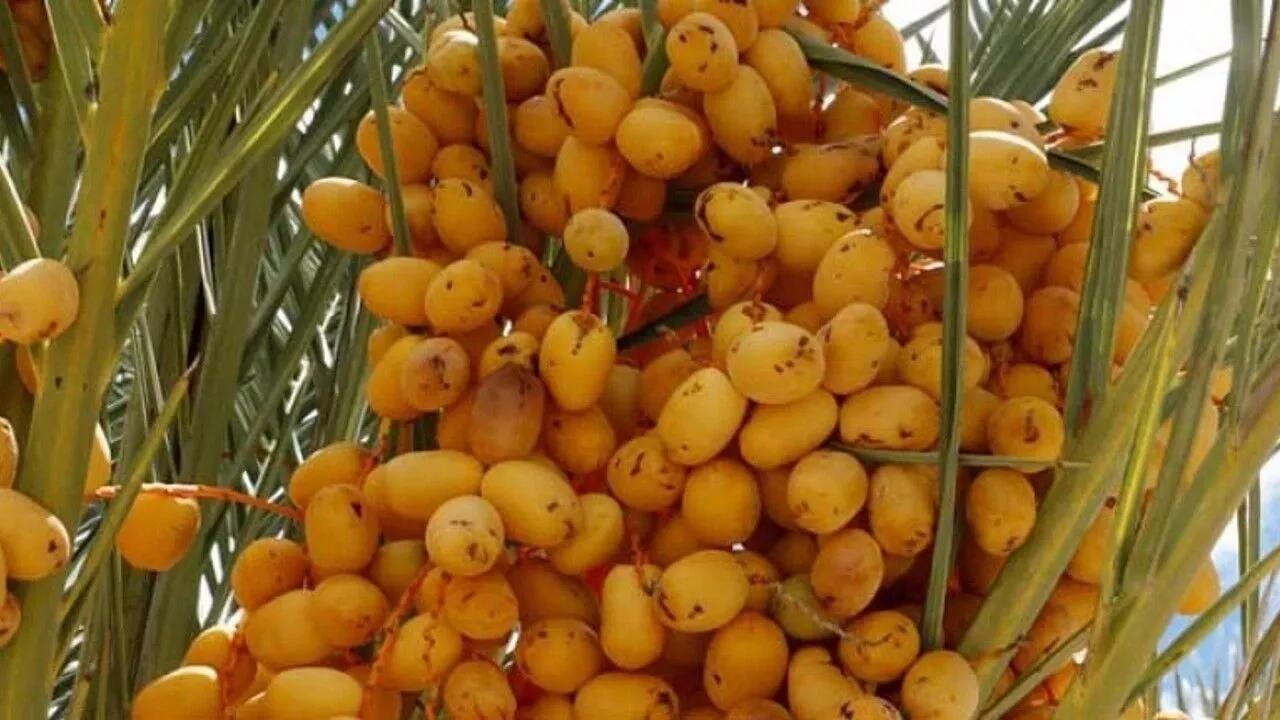
Datça Persimmon
Scientific Name(s) | Phoenix theophrasti Greuter | ||||||||
|---|---|---|---|---|---|---|---|---|---|
Common Names | Crete Date Datça Date | ||||||||
Subspecies | Phoenix theophrasti Greuter subsp. golkoyana Boydak (Gölköy Date) | ||||||||
Natural Range | Crete Island Patara Bodrum-Gölköy Kumluca-Karaöz Datça | ||||||||
Appearance | Typically suckering, clump-forming palm | ||||||||
Size(s) | Average 10-15 metres | ||||||||
Fruit | Small, low-fleshed, edible but not commercial | ||||||||
IUCN Conservation Status | Near Threatened (NT) | ||||||||
Primary Threat | Red Palm Weevil (Rhynchophorus ferrugineus) | ||||||||
Conservation Areas | Within the Datça-Bozburun Special Environmental Protection Area | ||||||||
Datça Date Palm (Phoenix theophrasti Greuter) is a tree species native to the Mediterranean and recognized as one of only two naturally occurring palm species in Europe. It is found naturally along the southwestern coasts of Türkiye and on the island of Crete. In addition to this species, the Bodrum-Gölköy population has been classified as a subspecies, Phoenix theophrasti Greuter subsp. golkoyana Boydak.
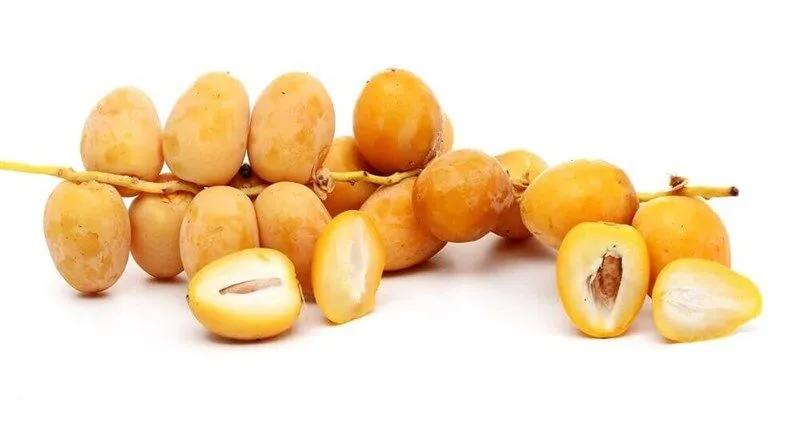
Datça Date Palm (Aydın Ses Newspaper)
Phoenix theophrasti was first described in 1967 by botanist Werner Greuter from the Vai population on the island of Crete. The species is named after the ancient Greek naturalist and philosopher Theophrastus. Initially thought to be a degraded cultivar of Phoenix dactylifera (Common Date Palm), it was later classified as a distinct species by Greuter. Its presence in Türkiye was first documented in 1982 by Melih Boydak and Mehmet Yaka in the Datça Peninsula (locations Eksera Creek and Hurmalıbük). Subsequent discoveries of natural populations followed in 1985 along the Finike Bay–Kumluca–Karaöz coast and in 1990 in Bodrum–Gölköy. Based on morphological and molecular genetic studies, the Gölköy population was classified as a new subspecies, P. theophrasti Greuter subsp. golkoyana Boydak.
The Datça Date Palm typically appears as a clump of stems rather than a single tree, due to its prolific basal and lateral shoots. It reaches an average height of 10–15 meters, though one individual in Datça–Eksera Creek was measured at approximately 17 meters. Stems are single and cylindrical, developing slowly.
Distinguishing Features of P. theophrasti subsp. golkoyana: The subspecies golkoyana differs from the nominate subspecies P. theophrasti in the following characteristics:
Phoenix theophrasti occurs naturally in nine distinct areas on the island of Crete and in southwestern Türkiye, specifically in the Datça Peninsula (Eksera Creek and Hurmalıbük), the Finike Bay–Kumluca–Karaöz coastline, and Patara. The subspecies P. theophrasti subsp. golkoyana is found only in Bodrum–Gölköy. The Datça Date Palm typically grows along seasonal streams up to 300 meters in elevation, on sandy, stony, and rocky coastal areas. The Kumluca–Karaöz population occupies a platform between sea level and 50 meters elevation, usually on soils developed over limestone bedrock. In the Datça Peninsula, it also occurs on serpentine and peridotite substrates. Although the species requires a continuous supply of groundwater, it is tolerant of seasonal droughts. It may grow mixed with pine and maquis vegetation.
The Datça Date Palm is a regional endemic species and is listed as "Near Threatened" (NT) on the IUCN Red List of Threatened Species. It holds special significance as Türkiye’s only native palm species. It has been observed to be resistant to fire and capable of resprouting after fire events.
Seed Germination: Seed sowing is typically carried out in spring and summer. Optimal germination temperatures are above 20°C, particularly in the range of 30–35°C. Esener (1999) recommended soaking non-fresh seeds in water for 24–72 hours prior to sowing. In a study by Çon (2017), under room temperature conditions (16.3°C–22.8°C, average 19.4°C), germination rates for both taxa were between 95% and 96%. Seeds of P. theophrasti subsp. golkoy germinated more quickly (13.9 days on average) than those of P. theophrasti (24.6 days on average). In field trials, seeds of P. theophrasti subsp. golkoy sown in April achieved the highest emergence rate at 83.4%. Seed storage conditions also affect viability; Datça Date Palm seeds stored at +4°C were still able to germinate after four years.
Seedling Development: In a study conducted by Çon (2017), the effects of different growing media on seedling growth characteristics were evaluated.
The main threats to the Datça Date Palm include:
Various measures are being taken to conserve the Datça Date Palm:
The Datça Date Palm and its subspecies are important genetic resources requiring careful conservation and management strategies due to their limited distribution and the threats they face.
Boydak, M. "Datça (Crete) Date Palm (Phoenix theophrasti Greuter) Distribution and a New Subspecies Identified in Bodrum-Gölköy (Phoenix theophrasti Greuter subsp. golkoyana Boydak)." Tabiat ve İnsan 2, no. 193 (2023): 18–38. https://dergipark.org.tr/tr/pub/tabin/issue/75873/1251423.
Doğa Koruma Merkezi. *Datça Hurması (Phoenix theophrasti Greuter) Tanıtım Broşürü.* Publication No: 10. Ankara: Doğa Koruma Merkezi, 2019. https://dkm.org.tr/sites/other/dkm/uploads/yayinlar/brosurler/brosur-10.pdf.
Parlak, S., and M. Yiğit. "Datça (Phoenix theophrasti Greuter) and Gölköy (Phoenix theophrasti Greuter subsp. golkoyana Boydak) Dates: Some Seed Characteristics." Ağaç ve Orman 1, no. 1 (2020): 42–45. https://dergipark.org.tr/en/pub/agacorman/issue/56136/719697.
Ses Gazetesi. "Datça Hurması Nedir? Türkiye’nin Tek Yerli Hurması Hakkında Bilmeniz Gerekenler." Date Published November 28, 2019. https://www.sesgazetesi.com.tr/datca-hurmasi-nedir-turkiyenin-tek-yerli-hurmasi-hakkinda-bilmeniz-gerekenler-18391877. Accessed June 3, 2025.
T.C. Ministry of Environment and Urbanization. *Datça Hurması (Phoenix theophrasti)*. Ankara, 2019. https://webdosya.csb.gov.tr/db/destek/icerikler/datca-hurmasi-12-15-20191128075751.pdf. Accessed June 3, 2025.
Çon, Hediye. *Datça Hurması (Phoenix theophrasti–Phoenix theophrasti subsp. golkoy)’nın Çimlenme ve Fidanlanmanın Farklı Yetiştirme Ortamlarında Büyüme Özelliklerinin Belirlenmesi.* Master's thesis, Akdeniz Üniversitesi, 2017. http://dspace.akdeniz.edu.tr/handle/123456789/3133.

Datça Persimmon
Scientific Name(s) | Phoenix theophrasti Greuter | ||||||||
|---|---|---|---|---|---|---|---|---|---|
Common Names | Crete Date Datça Date | ||||||||
Subspecies | Phoenix theophrasti Greuter subsp. golkoyana Boydak (Gölköy Date) | ||||||||
Natural Range | Crete Island Patara Bodrum-Gölköy Kumluca-Karaöz Datça | ||||||||
Appearance | Typically suckering, clump-forming palm | ||||||||
Size(s) | Average 10-15 metres | ||||||||
Fruit | Small, low-fleshed, edible but not commercial | ||||||||
IUCN Conservation Status | Near Threatened (NT) | ||||||||
Primary Threat | Red Palm Weevil (Rhynchophorus ferrugineus) | ||||||||
Conservation Areas | Within the Datça-Bozburun Special Environmental Protection Area | ||||||||
Discovery and Nomenclature
Morphological Characteristics
Distribution and Habitat
Ecological Importance and Conservation Status
Reproduction and Cultivation Studies
Threats
Conservation Efforts