


This article was automatically translated from the original Turkish version.
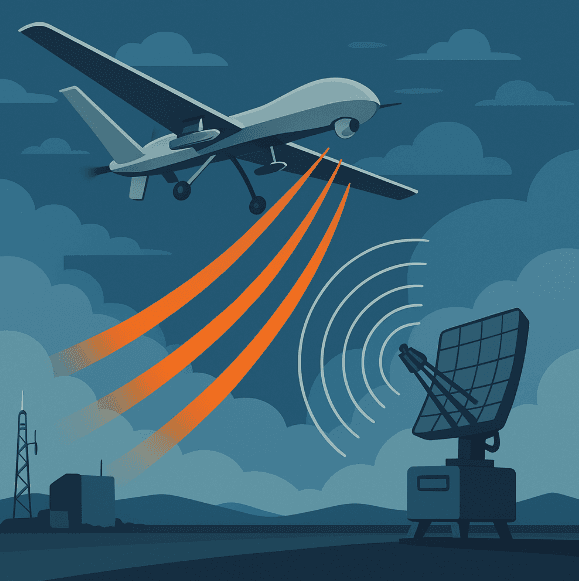
Electronic Mixing System (generated with artificial intelligence)
Main Area | Electronic Warfare (EW) | ||||||||
|---|---|---|---|---|---|---|---|---|---|
Subcategory | Electronic Attack (EA) | ||||||||
Primary Objective | To Jam, Deceive, or Disable Enemy Electronic Systems (Radar, Communications) | ||||||||
Goals | Radar, Radios, GPS Receivers, Data Links, Unmanned Systems | ||||||||
Method(s) | Noise Jamming DRFM Deception Jamming (Spoofing) | ||||||||
Platform(s) | Air Space Sea Land | ||||||||
Electronic Jamming (English: Jamming) is an activity conducted under Electronic Attack (EA), a sub-discipline of Electronic Warfare (EW). Its primary objective is to deliberately disrupt, delay, degrade, or deceive critical enemy functions that rely on the electromagnetic spectrum, such as radar detection, communication, navigation, or command and control. This is achieved by transmitting high-power radio frequency (RF) signals toward the target receiver system—such as a radar or radio—causing it to be unable to distinguish the desired signal from noise or to process incorrect information.
The modern battlefield is heavily dependent on systems operating across the electromagnetic spectrum. Electronic jamming exploits this dependency as a vulnerability, providing strategic and tactical advantages against adversary forces. These systems reduce the enemy’s situational awareness, diminish the effectiveness of weapon systems, and weaken the command and control chain.
The origins of electronic jamming extend back to the earliest periods when the electromagnetic spectrum began to be used for military purposes. Although wiretapping of telegraph lines during World War I are considered early examples of signal intelligence, the first prominent examples of active jamming operations emerged during World War II. During this period, the German Air Force (Luftwaffe) developed a radio-based guidance system to precisely locate targets during night bombing missions. In response, the British developed a countermeasure by transmitting powerful radio signals on the same frequencies used by the Germans. These signals from British transmitters disrupted the German aircraft’s ability to correctly receive their own guidance signals, severely degrading their targeting capability. This event is regarded as one of the first organized and effective electronic jamming operations in history.
Electronic jamming employs different techniques depending on the type and purpose of the target system. Fundamentally, it is divided into two main categories: noise jamming and deception jamming.
Noise Jamming: In this technique, the goal is to transmit a noise signal strong enough to overwhelm the target receiver within its operating frequency band. This renders the receiver “blind” and incapable of performing its function. When used against radar systems, it prevents targets from appearing on the radar display. When used against communication systems, it renders voice or digital transmissions unintelligible.
Deception Jamming: A more complex technique than noise jamming, its aim is not to blind the target system but to mislead it by transmitting false information. For example, when used against a radar system, it can generate numerous false targets to confuse the radar operator or alter the perceived position, speed, or distance of the real target. These techniques are typically implemented using Digital Radio Frequency Memory (DRFM) technology. DRFM-based systems instantly capture incoming enemy radar signals, modify them, and retransmit them to deceive the radar. Systems such as the AREAS 2-NC, developed by ASELSAN, possess this capability.
Jamming of Satellite and Navigation Systems: Global Navigation Satellite Systems (GNSS), such as the Global Positioning System (GPS), transmit low-power signals from satellites to the Earth’s surface. This makes them highly vulnerable to jamming. Powerful transmissions from ground or airborne platforms can easily overpower GPS signals. A more advanced method, known as “spoofing,” deceives GPS receivers by feeding them false signals, causing them to calculate incorrect positions. This poses a serious threat, particularly to precision-guided missiles or unmanned vehicles.
Electronic jamming systems play a critical role across all modern military platforms: land, air, sea, and space.
Air Platforms: Fighter aircraft and unmanned aerial vehicles (UAVs) are equipped with electronic jamming pods to suppress enemy air defense systems (SEAD/DEAD). For example, systems such as the AN/ALQ-257 IVEWS developed by Northrop Grumman for F-16s or the ANTIDOT 2-U developed by ASELSAN for UAVs enhance platform survivability and mission effectiveness by jamming enemy search and tracking radars.
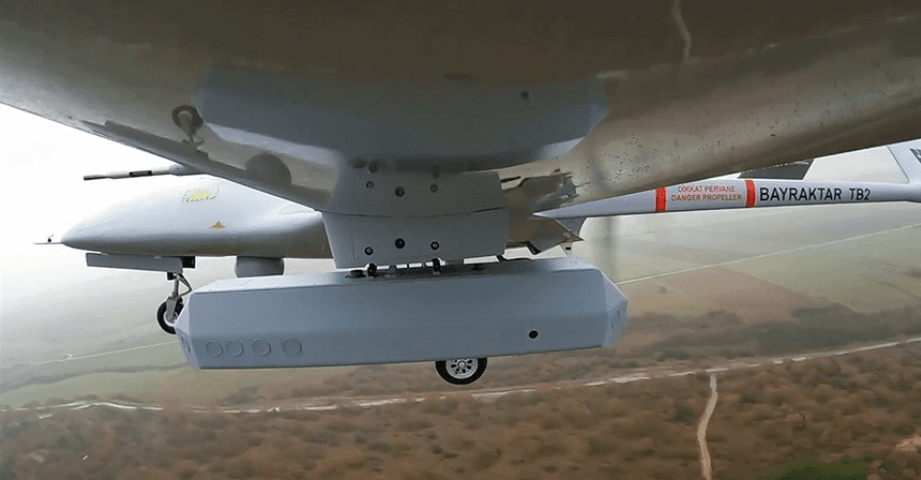
ANTIDOT 2-U manufactured by ASELSAN mounted on the TB2 UAV (AA)
Land Platforms: Mobile systems such as KORAL II and ILGAR, integrated onto truck-based platforms, provide tactical advantages by jamming enemy radar and communication systems over wide areas. Smaller systems like GERGEDAN are used to block radio frequency-triggered devices, protecting military convoys or bases from improvised explosive devices (IEDs).
Sea Platforms: Warships employ advanced electronic warfare suites and decoy launch systems such as KARTACA-N to defend against radar-guided anti-ship missiles. These systems protect the vessel by jamming the incoming missile’s radar or directing it toward false targets.
Space Applications: Space is becoming a new operational domain for electronic warfare. While directly jamming satellites is technically challenging and geopolitically risky, disrupting enemy satellite communication and navigation signals via ground stations or airborne platforms is a common practice.
As technology advances, the importance of electronic jamming systems continues to grow. The proliferation of unmanned systems has made electronic jamming one of the most effective countermeasures against them. Threats such as kamikaze UAVs or drone swarms are typically neutralized by jamming systems referred to as “drone-savers.” These systems disable UAVs by cutting their command and control or GPS links, causing them to lose control or abort their mission.
Electronic jamming is now the key to achieving dominance in the electromagnetic spectrum, recognized as the fifth operational domain alongside traditional land, sea, air, and space domains. Armies with advanced jamming capabilities gain a decisive advantage on the modern battlefield by “blinding and deafening” their adversaries.
Türkiye has developed significant capabilities in electronic jamming systems as part of its defense industry advancements. Systems developed by companies such as ASELSAN, EHSİM, and RST Technology meet the requirements of the Turkish Armed Forces and have also attracted international interest.
KORAL Mobile Electronic Warfare System: KORAL is a land-based, mobile system capable of detecting, identifying, and jamming enemy radars across a wide frequency band. It is considered a strategic asset.
ILGAR Communication Electronic Attack System: ILGAR, which can be integrated onto various platforms, disrupts enemy tactical communications by jamming targets in the V/UHF bands.
GERGEDAN V/UHF Portable Reactive Jammer System: Developed specifically to protect convoys and critical facilities against IED threats, it blocks radio frequency-triggered detonation signals.
ANTIDOT Electronic Warfare Pod: A compact electronic support and attack system designed for integration onto unmanned aerial vehicles. It autonomously detects and jams enemy air defense radars.
AREAS-2NC Radar Electronic Attack System: Primarily designed for maritime platforms, this system provides protection against modern threats using DRFM-based deception and jamming techniques.
ASELSAN. "AREAS-2NC." ASELSAN. Accessed July 19, 2025. https://www.aselsan.com.tr/savunma/urun/3263/areas-2nc.
ASELSAN. "Antidot-2U." ASELSAN. Accessed July 19, 2025. https://www.aselsan.com.tr/savunma/urun/2460/antidot-2u#section-features.
ASELSAN. "Elektronik Harp Sistem Teknolojileri." ASELSAN. Accessed July 19, 2025. https://www.aselsan.com.tr/cozumlerimiz/53/elektronik-harp-sistem-teknolojileri/.
Defence Turk. "Radar ve Elektronik Harp." DefenceTurk. Accessed July 19, 2025. https://www.defenceturk.net/turk-savunma-sanayi-urunleri/radar-ve-elektronik-harp.
Defence Turk. "Türkiye’nin Tercih Ettiği Elektronik Harp Sisteminin Testleri Sürüyor." DefenceTurk. Accessed July 19, 2025. https://www.defenceturk.net/turkiyenin-tercih-ettigi-elektronik-harp-sisteminin-testleri-suruyor.
RST Teknoloji. "Elektronik Harp Sistemleri." RST Teknoloji. Accessed July 19, 2025. https://rstteknoloji.com.tr/tr/project/elektronik-harp-sistemleri/.
STM ThinkTech. "Uydudan Elektronik Harp Uygulamaları: Gelişmeler ve Gelecek Öngörüleri." *STM ThinkTech*. Accessed July 19, 2025. https://thinktech.stm.com.tr/tr/uydudan-elektronik-harp-uygulamalari-gelismeler-ve-gelecek-ongoruleri.
SavunmaTR. "Elektronik Harp Nedir?" SavunmaTR. Accessed July 19, 2025. https://www.savunmatr.com/elektronik-harp-nedir/.

Electronic Mixing System (generated with artificial intelligence)
Main Area | Electronic Warfare (EW) | ||||||||
|---|---|---|---|---|---|---|---|---|---|
Subcategory | Electronic Attack (EA) | ||||||||
Primary Objective | To Jam, Deceive, or Disable Enemy Electronic Systems (Radar, Communications) | ||||||||
Goals | Radar, Radios, GPS Receivers, Data Links, Unmanned Systems | ||||||||
Method(s) | Noise Jamming DRFM Deception Jamming (Spoofing) | ||||||||
Platform(s) | Air Space Sea Land | ||||||||
No Discussion Added Yet
Start discussion for "Electronic Mixing Systems" article
Historical Development
Basic Principles and Techniques
Application Areas and Platforms
Role and Importance in Modern Warfare
Electronic Jamming Systems Developed in Türkiye