


This article was automatically translated from the original Turkish version.
Ethnobotany is a scientific discipline that studies the mutual relationships between humans and plants, extending from the evolutionary process that began in prehistory to the present day. In a narrower sense, it investigates how local communities in a specific geographic region utilize naturally occurring plants to meet various needs such as food, medicine, fuel, dye, and shelter, as well as the impact of these uses on the plants themselves. This discipline is interdisciplinary, integrating fields such as anthropology, botany, archaeology, pharmacology, ecology, and folklore. The primary objective of its research is to document local plant names, uses, preparation methods, and application techniques, thereby laying the groundwork for their scientific evaluation.
The term “ethnobotany” was first defined in 1895 by biology professor John W. Harshberger as “the use of plants by local populations.” Harshberger’s work titled “The Purposes of Ethnobotany” is recognized as the first publication to use this term. Over time, the definition has evolved; in 1993, Yen redefined it as “all types of reciprocal relationships between plants and indigenous peoples.” Today, ethnobotany encompasses not only the ways in which plants are used but also the ecological conditions of the environments in which these plants grow.
The scope of ethnobotanical research is broad and primarily includes the following areas:
The origins of human-plant relationships are as ancient as human history itself. The discovery of plant remains such as chamomile, rosemary, and mallow in a Neanderthal burial site in Shanidar Cave, northern Iraq, dated to approximately 60,000 years ago, is considered one of the earliest archaeological evidences of this relationship. These findings suggest that people of that era began distinguishing plants as sources of food and medicine.
The history of plant use in Anatolia also extends far back in time. Recipe formulas found on Hittite tablets serve as evidence of this deep-rooted tradition. Names such as “haššika” (poppy) and “zertun” (olive) mentioned in these texts show similarities to contemporary local names. During the Seljuk period, Ibn Baytar’s (1197–1248) work “Al-Mufradat” provided detailed information on medicinal plants in Anatolia and served as a source for Ottoman medical texts. Information from the Ottoman Empire period is found in the writings of travelers such as Ibn Battuta and Evliya Çelebi.
Scientific research in ethnobotany in Türkiye began in the late 19th century, with pharmacists conducting the earliest studies. During the Republican era, Assoc. Prof. Dr. Alfred Heilbronn initiated modern pharmacognosy research in Türkiye.
Ethnobotanical research is conducted following a specific methodology, typically involving the following steps:
The foundation of the research consists of interviews with local communities. Researchers collect data through direct interviews or surveys in selected settlement areas such as villages or towns. Information recorded includes local plant names, the plant parts used (roots, leaves, flowers, etc.), purposes of use, preparation methods, and application techniques. Interviewees are selected from diverse segments of the community—including the elderly, women, men, children, and shepherds—since each group may possess specialized knowledge about different plants.
Plants mentioned during interviews are collected from the field accompanied by the informant. Collected specimens are pressed and dried according to herbarium techniques and labeled. Their scientific identification is typically carried out using foundational floristic works such as “Flora of Turkey and the East Aegean Islands.” Identified specimens are stored in university herbaria.
Collected data are compared with existing scientific literature to determine whether a particular plant use has been previously documented. In recent years, quantitative ethnobotanical studies employing statistical methods to analyze data have become increasingly common.
The ways in which the people of Anatolia utilize plants are highly diverse, encompassing a broad spectrum from basic needs to cultural practices.
Many wild plants are consumed as food by local communities. These plants are eaten raw in salads, cooked in meals, dried, or pickled for winter storage. For example, the stems of Gundelia tournefortii (kenger) are used in cooking, while the fresh leaves of species such as Capsella bursa-pastoris (shepherd’s purse) and Malva neglecta (common mallow) are consumed as salads or vegetables. Species of Thymus (thyme) and Mentha (mint) are widely used as spices.

Capsella bursa-pastoris (Shepherd’s Purse) (Pexels)
The medicinal use of plants is one of the most extensively studied areas in ethnobotany. Local communities have traditionally relied on knowledge passed down through generations to treat ailments such as gastrointestinal disorders, respiratory illnesses, rheumatic pain, wounds, and various skin conditions.
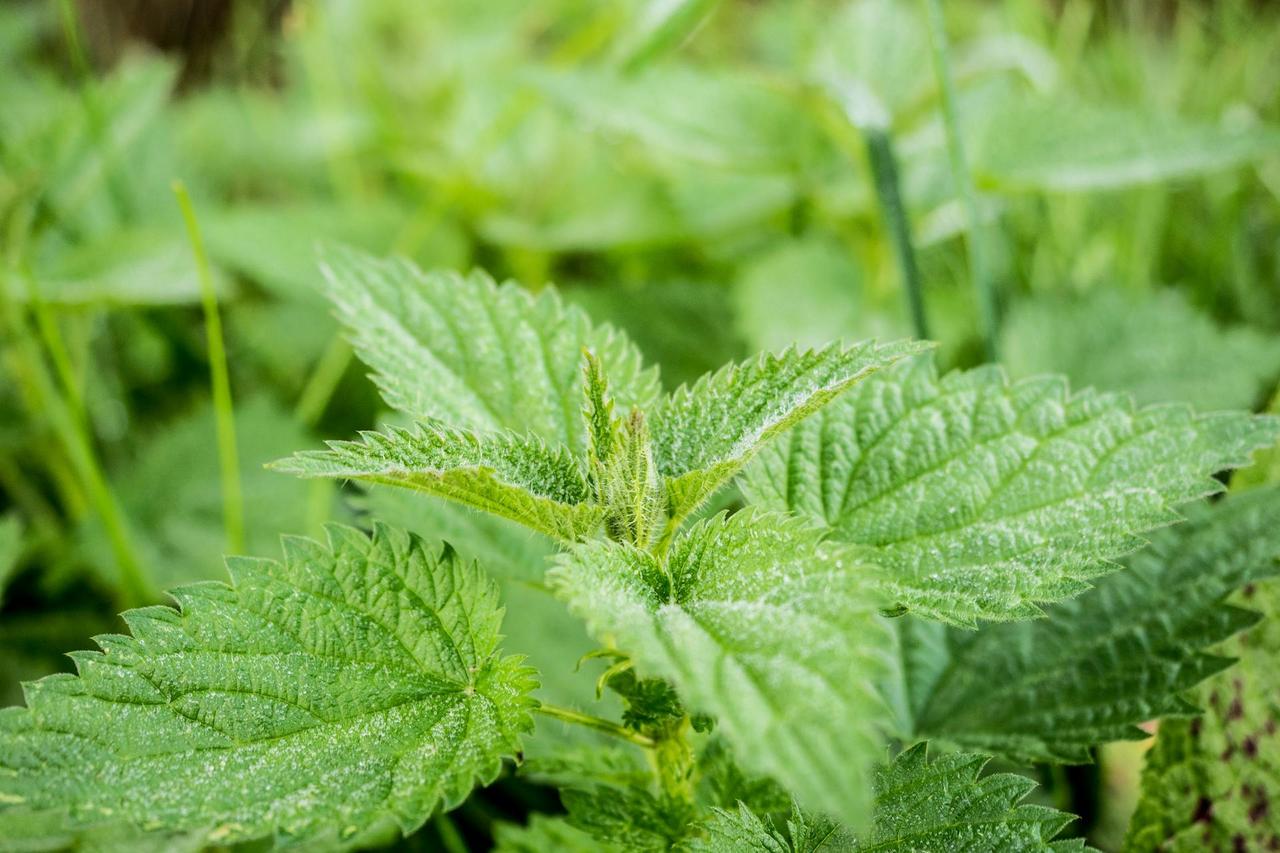
Urtica dioica (Stinging Nettle) (Pexels)
In rural areas, woody parts or roots of certain plants are used as fuel.

Phlomis (Çalba) (Pexels)
Before the widespread use of synthetic dyes, plants served as the primary source for dyeing wool and fabrics. Although this tradition has largely declined, it persists in some regions.

Hypericum (Kantaron) (Pexels)
Türkiye, with its rich flora comprising approximately 12,000 plant taxa and over 3,750 endemic species, holds immense potential for ethnobotanical research. Studies conducted in Türkiye are of great value in documenting this richness and preserving cultural heritage for future generations.
A study covering the period from 1928 to 1997 found that the highest number of ethnobotanical studies were carried out in the Black Sea and Central Anatolia regions, with human health and food being the most frequently investigated uses. This compilation noted that no studies had been conducted during that period in the provinces of Batman, Çankırı, Kırıkkale, Mardin, Nevşehir, Sakarya, and Şırnak.
When examining studies conducted between 1998 and 2008, an increase in the number of studies across the country was observed. During this period, the highest number of studies again occurred in Central Anatolia, while the fewest were conducted in Southeastern Anatolia. According to the most recent compilations, Batman and Kırıkkale provinces continue to remain unexplored from an ethnobotanical perspective.
To enhance the scientific knowledge in this field, institutions such as the Traditional Medicines Research and Application Center (GİLAM) have been established in Türkiye, and projects such as the Turkish Ethnobotanical Database (TEBVET) have been implemented. Such initiatives play a critical role in consolidating scattered data into centralized repositories accessible to researchers and in safeguarding cultural knowledge.
Warning: The content presented here is intended solely for general encyclopedic informational purposes. The information provided should not be used for diagnosis, treatment, or medical advice. Before making any decisions regarding health matters, you must consult a physician or qualified healthcare professional. The author of this article and KÜRE Encyclopedia assume no responsibility for any consequences arising from the use of this information for diagnostic or therapeutic purposes.
Akan, H., Mehmet Mustafa Korkut, and Mehmet Maruf Balos. "Arat Dağı ve çevresinde (Birecik, Şanlıurfa) etnobotanik bir araştırma." *Fırat Üniversitesi Fen ve Mühendislik Bilimleri Dergisi* 20, no. 1 (2008): 67–81. Accessed June 27, 2025. https://www.researchgate.net/publication/284686809_An_ethnobotanical_study_around_Arat_Mountain_and_its_surroundings_Birecik_Sanliurfa.
Elçi, Burcu, and Sadık Erik. "Güdül Ankara ve çevresinin etnobotanik özellikleri." *Hacettepe University Journal of the Faculty of Pharmacy* 2 (2006): 57–64. Accessed June 27, 2025. https://dergipark.org.tr/en/pub/hujpharm/issue/49853/639200.
Kendir, Gülsen, and Ayşegül Güvenç. "Etnobotanik ve Türkiye’de yapılmış etnobotanik çalışmalara genel bir bakış." *Hacettepe University Journal of the Faculty of Pharmacy* 1 (2010): 49–80. Accessed June 27, 2025. https://dergipark.org.tr/en/pub/hujpharm/issue/49839/639119.
Pexels. "Hypericum (kantaron) görselleri." Accessed June 27, 2025. https://www.pexels.com/tr-tr/arama/Hypericum%20(kantaron)/.
Pexels. “Doğa içinde fabrika tesis ve bitki görüntüsü.” Accessed June 27, 2025. https://www.pexels.com/tr-tr/fotograf/doga-fabrika-tesis-bitki-20826382/.
Pexels. “Doğal bir hypericum bitkisi görseli.” Accessed June 27, 2025. https://www.pexels.com/tr-tr/fotograf/32390888/.
Pexels. “Nane yaprağı.” Accessed June 27, 2025. https://www.pexels.com/tr-tr/fotograf/nane-yapragi-40742/.
Pexels. “Yağmur damlalarıyla sarı hypericum çiçeğinin yakın çekimi.” Accessed June 27, 2025. https://www.pexels.com/tr-tr/fotograf/yagmur-damlalariyla-sari-hypericum-ciceginin-yakin-cekimi-32674726/.
Saya, Ömer, İ. Ümit Yapıcı, and Hülya Hoşgören. "Kurtalan (Siirt) ilçesinin etnobotanik özellikleri." *Dicle Üniversitesi Ziya Gökalp Eğitim Fakültesi Dergisi* 12 (2009): 191–196. Accessed June 27, 2025. https://dergipark.org.tr/en/pub/zgefd/issue/47955/606759.
Türkan, Ş., H. Malyer, S. Öz Aydın, and G. Tümen. "Ordu ili ve çevresinde yetişen bazı bitkilerin etnobotanik özellikleri." *Süleyman Demirel Üniversitesi Fen Bilimleri Enstitüsü Dergisi* 10, no. 2 (2006). Accessed June 27, 2025. https://dergipark.org.tr/en/download/article-file/193668.

Definition and Scope
Historical Development
Theoretical Approach and Methodology
Fieldwork and Data Collection
Plant Specimen Collection and Identification
Data Analysis and Evaluation
Application Areas
Food and Spices
Folk Medicine
Fuel and Fodder
Dye
Other Uses
Ethnobotanical Research in Türkiye