


This article was automatically translated from the original Turkish version.
+2 More
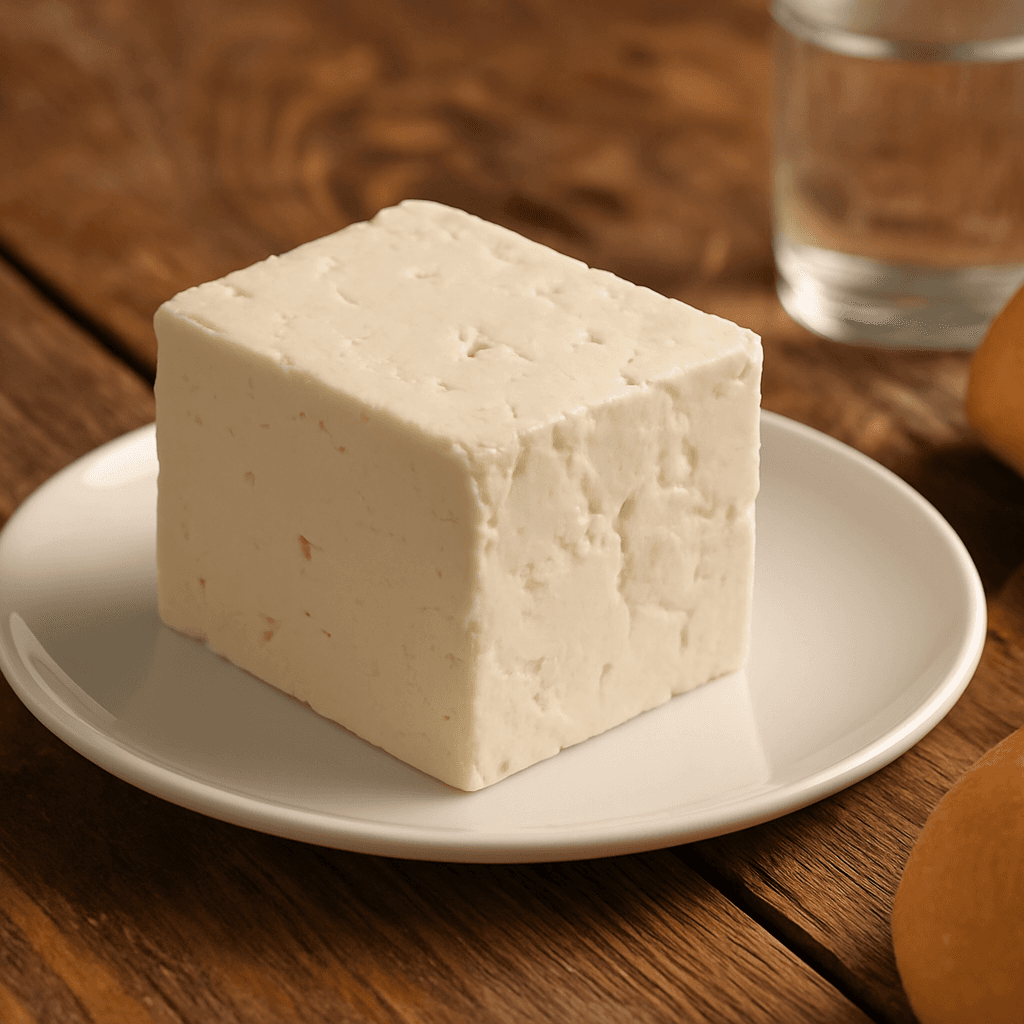
Ezine Cheese
Type of Geographical İndication | Place of Origin | ||||||||
|---|---|---|---|---|---|---|---|---|---|
File Number | C2006/004 | ||||||||
Application Date | 2006-02-24 | ||||||||
Registration Number | 86 | ||||||||
Registration Date | 2007-04-10 | ||||||||
Product / Product Group(s) | Cheeses | ||||||||
Province(s) | Çanakkale | ||||||||
Applicant/Registrant(s) | Development and Promotion of Ezine Cheese and Cheesemakers Association for the Protection | ||||||||
Status | Registered | ||||||||
Ezine Cheese is a cheese type registered with a geographical indication by the Turkish Patent and Trademark Office. This means that the production, processing, and all other operations related to the product must take place within a defined geographical boundary.
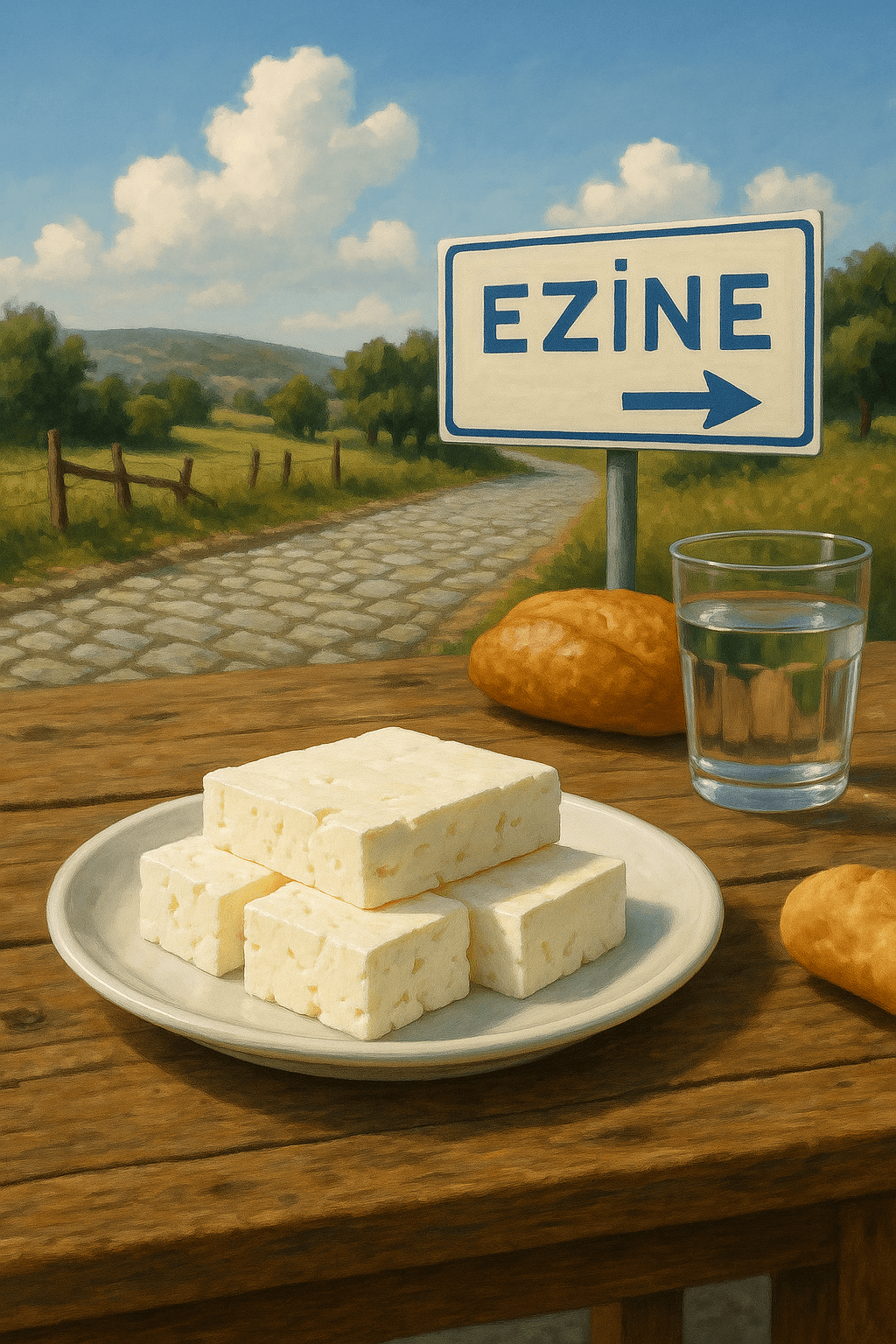
Ezine Cheese. (Generated by artificial intelligence.)
Ezine Cheese is one of the 26 cheese varieties in Türkiye with a registered geographical indication. The Turkish Patent and Trademark Office is an affiliated body of the Ministry of Industry and Technology. The geographical boundary of Ezine Cheese includes the districts of Ezine, Bayramiç, and Ayvacık in Çanakkale Province, as well as the villages of Şerbetli, Etili, Ahlatlıburun, Küçüklü, Alibeyköy, and Söğütalan under the district of Çan, and the villages of Karacaören, Kurşunlu, Şerbetli, and Kirazlı under the central district. The natural endemic vegetation, climate, and water sources in this production area play a crucial role in feeding the animals that impart unique characteristics to the cheese. In particular, Kaz Dağı contributes abundant rainfall, rich vegetation, and high oxygen levels, enabling the growth of hundreds of aromatic plants—such as thyme, wild marjoram, sage, woolly mint, oregano, and others—that impart flavor and aroma to the milk.
Ezine Cheese is produced by blending milk from sheep, goats, and cows raised on natural resources within the production area, in specific proportions according to the season. The milk ratios are as follows: sheep milk 35–45%, goat milk at least 40%, and cow milk no more than 25%. The milk used in production contains no antibiotics or acid-inhibiting substances, and no processes that alter its composition—such as fat removal or water addition—are permitted. The animal breeds used are Tahirova, Sakız, Dağlıç, and Sakız+Dağlıç crossbred sheep; Black Pied (Holstein) cows; and Karakeçi (hairy goat) and Turkish Saanen goats.
Ezine Cheese has a pale yellowish-white color and a medium firmness with a non-brittle structure. It contains a small number of fine pores within its mass. The flavor and aroma of the cheese derive from the milk composition, the local vegetation, and the production method. It exhibits “creamy” (from milk fat) and “cooked milk” (from thermal treatment) aromas. Additionally, the taste and aroma profiles of sheep, goat, and cow milk are transferred to the final product. Enzymatic, chemical, and microbial reactions produce characteristic fundamental tastes such as “salty,” “sour,” and “slightly sweet.” Only sea salt is used in the production of Ezine Cheese. The use of sea salt prevents the cheese from melting or disintegrating and facilitates the easy release of moisture during ripening. Only natural rennet is used as the coagulating agent. No food additives other than natural rennet and sea salt are added to the milk mixture.
The production of Ezine Cheese typically begins in March, the peak season for sheep and goat milk. The milk intended for processing is pasteurized at 67°C for 30 minutes. Coagulation is achieved by adding rennet enzyme at 32–34°C. No commercial cultures are used in production. After the curd forms, it is cut and then separated from the whey by natural drainage followed by pressing using a cendere cloth to form the teleme. The resulting teleme is cut into molds and left to mature in a brine solution of sea salt to develop the desired taste and aroma. The cheeses removed from the brine are arranged in tins, sprinkled with dry salt, and allowed to rest. The tins are then filled with cheese, covered with brine, and sealed tightly to exclude air. The cheeses are ripened for at least eight months in cold storage rooms maintained at 2–4°C to develop their characteristic flavor and aroma. The ripening process is visually monitored by opening the tins. The ripening period is indicated on the product label in months. Ezine Cheese may be sold in brined tins or vacuum-packed forms according to customer demand.
The compliance of Ezine Cheese with its geographical indication is monitored by an inspection body composed of experts from the Çanakkale Chamber of Commerce, the Çanakkale Provincial Directorate of Agriculture and Forestry, and the Department of Food Engineering at Çanakkale Onsekiz Mart University, under the coordination of the Ezine Cheese and Dairy Farmers Protection Association. Inspections are conducted annually on a regular basis and may also be carried out in response to complaints, suspicions, or specific needs. Inspection criteria include the geographical origin of the milk, the proportions of milk types used in production, animal breeds, the use of sea salt and natural rennet, production stages, ripening duration, the physical and chemical properties of the product, the acquired flavors, packaging, and the correct use of the geographical indication name, emblem, and labeling format. Inspection reports are submitted annually to the Turkish Patent and Trademark Office.
T.C. Ministry of Agriculture and Forestry. "Coğrafi İşaret Tesciliyle Taçlanan Peynirlerimiz." Accessed May 22, 2025. http://www.turktarim.gov.tr/Haber/684/cografi-isaret-tesciliyle-taclanan-peynirlerimiz#:~:text=Bunlar%3B%20Antakya%20carra%20peyniri%2C%20Antakya,göğermiş%20peynir)%2C%20Ezine%20peyniri%2C
Turkish Patent and Trademark Office. "Ezine Peyniri – Coğrafi İşaret Teknik Şartnamesi (PDF)." Date Published: November 12, 2021. Accessed May 22, 2025. https://ci.turkpatent.gov.tr/Files/GeographicalSigns/616998bb-ab63-4835-809b-f8a963661240.pdf
Turkish Patent and Trademark Office. "Ezine Peyniri" Geographical Indication Detail. Accessed May 22, 2025.

Ezine Cheese
Type of Geographical İndication | Place of Origin | ||||||||
|---|---|---|---|---|---|---|---|---|---|
File Number | C2006/004 | ||||||||
Application Date | 2006-02-24 | ||||||||
Registration Number | 86 | ||||||||
Registration Date | 2007-04-10 | ||||||||
Product / Product Group(s) | Cheeses | ||||||||
Province(s) | Çanakkale | ||||||||
Applicant/Registrant(s) | Development and Promotion of Ezine Cheese and Cheesemakers Association for the Protection | ||||||||
Status | Registered | ||||||||
Geographical Boundary and Regional Impact
Product Definition and Distinguishing Characteristics
Chemical Properties of the Product
Production Method
Inspection