
This article was automatically translated from the original Turkish version.
Halepçe Massacre, on 16 March 1988, was a chemical weapons attack carried out in the town of Halepçe, located in northeastern Iraq near the border with Iran. During the final phase of the Iran-Iraq War, forces loyal to the Iraqi Baath regime launched bombs containing chemical agents over the town and its surroundings. As a result of the attack, approximately 5,000 civilians lost their lives within a short time, and thousands were injured.
Halepçe is a settlement located in northeastern Iraq, southeast of Suleymaniye, and 14 kilometers from the Iranian border. It is 240 kilometers from the capital Baghdad, 260 kilometers from Erbil, and 76 kilometers from Suleymaniye. To the east and south lies Iran, to the north and northeast lies the Suleymaniye province, and to the southwest lies the Hanekin district of Diyala province. Its southern boundary is formed by the Sirvan River; the Havraman, Şnruwe, and Balambo plateaus lie to the southeast. Mountains ranging from 3 to 5 kilometers wide encircle Halepçe to the east and south in a semicircular formation. The Havraman and Süren mountains extend 30 kilometers to the northeast. The area measures between 1,523 and 1,600 square kilometers. 【1】 The town lies at an elevation of 260 meters above sea level and receives an annual rainfall of 750 millimeters. The region experiences a climate similar to the Mediterranean type, with cold and rainy winters and hot, dry summers. 【2】

Halepçe Massacre Infographic (Anadolu Ajansı)
The origin of the town’s name is subject to three different explanations in linguistics and history. The first suggests that the name derives from “Halap,” meaning “Little Aleppo,” due to the region’s strategic and commercial significance. The second explanation attributes the name to the Persian word “Acbaca,” meaning “strange place,” referencing the region’s natural beauty and climate. The third explanation links the name to the local plum variety known as “Heluje,” which over time evolved into “Heluçe” and then “Halepçe.” 【3】
Halepçe came under Ottoman administration after the 1514 Battle of Chaldiran and was incorporated into the Şehrizor province. Rebuilt in the 1650s by the Hama Çavuş family, the town was granted district status on 24 November 1869 by a special decree of Baghdad Governor Midhat Pasha. The first district governor appointed was Osman Pasha, leader of the Caf tribe. In Ottoman official records, the town was referred to as “Gülanber” or “Alabca.” After World War I, Halepçe became part of the British Mandate and later the Kingdom of Iraq. On 22 September 1999, the Iraqi Kurdistan Regional Parliament declared Halepçe a province. On 13 March 2014, its administrative status was elevated to the fourth province of Iraqi Kurdistan. On 20 March 2021, the Iraqi Parliament decided on the necessary administrative steps to formalize its provincial status. Due to administrative limitations, Halepçe participates in Iraqi general elections as part of the Suleymaniye electoral district. 【4】
The region’s population is predominantly composed of Sunni Kurds and Kakais. The Sorani and Hewrami dialects of Kurdish are spoken in the town. The demographic structure includes the Nevroli, Haruni, Zerduyi, and Şemerani tribes under the Caf tribal umbrella, as well as the Hevrami, Kelhur, and Tavegozi communities. In past decades, the town also hosted Christian and Zoroastrian populations, as well as a Jewish community numbering around a hundred households. A Jewish neighborhood known as “Culekekan” existed within the town. The Jewish population emigrated to Israel following the Iraqi Parliament’s 3 March 1951 law stripping them of citizenship. Politically, the Kurdistan Islamic Movement, known locally as Bzutneve, operated as a political and armed organization from 1987. 【5】
Halepçe’s population was recorded as 81,749 in the 1957 census. Prior to the 1988 chemical attack, the town’s population ranged between 40,000 and 60,000. According to 2018 data, the population had risen to 245,700. Administratively, 84.9% of the population resides in the urban center, while 15.1% lives in rural areas. This disproportionate distribution is primarily due to the Baath regime’s “urbanization” program during the 1980s. Under its security policies, the regime constructed new settlements such as Halepçe Housing, New Halepçe, and Barike to the west of the town. Rural residents were forcibly relocated to these new centers. After the establishment of the Iraqi Kurdistan Regional Government in 1992, incentives for returning to villages were not provided. 【6】
Tensions in the region escalated following the 1979 Islamic Revolution in Iran, due to border disputes. The Iraqi regime unilaterally abrogated the 1975 Algiers Agreement on 17 September 1979. After reciprocal attacks along the border, the Iran-Iraq War effectively began in 1980. This eight-year conflict unfolded in three distinct military phases and inflicted severe damage on both countries’ military, economic, and demographic infrastructure.

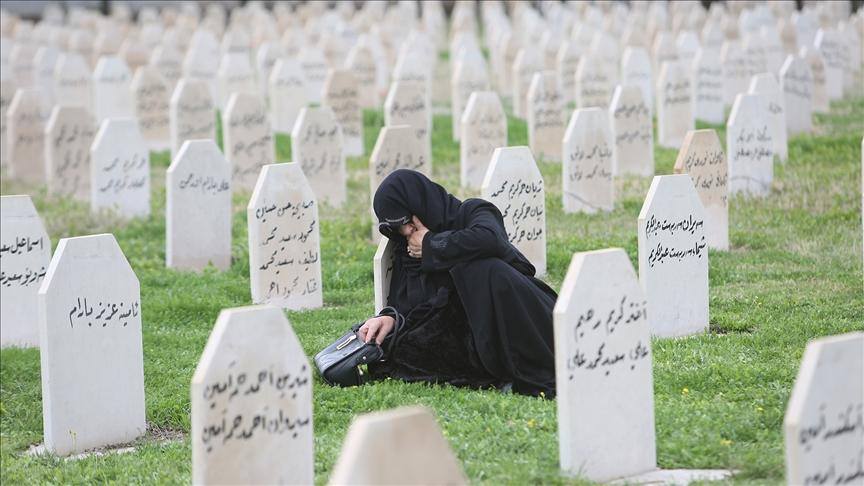
Halepçe Memorial Graveyard (Anadolu Ajansı)
Throughout the war, political and military groups operating in northern Iraq—including the Kurdistan Democratic Party (KDP), the Patriotic Union of Kurdistan (PUK), the Kurdistan Socialist Party (KSP), and the Kurdistan Islamic Movement (KIM)—switched allegiances between the warring states. Political, administrative, and economic negotiations between the Iraqi regime and the PUK, which began in 1983, lasted 18 months and ended in failure. During the same period, armed groups such as the Iraqi Islamic Revolution Supreme Council and the Badr Brigades, backed by Iran, were formed to oppose the Baghdad government. 【7】
Following the collapse of negotiations between Kurdish political groups and the Iraqi regime, the PUK entered into a military and political alliance with Iran. In January 1986, a PUK delegation visited the Ramazan Headquarters in Kermanshah, Iran, and signed a military agreement. Under this agreement, the parties committed to conducting joint military operations against the Iraqi regime, refraining from unilateral peace decisions, and providing military logistics. With Iranian mediation, competition between the KDP and PUK ended in 1987, leading to the formation of a united front. 【8】
Three-phase military planning meetings were held to capture Halepçe and its surroundings from Iraqi control. The first meeting took place at the Ramazan Headquarters in Kermanshah; the third occurred in the town of Pave between the PUK and KIM. During these meetings, the operational assignments of participating military units were determined. PUK forces were deployed in the Havraman, Şnruwe Mountain, and Sirvan areas; KDP forces were assigned to the Hurmal and Mla Hurdi regions; KSP forces were stationed on the Suren and Şarezur mountains; and KIM forces were positioned along logistical support lines. 【9】
Extensive intelligence and engineering activities were conducted prior to the military operation. Detailed data on Iraqi troop numbers, weapon capacities, deployment points, and psychological conditions were gathered and mapped. During the day, disguised engineering vehicles constructed secret access routes through mountainous terrain at night. Landmines previously laid along the border regions were cleared by joint expert teams during nighttime operations to open advance routes.
Halepçe was targeted by four main military headquarters under Iran’s ground forces: Quds, Fateh, Kazim, and Ramazan. Six regiments were assigned to the Quds headquarters, seven to the Fateh headquarters, and six to the Kazim headquarters. In addition to these regular military units, 515 personnel from the PUK, 400 from the KDP, 300 from the KSP, and approximately 180 from the KIM were integrated into the operation. Three Iranian officers were attached to each military commander to bring command and control under Iranian authority. 【10】
In the event of successful military operations, an eight-article protocol was signed between the parties regarding the administration of the captured territory. According to the protocol, control of the seized areas would be handed over to Kurdish forces; the Iranian army would supply food, fuel, and electricity from Pave. Heavy weapons would be handed over to the Iranian army, while light weapons would be given to Kurdish forces. Arab prisoners of war would be transferred to Iran, while Kurdish prisoners would be handed over to the armed parties, and these groups would not conduct independent military operations without Iranian army approval.
On 13 March 1988, Iranian artillery units began striking Iraqi military bases on high ground around Halepçe, initiating the military operations known as Victory-7, Beit al-Maqdis-4, and Val-Fajr 10. As fighting intensified, Iraqi helicopters dropped leaflets on 16 March 1988 warning civilians that a chemical attack was imminent and urging them to evacuate the area. The exodus of civilians attempting to flee was blocked by Iranian and allied armed forces, halting the evacuation process. 【11】
On 15 March 1988, the fifteenth day of the military campaign, Halepçe was fully captured by Iranian forces and allied armed groups. The capture of Halepçe provided Iran with a critical strategic advantage, as it was located just seven miles from Derbendihan Lake, a major source of water for the capital Baghdad. After the occupation, administrative tensions and conflicts arose between Iranian military officers and allied commanders over command, control, and weapons management. 【12】
Immediately after the capture of the city, the Iranian administration took steps to alter its administrative and demographic structure. An Iranian official named Razayi was appointed as district governor; street names and official institutions were translated from Kurdish to Persian. All state-owned equipment, infrastructure, and materials were seized and transported to Iran. The local population was deprived of humanitarian aid and pressured to migrate to Iran. The complete takeover of the city by Iranian forces and the dismantling of its administrative structure paved the way for the Iraqi regime’s decision to launch a chemical attack on the area.
The chemical attack on Halepçe on 16 March 1988 occurred during the final phase of the eight-year Iran-Iraq War. This military operation was planned as the final stage of the Iraqi Baath regime’s Anfal Campaign against the Kurds. The primary military justification was retaliation for the joint military operation by the PUK and Iranian Revolutionary Guards that had seized control of Halepçe. The Baghdad regime aimed to expel Iranian forces from the vicinity of Derbendihan Lake, which supplied water to the capital, and to punish armed groups collaborating with Iran and the local population.

Halepçe Massacre Infographic (Generated by Artificial Intelligence.)
The order for the chemical bombardment was issued directly by then-Iraqi President Saddam Hussein. The military and operational command was delegated to Ali Hasan al-Majid, General Secretary of the Baath Party’s Northern Bureau. Through special administrative decrees, al-Majid was granted presidential authority over northern Iraq and personally coordinated the use of banned weapons against civilian and military targets. Due to his direct role in authorizing chemical weapons use against civilians, al-Majid became known as “Chemical Ali.” Under his absolute command, Iraqi warplanes launched massive quantities of chemical weapons targeting Halepçe’s district center and surrounding settlements. 【13】
The chemical bombardment resulted in catastrophic demographic consequences and massive civilian casualties. Approximately 5,000 people, mostly defenseless women and children, died at the scene due to the toxic gases used. Between 7,000 and 10,000 civilians were seriously injured or permanently disabled as a result of the attack. The sudden nature of the assault and the complete absence of protective shelters or equipment among the population maximized the statistical scale of casualties. Thousands of survivors who escaped the attack fled on foot or by vehicle toward the Iranian border, seeking refuge from the lethal effects of the chemical clouds and advancing ground operations. 【14】
During the military operation on 16 March 1988, Iraqi air forces deployed various chemical weapons and destructive explosives against Halepçe. Under the command of Ali Hasan al-Majid, this large-scale attack involved the use of nerve agents such as Mustard Gas (Yperite), Sarin, Tabun, and Hydrogen Cyanide (HCN), as well as Napalm and phosphorus bombs.【15】 These chemical weapons possess highly specific biological and chemical formulations designed to cause lasting physical damage to the human body, living physiology, and the natural environment. The bombs deployed contained special propellers designed to mix different chemical agents just before impact with the ground. 【16】

An Unexploded Bomb After the Attack (Anadolu Ajansı)
One of the primary weapons used was Mustard Gas, also known as “yellow rain,” with the scientific symbol (vğ). Mustard Gas, classified among lethal agents, is seven times heavier than air, causing it to settle on the ground rather than remain airborne, forming a thick layer on the soil. This chemical penetrates ordinary clothing and hard plastics, causing large blisters and severe burns on human skin. It adheres to the eye’s lower layer, leading to blindness. Slightly soluble in water and faintly odorous, Mustard Gas, upon penetrating the soil, forms small bubbles that slow evaporation and remains an environmental threat for many years. If ingested, it damages the chest, waist, and eyes, destroys blood-forming cells, and completely disrupts the digestive system. 【17】
Another chemical agent used extensively in the massacre was Sarin gas, which can exist in both liquid and gaseous forms and emits a sweet apple-like odor. Its scientific name is isopropyl methylphosphonofluoridate, with the chemical formula (CH3)2CHO(CH3)FPO. This gas boils at 147 degrees Celsius and freezes at -56 degrees Celsius. It directly affects the human bloodstream and nervous system, causing immediate death within seconds of entering the body through the nose or skin. It rapidly enters the bloodstream via the respiratory tract and eyes, instantly incapacitating unprotected individuals.【18】
Tabun gas, used in the attack, is a colorless or light brown chemical mixture that emits a fish-like odor. Scientifically known as dimethylphosphoramidocyanidic acid, it has a flammability capacity of 172%. It dissolves rapidly in solvents. When inhaled through the nose, it produces a highly toxic effect, paralyzing the human body.【19】
Hydrogen Cyanide (HCN) gas was also actively deployed among the lethal weapons. This synthetic compound, converted from a weak liquid to a gas, emits a sharp bitter almond odor. Stored in bottles or amber containers, it exhibits highly toxic and rapidly flammable properties when inhaled through the mouth or nose. When present in the air at concentrations between 4.1% and 6%, it triggers an explosive reaction, causing massive destruction. 【20】
In addition to toxic chemical gases, Napalm and phosphorus bombs with high destructive power were also launched at strategic and civilian targets in the city. Napalm is produced by mixing aluminum soaps, oleic acid, naphthenic acid, and coconut oil in gasoline. This gelatinous explosive mixture is stabilized with alpha-naphthol to reduce its reactivity and ignites rapidly, generating intense heat. The burning fragments of these bombs adhere directly to the bodies of those they strike and continue burning until they penetrate the skin, causing deep, fatal wounds. 【21】
For two days prior to the chemical attack, the city was subjected to continuous conventional aerial bombardment. The primary objective of this tactical pre-bombardment was to shatter windows and doors of buildings, exposing them to chemical agents and forcing civilians into underground shelters. As a result of these bombardments, the local population was left completely defenseless against the approaching chemical wave.
On the morning of 16 March 1988, the military operation began under the appearance of a standard conventional air campaign. Iraqi warplanes first bombed the Said Sadik area in northern Halepçe. After this initial wave, aircraft dropped sheets of white paper over the city center. This was a meteorological tactic to determine wind direction and speed. Once wind data were accurately assessed, the main chemical bombing phase commenced.
The chemical attack began at approximately 10:50 a.m., directly targeting Halepçe’s city center and surrounding settlements. 【22】 Approximately 50 warplanes participated in the operation, releasing a total of 100 tons of toxic gas. The attacks were carried out in waves, with six-aircraft formations conducting successive sorties without interruption. By 11:35 a.m., the strong odors of garlic, onion, and sweet apple filled the entire city. Initially, people could not recognize that this intense apple scent was linked to chemical weapons. 【23】
Upon detonation, massive plumes of smoke rose into the sky. The chemical reactions of the different agents caused the smoke to turn shades of white, gray, pink, yellow, red, and blue. Mustard and nerve gases, being seven times heavier than air, rapidly sank under gravity and seeped into underground shelters through broken windows and ventilation openings. These accumulated heavy gases in enclosed and unprotected underground areas completely blocked the civilians’ ability to breathe or escape.
Individuals exposed to the gases experienced immediate physiological and neurological reactions. Inhalation and skin contact with the chemicals caused eye burns, white cataracts, shortness of breath, violent tremors, vomiting, skin darkening, and peeling. A large portion of the population, including parents trying to protect their children, died within seconds or minutes of exposure. Victims were found in shelters, streets, at the base of walls, and inside vehicles, with their bodies contorted and stiffened in physiological positions. Skeletons of animals that had inhaled the gas in basements physically demonstrated the toxin’s intensity. 【24】
The intense aerial attacks and chemical bombardment continued uninterrupted until 19 March 1988. In the following hours and days, all streets, doorways, underground cellars, and front yards of homes in the city were filled with lifeless bodies. Civilians fleeing the city by foot or vehicle toward mountainous terrain, fearing a second bombing, were also killed en masse by chemical clouds carried by the wind and settling in valleys.
The chemical attack on Halepçe on 16 March 1988 caused severe damage to the region’s demographic, ecological, and economic structure. This military operation resulted in a multidimensional process of annihilation targeting civilians, settlements, and the natural environment.
Halepçe Massacre (Generated by Artificial Intelligence.)
As a result of chemical gases such as Mustard, Sarin, and Tabun used during the attack, approximately 5,000 civilians lost their lives in Halepçe’s city center and surrounding areas. The majority of those killed were women, children, and the elderly, physically defenseless at the time. During the sudden bombardment between 10:50 and 11:35 a.m. on 16 March 1988, civilians fleeing the streets, inside vehicles, or in underground shelters died within seconds. Corpses were piled on streets, in doorways, and inside vehicles, contorted in rigid physiological forms. Due to the destructive properties of the chemical agents, between 7,000 and 10,000 civilians were seriously injured and suffered permanent physical disabilities. 【25】
This massacre constituted the deadliest and final phase of the Anfal Campaign, conducted by the Baath regime across northern Iraq between 1986 and 1989. Overall, approximately 150,000 people were killed during the Anfal operations through chemical weapons, mass executions, and forced displacement. During the campaign, the fate of 283,000 civilians—displaced, captured, or taken to camps—remains uncertain. This large-scale military operation resulted in the systematic extermination of civilians, the erasure of thousands of settlements from maps, and the implementation of mass annihilation policies on a military level. 【26】
Following the chemical bombardment, tens of thousands of survivors fled the city, fearing a second aerial attack, and embarked on a mass migration toward the border regions via mountainous terrain. Refugee groups, numbering between 65,000 and 80,000, set out on foot or in limited vehicles toward the borders of Turkey and Iran. Due to military units blocking main roads, destroying bridges, and laying mines at crossing points, civilians were forced to traverse steep mountain passes, deep valleys, and harsh natural terrain.【27】
The harsh meteorological conditions along migration routes further increased civilian casualties. During the escape through high-altitude mountainous areas under winter conditions, thousands of people suffered from freezing temperatures. Many civilians, including infants and the elderly, lacking footwear, adequate winter clothing, or protection, perished from exhaustion, starvation, and hypothermia while crossing the mountains. Approximately 80 to 160 civilians who spent the night in the mountains near the ruined border village of Kanitou froze to death. 【28】
Survivors exposed to chemical weapons suffered severe physiological reactions, dermatological burns, and chronic illnesses. Due to the destructive effects of Mustard and nerve gases on human cells and DNA, cancer, respiratory failure, lung diseases, and permanent vision loss became widespread among the population. Biological damage to reproductive systems led to widespread infertility among men and women, and a high incidence of miscarriages during pregnancy. 【29】
In addition to physiological damage, survivors suffered deep and lasting psychological trauma to their central nervous systems. Post-Traumatic Stress Disorder (PTSD) was observed with extreme intensity among the population due to the severe shock of the attack. This clinical condition manifested neurologically as persistent feelings of helplessness, severe fear syndromes, insomnia, and increased suicide tendencies. The sweet apple, garlic, and onion odors released during the bombing have become permanent phobias and lifelong traumatic memory triggers for survivors of Halepçe. 【30】
Chemical weapons destroyed not only human life but also the region’s ecological system and natural flora. The penetration of heavy synthetic Mustard Gas into the soil and water systems rendered thousands of hectares of agricultural land unusable for years; rivers, lakes, and groundwater were poisoned. These heavy gases, forming small bubbles beneath the soil, slowed evaporation. This toxic form continued to cause new civilian deaths even years after the attack, detonating during foundation excavations for new construction. Hundreds of thousands of domestic animals in open fields and barns, along with wild animals in the natural environment, were poisoned and died en masse. 【31】

Halepçe Memorial Graveyard (Anadolu Ajansı)
As a result of engineering operations by the Iraqi army and occupying forces, the civilian infrastructure of Halepçe and its surroundings was completely destroyed. As a result of bombardments and subsequent military demolition units, 2,459 settlements were entirely reduced to rubble, and 4,950 settlements were rendered physically uninhabitable. The city’s infrastructure—including a 32-kilometer water network, a 36-kilometer sewage line, and an 81-kilometer electrical distribution grid—was destroyed. General hospitals, health centers, fire stations, telephone and postal centers, kindergartens, youth centers, and public libraries were demolished with explosives and heavy machinery.【32】
The destruction of infrastructure and the natural environment completely collapsed the town’s economic independence and production capacity. The livelihoods of the local population, primarily based on agriculture and animal husbandry, were eliminated as livestock perished and land became contaminated with chemicals. Major local industrial facilities, such as a four-story tobacco processing factory, were destroyed, and their machinery and equipment were looted and transported across the border. The property, household goods, jewelry, and food stocks of civilians were systematically confiscated and plundered by Iraqi soldiers and pro-government militia forces.
Following the 2003 U.S. invasion, the trial process began. Iraqi President Saddam Hussein claimed before the court that he was unaware of the chemical attack on Halepçe and learned of it through the media. 【33】 As a result of the trials, Saddam Hussein and military commander Ali Hasan al-Majid were sentenced to death. The death sentences were not based solely on the Halepçe massacre but on a combination of multiple charges. On 1 March 2010, the Iraqi High Criminal Court officially recognized the events in Halepçe as “genocide.” 【34】

Saddam Hussein (Anadolu Ajansı)
During the trial of the military personnel responsible for the massacre, political and legal crises emerged. Pilot Tarik Ramazan, who flew the warplanes during the chemical attack, was captured in 2007 by security forces in Suleymaniye. At the personal order of then-Iraqi President and PUK leader Jalal Talabani, this individual was released. After his release, he was never apprehended again. This administrative decision provoked public outrage in the region and contributed to physical altercations among political parties during the Iraqi Kurdistan Regional Parliament session on 16 March 2021. 【35】
International recognition of the Halepçe Massacre as genocide has been limited. Many states have not classified the event within a legal framework of genocide. On the 26th anniversary of the massacre, a special Halepçe Massacre session was held at the United Nations office in Geneva. At this international session, visual evidence, documentary presentations, and witness testimonies regarding the massacre were presented at the institutional level to inform global public opinion.
Legal demands have been submitted to the central Iraqi government regarding compensation for victims’ families and the elevation of the region’s administrative status. The Iraqi Kurdistan Regional Government and victims’ families demand constitutional reparations. Administratively, the Iraqi Kurdistan Regional Parliament declared Halepçe the fourth province and “capital of peace” in 2014. On 20 March 2021, the Iraqi Parliament decided to complete the necessary legal procedures to grant Halepçe provincial status. This administrative process has not yet been fully finalized by the central Iraqi government.
The Halepçe Massacre is commemorated annually on 16 March with official and civil events in various cities within the Iraqi Kurdistan Regional Government’s territory. At the time the massacre began—11:00 or 11:05 a.m.—traffic is halted in Halepçe, Erbil, Suleymaniye, and Duhok, and the public emerges onto the streets for a five-minute moment of silence. Theater performances on the massacre are staged in areas such as Şanedar Park in Erbil. Official state ceremonies are organized at the Halepçe Martyrs’ Memorial and Genocide Museum. Statues of Omer Haver, who died in his arms with his child due to chemical gas exposure and has become a symbol of the massacre, have been erected at various points in the city. 【36】
Commemorative activities and administrative policies toward the region have occasionally met with local public resistance. During the anniversary events of the massacre in 2005, the people of Halepçe held protests due to insufficient public services and investment in the region. During these demonstrations, a young man lost his life, and the Martyrs’ Memorial, labeled by the public as “The Officials’ Piggy Bank,” was set on fire due to allegations that international aid had not been spent on the city’s infrastructure. The inadequate allocation of budgets and services in Halepçe remains a primary cause of disputes between local authorities and the population. 【37】
[1]
Ahmed Qadir Ali, “Halepçe’den Geriye Ne Kaldı?” ORSAM Bakış 208 (Nisan 2022): ORSAM (Ortadoğu Araştırmaları Merkezi). S.2-12. https://orsam.org.tr/dosya/halepceden-geriye-ne-kaldi.pdf
[2]
Omed Nasih Sharif, “Halepçe’ye Yapılan Kimyasal Saldırıda İran’ın Rolü (1988)” (yüksek lisans tezi, Van Yüzüncü Yıl Üniversitesi Sosyal Bilimler Enstitüsü Tarih Ana Bilim Dalı, 2018). S.26. https://tez.yok.gov.tr/UlusalTezMerkezi/tezDetay.jsp?id=LiVTAhCUlXHQ5IlsiBt2-g&no=UcL5w3BOblsbsfC5A3YHSA
[3]
Omed Nasih Sharif, “Halepçe’ye Yapılan Kimyasal Saldırıda İran’ın Rolü (1988)” (yüksek lisans tezi, Van Yüzüncü Yıl Üniversitesi Sosyal Bilimler Enstitüsü Tarih Ana Bilim Dalı, 2018). S.25. https://tez.yok.gov.tr/UlusalTezMerkezi/tezDetay.jsp?id=LiVTAhCUlXHQ5IlsiBt2-g&no=UcL5w3BOblsbsfC5A3YHSA
[4]
Ahmed Qadir Ali, “Halepçe’den Geriye Ne Kaldı?” ORSAM Bakış 208 (Nisan 2022): ORSAM (Ortadoğu Araştırmaları Merkezi). S.3. https://orsam.org.tr/dosya/halepceden-geriye-ne-kaldi.pdf
[5]
Ahmed Qadir Ali, “Halepçe’den Geriye Ne Kaldı?” ORSAM Bakış 208 (Nisan 2022): ORSAM (Ortadoğu Araştırmaları Merkezi). S.4. https://orsam.org.tr/dosya/halepceden-geriye-ne-kaldi.pdf
[6]
Ali, “Halepçe’den Geriye Ne Kaldı?” S. 2-3.
[7]
Omed Nasih Sharif, “Halepçe’ye Yapılan Kimyasal Saldırıda İran’ın Rolü (1988)” (yüksek lisans tezi, Van Yüzüncü Yıl Üniversitesi Sosyal Bilimler Enstitüsü Tarih Ana Bilim Dalı, 2018). S.51. https://tez.yok.gov.tr/UlusalTezMerkezi/tezDetay.jsp?id=LiVTAhCUlXHQ5IlsiBt2-g&no=UcL5w3BOblsbsfC5A3YHSA
[8]
Omed Nasih Sharif, “Halepçe’ye Yapılan Kimyasal Saldırıda İran’ın Rolü (1988)” (yüksek lisans tezi, Van Yüzüncü Yıl Üniversitesi Sosyal Bilimler Enstitüsü Tarih Ana Bilim Dalı, 2018). S.II. https://tez.yok.gov.tr/UlusalTezMerkezi/tezDetay.jsp?id=LiVTAhCUlXHQ5IlsiBt2-g&no=UcL5w3BOblsbsfC5A3YHSA
[9]
Sharif, “Halepçe’ye Yapılan Kimyasal Saldırıda İran’ın Rolü (1988).” S.35.
[10]
Sharif, “Halepçe’ye Yapılan Kimyasal Saldırıda İran’ın Rolü (1988).” S.38.
[11]
Human Rights Watch (HRW). Genocide in Iraq: The Anfal Campaign Against the Kurds. July 1993. Accessed 15 March 2026. P.48. https://www.refworld.org/reference/countryrep/hrw/1993/91717
[12]
Sharif, “Halepçe’ye Yapılan Kimyasal Saldırıda İran’ın Rolü (1988).” S.39.
[13]
Anadolu Ajansı. “Baas Rejiminin Elma Kokusuyla Gelen Halepçe Katliamının Üzerinden 37 Yıl Geçti.” Erişim tarihi: 15 Mart 2026. https://www.aa.com.tr/tr/dunya/baas-rejiminin-elma-kokusuyla-gelen-halepce-katliaminin-uzerinden-37-yil-gecti/3510962
[14]
Anadolu Ajansı. “Baas Rejiminin Elma Kokusuyla Gelen Halepçe Katliamının Üzerinden 37 Yıl Geçti.” Erişim tarihi: 15 Mart 2026. https://www.aa.com.tr/tr/dunya/baas-rejiminin-elma-kokusuyla-gelen-halepce-katliaminin-uzerinden-37-yil-gecti/3510962
[15]
Sharif, “Halepçe’ye Yapılan Kimyasal Saldırıda İran’ın Rolü (1988).” S.29.
[16]
Sharif, “Halepçe’ye Yapılan Kimyasal Saldırıda İran’ın Rolü (1988).” S.41.
[17]
Sharif, “Halepçe’ye Yapılan Kimyasal Saldırıda İran’ın Rolü (1988).” S.29.
[18]
Sharif, “Halepçe’ye Yapılan Kimyasal Saldırıda İran’ın Rolü (1988).” S.41.
[19]
Sharif, “Halepçe’ye Yapılan Kimyasal Saldırıda İran’ın Rolü (1988).” S.41.
[20]
Sharif, “Halepçe’ye Yapılan Kimyasal Saldırıda İran’ın Rolü (1988).” S.30.
[21]
Sharif, “Halepçe’ye Yapılan Kimyasal Saldırıda İran’ın Rolü (1988).” S.41.
[22]
Anadolu Ajansı. “Baas Rejiminin Elma Kokusuyla Gelen Halepçe Katliamının Üzerinden 37 Yıl Geçti.” Erişim tarihi: 15 Mart 2026. https://www.aa.com.tr/tr/dunya/baas-rejiminin-elma-kokusuyla-gelen-halepce-katliaminin-uzerinden-37-yil-gecti/3510962
[23]
Sharif, “Halepçe’ye Yapılan Kimyasal Saldırıda İran’ın Rolü (1988).” S.41.
[24]
Human Rights Watch (HRW). Genocide in Iraq: The Anfal Campaign Against the Kurds. July 1993. Accessed 15 March 2026. P.31. https://www.refworld.org/reference/countryrep/hrw/1993/91717
[25]
Anadolu Ajansı. “Baas Rejiminin Elma Kokusuyla Gelen Halepçe Katliamının Üzerinden 37 Yıl Geçti.” Erişim tarihi: 15 Mart 2026. https://www.aa.com.tr/tr/dunya/baas-rejiminin-elma-kokusuyla-gelen-halepce-katliaminin-uzerinden-37-yil-gecti/3510962
[26]
Anadolu Ajansı. “Halepçe Katliamı'nın 26'ıncı yıldönümü.” Erişim tarihi: 15 Mart 2026. https://www.aa.com.tr/tr/dunya/halepce-katliaminin-26inci-yildonumu/174637
[27]
Human Rights Watch (HRW). Genocide in Iraq: The Anfal Campaign Against the Kurds. July 1993. Accessed 15 March 2026. P.17. https://www.refworld.org/reference/countryrep/hrw/1993/91717
[28]
Human Rights Watch (HRW). Genocide in Iraq: The Anfal Campaign Against the Kurds. July 1993. Accessed 15 March 2026. P.46. https://www.refworld.org/reference/countryrep/hrw/1993/91717
[29]
Sharif, “Halepçe’ye Yapılan Kimyasal Saldırıda İran’ın Rolü (1988).” S.46.
[30]
Sharif, “Halepçe’ye Yapılan Kimyasal Saldırıda İran’ın Rolü (1988).” S.46.
[31]
Sharif, “Halepçe’ye Yapılan Kimyasal Saldırıda İran’ın Rolü (1988).” S.48.
[32]
Sharif, “Halepçe’ye Yapılan Kimyasal Saldırıda İran’ın Rolü (1988).” S.43.
[33]
Anadolu Ajansı. “Baas Rejiminin Elma Kokusuyla Gelen Halepçe Katliamının Üzerinden 37 Yıl Geçti.” Erişim tarihi: 15 Mart 2026. https://www.aa.com.tr/tr/dunya/baas-rejiminin-elma-kokusuyla-gelen-halepce-katliaminin-uzerinden-37-yil-gecti/3510962
[34]
TRT Haber. “Halepçe Katliamı'nın 33. Yılı.” Erişim tarihi: 15 Mart 2026. https://www.trthaber.com/haber/dunya/halepce-katliaminin-33-yili-565035.html
[35]
Ali, “Halepçe’den Geriye Ne Kaldı?” S.10.
[36]
Ali, “Halepçe’den Geriye Ne Kaldı?” S.7.
[37]
Ali, “Halepçe’den Geriye Ne Kaldı?” S.12.

Historical and Demographic Background
The Iran-Iraq War and the Path to the Massacre
The Chemical Attack of 16 March 1988
Chemical Weapons Used and Their Properties
Execution and Timeline of the Attack
Consequences and Scale of the Massacre
Casualties and Mass Displacement
Health, Psychological, and Environmental Impacts
Legal Proceedings, International Recognition, and Commemorative Activities