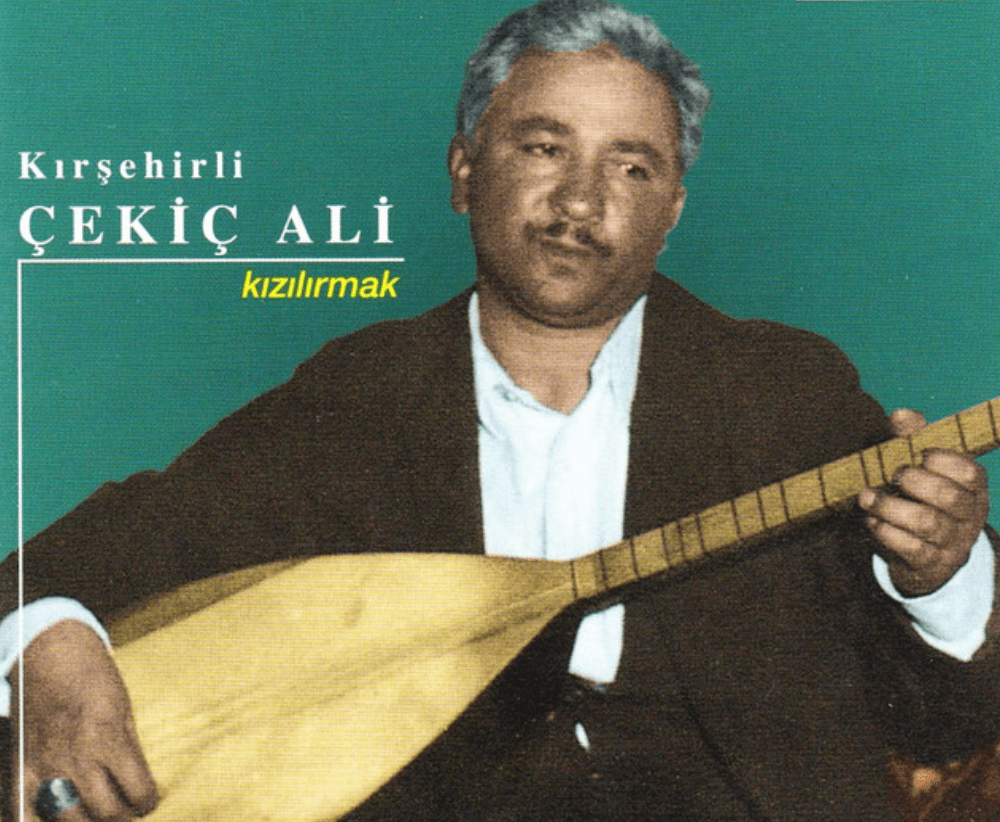



Eş | Fatma Hanım | ||||||||
|---|---|---|---|---|---|---|---|---|---|
Date and Place of Birth | 1932, Kırşehir-Kaman, Meşe Village | ||||||||
Ölüm tarihi | 1973-09-13 | ||||||||
Real Name | Ali Ersan | ||||||||
Nickname(s) | Çekiç Ali | ||||||||
Çocuk | Aydın Çekiç | ||||||||
Works | Topak Daşın Kenarı Irafa Koydum Narı Çubuk Uzun Bağlama Çubuğuna Lüleyim Çorabın Enine Bak Acem Kızı | ||||||||
Çekiç Ali is a Turkishmen-Abdal bard. Regarded as a bard who left a mark on the Abdal tradition of the Kırşehir region despite his short life, Çekiç Ali is among the representatives of Turkish folk music. An artist who expressed the emotions of the people through his saz and lyrics, he is remembered not only in his region but also across various parts of Anatolia for his name and songs. He began his musical journey in childhood and continued it at weddings, folk gatherings, and record recordings, establishing a unique place for himself through his original performance style and voice.

Çekiç Ali (Spotify)
Çekiç Ali’s real name is Ali Ersan. He was born in 1932 in Meşe village, part of the Kaman district of Kırşehir. During his childhood he lived in various places with his family and settled in Kırşehir in the 1940s. He later changed his surname from Ersan to Çekiç because his family was known as “Çekiçler.” The reason for this change was that a record producer in Istanbul illegally copied and released a record bearing his name without his consent and then denied ownership. In response, he officially changed his surname to “Çekiç” in the civil registry.
Çekiç Ali belonged to the Turkishmen-Abdal community. The Abdals are nomadic Turkishmen groups whose origins trace back to the Caucasus and who migrated to and settled in Anatolia. For the Abdals, music was not merely an art form but also a way of life and an instrument of identity. Çekiç Ali is recognized as one of the important representatives of this tradition.
Çekiç Ali began playing the saz in childhood and quickly gained recognition in his surroundings. He earned his livelihood by performing and singing at weddings. He grew up within the same tradition as Kırşehir-based Abdals such as Muharrem Ertaş, Hacı Taşan and Neşet Ertaş, but he did not imitate their styles; instead he developed his own interpretation.
His saz technique was noted for its agility and speed, allowing him to produce diverse tonal qualities on the bağlama. Because of this nimble and dynamic performance style, he became known by the nickname “Çekiç.” Neşet Ertaş described him as the “wrestler of the bağlama.”
Seven songs collected from Çekiç Ali are included in the TRT Turkish Folk Music repertoire. These include “Acem Kızı,” “Çorabın Enine Bak,” “Çubuğuna Lüleyim,” “Çubuk Uzun Bağlama,” “Irafa Koydum Narı,” “Kekillerin Neşte Neşte,” and “Topak Daşın Kenarı.” These songs feature makam characteristics such as “Kürdi,” “Hüseyni,” “Segâh,” “Uşşak,” and “Karcığar.”
Çekiç Ali - Doğar Yaz Ayları I Kızılırmak © 1999 Kalan Müzik (YouTube-Remaining Music)
Çekiç Ali’s wife, Fatma Hanım, is the niece of Muharrem Ertaş. Through this connection, he maintained a close relationship with Muharrem Ertaş. Çekiç Ali’s son, Aydın Çekiç, has shared many memories of his father’s life and art. According to him, Çekiç Ali’s sole source of income was playing the saz and singing folk songs at weddings.
In 1969 he won first prize in a competition held in Istanbul with his folkloric ensemble. He also played a key role in securing first place for the Kırşehir team at the 9th Folk Dances Festival organized by a bank. Through these events, he introduced the halay and folk dances of Kırşehir to the rest of Anatolia.
Çekiç Ali underwent heart surgery in 1971 and suffered a stroke two years later. He passed away on 13 September 1973 at the age of just 41. After his death, his friends erected his grave and composed elegies in his memory.
Ergü, Muaz. “Bağlamanın Pehlivanı Çekiç Ali.” Dibace.Net, April 30, 2022. https://www.dibace.net/portreler/baglamanin-pehlivani-cekic-ali.
Güçlü, Mustafa. "Bir Garip Bülbül Issız Çöllerde Çekiç Ali." Maya Kültür. Accessed October 2, 2025. https://www.mayakultur.com/2788/
Kalan Müzik. "Çekiç Ali - Doğar Yaz Ayları I Kızılırmak © 1999 Kalan Müzik." YouTube. Accessed October 2, 2025. https://www.youtube.com/watch?v=y67iy7OsVZk&list=RDy67iy7OsVZk&start_radio=1
Pelikoğlu, Mehmet Can. “Çekiç Ali’den Derlenen Türkülerde Makam Analizi.” *Online Journal of Music Sciences* 9, no. 1 (2024): 273–293. https://dergipark.org.tr/tr/download/article-file/3727308
Spotify. "Sarı Yazma, Çekiç Ali." Spotify. Accessed October 2, 2025. https://open.spotify.com/intl-tr/track/4jOMVsObwiMuKtbVUi1hqH
Yılmaz, Adnan. "Çekiç Ali ’nin Yaşamı Darbelerle Dolu..." Accessed October 2, 2025. https://kirsehircigdem.com/cekic-ali-nin-yasami-darbelerle-dolu

Eş | Fatma Hanım | ||||||||
|---|---|---|---|---|---|---|---|---|---|
Date and Place of Birth | 1932, Kırşehir-Kaman, Meşe Village | ||||||||
Ölüm tarihi | 1973-09-13 | ||||||||
Real Name | Ali Ersan | ||||||||
Nickname(s) | Çekiç Ali | ||||||||
Çocuk | Aydın Çekiç | ||||||||
Works | Topak Daşın Kenarı Irafa Koydum Narı Çubuk Uzun Bağlama Çubuğuna Lüleyim Çorabın Enine Bak Acem Kızı | ||||||||
Birth and Family
Abdal Tradition and Cultural Origins
Artistic Career
Personal Life and Environment
Achievements
Death