This article was automatically translated from the original Turkish version.
+2 More
Location | Pamukkale Türkiye Denizli | ||||||||
|---|---|---|---|---|---|---|---|---|---|
Establishment | 1984 (inauguration), 2000 (restoration completed) | ||||||||
Structure(s) | Roman Bath | ||||||||
Halls | Statues and Sarcophagi, Small Finds, Theater Finds | ||||||||
Collection | Ancient city artifacts, Bronze Age finds, Coins | ||||||||
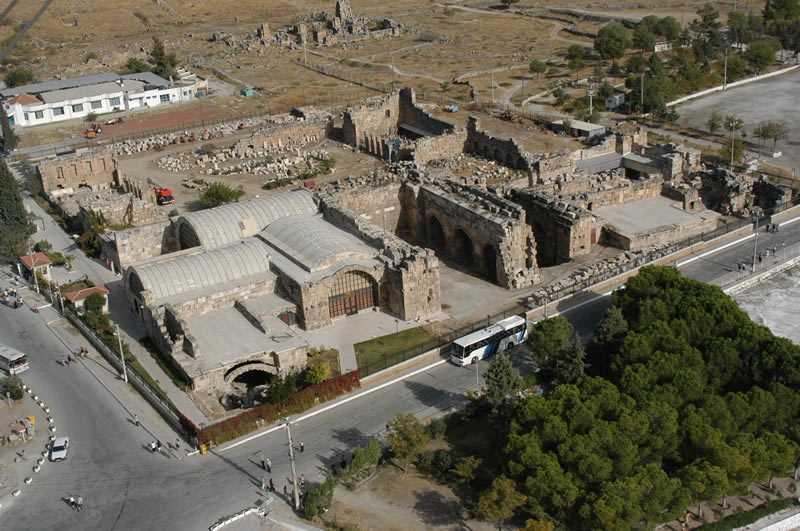
The Hierapolis Archaeology Museum is an archaeological museum located within the Pamukkale archaeological site in Denizli Province, Türkiye. Opened to the public in 1984 following the restoration of a Roman-era bath complex within the ancient city, the museum displays archaeological artifacts from Hierapolis and surrounding ancient settlements.
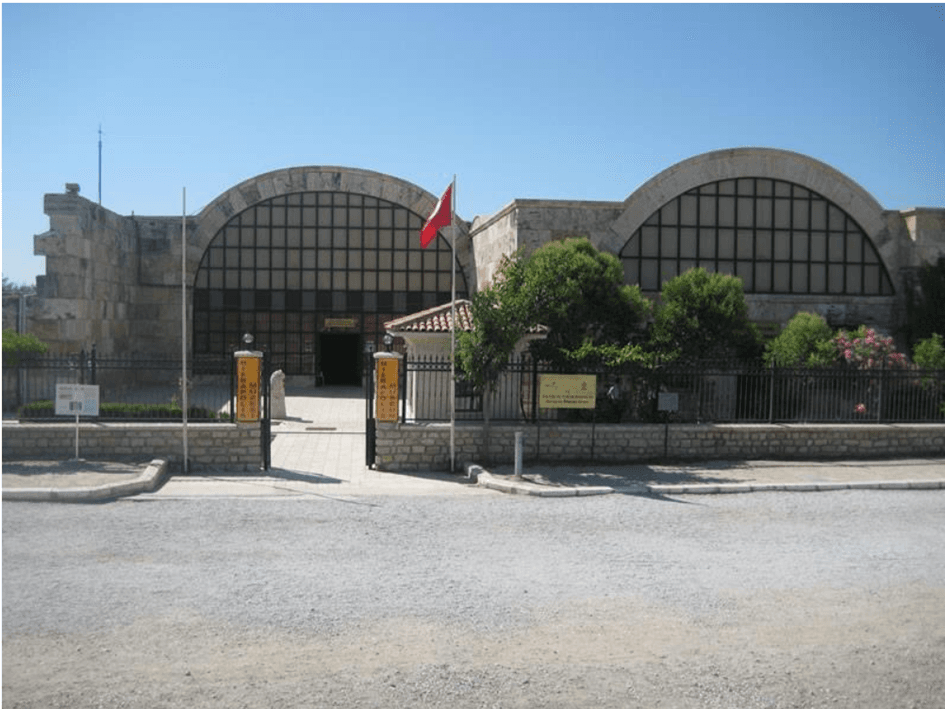
Hierapolis Archaeology Museum (Denizli Provincial Directorate of Culture and Tourism)
The museum was established through the restoration of a large bath structure dating to the Roman Imperial period, carried out in the 1970s. After its rehabilitation, the building opened to visitors in 1984 as the Hierapolis Museum. The structure was originally constructed as a Roman bath and later converted into a church during the Byzantine period.
The Hierapolis Archaeology Museum largely preserves the original architecture of the ancient bath complex. The building exemplifies Roman architectural tradition with its vaulted spaces. Constructed of stone, it draws attention through its monumental scale and functional divisions. The areas now used as museum galleries correspond to the main sections of the bath: the caldarium (hot room), tepidarium (warm room), and frigidarium (cold room).
The artifacts displayed at the Hierapolis Archaeology Museum consist primarily of movable cultural heritage items recovered from excavations in Hierapolis and Laodikeia, as well as other ancient cities in the Lycos (Çürüksu) Valley. Significant archaeological finds from important Bronze Age settlements such as Beycesultan Höyüğü also form an important part of the collection. Objects unearthed from settlements in Caria, Pisidia, and Lydia are similarly gathered and presented to the public.
The museum comprises three main exhibition halls.
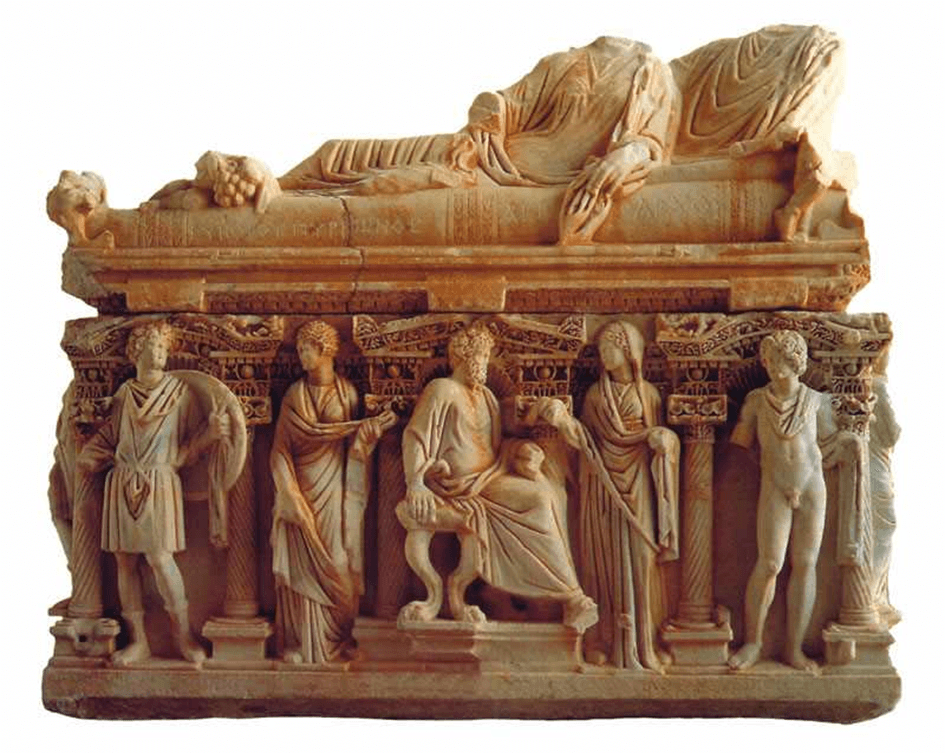
The Statues and Sarcophagi Hall contains sarcophagi, statues, grave stelae, architectural columns, capital fragments, and inscriptions from the excavations of Hierapolis and Laodikeia. Among the Roman-era works with Greek and Hellenistic origins are statues of Tyche, Dionysos, Pan, Asclepius, an Isis priestess, and Demeter. Grave stelae reflect local family burial traditions, while terracotta sarcophagi represent important examples of the period. The sarcophagus of Maximillian with its inscription and the Sidemara-type sarcophagus from Laodikeia are key pieces of the collection. Additionally, reliefs depicting gladiatorial combats and bull games, as well as the inscription belonging to Gladius Apuleius Aurelianus, are exhibited in this hall.
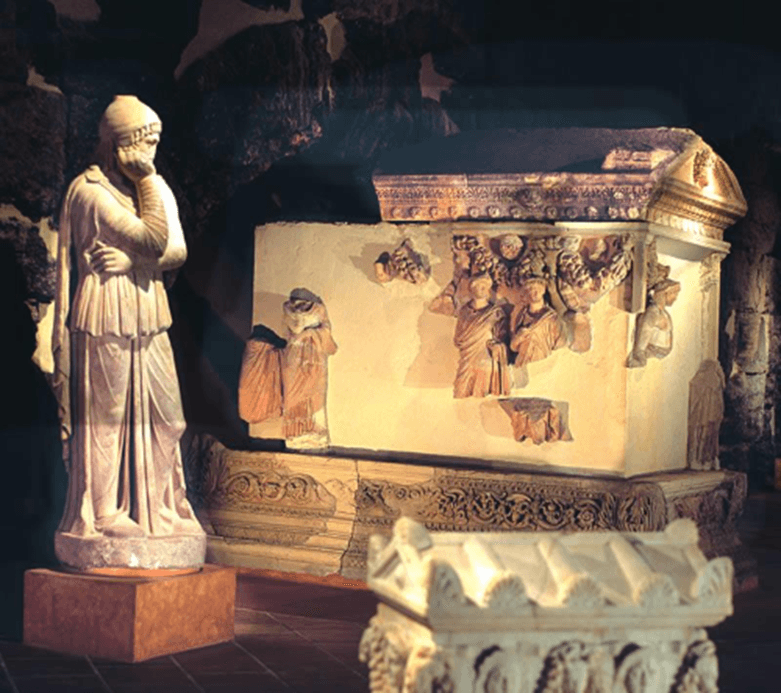
One of the Artifacts Exhibited in the Statues and Sarcophagi Hall (Denizli Provincial Directorate of Culture and Tourism)
Small artifacts dating from the 4th millennium BCE onward are displayed in chronological order. Objects collected from archaeological sites in Denizli and its surroundings are exhibited here. Idols, pottery, and stone artifacts from Beycesultan Höyüğü are particularly noteworthy. Terracotta lamps, glassware, necklaces, and metal jewelry from the Phrygian, Hellenistic, Roman, and Byzantine periods are also on display. Coins, beginning with the first minting in the 6th century BCE, are presented chronologically, including gold, silver, and bronze coins from the Hellenistic, Roman, Byzantine, Seljuk, and Ottoman periods. Silver items, gold jewelry from the Icikli and Akköy excavations, and terracotta objects are also exhibited in this hall.
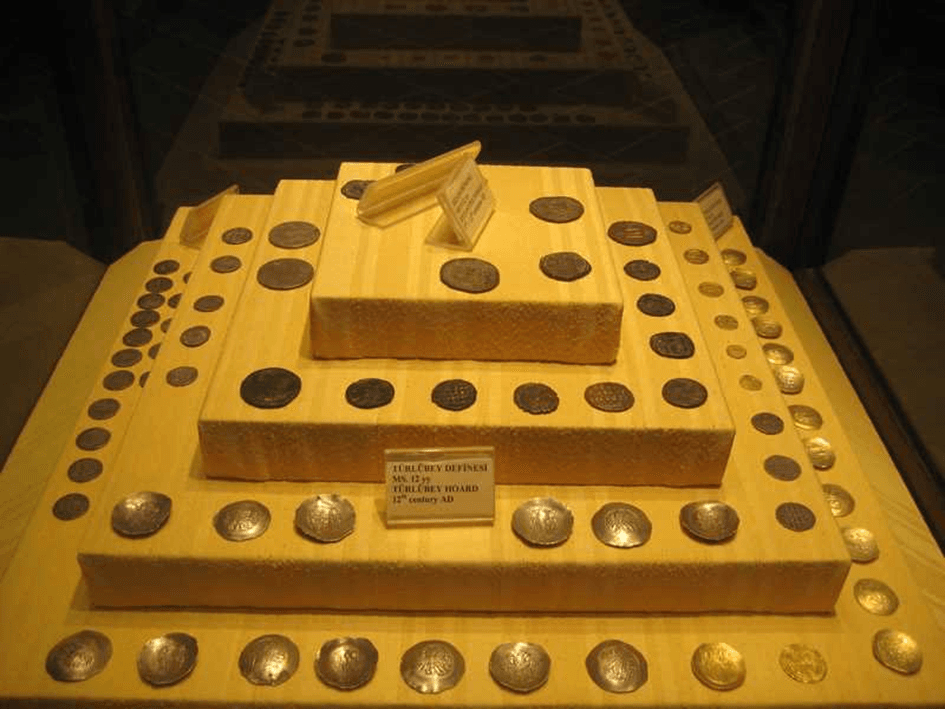
One of the Artifacts Exhibited in the Small Finds Hall (Culture Portal)
This hall displays reliefs and architectural decorations from the theater’s stage building, depicting mythological scenes such as the Dionysian processions, the myth of Niobe, the coronation ceremony of Emperor Septimius Severus, the myth of Marsyas, the struggle between Heracles and Antaeus, the birth of Apollo and Artemis, and Hades’ abduction of Persephone. Statues of Apollo, Leto, Artemis, and Hades, sphinx figures, busts of King Attalos and Eumenes, and inscriptions recording theater-related council decisions are also exhibited here. In the center of the hall stand statues of Triton, son of the sea god Poseidon, Hades, the god of the underworld, and a theater actor.
One of the Artifacts Exhibited in the Theater Finds Hall (Culture Portal)
The Hierapolis Archaeology Museum is significant both for its location within the archaeological site and for its adaptive reuse of an ancient structure. In addition to exhibiting archaeological artifacts, the museum contributes to the preservation and promotion of the region’s cultural heritage. When considered together with its architectural and historical characteristics, the Hierapolis Museum offers a multifaceted example of conservation encompassing both movable and immovable cultural heritage.
Ministry of Culture and Tourism of the Republic of Türkiye. "Müze Detay." Museum Portal. Accessed July 20, 2025. https://muze.gov.tr/muze-detay?SectionId=DHA01&DistId=MRK
Ministry of Culture and Tourism of the Republic of Türkiye. "Pamukkale Hierapolis Archaeology Museum." Kültür Portalı. Accessed August 16, 2025. https://www.kulturportali.gov.tr/turkiye/denizli/gezilecekyer/pamukkale-hierapolis-arkeoloji-muzesi
T.C. Ministry of Culture and Tourism. "Denizli Müze Müdürlüğü." General Directorate of Cultural Assets and Museums. Accessed August 16, 2025. https://kvmgm.ktb.gov.tr/TR-44081/denizli-muze-mudurlugu.html
T.C. Ministry of Culture and Tourism. "Pamukkale Archaeology Museum." Denizli Provincial Directorate of Culture and Tourism. Accessed August 16, 2025.

Location | Pamukkale Türkiye Denizli | ||||||||
|---|---|---|---|---|---|---|---|---|---|
Establishment | 1984 (inauguration), 2000 (restoration completed) | ||||||||
Structure(s) | Roman Bath | ||||||||
Halls | Statues and Sarcophagi, Small Finds, Theater Finds | ||||||||
Collection | Ancient city artifacts, Bronze Age finds, Coins | ||||||||
No Discussion Added Yet
Start discussion for "Hierapolis (Pamukkale) Archaeological Museum" article
History
Architectural Features
Collection and Exhibition Layout
Statues and Sarcophagi Hall
Small Finds Hall
Theater Finds Hall
Conservation and Use