


+2 More

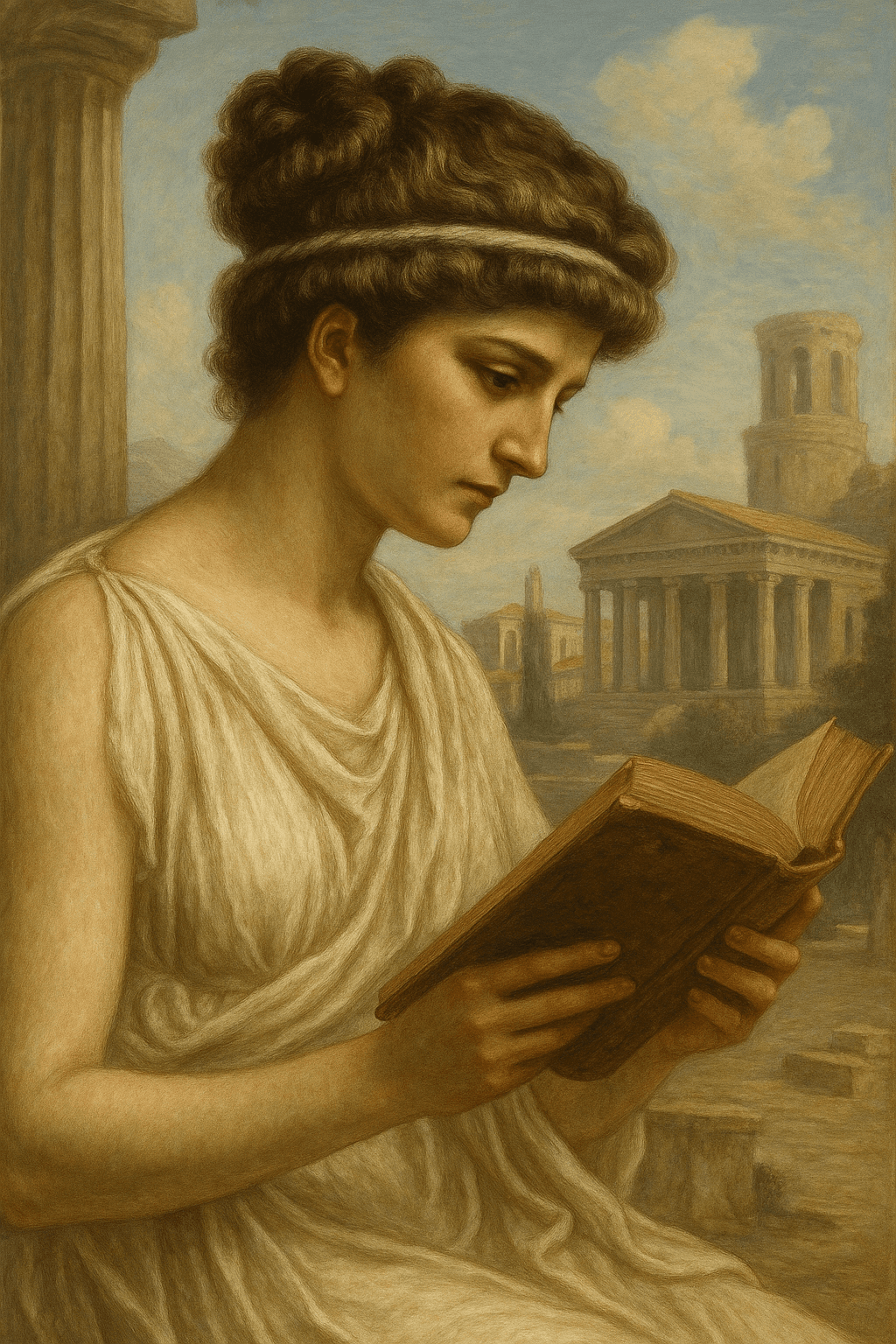
Hypatia
Life | MS 355-415 | ||||||||
|---|---|---|---|---|---|---|---|---|---|
Place of Birth | Alexandria, Egypt | ||||||||
Babası | Theon | ||||||||
Profession(s) | Mathematician philosopher astronomer | ||||||||
Title(s) | Head of the Alexandria School of Philosophy | ||||||||
Hypatia was a mathematician, astronomer, and philosopher who lived in Alexandria between 355 and 415 CE. There are differing views regarding her birth date; some scholars point to 370 CE while others favor 355 CE. The biographies of her students are better documented, and based on the assumption that they were several years younger than their teacher, 355 CE appears more likely.【1】 She died in March 415 in Alexandria.
She is also known as the "Philosopher of Alexandria" or the "Muse of Alexandria." Her father, Theon, was the last head of the Alexandria Philosophical School, a teacher of mathematics and astronomy, and the president of the Mouseion.【2】 Theon was also a scientist who conducted research in astronomy and other scientific fields, including solar and lunar eclipses. Hypatia received her early education from her father and learned the foundations of mathematics and astronomy at a young age. Due to her exceptional talent, she quickly reached the same level of understanding and insight as her father. She received comprehensive education in various fields including mathematics, astronomy, philosophy, religion, poetry, and handicrafts. She also learned physical activities such as swimming, rowing, horseback riding, and mountain climbing to support her physical development.
As part of her education, she traveled widely and spent time in Rome and Athens. During this period, she studied under the Athenian philosopher Plutarch, a Neoplatonist.【3】 In Athens and Rome, she received instruction in philosophy and astronomy, with mathematics being a primary focus.
After completing her education, Hypatia returned to Alexandria and began teaching philosophy, mathematics, and astronomy at the Platonic School within the Library of Alexandria. Students came from Europe, Asia, and Africa to attend her lectures, and she accepted students from distant regions such as Syria and Cyrene.
Among her students were prominent figures such as Orestes, who later became the Prefect of Alexandria, and Synesius, Bishop of Ptolemais.【4】 Synesius wrote letters expressing his admiration and deep respect for Hypatia. These letters have survived to the present day and are preserved in philosophical history texts. Hypatia taught Synesius how to use the astrolabe and the hydroscope.
Hypatia commonly used Diophantus’s work *Arithmetica* in her lectures. She did not present it as is but enriched it with her own interpretations, commentary, and explanations of her methods. She frequently delivered public lectures in the city center. She identified herself with the Neoplatonic school of thought.【5】
She was appointed head of the Platonic school founded by Plotinus and is regarded as one of the most important representatives of the Neoplatonic tradition in the Alexandrian School. She admitted students regardless of religion, language, or ethnicity. At the Alexandrian School, she taught the philosophies of Plato and Aristotle to students who followed Christianity, Judaism, and Paganism.
She was highly valued by Alexandria’s leading figures and received honors and medals. She was admitted to the city council by Prefect Orestes. According to her contemporary thinker Socrates Scholasticus, "She possessed such lofty knowledge that no philosopher of her time could match her."【6】 With the self-assurance granted by her profound knowledge, she acted fearlessly toward authorities and never hesitated to attend gatherings of men.
The Suda encyclopedia, compiled around 1000 CE, describes a scene in which "a large crowd and horses gathered at her door," with "some arriving, some departing, and others standing around."【7】 This image illustrates the great respect Hypatia commanded as an extraordinary philosopher, scientist, and mathematician.

Hypatia (Generated by Artificial Intelligence)
Hypatia wrote numerous books on mathematics. Unfortunately, only fragments of these works have survived to the present day. Most were lost during the fire of the Library of Alexandria and the destruction of the Temple of Serapis.【8】 None of Hypatia’s original writings have survived intact. The Suda encyclopedia, compiled around 1000 CE, identifies Hypatia as the author of commentaries on Diophantus of Alexandria’s *Arithmetica*, Apollonius of Perga’s *Conics*, and Ptolemy’s astronomical works. It is known that she co-authored at least one book on Euclid with her father. Fragments of a work contributing to Diophantus’s astronomical studies were discovered in the Vatican Library in the 15th century. She also wrote a book titled *On the Conics of Apollonius*. No further work was done on this subject until the second half of the 17th century, when Descartes, Fermat, Newton, and Leibniz emerged.【9】 In addition to her contributions to Apollonius’s *Conics*, Diophantus’s *Arithmetica*, and astronomical canons, she conducted various studies on conic sections such as hyperbolas, parabolas, and ellipses. It has been suggested that Hypatia had already conducted work on orbital motion—later rediscovered in the 17th century by the renowned mathematician Johannes Kepler (1571–1630) and known as Kepler’s Laws.【10】 She also left notes on Ptolemy’s astronomical treatises and Diophantus’s arithmetic texts. She and her father edited and commented on Ptolemy’s astronomical works. It is known that in the introduction to one of these commentaries, her father wrote, "This edition was prepared by my philosopher daughter Hypatia."
Hypatia is also renowned for various inventions used in celestial observations, water purification, and navigation. She developed a new type of astrolabe, an instrument used by astronomers to calculate the positions of the sun and stars.【11】 She also designed a series of instruments to facilitate terrestrial observations. Among her inventions were the hydroscope, used to view objects beneath water, and the hydrometer, used to measure the density and specific gravity of liquids.

Hypatia (Generated by Artificial Intelligence)
Hypatia lived in Alexandria during the second half of the 4th century and the first quarter of the 5th century CE and stood out as one of the most important and influential philosophers and scientists of her era. Alexandria was founded in 332 BCE by the Macedonian king Alexander the Great in Egypt. With its Philosophical School, museum, and library, Alexandria became one of the most significant centers of science in antiquity. It is said that during Julius Caesar’s time, the Library of Alexandria held 750,000 volumes.【12】 By the 4th century CE, Alexandria had lost much of its former brilliance. Most of the city’s library had burned down, the Mouseion had fallen into disarray, and Theon, Hypatia’s father, was the last recorded member.
The decline of Roman power and the spread of Christianity were defining events of the period. In 412 CE, a bishop named Cyril was appointed head of the Patriarchate of Alexandria.【13】 At the beginning of the 5th century, Alexandria became embroiled in a power struggle between the civil authority, Prefect Orestes, and the Christian bishop Cyril. Alexandria was in constant turmoil due to Cyril’s attempts to seize control of the city’s governance from the secular authority of Prefect Orestes. Hypatia, regarded by the municipal administration as a wise figure, attempted to mediate by promoting consultation, tolerance, and the separation of religion and state.【14】

Hypatia (Generated by Artificial Intelligence)
Hypatia was murdered in March 415 CE in Alexandria. Her close relationship with Orestes, a former student who later became Prefect of Egypt, and the protection she received from him, incited Bishop Cyril of the city’s church to stir up the populace against her. Hypatia was accused of impiety. In 415 CE, monks attacked Orestes and seriously wounded him. Orestes ordered the execution of the perpetrators, and despite Cyril’s efforts to portray them as martyrs, the public supported the decision. Cyril later claimed that Orestes was under Hypatia’s spell, asserting that she practiced sorcery and consorted with demons.【15】 A mob led by Peter, a reader in the church, attacked Hypatia as she returned home from her lectures, dragged her to a church known as Caesareum, killed her, dismembered her body, and burned the remains outside the city walls.【16】 Orestes abandoned his resistance and left Alexandria; the city fell entirely under church control. Following Hypatia’s death, the Alexandria Philosophical School was looted and burned on Cyril’s orders. Pagan temples were destroyed and synagogues converted into churches. A mass exodus of intellectuals and artists from Alexandria ensued. With Hypatia’s death, there remained no possibility for Neoplatonists to continue their schools in Alexandria. Hypatia’s murder marked the end of scientific and philosophical activity in Alexandria.【17】
Indian National Centre for Ocean Information Services. “Hypatia.” *Science, Civilization and Society*. Accessed May 22, 2025. https://incois.gov.in/Tutor/science+society/lectures/illustrations/lecture12/hypatia.html
Işık, Mehmet Fatih, and Zeynep Yılmaz Kurt. “Bilim İnsanı ve Bir Filozof Olarak Hypatia.” *Ortaçağ Araştırmaları Dergisi* 6, no. 1 (2023): 326–336. Accessed May 22, 2025. https://dergipark.org.tr/tr/pub/oad/issue/78379/1272488
Watts, Edward Jay. Hypatia: The Life and Legend of an Ancient Philosopher. Oxford: Oxford University Press, 2017.
Çağlar, Musa Kazım. “Hypatia’nın Işığından Bize Yansıyanlar.” Academia.edu, 2020. Accessed May 22, 2025. https://www.academia.edu/44554345/HYPATIANIN_I%C5%9EI%C4%9EINDAN_B%C4%B0ZE_YANSIYANLAR
[1]
Hypatia'nın doğum tarihi konusunda kesin bir bilgi bulunmamaktadır. Edward J. Watts "Hypatia The Life and Legend of an Ancient Philosopher" adlı çalışmasında MS 355 tarihini dikkate almaktadır.
[2]
Mouseion (Müze), antik İskenderiye'de bir araştırma merkezi ve kütüphaneydi. Günümüzdeki müze kavramından farklı olarak, bilim insanlarının çalışmalar yaptığı bir akademi niteliğindeydi.
[3]
Bu Plütark, MS 46-120 yılları arasında yaşamış olan ünlü tarihçi ve biyografi yazarı Plütark'tan farklı olarak, daha az tanınan yeni-eflatuncu bir filozoftur.
[4]
Synesius daha sonra Hıristiyan olmuş ve Ptolemais piskoposu olarak atanmıştır. Hypatia ile olan yakın dostluğu ve ona duyduğu saygı, farklı dini inançlara rağmen devam etmiştir.
[5]
Yeni-Eflatunculuk (Neoplatonizm), MS 3. yüzyılda Plotinus tarafından kurulan, Platon'un felsefesini mistik ve dini unsurlarla birleştiren bir felsefi akımdır. Bu akım, hem Hıristiyanlık hem de İslam felsefesini derinden etkilemiştir.
[6]
Sokrates Scholasticus (MS 380-439), Hypatia ile aynı dönemde yaşamış bir tarihçidir. "Ecclesiastical History" adlı eseri, Hypatia hakkında en güvenilir kaynaklardan biri olarak kabul edilir.
[7]
Suda (veya Souda), MS 10. yüzyılda Bizans döneminde derlenen bir ansiklopedidir. Antik dönem hakkında önemli bilgiler içermektedir ve Hypatia hakkındaki bilgilerin bir kısmı bu kaynaktan gelmektedir.
[8]
İskenderiye Kütüphanesi'nin tam olarak ne zaman ve nasıl yok olduğu tartışmalıdır. Kütüphanenin bir kısmı Julius Caesar'ın MS 48'deki İskenderiye kuşatması sırasında yanmış, kalan kısmı ise farklı dönemlerde zarar görmüştür.
[9]
Konikler, daire, elips, parabol ve hiperbol gibi geometrik şekilleri inceleyen matematik dalıdır. Bu alandaki çalışmalar, 17. yüzyılda analitik geometrinin gelişmesine önemli katkılar sağlamıştır.
[10]
Kepler Yasaları, gezegenlerin Güneş etrafındaki hareketlerini açıklayan üç temel yasadır. Johannes Kepler tarafından 1609-1619 yılları arasında formüle edilmiştir. Hypatia'nın bu konuda çalışmalar yaptığı iddiası tartışmalıdır.
[11]
Usturlap, gök cisimlerinin konumlarını belirlemek için kullanılan antik bir astronomik alettir. Denizcilik, astronomi ve astroloji alanlarında kullanılmıştır ve İslam dünyasında da büyük gelişme göstermiştir.
[12]
İskenderiye Kütüphanesi'ndeki kitap sayısı hakkındaki bilgiler antik kaynaklara dayanmaktadır ve abartılı olabilir. Ancak dönemin en büyük kütüphanesi olduğu konusunda tarihçiler hemfikirdir.
[13]
Kiril (Cyril), daha sonra Aziz Kiril olarak anılacak olan İskenderiye Patriği, MS 412-444 yılları arasında görev yapmıştır. Hıristiyanlığın savunucusu olarak bilinir ve Nestorius'a karşı mücadelesiyle ünlüdür.
[14]
Hypatia'nın din ve devlet işlerinin ayrılmasını savunduğu bilgisi, modern tarihçilerin yorumlarına dayanmaktadır. Antik kaynaklarda bu konuda açık bir ifade bulunmamaktadır.
[15]
Orta Çağ'da bilimsel çalışmalar ve aletler sıklıkla büyücülük ve şeytanla ilişkilendirilmiştir. Usturlap gibi astronomik aletlerin kullanımı, bazı dini otoriteler tarafından şüpheyle karşılanmıştır.
[16]
Hypatia'nın ölümü hakkındaki detaylar, Sokrates Scholasticus'un "Ecclesiastical History" adlı eserinden gelmektedir. Bu olay, antik dönemin en iyi belgelenmiş cinayetlerinden biridir.
[17]
Hypatia'nın ölümünün İskenderiye'deki bilimsel çalışmaların sonu olduğu görüşü, modern tarihçiler tarafından genel olarak kabul edilmektedir. Bu olay, antik bilim geleneğinden Orta Çağ'a geçişin sembolik bir dönüm noktası olarak görülür.

Hypatia
Life | MS 355-415 | ||||||||
|---|---|---|---|---|---|---|---|---|---|
Place of Birth | Alexandria, Egypt | ||||||||
Babası | Theon | ||||||||
Profession(s) | Mathematician philosopher astronomer | ||||||||
Title(s) | Head of the Alexandria School of Philosophy | ||||||||
Academic Career
Scientific Works
Inventions and Discoveries
Historical Context
Death and Aftermath