


This article was automatically translated from the original Turkish version.
+1 More
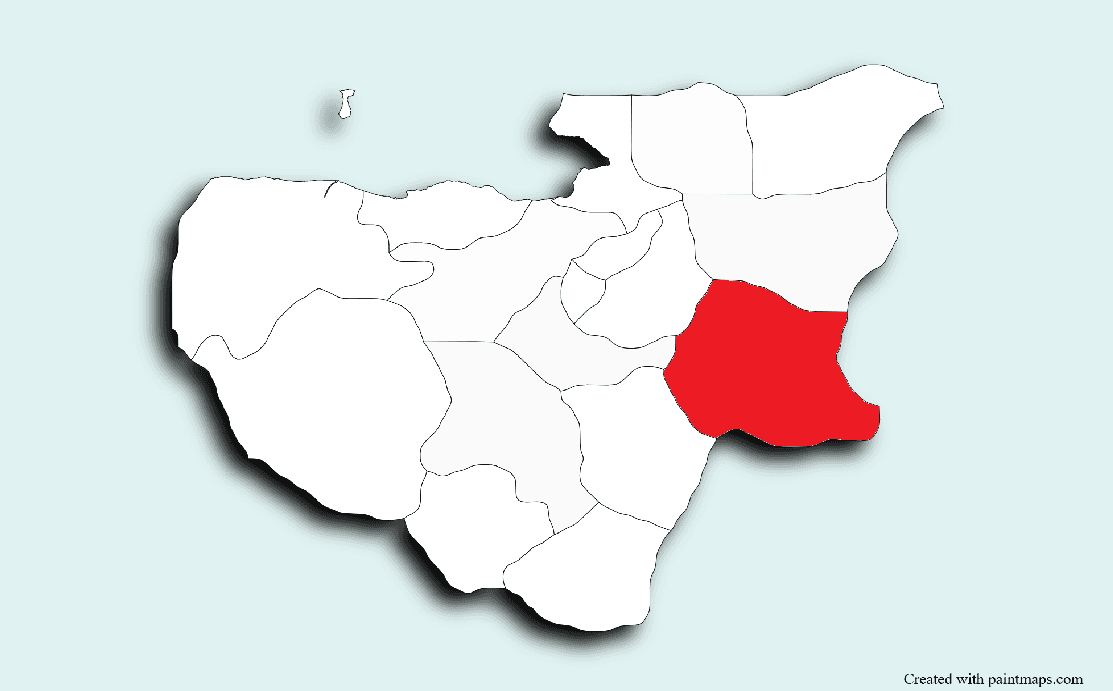
İnegöl (District)
Country | Türkiye | ||||||||
|---|---|---|---|---|---|---|---|---|---|
Region(s) | Marmara | ||||||||
Province(s) | Bursa | ||||||||
Area(s) | 1.065 km² | ||||||||
Elevation(s) | 350 m | ||||||||
Population | 286.848 (2022, TÜİK) | ||||||||
District Governor | Eren ARSLAN | ||||||||
Mayor(s) | Alper TABAN | ||||||||
İnegöl is a district of Bursa Province in Türkiye’s Marmara Region. With its population and industrial significance, İnegöl is one of Bursa’s largest districts and ranks as Türkiye’s 40th largest city. Located on the historic Silk Road, the district lies at the intersection of major Anatolian trade routes and is 3 to 5 hours by highway from major cities such as Istanbul, Ankara, and İzmir. It is 1 to 1.5 hours from the ports of Gemlik and Mudanya and just half an hour from Yenişehir International Airport, giving İnegöl a strategic location. İnegöl stands out for its furniture industry, agriculture, tourism potential, and rich cultural heritage.
Archaeological excavations conducted in 1847 and 1942 have revealed that İnegöl’s history extends back to the 3rd millennium BCE. The region was ruled by numerous civilizations including the Hittites, Bithynians, Lydians, Persians, and Macedonians. In the 2nd century BCE it came under Roman control and from 395 CE onward it became part of the Byzantine Empire. After the Battle of Manzikert in 1071, İnegöl passed under Seljuk rule but was briefly returned to Byzantine control during the Crusades in 1097. During the early years of the Ottoman Beylik, İnegöl was conquered in 1299–1300 by Turgut Alp and has remained Ottoman territory since then. In Byzantine times the district was known as Angelacoma; in Ottoman sources it appears as “Ayna-Göl” or “İne-Göl.” Evliya Çelebi, in his Seyahatname, recounts that the name derived from “Ezinegöl,” referring to the conquest occurring on a Friday (Ezine day), which later evolved into “İnegöl.”
During the Ottoman period, İnegöl developed as an agricultural and rural center and became a well-established town with significant structures such as the İshak Paşa Külliyesi. After the Russo-Turkish War of 1877–1878, an influx of immigrants from the Caucasus and the Balkans increased its population, and new neighborhoods and villages were established in the early 1900s. İnegöl was occupied by Greek forces between 1920 and 1921 but was liberated by the Turkish army on 6 September 1922. During the Republican era, the district experienced rapid development in industry and agriculture and acquired a modern urban appearance.
İnegöl is located in the southeastern part of the Marmara Region at 40° 09' north latitude and 29° 09' east longitude. It lies 45 kilometers southeast of Bursa, situated in a valley surrounded by Uludağ, Domaniç Mountain, and Ahı Mountain. The İnegöl Plain covers a fertile area of 148 km², covered by alluvial deposits. The district has a total area of 1,065 km², bordered by forested areas and highland pastures extending from the foothills of Uludağ to the Mezit Pass. The main rivers are Kocadere, Karadere, Akdere, and Mezit, which flow into the Sakarya River and ultimately reach the Black Sea. There are no natural lakes in the district, but artificial lakes such as Eymir, Kurşunlu, Halhalca, Yenice Göleti, and Boğazköy Dam are present.
İnegöl’s climate exhibits transitional characteristics between the Black Sea and Mediterranean climates. Summers are hot and dry, resembling the Mediterranean climate, while winters are cold and wet. The annual average temperature is 12.4°C, with summer averages of 21.9°C and winter averages of 2.3°C. The highest recorded temperature is 41.2°C (in August), and the lowest is -22.7°C. Snowfall is normal and frost events are frequent.
Greenery dominates İnegöl’s natural landscape. Forests cover 49% of the district, exceeding the national average. Major tree species include pine, beech, hornbeam, oak, linden, chestnut, and walnut. Shrubs such as elderberry, blackberry, raspberry, hawthorn, and lilac are common. In spring, meadows and forest clearings host approximately 600 plant species. Historic plane trees in the city center, especially around İshak Paşa Camii, are under protection.
İnegöl has a rich socio-cultural composition made up of native populations (Manavs and Yörüks), as well as immigrants from the Caucasus, the Balkans, and Anatolia. Known as “Little Istanbul,” the district maintains strong ties to its national culture through cultural associations and societies. Immigrants from various regions have preserved folk dances from areas such as the Caucasus, Rumelia, Bursa, Bilecik, and Artvin. İnegöl Mehteri, established in 1959, is Türkiye’s first civilian mehter band and represents the district in cultural events both domestically and internationally. Traditional celebrations include Hıdrellez (6 May) and “Dede Günü” feasts held in certain neighborhoods.
İnegöl is one of Türkiye’s most dynamic economic centers. Furniture manufacturing, agriculture, and textiles are the district’s most important economic activities. İnegöl hosts three organized industrial zones (İnegöl OSB, Furniture Specialized OSB, Yenice OSB) and its foreign trade volume exceeds one billion US dollars, with a trade surplus of 691 million dollars demonstrating its economic strength.
İnegöl is one of Türkiye’s leading furniture production centers. Woodworking, first documented in Ottoman records from 1523 as oar production, transitioned to furniture manufacturing from the 1950s onward. Today, approximately 2,000 furniture companies operate in the district, exporting to 200 countries. The MODEF fairs, held twice annually, promote İnegöl furniture globally. Türkiye’s first Furniture Specialized OSB is also located here.
The fertile soils of the İnegöl Plain are highly suitable for agriculture. Of the agricultural land, 72.8% is used for field crops, 19% for orchards and vineyards, and 7.7% for vegetable farming. Key products include peach, pear, cherry, apple, strawberry, wild blueberry, and sunflower seeds. Nurseries are among Türkiye’s leading centers. Livestock farming includes both large and small animal husbandry, beekeeping, and trout production. İnegöl Köftesi is a registered geographical indication product.
İnegöl possesses significant tourism potential due to its historical, natural, and cultural richness. Ottoman-era monuments, thermal spas, caves, highland pastures, and nature-based sports contribute to its appeal.
İnegöl Mehteri, the İnegöl Köftesi Festival, and agricultural festivals (strawberry, peach, wild blueberry) enrich the district’s cultural tourism. The Evliya Çelebi Route contributes to tourism as an international cultural trail.
According to 2022 TÜİK data, İnegöl’s population is 286,848. As the second largest city in Southern Marmara and Bursa’s most populous district outside the city center, its population consists of native residents, as well as immigrants from the Caucasus, the Balkans, and Anatolia. The demographic structure was diversified by the “93 Muhacirleri” after the Russo-Turkish War of 1877–1878 and by population exchanges during the 20th century. Migration from neighboring provinces and other regions of Türkiye, driven by industrial growth, has further increased the population. İnegöl has a dynamic and multicultural demographic structure.
İnegöl’s educational history began during the Ottoman period with the medrese of the İshak Paşa Külliyesi. Following the establishment of the Republic, new schools transformed the district into a regional education center. Today, it has 256 educational institutions serving 57,000 students and 3,600 teachers. The İnegöl Faculty of Business Administration and İnegöl Vocational School, both affiliated with Uludağ University, play a significant role in higher education.
Sports in İnegöl began before the Republic with hunting, horseback riding, and wrestling. After the Republic’s founding, sports expanded to include football, athletics, and cycling. İnegölspor, founded in 1984, has achieved success in professional leagues and produced national football players. İsmail Arca from İnegöl earned 53 caps for the national team.
İnegöl’s first hospital, named Memleket Hastanesi, opened in 1904. The 350-bed İnegöl State Hospital, which began operations in 2014, provides modern healthcare services. Additionally, 23 Family Health Centers, an Oral and Dental Health Center, and private hospitals strengthen the healthcare infrastructure.
İnegöl maintains sister city relationships with Rustavi (Georgia), Dunaujvaros (Hungary), Donji Vakuf (Bosnia and Herzegovina), and Mitrovica (Kosovo) for cultural and commercial cooperation.
Bursa Valiliği. “İnegöl,” Accessed April 20, 2025. http://www.bursa.gov.tr/inegol.
İnegöl Belediyesi. “İlçemizi Tanıyalım.” Accessed April 20, 2025. https://www.inegol.bel.tr/inegol/ilcemizi-taniyalim/.
İnegöl Belediyesi. “İnegöl Tarihçesi.” Accessed April 20, 2025. https://www.inegol.bel.tr/inegol/inegol-tarihi/.
İnegöl Belediyesi. “İnegöl’de Ekonomi,” Accessed April 20, 2025. https://www.inegol.bel.tr/inegol/inegolde-ekonomi/.
İnegöl Kaymakamlığı. “Tarihçe.” Accessed April 20, 2025. http://www.inegol.gov.tr/tarihce.
İnegöl Kaymakamlığı. “İlçemizde Kültür ve Turizm.” Accessed April 20, 2025. http://www.inegol.gov.tr/ilcemizde-kultur-ve-turizm.
İnegöl (District)
Country | Türkiye | ||||||||
|---|---|---|---|---|---|---|---|---|---|
Region(s) | Marmara | ||||||||
Province(s) | Bursa | ||||||||
Area(s) | 1.065 km² | ||||||||
Elevation(s) | 350 m | ||||||||
Population | 286.848 (2022, TÜİK) | ||||||||
District Governor | Eren ARSLAN | ||||||||
Mayor(s) | Alper TABAN | ||||||||
History
Geographical Structure
Climate and Vegetation
Social Structure
Economic Structure
Furniture and Wood Industry
Agriculture and Livestock
Tourism Potential
Historical Sites
Nature and Thermal Springs
Cultural Events
Demographic Structure
Education
Sports
Healthcare
Twin Cities