Operation Jalisco is a military operation launched on 22 February 2026 in the town of Tapalpa, in the Mexican state of Jalisco, aimed at capturing Nemesio Rubén Oseguera Cervantes, the leader of the Jalisco New Generation Cartel (CJNG), known as “El Mencho”. During the operation, an armed clash occurred between security forces and cartel members, resulting in Oseguera Cervantes sustaining serious injuries. He died while being transported to Mexico City.
The operation was conducted by Mexico’s National Defense Ministry and involved elements of the Mexican Army and the Mexican Air Force.
Targeted Structure and Leader
Jalisco New Generation Cartel (CJNG)
The Jalisco New Generation Cartel (CJNG) is a Mexico-based organized crime group and one of the country’s most powerful drug cartels. The cartel is particularly linked to the trafficking of fentanyl, cocaine and methamphetamine into the United States.
The U.S. Department of Justice has stated that CJNG is one of the largest and most violent drug trafficking organizations exporting tons of cocaine, methamphetamine and illegal opioids into the United States. U.S. authorities classify the cartel as a terrorist organization and offer a reward for its leader’s capture.
Since 2009, the cartel has carried out attacks against Mexican security forces, including shooting down a military helicopter in Jalisco in 2015 and attempting an unsuccessful assassination against Mexico City’s Public Security Director Omar García Harfuch. It is known to use unmanned aerial vehicles and improvised explosive devices.
In addition to drug trafficking, the cartel’s activities include fuel theft, extortion and real estate fraud.
Nemesio Rubén Oseguera Cervantes (“El Mencho”)
Nemesio Rubén Oseguera Cervantes, known by the alias “El Mencho”, is the leader of the CJNG. He was born in the state of Michoacán in western Mexico. In 1994 he was tried in the United States on charges of heroin trafficking and sentenced to three years in prison.
After returning to Mexico, he rose through the ranks of drug trafficking and founded the Jalisco New Generation Cartel (CJNG) in 2009. The U.S. Department of State has offered a reward of up to $15 million for information leading to his capture or conviction, as of 4 December 2024.
U.S. authorities have filed multiple indictments against him since 2017. In April 2022, he was charged with conspiracy to manufacture and distribute methamphetamine, cocaine and fentanyl, engaging in a continuing criminal enterprise and using firearms in connection with drug trafficking. He was the direct target of the military operation conducted on 22 February 2026 by Mexico’s Defense Ministry.
Planning of the Operation and Participating Institutions
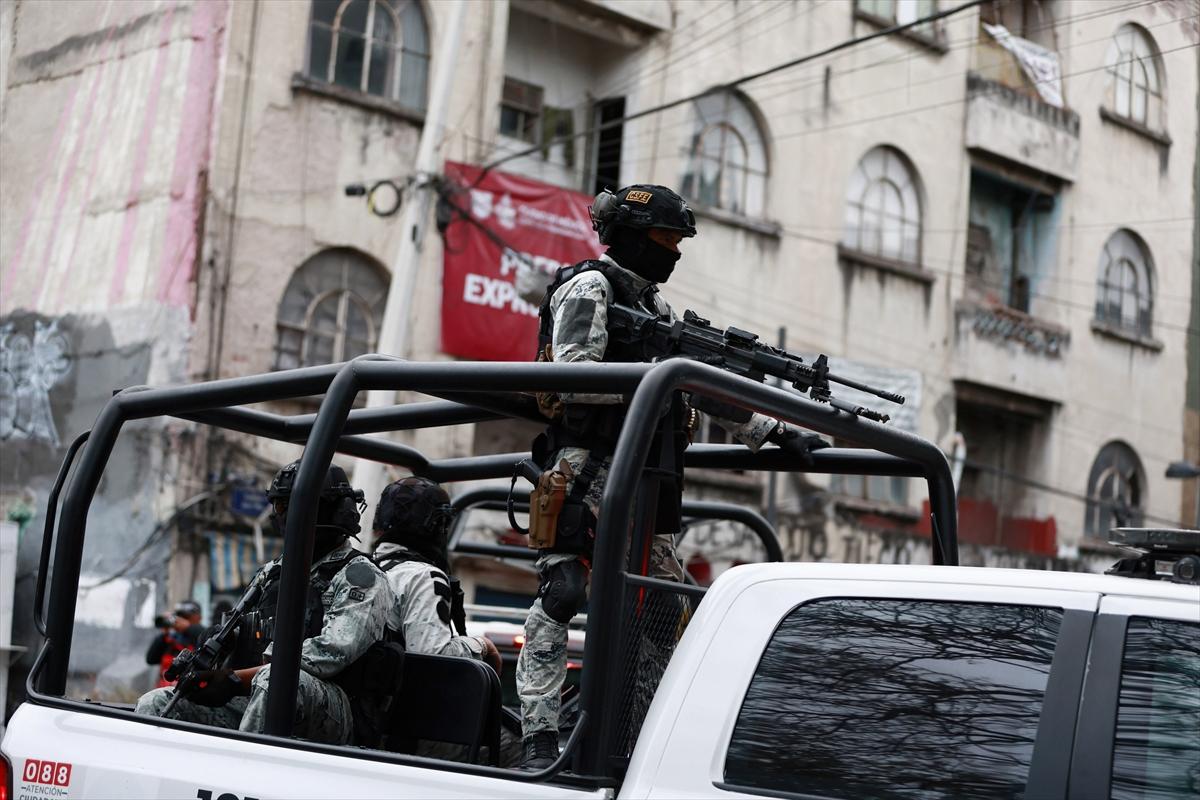
The operation was conducted by the Mexican National Defense Ministry (Secretaría de la Defensa Nacional). It involved elements of the Mexican Army, the Mexican Air Force and special forces units.
According to the Defense Ministry, the objective of the operation was to capture Nemesio Rubén Oseguera Cervantes alive. Federal security forces were deployed and the country was placed on alert during the operation.
Intelligence provided by U.S. authorities supported Mexican officials in carrying out the operation. The Mexican Defense Ministry confirmed that information sharing occurred between Mexico and the United States under a bilateral coordination framework. White House Press Secretary Karoline Leavitt stated that the U.S. government provided intelligence support for the operation.
Course of the Operation
On 22 February 2026, in the town of Tapalpa in southern Jalisco, the operation to capture Nemesio Rubén Oseguera Cervantes began. During the operation, military units came under fire and an armed clash erupted between security forces and cartel members.
At the scene, four cartel members were killed and three others were injured, including Nemesio Rubén Oseguera Cervantes. Two individuals were detained. Security forces seized armored vehicles, heavy weapons and rocket launchers. Three military personnel were injured and received medical treatment.
Death of Nemesio Rubén Oseguera Cervantes
Nemesio Rubén Oseguera Cervantes sustained serious injuries during the operation. He was subsequently airlifted to Mexico City. According to the Defense Ministry, he died during transport. Following the incident, Mexican authorities conducted identity verification and forensic procedures.
Violence Following the Operation
Following the death of Nemesio Rubén Oseguera Cervantes, cartel members carried out numerous road blockades and arson attacks. According to authorities, over 250 road blockades occurred in 20 Mexican states.
The violence primarily affected Jalisco, as well as Michoacán, Guanajuato and other states. Gunfire was heard in Guadalajara, the capital of Jalisco, where vehicles and businesses were set on fire.
In Zapopan, road blockades were also carried out, and security incidents occurred in Puerto Vallarta. Burned vehicles were reported in some areas of Guadalajara.
At least 14 people were killed in Jalisco, Michoacán and Guanajuato. Among the dead were seven National Guard personnel.
Impact on Civil Life and Transportation Systems
Following the operation, civilians in Guadalajara, the capital of Jalisco, remained indoors and nighttime activity declined. Some states suspended school operations for one day. Taxis and certain businesses in Puerto Vallarta halted operations.
Mexican President Claudia Sheinbaum, in a social media statement, urged the public to “remain calm”. She also stated that daily activities continued across most of the country.
U.S. and International Warnings
The U.S. Embassy issued a “stay where you are” advisory for U.S. citizens in certain areas of Jalisco, Tamaulipas, Michoacán, Guerrero and Nuevo León.
The U.S. Embassy also noted that road blockades disrupted air operations, resulting in the cancellation of several domestic and international flights from Guadalajara and Puerto Vallarta.
Cancellations in Aviation and Transportation
Due to the security situation in Puerto Vallarta, Air Canada suspended its flights. Delta, American Airlines and Alaska Airlines also reported cancellations and delays. Road blockades disrupted land transportation, causing traffic interruptions in several states.