


This article was automatically translated from the original Turkish version.
+2 More
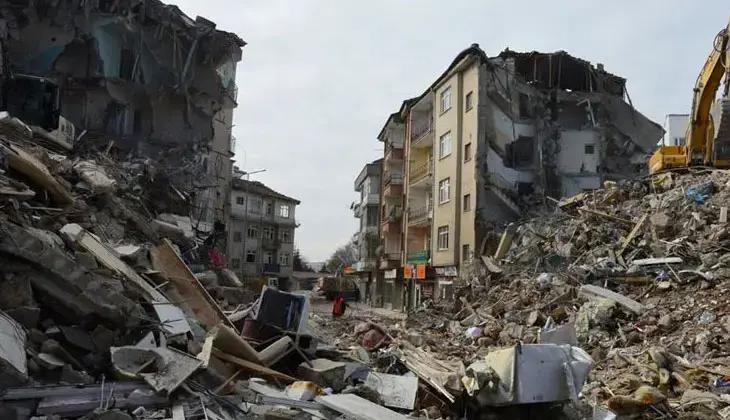
On 24 January 2020, a magnitude Mw 6.8 earthquake occurred with its epicenter in Çevrimtaş village of the Sivrice district in Elazığ. This shallow-focus earthquake took place on the Pütürge segment of the East Anatolian Fault System (EAFS) and was felt in Elazığ and surrounding provinces. The earthquake resulted in 41 fatalities, 1,607 injuries, and direct impact on approximately 47,800 people. In the city center of Elazığ, 13 percent of approximately 27,438 buildings sustained damage, particularly older structures located on alluvial soils that suffered severe damage.

Collapsed Buildings (BBC)
Elazığ is located in the Upper Euphrates region of Eastern Anatolia, within a seismically active zone between the North Anatolian and East Anatolian Fault Zones. On 24 January 2020 at 20:55 local time, a magnitude Mw 6.8 earthquake occurred with its epicenter in Çevrimtaş village, Sivrice district. The earthquake had a focal depth of approximately 5 km, classifying it as a shallow-focus event. Boğaziçi University Kandilli Observatory recorded the magnitude as Ml 6.6, while AFAD recorded it as Mw 6.8. This discrepancy arises from the use of different measurement methods (Richter scale and moment magnitude). The earthquake caused significant damage in Elazığ and Malatya and was felt in neighboring provinces such as Adıyaman, Kahramanmaraş, Diyarbakır, and Tunceli, although no major damage was reported in these areas.
The geological origin of the earthquake lies within the Pütürge segment of the East Anatolian Fault System. The EAFS is a left-lateral strike-slip transform fault extending from Karlıova in the northeast to Hatay in the southwest. The rupture occurred along an area of approximately 50–55 km and released energy equivalent to a 20-kiloton Hiroshima atomic bomb.
Geologically, Elazığ is built upon various units including alluvial plains, Keban Metamorphics, Elazığ Magmatics, Harami Formation, Kirkgeçit Formation, and Karabakır Formation. Approximately 90 percent of the city center lies on alluvial soil, which amplifies seismic waves and intensifies damage. The amplification factor for alluvial soils ranges from 13–18 for silty clay, and 7–12 for sandy gravelly clay and sand-gravel mixtures, while it drops to 2–5 on more competent substrates such as the Kirkgeçit Formation and Elazığ Magmatics.
The epicenter was located in Çevrimtaş village, 20 km from Sivrice district center and 35 km from Elazığ city center. According to AFAD data, the maximum ground acceleration recorded in Elazığ city center was 0.30 g, below the 0.40 g predicted by the Turkish Seismic Hazard Map. In Sivrice, it reached 0.63 g, and in Doğanyol district of Malatya, it was recorded at 0.65 g. Between the mainshock and 8 February 2020, 1,185 aftershocks with magnitudes ranging from 1.2 to 5.1 occurred. Kandilli Observatory noted that the earthquake resulted from rupture along a fault line approximately 40 km long and was felt at intensity VII (very strong) on the Mercalli Intensity Scale at the epicenter.
Following the earthquake, the Ministry of Environment and Urbanization initiated damage assessment surveys with 1,175 technical personnel and published final results on 17 February 2020. A total of 86,595 buildings (281,077 independent units) in Elazığ province were inspected, with 16,606 buildings (38,548 independent units) classified as collapsed, urgently requiring demolition, or severely damaged. In the city center, 3,527 of the 27,438 buildings (13 percent) sustained damage, and 17,854 residential units fell into categories of collapsed, urgently requiring demolition, severely or moderately damaged. Additionally, 4,663 independent units, mostly commercial establishments and warehouses, were damaged.
The neighborhoods suffering the most damage were Aksaray, Abdullahpaşa, Sürsürü, Mustafapaşa, Hicret, and Sanayi, all located on alluvial soils with older building stock. For example, in Aksaray, 47 buildings were collapsed or urgently requiring demolition and 256 were severely damaged; in Abdullahpaşa, 371 buildings were damaged. In contrast, neighborhoods such as Safran, Çaydaçıra, Alayaprak, Esentepe, and Hilalkent experienced low damage levels, as they are situated on more competent substrates such as the Kirkgeçit Formation or Elazığ Magmatics or feature newer building stock.
According to the Mercalli Intensity Scale, the earthquake was felt at intensities ranging from 5 to 8.5 in the city center. Neighborhoods including Aksaray, Kızılay, Mustafapaşa, Rüstempaşa, Nailbey, Çarşı, Rızaiye, İcadiye, and Sarayatik, due to their alluvial substrates and older buildings, experienced intensities of 8–8.5 (destructive). Areas with moderately damaged buildings such as İzzetpaşa, Üniversite, and the western part of Sürsürü were affected at intensities of 6–6.9 (strong), while neighborhoods with concentrated new construction such as Ataşehir experienced intensities of 5–5.9 (very strong).
Following the earthquake, one of the largest urban transformation projects in Turkish history was launched in Elazığ. The Ministry of Environment and Urbanization declared Abdullahpaşa, Mustafapaşa, Rüstempaşa, Sürsürü, and Gölbaşı neighborhood of Sivrice as high-risk zones and initiated construction of 20,160 housing units. As of 2021, 140 of the 2,287 planned units in Abdullahpaşa and 179 in Sürsürü had been delivered, with construction ongoing in other neighborhoods. Projects led by TOKİ are being constructed in compliance with earthquake regulations.
A total of 55,970,642 Turkish Lira in rental assistance was provided to 6,277 property owners and 933 tenants in high-risk zones, while 154 individuals received 35,432,926 Turkish Lira as expropriation compensation. Rental assistance was provided monthly at 905 Turkish Lira until construction completion in high-risk zones, and for 18 months in other areas. Under AFAD coordination, 3,829 personnel, 22 search-and-rescue dogs, 568 ground vehicles, and 5 aircraft were deployed for rescue operations. The Turkish Red Crescent dispatched 31 personnel, 6 catering vehicles, 5 communication vehicles, and 3 mobile kitchen trucks to the region.
A second earthquake of magnitude Mw 5.3 on 27 December 2020 caused 884 of the 983 previously moderately damaged buildings to be reclassified as severely damaged. Damage assessment for this event was completed and the results published on 17 May 2021.
The earthquake directly affected approximately 47,800 people in Elazığ, equivalent to 13 percent of the total population, leaving them homeless. Occurring during winter, the disaster made life in tent and container cities extremely difficult, leading to health problems and disruptions in social life. The fact that 95 percent of the 4,663 damaged independent units were commercial establishments increased economic losses. Rising demand for housing triggered sharp increases in rent and property prices.

People Waiting Outdoors Late Into the Night (BBC)
The 24 January 2020 Elazığ-Sivrice earthquake demonstrated how alluvial soils and aging building stock amplify seismic damage. Urban transformation, renewal of old structures, and construction in compliance with earthquake regulations are critical to mitigating the impact of similar disasters. Additionally, directing urban expansion toward geologically stable slopes and preserving agricultural land is vital for maintaining human-nature harmony. Although rapid post-earthquake intervention and urban transformation projects accelerated Elazığ’s recovery, ongoing efforts are required for long-term planning and monitoring.
BBC Türkçe. “Elazığ Depremi: 6,8 Büyüklüğündeki Sarsıntı Can Kaybı ve Hasara Yol Açtı.” Accessed May 21, 2025. https://www.bbc.com/turkce/haberler-turkiye-51244459.
Elazığ Çevre and Urbanization Provincial Directorate. “2020 Yılı İçerisinde Elazığ’da Meydana Gelen Depremler ve Sonrasında Yapılan Çalışmalar.” 2021. Accessed May 21, 2025. https://elazig.csb.gov.tr/2020-yili-icerisinde-elazig-da-meydana-gelen-depremler-ve-sonrasinda-yapilan-calismalar-haber-260760.
Kandilli Rasathanesi. "24 January Sivrice-Elazığ Depremi Press Bulletin." 2020. Accessed May 21, 2025. http://www.koeri.boun.edu.tr/sismo/2/24-ocak-sivrice-elazig-depremi-2/.
Şıkoğlu, E., and Y. İnce Güney. “24 Ocak 2020 Sivrice (Elazığ) Depremi’nin Kent Merkezindeki Yansıması Üzerine Coğrafi Bir Değerlendirme.” *Resilience* 4, no. 2 (2020): 275–292. Accessed May 21, 2025. https://dergipark.org.tr/tr/pub/resilience/issue/55697/779242.

No Discussion Added Yet
Start discussion for "January 24, 2020 Elazığ Sivrice Earthquake" article
General Information
Geological and Seismic Characteristics of the Earthquake
Damage Assessment and Affected Areas
Urban Transformation and Relief Efforts
Social and Economic Impacts