

This article was automatically translated from the original Turkish version.
+2 More
The Kadıoğlu Mosaics are located within the boundaries of Kadıoğlu Village, in the Çaycuma district of Zonguldak province. The site is situated approximately 45 km southeast of the city center of Zonguldak. The mosaics were uncovered during rescue excavations carried out by the Zonguldak Ereğli Museum Directorate between 2008 and 2010. The excavations took place on privately owned land, during which the presence of a Roman-era villa rustica architectural complex was identified.
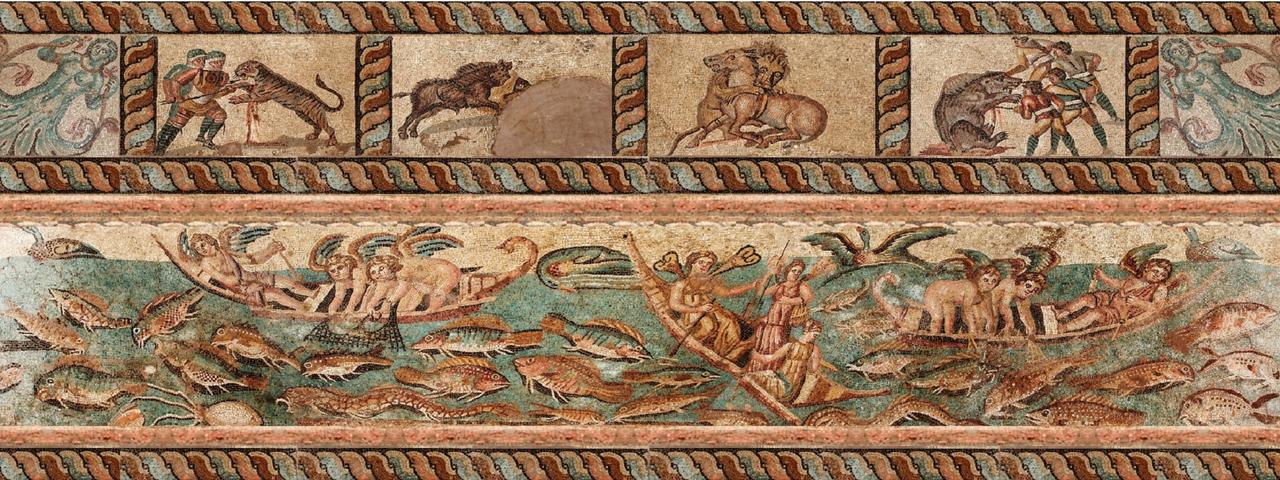
Kadıoğlu Mosaics (Caycuma)
As a result of the excavations, a structural layout consisting of apsidal rooms and other spaces with distinct functions was determined. The mosaics form the flooring of this building. In addition, ceramic fragments, small artifacts, and a silver coin dated to the reign of Emperor Valerianus were recovered. These findings indicate that the architectural complex was in use during the final quarter of the 3rd century CE. Following excavation, the mosaics were preserved in situ by covering them with geotextile and fill material to ensure their protection.
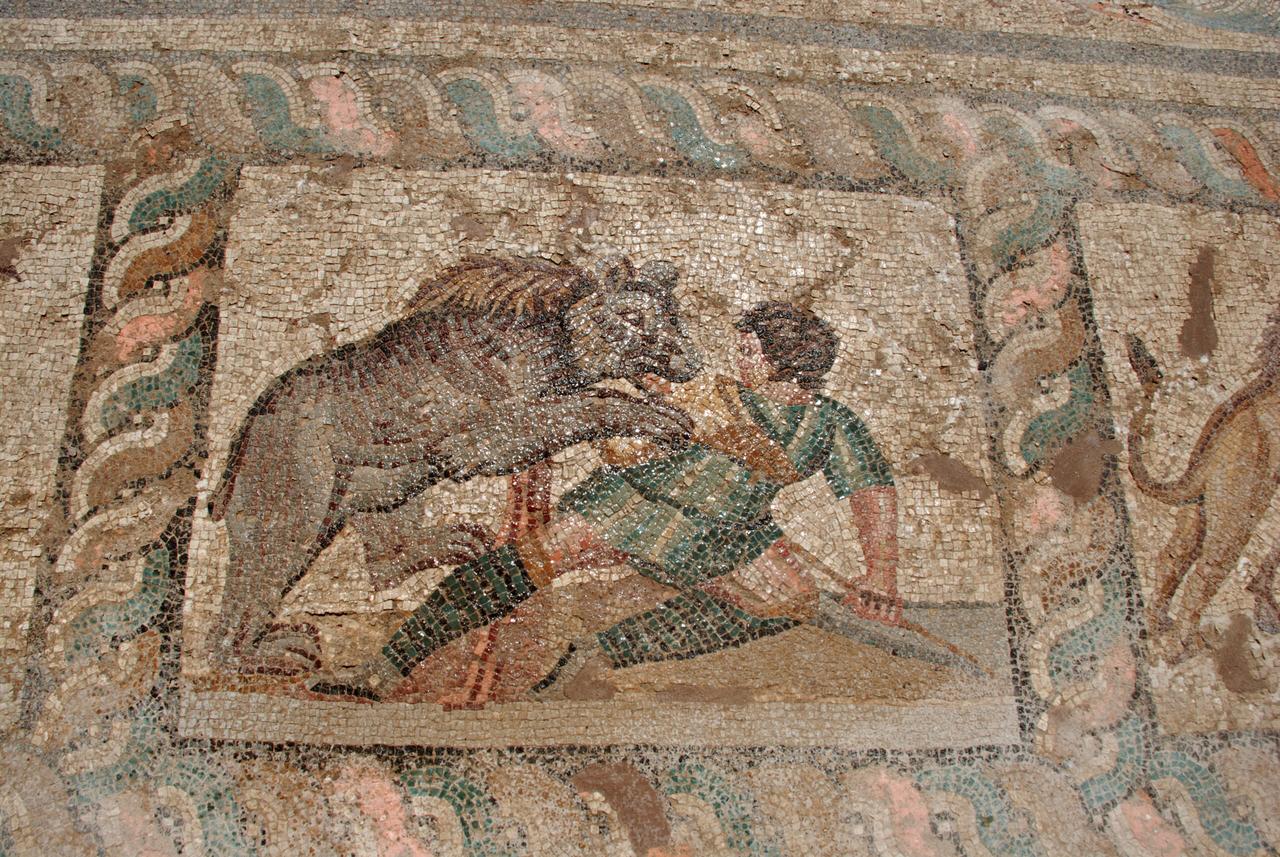
Hunting Scene (Caycuma)
The Kadıoğlu Mosaics consist of three main floor panels. The first panel depicts a mythological scene titled “Lykurgos and Ambrosia.” The composition features a male and a female figure amid grapevines, associated with the mythology of Dionysus. The second panel is dominated by geometric motifs in a decorative arrangement. The third panel stands out for its figurative composition and multi-row border design. This panel includes hunting scenes, animal combats, depictions of Eros and Psyche【1】, marine creatures, and water nymphs.
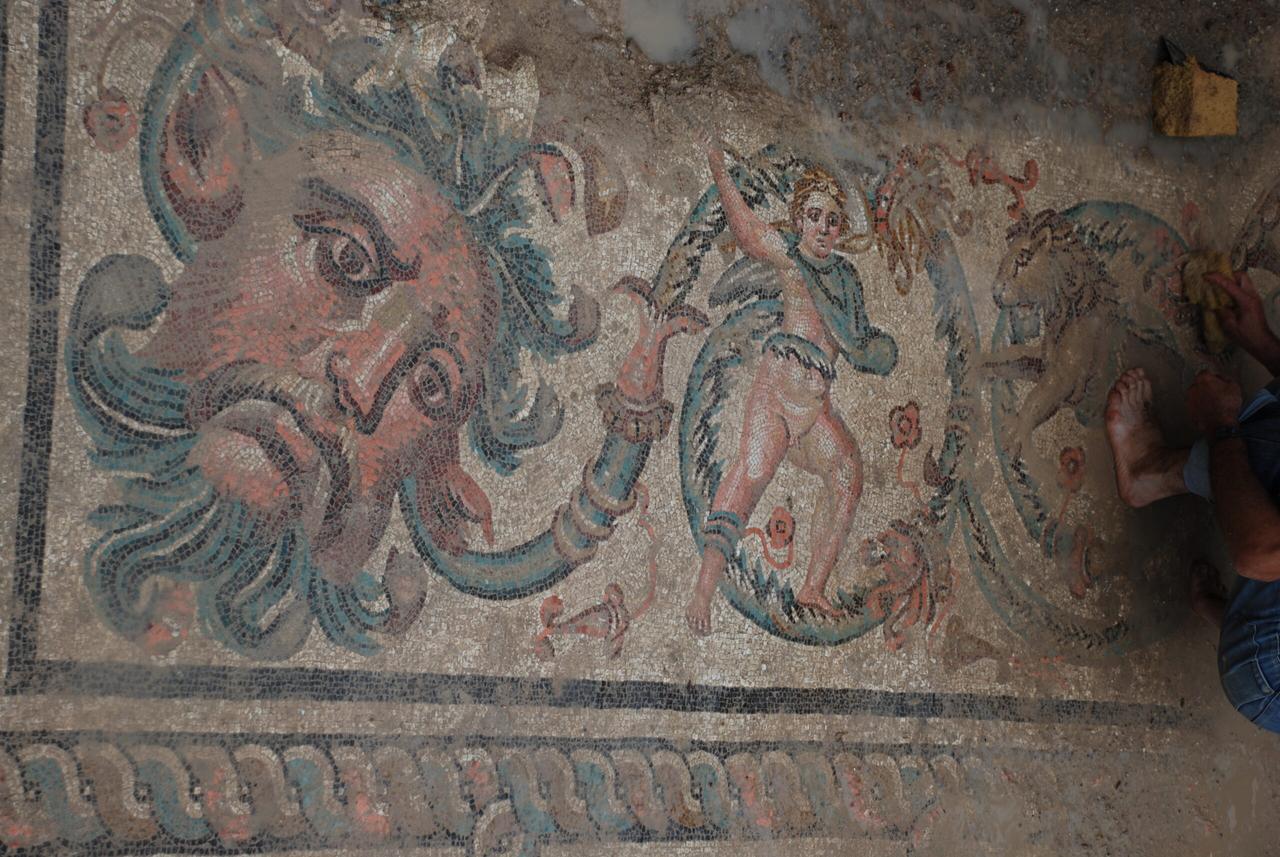
Lykurgos and Ambrosia, Large Face (Mask) (Caycuma)
In the four corners of the third panel, four bearded male masks are depicted. These masks are arranged within acanthus scrolls alongside Eros and animal figures. The large eyes and bearded features of the faces, the lobster-claw-like elements at ear level, and the vegetal arrangements of hair and beard suggest a connection with the sea god Oceanus. The placement of the masks at the corners of the mosaic aligns with a known Roman mosaic tradition of protective iconography.
When stylistic features, iconographic elements, and excavation finds are considered together, the Kadıoğlu Mosaics are dated to the late 3rd century CE. The mosaics represent examples in which distinct regional artistic traditions of Roman Anatolia were combined.
[1]
Zeugma Mosaic Museum. “Love: Eros and Psyche.” Zeugma Mosaic Museum. Accessed: 30 December 2025

Architectural and Archaeological Context
Mosaic Panels
Mask Depictions
Dating
