


This article was automatically translated from the original Turkish version.
+2 More
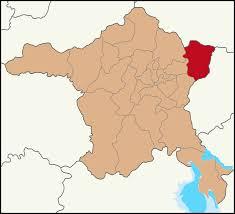
Kalecik
Province(s) | Ankara | ||||||||
|---|---|---|---|---|---|---|---|---|---|
Geographic Region | Central Anatolia | ||||||||
Population | 13,012 | ||||||||
District Governor | Uhut Emre Koyuncu | ||||||||
Mayor(s) | Satılmış Karakoç | ||||||||
Kalecik is a district in the Central Anatolia Region of Türkiye, affiliated with Ankara. Located approximately 70 kilometers from the city center of Ankara, Kalecik lies in the northeastern part of the province along the banks of the Kızılırmak River. To the north lies Çankırı Province, to the east the Keskin district of Kırıkkale, to the south the Akyurt district, and to the west the Elmadağ district. With an area of approximately 1,104 km², Kalecik is among the medium-sized districts of Ankara in terms of land area.

Ankara, Kalecik – General View (Kalecik Municipality)
The history of Kalecik dates back to ancient times. Archaeological investigations in the region have revealed that settlement extends as far back as the Hittite period. The name of the district derives from the castle located in the center, which is believed to date from the Roman-Byzantine era.
Throughout history, Kalecik has been under the rule of the Phrygians, Romans, Byzantines, Seljuks, and Ottomans. During the Ottoman period, Kalecik was an important settlement within the Ankara Sanjak and gained prominence in the 17th and 18th centuries for its viticulture and commercial potential. After the proclamation of the Republic, Kalecik continued its development and attained district status in 1929.
The elevation of Kalecik is approximately 725 meters. The geography of the district is characterized by the steppe and undulating terrain typical of Central Anatolia. Kalecik possesses fertile agricultural lands along the Kızılırmak River. Vineyards, wheat fields, and legume crops are widespread in the district. Additionally, non-agricultural natural habitats exist in the Kalecik Mountains and rural areas.
The climate exhibits the typical continental characteristics of Central Anatolia: hot and dry summers and cold, snowy winters. However, microclimatic variations are observed in the Kızılırmak Valley.
According to TÜİK 2024 data, the total population of Kalecik is 13,012. With this population, Kalecik is among the medium-sized districts of Ankara in terms of population. The majority of the population resides in the district center, while lower-density settlements are spread across more than 50 neighborhoods and villages under the district’s jurisdiction. In recent years, the youth population has declined due to emigration outside the district, but an increase in student population has been observed thanks to Ankara University Kalecik Vocational School.
The economy of Kalecik is largely based on agriculture and animal husbandry. The district’s most important agricultural product is the black grape variety known as Kalecik Karası. Wines produced from this grape are recognized both nationally and internationally. Wheat, barley, lentils, and sunflower are also widely cultivated. Thanks to the Kızılırmak River, the district benefits from fertile irrigation opportunities.

Ankara, Kalecik Karası Grape (Kalecik Municipality)
Small and large livestock farming are practiced, while poultry farming and beekeeping also contribute to the local economy. Agriculture-based industry and the sale of homemade products such as grape molasses, walnut-stuffed sausage, and jams provide additional economic value to the district.
Kalecik possesses significant potential for cultural and rural tourism due to its natural beauty and historical structures. The Kalecik Castle, the Historical Stone Bridge, traditional Ottoman houses, mosques, baths, and vineyards attract visitors.
The annual Kalecik Karası Grape Festival is one of the most important events reflecting the district’s cultural identity. The festival features grape competitions, folk dances, regional music performances, and handicraft exhibitions. Traditional arts such as hand weaving and wood carving are also integral parts of the local culture.
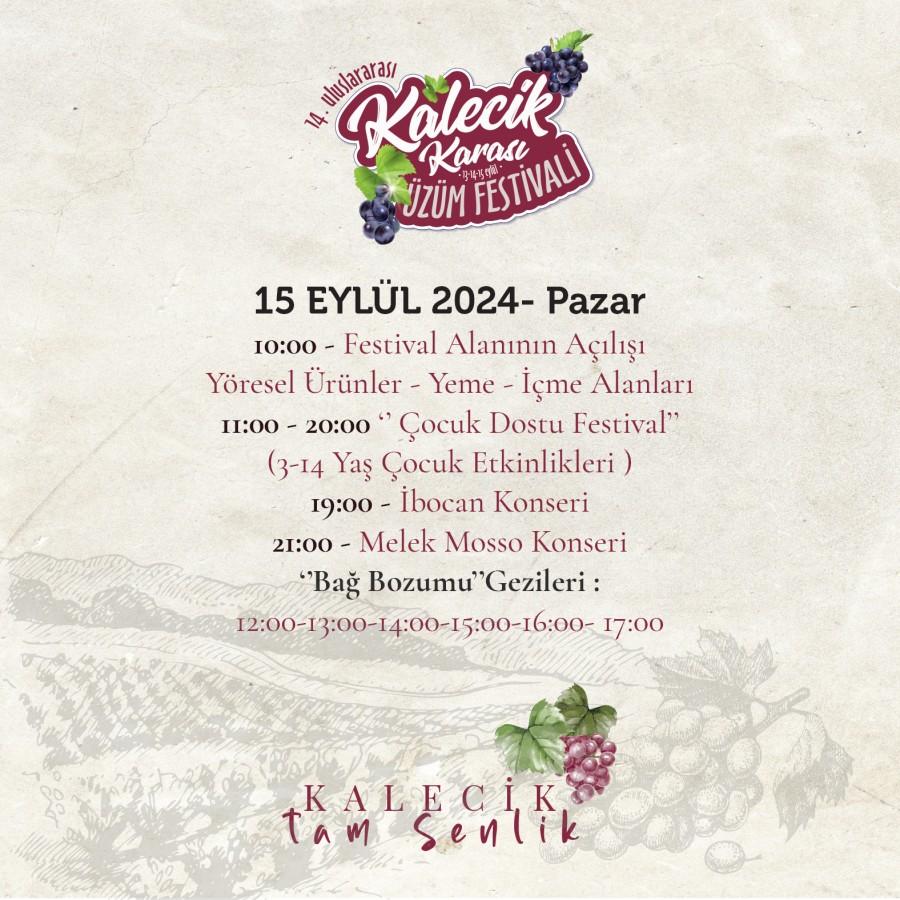
Ankara, Kalecik Karası Grape Festival Brochure (Kalecik Municipality)
Kalecik cuisine embodies the flavors of Central Anatolia. Dishes such as tarhana soup, keşkek, lentil stews with meat, tandır kebab, homemade erişte pasta, and jams stand out. Grape molasses, walnut-stuffed sausage, and homemade wines are among the district’s distinctive products.
Ankara İl Kültür ve Turizm Müdürlüğü. “Kalecik.” Ankara İl Kültür ve Turizm Müdürlüğü Resmî Web Sitesi. Accessed May 20, 2025. https://ankara.ktb.gov.tr/TR-152774/kalecik.html
Kalecik Belediyesi. "Tarihçe." Kalecik Municipality Official Website. Accessed May 20, 2025. https://kalecik.bel.tr/sayfa/tarihce
T.C.Kalecik Kaymakamlığı Governorship. “İlçemiz.” T.C. Kalecik District Governorship Official Website. Accessed May 20, 2025. http://kalecik.gov.tr/ilcemiz
Türkiye İstatistik Institute (TÜİK). (2025). “Adrese Dayalı Nüfus Kayıt Sistemi Sonuçları, 2024”. Accessed May 20, 2025. https://data.tuik.gov.tr/Bulten/Index?p=Adrese-Dayali-Nufus-Kayit-Sistemi-Sonuclari-2024-53783

Kalecik
Province(s) | Ankara | ||||||||
|---|---|---|---|---|---|---|---|---|---|
Geographic Region | Central Anatolia | ||||||||
Population | 13,012 | ||||||||
District Governor | Uhut Emre Koyuncu | ||||||||
Mayor(s) | Satılmış Karakoç | ||||||||
History
Geography and Climate
Population and Demographic Structure
Economy
Tourism, Culture and Cuisine