


This article was automatically translated from the original Turkish version.
+1 More
Location | Nevşehir Cappadocia | ||||||||
|---|---|---|---|---|---|---|---|---|---|
Discovery(ies) | 2014 | ||||||||
Status | Third-degree archaeological site | ||||||||
Period(s) | 6th century (Monastery) 12th century (Byzantine Castle) | ||||||||
Area(s) | 120 000 m² (Phase 1) | ||||||||
Date of Opening to Visitors | 2020 | ||||||||
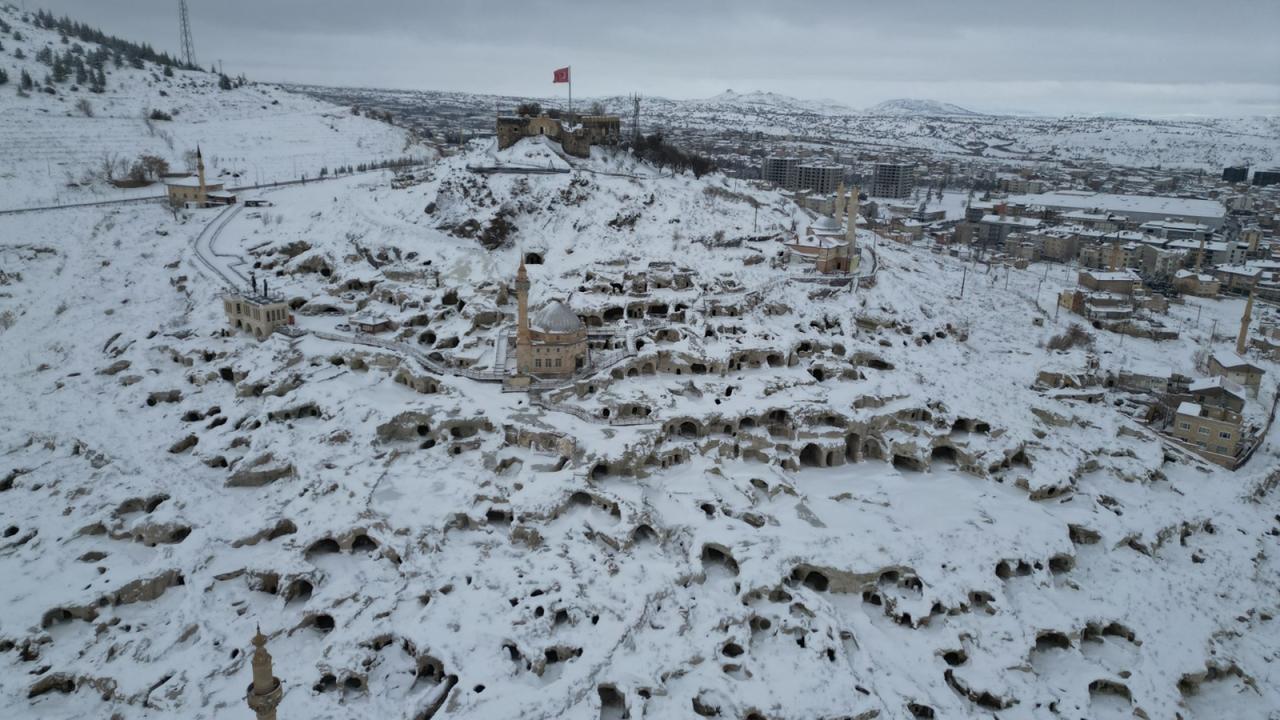
Kayaşehir is located at the foot of Nevşehir Castle in the center of Nevşehir province. It was discovered during excavations carried out in 2014 as part of the “Nevşehir Castle and Surroundings Urban Transformation Project” conducted by the Nevşehir Municipality and the Housing Development Administration of Türkiye (TOKİ). As a result of these urban transformation excavations, a multi-layered and multifunctional settlement structure was identified beneath the surface.
The area, designated as a protected site by the Ministry of Culture and Tourism, has been the focus of archaeological excavations, cleaning, and restoration work since 2015. To date, a monastery dating to the 6th century, a church with frescoes from the 12th century, numerous rock-cut tombs, passageways, tunnels, and various spaces have been uncovered. According to investigations, Kayaşehir bears traces from the Byzantine, Roman, Seljuk, Ottoman, and Republican periods and is therefore regarded as a multi-layered settlement.

Kayaşehir (Anadolu Agency)
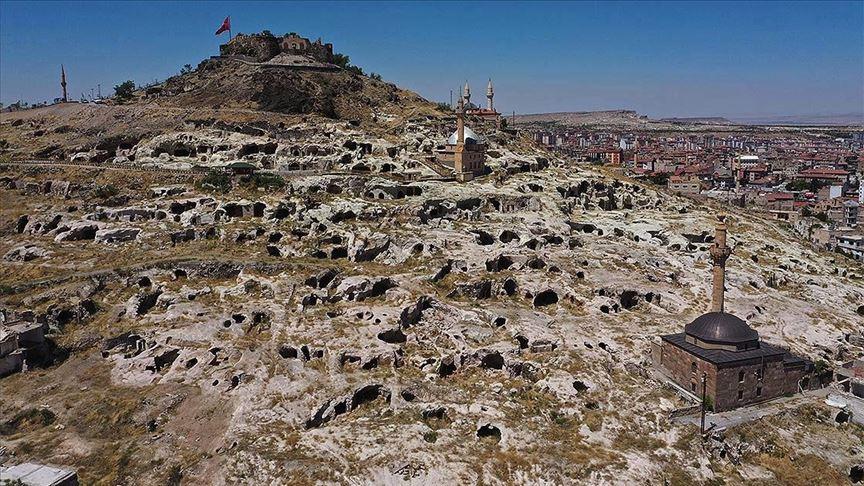
Kayaşehir spreads over an area of approximately 400,000 square meters around Nevşehir Castle. Excavations have revealed more than a thousand rock-cut spaces. These include places of worship, tombs, cisterns, living quarters, stable areas, ventilation shafts, and tunnels.
According to officials at the Nevşehir Museum, a total of 1,271 archaeological artifacts have been recovered during the excavations and transferred to the museum. Some sections of the site appear as a seven-story underground settlement. The structures were created by carving into natural rock formations, and the majority are arranged in stepped tiers along the slope.

Kayaşehir (Anadolu Agency)
Kayaşehir is shaped by the distinctive rock-carved architecture of the Cappadocia region. The structures identified in the area primarily consist of rooms carved into tuff rock masses. Most of these buildings are organized as multi-room dwellings, communal living spaces, storage areas, and stables.
One of the religious structures found at the site is a monastery dating to the 6th century. Additionally, a church from the 12th century containing frescoes depicting the birth of Jesus Christ has been uncovered. These frescoes are noted to have been executed using techniques characteristic of Byzantine art.
Numerous rooms connected by passageways and tunnels were used for both daily life and defensive purposes. Ventilation shafts and cistern systems are also located on the upper levels of the site. The rock settlement exhibits a layered structure along the slope.
Kayaşehir (Anadolu Agency)
Anadolu Ajansı. "Kapadokya'daki Tarihi Kayaşehir Konuklarını Ağırlıyor." Accessed June 17, 2025. https://www.aa.com.tr/tr/kultur-sanat/kapadokyadaki-tarihi-kayasehir-konuklarini-agirliyor/1923742
Anadolu Ajansı. "Tarihi Kayaşehir Turistlere Gece Gündüz Ev Sahipliği Yapıyor." Accessed June 17, 2025. https://www.aa.com.tr/tr/turkiye/tarihi-kayasehir-turistlere-gece-gunduz-ev-sahipligi-yapiyor-/1936943
Nevşehir Belediyesi. "Tarihi Kayaşehir Yerli ve Yabancı Konuklarını Ağırlıyor." Accessed June 17, 2025. https://www.nevsehir.bel.tr/haber-detay/10002/tarihi-kayasehir-yerli-ve-yabanci-konuklarini-agirliyor
T.C. Ministry of Culture and Tourism. "Nevşehir'de Tesadüfen Ortaya Çıkarılan 'Kayaşehir' Turizme Açıldı." Accessed June 17, 2025. https://basin.ktb.gov.tr/TR-269822/nevsehir39de-tesadufen-ortaya-cikarilan-kayasehir-turizme-acildi.html

Location | Nevşehir Cappadocia | ||||||||
|---|---|---|---|---|---|---|---|---|---|
Discovery(ies) | 2014 | ||||||||
Status | Third-degree archaeological site | ||||||||
Period(s) | 6th century (Monastery) 12th century (Byzantine Castle) | ||||||||
Area(s) | 120 000 m² (Phase 1) | ||||||||
Date of Opening to Visitors | 2020 | ||||||||
Features
Architecture