


This article was automatically translated from the original Turkish version.
+2 More
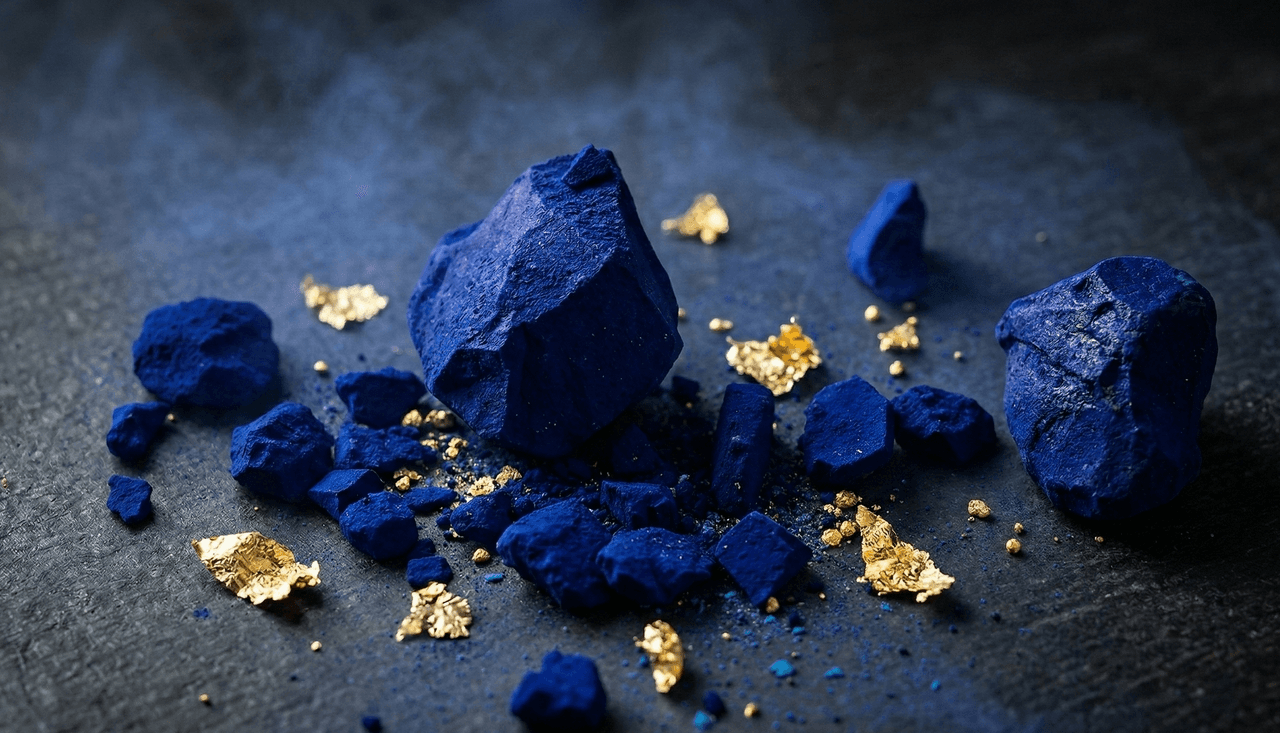
Lahor çiviti pigmenti.(yapay zeka ile üretilmiştir)
Lahor çiviti is a plant-based inorganic pigment used in traditional Turkish ebru art to achieve blue and navy tones. It is also known as child’s madder and is utilized in pharmaceutical production. In ebru art, water-soluble aniline dyes are not used because they lack opacity; instead, metal oxides, earths, and minerals obtained directly from nature—without laboratory synthesis—are preferred. Since mixing pigments with acids or similar chemicals to ensure adhesion to paper causes the paper to burn and deteriorate over time, natural pigments such as Lahor çiviti, which contain no harmful acids, are employed in ebru art to prevent damage to the paper.【1】
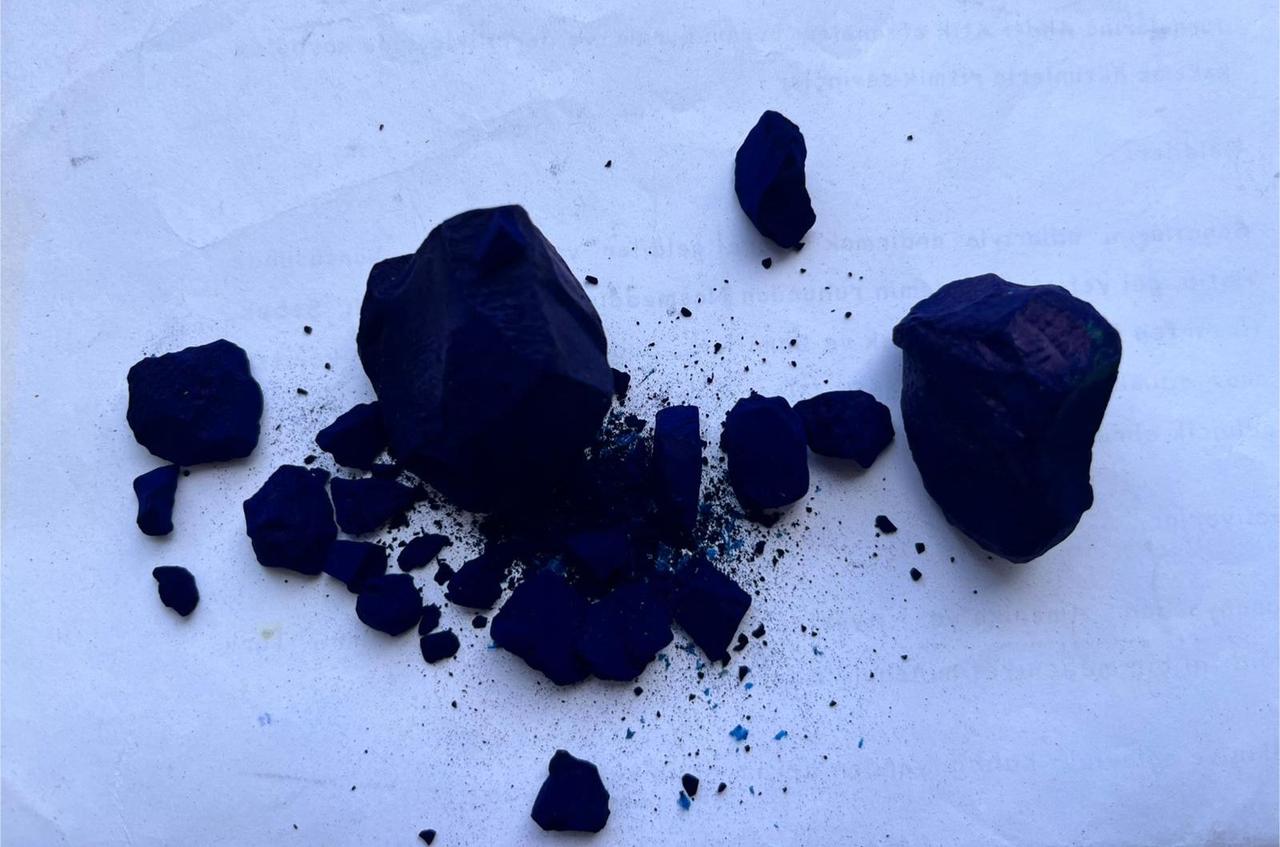
Natural Lahor çiviti pigment. (Photo: Umut Taş)
This natural pigment is applied to the ebru tray using brushes made from rose twigs and horsehair, after being treated with gum tragacanth to thicken the water and cattle gall to enable the pigment to float on the surface. Lahor çiviti is specifically favored in certain ebru techniques. In kılçıklı ebru, pigments containing Lahor çiviti or those with reduced water viscosity are particularly used; when left to dry on the tray surface, these pigments crack and produce a texture resembling fine hairs. Similarly, in somaki ebru, after the background has been combed using techniques such as gel-git ebru, coarse granules of Lahor çiviti are scattered over the surface, pressing down the underlying pattern to create textures resembling marble veins.【2】
The indigo plant is a botanical source universally employed for blue dye production and known in scientific literature as "Indigofera." This plant family, comprising approximately eight hundred local species in tropical and subtropical regions, includes "Indigofera tinctoria L." as the most effective species for blue dyeing. This tropical plant yields a wide spectrum of vibrant hues ranging from deep navy to the lightest blues. Due to its high color quality, indigo dye has been traditionally applied for centuries across a vast geographical area including the Mediterranean Basin, Africa, the Far East, India, and South America.【3】
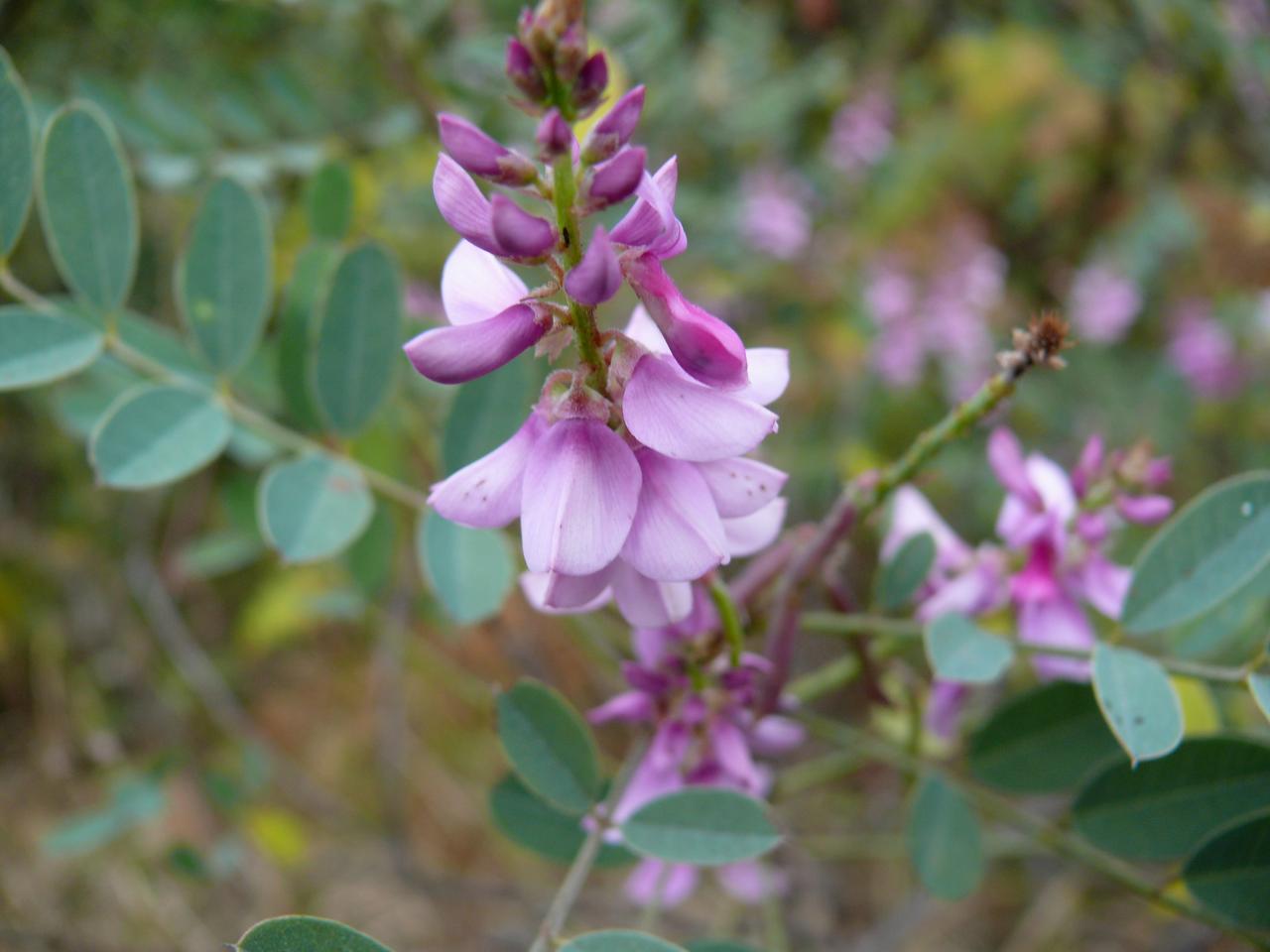
Indigofera plant in its natural habitat. (Photo: Flickr)
Native to India, this plant belongs to the genus Indigofera within the Fabaceae family. It is an annual shrub reaching up to 1.5 meters in height, and its leaves are the source of blue dye. The leaves naturally contain a colorless compound called indican glucoside. Under the action of enzymes and weak acids, this compound transforms into colorless indoxyl, which then reacts with oxygen in the air to form the blue-colored indigo dye.【4】
In societies adhering to Islamic faith, book arts—particularly calligraphy—have received far greater emphasis and undergone more significant development than other art forms. As religious, historical, literary, and scientific works proliferated throughout history, numerous manuscripts and translations were produced and adorned with various decorative elements.【5】
To enable pigments used in traditional Turkish ebru art to float on the water surface and transfer effectively to paper, they must be treated with specific materials. The plant-based blue pigment Lahor çiviti is treated with gum tragacanth to thicken the water and cattle gall to enhance surface adhesion, then applied to the tray using brushes made from rose twigs and horsehair. Lahor çiviti plays a direct role in specialized ebru techniques such as kılçıklı and somaki. In kılçıklı ebru, pigments containing Lahor çiviti or those with reduced water content are used; upon drying on the tray surface, they crack and produce a hair-like texture. In somaki ebru, after the background has been combed, coarse granules of Lahor çiviti are scattered over the surface, pressing down the underlying pattern to create textures resembling marble veins.【6】
Derived from the Arabic word "zeheb," meaning gold, tezhip is a decorative art form based on fine brushwork, used in Islamic societies to embellish manuscripts, especially calligraphy. In manuscript decoration, just as in ebru art, where acid-free natural pigments such as Lahor çiviti are employed to preserve the paper’s integrity, tezhip art also utilizes earth pigments derived from nature alongside gold. The most important factor ensuring the longevity of traditional artworks—allowing them to endure for centuries without fading or deteriorating—is the use of natural materials such as Lahor çiviti.【7】
In the Ottoman Empire, ebru art was not only an aesthetic embellishment but also a functional tool for securing official records. Examination of financial ledgers from the Ministry of Finance reveals that ebru patterns applied to the bindings and margins of these documents played a crucial role in preventing forgery. One of the most important factors ensuring the durability of these official ebru designs is the preference for natural pigments such as Lahor çiviti, which contain no acids and do not degrade paper over time. The preservation of color in these archival volumes over centuries is a direct result of the use of these natural pigments and traditional treatment methods.【8】
Approximately eight hundred local species of the Indigofera plant, used for blue dye production, grow in tropical and subtropical regions. The dye derived from this plant family has been used throughout history across a vast geographical area stretching from Asia to Europe in textile dyeing and traditional art practices. The widespread use of indigo reflects historical economic, cultural, and artistic interactions.【9】
Alikılıç, Narin, and Alikılıç, Dündar. "Osmanlı Arşiv Belgelerinde Ebru Sanatı: Mâliye Nezâreti Masârifât Defterlerinden Örnekler." *Education and Technology in Information Science* 3, no. 1 (2025): 1-16. Accessed March 8, 2026. https://dergipark.org.tr/tr/download/article-file/4816629
Batur Ercivan, Gülcan. "Mavi Boya İndigo Bitkisinin Tarihsel Serüveni." Uluslararası Sosyal Araştırmalar Dergisi 11, no. 60 (2018): 548-555. Accessed March 8, 2026. https://www.academia.edu/115056746/Mavi_Boya_%C4%B0ndi_go_Bi_tki_si_ni_n_Tari_hsel_Ser%C3%BCveni_
Karakuş Sakin, Neval. "Kumlu Hatîb Ebrû Örnekleri." *Sosyal Bilimler Enstitüsü Dergisi*, no. 32 (2012): 213-235. Accessed March 8, 2026. https://dergipark.org.tr/tr/download/article-file/219602
Sadıgov, T. M., Mammadov, R. M., Gafarova, M. A., and Nuriyeva, T. T. "Bakü (Azerbaycan) Ortamında Indigofera tinctoria L. Bitkisinin Kültüre Edilmesinde Mineral ve Organik Gübrelerin Rolü." *TABAD Tarım Bilimleri Araştırma Dergisi* 1, no. 1 (2008): 31–35. Accessed March 8, 2026. https://dergipark.org.tr/tr/download/article-file/412092
Tosun, Gamze. "Tezhip ve Ebru Sanatı." Aydın Adnan Menderes Üniversitesi Karacasu Memnune İnci Meslek Yüksekokulu, 2023. Accessed March 8, 2026. https://www.academia.edu/103197819/TEZH%C4%B0P_ve_EBRU_SANATI
[1]
Gamze Tosun. "Tezhip ve Ebru Sanatı." Aydın Adnan Menderes Üniversitesi Karacasu Memnune İnci Meslek Yüksekokulu, (2023)s,6-13. Erişim Tarihi: 8 Mart 2026.https://www.academia.edu/103197819/TEZH%C4%B0P_ve_EBRU_SANATI
[2]
Gamze Tosun. "Tezhip ve Ebru Sanatı." Aydın Adnan Menderes Üniversitesi Karacasu Memnune İnci Meslek Yüksekokulu, (2023)s,6-13. Erişim Tarihi: 8 Mart 2026.https://www.academia.edu/103197819/TEZH%C4%B0P_ve_EBRU_SANATI
[3]
Gülcan Batur Ercivan. "Mavi Boya İndigo Bitkisinin Tarihsel Serüveni." Uluslararası Sosyal Araştırmalar Dergisi 11, sy. 60 (2018): 548-555. Erişim Tarihi: 8 Mart 2026.https://www.academia.edu/115056746/Mavi_Boya_%C4%B0ndi_go_Bi_tki_si_ni_n_Tari_hsel_Ser%C3%BCveni_
[4]
T. M. Sadıgov, R. M. Mammadov, M. A. Gafarova ve T. T. Nuriyeva. "Bakü (Azerbaycan) Ortamında Indigofera tinctoria L. Bitkisinin Kültüre Edilmesinde Mineral ve Organik Gübrelerin Rolü." TABAD Tarım Bilimleri Araştırma Dergisi 1, sy. 1 (2008): 31-35. Erişim Tarihi: 8 Mart 2026.https://dergipark.org.tr/tr/download/article-file/412092
[5]
Gamze Tosun. "Tezhip ve Ebru Sanatı." Aydın Adnan Menderes Üniversitesi Karacasu Memnune İnci Meslek Yüksekokulu, (2023)s,6-13. Erişim Tarihi: 8 Mart 2026.https://www.academia.edu/103197819/TEZH%C4%B0P_ve_EBRU_SANATI
[6]
Gamze Tosun. "Tezhip ve Ebru Sanatı." Aydın Adnan Menderes Üniversitesi Karacasu Memnune İnci Meslek Yüksekokulu, (2023)s,6-13. Erişim Tarihi: 8 Mart 2026.https://www.academia.edu/103197819/TEZH%C4%B0P_ve_EBRU_SANATI
[7]
Gamze Tosun. "Tezhip ve Ebru Sanatı." Aydın Adnan Menderes Üniversitesi Karacasu Memnune İnci Meslek Yüksekokulu, (2023)s,6-13. Erişim Tarihi: 8 Mart 2026.https://www.academia.edu/103197819/TEZH%C4%B0P_ve_EBRU_SANATI
[8]
Narin Alikılıç, ve Dündar Alikılıç. "Osmanlı Arşiv Belgelerinde Ebru Sanatı: Mâliye Nezâreti Masârifât Defterlerinden Örnekler." Education and Technology in Information Science 3, sy. 1 (2025): 1-16. Erişim Tarihi: 8 Mart 2026.https://dergipark.org.tr/tr/download/article-file/4816629
[9]
Narin Alikılıç ve Dündar Alikılıç. "Osmanlı Arşiv Belgelerinde Ebru Sanatı: Mâliye Nezâreti Masârifât Defterlerinden Örnekler." Education and Technology in Information Science 3, sy. 1 (2025): 1-16. Erişim Tarihi: 8 Mart 2026.https://dergipark.org.tr/tr/download/article-file/4816629


Lahor çiviti pigmenti.(yapay zeka ile üretilmiştir)
Use of Lahor çiviti in Ebru Art
The Indigofera Plant
Chemical Structure of the Indigofera Plant
Role in Traditional Turkish Arts
Applications in Ebru Art
Use in Tezhip Art
Ebru Art in Ottoman Archival Documents
Global Journey of Indigo Dye