

This article was automatically translated from the original Turkish version.
The Lecornu Government is the forty-seventh government of the French Fifth Republic. The cabinet of Sébastien Lecornu, appointed Prime Minister by President Emmanuel Macron on 9 September 2025, was announced on 5 October 2025. The government served for only 27 days and resigned on 6 October 2025. The Lecornu Government is recorded as the shortest-lived government in the history of the Fifth Republic. Following this resignation, President Macron reappointed Lecornu as Prime Minister on 10 October 2025, leading to the formation of the second Lecornu government.
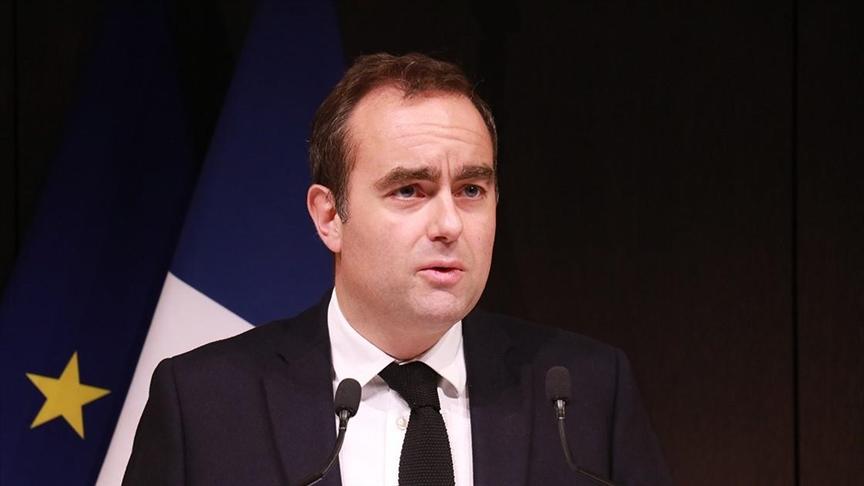
Sébastien Lecornu – (Anadolu Ajansı)
In France, the early general elections held in July 2024 resulted in the National Assembly being divided among three main blocs. Neither the Left Alliance nor President Emmanuel Macron’s centrist coalition (Renaissance and its allies) nor the far-right National Rally Party (Rassemblement National) secured an absolute majority.
During this period, the government led by Michel Barnier resigned at the end of 2024 due to disagreements over the budget. A new government was then formed under François Bayrou. The newly established Bayrou government presented a fiscal discipline plan of 44 billion euros for the 2026 budget. The plan included measures such as freezing public spending, reducing social benefits, and eliminating two official public holidays. Both the Left Alliance (Nouveau Front Populaire) and the far-right National Rally voted against the proposal during the vote of confidence in the National Assembly. Following the vote, the government failed to secure confidence and fell.
Following François Bayrou’s resignation, the Élysée Palace announced its intention to form a new cabinet to ensure governmental continuity, ultimately deciding to appoint Sébastien Lecornu as Prime Minister.
Following the fall of the Bayrou government in September 2025, President Emmanuel Macron appointed Sébastien Lecornu as Prime Minister on 9 September 2025. The Élysée Palace stated that the new Prime Minister’s mission was to “re-establish political and institutional stability” in the country. At 39 years of age, Lecornu became Macron’s seventh Prime Minister. The Élysée’s decision identified resolving the budget crisis and restoring confidence in public finances as top priorities. Prior to his appointment as Prime Minister, Sébastien Lecornu had served as Minister of the Armed Forces.
Lecornu’s appointment as Prime Minister elicited varied reactions across the political spectrum. The Left Alliance and the Socialist Party criticized the choice, arguing that Macron had selected someone from his inner circle. Socialist deputy Philippe Brun described the appointment as “a choice made despite the will of the Assembly.” Far-right leader Jordan Bardella stated that Lecornu would be judged “by his performance.” The party La France Insoumise, led by Jean-Luc Mélenchon, rejected the appointment and announced it would initiate efforts to remove President Macron from office.
After assuming office, Lecornu held a series of consultation meetings with parties represented in the National Assembly. These discussions sought to reach an agreement on a “non-aggression pact” to secure government confidence and pass the budget proposal.
On 5 October 2025, Sébastien Lecornu announced the composition of his new government via a decree issued by the Élysée Palace. The government, approved by President Macron, became the forty-seventh cabinet of the French Fifth Republic. According to the Élysée statement, the cabinet was structured around the principles of “economic stability, institutional continuity, and the continuation of reforms.”
The new cabinet consists of 18 ministers. The official list of the Lecornu Government, as published by the Élysée Palace, is as follows:
In addition:
17. Aurore Bergé – Minister for Gender Equality and the Fight Against Discrimination; also Government Spokesperson
18. Mathieu Lefèvre – Minister in charge of Relations with Parliament
The Élysée Palace announced that the first meeting of the new Cabinet would be held on 6 October 2025 at 16:00 following the appointments.
The composition of the new government largely resembled that of the previous cabinet led by François Bayrou. Key portfolios such as economy foreign affairs interior affairs and justice were retained by the same individuals. Following the announcement of the cabinet opposition parties responded critically. National Union leader Jordan Bardella described the government as “a continuation of the previous administration” and called for “either a change of direction or a vote of no confidence.” Leaders of the Left Alliance assessed the cabinet as “an extension of the current political deadlock.” Some center-right members of parliament emphasized that Lecornu must continue seeking dialogue during the budget process.
The National Assembly was expected to grant the government a vote of confidence following its general policy statement on 7 October 2025. This vote did not take place because Lecornu resigned on the morning of 6 October.
On the morning of 6 October 2025 French Prime Minister Sébastien Lecornu submitted the resignation of his government to President Emmanuel Macron. The Élysée Palace issued a statement saying “The President has accepted the resignation of Prime Minister Lecornu.” Lecornu’s cabinet resigned just 14 hours after being announced on the evening of 5 October. With this development Lecornu became the shortest-serving prime minister in the history of the Fifth French Republic.
Following the resignation the Élysée Palace assigned Lecornu a temporary role. The statement noted that Lecornu had been tasked with “conducting final consultations with parties represented in parliament to ensure political stability for the country.” The Élysée indicated that these consultations were planned to be completed by the evening of Wednesday 8 October 2025.
In his statement after resigning Lecornu said that efforts to reach consensus on the budget draft had failed. He stated that each opposition party insisted on implementing its own budget program preventing the formation of a common ground in parliament. Lecornu explained that his government had intended to pass the budget without a vote by invoking Article 49.3 of the Constitution which allows budget adoption without parliamentary vote but received no support from political parties for this approach.
According to information from Élysée circles rising criticism of the cabinet accelerated the resignation. The cabinet’s heavy reliance on ministers from the François Bayrou era created unease among parliamentary parties. In particular the appointment of Bruno Le Maire as Minister of Defense sparked controversy after which Le Maire announced he would withdraw from the cabinet before assuming office.
Following Lecornu’s resignation President Macron announced that temporary arrangements would be made for the government to continue functioning and that new consultations would be launched to ensure stability. The Élysée assigned Lecornu the task of conducting final talks with parties and preparing a “stability plan for the country.”
In the hours following the resignation opposition leaders in the National Assembly issued statements. Jordan Bardella leader of the far-right National Union party called on the President to dissolve the National Assembly and call early elections. Jean-Luc Mélenchon leader of the Left Alliance demanded immediate consideration of the earlier petition for Macron’s removal from office. David Lisnard Vice President of the Republicans party stated that the President “must plan his own resignation for the sake of national interest.”
On 10 October 2025 French President Emmanuel Macron announced in a written statement from the Élysée Palace that he had “reappointed Sébastien Lecornu as Prime Minister” following his resignation earlier in the week. According to an Anatolia Agency report from Paris sources “According to the written statement from the Élysée Palace Macron reappointed Lecornu as Prime Minister and tasked him with forming a government.”
According to the statement President Macron met during the day with representatives of political parties represented in the National Assembly at the Élysée Palace. The far-right party Rassemblement National (RN) and the far-left party La France Insoumise (LFI) were not invited to these talks.
In a post on the U.S.-based platform X Lecornu stated “I accept with a sense of duty the mission entrusted to me by the President to secure a budget for France before the end of the year and find solutions to the daily challenges faced by our citizens.”
Macron’s decision to reappoint the prime minister who had resigned earlier in the same week drew criticism from opposition circles.
After forming his second government Sébastien Lecornu made a public statement via the social media platform X. He stated that the new cabinet was focused on the mission of securing a budget for France before the end of the year. He thanked all cabinet members for acting beyond personal and partisan interests and emphasized that the fundamental priority was the national interest.
The members of the new government are as follows:
This cabinet brings together individuals from diverse political backgrounds who previously held office.
The primary objective of the second Lecornu government is to secure parliamentary approval of the national budget and ensure fiscal stability before the end of the year. The government aims to implement economic reforms reduce public debt and stabilize growth rates through various policies. In this context key priorities include enhancing the efficiency of public services restructuring agricultural and industrial policies and emphasizing economic diplomacy in foreign relations. Additionally reforms in health and education increasing cultural investments and modernizing transportation infrastructure are central elements of the government’s program.
Sebastien Lecornu stated that in forming the cabinet he adopted a consensus approach that transcended personal and partisan interests. This approach led to the formation of a mixed administration comprising figures from both the center and center-right political spectrum.
Al Jazeera. "Macron names close ally Sebastien Lecornu as new French PM." Accessed October 6, 2025. https://www.aljazeera.com/news/2025/9/9/frances-macron-names-sebastien-lecornu-prime-minister
Anadolu Ajansı. "Fransa'da yeniden Başbakan atanan Lecornu hükümetini kurdu." Accessed October 13, 2025. https://www.aa.com.tr/tr/dunya/fransada-yeniden-basbakan-atanan-lecornu-hukumetini-kurdu/3715329
Anadolu Ajansı. “Fransa Cumhurbaşkanı Macron, İstifa Eden Lecornu’yu Yeniden Başbakan Olarak Atadı.” Accessed October 11, 2025.
BBC News. “French Prime Minister Sébastien Lecornu resigns after less than a month.” BBC News. Accessed October 6, 2025. https://www.bbc.com/news/articles/cewn9k0w9rxo
France 24. “France Unveils New Government amid Political Deadlock.” France 24. Accessed October 6, 2025. https://www.france24.com/en/live-news/20251005-france-unveils-new-government-amid-political-deadlock
Info.Gouv.fr. "La Composition du Gouvernement de Sébastien Lecornu." Gouvernement de la République Française. Accessed October 6, 2025. https://www.info.gouv.fr/actualite/la-composition-du-gouvernement-de-sebastien-lecornu
Info.Gouv.fr. “Démission de Sébastien Lecornu.” *Gouvernement de la République Française*. Accessed October 6, 2025. https://www.info.gouv.fr/actualite/demission-de-sebastien-lecornu
Le Monde. “French PM Lecornu resigns hours after forming cabinet.” Accessed October 6, 2025. https://www.lemonde.fr/en/france/article/2025/10/06/french-pm-lecornu-resigns-hours-after-naming-government_6746132_7.html
Politico. "French PM and government resign, pitching Macron into chaos." Accessed October 6, 2025. https://www.politico.eu/article/french-government-announces-resignation-sebastien-lecornu/
Reuters. "French government quits just hours after being appointed, deepening political crisis." Accessed October 6, 2025. https://www.reuters.com/world/europe/french-socialist-leader-will-vote-against-pm-lecornu-things-stand-2025-10-06/
Yeni Şafak. "Sadece 27 Gün Dayanabildi: Fransa Başbakanı Lecornu İstifa Etti." Accessed October 6, 2025. https://www.yenisafak.com/dunya/sadece-27-gun-dayanabildi-fransa-basbakani-lecornu-istifa-etti-4755652

No Discussion Added Yet
Start discussion for "Lecornu Government (2025)" article
Background
Appointment of Sébastien Lecornu
Formation of the First Government
Cabinet Composition (5 October 2025)
General Nature of the Cabinet and Initial Reactions
Resignation of the Government
Reasons for the Resignation
Reactions from the Élysée Palace and Parliament
Reappointment Process (10 October 2025)
Formation of the Second Government
Priorities and Political Objectives