


This article was automatically translated from the original Turkish version.
+2 More
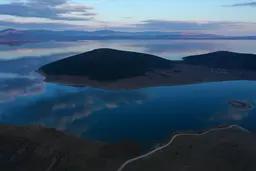
Mada Island (generated by artificial intelligence)
Location | Beyşehir Lake Isparta Province Şarkikaraağaç District within the boundaries of Gedikli Village | ||||||||
|---|---|---|---|---|---|---|---|---|---|
Area(s) | Approximately 8 220 hectares | ||||||||
Elevation(s) | Highest point at 1 350 m | ||||||||
Settlement | Kuruca Mahalle (approximately 180 people) | ||||||||
Economic Activities | Dry farming, fishing, limited livestock breeding | ||||||||
Natural Features | Cork oak, juniper, lake birds, within the boundaries of Kızıldağ National Park | ||||||||
Transportation(s) | No land connection access by boat and raft | ||||||||
Protection Status | Under environmental protection due to its national park status | ||||||||
Mada Island is the only island in Türkiye’s largest freshwater lake, Beyşehir Lake, that has permanent human settlement. Administratively, it falls within the boundaries of Gedikli Village, Şarkikaraağaç District, Isparta Province. Located approximately 800 meters from the shore, Beyşehir Lake, in which the island is situated, lies between Konya and Isparta provinces and is of vital importance for irrigation, fishing, and drinking water supply.
The island covers approximately 800 to 900 dunams of arable land. Its total area is estimated at about 8,220 hectares. Topographically, the island is gently undulating, with its highest point reaching an elevation of 1,350 meters. The surrounding shoreline varies periodically due to seasonal fluctuations in lake water levels.

Mada Island (AA)
Mada Island is a landmass of volcanic origin formed through post-tectonic processes linked to the formation of the lake. The majority of the island is covered by natural vegetation, consisting of species such as kermes oak (Quercus coccifera), juniper (Juniperus spp.), willow (Salix spp.), poplar (Populus spp.), and patches of grassland and pasture plants.
The lake’s significant populations of waterfowl and aquatic biodiversity are also highly present around Mada Island. The island lies within the boundaries of Kızıldağ National Park and is part of protected ecosystems. As a result, certain economic activities, primarily small-scale livestock farming, are legally restricted.
The earliest known settlement on Mada Island dates back to the Roman period. However, the current settlement pattern was established in the 19th century. In 1866, a group of Russian migrants known as Don Cossacks were settled on the island by the Ottoman State. These groups soon abandoned the island, and were replaced by Circassians, Turkmen tribes (Tırtar, Ötkünlü), and migrants from surrounding villages.
Permanent and regular settlement on the island began in the 1920s. Today, the only permanent neighborhood on the island is Kumluca Neighborhood, home to approximately 180 residents. Basic public infrastructure such as a mosque, primary school, and health center exists on the island, but schooling and healthcare services are currently largely provided from settlements on the mainland.
The main sources of livelihood on Mada Island are as follows:
Beekeeping is also practiced on the island, and limited local honey production continues due to the area’s floral diversity.
Inhabitants of Mada Island, the Yörüks, migrate by boat (AA)
The island has no physical road connection to the mainland. Transportation is traditionally provided by motorboats or 15-ton barges. These vessels are heavily used during the summer season, while in winter the lake surface partially freezes, allowing residents to cross on foot.
The island has an electrical infrastructure, and water supply is obtained through the collection of water from small reservoirs and rainwater. Sewage infrastructure is limited, and septic systems are used due to environmental protection requirements.

Mada Island (AA)
Mada Island is a multicultural example where different ethnic groups have coexisted over various historical periods. This cultural diversity is reflected in many aspects, from local dialects to traditional agricultural tools. The islanders continue to practice unique rural customs such as traditional lake fishing, imece-based production, and communal land ownership.
In addition, Mada Island has occasionally been featured in regional promotional documentaries and research studies. It is one of the rare examples among lake islands in terms of both its settlement pattern and social fabric.
Mada Island is included within the boundaries of Kızıldağ National Park, a status that ensures the protection of its flora, fauna, and water quality. This designation has preserved natural habitats to a large extent while subjecting human activities to specific regulations. The island holds potential for ecotourism, although this sector remains undeveloped.
Anadolu Ajansı. "Mada Adası Sakini Yörükler Kayıklarla Göçüyor." Accessed July 18, 2025. https://www.aa.com.tr/tr/yasam/mada-adasi-sakini-yorukler-kayiklarla-gocuyor/1825387.
Beyşehir Municipality. "Beyşehir Gölü Adaları." Beyşehir Belediyesi. Accessed July 18, 2025. https://www.beysehir.bel.tr/gezilecek-yerler/5.
Isparta Valiliği. “Vali Günaydın Türkiye’nin Yerleşim Olan Tek Göl Adası Mada’yı Ziyaret Etti.” Accessed July 18, 2025.
Muşmal, Hüseyin. “Geçmişten Günümüze Beyşehir Gölü Mada Adası’nda İskân ve Beşerî Faaliyetler.” *Yalova Sosyal Bilimler Dergisi*, 14(2), 150–162. Accessed July 18, 2025. https://dergipark.org.tr/tr/pub/yalovasosbil/issue/87936/1533448.
T.C. Kültür ve Turizm Bakanlığı. "Mada-Kazak-Kumluca Adası." Kültür Portalı. Accessed July 18, 2025. https://www.kulturportali.gov.tr/turkiye/isparta/gezilecekyer/mada--kazak--kumluca-adasi.

Mada Island (generated by artificial intelligence)
Location | Beyşehir Lake Isparta Province Şarkikaraağaç District within the boundaries of Gedikli Village | ||||||||
|---|---|---|---|---|---|---|---|---|---|
Area(s) | Approximately 8 220 hectares | ||||||||
Elevation(s) | Highest point at 1 350 m | ||||||||
Settlement | Kuruca Mahalle (approximately 180 people) | ||||||||
Economic Activities | Dry farming, fishing, limited livestock breeding | ||||||||
Natural Features | Cork oak, juniper, lake birds, within the boundaries of Kızıldağ National Park | ||||||||
Transportation(s) | No land connection access by boat and raft | ||||||||
Protection Status | Under environmental protection due to its national park status | ||||||||
Geological and Ecological Features
Historical Development and Demographic Structure
Economic Activities
Infrastructure and Transportation
Socio-Cultural Structure
Conservation and Sustainability