This article was automatically translated from the original Turkish version.
Registration Number | 261 | ||||||||
|---|---|---|---|---|---|---|---|---|---|
Registration Date | 06.12.2017 | ||||||||
Application Number | C2010/053 | ||||||||
Application Date | 14.09.2010 | ||||||||
Name of the Geographical Indication | Malkara Eski Kaşar Cheese | ||||||||
Name of the Product | Eski Kaşar Cheese | ||||||||
Type of Geographical Indication | Place of origin | ||||||||
Applicant/Registrant(s) | Malkara Chamber of Commerce and Industry | ||||||||
Address of the Registrant | Gazibey Mah. Tevfik Bey Cad. No:9/2 Malkara Tekirdağ | ||||||||
Geographical Boundary | Malkara District Tekirdağ Province | ||||||||
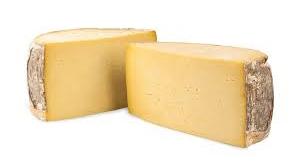
Malkara Old Kaşar Cheese is a traditional cheese variety produced in the Malkara district of Tekirdağ and registered under its place of origin. It is made by blending milk from sheep, goats, and cattle that graze on region-specific vegetation, including Lathyrus L. (mürdümük) and various herbs. The production process is based on aging milk collected between 1 April and 31 July under specific temperature and humidity conditions for at least 90 days.
The Malkara district lies between 40.54° north latitude and 26.52° east longitude and features plateaus with semi-steppe characteristics. The region is notable for its rich pastures and meadows. Historical records indicate that Malkara was known for its kaşar cheese as noted in Evliya Çelebi’s Seyahatname. In 1937, research conducted in the Thrace region confirmed Malkara as a significant center for cheese production. This historical and geographical context directly influences the distinctive characteristics of the milk used in its production.
Malkara Old Kaşar Cheese is produced using a blend of milk collected between 1 April and 31 July. The milk must be mixed in the following proportions:
The animals are fed primarily on region-specific vegetation, especially Lathyrus L. (mürdümük), along with various herbs and thyme. Key plant species include:
Lathyrus sylvestris (forest mürdümük), Medicago minima (wild alfalfa), M. polymorpha (hairy alfalfa), M. falcata (yellow-flowered alfalfa), M. orbicularis (disk-shaped alfalfa), Melilotus indica (Indian sweet clover).
Avena elatius (tall meadow oat), Avena fatua (wild oat).
Thymus longicaulis (long-stemmed thyme), Thymus zygioides (thyme). Terpene-derived compounds found in these plants—for example, copaene, trans-caryophyllene, and gurjunene—transfer into the milk and impart distinctive aromatic qualities to Malkara Old Kaşar Cheese. Gas chromatography–mass spectrometry analyses have revealed similarities between the volatile compounds in Lathyrus L. plants and those in the cheese.
Milk Collection and Controls: Milk collected during the specified period is accepted only after analysis for fat, dry matter, antibiotics and acidity. The pH of the milk to be used must not exceed 6.20.
Cleaning and Standardization: Foreign substances are removed from the milk. The milks are blended to achieve a dry matter content of 60% and a milk fat content of 45%.
Thermal Treatment and Cooling: The milk is heated for 1–10 minutes at 30–55 °C and then cooled to 1–2 °C above the ripening temperature.
Ripening and Curd Cutting: Coagulation occurs within 30–45 minutes at 29–32 °C. Natural rennet is preferred; if unavailable, commercial rennet may be used. The curd is cut to the size of a chickpea and partial whey drainage is performed.
Pressing and Cutting: The first pressing occurs when the pH reaches 5.80–5.90. The curd is cut twice. The second pressing continues until the pH reaches 5.10–4.80.
Boiling: At this pH range, the dough is boiled for 5 minutes in water at 78 °C containing 3–8% salt. The core temperature must reach at least 72 °C.
Molding and Pre-Aging: The 13 kg dough is placed into molds, and 150–300 g of sea salt is applied to each wheel. The wheels are turned 40–50 times. Pre-aging occurs in two stages at 16–22 °C and 70–90% relative humidity:
Fungal Growth and Cleaning: Surface molds are brushed off, the cheese is washed with whey and wiped with milk cream.
Wrapping and Sewing: Wheels are wrapped in oiled paper and placed in hemp sacks. Top and bottom surfaces are supported by wooden boards and sewn along the sides.
Storage and Final Aging: The cheese is stored for at least 90 days at 0–1 °C and 70–90% relative humidity.
Packaging and Sales: The product may be sold either in sacks or sliced. Vacuum-packed products have a shelf life of 12 months; those packaged in modified atmosphere have a shelf life of 6 months. When stored in sacks, the cheese can last up to 18 months.
Compliance monitoring for registration is carried out by a four-member commission coordinated by the Malkara Chamber of Commerce and Industry. The commission includes a representative from the Chamber, a food engineer from Namık Kemal University, a control officer from the Malkara District Directorate of Agriculture and Forestry, and a specialist from the Chamber of Food Engineers of the Turkish Chamber of Civil Engineers (TMMOB) in Tekirdağ. Inspections are conducted annually as scheduled, but may also be carried out at any time in response to complaints, suspicions or specific needs. Producers are required to maintain records of milk sources, temperature and humidity values until the product’s final consumption date.
Turk Patent and Trademark Office. "Malkara Eski Kaşar Peyniri." Accessed July 20, 2025. https://ci.turkpatent.gov.tr/cografi-isaretler/detay/38034.
Turkish Patent and Trademark Office. “Malkara Eski Kaşar Peyniri Tescil Belgesi (PDF).” Accessed July 20, 2025. https://ci.turkpatent.gov.tr/Files/GeographicalSigns/8ffe5d9b-9204-43e8-b397-9cee10abf245.pdf.

Registration Number | 261 | ||||||||
|---|---|---|---|---|---|---|---|---|---|
Registration Date | 06.12.2017 | ||||||||
Application Number | C2010/053 | ||||||||
Application Date | 14.09.2010 | ||||||||
Name of the Geographical Indication | Malkara Eski Kaşar Cheese | ||||||||
Name of the Product | Eski Kaşar Cheese | ||||||||
Type of Geographical Indication | Place of origin | ||||||||
Applicant/Registrant(s) | Malkara Chamber of Commerce and Industry | ||||||||
Address of the Registrant | Gazibey Mah. Tevfik Bey Cad. No:9/2 Malkara Tekirdağ | ||||||||
Geographical Boundary | Malkara District Tekirdağ Province | ||||||||
No Discussion Added Yet
Start discussion for "Malkara Old Kaşar Cheese" article
Geographical and Historical Context
Raw Material Properties and Animal Feeding
Legumes:
Grasses:
Other Families:
Physical, Chemical and Sensory Properties
Physical Properties:
Chemical Properties:
Sensory Properties:
Production Method
Monitoring and Traceability