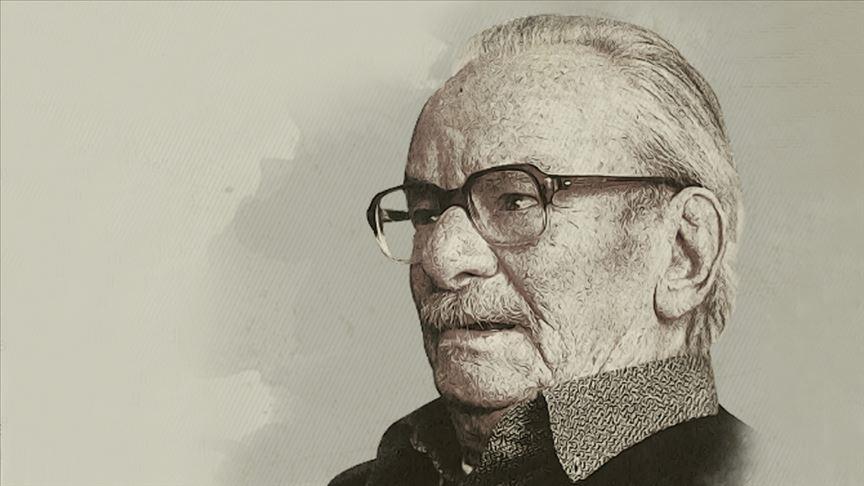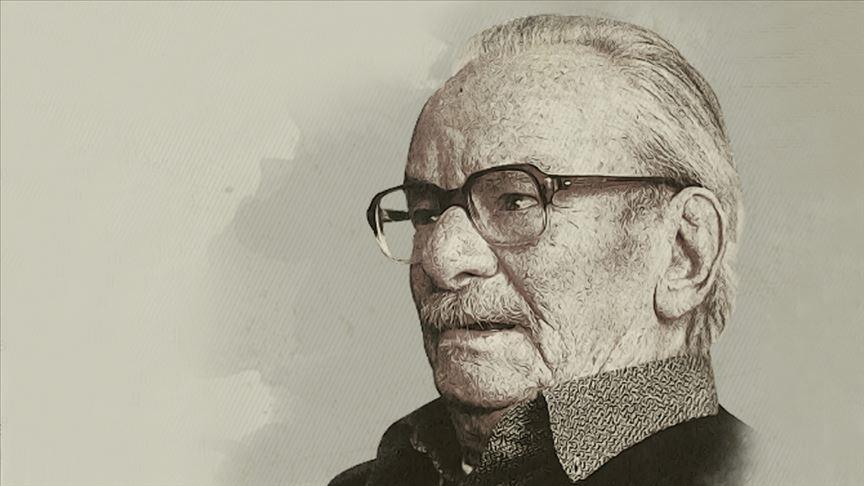

Doğum tarihi | 1915-07-05 | ||||||||
|---|---|---|---|---|---|---|---|---|---|
Eş | Suna Beğensel Akkan Yaşar Gedikoğlu Sabahat Tertemiz | ||||||||
Place of Birth | Çanakkale | ||||||||
Ölüm tarihi | 2002-11-28 | ||||||||
Place of Death | İstanbul | ||||||||
Profession(s) | Poet Translator Essayist Playwright | ||||||||
Literary Period | Republican Era Turkish Literature | ||||||||
Literary Movement(s) | Garip Movement Social Realism | ||||||||
Çocuk | İdris Anday | ||||||||
He was born in Çanakkale in 1915. His real name is Muzaffer Melih. He is the fourth son of İbrahim Cevdet and Hatice Nadide. His birth was registered in the Istanbul-Fatih population records two years after his birth, on 03.10.1333, which is why some sources list Istanbul as his place of birth. He comes from a distinguished and privileged family. His paternal grandfather, Mehmet Raşit Paşa, rose to the rank of Mirliva (Brigadier General) in the Ottoman Army and holds the distinction of being the Ottoman State’s first pharmacist pasha. His great uncle, Mukim Paşa, was the personal physician of Sultan Abdülhamid II. Mehmet Kadri Anday (b. 1290/1874), who went to France for medical training, was a key figure in organizing the secret correspondence of the Committee of Union and Progress and played a decisive role in Melih Cevdet’s upbringing and in the family’s adoption of the surname Anday. Mehmet Kadri Anday was the first pediatric specialist in Turkish medical history and the founding president of the Children’s Physicians Assembly (Pediatric Institution).
He began his primary education in 1923 at the 35th Primary School in Mühürdar, Kadıköy. He continued his secondary education at Kadıköy Sultanisi, where he wrote his earliest literary attempts under the pseudonym “Tepegöz Hayri.”
In 1930, due to his father’s transfer, he moved to Ankara and completed his secondary and high school education at Ankara Boys’ High School. There he met Orhan Veli and Oktay Rifat and joined the editorial staff of the magazine Sesimiz. After graduating from high school in 1934, he enrolled at Ankara University Faculty of Law and later transferred to the Faculty of Language, History and Geography, but did not complete his higher education.
He began his writing career with poetry during his high school years. His earliest poems, “Sarı-Siyah” and “Hatırlama,” were published in the magazine İnkılâp. The magazine Sesimiz, which he co-founded with his high school friends, was an important periodical in the early years of his literary life. Anday’s first contribution to this magazine appeared in its seventh issue. Between April 1933 and May 1936, he published four poems in various periodicals. He entered the literary public sphere with the magazine Varlık, which began publishing his poems and writings on 15 İkinciteşrin (November) 1936.
The poem titled “Ukde,” published in Varlık in November 1936, is the first poem by the Garip trio to appear in this magazine. The Garip trio (Orhan Veli, Oktay Rifat, Melih Cevdet Anday) was recommended to Yaşar Nabi Nayır, the owner of Varlık, by Nahit Sırrı Örik and introduced as bringing a “new atmosphere to our poetry.” Their poems were first published collectively under the general title “Şiirler” in the Varlık issue dated 15 September 1937. This page was dedicated to Melih Cevdet, who was abroad at the time. After Anday returned from abroad in November 1937, the names of the three poets began appearing together in Varlık.
In May 1941, Orhan Veli published their poems in a book titled Garip, after which they became known as the “Garip” group.
His first civil service position was as a Grade 2-5 official at the State Railways from 1 September 1936 to 17 October 1938. On the recommendation of then Minister of National Education Hasan Âli Yücel, he held various roles including Head of the Technical Bureau at Maarif Matbaası (1942), Photography Specialist, Advisor for Children’s Publications (1943), and Deputy Director of Comparative Studies. After the 1946 elections, he was appointed to the Ankara General Library and resigned from this position in 1951, returning to Istanbul after a 21-year absence.
From September 1953, he managed the “Art and Literature” section of the newspaper Akşam, followed by a brief period at Yapı Kredi Bank’s Doğan Kardeş Yayınları. From 1957 onward, he wrote columns for the newspaper Tercüman under his own name and later under the pseudonym Yaşar Tellidede. He also serialized his novels under the pen name Murat Tek. He continued contributing columns to various newspapers (Büyük Gazete, Yeni Tanin, İkdam, Vakit, Yeni Memleket, Vatan, Yeni İstanbul, Ulus, Dünya). In 1954, he began teaching Theater, European Literature, Diction, and Phonetics at the Istanbul Municipal Conservatory.
From 10 February 1961 until 29 April 1997, he wrote a column for the newspaper Cumhuriyet and serialized many of his novels in its pages. He served as President of the Turkish Writers’ Union (1963), Member of the TRT Board of Directors (1964–1969), and Educational Advisor at UNESCO Headquarters (1979–1980). He used numerous pseudonyms including “Tepegöz Hayri,” “Murat Tek,” “Yaşar Tellidede,” “Gani Girgin,” “Zater,” “Niyaz Niyazoğlu,” “Laf Ebesi,” “H. Mecdi Velet,” “M.C.A.,” “Melih Cevdet,” “M. C. Anday,” “M. Cevdet Anday,” “Melih C.,” “Melih C. Anday.”
He married his first wife, Sabahat Tertemiz, with whom he worked at the Ministry of National Education, in October 1945. He lost Sabahat Hanım in 1956. Three years later, he married Yaşar Gedikoğlu, with whom he had a son named İdris. He divorced Yaşar Hanım in 1983. His third and final wife was Suna (Beğensel) Akkan, whom he married on 16 June 1983.
Garip Period: With the publication of the book Garip, he became one of the representatives of a poetic style that rejected meter and rhyme and relied on everyday language.
Break from Garip and Transformation: His break from the Garip movement, initiated with the publication of the poem “Tohum,” became evident in the 1960s. Anday’s evolving poetic vision manifested itself after 1960, culminating in his final poetry collection, Yağmurun Altında. Because his post-1960 poems were perceived as texts difficult to interpret, Anday wrote explanatory “Addenda” to accompany them. He described his poetic evolution as follows: “My earliest poems were metric and rhymed; later I turned toward poetry seeking its own internal logic and discipline.”
Novels: He turned to the novel genre in the 1960s. His early novels (Yağmurlu Sokak, Meryem Gibi, Birbirimizi Anlamalıyız) were serialized in Tercüman and Cumhuriyet under pseudonyms, driven by journalistic daily needs. These novels explore the stages of individuality and citizenship within the social conditions of the Republican era and everyday relationships. His novel Aylaklar, published under his own name, marked the beginning of his second phase as a novelist and was followed by subsequent novels Gizli Emir, İsa’nın Güncesi, and Raziye.
Plays: He also produced works in theater. The fundamental elements shaping dramatic situations in his plays are “time” and “space.” Published theatrical works include İçerdekiler, Mikado’nun Çöpleri, and Dört Oyun. Mikado’nun Çöpleri was broadcast in German by Bremen Radio, and İçerdekiler was staged in Hungarian in Hungary.
Essays: He is an essayist within the context of Republican-era Turkish literature. His essay collections include Doğu-Batı, Konuşarak, Yeni Tanrılar, and Dilimiz Üstüne Konuşmalar.
Translations: He translated works from many foreign languages (Russian, English, French, Persian, Arabic, Greek) across various genres. He sometimes translated alone and sometimes collaborated with friends and his second wife, Yaşar (Gedikoğlu) Anday, including Orhan Veli, Oktay Rifat, Erol Güney, Sabahattin Eyüboğlu, Mîna Urgan, Vedat Günyol, Hilmi Yavuz, and Halit Çakır. His translations include Don Juan, Müfettiş (Revizor), Ölü Canlar (Myortve duşı), Batıdan Şiirler, Fareler ve İnsanlar Üzerine, and Babalar ve Oğullar.
Travel Writing: He authored a travelogue titled Sovyet Rusya, Azerbaycan, Özbekistan, Bulgaristan, Macaristan.
Memoirs: He wrote a memoir titled Akan Zaman Duran Zaman: Anı.
He died on 28 November 2002 at the Marmara University Faculty of Medicine’s Koşuyolu Hospital, where he was being treated for respiratory and kidney failure. He is buried at the Büyükada Cemetery.
Anadolu Ajansı. "Evrensel değerleri kalemine yansıtan şair ve yazar: Melih Cevdet Anday." Accessed June 29, 2025. https://www.aa.com.tr/tr/kultur-sanat/evrensel-degerleri-kalemine-yansitan-sair-ve-yazar-melih-cevdet-anday/2057976
Durmuş, Mitat. “Melih Cevdet Anday (Muzaffer Melih Anday).” *Atatürk Ansiklopedisi*. Accessed June 29, 2025. https://ataturkansiklopedisi.gov.tr/detay/302/Melih_Cevdet_Anday_(Muzaffer_Melih_Anday)
Durmuş, Mitat. “Melih Cevdet Anday.” *TEİS – Türk Edebiyatı İsimler Sözlüğü* (Ahmet Yesevi Üniversitesi). Accessed June 29, 2025. https://teis.yesevi.edu.tr/madde-detay/melih-cevdet-anday

Doğum tarihi | 1915-07-05 | ||||||||
|---|---|---|---|---|---|---|---|---|---|
Eş | Suna Beğensel Akkan Yaşar Gedikoğlu Sabahat Tertemiz | ||||||||
Place of Birth | Çanakkale | ||||||||
Ölüm tarihi | 2002-11-28 | ||||||||
Place of Death | İstanbul | ||||||||
Profession(s) | Poet Translator Essayist Playwright | ||||||||
Literary Period | Republican Era Turkish Literature | ||||||||
Literary Movement(s) | Garip Movement Social Realism | ||||||||
Çocuk | İdris Anday | ||||||||
Educational Life
Beginning of Literary Career and the Garip Movement
Professional Life
Marriages and Family Life
Literary Movements and Poetic Vision
Works in Other Literary Genres
Death