


This article was automatically translated from the original Turkish version.
+2 More
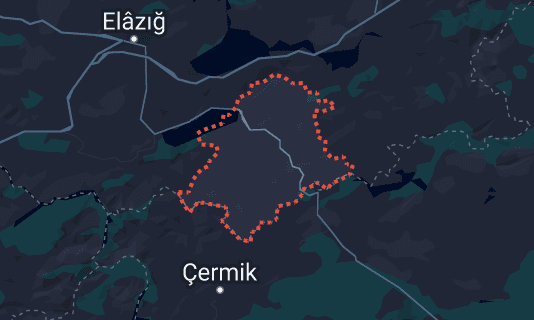
Mine (District)
Region(s) | Eastern Anatolia Region | ||||||||
|---|---|---|---|---|---|---|---|---|---|
Province(s) | Elazığ | ||||||||
Population | 9,693 (2023) | ||||||||
Mayor(s) | Musa ORHAN | ||||||||
District Governor | Mustafa ATIŞ | ||||||||
Town | 1 | ||||||||
Village | 38 | ||||||||
Elevation(s) | 054 m 1 | ||||||||
Area(s) | 819 km² | ||||||||
Maden is a district of Elazığ Province in Türkiye’s Eastern Anatolia Region. It is located approximately 80 kilometers from the provincial center. It is bordered by Ergani District of Diyarbakır to the south, Alacakaya District of Elazığ to the west, Sivrice District to the north, and Palu District to the east. The district covers an area of approximately 819 km² and features a mountainous and rugged topography. As of 2023, the population of the district center is 3,761 and the total population is 9,693. The district includes one township (Gezin) and 38 villages.
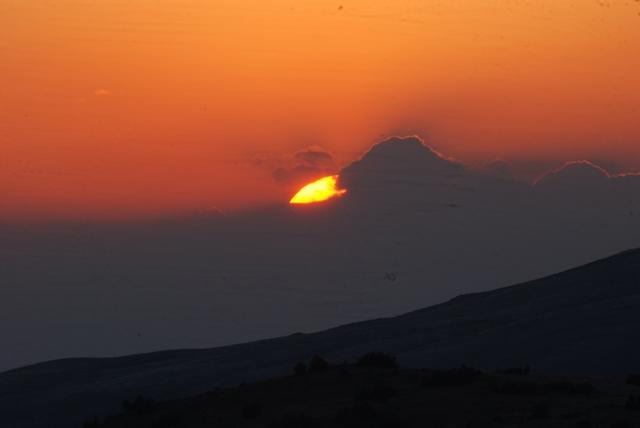
Maden at sunset (Elazığ Provincial Directorate of Culture and Tourism)
The district of Maden has been home to numerous civilizations throughout history. The earliest settlement traces in the region date back to the 2000s BCE. Influenced by the Hittites, Urartians, Assyrians, Persians, Romans, and Byzantines, Maden came under Turkish control in 1085. Following the Battle of Manzikert, the area became a settlement ground for Turkic tribes that spread into Anatolia, and it later passed under the rule of the Artuqids, then the Akkoyunlus, and finally the Ottoman Empire.
During the Ottoman period, Maden was a neighborhood subordinate to the Ergani Sanjak. It attained district status in 1870. Until 1936, it was attached to Diyarbakır Province, after which it was transferred to Elazığ Province. The name “Maden,” meaning “mine,” originates from the rich copper and other mineral mines that have operated in the region throughout history.
Maden District has a mountainous and uneven topography. Important elevations in the district include Şahmiran Mountain and Çakmaktepe. The Maden Creek, a tributary of the Euphrates River, flows through the district. The region experiences a continental climate with hot, dry summers and cold, snowy winters. The natural vegetation consists mainly of steppe with scattered forested areas. One of the district’s notable natural attractions is the shoreline of Hazar Lake within the boundaries of Gezin Township.
Maden District consists of a total of 39 settlement units: the district center, the township of Gezin, and 38 villages. Gezin held district status until 2013, after which it was downgraded to township status and attached to Maden. Settlement patterns in the district center and villages are dispersed. Access to the district is provided via the road connecting Elazığ to Maden.
As of 2023, the population of the Maden district center is 3,761 and the total district population is 9,693. A significant portion of the population resides in rural settlements. Population decline has been observed since the 1980s due to migration. Economic factors, along with the district’s geographical structure and limited employment opportunities, have contributed to this decline.
Historically, Maden District has been an important settlement due to its mineral resources, particularly copper ore and other metallic minerals. However, mining activities today are limited. The district’s economy is largely based on animal husbandry and small-scale agriculture. Barley, wheat, and forage crops are the main agricultural products. Animal husbandry involves both large and small livestock farming. In recent years, the township of Gezin and the surrounding area of Hazar Lake, which have tourism potential, have contributed to economic activity during the summer months.
The district hosts various educational institutions under the Ministry of National Education, offering preschool, primary, middle, and high school levels. Mobile education services are provided for students in rural neighborhoods. Vocational and technical education institutions are also present in the district. Educational services are coordinated by the Maden District National Education Directorate.
Health services in Maden District are delivered through a state hospital, family health centers, and health posts. The district has one state hospital and several health units. Additionally, health houses are located in Gezin Township and some villages. Due to shortages of specialist physicians and equipment, some advanced medical services require referral to the provincial center of Elazığ.
Maden District lies on the road connecting Elazığ to Diyarbakır. Access to the district is provided by regular bus and minibus services from Elazığ and Diyarbakır. The nearest airport is in Elazığ. Although railway transport once played an important role, there is currently no active passenger rail service. Village roads in the district are asphalted and stabilized, but access to some settlements becomes difficult during winter months.
Maden District is rich in cultural heritage due to its historical copper mines and structures from the Ottoman period. Notable landmarks in the district center include the Maden Clock Tower, Hacı Hasan Mosque, and various caravanserais. Historical aqueducts, fountains, and remnants of ancient settlements are also found in the district. A significant portion of these historical sites is directly linked to past mining activities. Various cultural events are also held in the district.
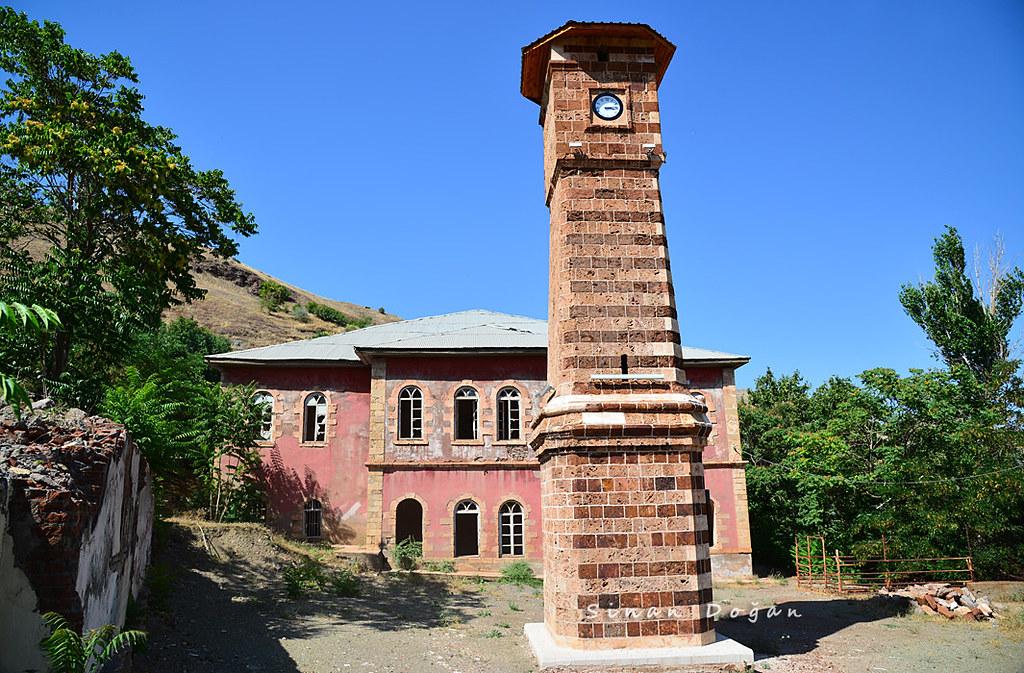
Maden Clock Tower (Mining Municipality)
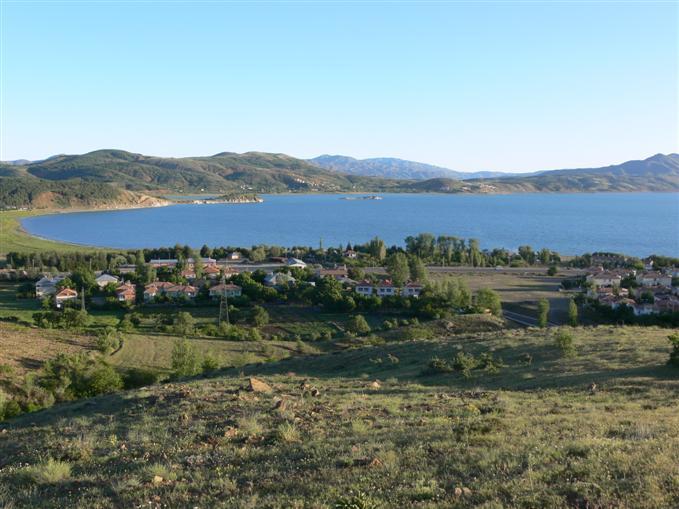
Hazar Lake View from Gezin (Elazığ Provincial Directorate of Culture and Tourism)
Elazığ İl Kültür ve Turizm Müdürlüğü. "Maden." T.C. Kültür ve Turizm Bakanlığı. Accessed May 5, 2025.
Maden Belediyesi. "Population." Accessed May 5, 2025.
Maden Belediyesi. *Maden Belediyesi Resmî Web Sitesi*. Accessed May 5, 2025.
Maden Belediyesi. “History Place.” Accessed May 5, 2025.
Maden Kaymakamlığı. "Belde ve Köylerimiz." Accessed May 5, 2025.
Maden Kaymakamlığı. "İlçemizin Tarihi." Accessed May 5, 2025.
Maden Kaymakamlığı. “İlçemiz.” Accessed May 5, 2025.
Maden İlçe National Education Directorate. Accessed May 5, 2025.

Mine (District)
Region(s) | Eastern Anatolia Region | ||||||||
|---|---|---|---|---|---|---|---|---|---|
Province(s) | Elazığ | ||||||||
Population | 9,693 (2023) | ||||||||
Mayor(s) | Musa ORHAN | ||||||||
District Governor | Mustafa ATIŞ | ||||||||
Town | 1 | ||||||||
Village | 38 | ||||||||
Elevation(s) | 054 m 1 | ||||||||
Area(s) | 819 km² | ||||||||
History
Geographical Structure
Administrative Structure and Settlement
Population and Economy
Education and Health
Transportation
Historical and Cultural Heritage